

Your Tibetan zodiac sign is the animal of your birth year, and in Tibetan Buddhist tradition, that animal comes paired with a guardian Buddha believed to watch over you from birth. The Tibetan zodiac runs on a 12-year animal cycle woven together with five elements (Wood, Fire, Earth, Iron, and Water), forming a 60-year cycle used for centuries to describe a person’s nature, timing, and spiritual protection.
At PotalaStore, we work directly with monks at Sera Jhe Monastery and Kopan Monastery in Nepal, where each guardian piece we source is blessed before it ships. That partnership taught us how the birth-year guardian tradition is actually practiced, well beyond the surface-level charts you find online.
Below, you will find the full 12-sign chart, the eight guardian Buddhas mapped to every animal, and simple ways to honor yours. If you were born in January or February, we will also show you why your sign might not be the one you expect.
Quick answer: Find your animal by birth year, then match it to one of eight guardian Buddhas. For example, Rat is guarded by Thousand-Armed Guanyin, Rabbit by Manjushri, and Dog and Pig by Amitabha.
Table of Contents
What Is the Tibetan Zodiac?
The Tibetan zodiac is a 12-year cycle of animal signs, paired with five elements, used in Tibetan Buddhist tradition to describe your birth-year nature and the guardian connected to it. Every year in the Tibetan zodiac carries both an animal and one of the five elements, so the full system repeats only once every 60 years.
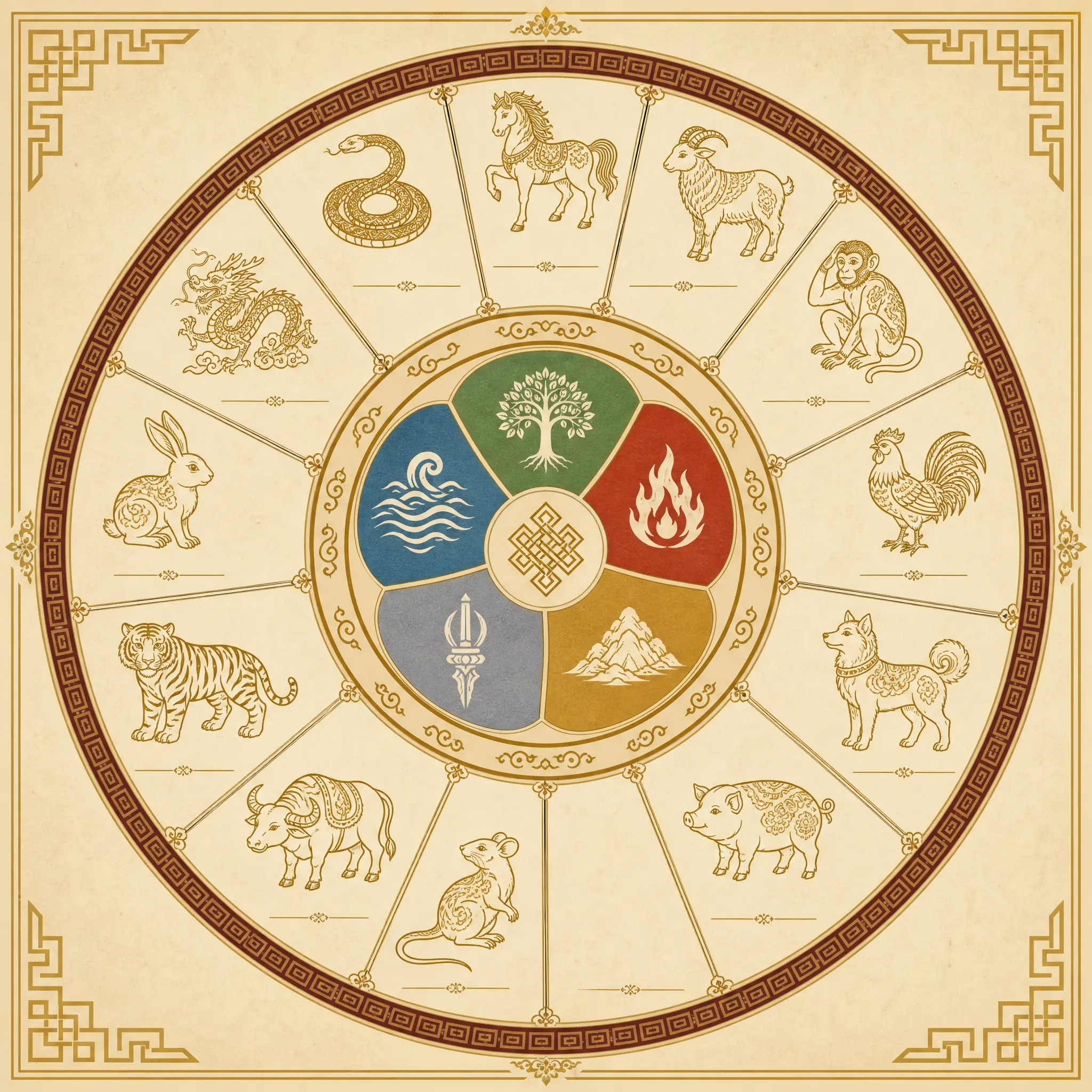
The 12 Animals and the 5 Elements
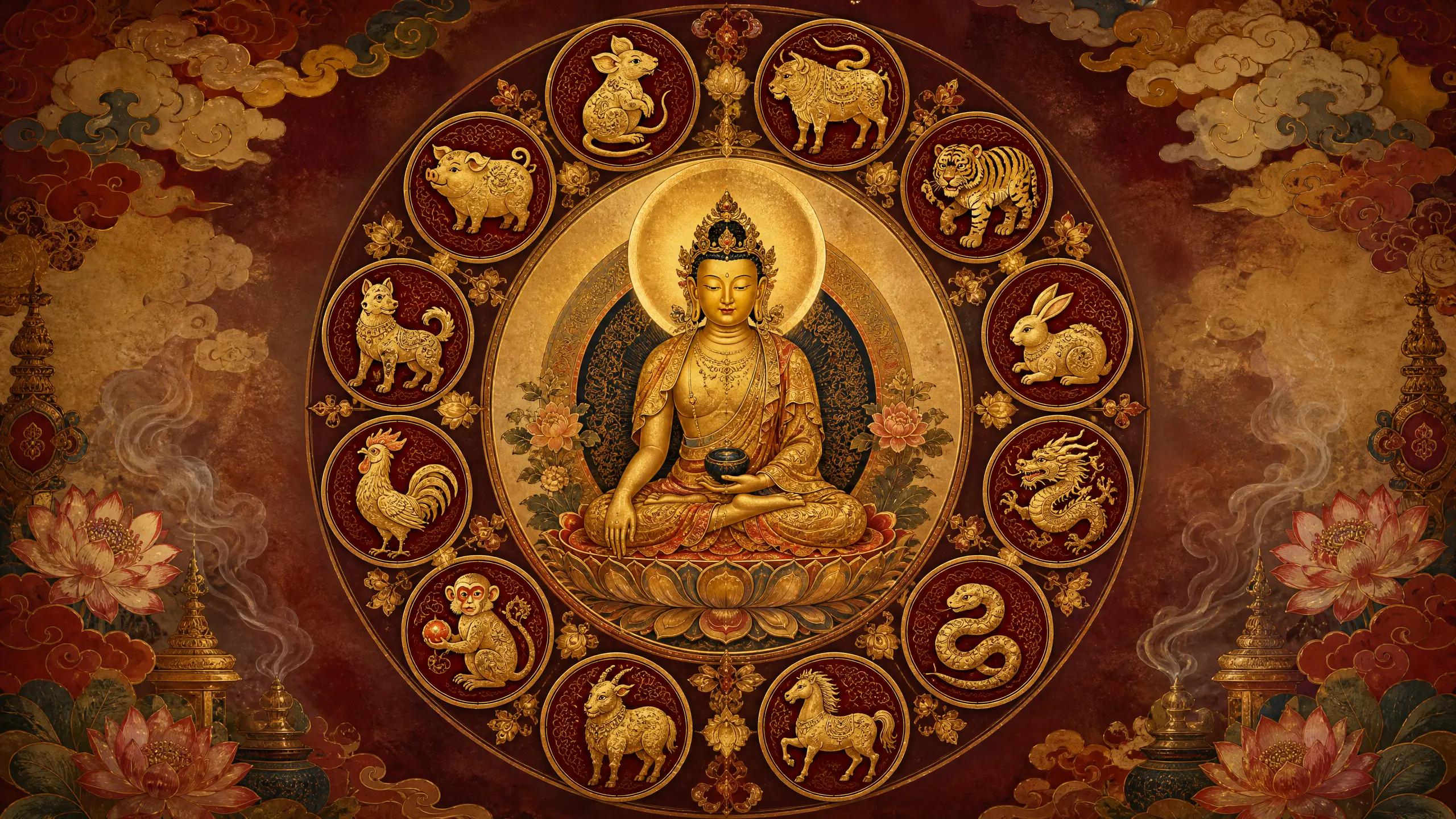
The twelve animals are Rat, Ox, Tiger, Rabbit, Dragon, Snake, Horse, Goat, Monkey, Rooster, Dog, and Pig. Each of the five elements shapes a year’s character, and every element colors two years in a row before the cycle advances:
- Wood: growth and flexibility
- Fire: activity and transformation
- Earth: stability and grounding
- Iron (Metal): clarity and structure
- Water: adaptability and flow
Together, the twelve animals and five elements combine into a 60-year cycle. That pairing is why 2025 is read as a Wood Snake year rather than simply a Snake year.
How the Tibetan Zodiac Differs From the Chinese Zodiac
The Tibetan and Chinese zodiacs share the same twelve animals, but the Tibetan calendar starts each year at Losar. Losar, the Tibetan New Year, falls on the new moon nearest February, which can differ from the Chinese New Year by up to a month. Because both systems reckon your age and animal from their own New Year rather than January 1, a birthday in late winter can land on a different animal depending on which calendar you follow.
How Do You Find Your Tibetan Zodiac Sign?
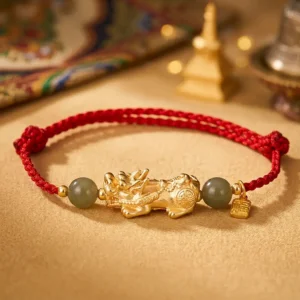
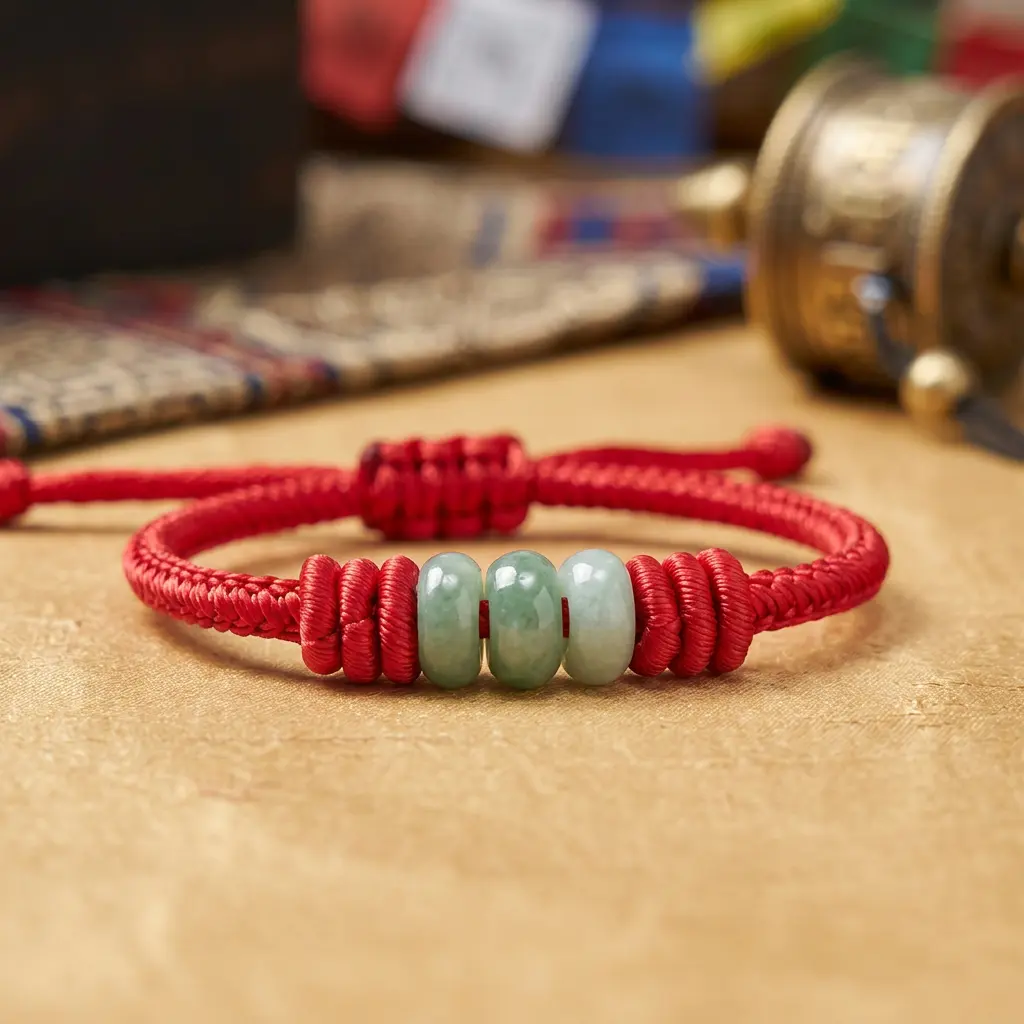
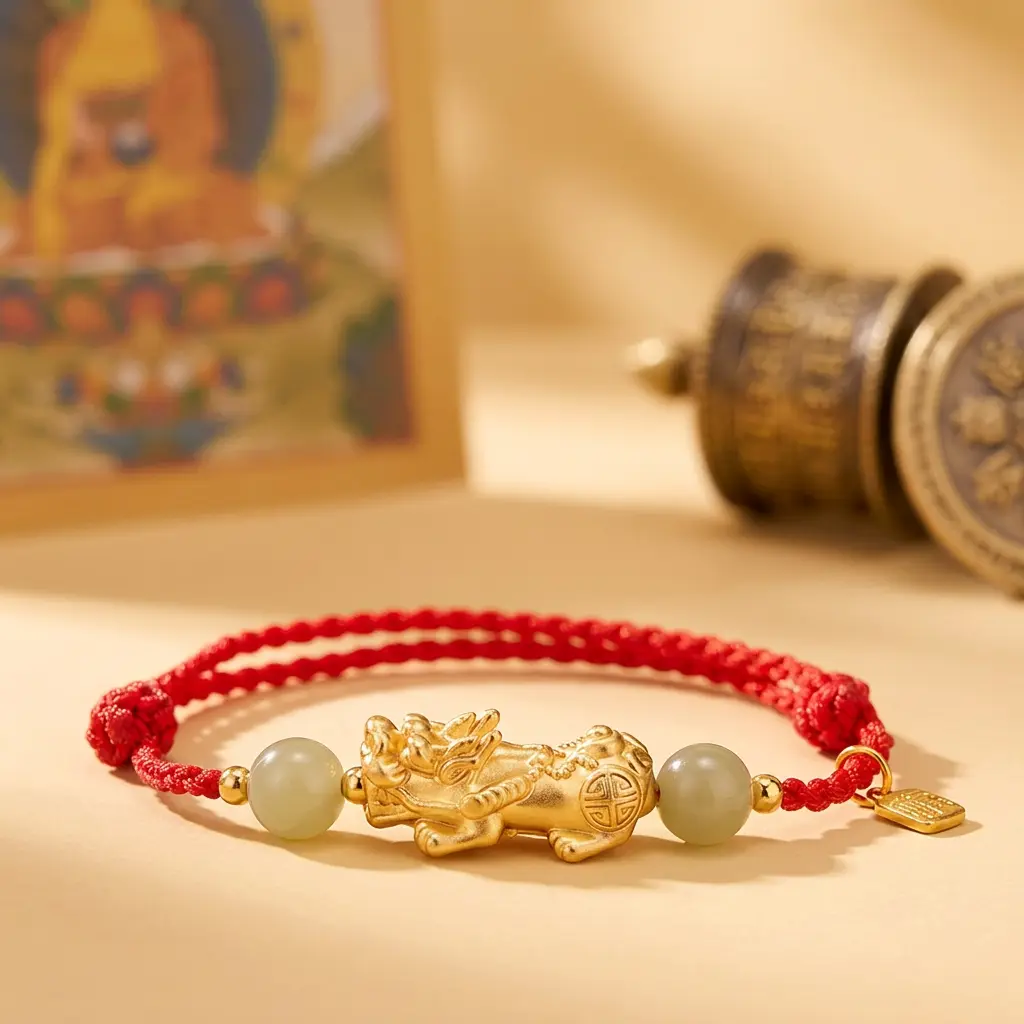
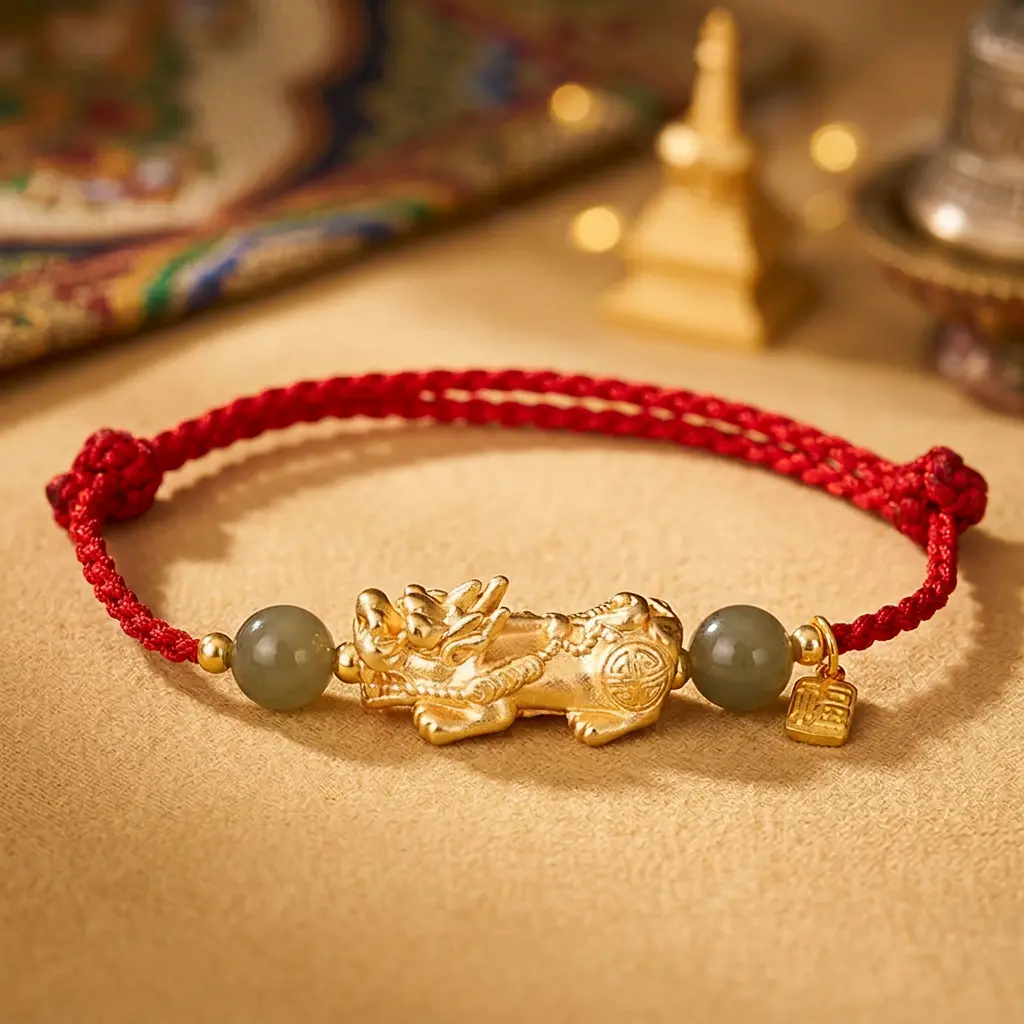
Pixiu Fu Red String Bracelet — Draw In Wealth, Wear Your Blessing
Original price was: $76.95.$66.95Current price is: $66.95.
Buy Now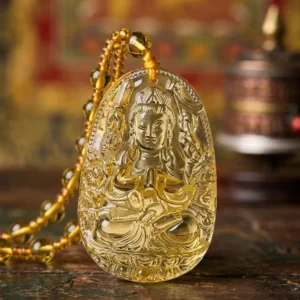
Citrine Guardian Buddha Necklace – Zodiac Amulet
Original price was: $60.00.$32.95Current price is: $32.95.
Buy Now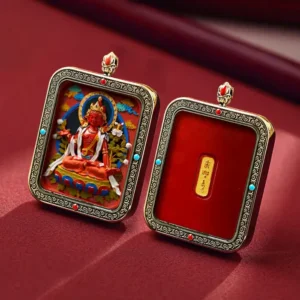
Hand-Painted Thangka Ga Wu Box Pendant Necklace
Original price was: $93.95.$68.95Current price is: $68.95.
Buy Now
Pixiu Black Obsidian Bracelet – Feng Shui Wealth
Original price was: $108.95.$82.95Current price is: $82.95.
Buy NowTo find your Tibetan zodiac sign, match your birth year to its animal in the chart below.
Find Your Animal by Birth Year
| Zodiac Animal | Recent Birth Years |
|---|---|
| Rat | 1984, 1996, 2008, 2020 |
| Ox | 1985, 1997, 2009, 2021 |
| Tiger | 1986, 1998, 2010, 2022 |
| Rabbit | 1987, 1999, 2011, 2023 |
| Dragon | 1988, 2000, 2012, 2024 |
| Snake | 1989, 2001, 2013, 2025 |
| Horse | 1990, 2002, 2014, 2026 |
| Goat | 1991, 2003, 2015, 2027 |
| Monkey | 1992, 2004, 2016, 2028 |
| Rooster | 1993, 2005, 2017, 2029 |
| Dog | 1994, 2006, 2018, 2030 |
| Pig | 1995, 2007, 2019, 2031 |
Each animal repeats every 12 years, so you can count forward or backward from any year you know. If 2025 is the Snake, then 2013 and 2001 are also Snake years.
Born in January or February? Check Your Losar Date
If you were born in January or early February, you may belong to the previous animal year. Losar shifts each year with the lunar calendar, so a late-January birthday can fall under one animal in one year and a different animal the next. When your birthday sits close to the New Year boundary, look up the exact Losar date for your birth year to confirm your sign before you read the rest of this guide.
Meet the Guardian Buddha Connected to Your Birth
In Tibetan Buddhist tradition, each zodiac animal is watched over by one of eight guardian Buddhas, and your birth year points to the specific guardian Buddha connected to you. Eight figures cover all twelve signs, so several Buddhas protect two animals each. These pieces are traditionally carried as Tibetan protection amulets and kept close as a daily reminder.
The Complete Zodiac-to-Guardian-Buddha Chart
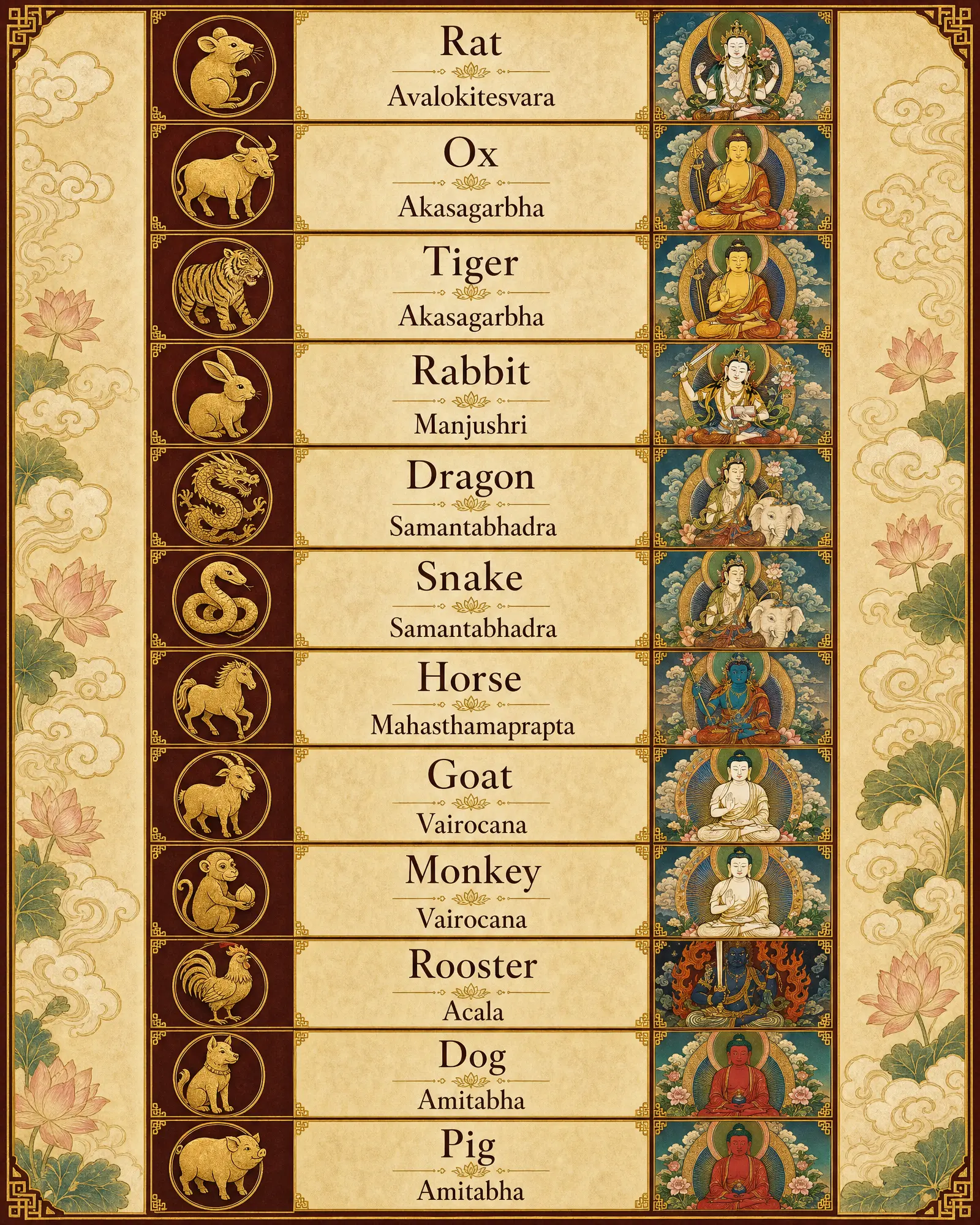
| Zodiac Animal | Guardian Buddha (Ben Ming Fo) | Associated Quality |
|---|---|---|
| Rat | Thousand-Armed Guanyin (Avalokiteshvara) | Compassion and mercy |
| Ox | Akashagarbha Bodhisattva | Wisdom and good fortune |
| Tiger | Akashagarbha Bodhisattva | Wisdom and good fortune |
| Rabbit | Manjushri Bodhisattva | Wisdom and knowledge |
| Dragon | Samantabhadra Bodhisattva | Virtue and action |
| Snake | Samantabhadra Bodhisattva | Virtue and action |
| Horse | Mahasthamaprapta Bodhisattva | Strength and clarity |
| Goat | Mahavairocana Buddha | Enlightenment and light |
| Monkey | Mahavairocana Buddha | Enlightenment and light |
| Rooster | Acala (Fudo Myo-o) | Protection and courage |
| Dog | Amitabha Buddha | Infinite light and peace |
| Pig | Amitabha Buddha | Infinite light and peace |
What “Ben Ming Fo” Means in Tibetan Buddhist Tradition
Ben Ming Fo (本命佛) means “natal Buddha,” the guardian assigned to you at birth rather than one you pick. The pairing comes out of esoteric, or Vajrayana, Buddhism, which took shape in Tang-dynasty China and became central to Tibetan Buddhism. In this view, your guardian is less an external deity to worship and more a mirror of qualities already within you, what the tradition calls your Buddha-nature. It is worth being clear that this eight-to-twelve pairing is a regional devotional custom, not a universal Buddhist doctrine, and wearing an image is treated as a support for practice rather than a guarantee of any outcome.
What Your Natal Buddha Reveals About Your Nature
Each guardian Buddha embodies a quality that tradition says supports the signs under its care, from boundless compassion to fearless protection. These are read as encouragements to develop a trait, not fixed predictions about your life.
Guardians of Compassion and Wisdom
- Thousand-Armed Guanyin (Rat): a form of Avalokiteshvara, the bodhisattva of compassion. The many arms picture an ability to respond to suffering in many ways at once.
- Akashagarbha (Ox and Tiger): associated with the vastness of wisdom and with good fortune, often invoked for study and clear judgment.
- Manjushri (Rabbit): the bodhisattva of transcendent wisdom, traditionally called on for learning, memory, and decision-making.
- Samantabhadra (Dragon and Snake): the bodhisattva of virtuous action, shown riding a six-tusked white elephant that symbolizes overcoming obstacles.
Guardians of Protection and Infinite Light
- Mahasthamaprapta (Horse): associated with spiritual strength and the clarity to see a path through difficulty.
- Mahavairocana (Goat and Monkey): the cosmic Buddha of illumination, linked with insight that reaches everywhere.
- Acala, or Fudo Myo-o (Rooster): a wisdom king of unmoving protection and steady courage under pressure.
- Amitabha (Dog and Pig): the Buddha of infinite light, connected with peace, refuge, and ease.
To see how your sign’s energy is read month to month, our monthly Chinese zodiac horoscope follows each animal through the year.
How to Honor Your Birth Protector Every Day
The most common way to honor your birth protector is to wear their image, traditionally as a blessed pendant, and to hold a simple daily intention or mantra. You do not need an elaborate setup to begin.
Wearing a Guardian Buddha Pendant
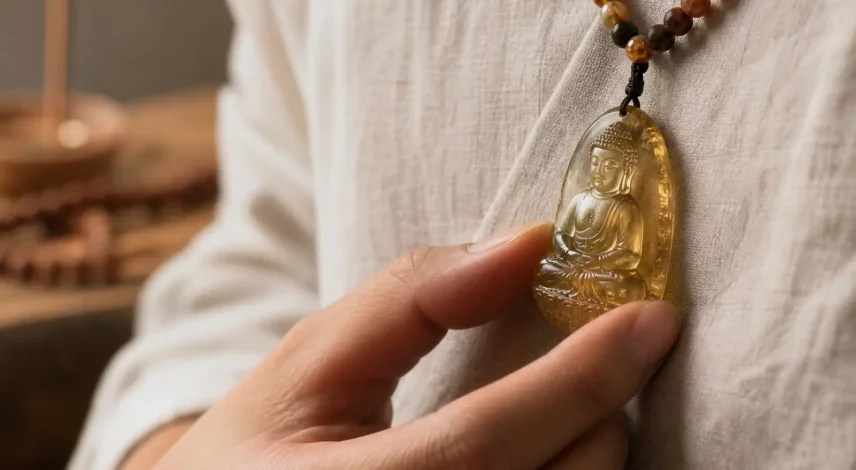
A guardian pendant carries the figure matched to your sign, which is what makes it personal rather than generic jewelry. Because every person has a natal Buddha set by birth year, the piece is chosen for you before you ever pick it up. Our Citrine Guardian Buddha zodiac pendant measures 2 in x 1.2 in (5 cm x 3 cm) on a 27.5 in (70 cm) chain, with the carved guardian for your animal at its center.
Natural citrine has one property most stones lack: it is self-cleansing, so it does not need regular resetting the way many crystals do. That makes it easy to wear every day without extra care rituals. When our founder first visited Sera Jhe, what surprised us was how much of the value sits in the blessing, not the stone itself. Every guardian piece we ship is consecrated there or at Kopan Monastery before it leaves, which is the part you cannot see in a photo. You can browse the full range of Tibetan mala and Guardian Buddha necklaces to compare materials.
Simple Daily Practices: Mantra and Mindful Intention
If you are new to this, there is no wrong way to begin. Sincerity matters more than ritual precision. A few simple practices carry most of the meaning:
- Recite your guardian’s mantra: even a few minutes of quiet repetition can serve as a focused reset.
- Touch the pendant to re-center: a brief pause during the day to bring your attention back to your intention.
- Dedicate the merit: close with a simple wish for the benefit of others rather than only yourself.
Choosing an Authentic Guardian Piece: What to Look For
An authentic guardian piece comes down to two things: whether it has been properly consecrated, and whether it is made from genuine, traditionally carved materials. Price alone tells you very little.
Monastery-Blessed vs. Mass-Produced
Each PotalaStore guardian pendant passes through a 3-day puja and rab gnas ceremony at Sera Jhe and Kopan Monastery, the rite that consecrates an object as a living support rather than decoration. This consecration is what the tradition holds gives a piece its protection, not the material by itself. A mass-produced pendant skips this step entirely, which is the difference most listings never mention. For every order, 10% goes to the monasteries that perform the blessing, and one tree is planted through reforestation work in Tibet and Nepal. You can read more about our founder’s monastery partnerships and how the sourcing works.
Natural Materials and Traditional Iconography
Genuine pieces use natural materials and follow traditional iconography, right down to the mudras and seated posture of each figure. Most citrine sold today is heat-treated amethyst with a uniform bright-orange color, while natural citrine shows a softer, smoky-gold tone with slight variation. Those small differences in color are the fingerprint of the real stone, not flaws. Look for hand-carving over generic molds, since the facial expression and hand gestures should match established iconographic standards. A hand-painted Thangka Guardian Buddha pendant is another traditional option when you want the painted style rather than carved stone.
If you are choosing a gift, matching the piece to the recipient’s sign is what makes it thoughtful. You are giving the protector that is already theirs, which reads as far more personal than a generic charm.
⚠️ Important note: Information about guardian Buddhas, elements, and spiritual protection reflects traditional beliefs and cultural practice, not scientific evidence. This eight-to-twelve zodiac pairing is a regional devotional custom, not universal Buddhist doctrine. Wearing an image is treated as a support for reflection and intention, and it does not guarantee safety, wealth, or any particular outcome. This content is for educational purposes and is not a substitute for professional advice.
Frequently Asked Questions
They share the same twelve animals, but the Tibetan zodiac reckons the year from Losar, the new moon nearest February, and pairs each animal with one of five elements over a 60-year cycle. Dates can shift by up to a month compared with the Chinese New Year.
Your natal Buddha is set by your zodiac animal. For example, Rat connects to Thousand-Armed Guanyin, Rabbit to Manjushri, and Dog and Pig to Amitabha. Find your animal by birth year in the chart above, then match it to your guardian.
Not at all. Buddhist teaching welcomes sincere engagement. Worn with respect and an understanding of its meaning, a guardian pendant honors the tradition regardless of your personal faith. Many people are drawn to these figures for their universal values of peace, wisdom, and compassion.
You may fall under the previous zodiac year, since Losar shifts from year to year. Check the exact Losar date for your birth year to confirm your animal, then look up the guardian Buddha matched to that sign.
Meet the Guardian That Is Already Yours
Find your animal, then wear the natal Buddha connected to your birth, hand-carved and blessed at Sera Jhe and Kopan Monastery.Find Your Guardian Buddha Pendant
📚 References
- Tibetan Calendar and the 60-Year Cycle: Overview of the animal-element system, the sexagenary cycle, and Losar. Wikipedia: Tibetan calendar
- Tibetan Astrology, Animal Signs and Elements: Scholarly explanation of birth-year animals, the five elements, and how age is reckoned from the Tibetan New Year. Study Buddhism (Berzin Archives)
- Bodhisattvas and Buddhist Iconography: Background on figures such as Avalokiteshvara, Manjushri, and Amitabha in Himalayan and East Asian art. Source: The Rubin Museum of Himalayan Art. (Readers may search the institution’s collection for current resources on each figure.)
- Vajrayana (Esoteric) Buddhism: Context on the tradition from which the natal-Buddha custom developed. Source: Encyclopaedia Britannica. (Readers may search Britannica for its current entry on Vajrayana.)