

Feng shui tradition says to protect your good fortune on New Year’s Day by not cleaning it out, spending it, or cutting it off. Nine everyday habits break that rule, and each one has an easy swap.
These New Year’s Day taboos are about qi, the life energy that feng shui tries to keep flowing. Qi is believed to arrive fresh with the new year. Here is the twist most guides skip. The rules traditionally belong to the first day of the lunar year, which is 02/06/2027, not January 1. Many American families follow some of them on both dates.
At Potala Store, we cross-checked Britannica, a Scottish university’s Confucius Institute, the Central Tibetan Administration, and a US news report. They agree on more than you might expect, and where they differ, we say so. If you already swept the floor today, relax. Tradition offers a gentle fix for almost every slip.
Table of Contents
What Not to Do on New Year’s Day: The 9 Feng Shui Taboos at a Glance
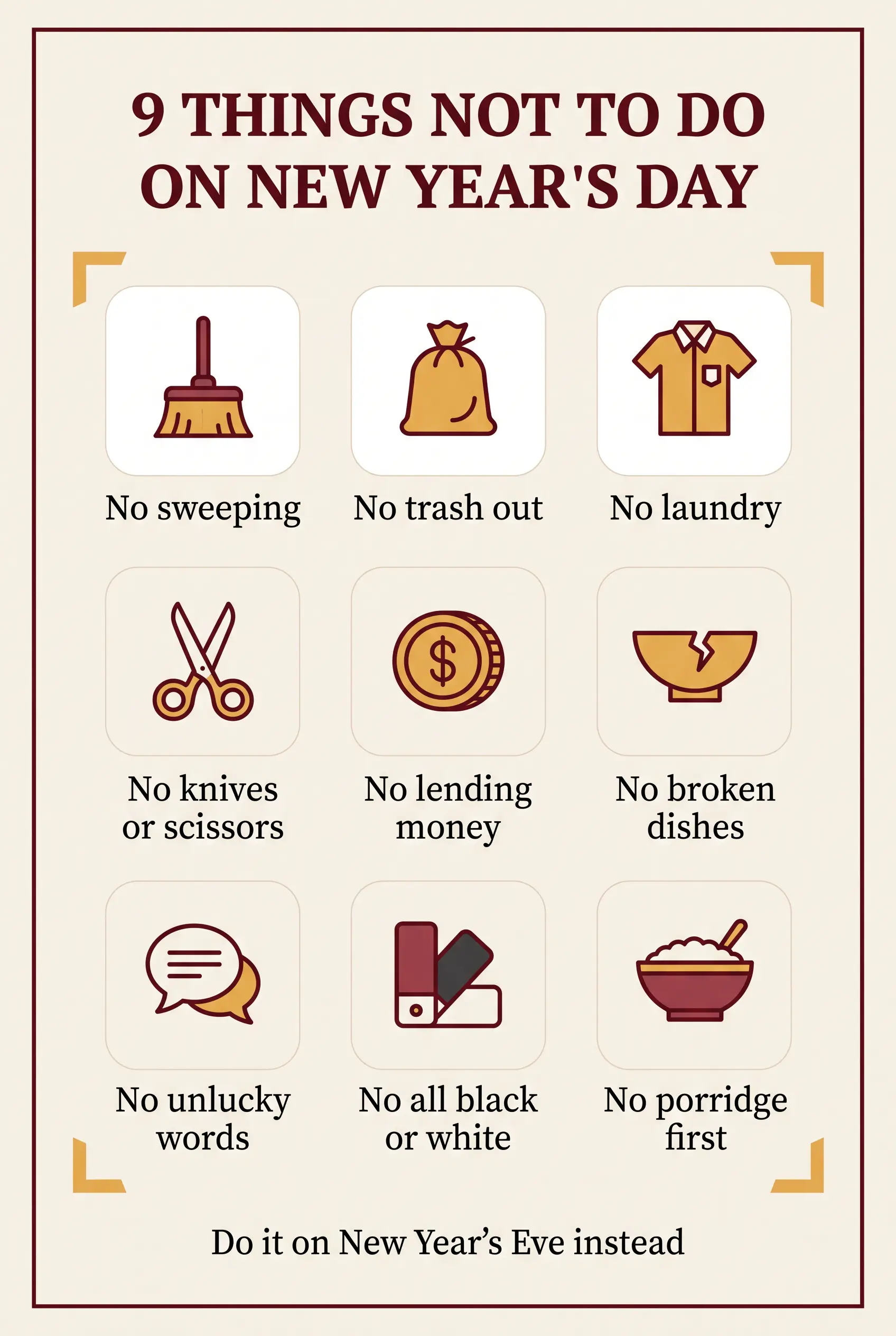
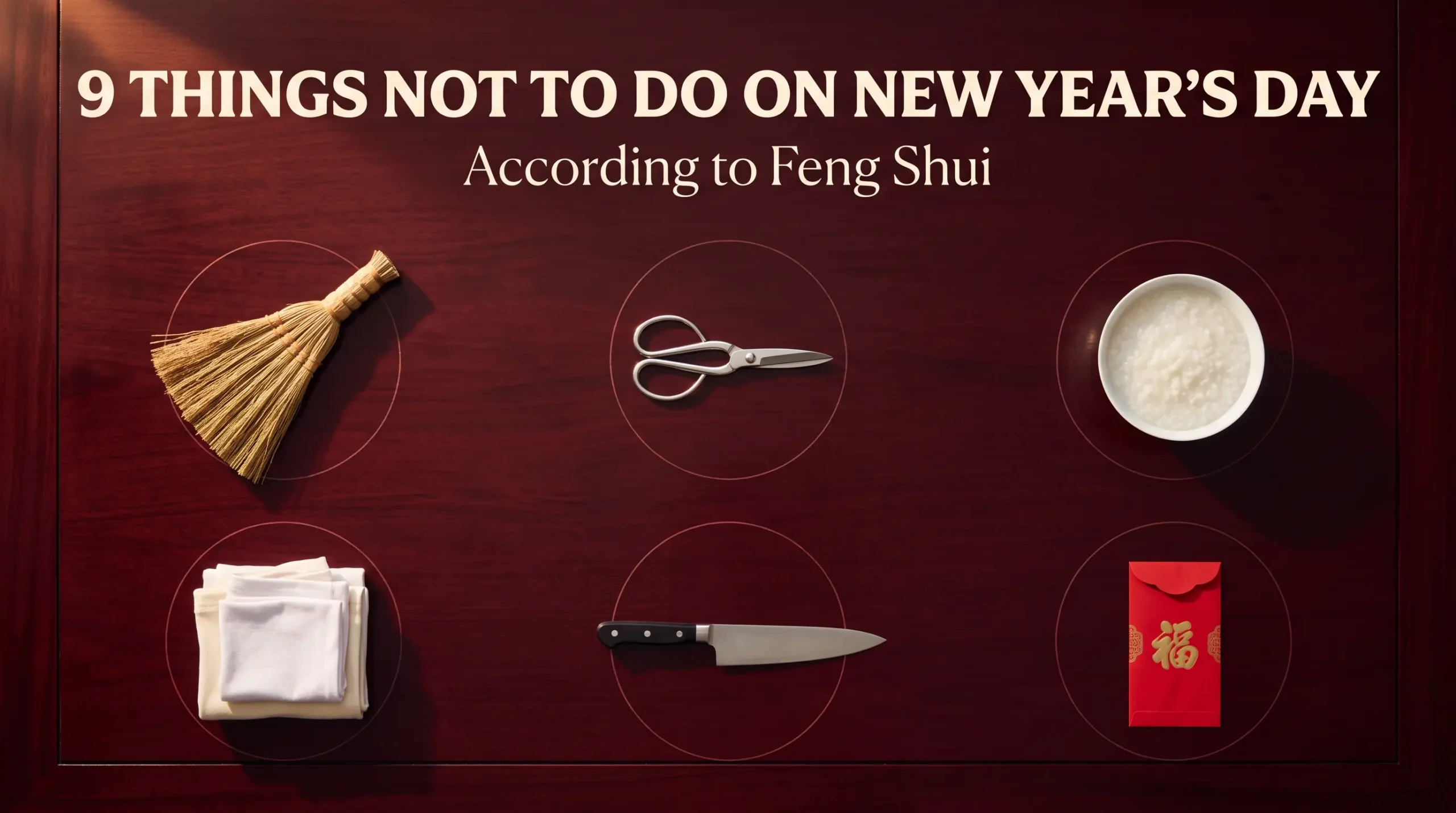
Traditionally, you should not sweep, take out the trash, do laundry, use knives or scissors, lend money, break dishes, speak unlucky words, wear all black or all white, or eat porridge on New Year’s Day, because each act is believed to send the year’s incoming good fortune away.
- Don’t sweep or mop: it is believed to brush good fortune out the door.
- Don’t take out the trash: carrying anything out is believed to carry wealth out.
- Don’t do laundry or wash your hair: the first two lunar days honor the Water God.
- Don’t use knives or scissors: cutting is believed to cut off opportunities.
- Don’t lend or borrow money: day-one money habits are believed to repeat all year.
- Don’t break dishes: breaking things is a bad omen, but a red-paper fix exists.
- Don’t speak unlucky words or argue: the first day is believed to set the year’s mood.
- Don’t wear all black or all white: both are traditional colors of mourning.
- Don’t eat porridge first: rice porridge (congee) is linked with a lean year.
Treat this as a one-day pause, not a year-long rulebook. Many families lift the rules after day one. Others wait until day three or day five, and some keep a few until the Lantern Festival on day 15.
Which “New Year’s Day” Do Feng Shui Rules Follow?
Traditionally, these taboos belong to the first day of the lunar year, which falls on 02/06/2027. Lunar New Year, also called Spring Festival, is the holiday that feng shui sources usually mean by “New Year’s Day.” Many American families also follow a few rules on January 1, so this guide covers both. The date table below lines up every start date.
Why the First Day Is Believed to Set the Tone
In Chinese folk belief, the first day previews the whole year. A nap on day one is believed to predict a lazy year, and tears are believed to predict a sad one. Because of this, people choose small actions on purpose and save chores for New Year’s Eve. The rules below are the habits that tradition says are worth a one-day pause.
Home and Cleaning Taboos: Keep Good Fortune Inside
Sweeping on New Year’s Day is believed to brush good fortune right out the door, so tradition says to finish every chore by New Year’s Eve. This section covers three chores: sweeping, trash, and laundry. Britannica notes that sweeping or cleaning on the first day is seen as inauspicious for exactly this reason.
1. Don’t Sweep or Mop the Floor
Leave the broom in the closet, because sweeping on day one is believed to sweep away the luck that just arrived. The broom is the symbol here. It carries wealth luck out with the dust. Most traditions lift the rule after day one, but some households wait until day three or day five.
When we compared sources, this was the biggest disagreement. They give different end dates for the sweeping ban. If you spill something, many families pick it up by hand or blot it, and they never sweep toward the door. Do the deep clean on 12/31. For January 1, save sweeping for January 2. For the lunar new year, wait until at least day two.
2. Don’t Take Out the Trash
Keep the trash inside until the day ends, because carrying anything out is believed to carry wealth out with it. Some families wait until day two, and others wait until day five. This is one place where American folklore and Chinese tradition agree. A KIRO 7 report on US New Year’s superstitions says nothing should leave the house on January 1. Empty every bin before the New Year’s Eve ball drop, and you are covered either way.
3. Don’t Do Laundry or Wash Your Hair
Skip the washer and the shampoo, because the first two days of the lunar year are traditionally the Water God’s birthday. Washing is believed to wash that celebration, and some luck, away. Southern US folklore reaches the same rule from a different direction. It warns that washing clothes on January 1 means “washing for the dead,” a saying tied to losing a loved one in the coming year. That sounds grim, so remember it is folklore, not a forecast.
Many families still shower on day one. They just move laundry and hair washing to New Year’s Eve.
Wealth Rules: Why Money and Sharp Objects Stay Put
Feng shui tradition treats day one as a no-cutting, no-lending, no-breaking day, because each act symbolizes severing or losing what the new year brings. These three rules protect prosperity, and each has an easy swap.
4. Don’t Use Knives or Scissors
Put knives and scissors out of sight, because cutting on day one is believed to cut off opportunities coming your way. Sharp tools are also linked with sharp words and quarrels. If you plan to cook on January 1, prep and chop everything on New Year’s Eve. Some families do exactly that, and it makes day one more relaxed.
5. Don’t Lend or Borrow Money
Settle your debts before New Year’s Eve, and avoid lending or borrowing on day one, because tradition says money habits on day one repeat all year. Borrowing is believed to start a year of debt. Lending is believed to start a year of giving wealth away. Red envelopes are the exception. Giving one is a blessing, not a loan.
Some Tibetan households follow a similar idea on the first day of Tibetan New Year. They avoid spending money, believing that spending then means debt all year. Prefer a symbol of wealth luck, such as Chinese coins, to a money move? Read about feng shui lucky coins on red string and where to place them.
6. Don’t Break Dishes (and What to Do If You Do)
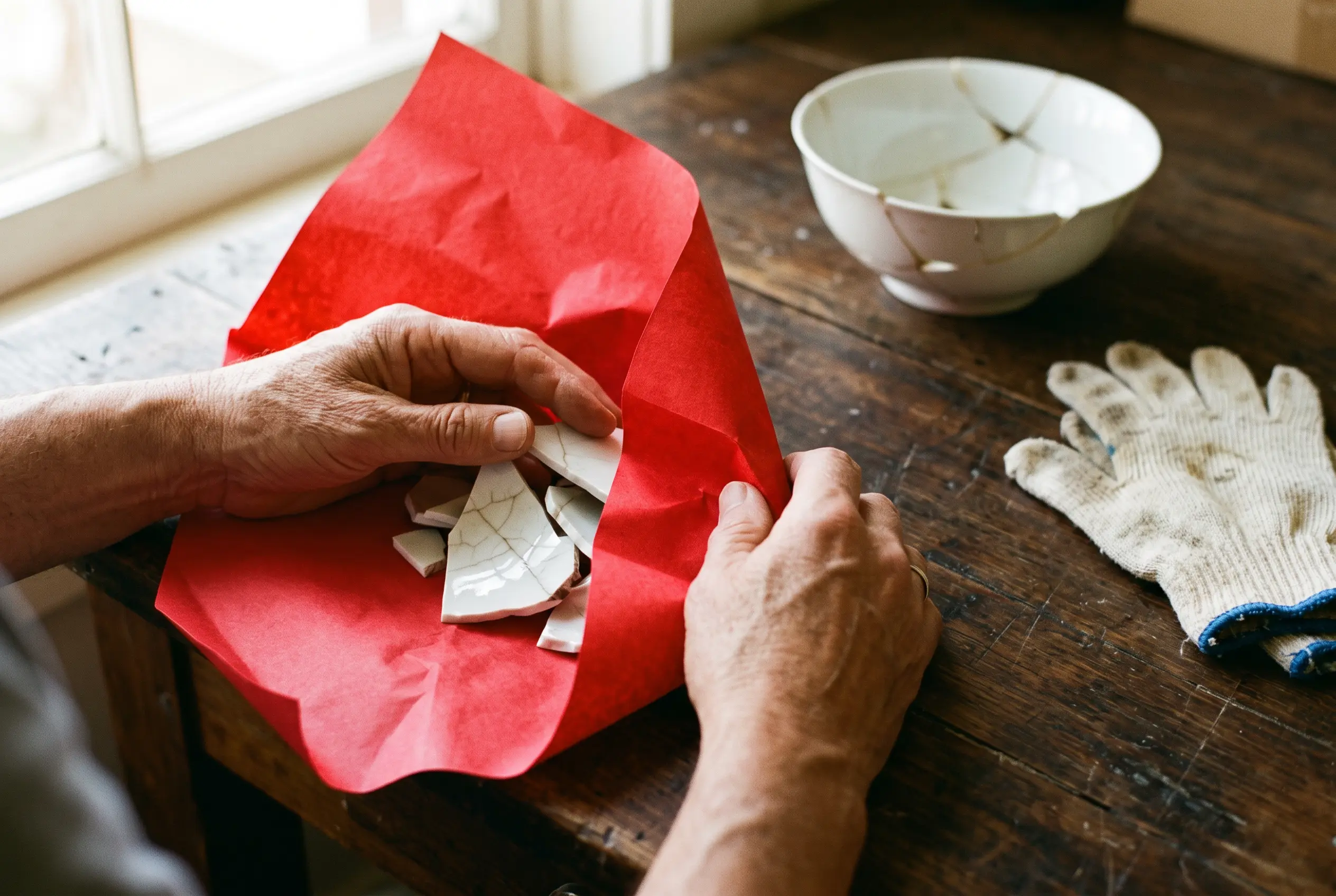
Breaking glass or porcelain is believed to shatter luck, but tradition offers a fix: wrap the pieces in red paper and say “sui sui ping an,” which means peace year after year. The fix works through a homophone, a word that sounds like another word. In Mandarin, “sui” can mean both “shatter” and “year,” so the phrase turns a bad omen into a blessing.
Many families keep the wrapped pieces until day five before throwing them away. Wear gloves when you pick up the shards, because a cut finger is a worse start than a broken plate.
A symbol instead of a money move. Many people wear a wealth symbol on the left wrist, the side feng shui often links with receiving. Potala Store’s Citrine Pixiu Bracelet for wealth and prosperity pairs citrine, a gemstone traditionally linked with abundance, with the pixiu, a mythical creature traditionally linked with wealth. It is $33.95 at the time of writing, down from $58.95. It lets you set a “keep my wealth” intention without touching money on day one.
Speech, Color, and Food: Protecting the Year’s Mood
On day one, tradition asks you to guard three things, your words, your wardrobe, and your breakfast, because each is believed to set the year’s emotional tone. These rules need no special tools. They only need a little planning the night before.
7. Don’t Speak Unlucky Words or Start Arguments
Avoid words about death, illness, or loss on day one, because a year that begins with them is believed to be filled with them. Arguments and crying are on the same list. If a tense topic comes up, say “let’s talk tomorrow.” Many families also swap blunt words for gentler ones, such as “under the weather” instead of “sick.” Keep the mood light, and save serious talks for day two.
8. Don’t Wear All Black or All White
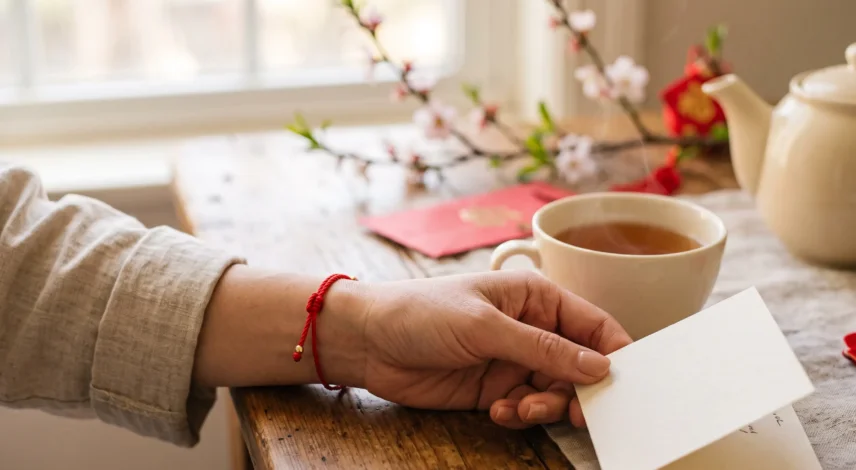
Skip head-to-toe black or white, the traditional colors of mourning, and add red or another bright color instead. Red is considered auspicious, while all black or all white is considered inauspicious on a day meant for a fresh start. You do not need a full red outfit. A red scarf, red socks, or a red string bracelet is enough for many families.
9. Don’t Eat Porridge for Breakfast
Rice porridge, also called congee, is traditionally the meal of a poor household, so eating it first on day one is believed to invite a lean year. Choose dumplings, noodles, or sticky rice cake instead. Many families pick foods whose names or shapes suggest wealth and long life. Plain porridge can wait until day two.
January 1 vs. Lunar New Year vs. Losar: Which Rules Apply When?
In 2027 you get four new year starting points: 01/01/2027, Li Chun on 02/04/2027, Lunar New Year on 02/06/2027, and Tibetan Losar on 02/07/2027, and most feng shui taboos belong to 02/06/2027. For the full 15-day festival calendar, see our guide to Chinese New Year 2027 dates, traditions, and lucky symbols.
| Date (2027) | New year | Do feng shui taboos apply? | Tip |
|---|---|---|---|
| 01/01/2027 (Friday) | Gregorian New Year’s Day | Optional. Overlaps with US folk customs. | Skip laundry and trash if you like the tradition. |
| 02/04/2027 (Thursday) | Li Chun, the start of spring and the feng shui solar year | The year’s energy shifts. Taboos are not tied to this date. | Place your home cures and decor by 02/03/2027. |
| 02/06/2027 (Saturday) | Lunar New Year (Spring Festival) | Yes. This is the core day. | Follow all nine rules. |
| 02/07/2027 (Sunday) | Losar (Tibetan New Year) | Related customs, not identical. | Keep it a family day, speak kindly, and hold off on cleaning. |
Feng shui schools differ on when the year begins. Some practitioners use Li Chun, while others use Lunar New Year. Per the Hong Kong Observatory, Li Chun arrives at 01:46 UTC on 02/04/2027. That is 8:46 p.m. Eastern (5:46 p.m. Pacific) on 02/03/2027. Losar can fall a day earlier or later than Lunar New Year depending on the Tibetan calendar, so check with your local center.
Do American New Year’s Superstitions Overlap With Feng Shui?
Yes, American folk customs and feng shui overlap on laundry and on keeping everything inside the house. KIRO 7 reports that some Americans avoid washing clothes on January 1 and avoid carrying anything out of the home. Southern tables add black-eyed peas and greens for luck. Some families also care who walks through the door first, a custom called first-footing.
The main difference is timing. American rules attach to January 1, while feng shui rules attach to the lunar year.
How Is the First Day of Losar Different?
The first day of Losar, called Lama Losar in Lhasa, is traditionally a family day, and the cleaning happens before it. The Central Tibetan Administration notes that monasteries begin Losar on the 29th day of the 12th month, and that the last day of the old year is for cleaning and preparing.
One surprise from our research: Tibetan and Chinese customs about cleaning before the new year line up almost exactly. Some Tibetan households also hold off on cleaning for the first days to preserve luck, and they avoid unlucky words and black or white clothing. Brandeis University’s guide notes that Losar traditions are unique to Tibet and predate Chinese influence, so the overlap is real but the traditions are distinct.
Families greet one another with “Tashi Delek,” a phrase meaning good luck and happiness, and many share guthuk, a dumpling soup. For exact holy days, check our 2027 Tibetan Buddhist calendar with Losar on 02/07/2027.
What to Do Instead: A Gentle Reset Plan for Day One
The easiest way to honor every taboo is to front-load your chores: clean, do laundry, wash your hair, and settle debts by New Year’s Eve, then spend day one resting, greeting, and celebrating.
Your New Year’s Eve Checklist
By 11:59 p.m. on New Year’s Eve, aim to have the house swept, the laundry folded, the trash out, and any debts paid.
- Sweep and mop every room, then put the broom away.
- Take out all trash and empty the recycling bin.
- Finish laundry and wash your hair.
- Prep and chop tomorrow’s food, then put the knives away.
- Settle what you owe and lay out something red to wear.
On day one, wear red or another bright color, greet family with good wishes, and set one clear intention. On Lunar New Year, many people say “Gong Xi Fa Cai.” On Losar, say “Tashi Delek.”
Already Swept or Broke Something? Here’s the Traditional Fix
Don’t panic. Tradition has a remedy for most slips, and intention matters more than a perfect record. If you broke something, wrap the pieces in red paper and say “sui sui ping an.” If you swept, some families sweep the dust inward and keep it inside until day five. If you did laundry, simply move on. These are cultural customs, not guarantees.
On Losar, you can tie on a fresh red string and set one clear intention for the year. That small act turns a list of “don’ts” into a fresh start you chose.
Frequently Asked Questions About New Year’s Day Taboos
In feng shui tradition, yes. Cleaning on day one is believed to sweep away incoming good fortune. Do your deep clean by New Year’s Eve, then save sweeping for January 2, or for the second day of the lunar year or later.
Many families shower but skip washing their hair, since the first two lunar days honor the Water God. If that feels too strict, wash your hair on New Year’s Eve to start the year fresh.
Chinese folk belief holds that napping on day one predicts a lazy year. Many lists also say to wake up on your own rather than be woken. Plan an early, unhurried start, then check the 2027 date table to see which day matters most for you.
Wear something red or new, greet family with good wishes, and set one clear intention for the year. Many people mark the day by putting on a fresh Tibetan red string bracelet as a daily reminder of that intention.
In summary, the key takeaway is simple. Feng shui New Year’s Day taboos ask you to keep good fortune in, so do your cleaning, washing, and cutting on New Year’s Eve. Follow as many rules as feel meaningful to you, and treat the rest as culture to enjoy.
Start the year with a symbol, not a worry. Our Tibetan red string bracelet is listed as made in Tibet by local artisans and costs $38.95 at the time of writing. It is light enough to wear every day with no ritual setup, and it gives your New Year intention a visible reminder.
Browse the ATTRACT LUCK collection of red string bracelets and citrine pieces at Potala Store and pick one for yourself or a friend.Shop the ATTRACT LUCK collection
📚 References
- Chinese New Year customs and taboos: Overview of sweeping, breaking objects, and other first-day beliefs. Encyclopaedia Britannica
- Taboos during Chinese New Year: Water God’s birthday, napping, and sharp objects, explained for general readers. Confucius Institute for Scotland
- A brief introduction to Losar, Tibetan New Year: Losar preparations, the 29th day of the 12th month, and Lama Losar. Central Tibetan Administration
- New Year’s Day superstitions in the US: Laundry, items leaving the home, and Southern food customs. KIRO 7 News (Cox Media Group)