
The Best Feng Shui Plants for Wealth: 7 Money Plants That Actually Belong in Your Home
 by Yang Tso
0 comments
by Yang Tso
0 comments
The best feng shui plants for wealth are the money tree, jade plant, and lucky bamboo — but which one you buy matters far less than where you put it. Most guides hand you a list of 15 plants and stop there. That’s the part that costs people results: a money plant parked in a dark hallway does nothing for your prosperity corner.
At Potala Store, we source wealth symbols directly from Tibetan artisan workshops and partner monasteries, including Sera Jhe and Kopan. We’ve helped thousands of people set up their southeast wealth corner, and the same mistake comes up again and again — people buy the plant, skip the placement, then wonder why nothing shifts.
So here’s the short version. Seven plants carry the strongest wealth associations in feng shui: money tree, jade plant, lucky bamboo, Chinese money plant, golden pothos, rubber plant, and areca palm. Each one strengthens the Wood element, which governs the southeast sector of your home — the zone traditionally tied to money and abundance. Below you’ll get the plants, the exact placement, an honest money tree vs. jade comparison, and how to layer crystals on top.
⚠️ One honest note up front: No plant guarantees a bigger bank balance. Feng shui is a traditional belief system, not proven science and not financial advice. What plants reliably do is make a space feel tended, intentional, and alive — and that’s worth something on its own.
Table of Contents
What Are the Best Feng Shui Plants for Wealth?
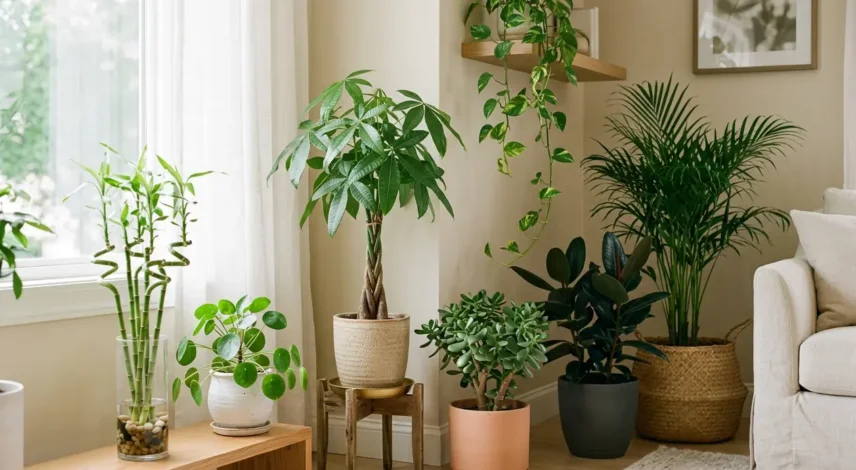
The best feng shui plants for wealth are the money tree (Pachira aquatica), jade plant, lucky bamboo, Chinese money plant, golden pothos, rubber plant, and areca palm. Each is believed to activate the Wood element in your home’s southeast wealth corner, symbolizing steady financial growth rather than sudden windfalls.
- Money Tree (Pachira aquatica): Carries five leaves per stem — read as five coins, and as the five feng shui elements. The braided trunk is said to trap fortune in its twists. Water every 1–2 weeks.
- Jade Plant (Crassula ovata): The oldest pedigree of the group. Its thick, coin-shaped leaves symbolize wealth accumulating rather than passing through. Water every 2–3 weeks; it stores its own reserves.
- Lucky Bamboo (Dracaena sanderiana): The only plant here that activates Wood and Water at once, since it grows in a vase of water. Water feeds Wood — that’s the generative cycle in one object.
- Chinese Money Plant (Pilea peperomioides): Round, flat leaves on thin stems, like coins on stalks. It produces offshoots you can pot and give away, which practitioners read as wealth that multiplies when shared.
- Golden Pothos (Epipremnum aureum): Fast, trailing vines symbolize income that keeps extending. The most forgiving plant on this list — it survives low light and irregular watering.
- Rubber Plant (Ficus elastica): Broad, rounded, glossy leaves. In feng shui, round leaves invite; pointed leaves cut. Its upward growth reads as expansion.
- Areca Palm: Tall, feathery fronds that lift energy near an entrance. Best where you want movement rather than accumulation.
Notice the pattern: every plant on this list has rounded or coin-shaped leaves and grows upward or outward. That’s not a coincidence. Feng shui reads spiky, sharp foliage as Sha Qi — cutting energy — which is why cacti and snake plants get excluded from most wealth corner recommendations even though they’re excellent houseplants elsewhere.
The other shared trait matters more than any of them: the plant has to be alive and healthy. A struggling money plant is worse than no plant.
Where Should You Place a Money Plant for Prosperity?
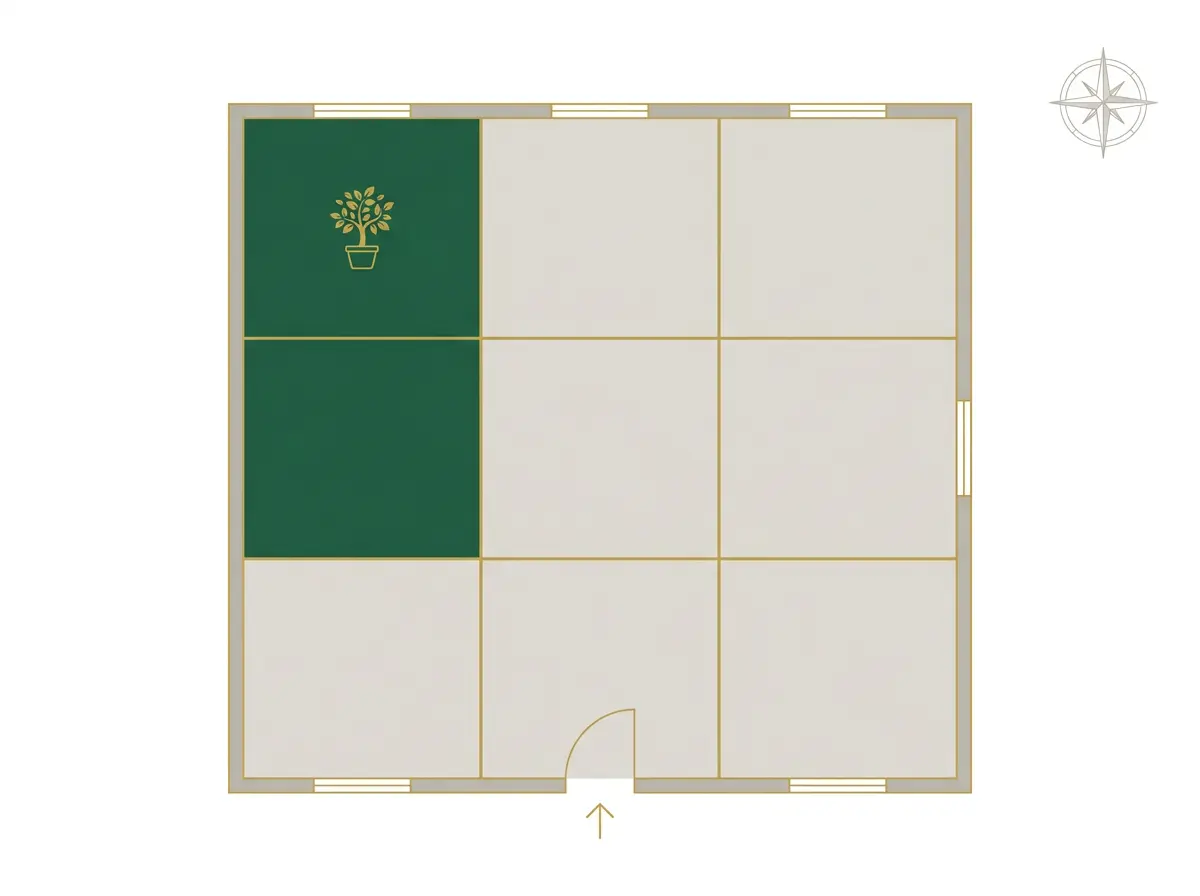
Place your money plant in the southeast corner of your home or room — the Xun area (巽卦) of the Bagua map, at 112.5°–157.5° by compass. This is the sector traditionally governed by Wood and associated with wealth, which is exactly why a money tree belongs in the southeast wealth corner rather than wherever there happens to be a free shelf.
There are two accepted ways to find it, and they don’t always agree:
| Method | How to Find It | Best For |
|---|---|---|
| Compass (Classical) | Use a compass app. Southeast = 112.5°–157.5° from north. | Houses with a clear, regular footprint |
| Bagua / BTB Method | Stand at your front door facing in. The far back-left corner is your money zone. | Apartments, single rooms, rentals |
Pick one method and apply it consistently. Switching between them mid-setup is how people end up with plants in three different corners and confidence in none of them.
A fair disclosure: not every source agrees. Most practitioners and the classical Bagua place wealth in the southeast, but some Western feng shui writers assign the money corner to the southwest instead. We follow the southeast — it aligns with the Xun trigram and with the Wood element that these plants supply. If you want the full breakdown of stars and sectors, here’s how to activate your southeast wealth corner for the current cycle.
Three placement rules worth following:
- Declutter first. Clearing the corner does more than any object you add to it. Chi stagnates around clutter.
- Give it light. The southeast corner of a windowless room is still the southeast corner — but the plant will die there, which defeats the purpose.
- Skip the bathroom. If your wealth corner lands in a bathroom, most practitioners advise keeping the door shut and applying the method to a single room instead.
Money Tree vs. Jade Plant: Which Draws More Fortune?
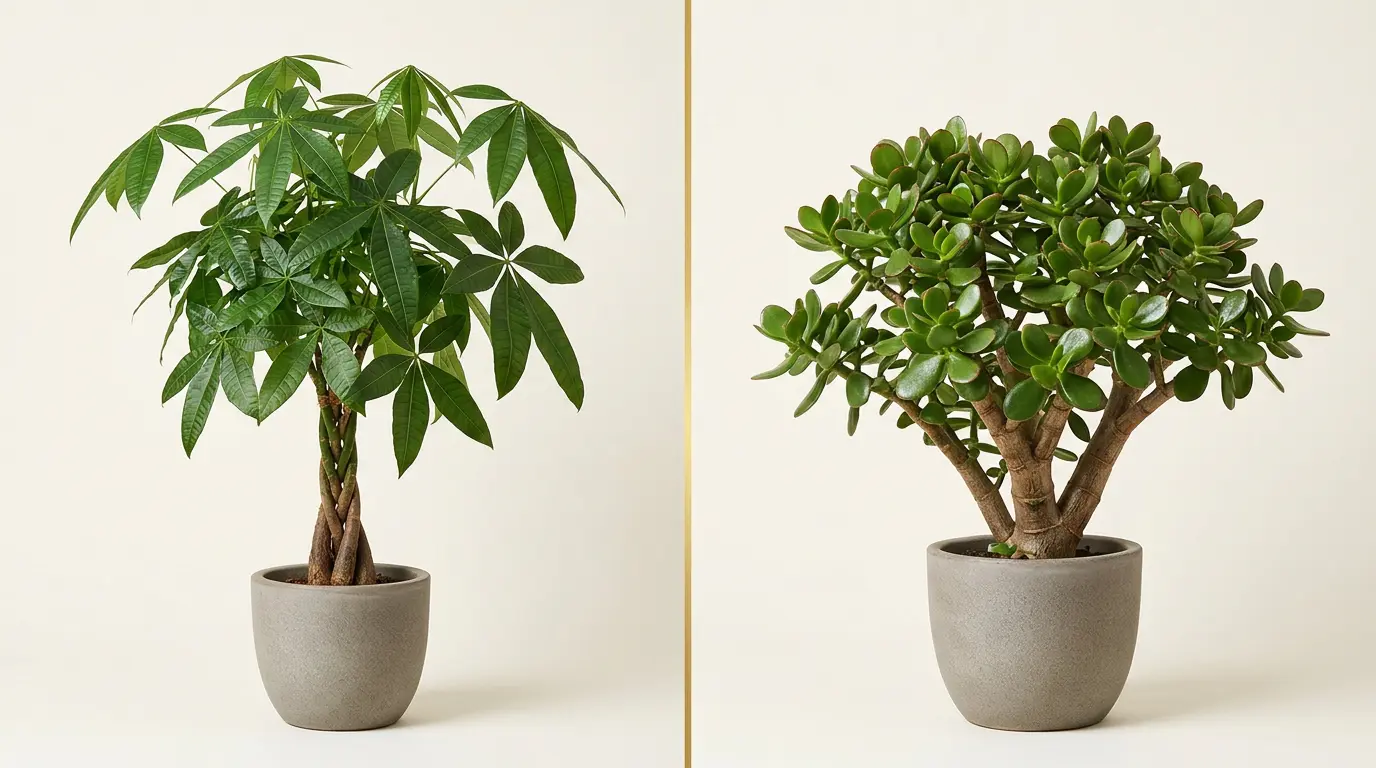
Both are called “money plants,” but they differ where it counts: the jade plant has the older feng shui pedigree, while the money tree is pet-safe and more forgiving for beginners.
| Feature | Money Tree (Pachira aquatica) | Jade Plant (Crassula ovata) |
|---|---|---|
| Symbolism | Five leaves = five elements; braided trunk traps luck | Coin-shaped leaves = wealth accumulating |
| Origin as a “money plant” | Created in the 1980s in Taiwan | Centuries of traditional use |
| Watering | Every 1–2 weeks | Every 2–3 weeks |
| Pet safety | Non-toxic to cats and dogs | Toxic to cats, dogs, and horses (ASPCA) |
| Best for | Beginners, pet owners, gifting | Traditionalists, dry rooms, long-term growth |
Here’s the detail almost no wealth-plant guide mentions, and it surprised us when we first dug into it. The braided money tree isn’t ancient at all. According to the New York Botanical Garden, the braided Pachira aquatica sold everywhere today is rumored to have been created in the 1980s by a truck driver in Taiwan who cultivated it as a bonsai. The plant is native to the wetlands of Central and South America and grows up to 60 feet in the wild. Its five-leaf clusters became associated with coins and with the lucky number 5.
Does that make it fake? We don’t think so — a tradition that’s forty years old is still a tradition, and the symbolism is coherent. But it’s worth knowing that the jade plant is the one with real historical depth, and we’d rather tell you that than let you assume otherwise.
One practical caveat that matters more than the history: the jade plant is toxic to cats, dogs, and horses per the ASPCA. If you have pets who chew, choose the money tree. A rare seven-leaf money tree stem, incidentally, is considered a sign of immense good fortune — worth checking your plant for.
How Many Lucky Bamboo Stalks Attract Wealth?
For wealth, choose an arrangement with eight stalks. Eight is the number most strongly tied to prosperity and abundance in Chinese tradition, which is why lucky bamboo sold for wealth intentions typically comes in eight stalks rather than three or nine.
| Stalks | Traditional Meaning |
|---|---|
| 3 stalks | Happiness, longevity, growth |
| 5 stalks | Health and the five elements |
| 8 stalks | Wealth and abundance — the wealth-corner choice |
| 9 stalks | Good fortune |
| 4 stalks | Avoid — “four” sounds like “death” in Chinese |
The eight-stalk count is the one we’d point you toward for a money corner, and it’s the count we use in our own guidance. If you’re buying lucky bamboo as a gift, never send four stalks. That’s not superstition-splitting — for anyone who knows the tradition, four reads roughly the way a sympathy card would at a housewarming.
Lucky bamboo earns its place in the wealth corner for a structural reason, not just a numerical one. Sitting in a vase of water, Dracaena sanderiana activates Wood and Water simultaneously. Water nourishes Wood in the five-element generative cycle, so a single vase does what a plant plus a fountain would otherwise take two objects to accomplish. Change the water every 7–10 days and keep it out of direct sun.
Pairing Wealth Plants with Crystals to Amplify Abundance
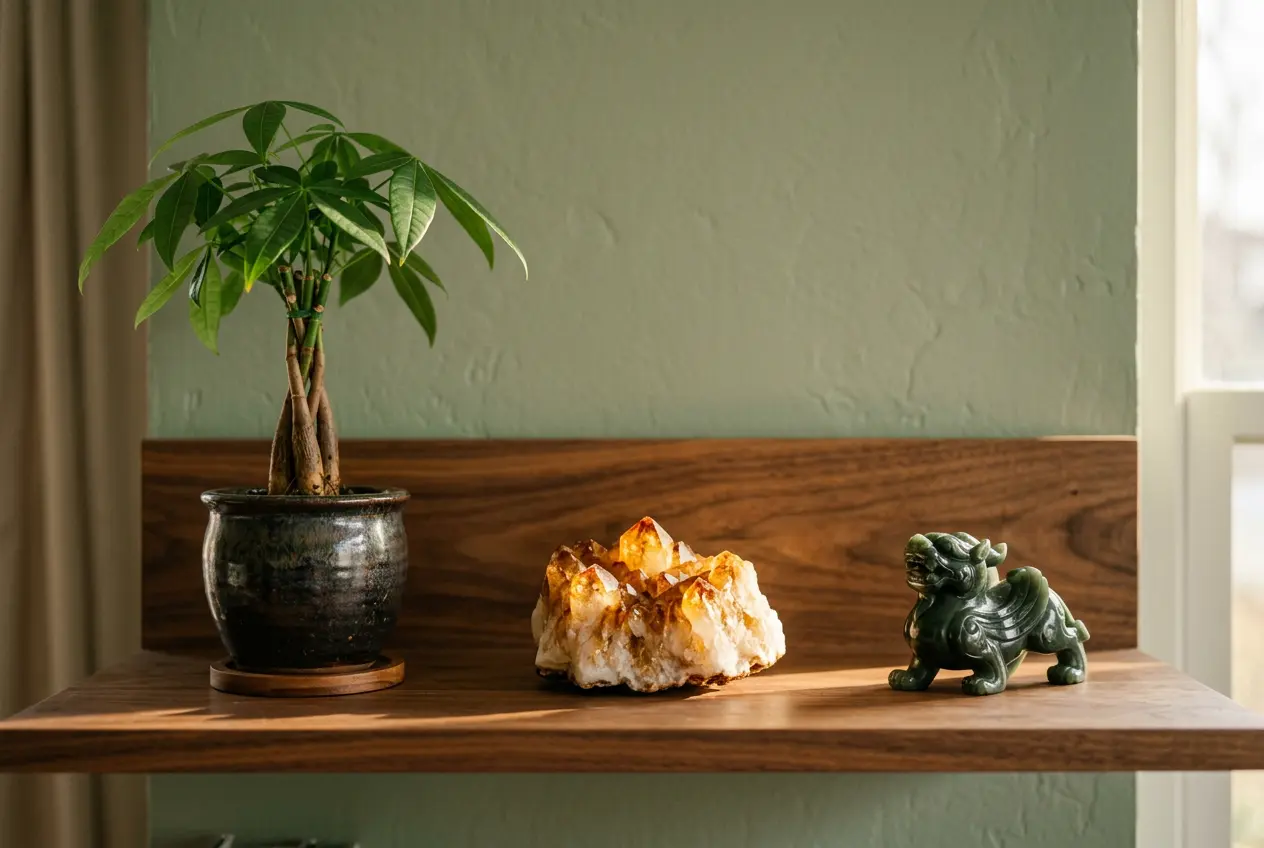
A living plant supplies the Wood element — but most practitioners layer a second material on top of it. The traditional setup isn’t a jungle of lucky objects. It’s three intentional items: one plant, one crystal, one symbol.
Citrine is the usual partner. Known as the Merchant’s Stone, it’s been tucked into cash boxes for over two thousand years and is one of the few crystals practitioners say converts rather than absorbs negative energy — meaning it doesn’t need the regular cleansing that obsidian or black tourmaline do. Set beside a jade plant or money tree, it pairs Earth energy with Wood.
This is also our honest workaround for a real problem. Plenty of people want a wealth corner but genuinely cannot keep a plant alive, or have a southeast corner with no window. We’ve watched customers buy a money tree three times and lose it three times. A crystal wealth tree solves that: it carries the same upward, branching form and the same coin symbolism, and it doesn’t need light or water. It’s not a substitute for a thriving plant if you can manage one — but a dead plant in the wealth corner is the worst outcome of all, and a crystal tree beats that every time.
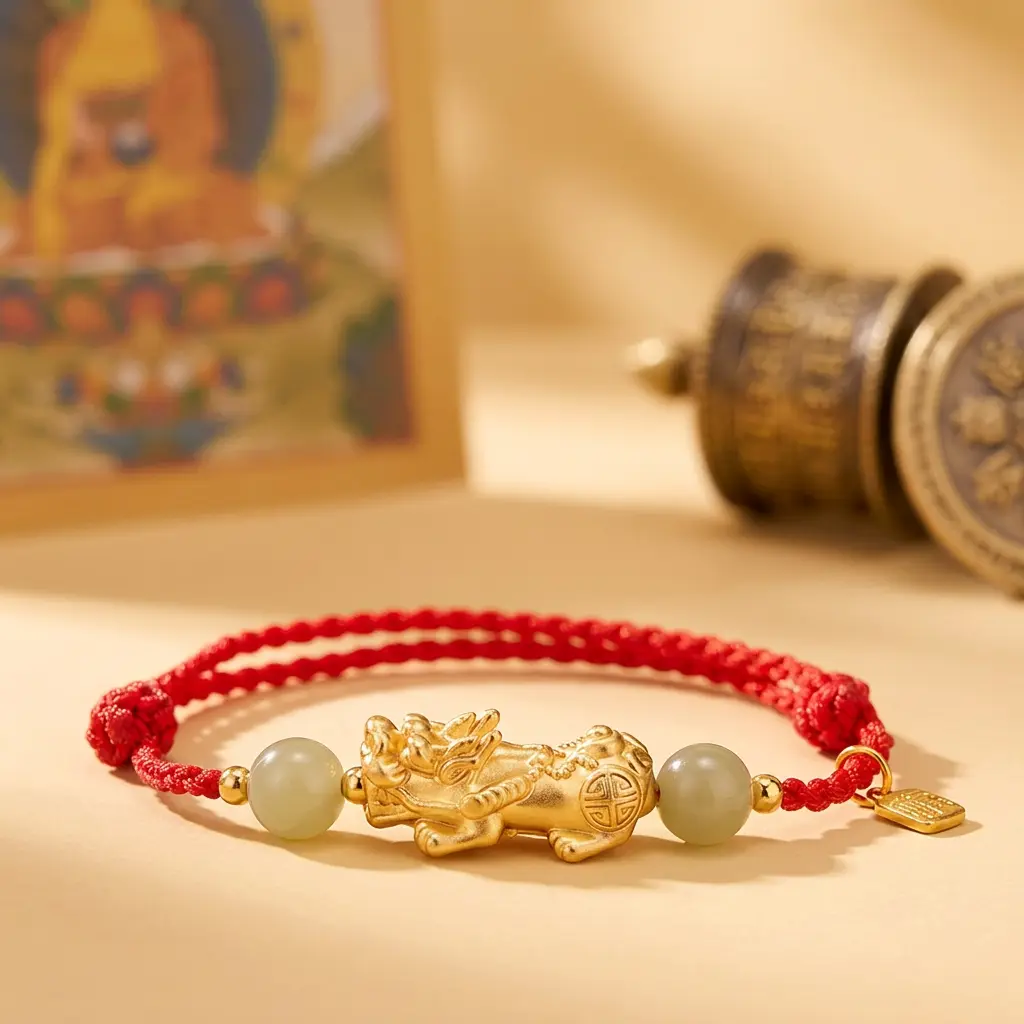
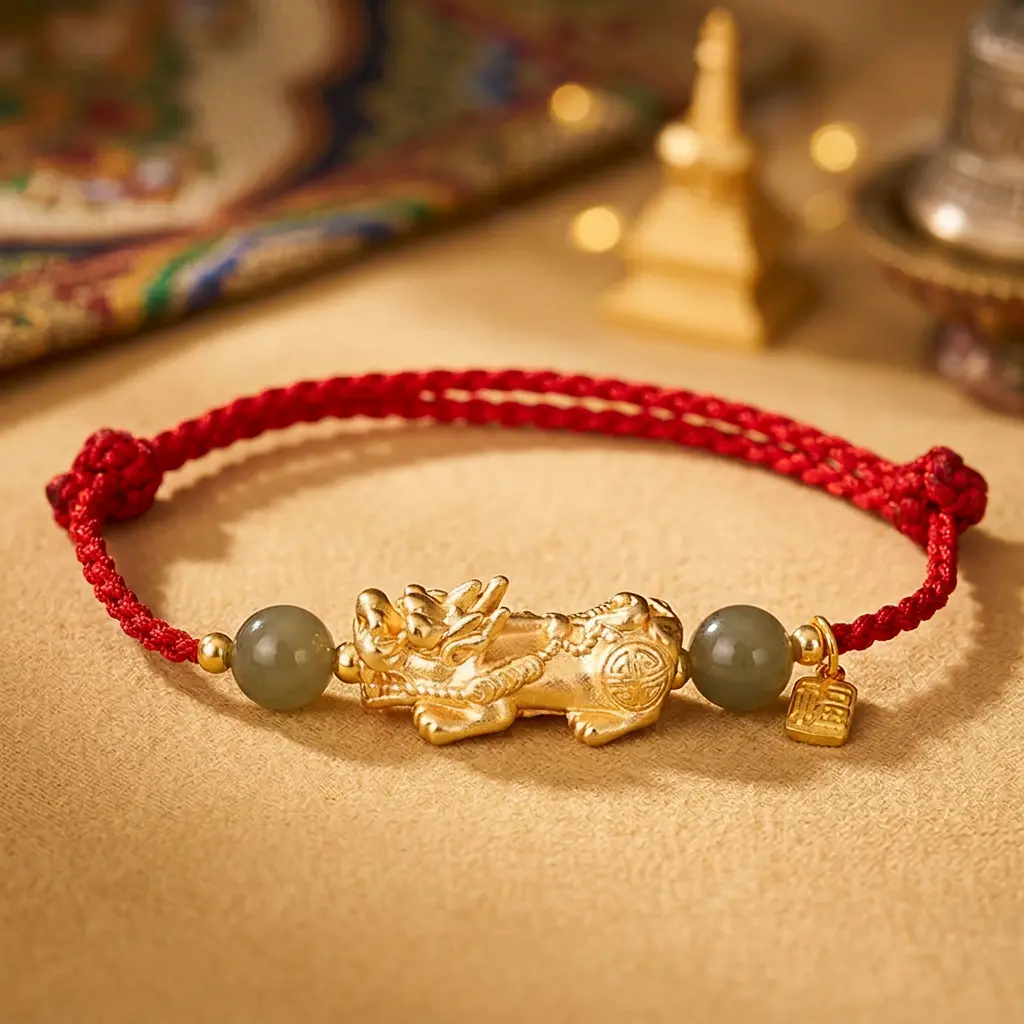
💡 What we’d actually put in the corner: One healthy plant (money tree or jade), one monk-blessed citrine wealth crystal, and one symbol — Pixiu, a money frog, or nine I-Ching coins tied with red ribbon. Each Potala Store crystal is prepared through a three-day rab gnas puja consecration with monks at Sera Jhe Monastery, a ceremony standard retail crystals don’t carry. For the complete list, see our guide on what to place in your money corner.
The key takeaway: place one to three items with intention. Crowding the corner with ten lucky objects creates confused, cluttered energy — the exact thing feng shui asks you to clear.
Care Tips to Keep Your Feng Shui Wealth Plants Thriving
A thriving plant is what actually powers good feng shui — so give your wealth plants bright, indirect light, water only when the topsoil dries, and remove dead leaves promptly.
- Light: Bright, indirect. Direct afternoon sun scorches money tree and rubber plant leaves.
- Temperature: 65–85°F. Keep plants away from heating vents and drafty winter windows.
- Water: Money tree every 1–2 weeks; jade every 2–3 weeks. Overwatering kills more money trees than neglect ever has.
- Dead leaves: Remove them the week you see them. In feng shui, withering foliage symbolizes declining finances — and practically, it’s the earliest signal something’s wrong.
- Reset: Refresh the corner before Lunar New Year — repot, dust the leaves, clear anything that’s accumulated.
There’s a side benefit worth naming honestly. NASA’s 1989 study on interior landscape plants found that certain common houseplants can remove volatile organic compounds like benzene and formaldehyde from air — in sealed test chambers. That research is frequently overstated online; a few pots won’t purify a whole house. But it’s a real, measured reason to keep greenery around, independent of any wealth belief.
The most common mistake we see isn’t picking the wrong plant. It’s treating the plant as a charm instead of a living thing — buying it, placing it, and never touching it again. The tending is the practice. A money plant you check on weekly does more for your relationship with your finances than any species on this list.
Complete Your Wealth Corner
Pair your feng shui plants for wealth with authentic Tibetan prosperity symbols — citrine, Pixiu, and wealth crystals, each blessed by monks at our partner monasteries and shipped worldwide.Shop PotalaStore’s Attract Wealth Collection →
Frequently Asked Questions
The money tree (Pachira aquatica) is the most popular choice, thanks to its five-leaf clusters symbolizing the five elements and its braided trunk. The jade plant runs a close second and has the longer traditional pedigree, with coin-shaped leaves symbolizing accumulating wealth.
It’s the southeast sector of your home or room — the Xun area of the Bagua map, at 112.5°–157.5° by compass. Alternatively, stand at your front door facing in and look to the far back-left corner. Choose one method and stick with it.
The jade plant is toxic to cats, dogs, and horses according to the ASPCA, while the money tree (Pachira aquatica) is considered non-toxic. If you have pets who chew on plants, choose the money tree — or browse pet-safe wealth symbols like citrine and Pixiu instead. Contact the ASPCA Animal Poison Control Center at (888) 426-4435 if you suspect your pet has eaten a toxic plant.
Choose eight stalks for wealth and abundance. Three stalks represent happiness, five represent health and the five elements, and nine represent good fortune. Avoid four stalks, which are traditionally considered unlucky.
The Bottom Line
The best feng shui plants for wealth aren’t complicated: money tree, jade plant, and lucky bamboo cover the vast majority of cases. Put one in your southeast wealth corner, keep it genuinely healthy, add a citrine crystal if you want a second layer, and clear the clutter around it. That’s the whole practice. The plants are a prompt to pay attention — and paying attention to your money corner tends to mean paying attention to your money.
📚 References
- Money Tree Origin & Symbolism: Botanical background on Pachira aquatica, its 1980s Taiwanese origin as a braided houseplant, and the five-leaf coin association. New York Botanical Garden
- Jade Plant Pet Toxicity: Official toxicity listing for Crassula ovata for cats, dogs, and horses. ASPCA Animal Poison Control
- Houseplants & Indoor Air Quality: Wolverton et al., Interior Landscape Plants for Indoor Air Pollution Abatement (Final Report, September 1989) — the original NASA study on VOC removal by common houseplants. NASA Technical Reports Server
- Feng Shui Fundamentals: Overview of feng shui’s origins, the flow of qi, yin-yang, and the five elements — including noted criticism regarding empirical evidence. Encyclopaedia Britannica