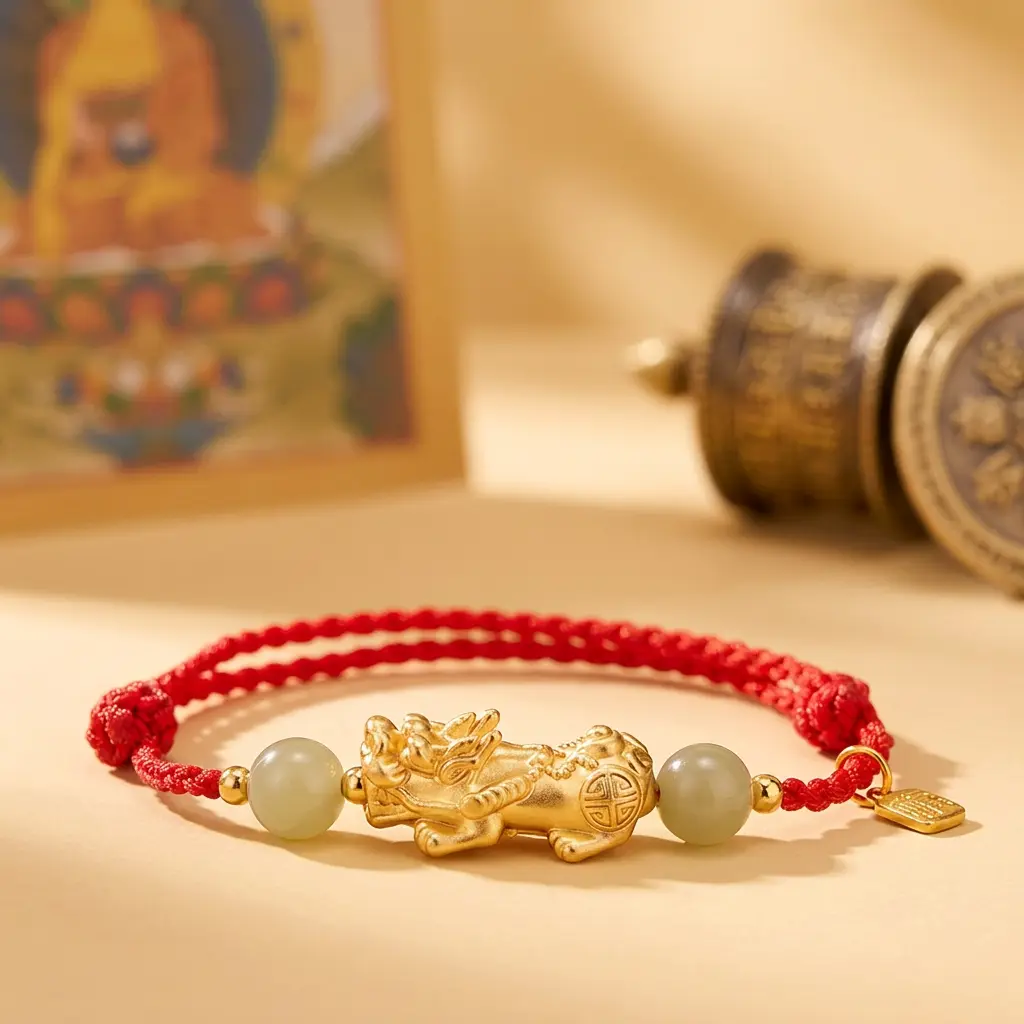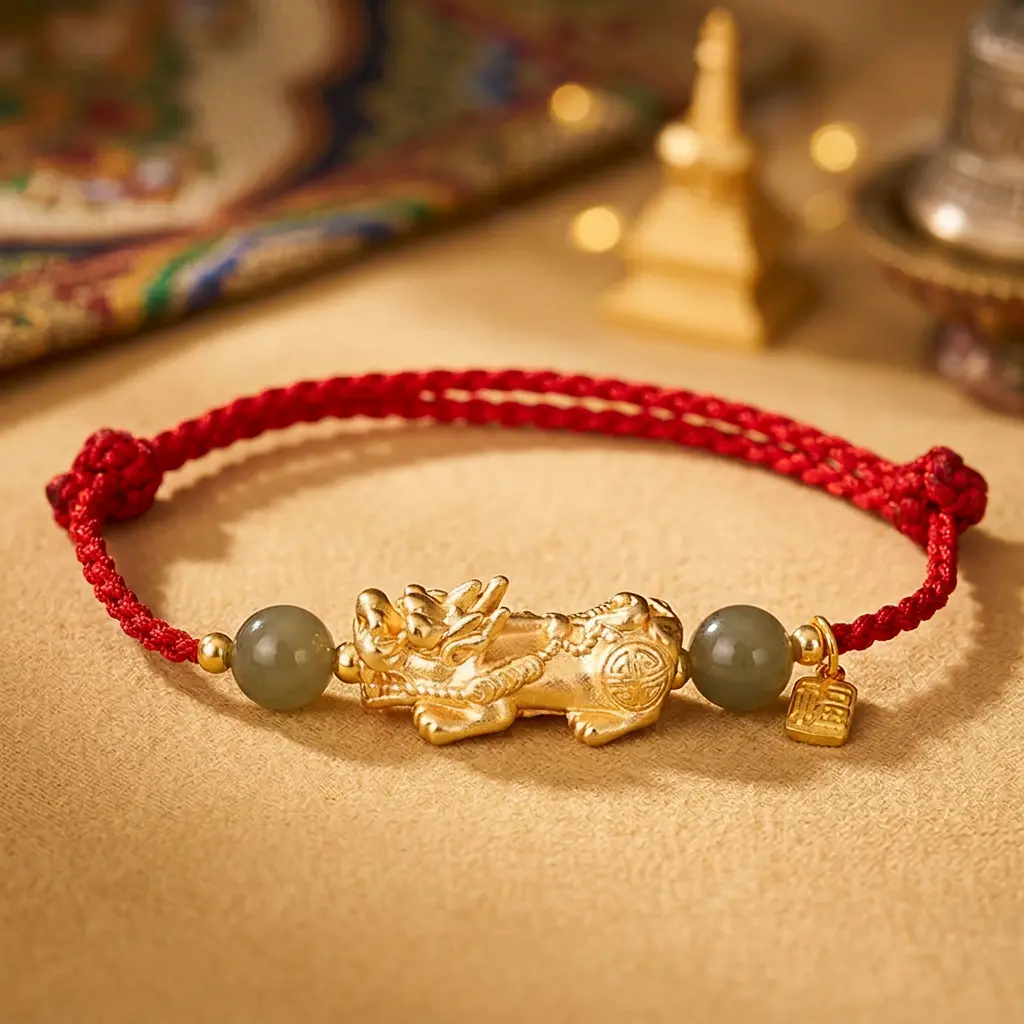


If you just got a feng shui bracelet and you’re worried about wearing it wrong, here’s the short answer first: wear it on your left wrist to draw in wealth, point any Pixiu charm outward toward your little finger, and cleanse it once before your first wear. That’s 90% of what matters. This guide covers the rest — what these bracelets mean, the stones behind them, how to activate the energy, and how to spot a fake.
A feng shui bracelet is a gemstone bracelet built around Chinese energy principles, meant to align your personal Qi (life-force energy) with a specific goal like wealth, protection, or health. At Potala Store, we source and bless our pieces through direct partnerships with Himalayan monasteries, including Sera Jhe and Kopan. That relationship has shown us how practitioners actually use these bracelets — which is often different from what you’ll read on a typical crystal website. We’ll share those details as we go.
⚠ A quick, honest note: The wealth, protection, and healing properties described here come from traditional Chinese and Tibetan belief, not scientific evidence. Think of a feng shui bracelet as a daily anchor for your intentions — a helpful reminder, not a guaranteed outcome. It’s not a substitute for professional medical, mental-health, or financial advice.
Table of Contents
What Is a Feng Shui Bracelet, and What Does It Actually Do?
A feng shui bracelet is a spiritual accessory made from natural gemstones and symbols believed to channel positive energy (Qi) and align your intentions with a specific goal — usually wealth, protection, or health. Unlike ordinary fashion jewelry, it’s chosen for what it represents, not just how it looks.
The idea rests on one of the world’s oldest surviving traditions. Feng shui — literally “wind and water” — is one of the most ancient and still-practiced geographic traditions in history, with roots reaching back to early Zhou-dynasty China (1046–256 BCE). It’s grounded in the ideas of yin and yang and the Five Elements (water, wood, fire, earth, and metal), with qi understood as a vital life force that flows through everything.
A bracelet puts that idea on your wrist. Each stone corresponds to an element and an intention: black obsidian for protection, citrine for business income, jade for health, and a Pixiu charm for pure wealth attraction. The interest isn’t niche, either — the broader crystal jewelry market was valued at roughly $35.2 billion in 2025 and is projected to grow at about a 6.6% annual rate through the next decade, a sign of how mainstream this once-esoteric practice has become in the U.S.
In our experience, most first-time buyers aren’t looking for magic. They want a tangible, everyday reminder of a goal — and worn with intention, that’s exactly where a bracelet earns its keep.
Which Hand Do You Wear a Feng Shui Bracelet On?
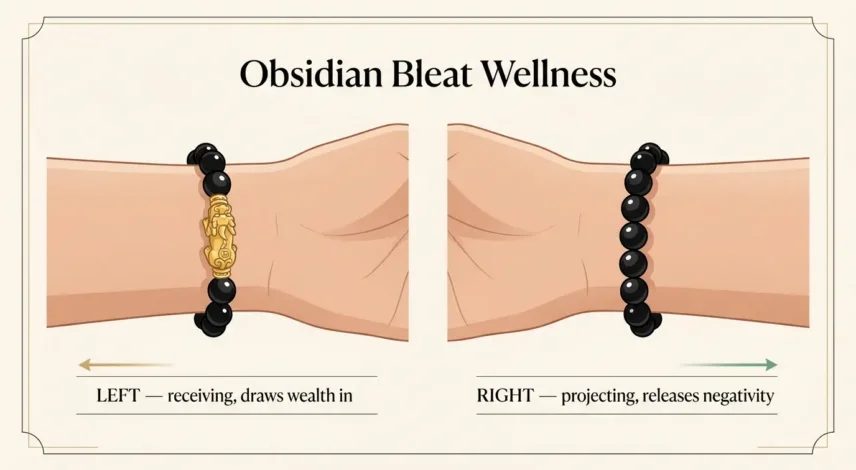
Wear your feng shui bracelet on your left wrist — the receiving side in feng shui — to draw in wealth and positive energy. The one common exception is black obsidian, a protection stone that can go on the right wrist to release negativity. If your bracelet has a Pixiu charm, its head should always face outward, toward your little finger.
The rule comes from a simple principle: “left hand in, right hand out.” In feng shui and Buddhist tradition, the left side of the body is the receiving channel that draws energy toward you, while the right side projects energy outward. So wealth-attraction stones — citrine, jade, and Pixiu — belong on the left. Wearing them on the right symbolically sends that abundance away.
Where it gets more precise is black obsidian, and this is where a lot of generic guides oversimplify. Because obsidian’s traditional job is to expel negative energy rather than attract, it breaks the left-only rule. Here’s the material-based breakdown we give our own customers:
| Wrist | Best stones | What it does |
|---|---|---|
| Left (receiving) | Citrine, green jade, Pixiu, tiger’s eye | Draws in wealth, opportunity, and abundance |
| Right (projecting) | Black obsidian, hematite | Expels negativity and bad luck outward |
A word on the Pixiu head: point it outward, toward your pinky finger, not inward toward your body — that’s the direction it “faces the world” to gather wealth. We’ve found the single most common mistake new wearers make is forgetting to re-orient the head after taking the bracelet off. A three-second check each morning solves it. For a deeper walk-through of the wearing rules, our guide on black obsidian bracelet meaning and feng shui rules covers the edge cases.
Types of Feng Shui Bracelets and Their Meanings
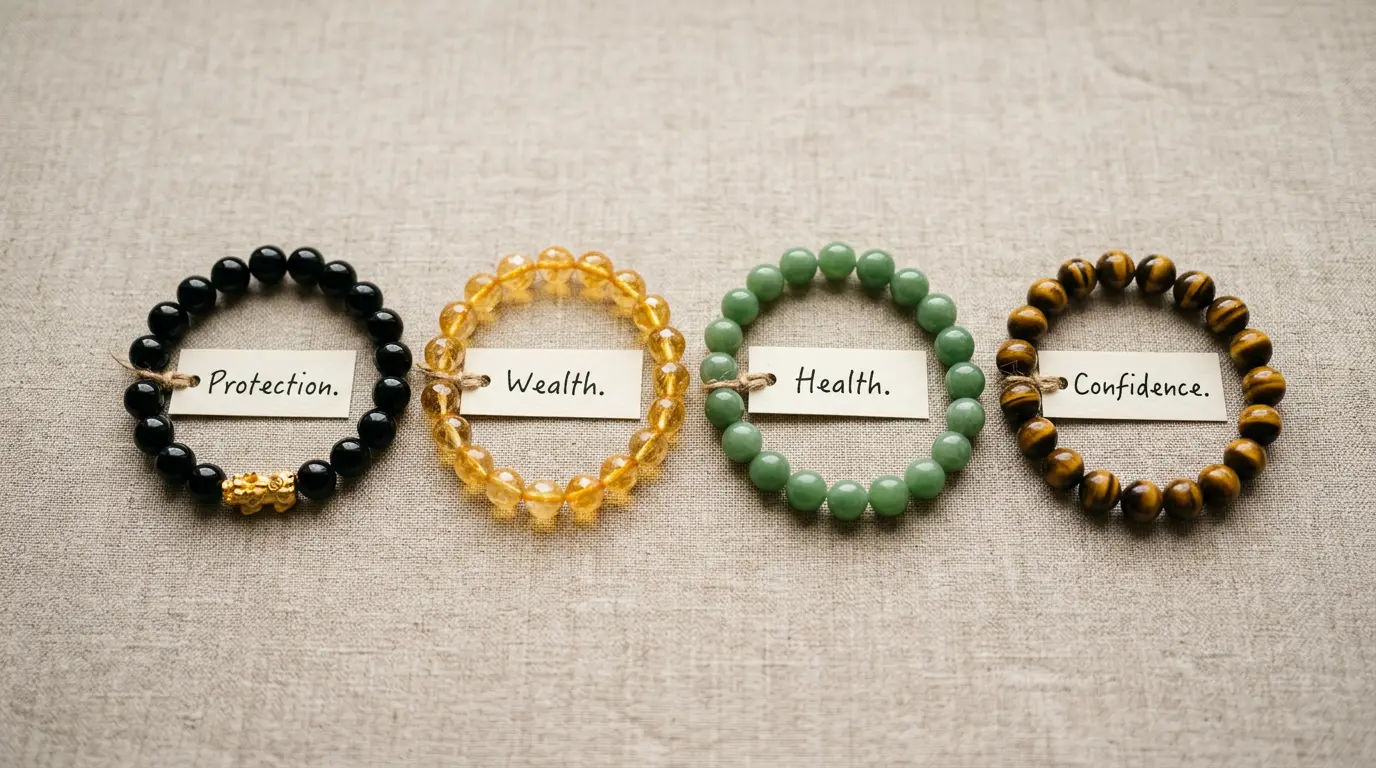
Feng shui bracelets fall into a few core types — wealth, protection, and health — each built around specific stones and a symbol that aligns with the Five Elements. Matching the bracelet to your goal matters more than owning the “prettiest” one.
Wealth Bracelets: Pixiu, Citrine & Tiger’s Eye
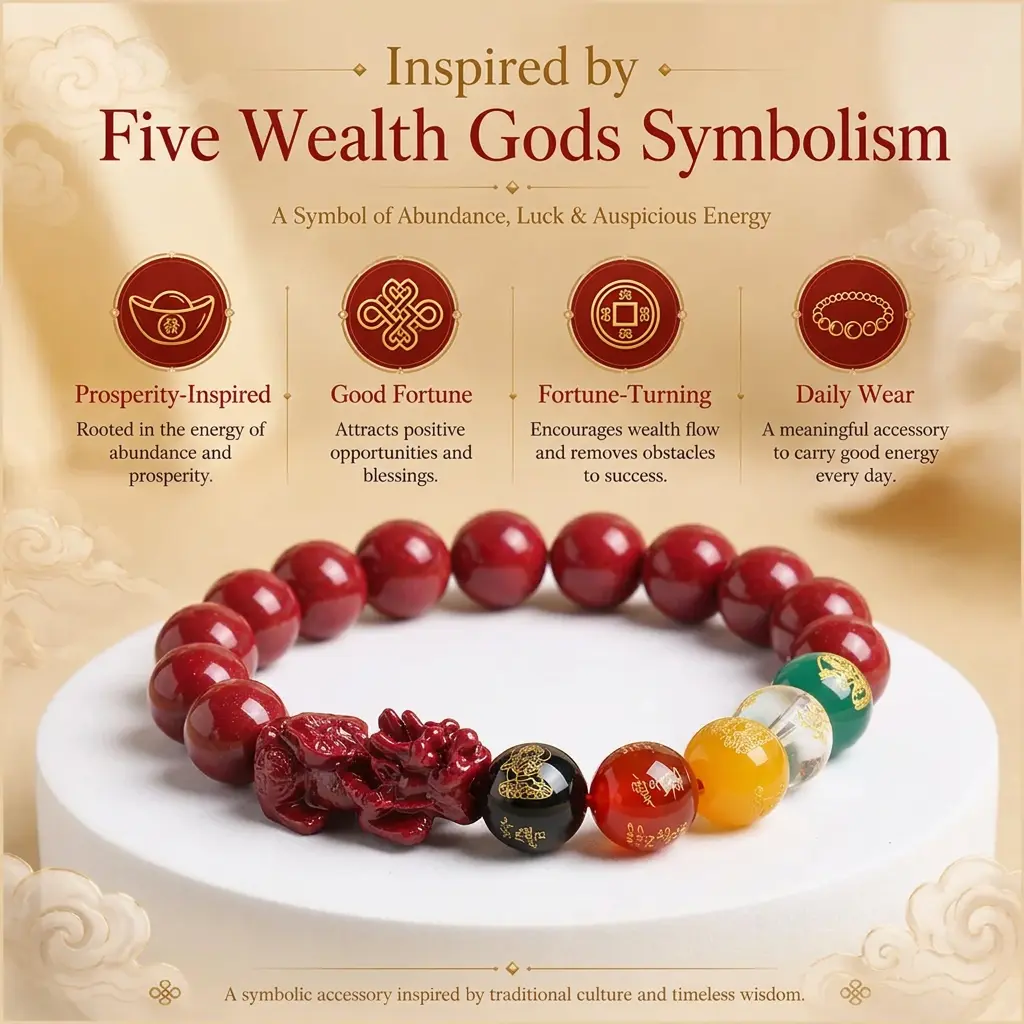
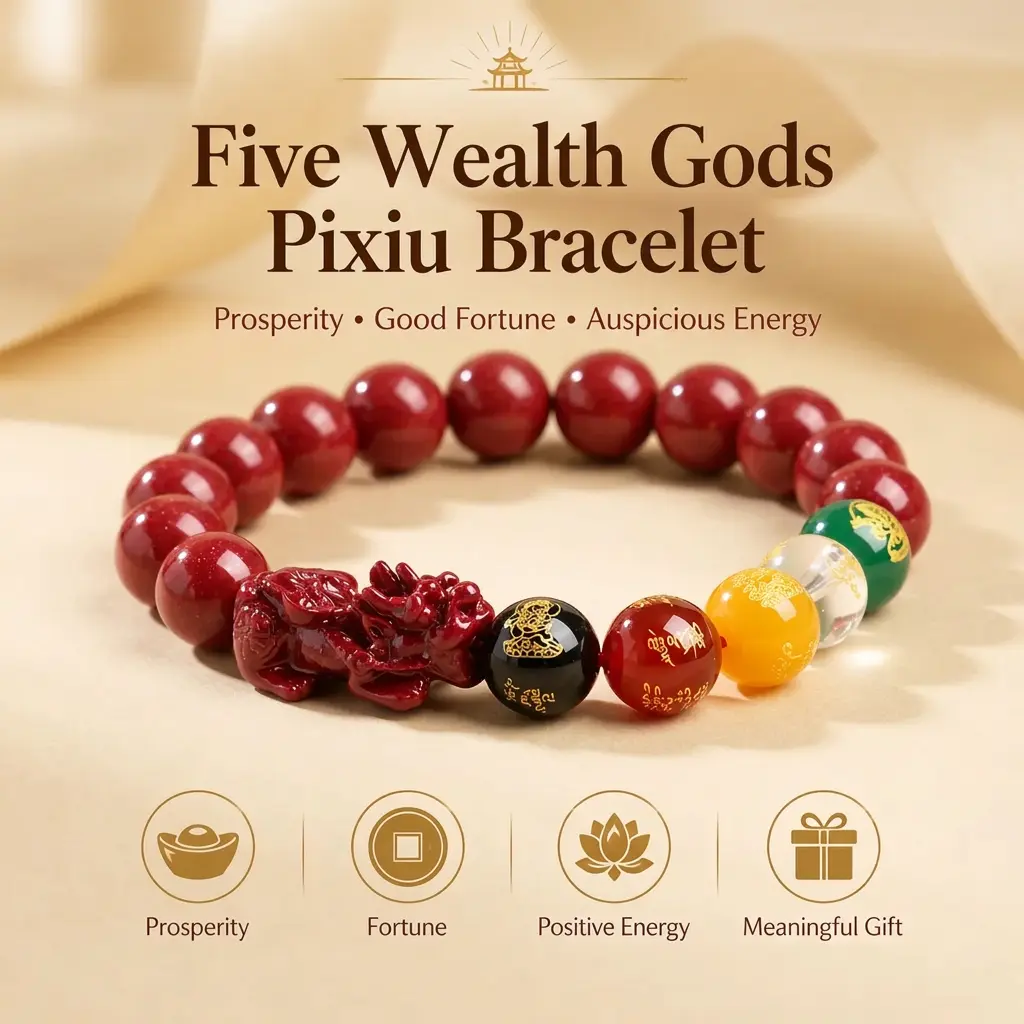
The most famous wealth symbol is the Pixiu (also spelled Pi Yao) — a mythical winged creature with a dragon’s head and a lion’s body. The legend explains its power: Pixiu is the ninth son of the Dragon King, and after defiling the Jade Emperor’s palace, it was punished with a sealed rear — so it devours gold and jewels but can never release them. That’s why it symbolizes wealth that comes in and never leaves.
There’s a detail most Western sources miss entirely: single vs. double Pixiu. A single, male Tianlu hunts and attracts new wealth from all directions. The female Bixie guards existing wealth and prevents financial loss. A double Pixiu bracelet pairs both into a complete “earn and protect” system, though a single Pixiu is considered powerful enough for most people.
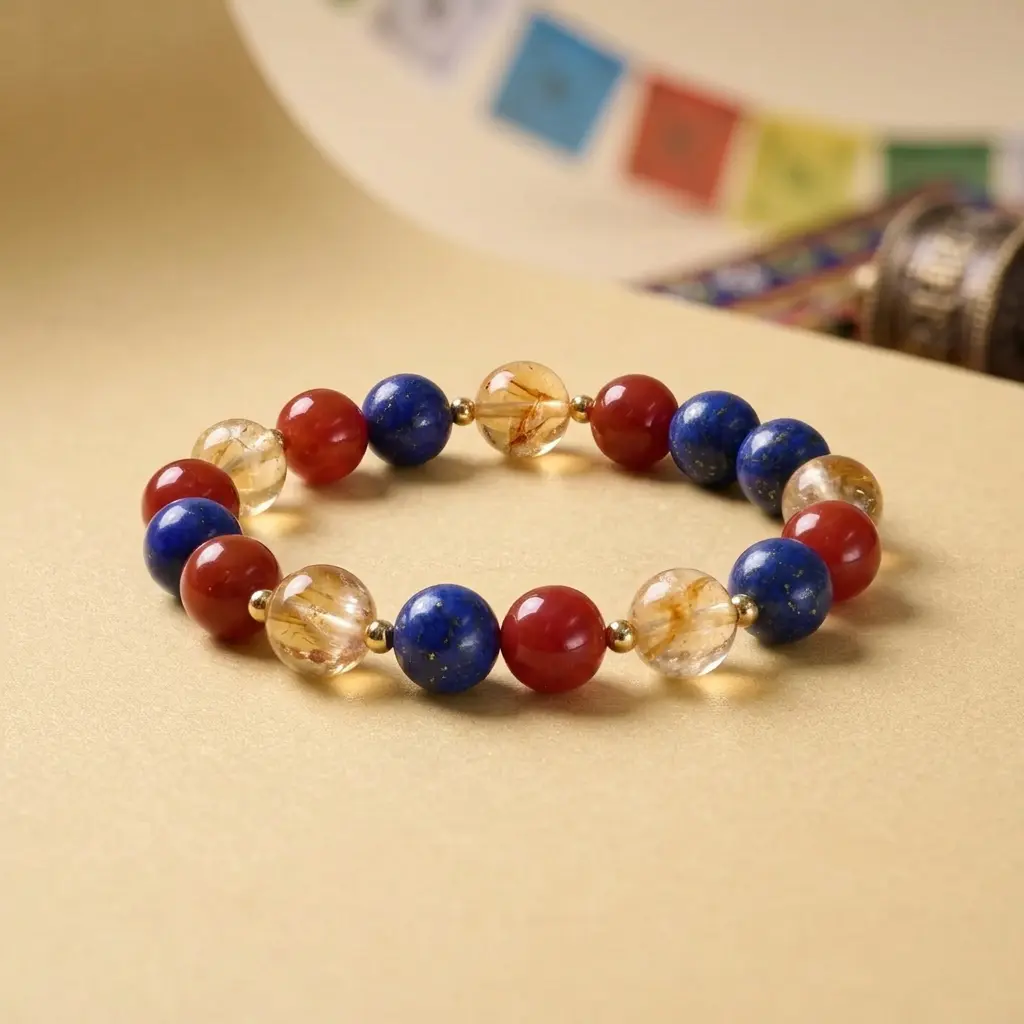
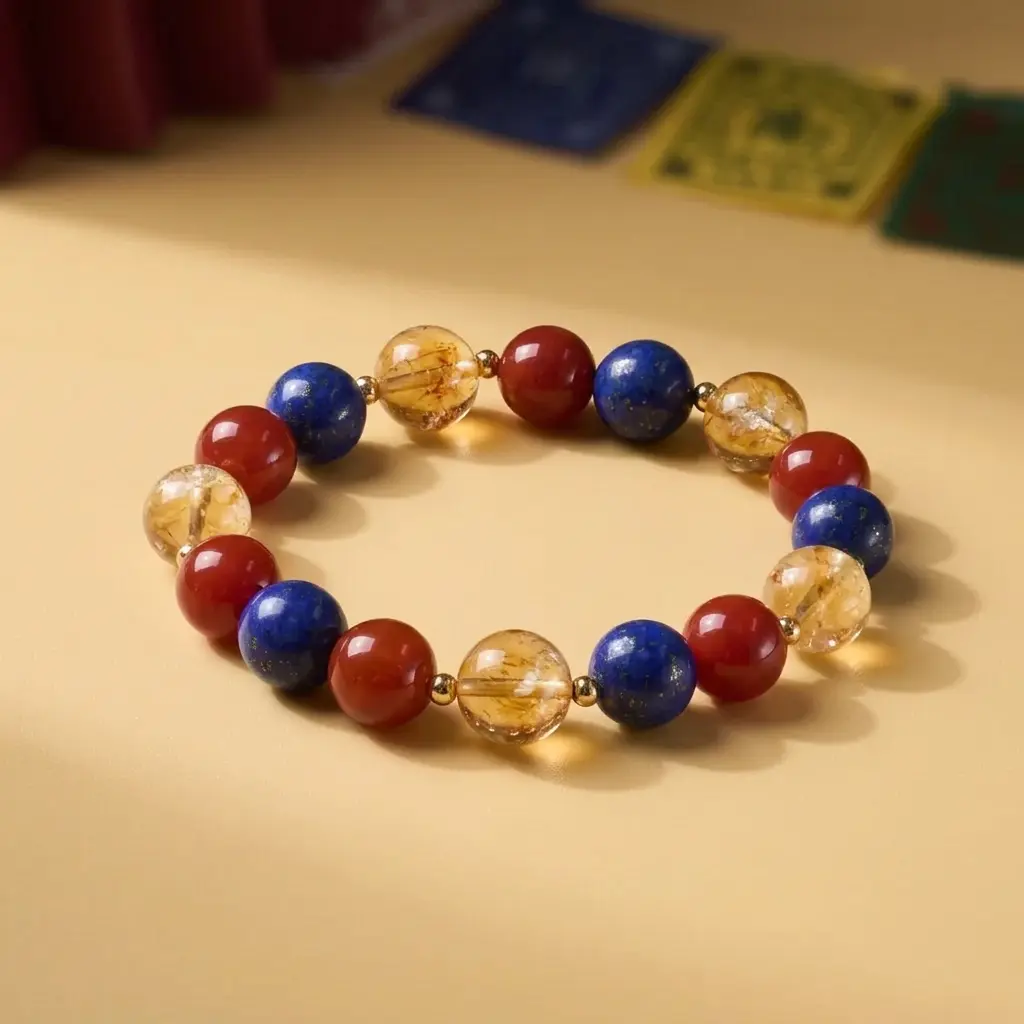
Citrine, meanwhile, is the “Merchant’s Stone” — used by business owners for centuries to attract customers and income. It’s the go-to for entrepreneurs. Our Citrine God of Wealth Bracelet builds citrine together with the five feng shui elements and protective black obsidian into one piece.
Protection Bracelets: Black Obsidian & Hematite
Black obsidian is naturally occurring volcanic glass, formed when silica-rich lava cools so fast that crystals never get the chance to form. It’s technically not a true “rock,” and it’s dense, glossy, and roughly 5–5.5 on the Mohs hardness scale with a silica content above 70%. In feng shui it carries the Water element, which governs the flow of money and career energy, and it’s prized as one of the strongest grounding and protection stones.
Health & Harmony Bracelets: Green Jade
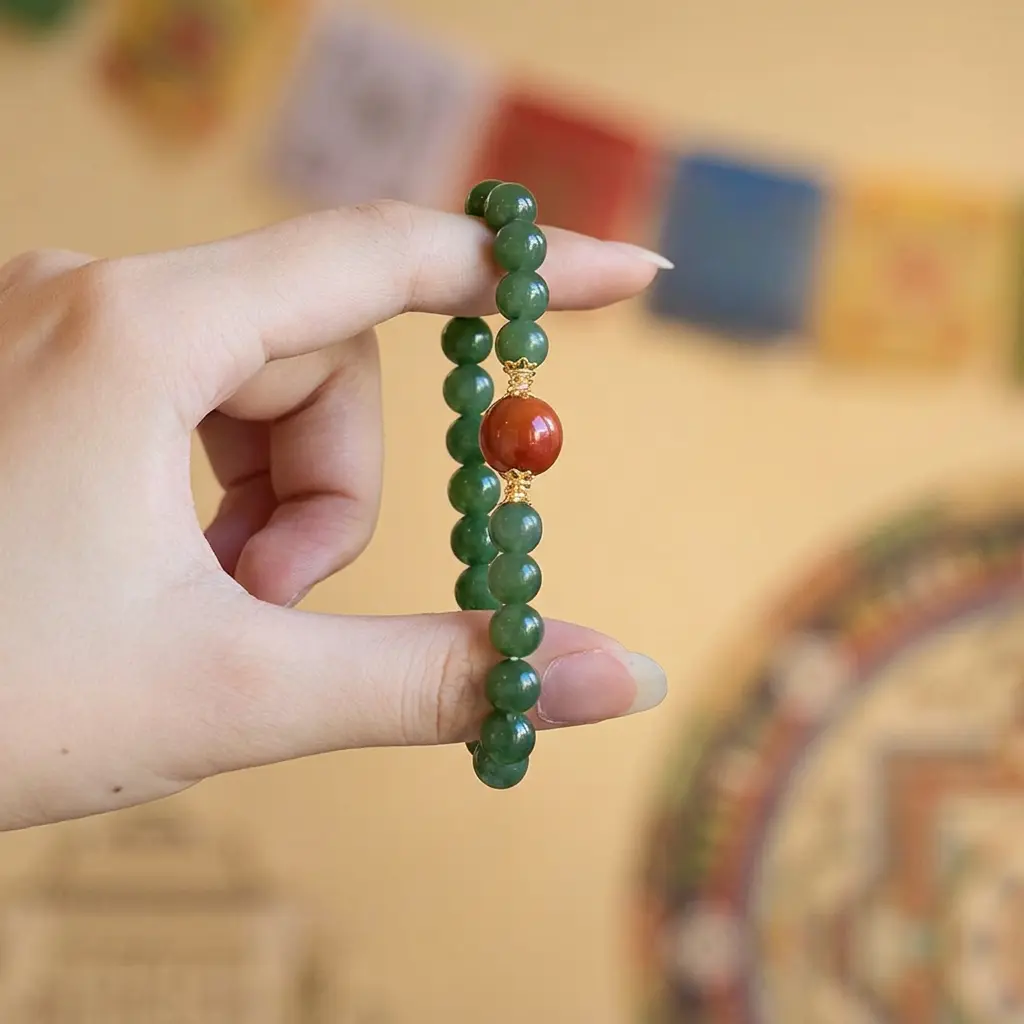
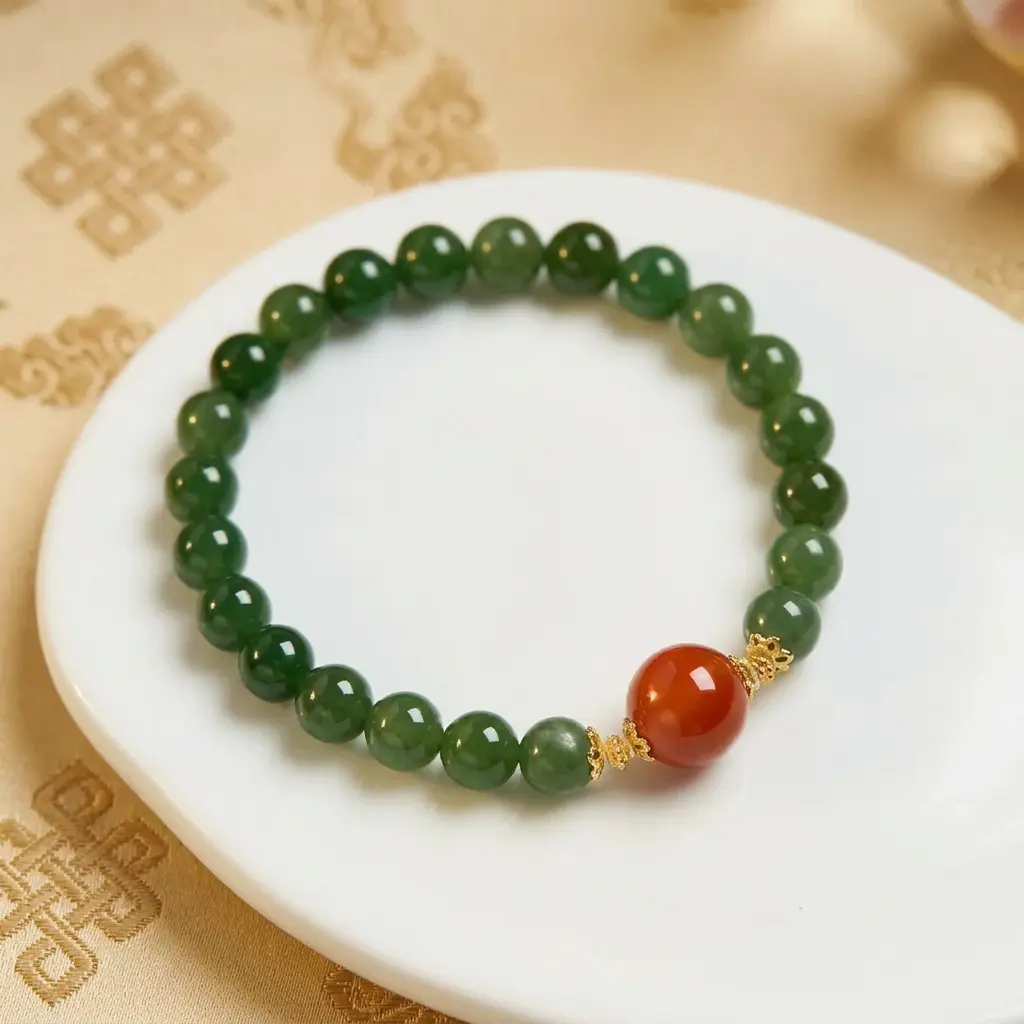
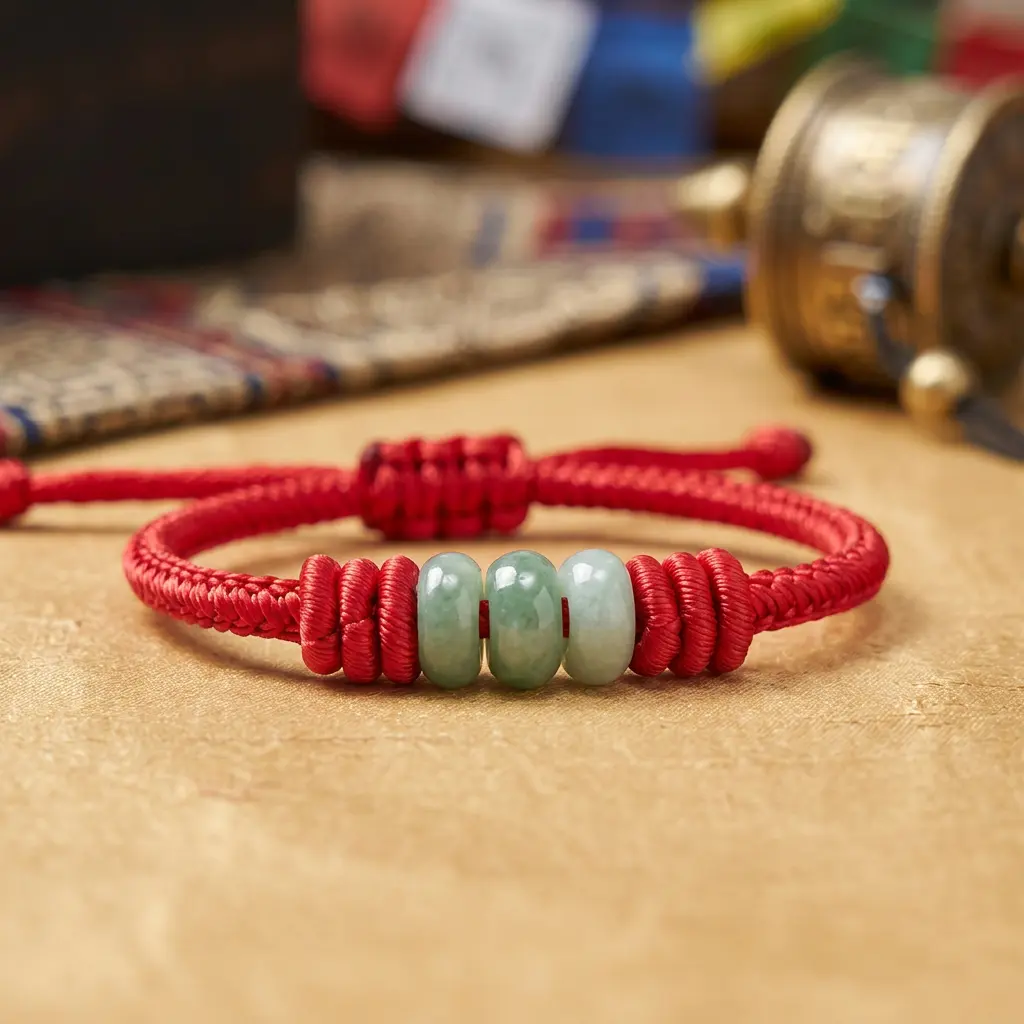
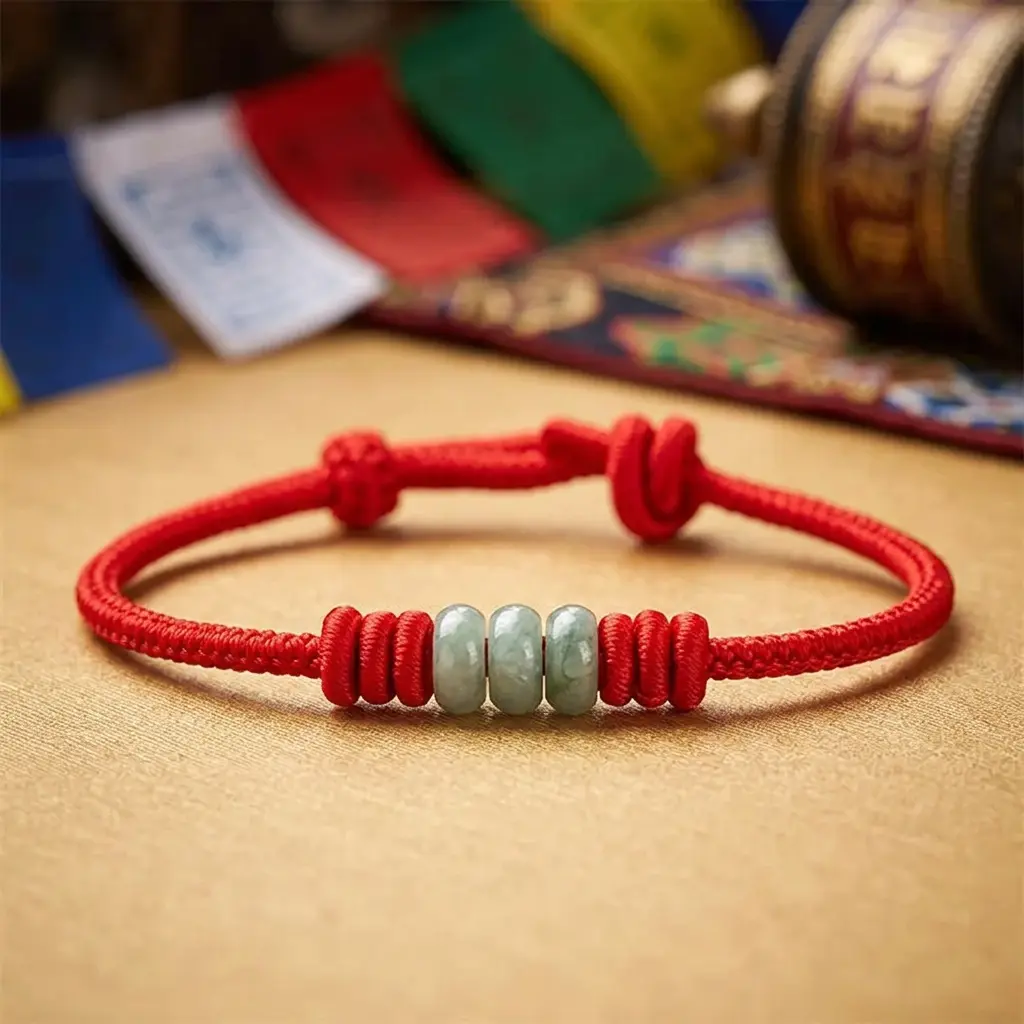
Green jade corresponds to the Wood element — growth, vitality, and renewal — and has been a Chinese health and longevity symbol for over 3,000 years. Where citrine aggressively pulls in new money, jade stabilizes and protects what you already have. Our natural jade bracelet for luck and healing uses Grade A jade for exactly this gentler, balancing energy.
Which stone matches you?New money coming in → citrine. Protecting savings you’ve worked hard for → black obsidian. Long-term stability and health → green jade. Not sure? Start with a single Pixiu in obsidian — it’s the most-recommended entry point in feng shui practice.
How Do You Activate and Cleanse a Feng Shui Bracelet?
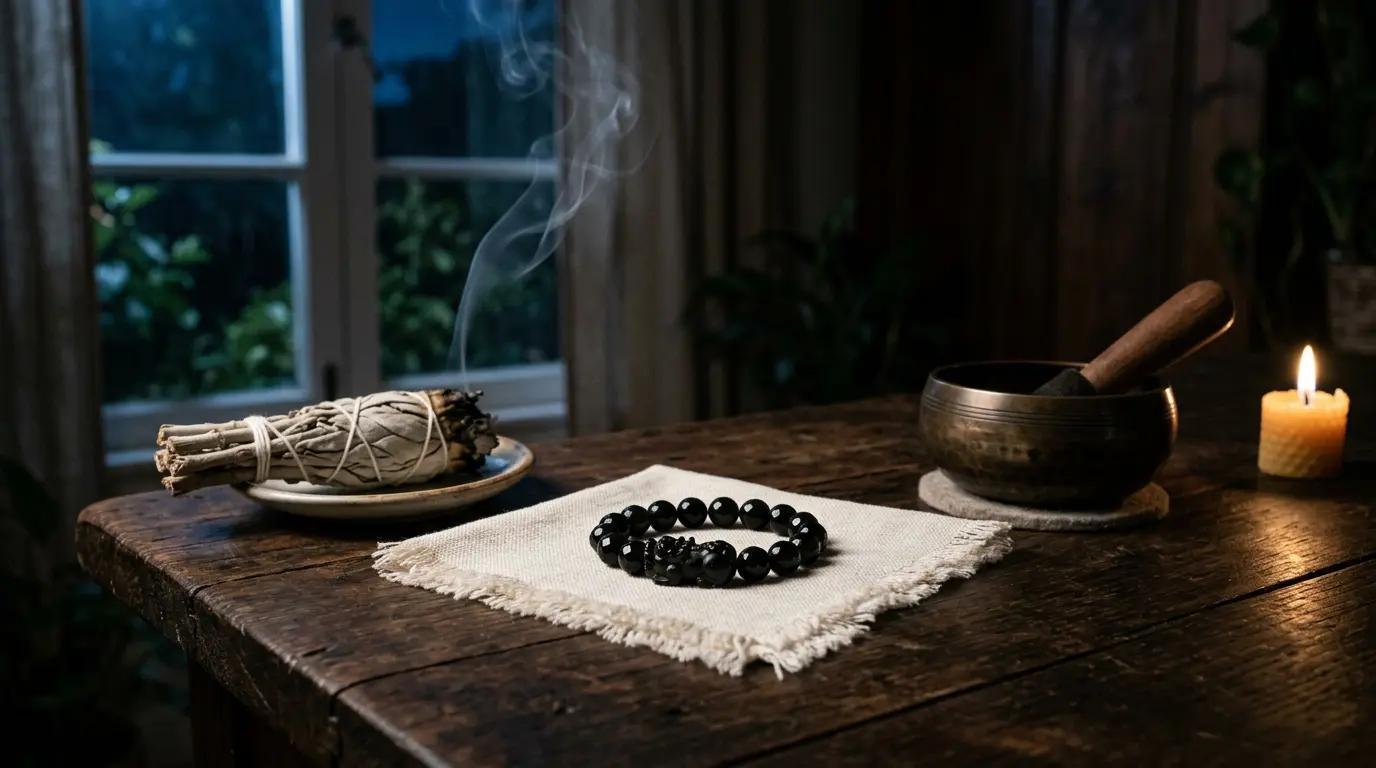
Before wearing your bracelet for the first time, cleanse it to clear old energy, then activate it by setting a clear intention. The whole ritual takes about five minutes, and you’ll re-cleanse roughly once a month with regular wear.
Cleansing comes first. Here are the traditional methods, with the timing we use ourselves:
- Moonlight charging: Leave the bracelet under a full moon for 4–6 hours. Safe for every stone.
- Sage smudging: Pass it through white sage smoke for 30–60 seconds.
- Sound cleansing: Ring a singing bowl beside it for 1–2 minutes.
- Running water: A brief rinse works for quartz-family stones — but skip this for pyrite, which oxidizes, and don’t soak obsidian long-term.
Then activate it. Hold the bracelet, close your eyes, and state your goal out loud as a declaration, not a wish: “I attract abundance and I am protected from loss.” Tradition points to putting on a new bracelet between 7–9 AM — called “dragon raising its head” time, when morning Qi is considered strongest — and wearing it daily for the first 21 days to build the bond.
One thing worth being honest about from experience: proper cleansing is what restores the natural energy flow that daily wear wears down, but you don’t need to overdo it. We tried aggressive weekly salt cleansing early on and found it faded and dulled some softer stones over time. Once a month is plenty for most people. And a Tibetan detail most crystal guides skip — at the monasteries we partner with, pieces pass through a traditional consecration (known as kai guang, or rab gnas, an “eye-opening” blessing) before they’re considered ready to carry intention. It’s a step you simply won’t find on a mass-market bracelet.
Pro tipStore your bracelet in the living room overnight with any Pixiu head facing the front door — traditionally, it keeps “gathering” while you rest. And take it off before showering, swimming, and sleeping.
How to Choose an Authentic Feng Shui Bracelet (and Avoid Fakes)
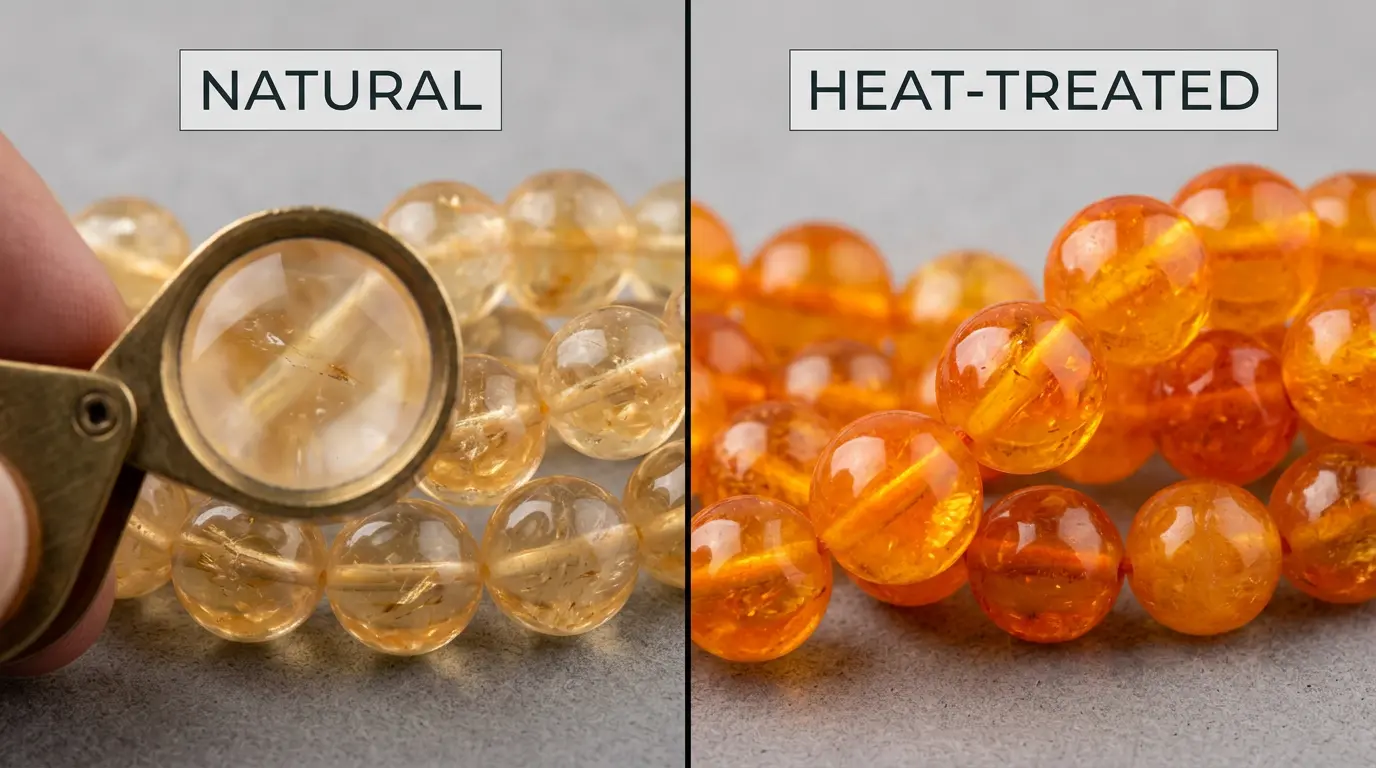
Choosing an authentic feng shui bracelet comes down to three things: match the stone to your intention, verify the material is genuine, and buy from a source you trust. Get those right and the rest is personal preference.
Authenticity is where beginners lose money, so a few honest checks help. Natural stone has small imperfections, feels cool and has real weight, and shows subtle color variation — no two jade beads look identical. Be especially careful with citrine: most sold commercially is heat-treated amethyst, which turns a harsh, flat orange, while natural citrine is a softer golden-amber. A reputable seller will tell you which one you’re getting.
A quick buying framework:
- Match the intention: wealth, protection, or health — pick one primary goal, not all three at once.
- Verify the material: ask whether stones are natural or treated, and expect a straight answer.
- Check the source: blessed or consecrated pieces from a traceable tradition carry more meaning than anonymous wholesale beads.
Two traditional cautions: keep your total Pixiu count to three pieces or fewer, and Pixiu is traditionally not combined with Tiger-zodiac jewelry. If you have a chronic health condition, treat any energy claim as complementary and check with a professional first.
We understand this can feel like a real decision — for many people it’s a meaningful purchase, and nobody wants to get it wrong or overpay for a fake. That’s exactly why every Potala Store piece is sourced through verified Tibetan and Nepalese monastery partnerships and blessed before it ships. If you’d rather compare formats first, our breakdown of the single vs. double Pixiu bracelet is a good next read.
Ready to Start Your Practice?
Browse Potala Store’s monk-blessed feng shui bracelets — handcrafted, sourced from Himalayan monastery partnerships, and blessed before they reach your wrist.Shop Pixiu Bracelets →
Frequently Asked Questions
There’s no scientific proof that a bracelet directly changes your finances or health — its documented value is psychological. It works as a daily reminder that sharpens intention and confidence, and it’s most powerful when paired with real action. Millions of people across Asia have worn Pixiu for centuries for exactly that focus.
Traditionally, no. Remove Pixiu bracelets before sleeping, since their energy is considered too active for rest, and take them off before showering — water and soap can damage the cord and some stones. Store it in your living room with the head facing the front door.
It’s best to keep your bracelet to yourself, since another person’s energy is believed to weaken your personal bond with it. If someone does touch it, rinse it briefly under running water or pass it through sage smoke to reset the energy.
Many wearers report a mindset shift within days and notice tangible opportunities within 2–4 weeks of consistent daily wear combined with aligned effort. Remember, the bracelet amplifies your intention — it isn’t a passive charm. For more, see our full feng shui jewelry FAQ.
📚 References
- Feng Shui, History & Philosophy: Origins, the Five Elements, and the meaning of qi in Chinese tradition. Encyclopaedia Britannica
- Obsidian — Formation & Properties: How volcanic glass forms, its silica content, and why it isn’t technically a rock. Volcano World, Oregon State University
- Pixiu Mythology & Cultural History: Background on the Pixiu’s origins and its role as a symbol of fortune. China Daily
- Crystal Jewelry Market Data: Market size and growth projections for the crystal jewelry sector. Dataintelo Market Research