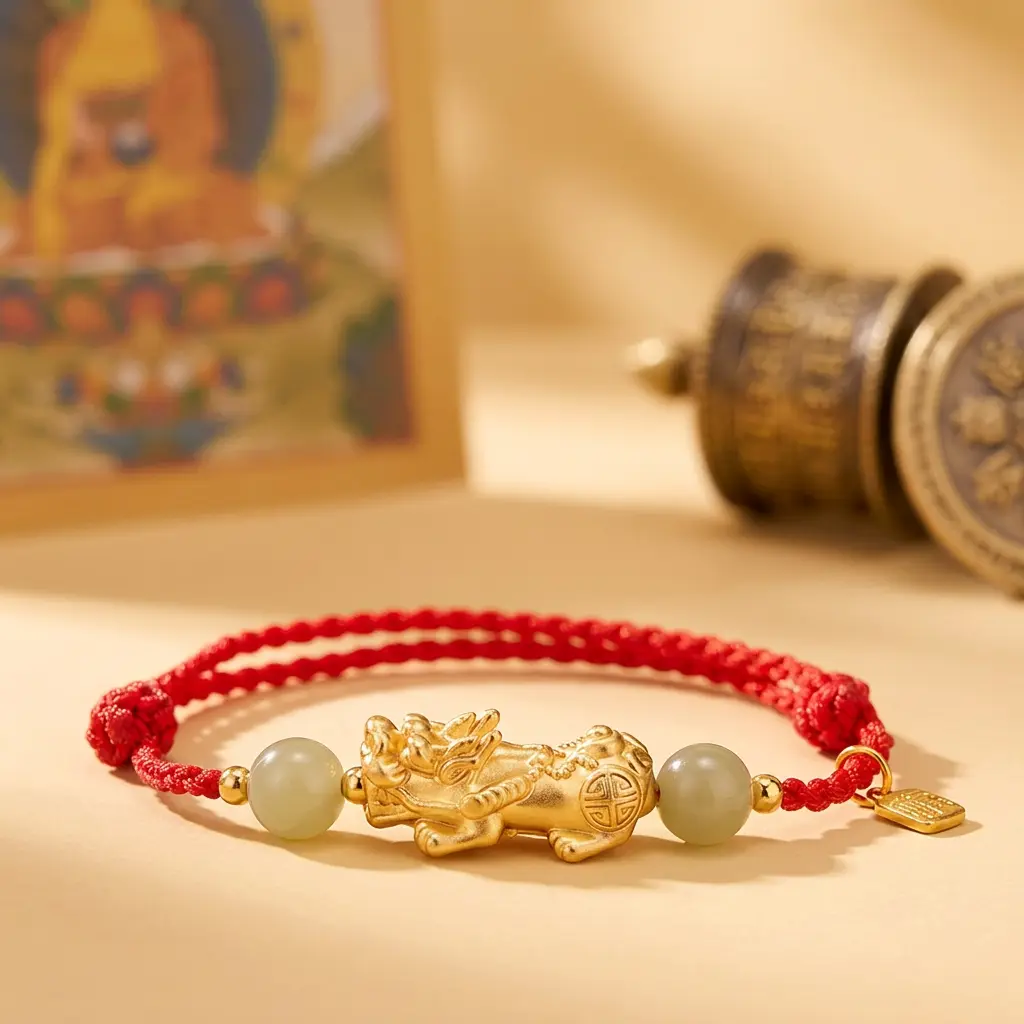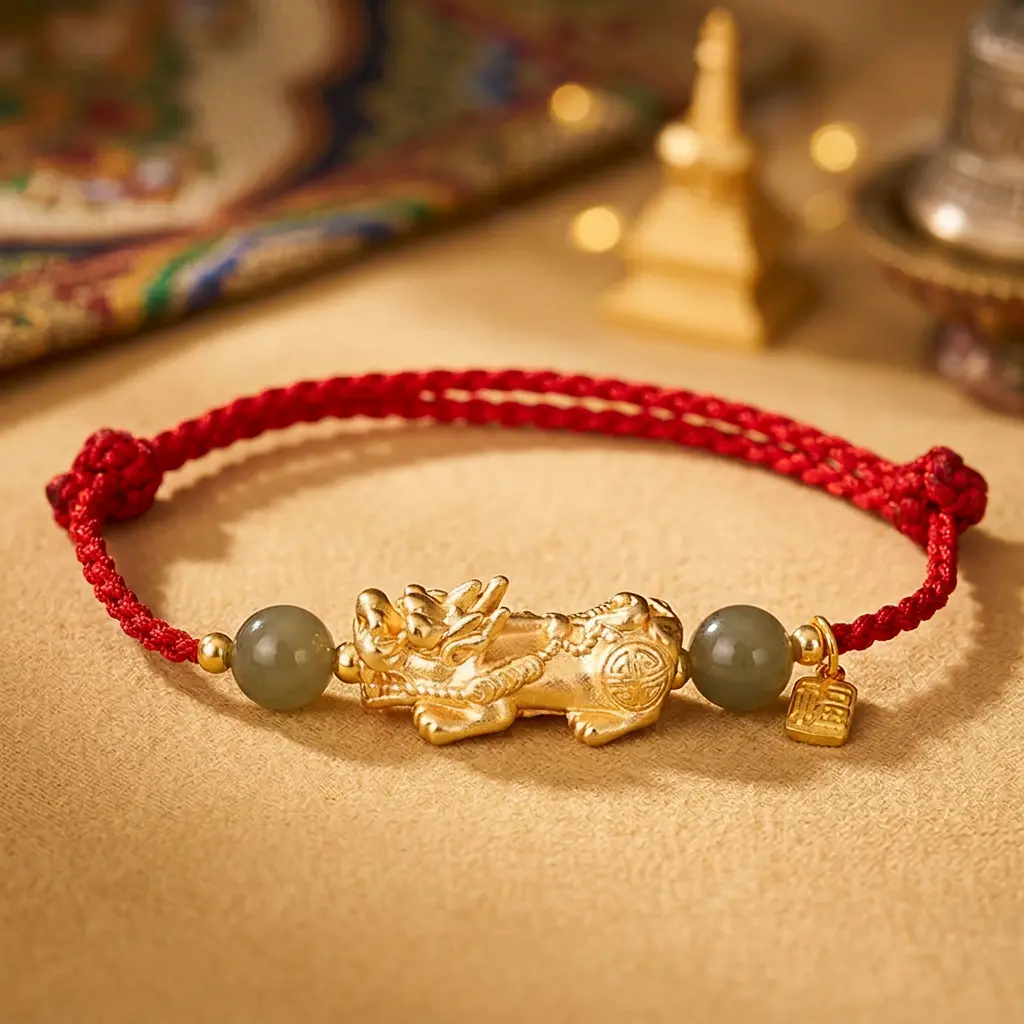

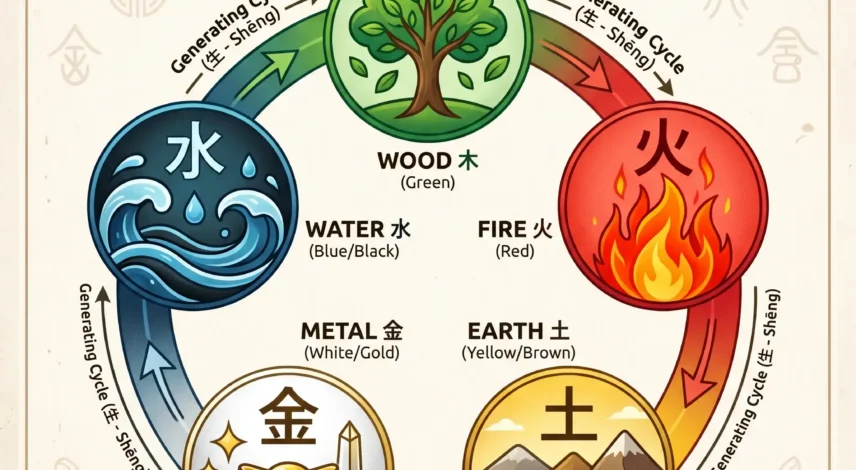

Wood, Fire, Earth, Metal, and Water aren’t just materials in Feng Shui — they’re five patterns of energy that Chinese philosophy uses to explain how everything in the universe changes, interacts, and stays in balance. Known as Wu Xing (五行) in Chinese, the Five Element Theory has shaped Chinese medicine, astrology, and Feng Shui for over 2,000 years. It’s also the logic behind everyday choices, like why a citrine crystal gets paired with black obsidian, or why a home’s southeast corner calls for a wooden plant instead of a metal ornament.
At Potala Store, we work directly with artisans and monasteries across Tibet and Nepal who still apply these principles when crafting spiritual jewelry, so this guide blends the classical theory with how people actually use it today — in a home, in the crystals someone chooses, and in the birth element that has shaped their personal energy since the year they were born.
Table of Contents
What Is the Five Element Theory in Feng Shui?
The Five Element Theory holds that five types of energy — Wood, Fire, Earth, Metal, and Water — flow through everything in nature, and that understanding how they generate and restrain each other reveals the underlying balance of any person, space, or situation. In Chinese, this framework is called Wu Xing, which translates more precisely as “five phases” or “five movements” rather than five fixed substances.
The theory’s roots go back over two millennia. Historians trace its systemization to Zou Yan, a scholar-philosopher active in the 3rd century BCE, whose cosmological model went on to dominate intellectual life during the Han Dynasty (206 BCE–220 CE). It’s worth remembering that the five “elements” were never meant literally — ancient Chinese thinkers weren’t claiming the universe is built from five physical substances the way Greek philosophy proposed earth, water, air, and fire. Instead, Wood, Fire, Earth, Metal, and Water are shorthand for five qualities of change: growth, expansion, stability, contraction, and stillness.
Feng Shui borrowed this framework directly. A home, a room, or a piece of jewelry is read through the same five-element lens used in traditional medicine and astrology — which is why the theory shows up everywhere from acupuncture charts to the crystal bracelet on someone’s wrist.
The Five Elements Explained: Wood, Fire, Earth, Metal, Water

Each of the five elements carries its own season, direction, color, and body system, and most Feng Shui guides list these associations separately — but seeing them side by side is what actually makes the system click. The table below consolidates the core correspondences in one place.
| Element | Season | Direction | Color | Body System (TCM) | Core Quality |
|---|---|---|---|---|---|
| Wood (木) | Spring | East | Green | Liver & Gallbladder | Growth, ambition |
| Fire (火) | Summer | South | Red | Heart & Small Intestine | Passion, momentum |
| Earth (土) | Late summer | Center | Yellow | Spleen & Stomach | Stability, nurture |
| Metal (金) | Autumn | West | White | Lungs & Large Intestine | Clarity, discipline |
| Water (水) | Winter | North | Black/Blue | Kidneys & Bladder | Wisdom, depth |
Traditional Chinese Medicine leans on this same table. A practitioner reading someone’s constitution as “Wood-dominant,” for instance, is describing a tendency toward the liver system and a personality inclined toward growth and assertiveness — the medical and the psychological reading come from the same root system rather than two separate ideas.
The personality side of each element is where most guides stay vague, so here’s what each one tends to look like in practice:
- Wood people are natural growers — ambitious and quick to start new projects, though sometimes better at beginning things than finishing them.
- Fire people bring warmth and momentum — expressive, magnetic, and drawn to visibility, but prone to burning out without deliberate rest.
- Earth people are the stabilizers — dependable and nurturing, often the person a group leans on during change.
- Metal people value precision — organized and principled, occasionally to the point of rigidity under pressure.
- Water people run deep — reflective and adaptable, comfortable working quietly toward long-term goals rather than chasing quick wins.
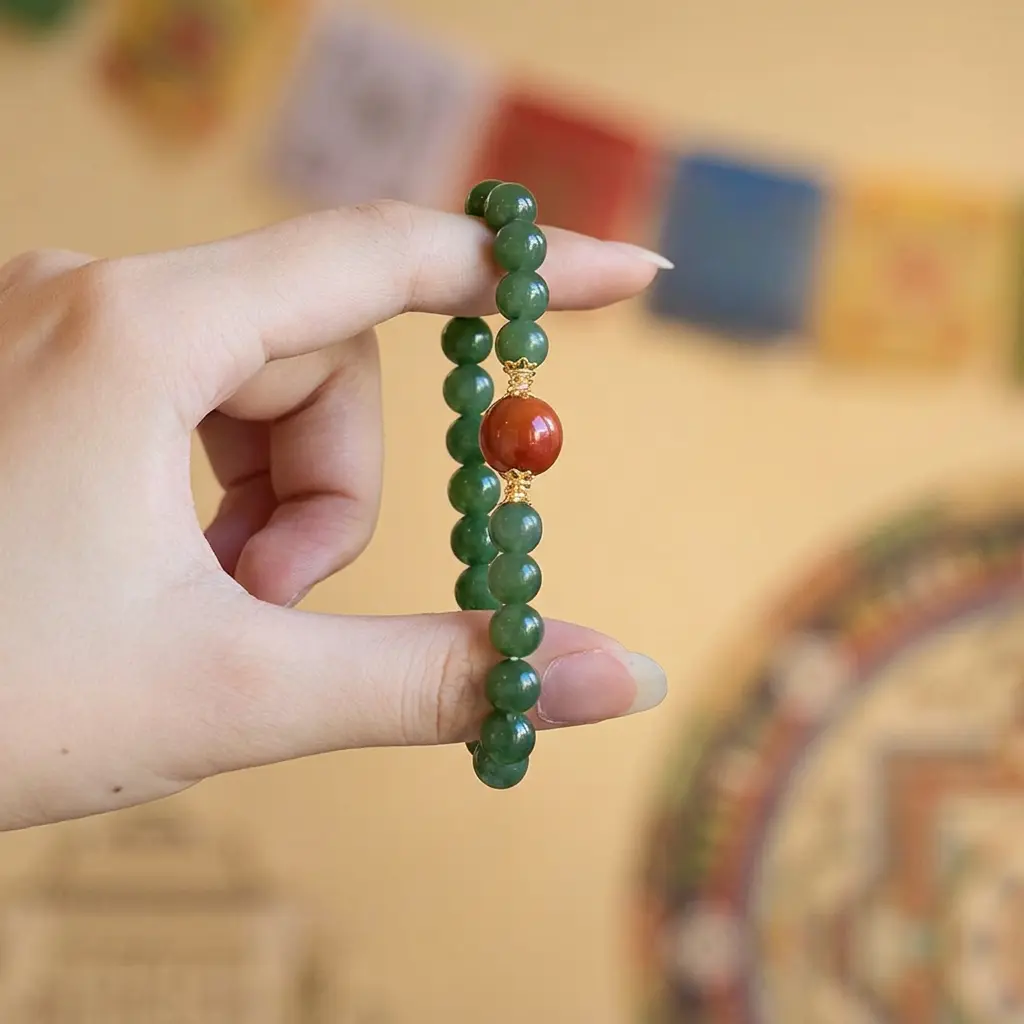
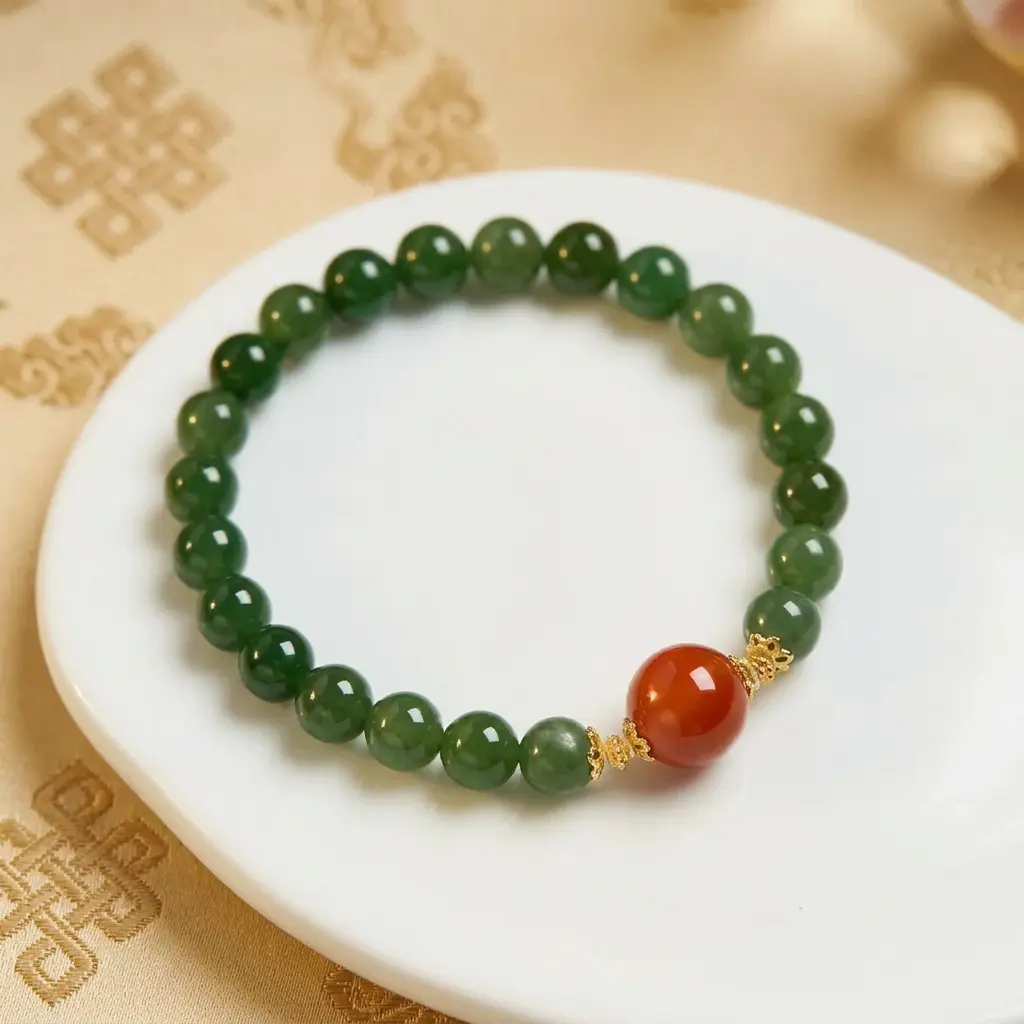
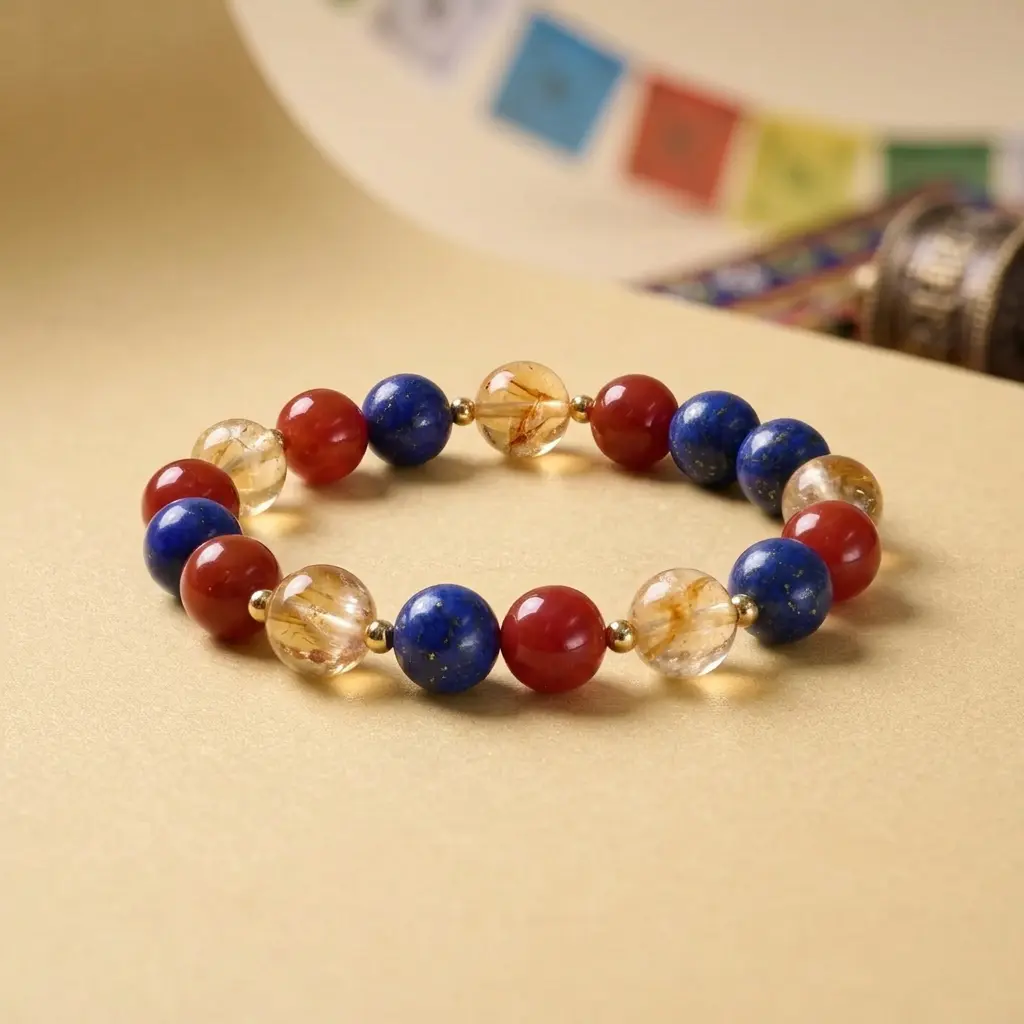
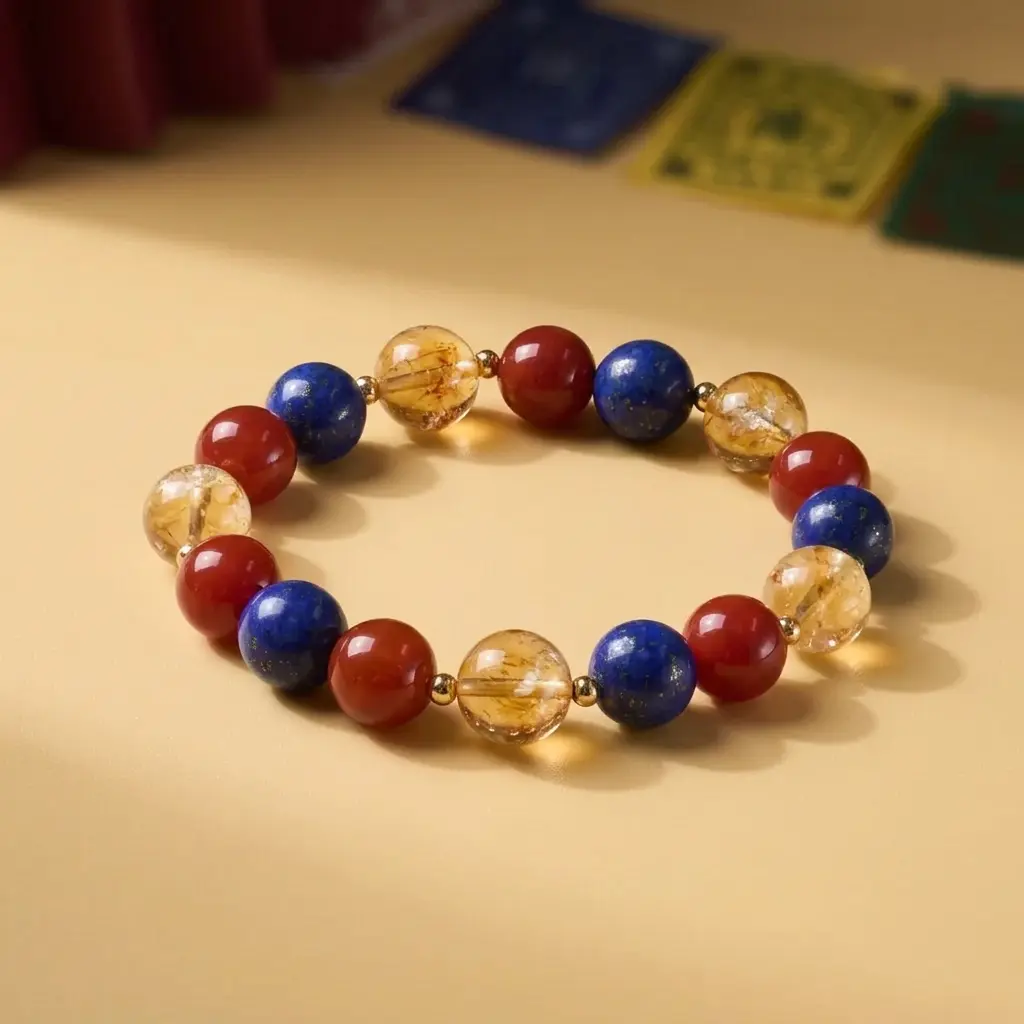
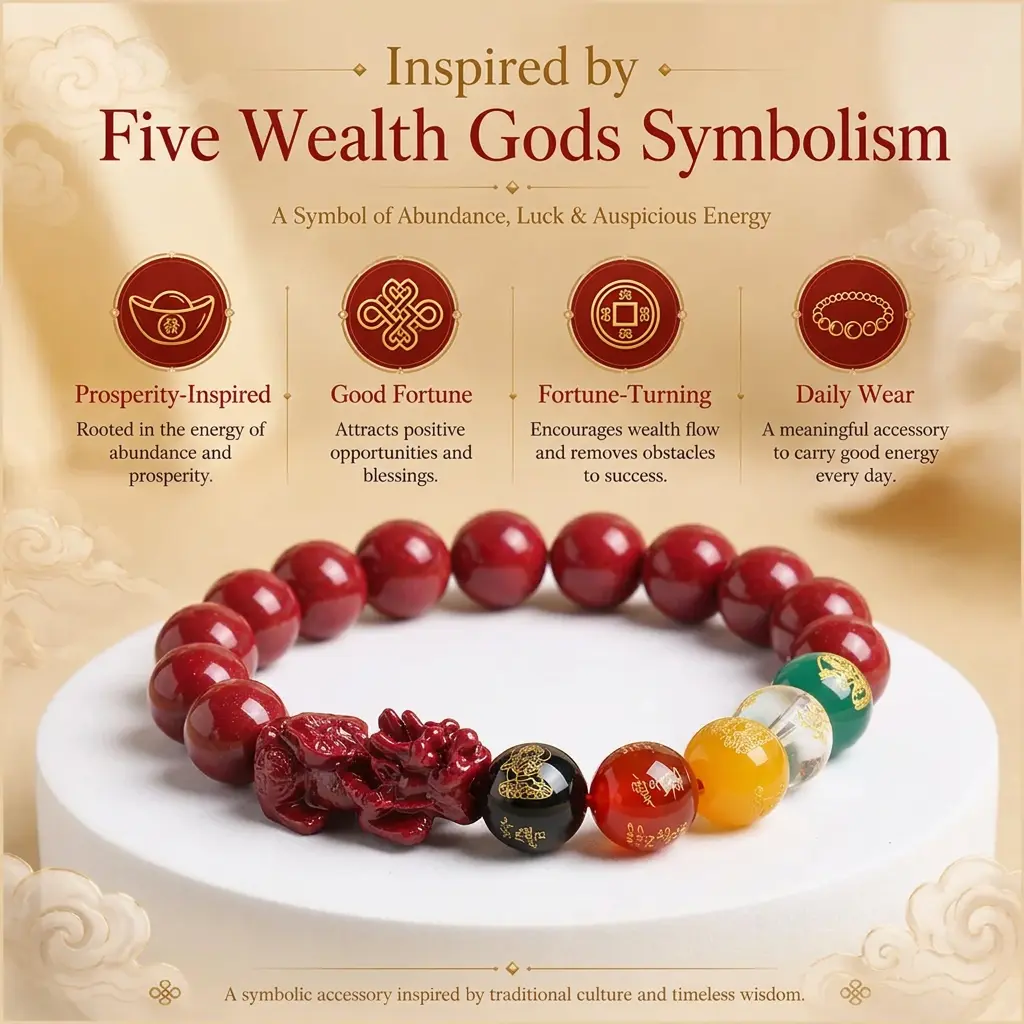
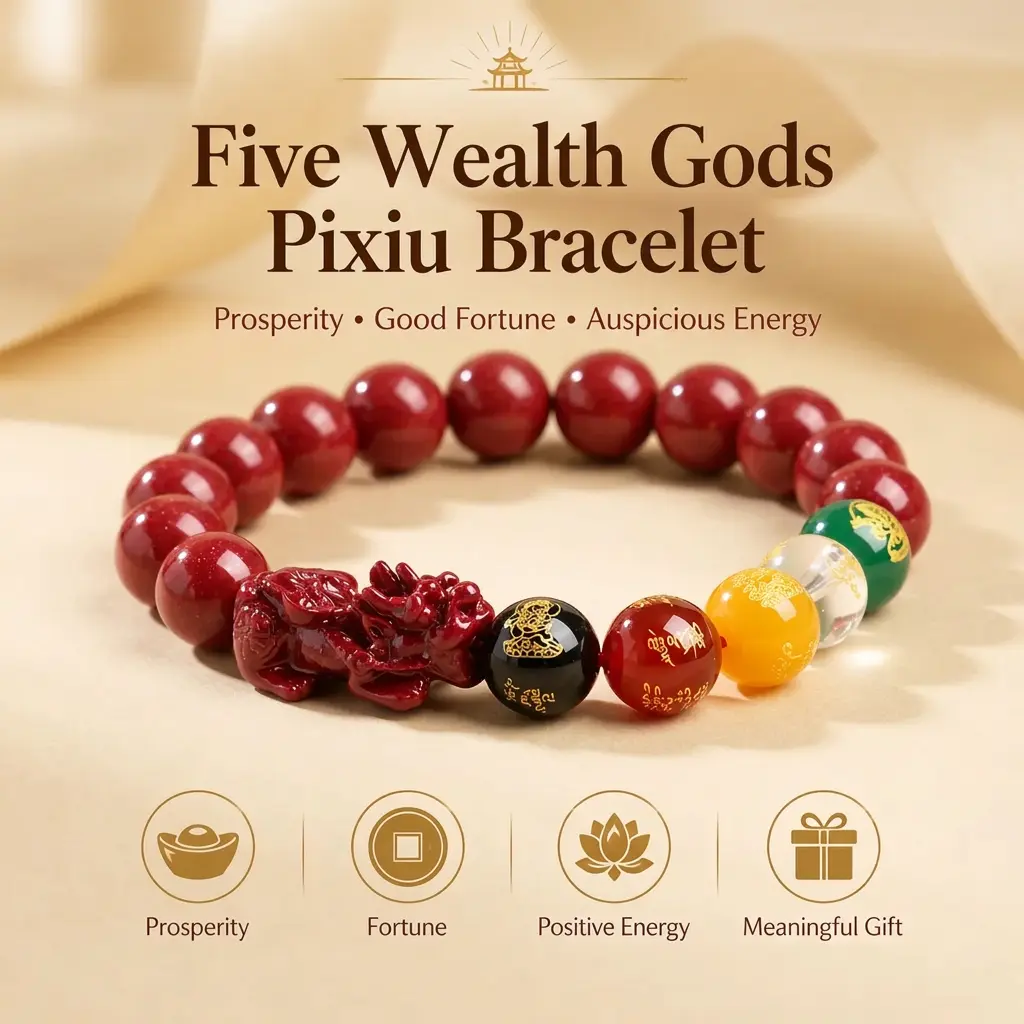
Where this gets genuinely useful is in crystal pairing. Potala Store’s Citrine God of Wealth Bracelet is a rare example of a single piece built around four of the five elements at once: golden citrine for Earth, black obsidian for Water, green aventurine for Wood, and clear quartz for Metal, each stone chosen specifically because it carries that element’s traditional signature rather than for looks alone. Fire is typically represented separately, through warm-toned stones like carnelian or garnet, since combining all five strong elemental energies on one wrist is traditionally considered less stable than a deliberately balanced pairing.
The Generating Cycle: How the Five Elements Create Each Other

The Generating Cycle (Sheng, 生) describes how each element produces the next in an unbroken loop: Wood feeds Fire, Fire creates Earth, Earth bears Metal, Metal collects Water, and Water nourishes Wood. This sequence explains supportive relationships — one element strengthening another rather than competing with it.
- Wood generates Fire: dry wood is fuel, giving fire the material it needs to burn.
- Fire generates Earth: fire’s ash returns to the ground, enriching soil.
- Earth generates Metal: metal ore forms and is mined from within the earth.
- Metal generates Water: metal, when heated, becomes liquid, and cold metal surfaces draw condensation.
- Water generates Wood: water nourishes roots, letting trees and plants grow.
In practice, this cycle explains why a Feng Shui remedy often pairs two elements instead of one. If a home’s career area feels stagnant (a Water-governed zone), the classic fix isn’t more Water — it’s Metal, since Metal generates Water and strengthens it from behind rather than overwhelming it directly.
The Overcoming Cycle: How the Five Elements Keep Each Other in Check

The Overcoming Cycle (Ke, 克) is the restraining counterpart to the Generating Cycle: Wood parts Earth, Earth absorbs Water, Water extinguishes Fire, Fire melts Metal, and Metal cuts Wood. Where the Generating Cycle builds energy up, the Overcoming Cycle keeps any single element from dominating the system.
| Controlling Element | Controlled Element | Traditional Explanation |
|---|---|---|
| Wood | Earth | Roots split and part the soil |
| Earth | Water | Earth banks and absorbs water |
| Water | Fire | Water extinguishes flame |
| Fire | Metal | Fire melts and reshapes metal |
| Metal | Wood | A metal axe cuts through wood |
Both cycles run at the same time in Feng Shui practice. A consultant reading a room isn’t just asking “which element is present” but “is this element being fed, or is it being checked” — and the answer determines whether the fix is to add an element or to introduce one that restrains it.
This is also the piece that separates a considered Feng Shui adjustment from guesswork. Adding Fire to a space that already runs hot in Fire energy just pushes an imbalance further; the more useful move is usually to bring in the element that controls the excess, or the one that generates the element you actually want more of. The two cycles aren’t competing systems — they’re the same map read in two directions.
How to Apply the Five Elements in Your Home and Life
Applying Wu Xing starts with identifying which element a space or intention needs, then introducing that element’s colors, materials, or crystals in a targeted way rather than all at once. A few starting points:
- Read the room by function: Potala Store’s guide to the Feng Shui money corner is a good example — the wealth sector responds to Wood (plants) and Water (a small fountain or citrine cluster), not to Fire or Metal objects.
- Match color to intention: green and brown support Wood-driven growth goals; red and orange support Fire-driven confidence and visibility; black and deep blue support Water-driven calm and introspection.
- Choose crystals by element, not just by appearance: our step-by-step guide to choosing and wearing Feng Shui bracelets walks through matching a stone’s element to a specific goal, from Black Obsidian (Water) for protection to Citrine (Earth) for stability and wealth.
- Know your personal element: in Chinese astrology, the final digit of a birth year points to a dominant personal element, which is traditionally used to decide which colors and stones support someone’s energy versus which ones might overwhelm it. Our detailed walkthrough on finding your birth element covers the full calculation and what each element year tends to mean.
One caution worth repeating: more elements isn’t automatically better. Stacking several strong, unrelated elemental stones on one wrist — say, a Fire crystal and a Water crystal with nothing grounding them — is traditionally considered to create friction rather than harmony. The Overcoming Cycle above is exactly why: pick one primary element that matches the goal, then add a second only if it generates or gently supports the first.
A simple way to start: name the one area of life you want to shift (money, focus, calm, confidence), match it to the element most associated with that outcome using the table earlier in this guide, then choose one color, one material, or one crystal from that element rather than redecorating an entire room at once. Small, correctly-targeted changes are traditionally considered more effective than broad, unfocused ones.
⚠️ A Note on Tradition and Evidence: The Five Element Theory is a traditional Chinese philosophical and cultural framework, not a scientifically validated system. The energetic properties described here — for elements, crystals, and Feng Shui placements — reflect centuries of traditional belief and practitioner experience rather than clinical evidence. This guide is offered for cultural and spiritual interest and shouldn’t replace professional medical, psychological, or financial advice.
Frequently Asked Questions
The five elements are Wood, Fire, Earth, Metal, and Water. Each represents a distinct type of energy with its own season, direction, color, and set of traditional associations, and Feng Shui uses their relationships to assess balance in a space or object.
Your birth element is traditionally determined by the last digit of your birth year on the Chinese calendar. For a full breakdown, including how Chinese New Year affects borderline birth dates, see our guide to finding your birth element.
No — Wu Xing doesn’t rank the elements. Each one generates one element and restrains another, so the system is built around circulation and balance rather than a hierarchy. An element only becomes a “problem” when it’s excessive or deficient relative to the others.
Yes, but with care. Pairing an element with the one that generates it (Water and Wood, for example) tends to feel harmonious, while combining two unrelated strong elements without a grounding stone between them is traditionally seen as creating conflicting energy rather than double the benefit.
📚 References
- Wuxing — Historical and Philosophical Overview: Scholarly summary of the Five Elements’ origins and their role in Chinese cosmology. Encyclopaedia Britannica
- Wuxing (Wu-hsing) — Chinese Philosophy: In-depth academic exploration of the Five Phases as a philosophical system, including early textual sources. Internet Encyclopedia of Philosophy
- Wuxing (Chinese Philosophy): General reference overview of the Five Elements’ applications across Chinese medicine, astrology, and martial arts. Wikipedia
💡 Next step: Once you know how the five elements interact, the natural next question is which one is yours. Explore Potala Store’s guide to finding your birth element, or browse monastery-blessed pieces like the Citrine God of Wealth Bracelet, built around four of the five elements at once.