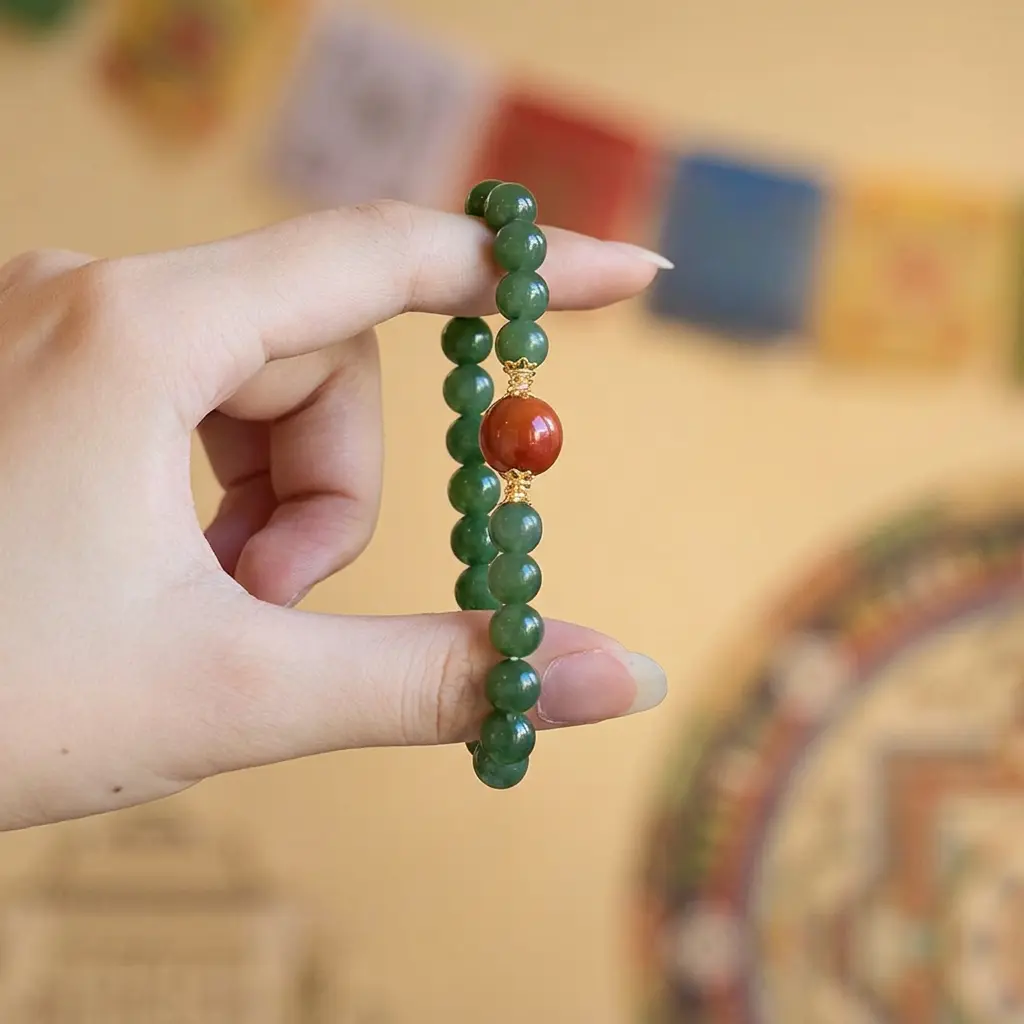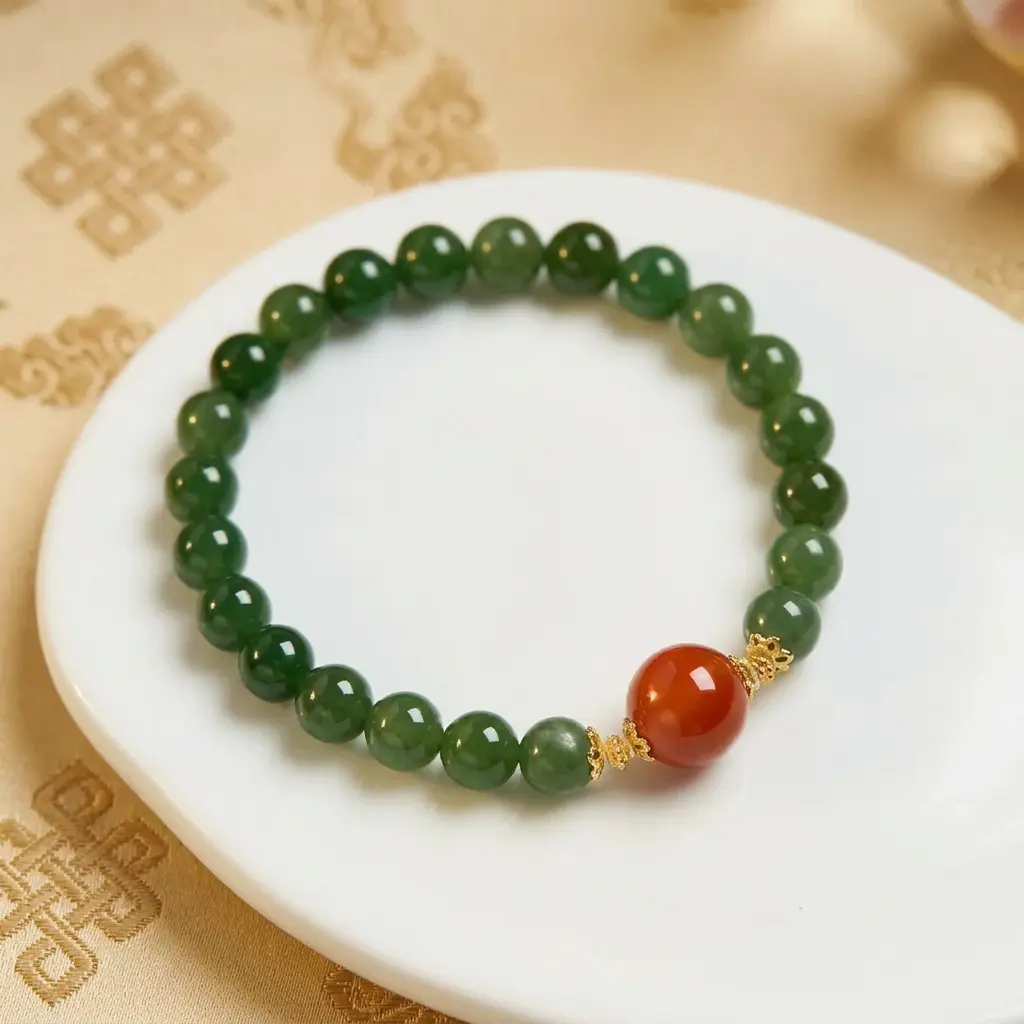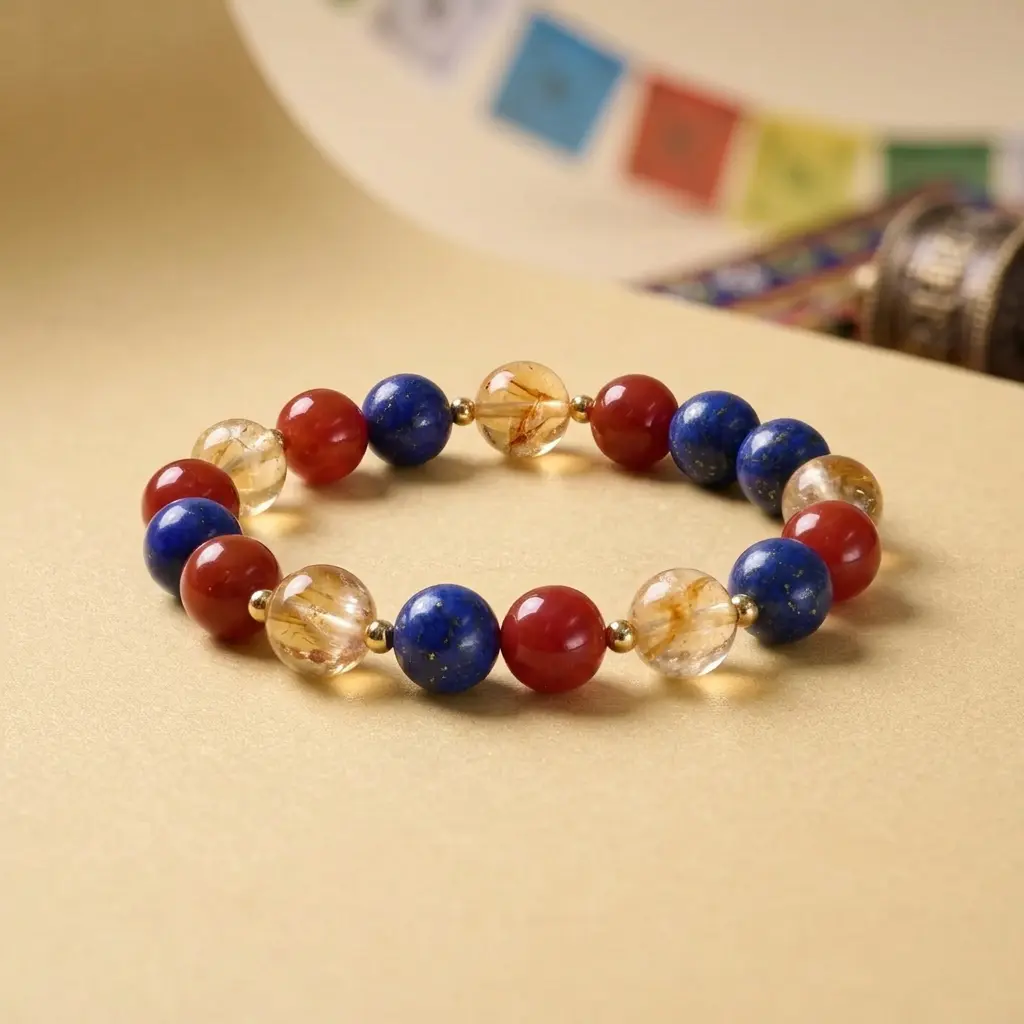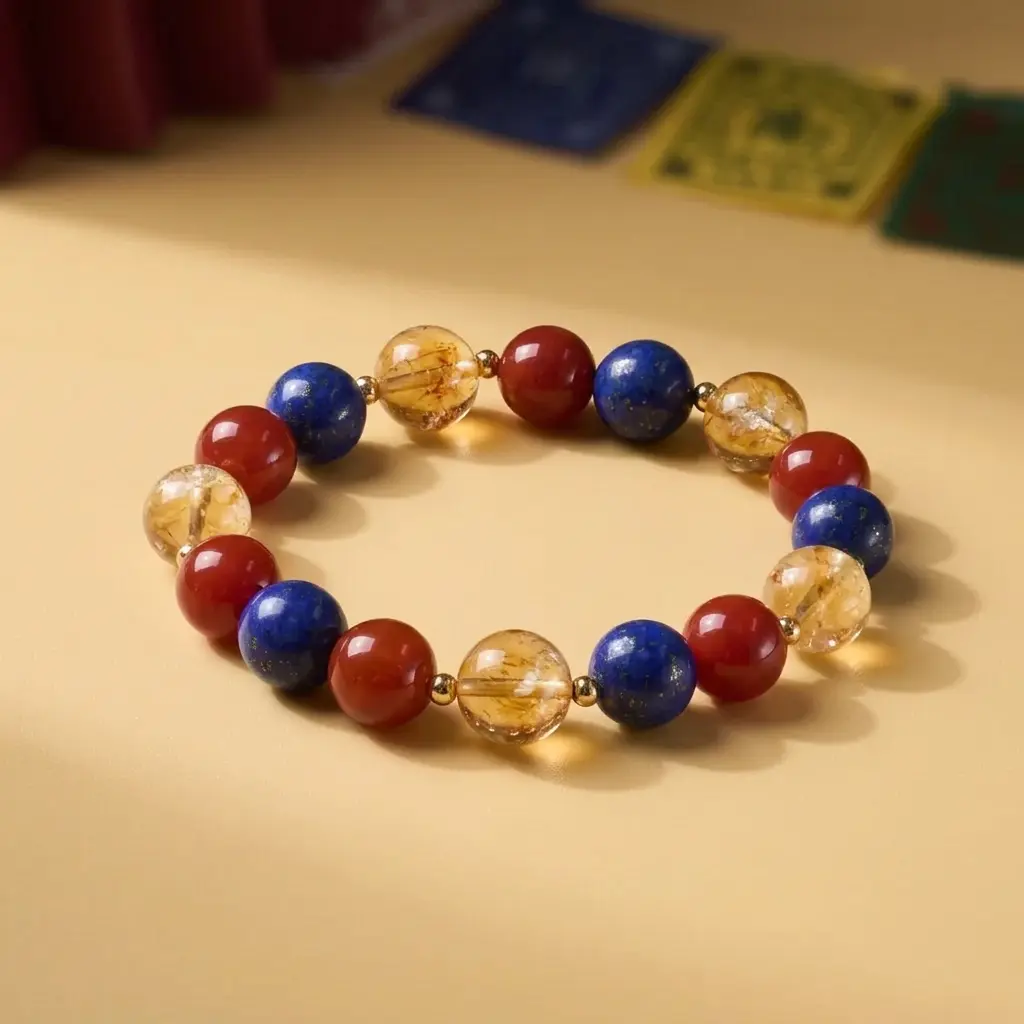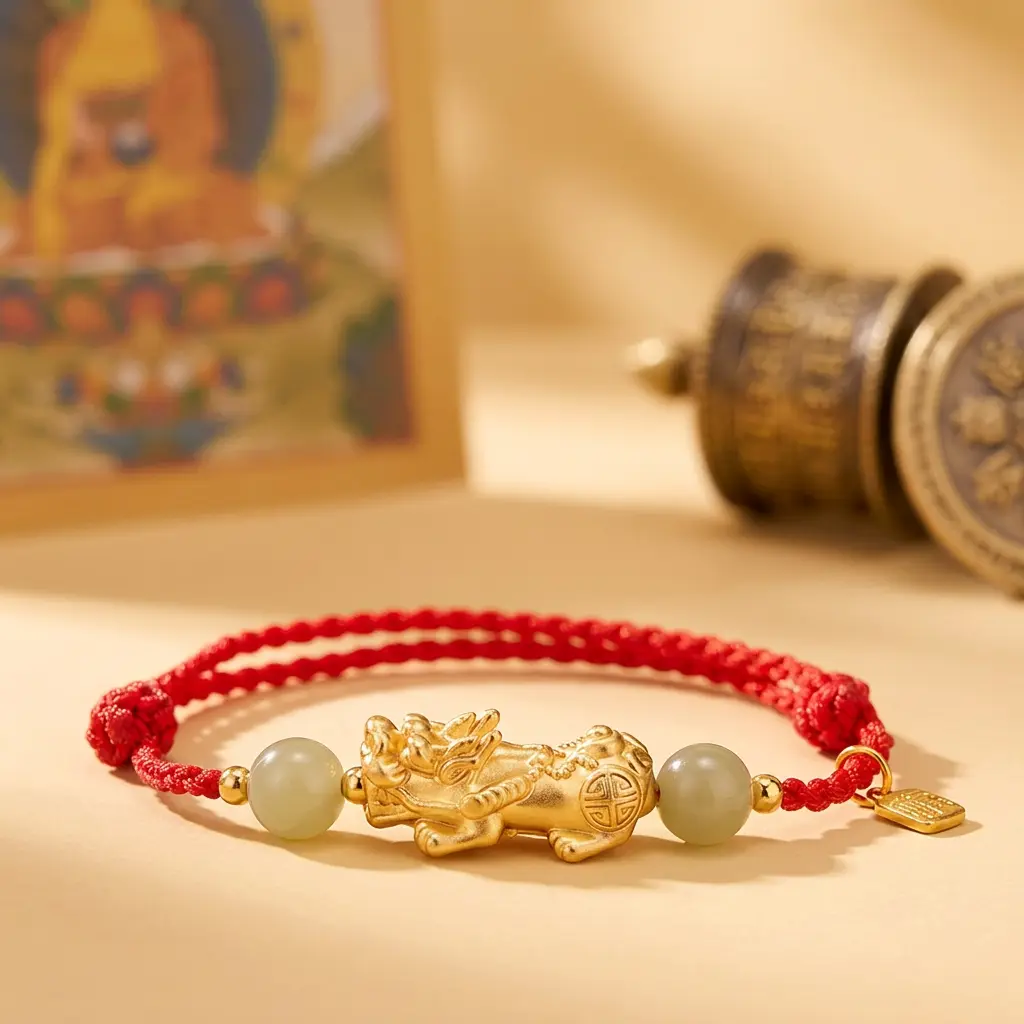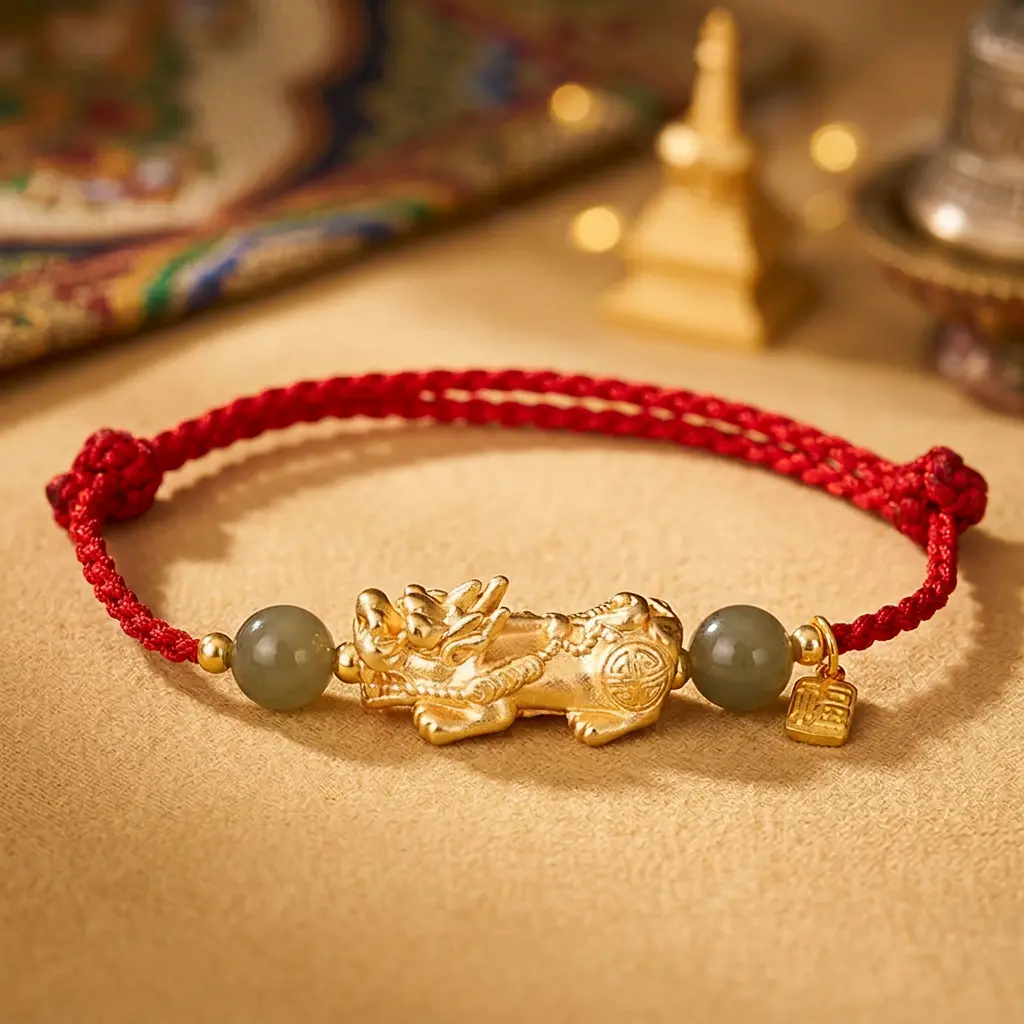

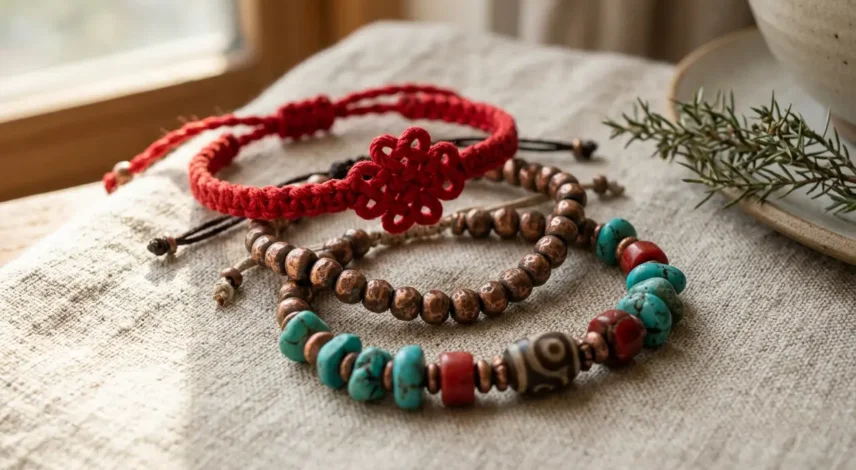

A Tibetan bracelet is a handcrafted Buddhist talisman traditionally worn for spiritual protection, mindfulness, and good fortune. Its meaning comes from three things working together—sacred symbols like the endless knot, five auspicious colors, and natural materials such as copper, turquoise, and dzi beads—each believed to carry a specific protective or healing intention.
If the symbols and colors feel confusing, or you’re worried about buying something mass-produced (or wearing it the “wrong” way), this guide clears it up. At PotalaStore, we’ve worked directly with Himalayan artisans for over a decade, and our pieces are tied and blessed in partnership with the Sera Jhe and Kopan Monasteries. That hands-on relationship is what lets us tell you, honestly, what these bracelets mean and how to wear one with respect. You don’t need to be Buddhist to wear a Tibetan bracelet—only to approach it with genuine intention.
Want the short version first? A Tibetan bracelet protects, grounds, and reminds you to stay present. The rest of this guide explains the symbols, the colors, the materials, and which wrist to choose. For an even deeper look at colors and benefits, see our Tibetan bracelet meaning guide.
Table of Contents
What Does a Tibetan Bracelet Mean?
The most recognized meaning of a Tibetan bracelet is spiritual protection—it is known in Buddhist tradition as a “talisman of protection” believed to shield the wearer from negative energy and misfortune. Beyond protection, a Tibetan bracelet carries three more layers of meaning that have stayed consistent since Buddhism took root in Tibet in the 7th century.
- Protection: a wearable shield against negative influences, the meaning most people search for first.
- Mindfulness: a physical touchstone that pulls your attention back to the present moment during a busy day.
- Good fortune & abundance: worn with clear intention, it is believed to align you with prosperity.
- Connection to the Dharma: a daily, visible link to Buddhist practice and values.
Here’s the part most websites skip: the meaning isn’t only in the finished object—it’s in how it’s made. In a workshop in Kathmandu, I once watched an artisan tie a single bracelet while quietly reciting Om Mani Padme Hum the entire time. Each knot took intention, not just dexterity. That’s the difference between a souvenir and a blessed bracelet.
Sacred Symbols on a Tibetan Bracelet (Endless Knot, Om & More)
The most iconic symbol on a Tibetan bracelet is the endless knot—one of Buddhism’s Eight Auspicious Symbols (the Ashtamangala). It has no beginning and no end, and it represents Samsara, the eternal cycle of birth, death, and rebirth, along with the way wisdom and compassion are forever interwoven. When you see that looping knot on a bracelet, you’re looking at the whole of interconnected existence on your wrist.
A few other symbols appear again and again, and each one has earned its place:
- Om Mani Padme Hum: the six-syllable mantra of Avalokiteshvara, the Bodhisattva of Compassion—often translated as “the jewel in the lotus.” Each syllable is believed to purify a different obstacle of the mind: pride, jealousy, desire, ignorance, attachment, and hatred. It is the most widely recited mantra in Tibetan Buddhism.
- Dorje (Vajra): a thunderbolt-shaped symbol of indestructible truth and spiritual power.
- Lotus: the flower that rises clean through muddy water, symbolizing enlightenment growing out of difficulty.
On many of our mantra-engraved bracelets, the six syllables sit on a small sterling silver tube at the center—so the most important teaching in Tibetan Buddhism rides quietly on your wrist all day.
What Do the Colors of a Tibetan Bracelet Mean?
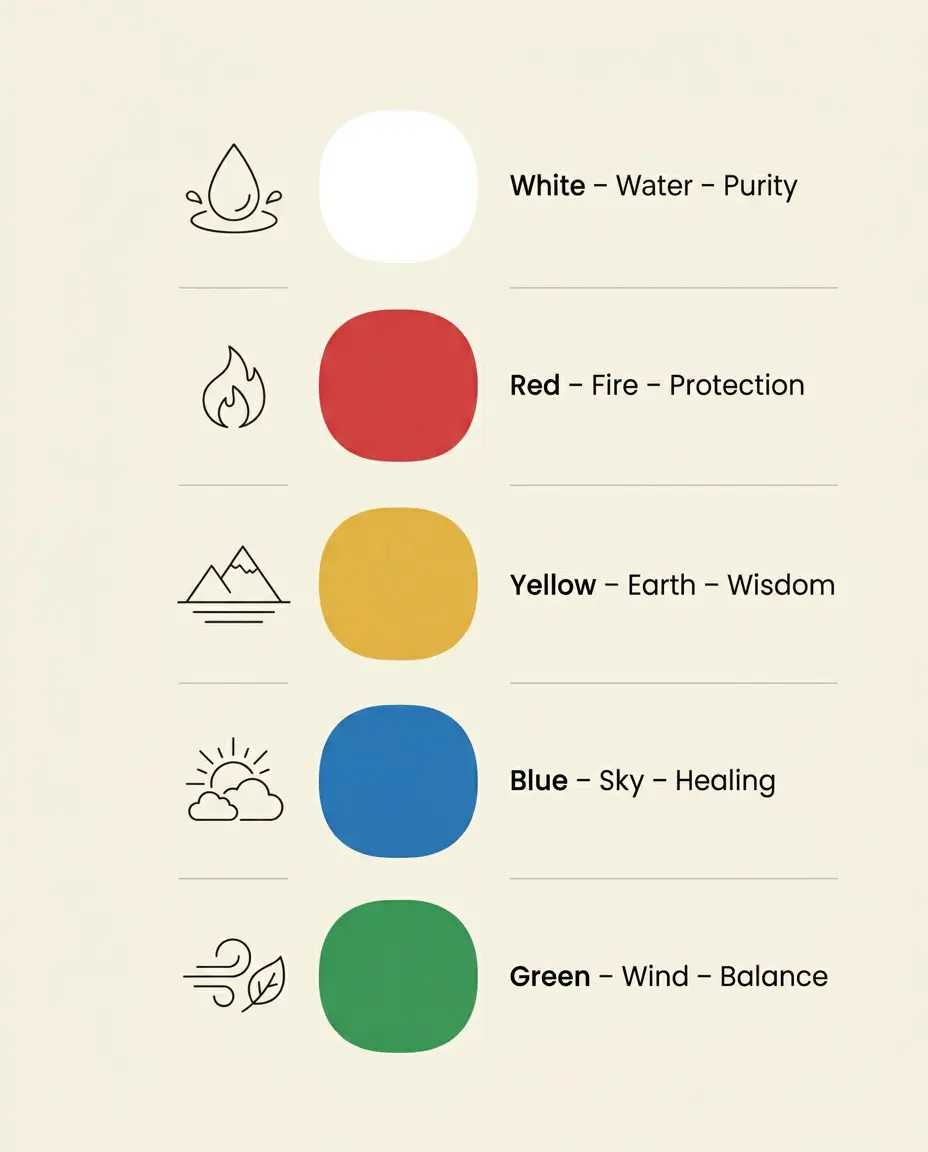
In Tibetan Buddhist tradition, the five sacred colors—white, red, yellow, blue, and green—are known as the Pancha-Varna, the auspicious hues believed to have surrounded the Buddha at his enlightenment. Each color is tied to an element and a quality of mind, which is why color is one of the first things to consider when choosing a bracelet.
| Color | Element | Believed Meaning |
|---|---|---|
| White | Water | Purity, peace, and clarity of mind |
| Red | Fire | Life force, protection, and strength |
| Yellow / Gold | Earth | Wisdom, rootedness, and abundance |
| Blue | Sky / Space | Healing, wisdom, and the infinite |
| Green | Wind / Air | Balance, growth, and harmony |
A five-color bracelet isn’t just decorative. Wearing all five Pancha-Varna colors together is believed to align you with all five elements at once—a balanced, all-purpose choice. If you’d rather lead with a single intention, pick the color that matches what you need most right now: red when you want protection, blue when you’re seeking calm, green when life feels off balance.
Materials & Types of Tibetan Bracelets
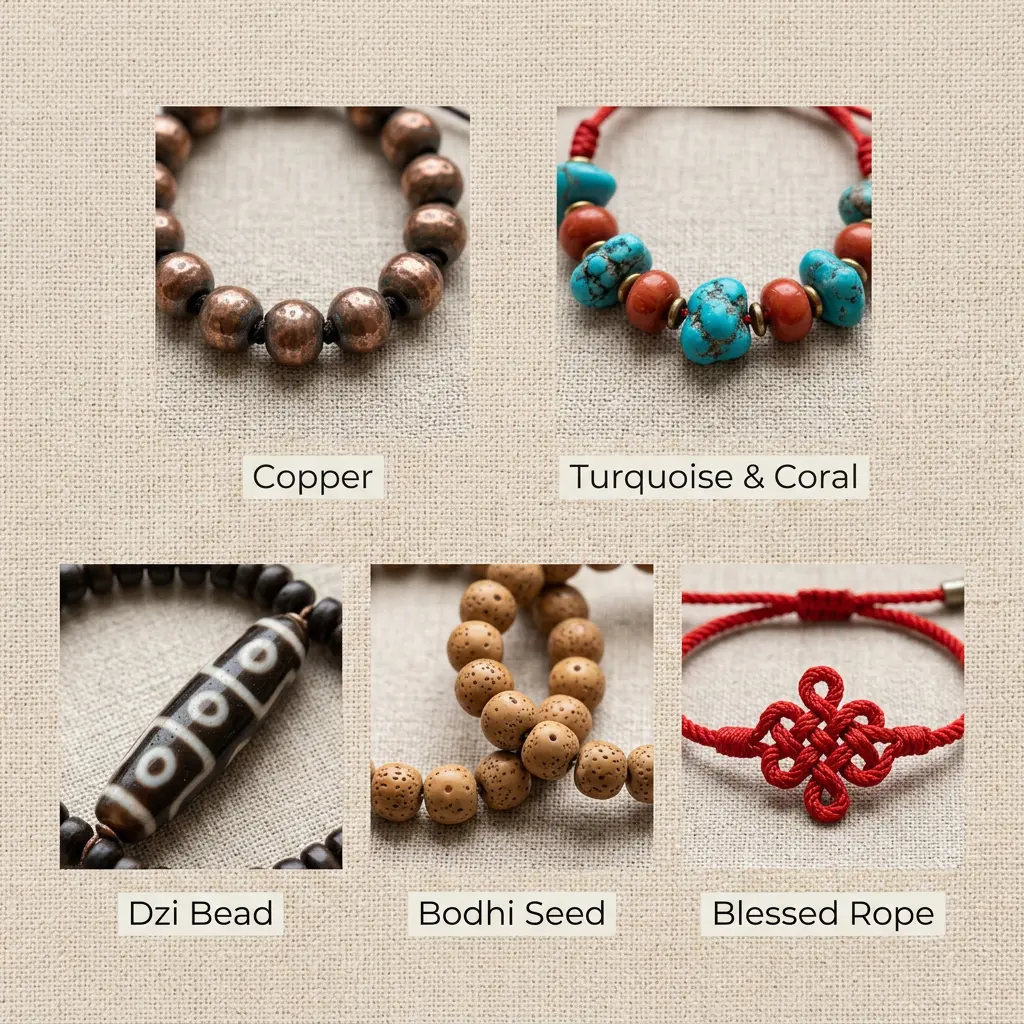
Tibetan bracelets are made from natural, spiritually significant materials—blessed cord, copper, turquoise and red coral, yak bone, bodhi seed, sandalwood, and dzi agate—and each material is chosen for a specific intention rather than appearance alone. Knowing what each one represents makes choosing far easier.
| Material / Type | Best For (Intention) | Suggested Wrist | Quick Care |
|---|---|---|---|
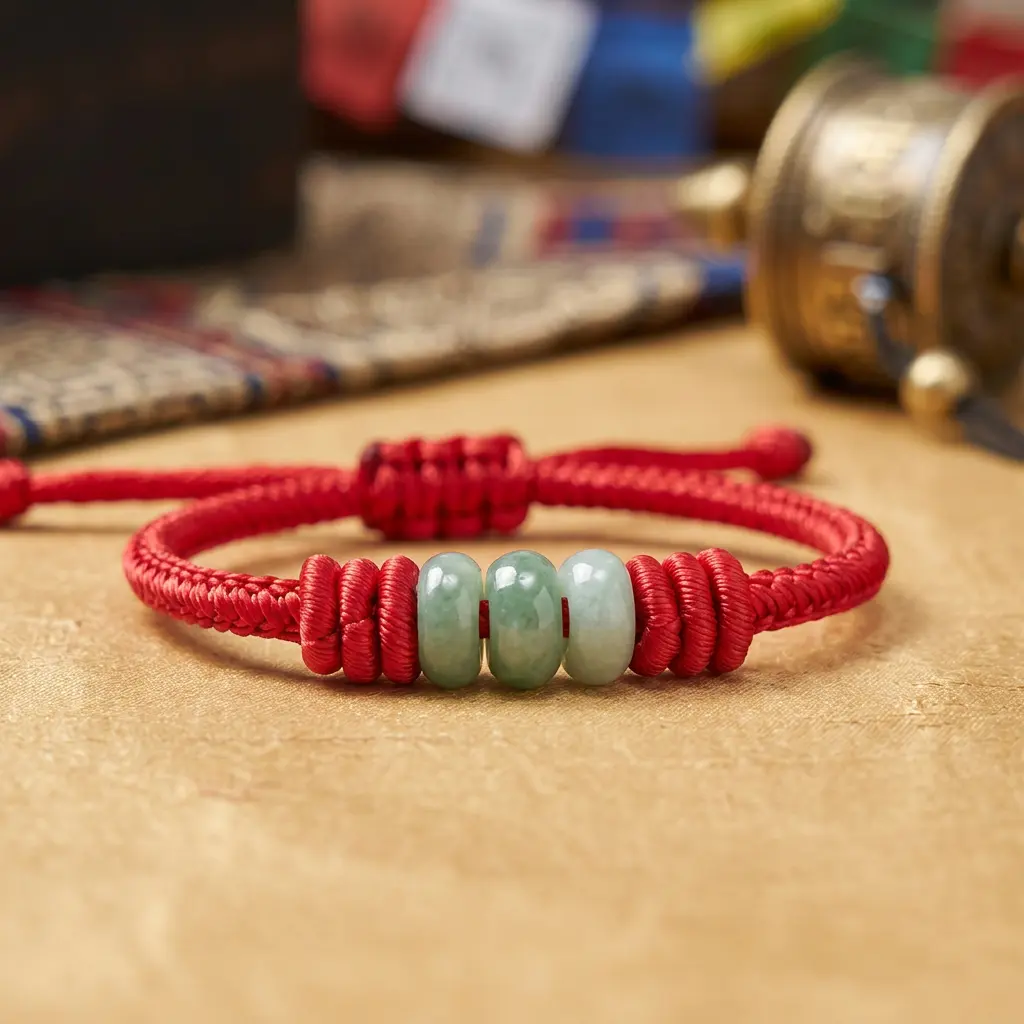
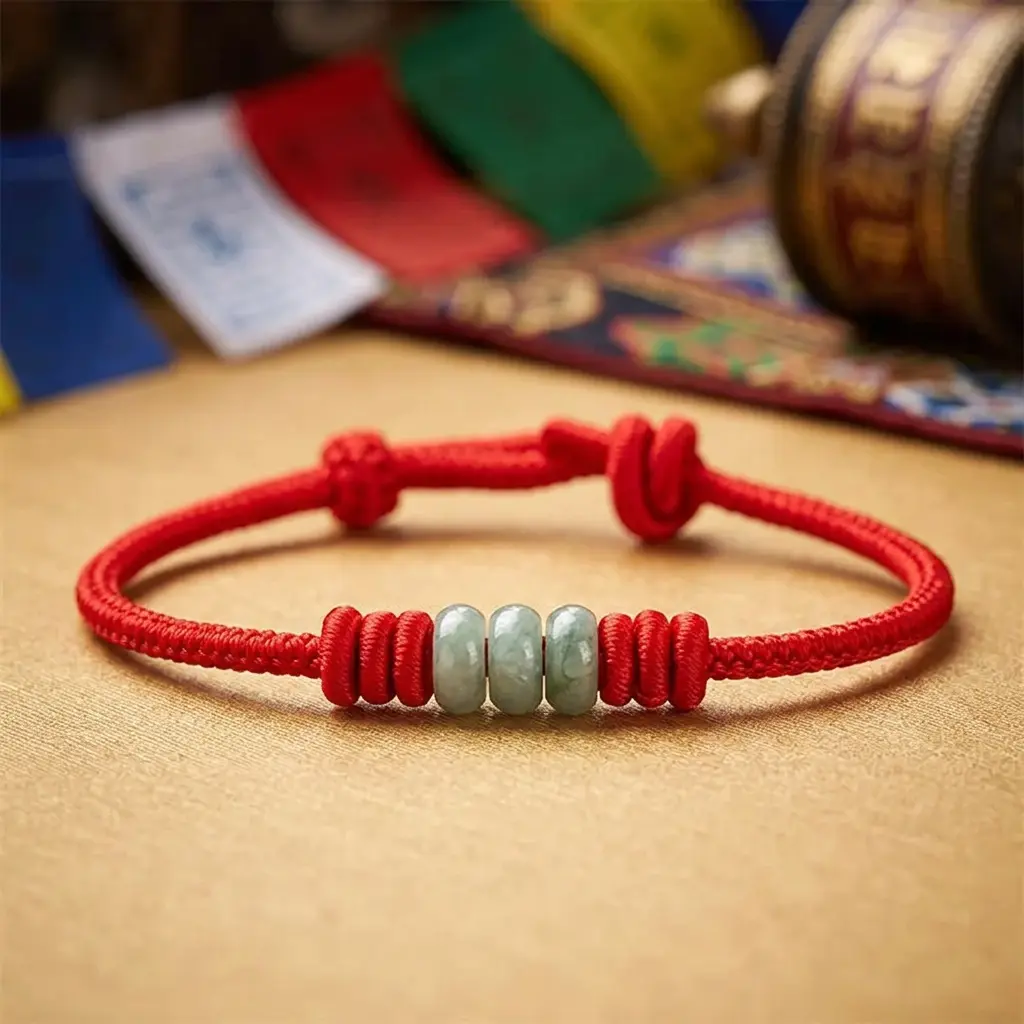
| Blessed rope / knot | Everyday protection | Left | Keep dry; avoid water |
| Copper | Grounding & healing | Either | Wipe clean; let patina form |
| Turquoise & red coral | Protection & vitality | Left | Avoid harsh chemicals |
| Bodhi seed / sandalwood | Meditation & focus | Either | Keep dry; oil lightly |
| Dzi (agate) | Fortune & protection | Left | Smoke or moonlight cleanse |
| Yak bone | Impermanence & mindfulness | Either | Keep dry; wipe clean |
The traditional pairing of turquoise and red coral shows up constantly in Tibetan jewelry because the two stones are believed to balance each other—coral’s vital, protective energy alongside turquoise’s calming, healing quality.
The natural materials carry teachings of their own. Bodhi seeds connect the wearer to the tree under which the Buddha reached enlightenment, making them a favorite for meditation bracelets. Yak bone, by contrast, is a reminder of impermanence and the interconnectedness of all life—a quietly powerful choice for staying grounded in the present.
A Quick Word on Dzi Beads
Dzi beads—called “heaven’s beads”—are agate stones marked with mysterious “eyes,” and the number of eyes is believed to change the bracelet’s meaning. A three-eye dzi is associated with wealth and the three stars of luck (happiness, honor, and longevity), while a nine-eye dzi is considered the most powerful of all. If you’re drawn to these, our breakdown of what each eye count means walks through how to choose.
Not sure where to start? A simple copper healing bracelet suits almost everyone, while a red string knot bracelet is the classic protection piece. Browse the full PotalaStore Tibetan bracelet collection to match a material to your intention.
Which Hand Should You Wear a Tibetan Bracelet On?
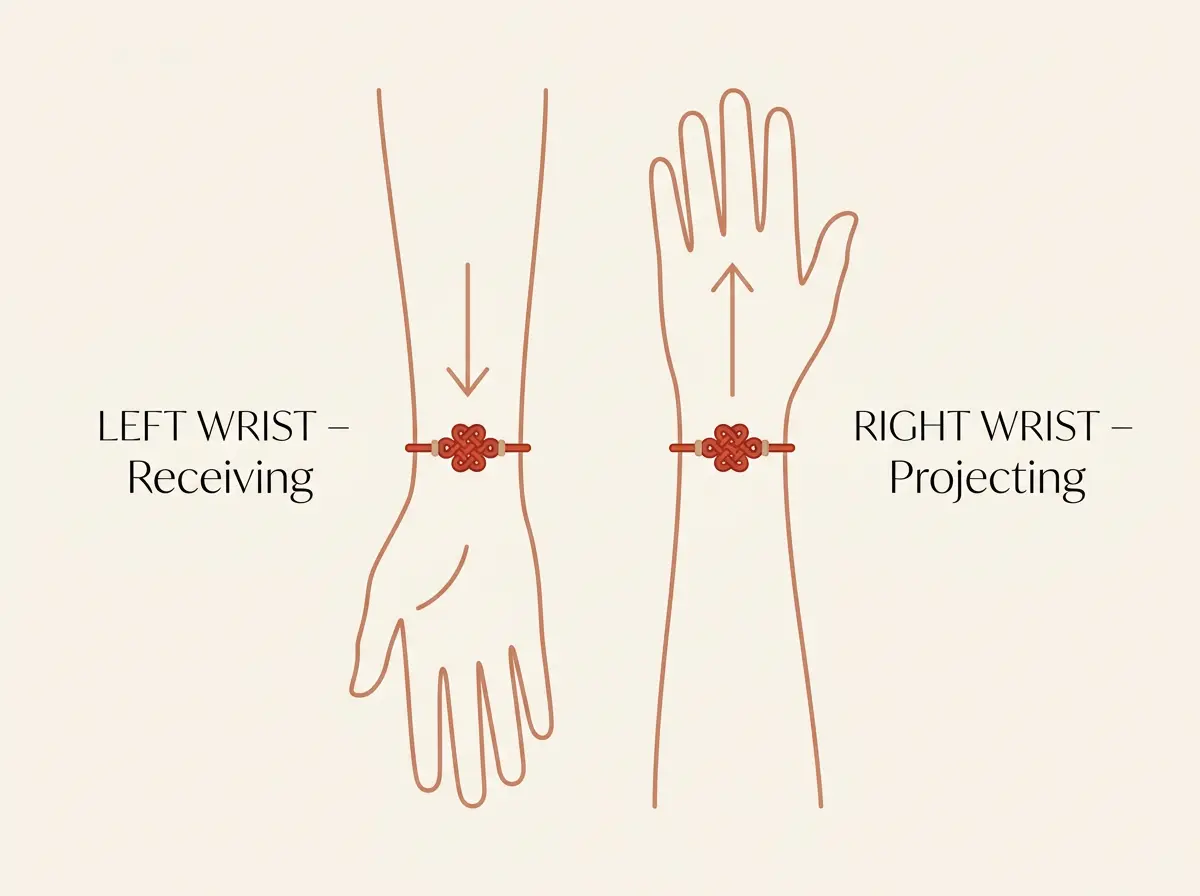
Traditionally, you wear a Tibetan bracelet on your left wrist—the “receiving” side of the body, closest to the heart—to draw in protection and blessings. Wear it on your right wrist, the “projecting” side, when you want to send positive energy and intentions outward. Both are correct; the choice depends on what you’re after.
- Left wrist (receiving): absorb protection, healing, and calm.
- Right wrist (projecting): radiate intention, manifest goals, share energy.
How to Activate Your Bracelet (4 Steps)
Before wearing a new bracelet, many practitioners “activate” it. It takes only a few minutes, and the key is sincere intention rather than perfect execution—so don’t worry about getting it flawless your first time.
- Cleanse it: pass it through sage or incense smoke, or rest it under moonlight overnight, to clear residual energy.
- Hold it: cup the bracelet in both hands to create a connection between you and the piece.
- Set your intention: silently name what you want it to support—protection, focus, healing.
- Recite the mantra: say Om Mani Padme Hum, then slip it onto your chosen wrist.
One honest note from experience: people often expect a dramatic feeling, and that’s not really the point. The bracelet works as a daily reminder. I wear a red cord during stressful work weeks, and every time I glance down, it cues one slow breath. That small, repeated pause is the real benefit. For more on matching mantras to intentions, see our mantra jewelry guide.
How to Tell If a Tibetan Bracelet Is Authentic
An authentic Tibetan bracelet shows natural material variation, handcrafted imperfections, and a verifiable blessing—and because fair wages and real materials cost money, genuine handmade pieces generally start around $25–$30. Anything far below that is almost certainly mass-produced. (At the rare, collectible end, antique dzi beads can sell for thousands of dollars and up.) Here’s how to check before you buy:
- Look for natural variation: real turquoise has matrix veining and slight color shifts; genuine obsidian feels cool, then warms in your hand. Flawless uniformity is a red flag.
- Ask about provenance: who tied it, and was it blessed? Every PotalaStore bracelet is hand-tied over 1–3 days and consecrated in partnership with the Sera Jhe and Kopan Monasteries, two respected Tibetan Buddhist institutions still active today.
- Watch the metal: avoid cheap “Tibetan silver” that can contain lead. Genuine pieces use copper, sterling silver, or natural stone.
- Mind the time: a real handmade knot bracelet takes roughly 30–50 minutes of hand-tying—craftsmanship you can feel.
And if you feel a moment of hesitation before buying—wondering whether you’re being respectful—that instinct is worth honoring. It usually means you already care enough to do this right. You can wear a Tibetan bracelet whether or not you’re Buddhist; what matters is approaching it with respect.
This is also where our own story matters. Our founder, Yang Tso, is a Tibetan Buddhist practitioner who has traveled to monastery puja ceremonies for years to keep our blessing process authentic rather than decorative. That direct relationship—not a warehouse and a logo—is what stands behind the word “blessed” when we use it. A genuine bracelet should come with that kind of traceable story, and you’re right to ask for one.
Wear a Blessing, Not Just an Accessory
Every PotalaStore bracelet is hand-tied and blessed in partnership with Himalayan monasteries—with a 30-day return promise so you can choose with confidence.Shop Monastery-Blessed Bracelets →
⚠️ Important Note: The information about spiritual, protective, and energy properties here is based on traditional Tibetan Buddhist beliefs and personal experience, not scientific evidence. This content is for educational purposes and is not a substitute for professional medical or mental-health advice.
Frequently Asked Questions
Yes. Tibetan tradition welcomes anyone who approaches sacred objects with genuine respect, and the bracelet works as a tool for mindfulness and protection regardless of your faith. The Dalai Lama himself has said he’s less interested in converting people than in helping them become happier and kinder.
In Tibetan tradition, a broken bracelet is generally seen as positive or neutral—the piece has “completed its work,” absorbing or redirecting the energy it was meant to address. It isn’t considered bad luck. You can read more about why in our guide on why a broken protection bracelet isn’t a bad sign.
Authentic ones are. Every PotalaStore bracelet is hand-tied over 1–3 days while artisans recite Om Mani Padme Hum, and our pieces are consecrated in partnership with monks at the Sera Jhe and Kopan Monasteries. Mass-produced bracelets skip this step entirely.
Genuine handcrafted, blessed bracelets generally start around $25–$30, with most quality knot and copper pieces falling in the $30–$60 range. Rare antique dzi beads are the exception and can reach into the thousands. If a “blessed” bracelet costs only a few dollars, it’s almost certainly machine-made.
📚 References
- The Endless Knot & Eight Auspicious Symbols: Overview of the Ashtamangala and the endless knot’s link to Samsara in Buddhist iconography. Wikipedia
- Om Mani Padme Hum: Background on the six-syllable mantra of Avalokiteshvara and its meaning. Wikipedia
- Dzi Beads: Cultural significance and valuation of Tibetan dzi agate beads. Wikipedia
- Buddhism in Tibet: Historical context for the 7th-century arrival of Buddhism in Tibet. Encyclopædia Britannica