
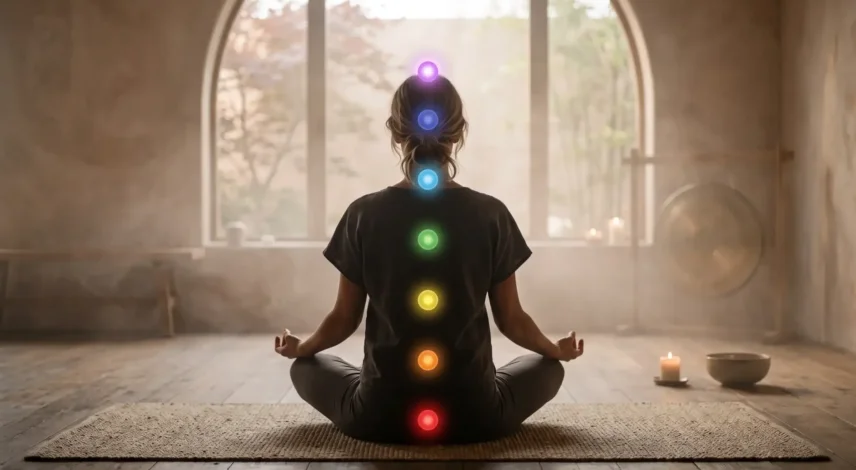

The seven chakras are the seven main energy centers that run from the base of your spine to the crown of your head. In traditional yogic thought, each one governs a different part of your physical, emotional, and spiritual life. When energy flows freely through all seven, you feel balanced and grounded. When one is blocked, that area of life often feels stuck.
If the whole idea sounds a little abstract, you are not alone. Most people meet the chakra system for the first time in a yoga class or a meditation app, with no real map for what any of it means. This guide is that map. You will learn each chakra’s color, location, and meaning, how to spot a blocked energy center, and a few simple ways to bring things back into balance.
At PotalaStore, we work directly with Himalayan artisans who have made chakra jewelry and prayer beads for generations. That background shapes how we explain this topic: with respect for a tradition thousands of years old, and without the health promises you will find on some wellness sites. Think of the chakras as a practical framework for self-reflection, not a medical diagnosis.
Here is the short version before we go deeper. There are seven main chakras, each tied to a color of the rainbow, a location along the spine, and a theme such as safety, creativity, or intuition. You do not need to memorize all seven today. Starting with just one is exactly how most beginners begin.
Table of Contents
What Are the Seven Chakras?

The seven chakras are seven spinning centers of energy positioned along the spine, from its base to the top of the head, each linked to a specific color, body region, and life theme. In traditional practice, they are meant to stay open so that energy can move freely from one center to the next.
The seven chakras are mapped along the body’s central energy channel, known in yoga as the Sushumna Nadi. Some traditions describe many more minor points, but these seven are the ones almost everyone means when they talk about chakras.
What the Word “Chakra” Actually Means
Chakra (cakra in Sanskrit) means “wheel” or “disk.” Ancient yogic texts pictured each chakra as a spinning wheel that keeps life force, called prana, moving through the body. When a wheel turns freely, energy flows. When it slows or jams, that part of life can feel heavy or off balance.
A Brief History: From the Vedas to Modern Wellness
The chakra system first appeared in the Vedas, a collection of sacred Indian texts written roughly between 1500 and 1000 BC. For most of that history, the chakras belonged to yoga and meditation rather than Western wellness. They reached a wider audience only recently, as yoga spread around the world. In our own work with Himalayan artisans, we have seen how differently the system is treated in its home tradition, where it is tied to disciplined daily practice rather than quick fixes.
The Lower Chakras: Your Energetic Foundation
The three lower chakras handle your foundation: safety, emotion, and personal power. Before we break each one down, here is the full seven-chakra system at a glance.
| # | Chakra (Sanskrit) | Color | Location | Governs |
|---|---|---|---|---|
| 1 | Root (Muladhara) | Red | Base of spine | Safety, grounding, survival |
| 2 | Sacral (Svadhisthana) | Orange | Below the navel | Emotion, creativity, pleasure |
| 3 | Solar Plexus (Manipura) | Yellow | Upper abdomen | Confidence, willpower, identity |
| 4 | Heart (Anahata) | Green | Center of the chest | Love, compassion, connection |
| 5 | Throat (Vishuddha) | Blue | Throat | Communication, truth, expression |
| 6 | Third Eye (Ajna) | Indigo | Between the eyebrows | Intuition, insight, imagination |
| 7 | Crown (Sahasrara) | Violet | Top of the head | Awareness, purpose, spirituality |
The Seven Chakras7. Crown (Sahasrara)Violet · Top of the head · Awareness6. Third Eye (Ajna)Indigo · Between the eyebrows · Intuition5. Throat (Vishuddha)Blue · Throat · Communication4. Heart (Anahata)Green · Center of the chest · Love3. Solar Plexus (Manipura)Yellow · Upper abdomen · Confidence2. Sacral (Svadhisthana)Orange · Below the navel · Creativity1. Root (Muladhara)Red · Base of spine · GroundingThe seven chakras from crown to root, with each center’s color, Sanskrit name, and location.
The lower chakras (root, sacral, and solar plexus) connect you to your body and the physical world. They cover your most basic needs, from feeling safe to feeling confident enough to act.
Root Chakra (Muladhara): Safety and Grounding
Your root chakra (Muladhara) sits at the base of the spine, and its color is red. The root chakra is all about grounding: feeling safe, stable, and rooted in your body. When it is balanced, you feel steady and secure. When it is blocked, practitioners link it to anxiety about money, restlessness, and lower-back tension. Many people work with grounding stones here. Black obsidian is a traditional choice, and you can read more in our guide to black obsidian for root chakra grounding.
Sacral Chakra (Svadhisthana): Creativity and Emotion
The sacral chakra (Svadhisthana) sits just below the navel and glows orange. It governs emotion, creativity, and pleasure, and it shapes how you relate to your own feelings and to other people. A balanced sacral chakra supports easy creative flow and healthy emotional connection. When it is blocked, you may feel creatively stuck, emotionally numb, or swept away by mood swings.
Solar Plexus Chakra (Manipura): Confidence and Willpower
The solar plexus chakra (Manipura) sits in the upper abdomen and is yellow. It is the center of personal power, tied to confidence, willpower, and your sense of identity. When it is strong, you feel capable and in control of your choices. When it is blocked, common signs include low self-worth, indecision, and digestive discomfort such as heartburn.
The Upper Chakras: Connection, Expression, and Insight
The upper chakras govern how you love, speak, sense, and connect to something larger than yourself. The heart sits in the middle and works as a bridge between the lower, physical centers and the higher, spiritual ones.
Heart Chakra (Anahata): The Bridge of Love
The heart chakra (Anahata) sits at the center of the chest and is green. It rules love, compassion, and connection, and it acts as the bridge between the three lower chakras and the three upper ones. A balanced heart chakra makes it easier to give and receive love. When it is blocked, people often put everyone else’s needs first and end up feeling lonely or closed off.
Throat Chakra (Vishuddha): Communication and Truth
The throat chakra (Vishuddha) sits at the throat and is blue. It governs communication, honest expression, and speaking your truth. When it flows well, you say what you mean with calm confidence. When it is blocked, you may struggle to speak up, talk over others, or feel that your voice is not heard.
Third Eye Chakra (Ajna): Intuition and Insight
The third eye chakra (Ajna) sits between the eyebrows and is indigo. It governs intuition, insight, and imagination, the quiet inner sense that helps you read a situation beyond the obvious. A balanced third eye supports clear thinking and trust in your gut. When it is blocked, you may feel foggy, uninspired, or cut off from your intuition.
Crown Chakra (Sahasrara): Awareness and Purpose
The crown chakra (Sahasrara) sits at the top of the head and is violet or white. It represents awareness, purpose, and spiritual connection, and it is seen as the center that helps keep all the others open. When it is balanced, you feel a sense of meaning and connection. When it is blocked, life can feel cynical, scattered, or empty of purpose.
How Do You Know If a Chakra Is Blocked?
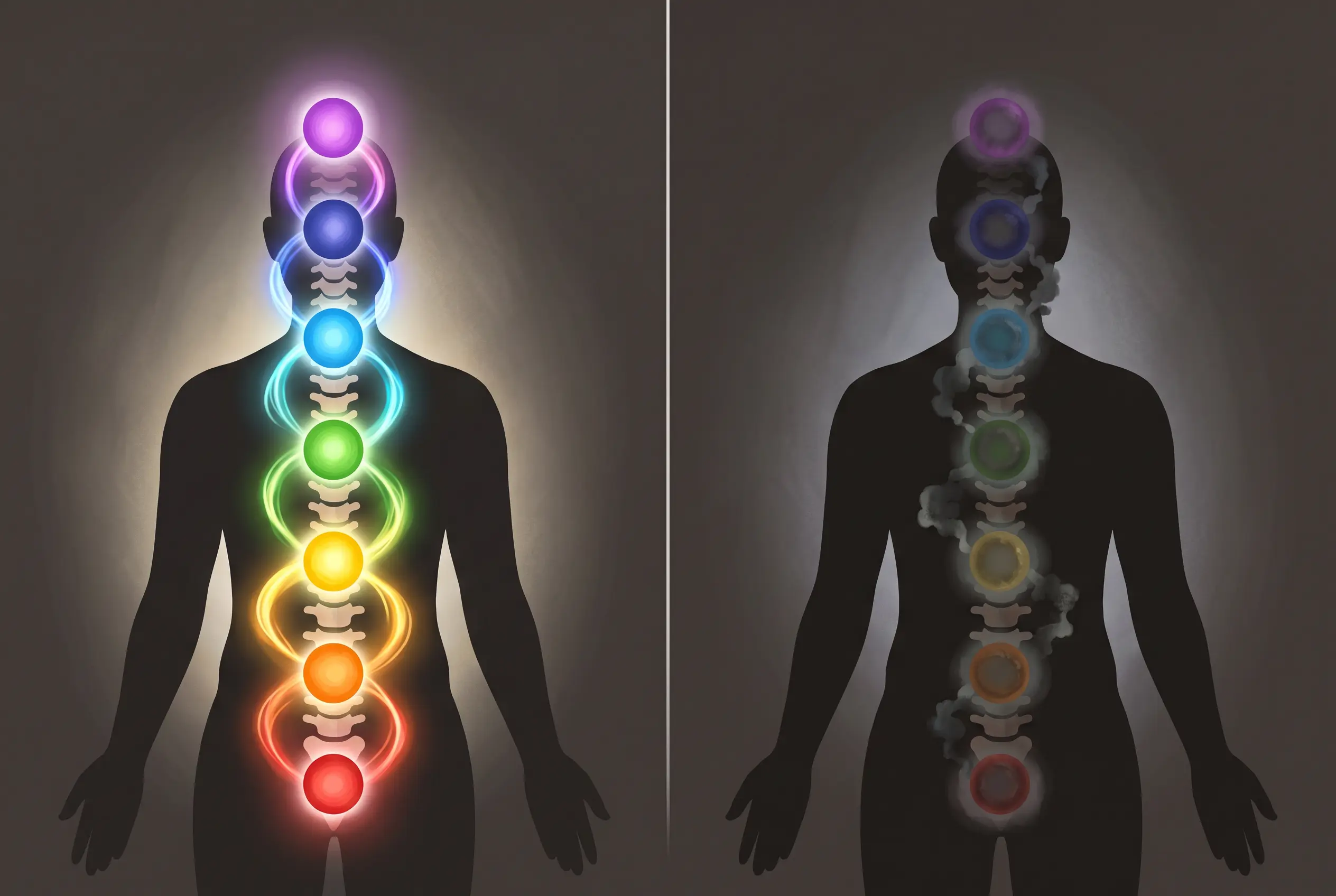
A blocked chakra usually shows up as ordinary physical or emotional symptoms, not anything dramatic. The exact signs depend on which energy center is affected, and they tend to fall into two groups.
If this feels like a lot, you are not doing it wrong. Start by noticing just one pattern that sounds familiar to you, then focus your attention there. Working with one chakra at a time is far easier than trying to balance all seven at once.
Physical Signs of an Imbalance
Practitioners commonly link a blocked chakra to physical patterns in its part of the body:
- Root: lower-back pain, fatigue, or feeling ungrounded.
- Sacral: stiff hips, low energy, or reproductive discomfort.
- Solar plexus: digestive trouble such as heartburn or indigestion.
- Heart: chest tightness or shallow, guarded breathing.
- Throat: a sore throat, jaw tension, or thyroid concerns.
- Third eye: headaches or trouble concentrating.
- Crown: exhaustion or sensitivity to light and sound.
Emotional and Behavioral Signs
The emotional signs are often easier to notice than the physical ones:
- Root: anxiety about money, safety, or basic needs.
- Sacral: creative blocks or feeling emotionally flat.
- Solar plexus: low confidence, indecision, or control issues.
- Heart: trouble trusting, forgiving, or letting people close.
- Throat: holding back your opinions or fear of judgment.
- Third eye: feeling stuck, uninspired, or out of touch with your gut.
- Crown: cynicism, disconnection, or a lost sense of purpose.
Simple Ways to Balance Your Energy Centers
Balancing your chakras does not have to be complicated, and a few simple, consistent habits do most of the work. You do not need special training or expensive tools to begin. Pick one center to focus on, then use the practices below.
Meditation, Breath, and Affirmations
Three beginner-friendly practices work for every chakra:
- Meditation: spend 5 to 10 minutes picturing a wheel of the chakra’s color turning smoothly in its spot on the body.
- Breathwork: slow, deep belly breaths help settle the lower chakras and calm a busy mind.
- Affirmations: short spoken phrases give each center a clear intention, such as “I am safe” for the root or “I speak my truth” for the throat.
The key takeaway is consistency. Five focused minutes a day does more than one long session once a month.
Crystals, Color, and Sound

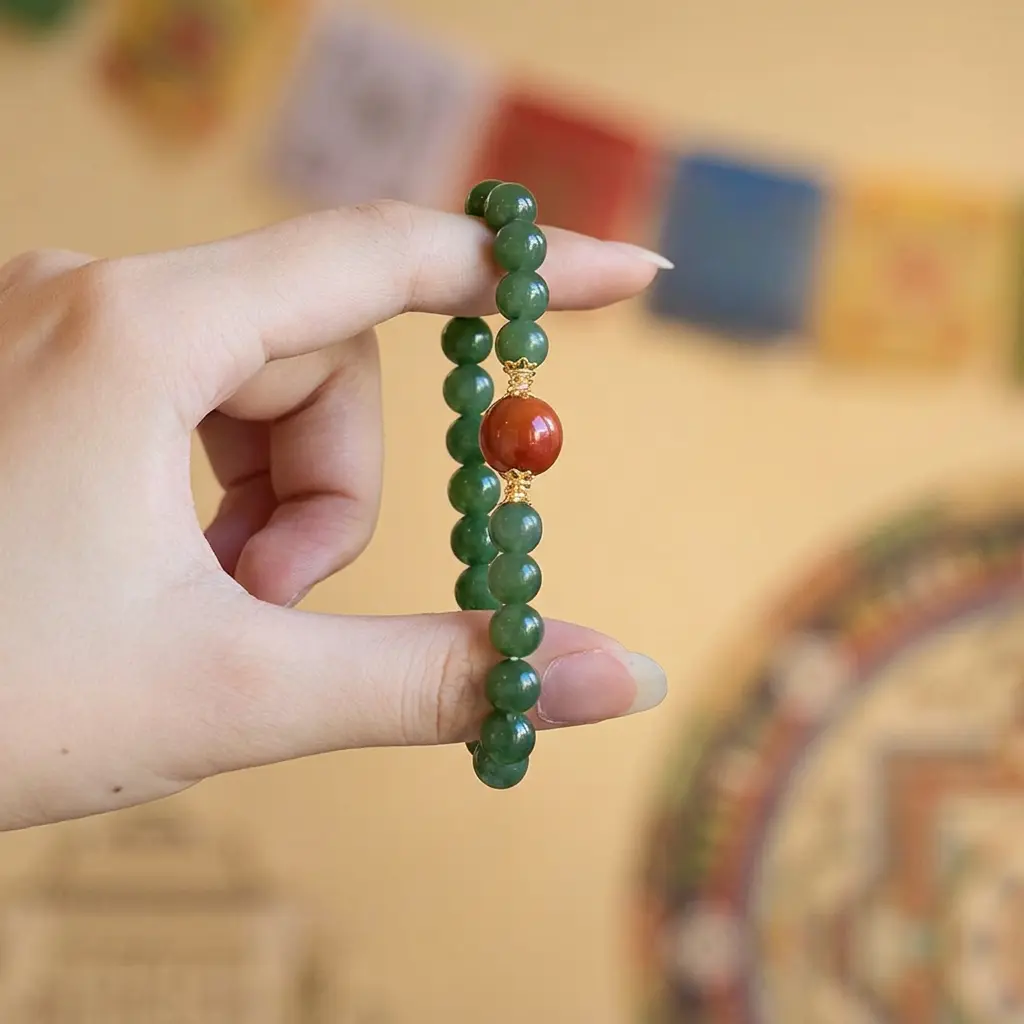
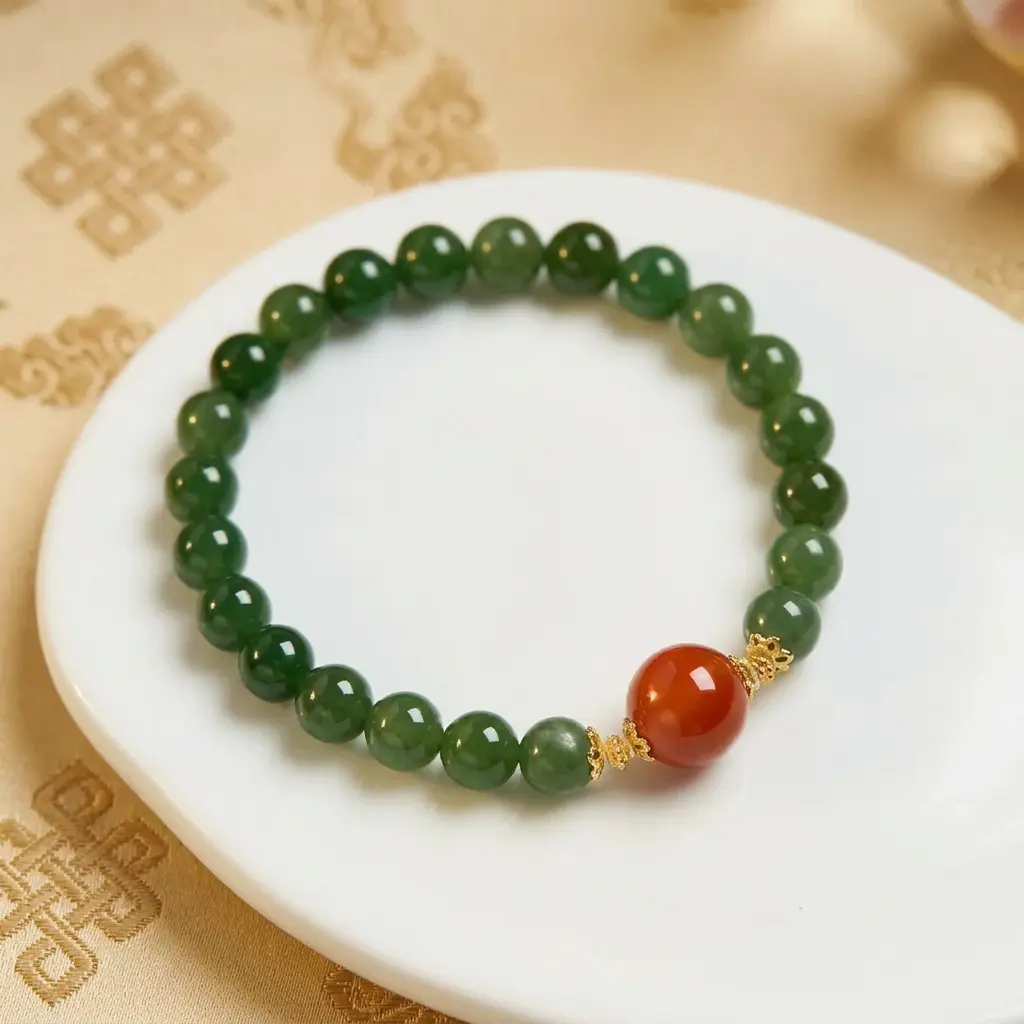
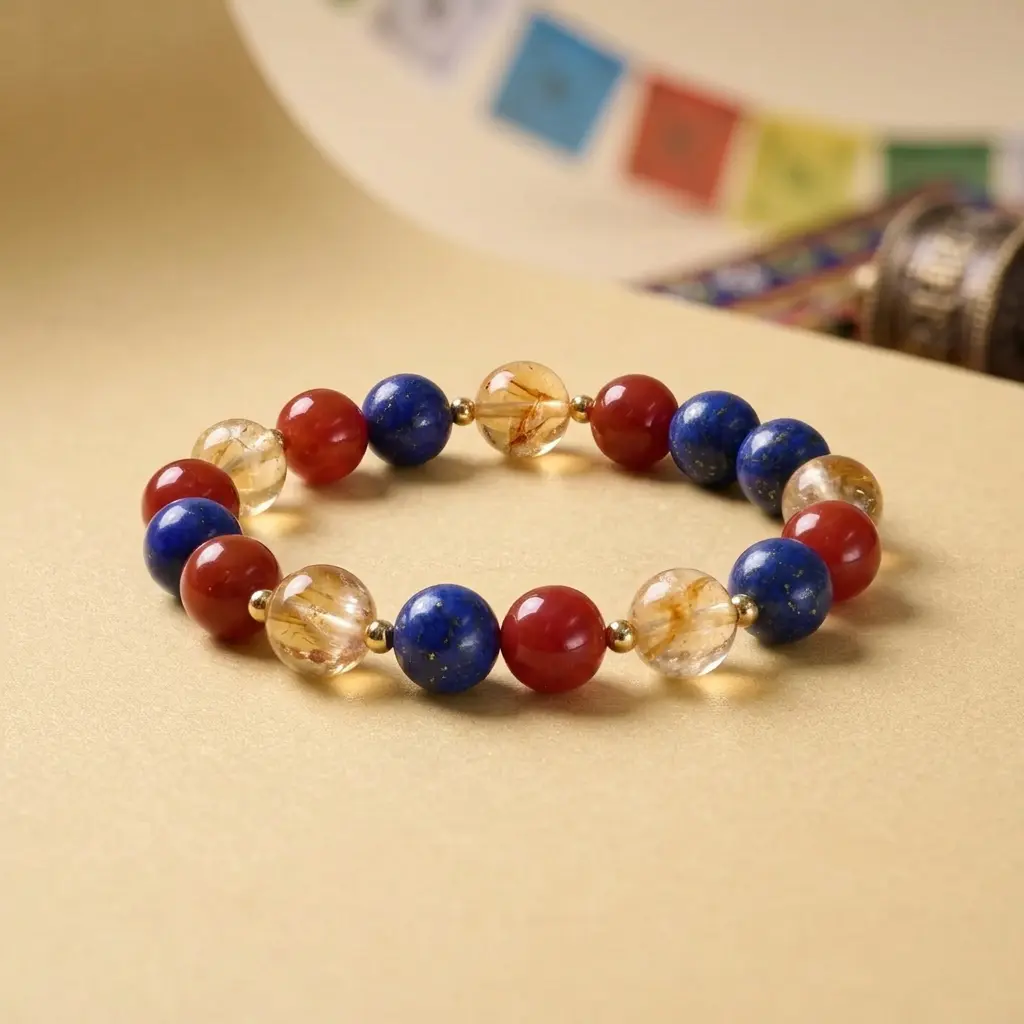
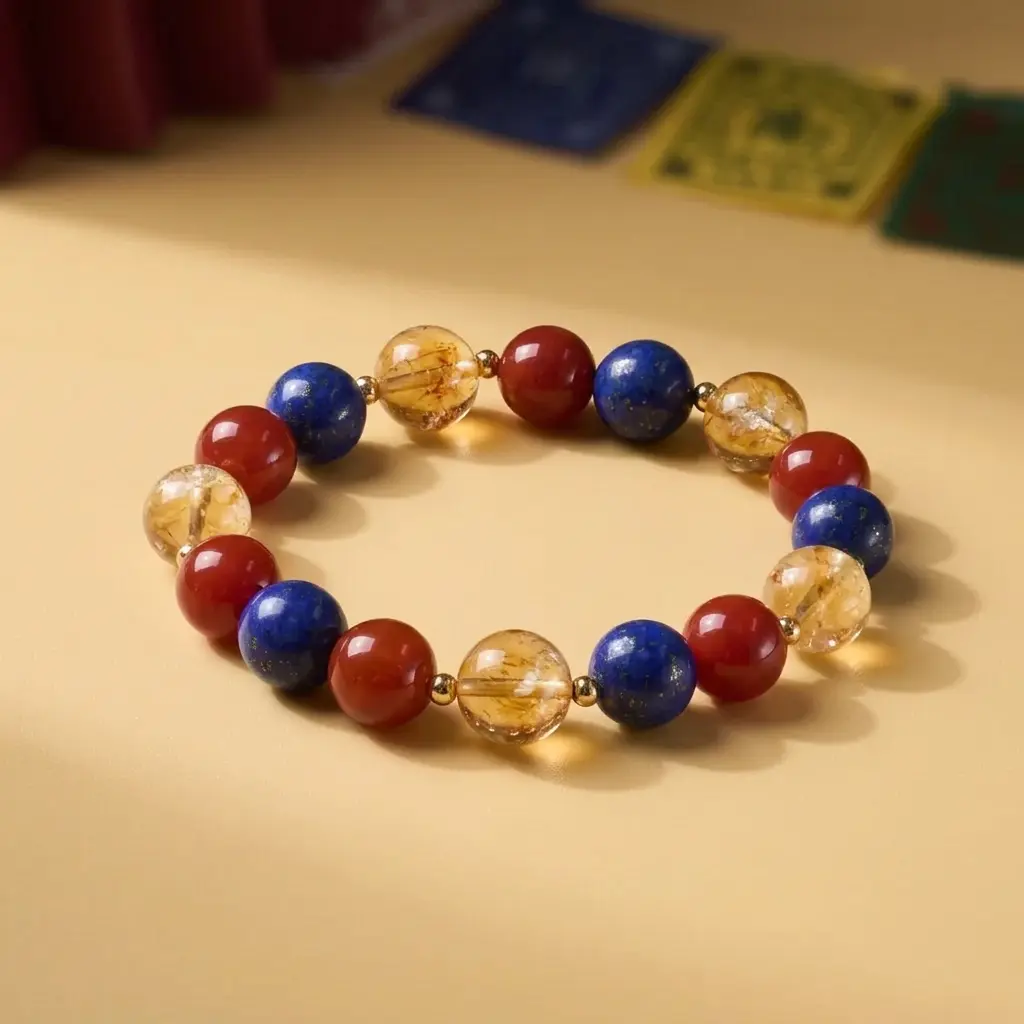
Working with color and stones is a simple way to bring your energy back into balance. Each chakra has a traditional color, and many people wear a matching gemstone as a daily reminder to check in. A 7 chakra bracelet carries one stone in each chakra’s color, from a red stone at the root to a violet one at the crown. In our own collection, each stone sits on an 8mm bead and is sourced from the Himalayan artisans we have worked with for years. You can explore our 7 chakra healing bracelet collection to find one that matches the energy you want to focus on.
If you are brand new to stones, our roundup of the best healing crystals for beginners is a good starting point, and which crystal bracelet matches your intention can help you choose your first piece. One practical tip: a few stones are best kept apart, which we cover in which crystals not to combine. Sound also helps here, and a singing bowl or a simple hum can be used to “tune” a center much like an instrument. Remember, a bracelet is a reminder to slow down and pay attention, not a remedy.
⚠ Important note: The information about chakras and energy properties reflects traditional spiritual beliefs and personal experience, not scientific evidence. It is meant for educational purposes and is not a substitute for professional medical or mental-health care. If you have a health concern, please speak with a qualified professional.
Frequently Asked Questions
From the base of the spine up: root (Muladhara), sacral (Svadhisthana), solar plexus (Manipura), heart (Anahata), throat (Vishuddha), third eye (Ajna), and crown (Sahasrara). They move from red at the root to violet at the crown.
Notice recurring patterns and match them to a center. Lower-back pain or money worry points to the root. Creative or emotional numbness points to the sacral. Low confidence points to the solar plexus. Start with the one pattern that feels most familiar.
Most people start with the root chakra, since grounding is the foundation for everything above it. Working with one chakra at a time is far less overwhelming than trying to balance all seven at once.
Chakras come from ancient yogic tradition and are best understood as a symbolic map for self-reflection rather than a medically verified part of anatomy. Many people find the framework helpful alongside professional care, not instead of it.
Bring the Seven Chakras Into Daily Life
A 7 chakra bracelet keeps your energy in focus, with one gemstone for each center, handcrafted by Himalayan artisans and shipped worldwide from PotalaStore.Shop 7 Chakra Bracelets →
📚 References
- Origins of the Chakra System: An academic overview of how the chakras appear in early Indian tradition. Source: “A Brief History of the Chakras in Human Body,” ResearchGate (readers may search ResearchGate for the current version).
- Chakra (Concept Overview): Encyclopedic background on the Sanskrit meaning, history, and the seven-chakra model. Wikipedia
- Locations and Signs of Blockage: A medically reviewed guide to each chakra’s location and commonly cited symptoms. Healthline
- Chakras and Yoga Practice: How the chakras connect to the elements and a beginner yoga practice. Yoga Journal