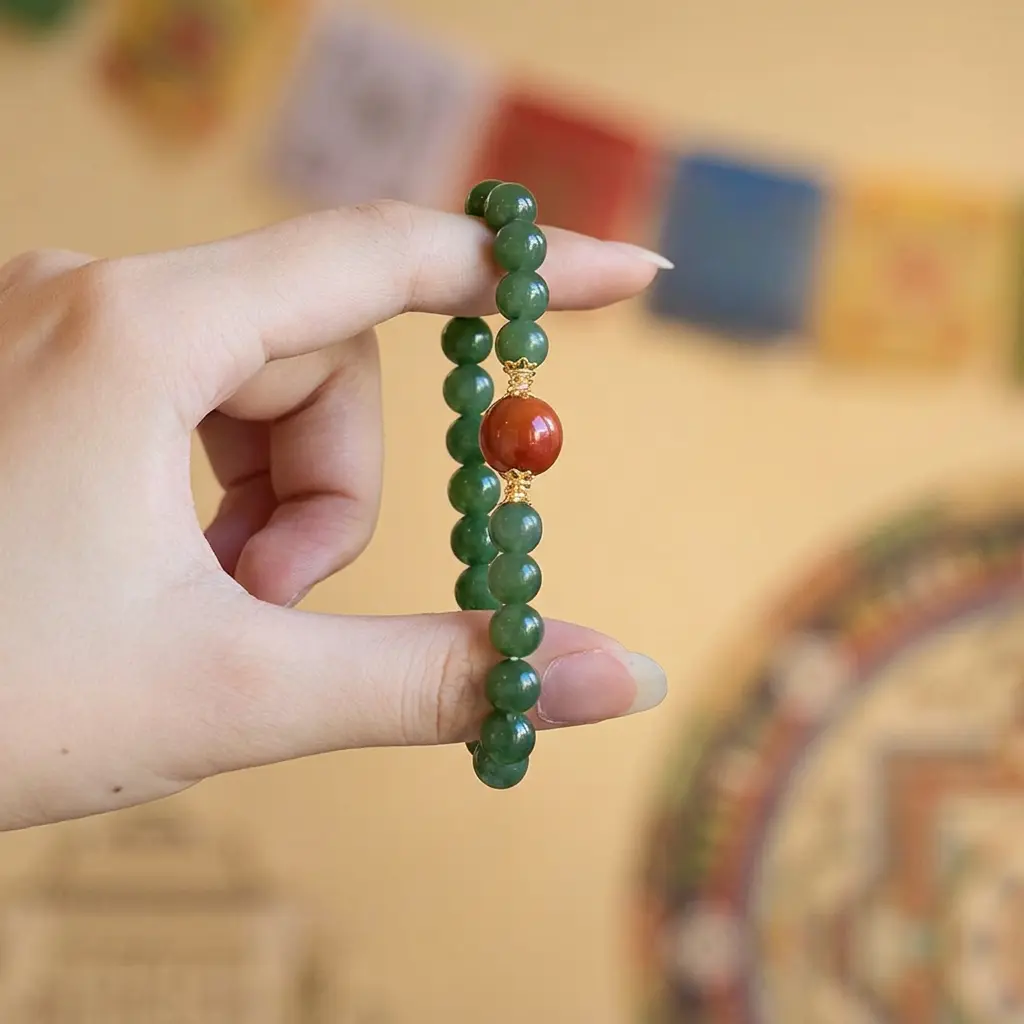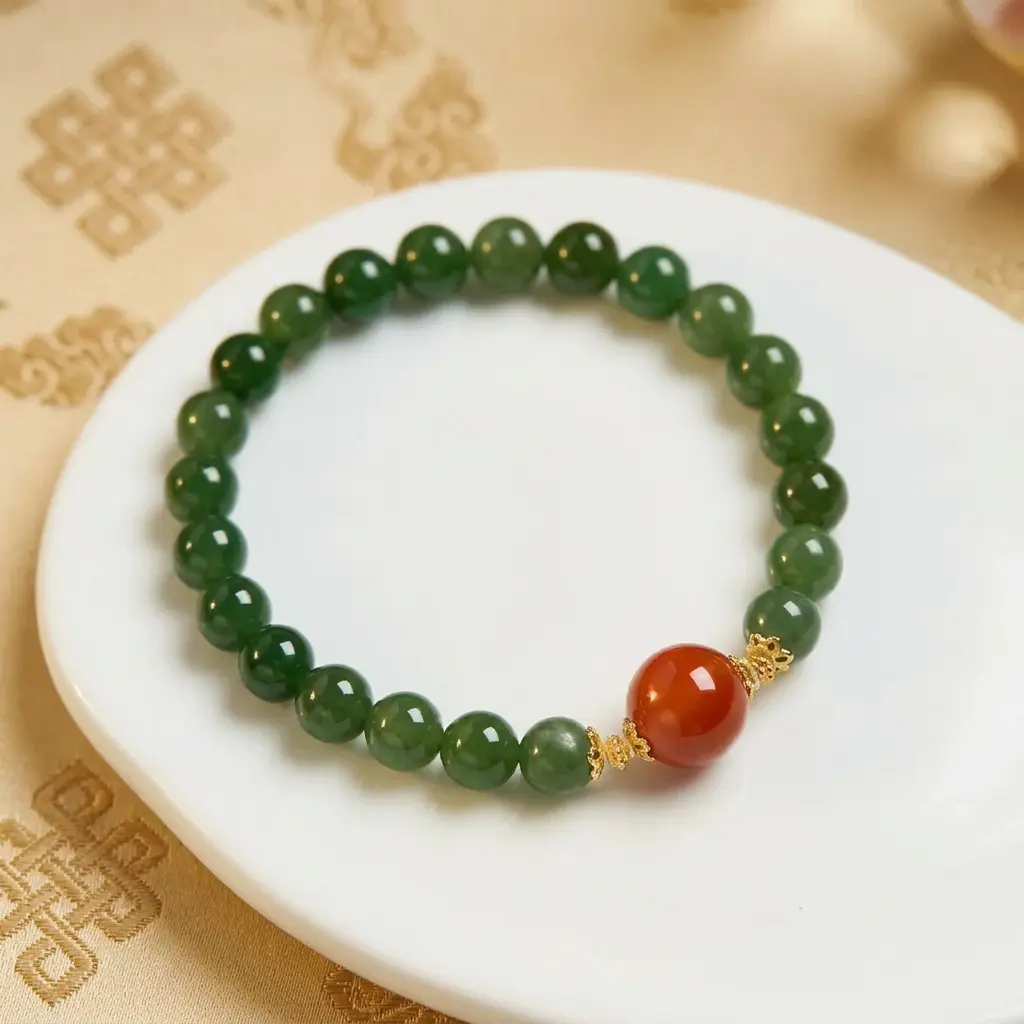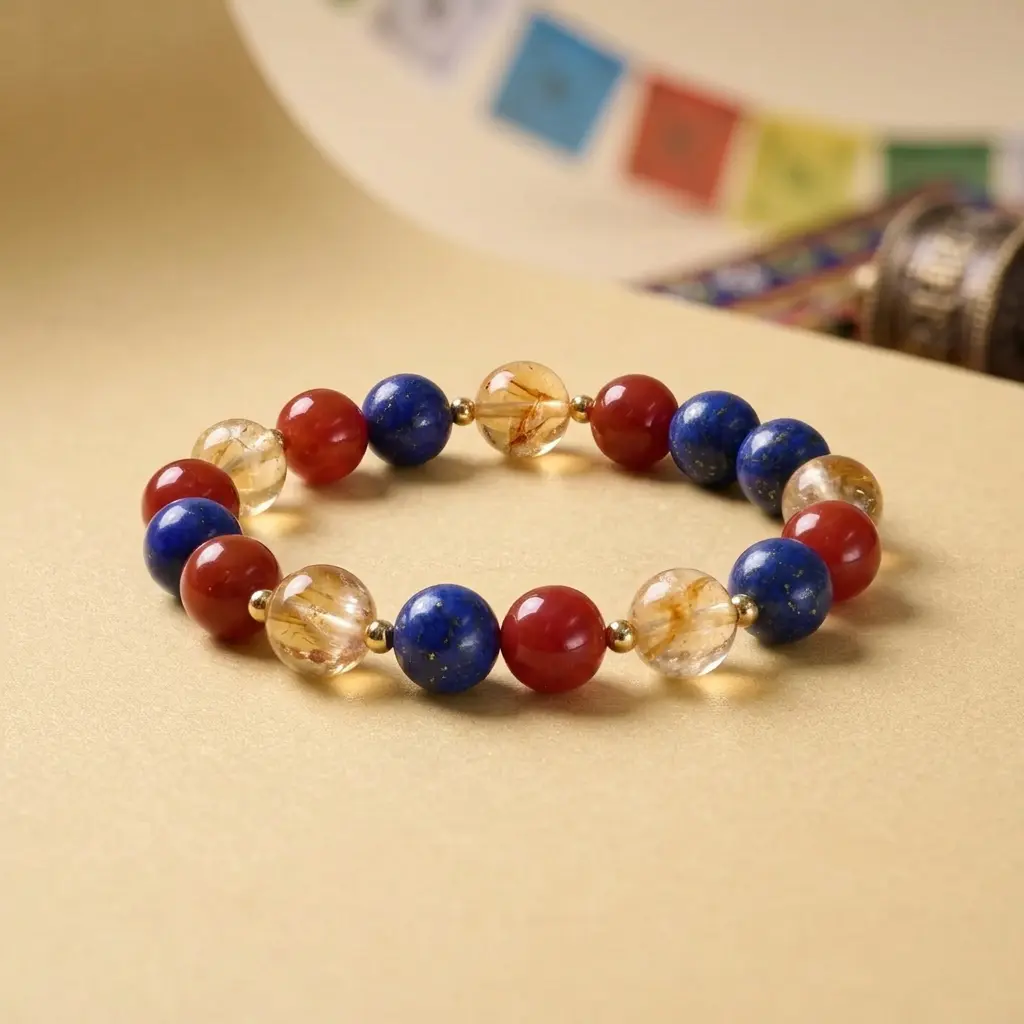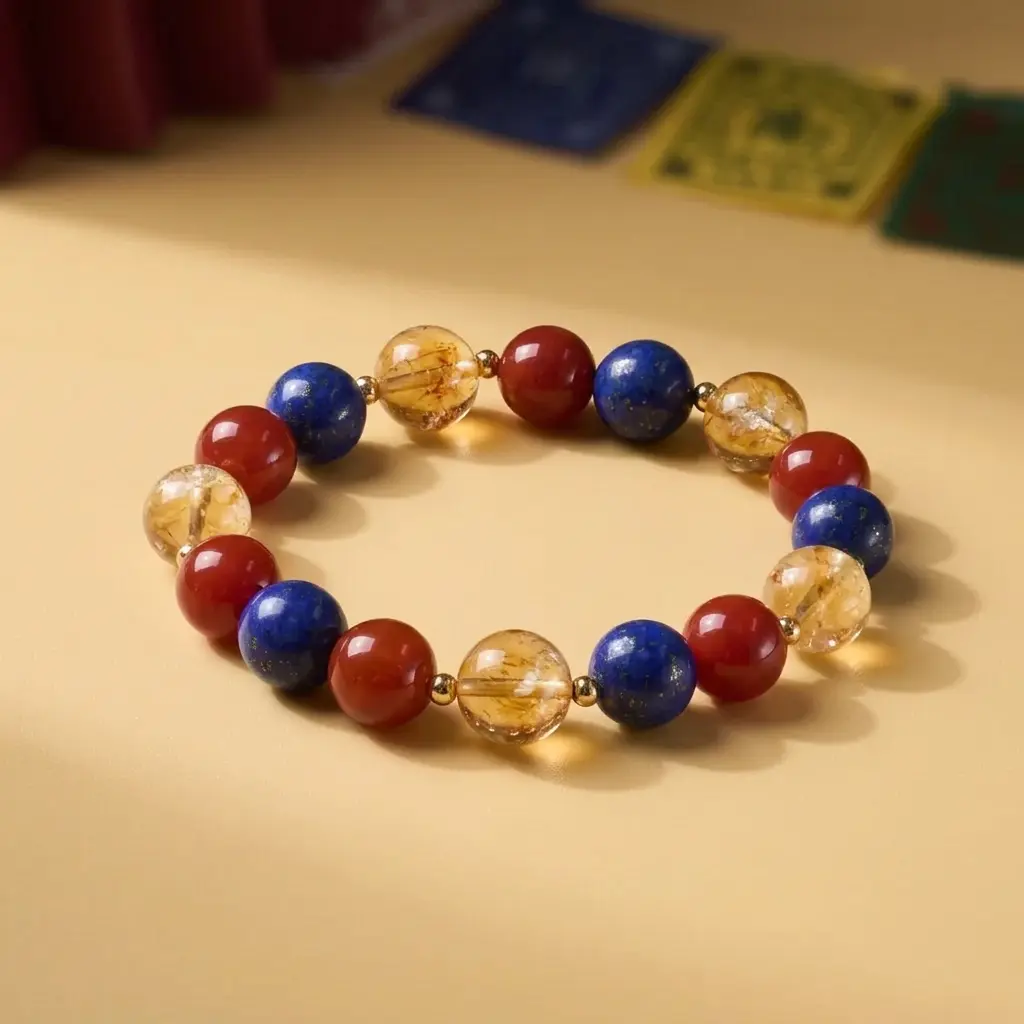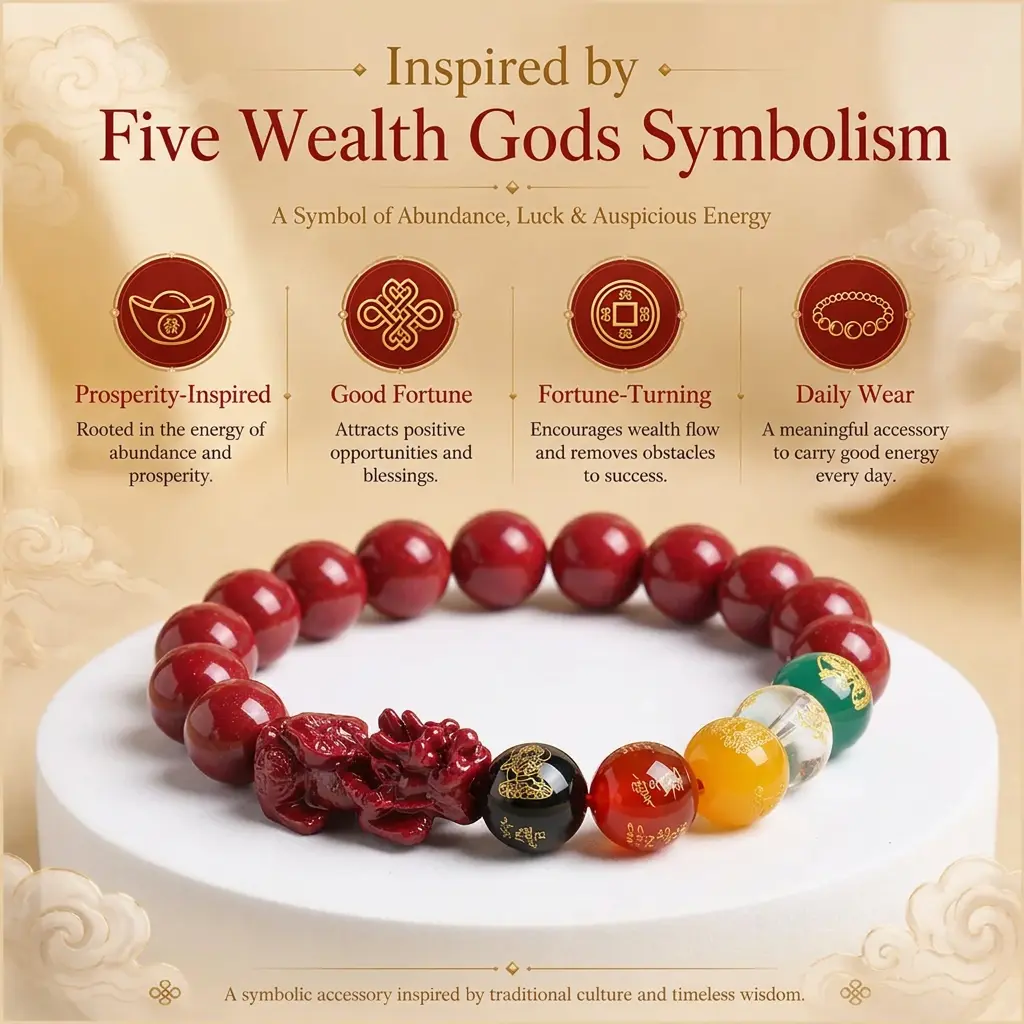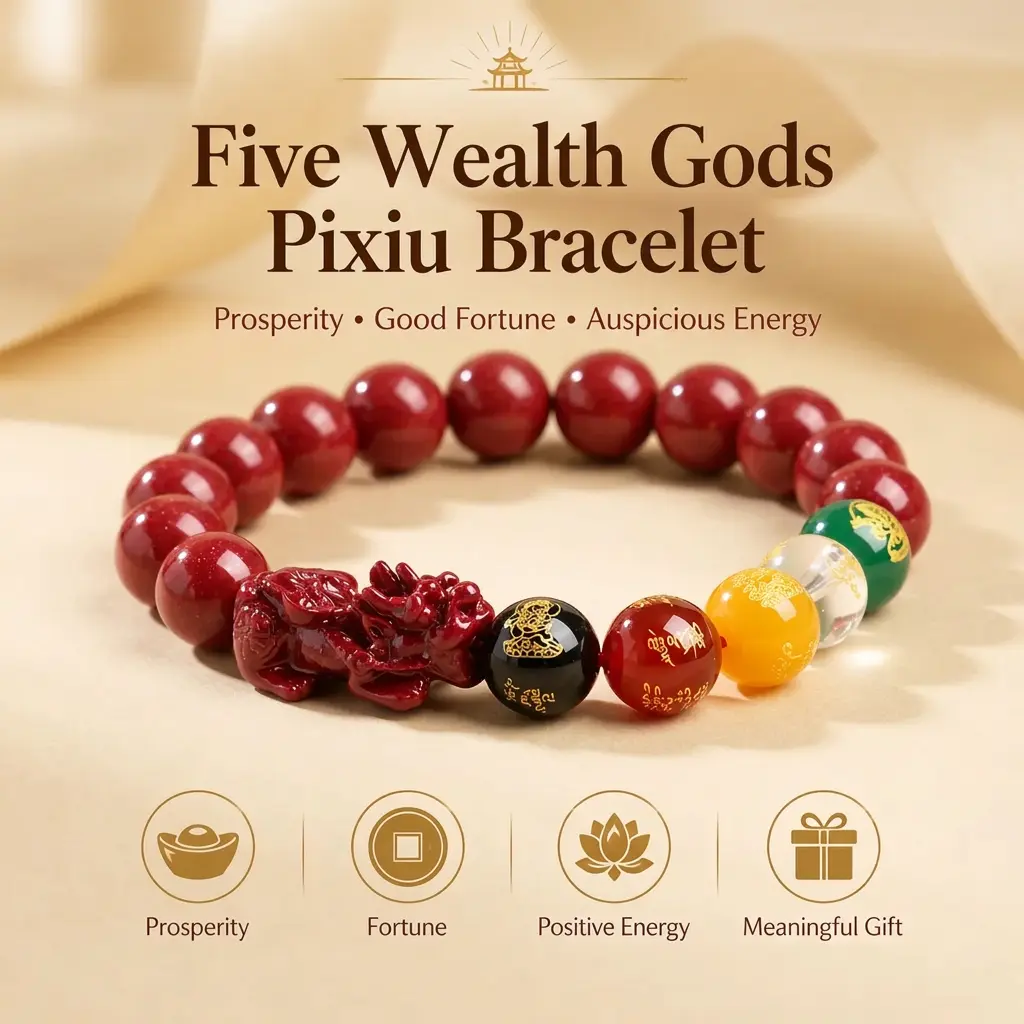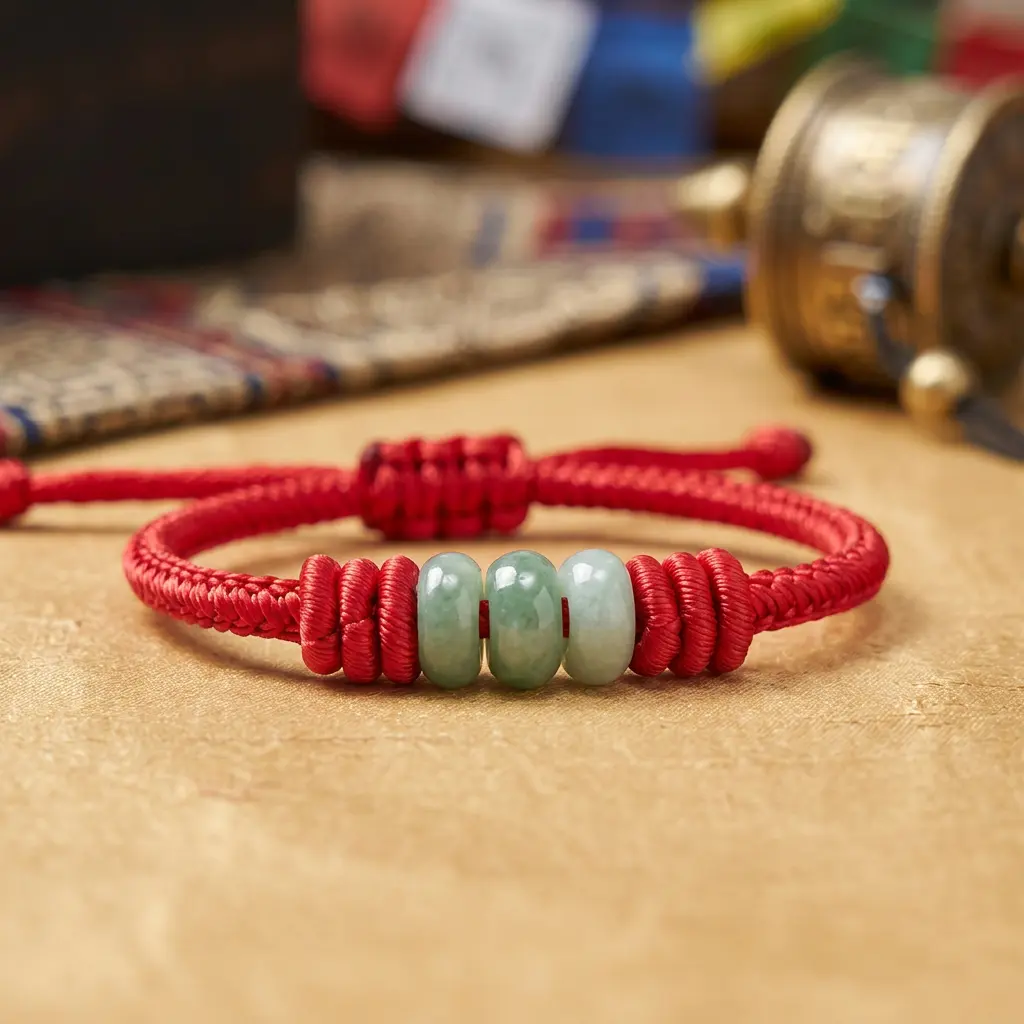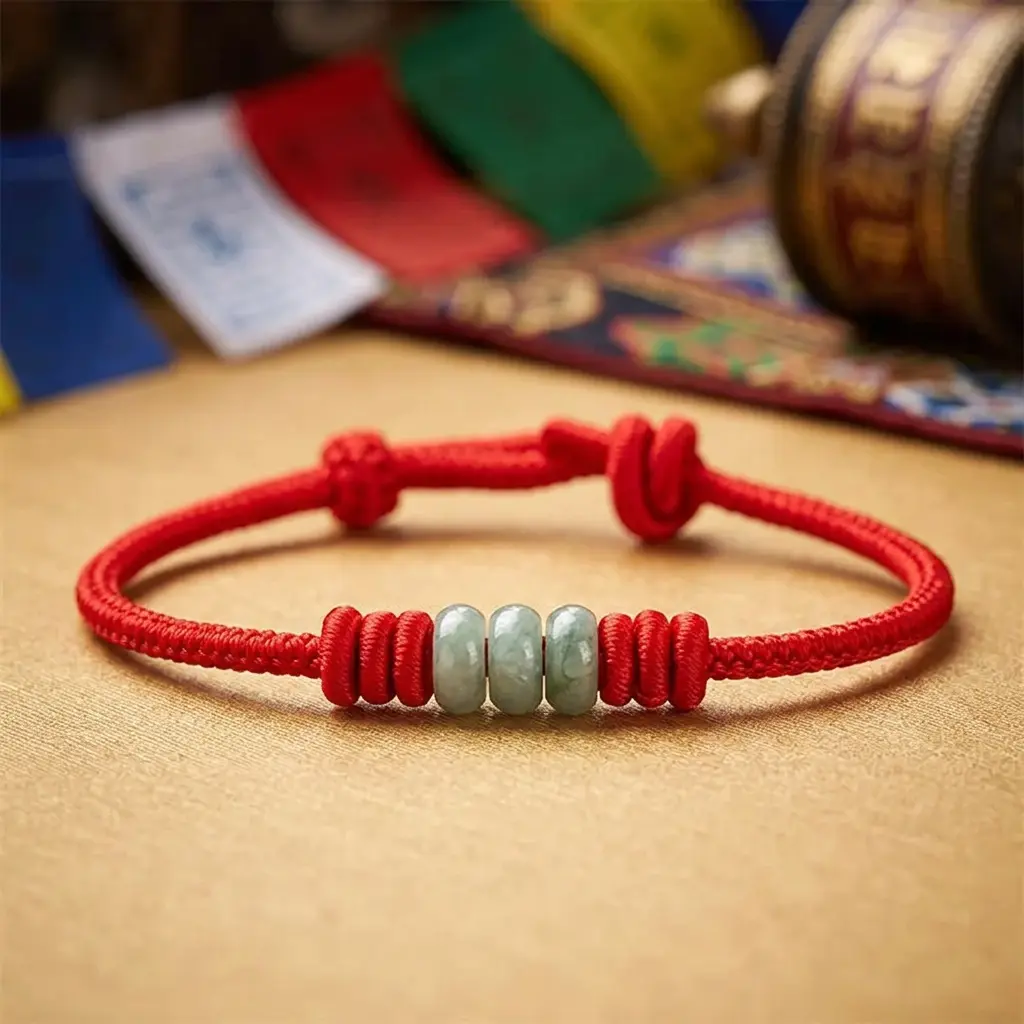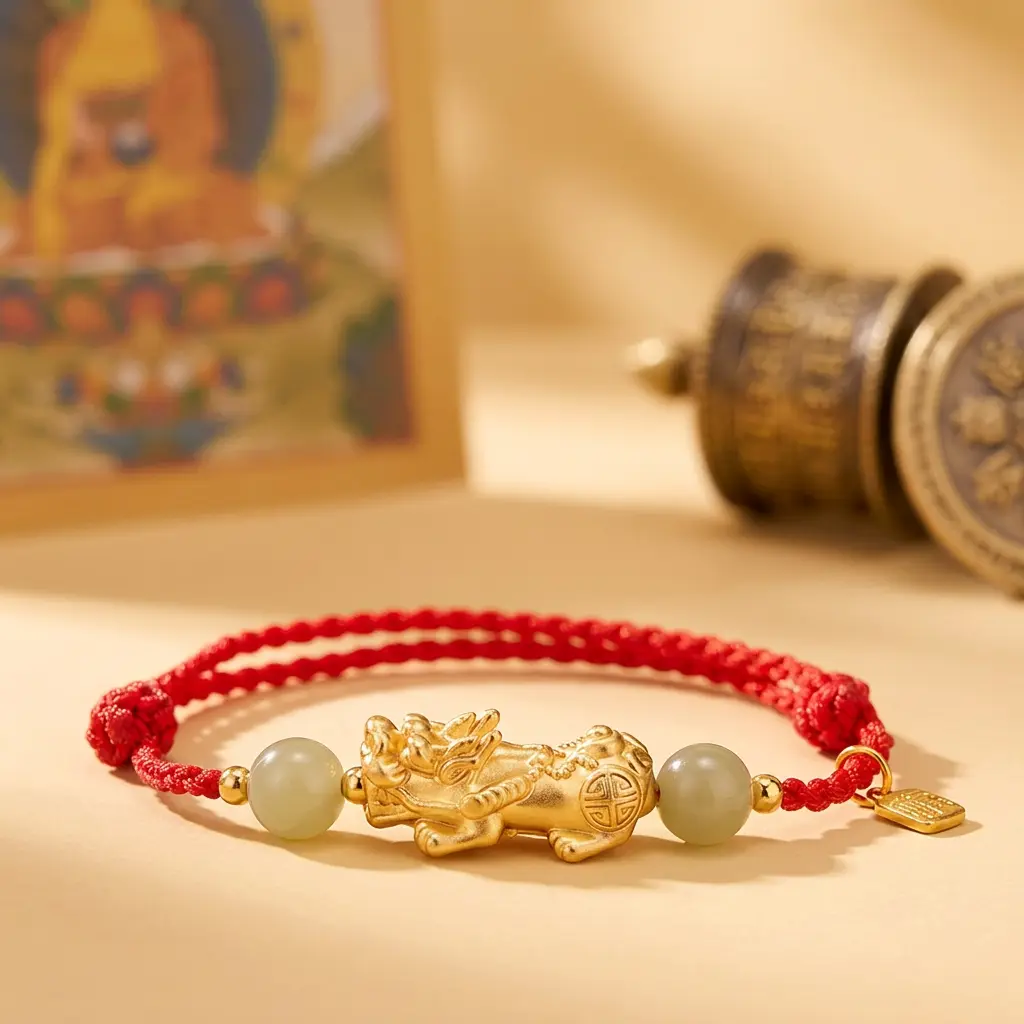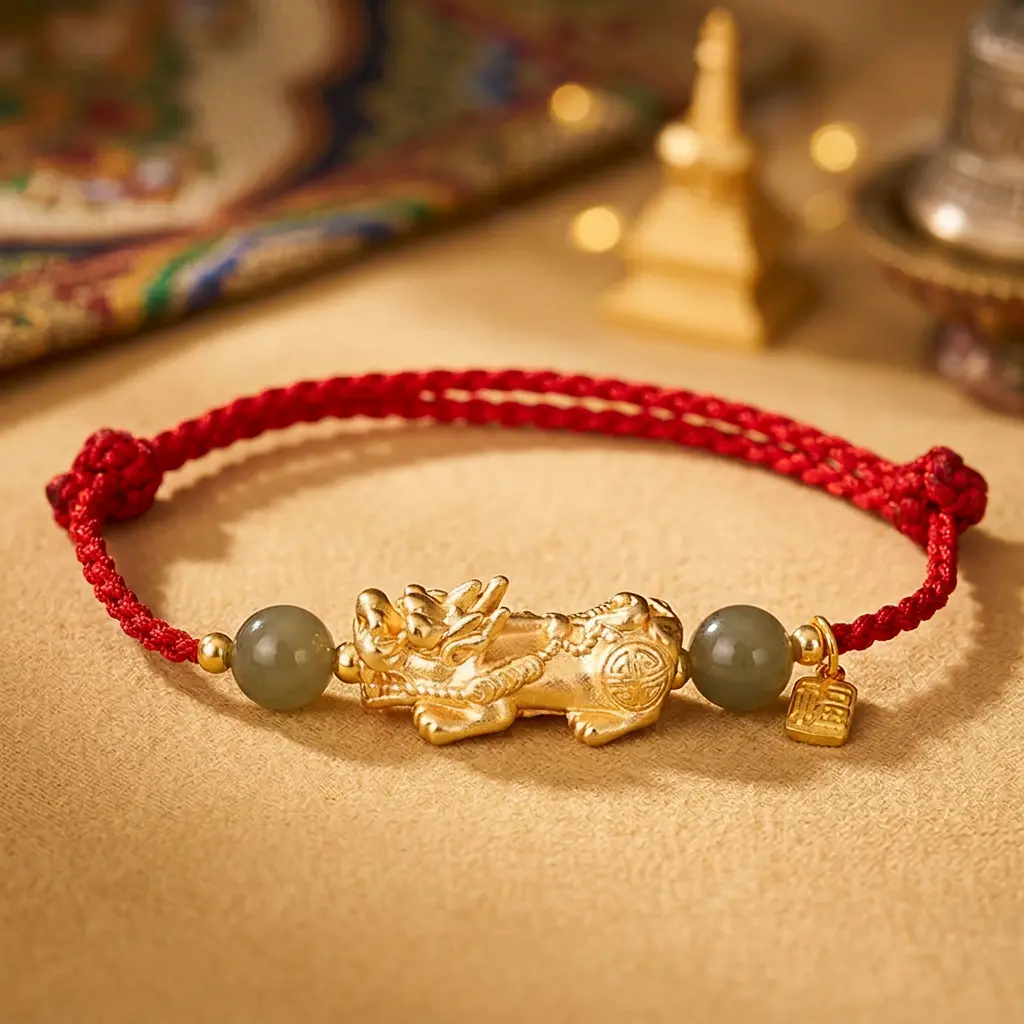

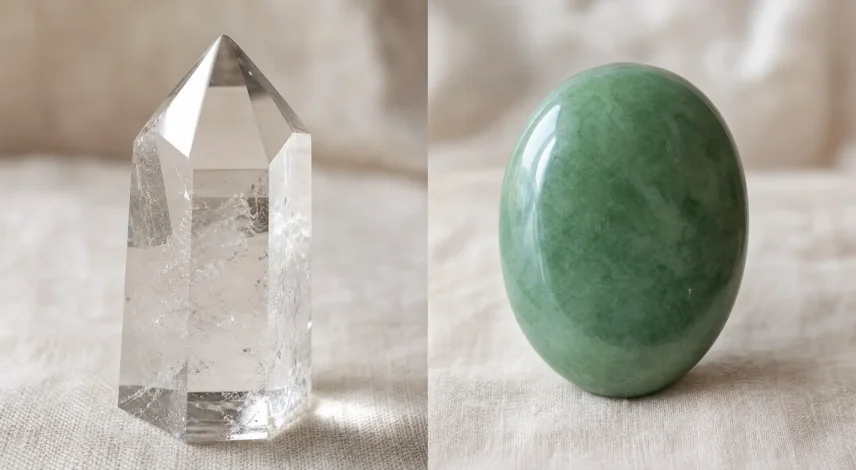

Still deciding between crystal and jade? Start with the fact most sellers blur: jade is not a crystal. Crystal usually means a quartz-family mineral that grows as single, often transparent crystals. Jade means one of two tough minerals, jadeite or nephrite, built from densely interlocking crystals.
That one difference changes how each stone looks, what it costs, how it holds up on your wrist, and what it has meant for thousands of years. At PotalaStore, we source and hand-finish our jade and crystal pieces through Himalayan monastery partnerships, so the checks in this guide are the same ones our artisans run on every batch. Below is the honest breakdown by material, meaning, and price, plus a four-step test you can run yourself before you pay.
Table of Contents
Is Jade a Crystal? The Core Material Difference
Jade is crystalline under a microscope, but it is not a “crystal” in the jewelry sense. Jadeite and nephrite are dense aggregates of interlocking crystals, while quartz grows as single crystals with visible faces. That structural gap drives every practical difference in this guide.
The key idea is that hardness and toughness are not the same thing. Hardness measures scratch resistance. Toughness measures resistance to chipping and breaking. Jade’s interlocking crystals give it a toughness quartz cannot match, which is why ancient workers carved tools and ritual objects from it long before they cared about color.
What “Crystal” Actually Means in Jewelry
In retail, “crystal” is a broad basket, not a single stone. It can mean clear quartz (silicon dioxide, SiO₂), purple amethyst, golden citrine, brown smoky quartz, banded agate, or even manufactured glass. Each has different hardness, color, and treatment risks, so the safest move is to ask for the exact mineral name rather than accepting “crystal” as a full answer.
What Counts as Real Jade
Modern gemology reserves “jade” for two minerals. Jadeite is a sodium aluminum silicate (a pyroxene) with a Mohs hardness of 6.5 to 7. Nephrite is a calcium magnesium silicate (an amphibole) at Mohs 6 to 6.5. Quartz measures 7 on the Mohs scale, so it can scratch some jade, yet a jade bangle often survives an impact that chips a quartz point. A “jade” bracelet should name jadeite or nephrite, not use jade as a color word.
Crystal vs Jade at a Glance
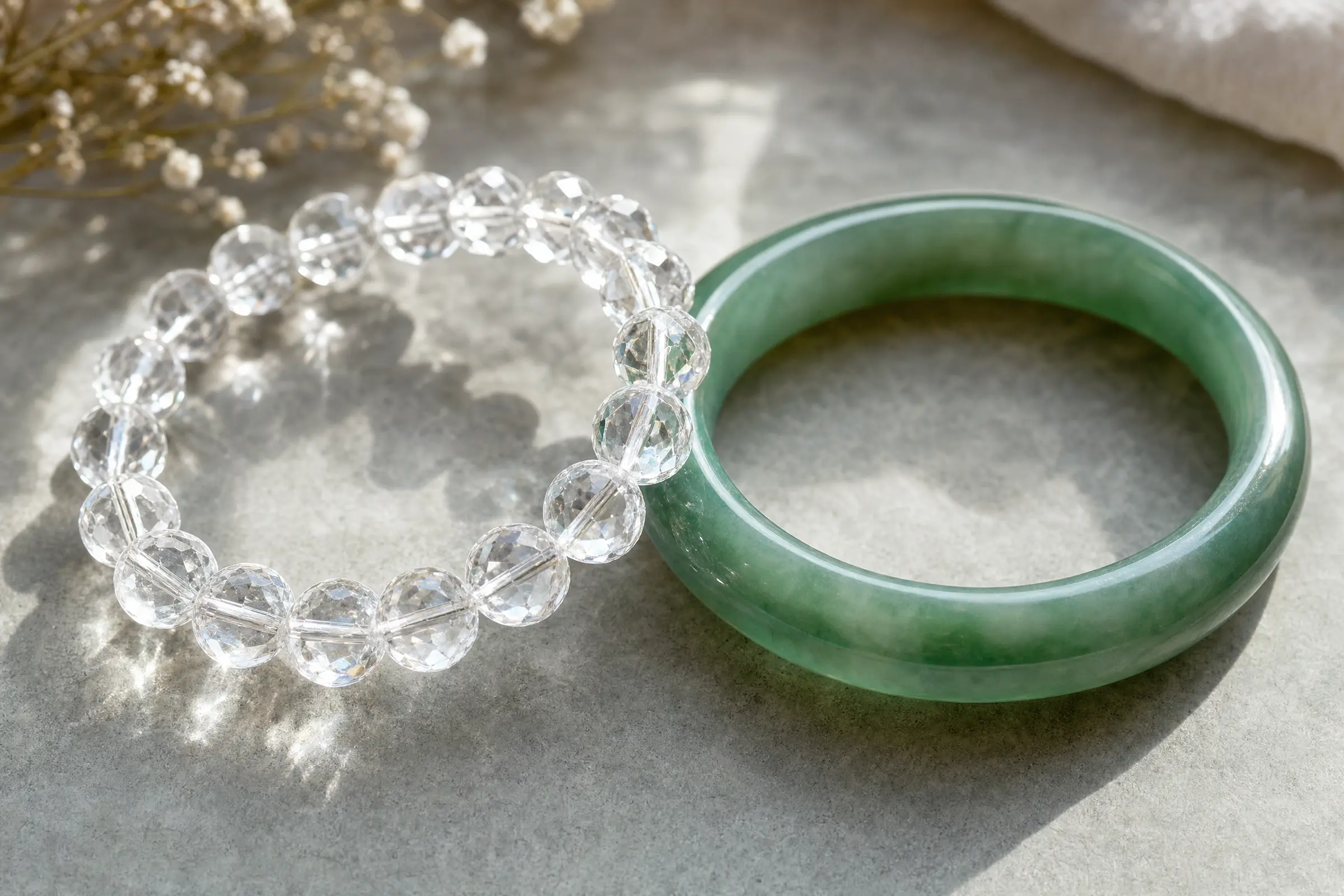
Here is the side-by-side, using clear quartz as the crystal reference since “crystal” spans many minerals.
| Factor | Crystal (quartz reference) | Jade (jadeite / nephrite) |
|---|---|---|
| Composition | Silicon dioxide (SiO₂) | Jadeite = pyroxene; nephrite = amphibole |
| Structure | Single crystals, often visible faces | Interlocking microscopic crystals (aggregate) |
| Mohs hardness | 7 | Jadeite 6.5–7; nephrite 6–6.5 |
| Toughness | Can chip or fracture on impact | Exceptionally break-resistant |
| Typical look | Transparent to opaque, glassy luster | Translucent to opaque, dense smooth luster |
| Common buying risk | Glass, dyed or synthetic quartz, vague labels | Dye, bleaching, polymer impregnation, imitations |
| Price range (USD) | ~$10–60 commercial, higher for specimens | ~$20–80 nephrite; Grade A jadeite hundreds–thousands+ |
Quick verdict: choose crystal when you want transparency, faceted sparkle, or a named quartz variety. Choose jade when you want a dense polish, exceptional toughness, and deep cultural history. Neither category has proven medical effects.
What Each Stone Means: Chinese Jade Symbolism vs Crystal Intentions
Jade’s meaning is old and specific, while crystal meaning is a flexible modern vocabulary tied to color. In Chinese culture, jade has stood for virtue, protection, and longevity for more than 5,000 years, which is why it is called the Stone of Heaven.
⚠️ Important note: The cultural and spiritual meanings below come from tradition and personal interpretation, not scientific evidence. Jade and crystal are not medical treatments and offer no guaranteed outcome. Treat any symbolism as personal meaning, not a health or financial promise.
Why Jade Is the “Stone of Heaven” in China
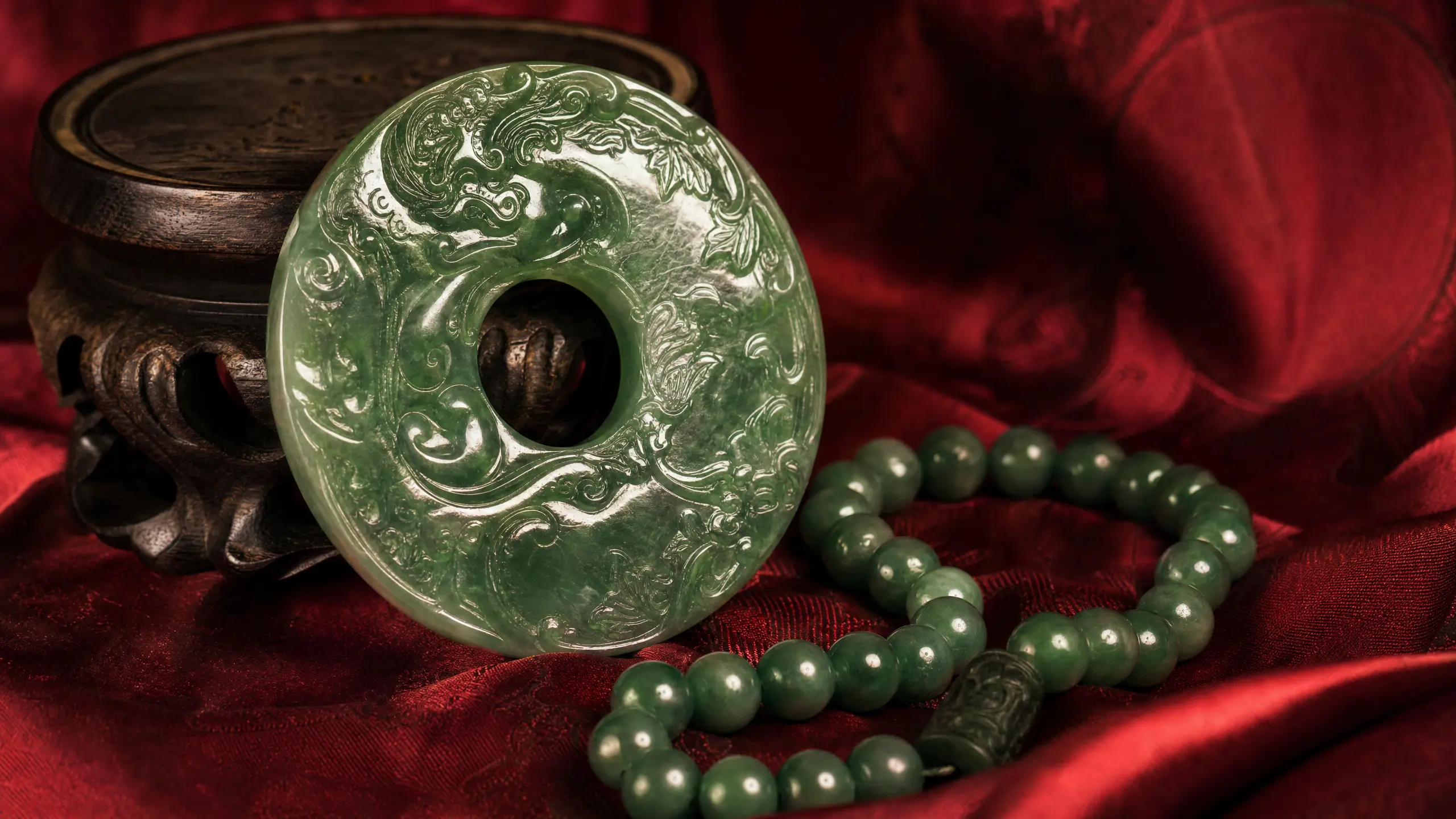
The Han scholar Xu Shen described jade as embodying five virtues: benevolence, wisdom, courage, justice, and purity. The flat ritual disc called a bi, with a hole in the center, symbolized heaven, and the character for jade is one of the oldest in written Chinese. In the United States, jade also carries a modern role as the traditional gemstone for the 12th wedding anniversary, which makes it a natural anniversary gift with a story attached.
How Crystal Meanings Work Today
Crystal symbolism is newer and color-driven. In contemporary practice, amethyst is linked to calm, citrine to abundance, and clear quartz to clarity and amplification. This gives crystals a modular vocabulary: you pick a color and an intention. If you want to see how that plays out across specific stones, our guide to the gold Pixiu vs jade Pixiu comparison shows how material choice shifts the intended meaning of the same charm.
How to Tell Real Jade From Quartz and Glass: A Buyer’s 4-Check Test
You can screen most crystal-and-jade pieces yourself in four checks before you ever pay for a lab test.
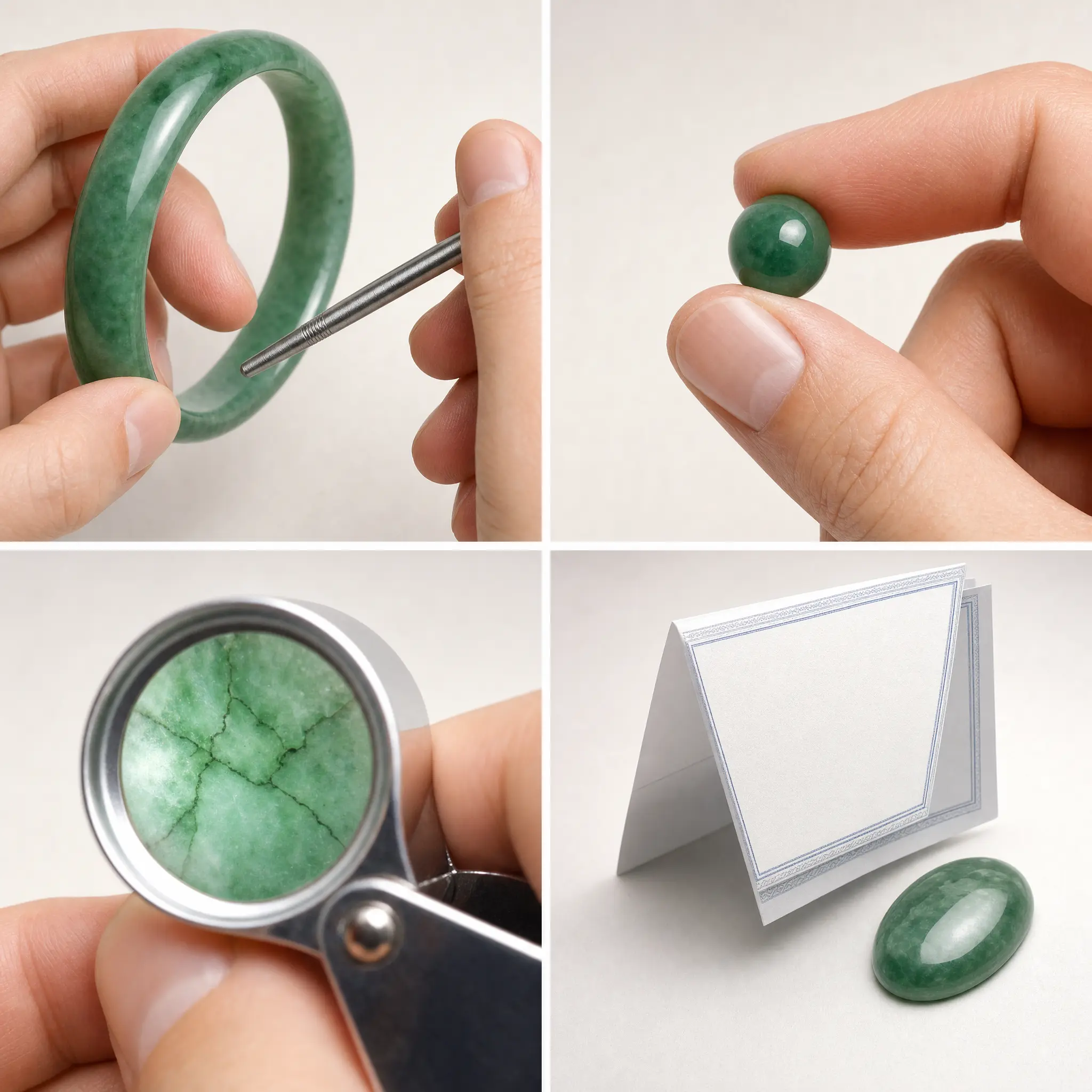
- Chime test: Tap the piece gently with a hard object. Nephrite rings with a soft musical tone, while jadeite does not, so a clear chime points toward nephrite.
- Feel and weight: Use these only as clues. The old “cold stone” idea is unreliable, since temperature and heft change with bead size, setting, and room conditions.
- Magnification: Look for dye pooling in surface cracks, the most common tell of treated jadeite. Round gas bubbles instead suggest glass, not natural stone.
- Ask for disclosure and a report: For higher-value pieces, request treatment disclosure and a lab report using refractive index or spectroscopy. Never run a destructive scratch test on finished jewelry.
Worried a “jade” bracelet is really dyed quartz? Most of it you can check in about a minute with the steps above. When we receive a batch of jade beads, the chime test is our first pass, and the most common problem we see is dyed quartz or serpentine sold under a jade trade name. Under a loupe, the dye concentrated in the tiny cracks gives it away almost every time.
The Chime Test and What It Can (and Can’t) Tell You
The chime test separates nephrite from jadeite, but it does not prove a stone is untreated or natural. A treated nephrite can still ring, and a well-made glass imitation can fool the ear. Use the chime as a first filter, then move to magnification and disclosure for anything you plan to spend real money on.
When to Pay for a Lab Report
Pay for testing once a piece crosses into serious money, roughly the point where a fake would cost you more than the report. A gemological lab can confirm jadeite versus nephrite, natural versus synthetic quartz, and detect dye, bleaching, or polymer impregnation that photos cannot show. Our jade is unprocessed, undyed, and uncoated, and we include disclosure so you are not guessing. If you like to keep several stones together, our crystal hardness and pairing guide covers which pieces to separate so harder quartz does not scratch softer jade.
Price Guide: What You Actually Pay for Jade vs Crystal
Neither category has one price. Commercial nephrite beads can run about $20 to $80, fine Grade A jadeite reaches thousands of dollars, and quartz spans roughly $10 to $60 for common material up to collectible specimen prices. The category name alone tells you nothing about value.
What Drives Jade’s Price
For jade, value tracks mineral type, color, transparency, texture, and treatment. Grade A jadeite is untreated and holds its color and value, while Type B and Type C jade is bleached, dyed, or polymer-filled and sits in a much lower tier. Buying untreated matters in practice: the color will not fade after a few years, and the value will not collapse when a buyer learns it was treated. A common and costly mistake is paying Grade A prices for a treated stone.
What Drives Crystal’s Price
For quartz, value tracks variety, color, clarity, crystal form, and size. A common clear quartz bead is inexpensive, while a rare specimen or a deeply colored amethyst can climb quickly. In both categories, a brand story is not a substitute for these factors, so always price the stone on its own merits.
Which Should You Buy? Choose by Goal, Wear, and Feng-Shui Element
Choose by use first. Jade’s toughness wins for solid bangles, carved pendants, and beads you handle daily, while crystal wins when you want a specific color, faceted sparkle, or a named quartz variety.
Choose Jade If…
Pick jade for everyday durability, an heirloom piece, or a gift with cultural depth. If you are choosing by intention, green jade is tied to the Wood element in feng shui, the energy of growth, renewal, and forward momentum in work and health. That makes green jade a natural fit when your goal is steady, long-term progress rather than a quick lift. Most beads come in 8mm for a slim, subtle look or 10mm for a bolder statement often chosen by men.
💡 Buying for someone else? If it is a gift and you do not know the person’s beliefs, you really do not want to overclaim. Pick verified material, add a short note on the cultural meaning, and let them decide what it means to them. Our natural green jade Pixiu bracelet pairs untreated jade with a hand-carved charm and blessing documentation, which makes the story easy to pass along.
Choose Crystal If…
Pick crystal when you want visible transparency, a faceted point, or a color tied to a specific intention like amethyst for calm or citrine for abundance. If you are new to stones, our guide to choosing your first crystal bracelet walks you through bead size, wrist fit, and which starter stones are the most forgiving.
Shop Verified Jade & Crystal Bracelets
Browse PotalaStore’s collection of monastery-blessed, ethically sourced pieces, with untreated jade and named crystal varieties you can actually verify.Shop Spiritual Healing Crystal Bracelets →
Frequently Asked Questions
Jade is a semi-precious gemstone that refers to two minerals, jadeite and nephrite, both prized for exceptional toughness. In everyday jewelry it is sold as a gemstone, not as a transparent “crystal.”
Neither category has a fixed price. Common quartz can be cheap, while fine untreated (Grade A) jadeite reaches thousands of dollars. The material name does not predict value, since color, treatment, and quality do.
Yes. Just remember quartz (Mohs 7) is harder and can scratch jade if loose beads rub repeatedly, so use secure knotting and store pieces apart. For full pairing rules, see our crystal hardness and pairing guide.
For a durable, meaningful heirloom, jade’s toughness and cultural depth make it a safe choice. For a specific color or intention, a named crystal works well. Either way, verify the material and add a short cultural note rather than a strong spiritual claim. You can browse verified options in our natural jade bracelet range.
📚 References
- Jade Overview and Description: Jadeite and nephrite composition, colors, and quality factors. Gemological Institute of America (GIA)
- Jade: Properties and History: Mineralogy and cultural background of the two jade minerals. Encyclopaedia Britannica
- Quartz and Mineral Gemstones: Quartz as rock crystal, hardness, and gem varieties. U.S. Geological Survey (USGS)
- Ancient Chinese Jades: Early nephrite tools, ornaments, and ritual objects in Chinese culture. Smithsonian National Museum of Asian Art