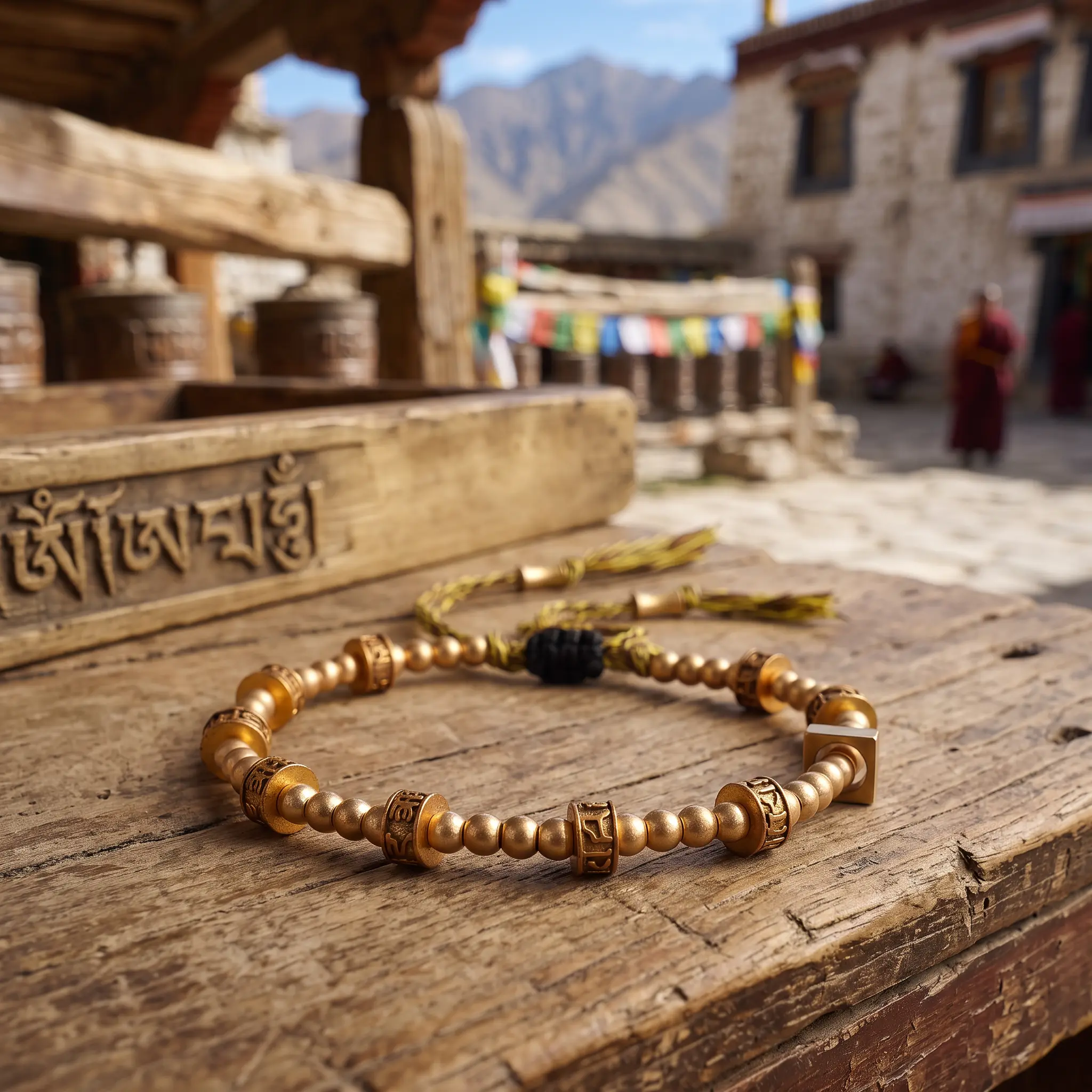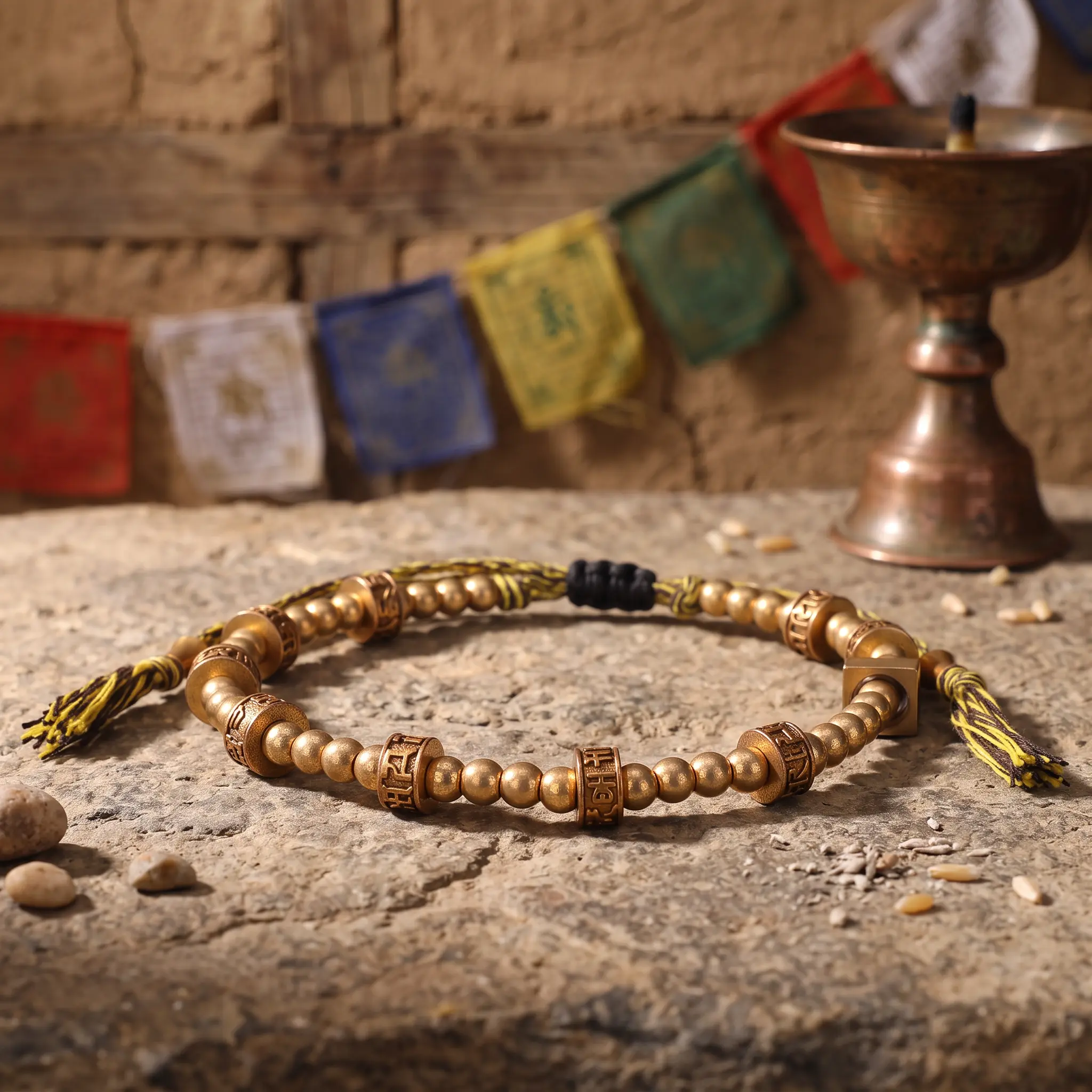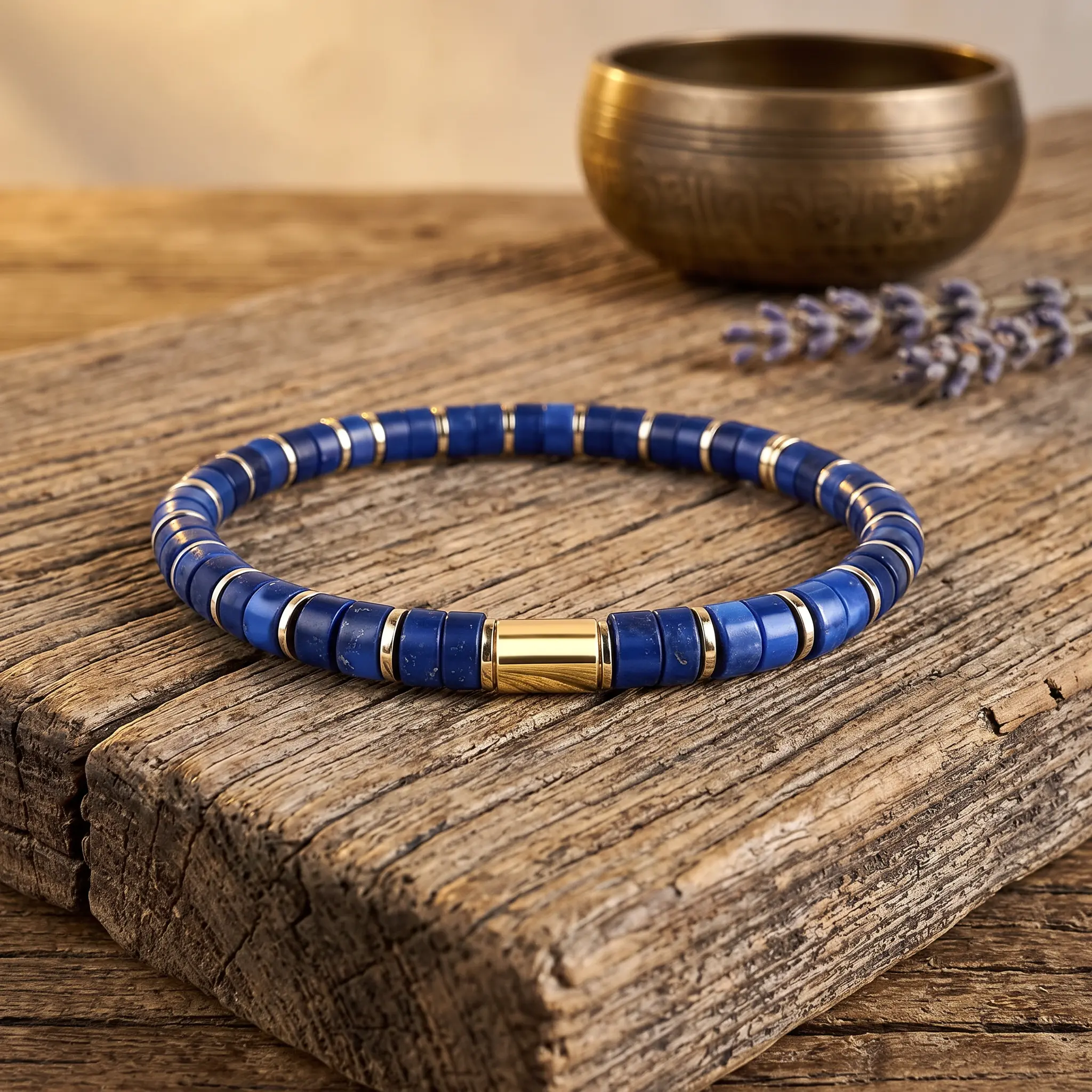

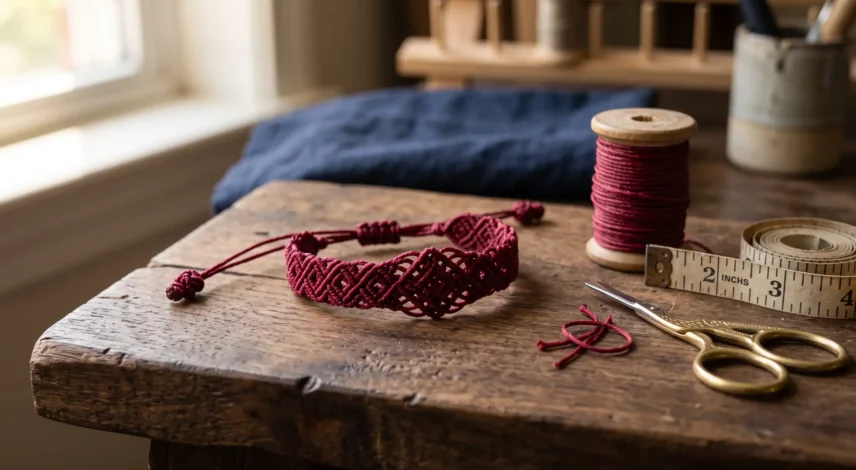

A hand-knotted Tibetan bracelet takes about 30 to 50 minutes to tie, yet the full process runs one to three days from first cut to blessing. That gap explains why a $6 marketplace cord and a $29 workshop cord can look alike but differ in nearly every way that matters.
PotalaStore works with Himalayan artisans, and the timing below reflects how that work is actually paced.
You will see “20 minutes” on one site and “3 days” on another. Both can be true, because they measure different clocks. Here is where the days go, what slows a knot, and how to spot real hand-knotting in 30 seconds.
See the hand-knotted Tibetan bracelets this story is about.
Table of Contents
How Long Does It Take to Make a Hand-Knotted Tibetan Bracelet?
Tying a hand-knotted Tibetan bracelet takes about 30 to 50 minutes of active work, but the full process usually stretches across one to three days. Cord preparation, knot-by-knot quality checks, retying uneven sections, and a traditional consecration before shipping fill the rest of the calendar.
Think of the process as a short stretch of hands-on work surrounded by longer stretches of care. Six stages make up the full calendar.
- Cord preparationCutting, measuring, and checking the thickness of the waxed cord.
- KnottingAbout 30 to 50 minutes of tying the pattern by hand.
- FinishingTying the sliding knot closure and heat-sealing the cord ends.
- Quality check and retieInspecting every knot and untying any that sit crooked.
- ConsecrationA traditional blessing before the bracelet ships.
- Packing and shippingSealing the finished bracelet for delivery.
Stages are shown in order, not to scale.
Active Knotting Time vs. Elapsed Time
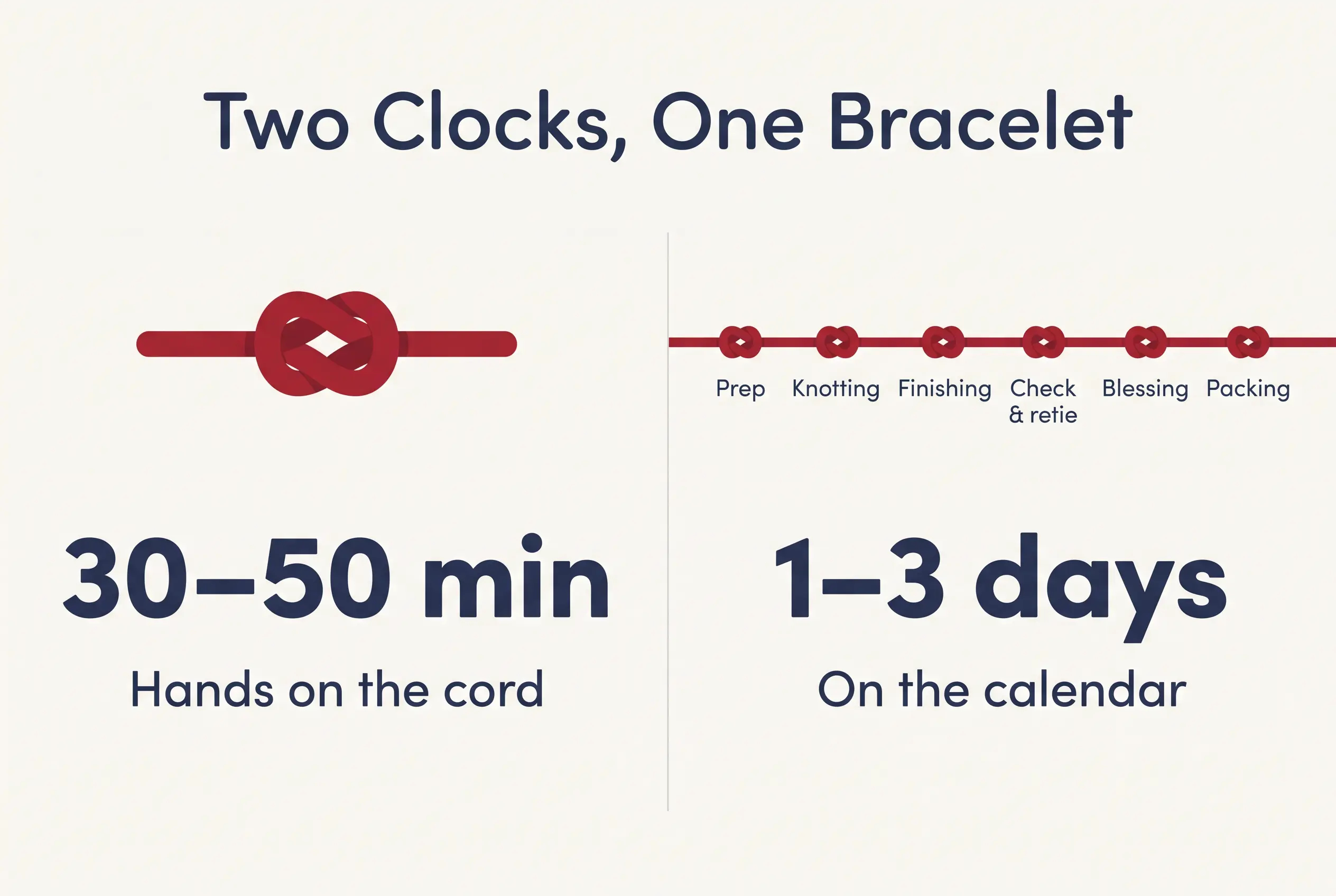
Active knotting time is the number of minutes an artisan’s hands are on the cord. Elapsed time is the number of days between the first cut and the finished, blessed bracelet. The two numbers answer different questions, so they rarely match.
| Clock | What it counts | Typical figure | Source |
|---|---|---|---|
| Active knotting time | Tying the knots only | 30 to 50 minutes per bracelet | Our Lucky Rope Bracelet product page |
| Hands-on total | Preparation, knotting, finishing, checking, retying | 20 minutes | Artisan timing |
| Elapsed time | First cut to finished, blessed bracelet | 1 to 3 days | PotalaStore workshop process |
Why One Shop Says “20 Minutes” and Another Says “3 Days”
Shops count different things. In October 2026 we reviewed listings and buying guides for similar bracelets and found estimates ranging from 20 minutes to two days.
- 20 to 30 minutes: one store counts knotting and blessing together for a simple cord.
- 30 to 60 minutes: another jewelry shop counts hands-on tying only.
- Four to six hours: a buying guide gives this range for a single hand-knotted cord bracelet.
- One afternoon to two days: a workshop says a simple single-color strand fills an afternoon, while a multicolor piece can take two days.
None of these figures is wrong. Minutes measure hands on cord, and days measure the calendar. The bottom line is simple: ask any seller which clock they mean.
Not every cord takes days, either. A simple snake-knot band can be finished in a single sitting.
Inside the Workshop: A Maker’s Day, Knot by Knot
A maker’s day starts long before the first knot: cutting cord to length, checking its thickness, and choosing which strand will carry the pattern. Most of the skill sits in small decisions that a finished bracelet hides.
Preparing the Cord: Thickness, Wax, and Tension
Classic Tibetan knot bracelets use waxed cotton cord between 0.8 and 1.5 mm thick (0.03 to 0.06 inches). Cord thinner than 0.8 mm slips and twists under tension, so artisans check thickness before they cut.
Nylon cord and red string versions also exist, and beaded styles add ceramic beads that must be strung evenly. Even cord produces even knots, and even knots hold their shape through daily wear.
Tying While Reciting: How Mantra Sets the Pace
Many Tibetan Buddhist artisans traditionally recite a mantra such as Om Mani Padme Hum, the six-syllable mantra of compassion, while they tie. The recitation sets a steady knot rhythm, which suits the work because even tension depends on an even pace.
The Knots That Get Untied
Even experienced hands untie knots. We have retied the same inch of cord several times before it sat right.
A knot that looks fine on the table can show a crooked shoulder under a lamp. The quality-check retie is the step where an artisan inspects every knot, unpicks any that sit crooked, and ties them again.
Shoppers never see this part of the day. It is one reason a hand-knotted cord holds up through daily wear.
What Slows the Craft Down? Knots, Colors, and Closures
Three choices decide how long a knot bracelet takes: the knot pattern, the number of color changes, and how carefully the closure is finished. Each one adds or saves time, and every knot is still tied by hand.
Snake Knot vs. Vajra Knot vs. Endless Knot: Which Takes Longest?
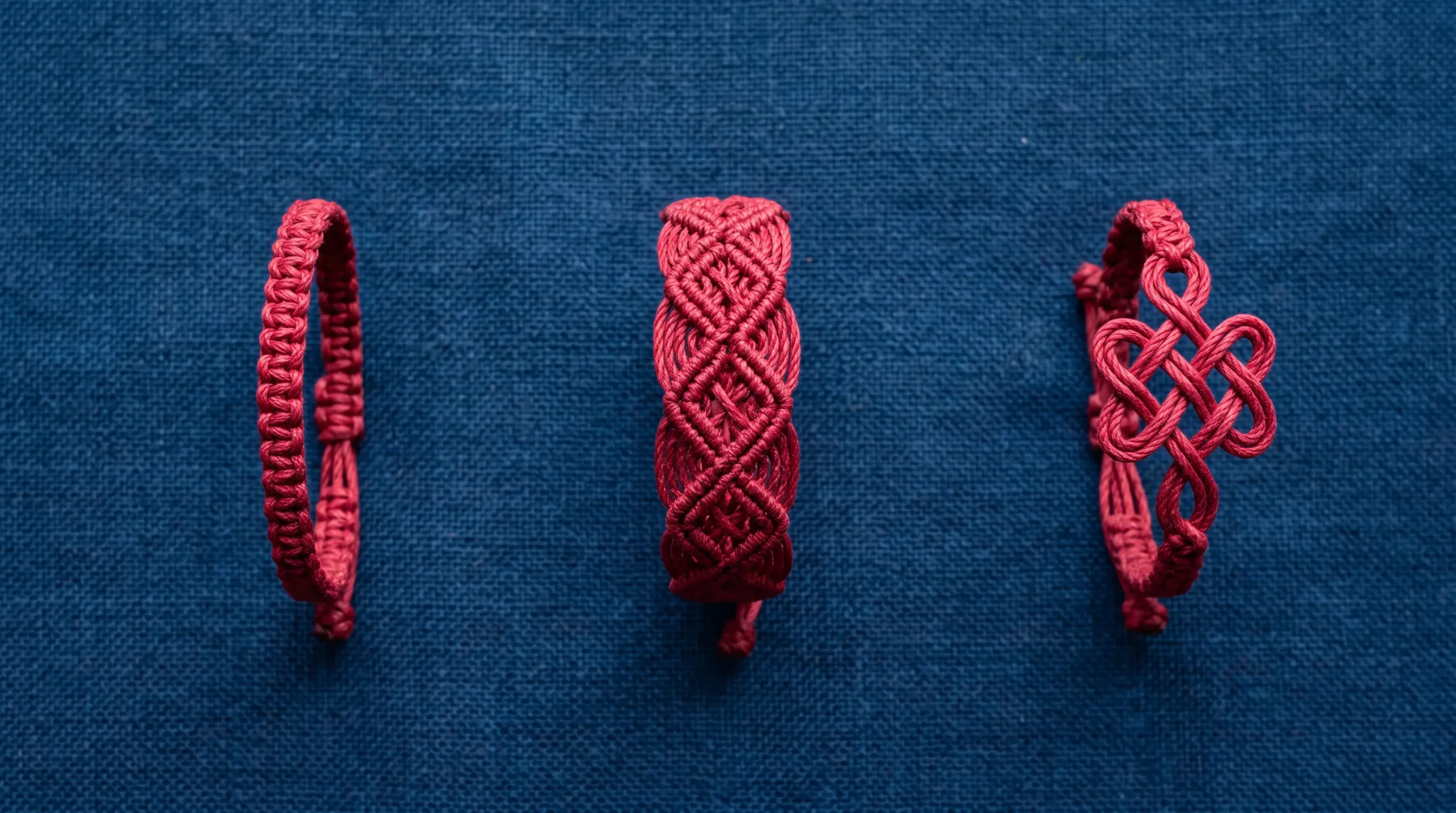
The endless knot takes longest, the Vajra knot sits in the middle, and the snake knot is fastest. These are relative rankings from the craft, not exact minute counts.
- Snake knot (fastest): a simple repeating pattern that suits a single-sitting band.
- Vajra knot (moderate): the classic protection knot, also called the Jingang or King Kong knot. Its diamond-scepter pattern needs steady tension on every turn.
- Endless knot (slowest): called palbeu in Tibetan and counted among the Eight Auspicious Symbols (Ashtamangala).2 Its interlocking structure leaves little room for slack.
If you want the tying steps, here is how the Vajra, endless, and snake knots are tied.
Color Changes and Hidden Splices
Every color change means joining a new strand and hiding the join inside the knot. A five-color cord, a red-and-black pair, or a beaded style each adds steps before the first knot is even tied.
Finishing the Sliding Knot So It Lasts
A diamond knot locks each end, and a sliding knot lets the bracelet adjust. A crooked closure can undo the work of an otherwise even bracelet.
Artisans then heat-seal the cord tips so the strands do not fray. For you, that means a bracelet that stays closed on a busy day and does not unravel at the ends.
Each Tibetan Buddhist Knot Lucky Rope Bracelet takes 30 to 50 minutes to tie. It adjusts from about 6.3 to 9.4 inches (16 to 24 cm), so it works as a gift when you do not know the wrist size. Prices run from $28.95 to $58.95.
Why the Blessing Adds Days, Not Minutes
In Tibetan Buddhist tradition, a protection cord is consecrated after it is knotted, so the blessing is a separate step on the calendar, not something squeezed into the tying. Consecration adds days to the process but no minutes to the knotting.
How Are Buddhist Monk Bracelets Blessed?
A lama traditionally blesses a protection cord by entering a state of meditative visualization and reciting mantras over it. In the Bhutanese practice described by scholar Karma Phuntsho, the lama often blows on the cords as part of the rite.1 Some cords carry one knot, while others carry three, five, nine, or even twenty-one.
Each knot and material also carries traditional meaning. Our guide to what the symbols and materials on a Tibetan bracelet mean covers them.
Our own consecration happens before a bracelet ships.
Are Tibetan Bracelets Really Made by Monks?
Some are, but many are tied by lay artisans and their families and blessed separately. “Made by monks” and “blessed by monks” are different claims, and that wording matters.
A clear example comes from the Tibetan Nuns Project, which describes its malas as hand-strung, knotted, and blessed by nuns at Dolma Ling Nunnery.3 If you want to read about the tradition behind blessed bracelets, see why Buddhist monks give blessed bracelets.
If a listing promises a blessing, it is fair to ask who performed it and when. We expect that question, and we answer it.
Hand-Knotted vs. Machine-Made Tibetan Bracelets: What the Extra Days Buy You
Handmade Tibetan knot bracelets cost more because you are paying for an artisan’s hours, not a machine’s seconds, and those hours show up in tighter, more even knots.
| Feature | Hand-knotted bracelet | Typical low-cost listing |
|---|---|---|
| Time per piece | 30 to 50 minutes of knotting, 1 to 3 days overall | Rarely stated |
| Knot tension | Checked knot by knot, retied if uneven | Varies by seller |
| Cord ends | Heat-sealed | Often glued or loosely trimmed |
| Closure | Diamond knot with sliding adjustment | Varies; some have a fixed length |
| Blessing | Consecrated before shipping | Often claimed, rarely explained |
| Price | $28.95 to $58.95 (Lucky Rope Bracelet) | About $5 to $12 on marketplaces, as of 10/28/2026 |
Is a Hand-Knotted Bracelet Worth Paying More For?
A hand-knotted bracelet is worth the higher price if you want even knots that hold up to daily wear and a process you can verify. A low price does not prove a bracelet is machine-made. It does suggest that hours, materials, or pay were squeezed somewhere.
Even a modest hourly wage across 30 to 50 minutes of knotting, plus checking and finishing, adds up to more than a few dollars. A $6 listing that claims monk-made, blessed, and hand-knotted is worth a second look.
If you are buying a gift before Black Friday (11/27/2026), the adjustable sliding knot removes the wrist-size guess. You do not want to send the wrong fit.
How to Spot Real Hand-Knotting in 30 Seconds
Five quick checks separate careful hand-knotting from a rushed copy.
- Check the spacing. Hold the cord under a lamp. Knots should match in size and spacing, with small natural variation.
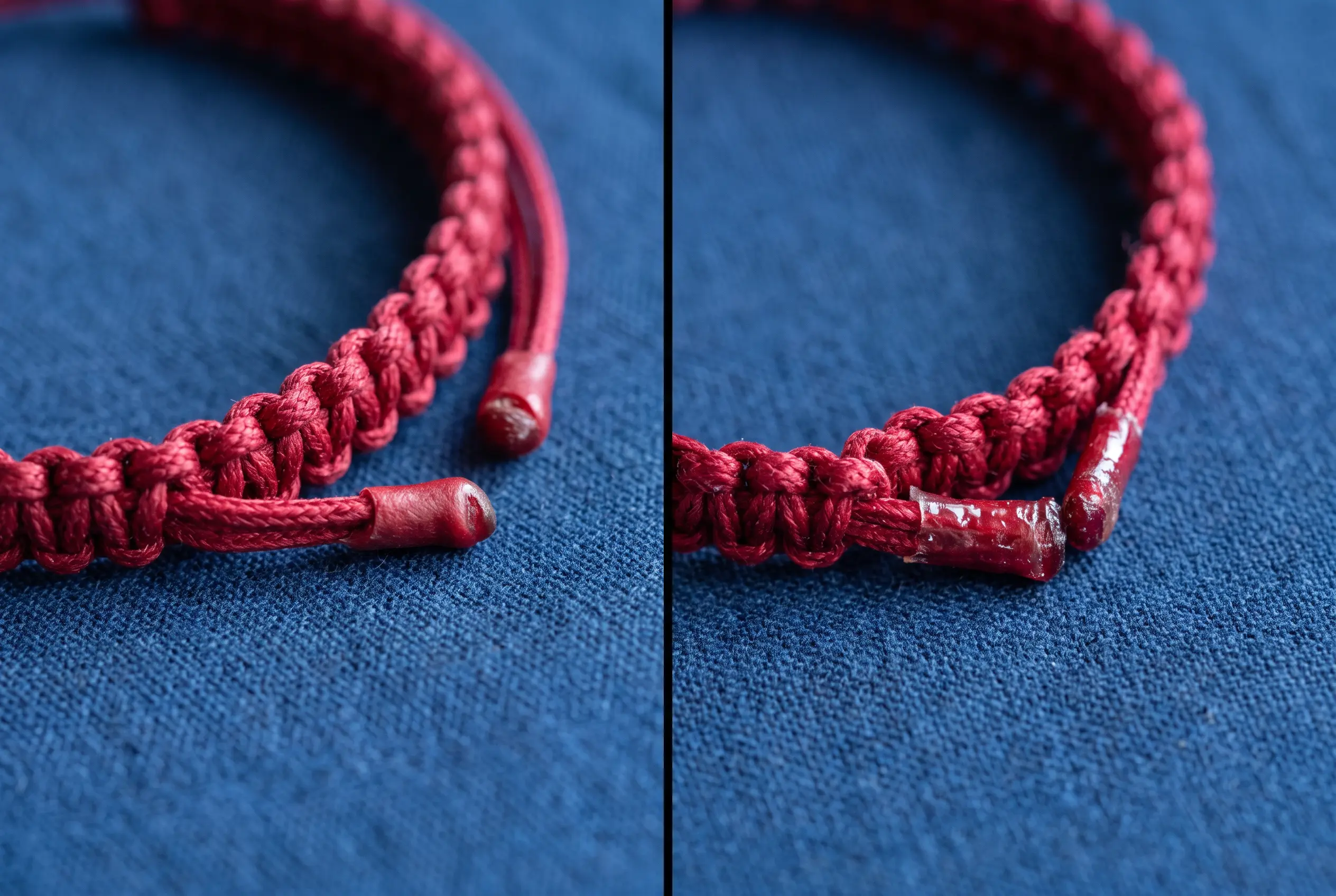
- Inspect the ends. Heat-sealed tips look smooth and neat, while glue can leave a stiff, shiny blob.
- Test the slide. The sliding knot should move with light pressure and hold when you let go.
- Know the material. Waxed cotton looks matte and nylon looks smoother. Both are fine when the listing names them.
- Read the claims. Ask who tied it, who blessed it, and when.
For the full list, see PotalaStore’s 5-point checklist for authentic Tibetan jewelry.
Frequently Asked Questions
Yes. A basic Vajra cord takes roughly 30 to 60 minutes with two lengths of waxed cord. Your first few will take longer while your hands learn even tension, and the knot-tying guide linked above walks through each step.
Take it off before showering. Water, soap, and lotion weaken cotton fibers and fade the dye over time, so a cord that took days to make lasts longer when you keep it dry.
In Tibetan tradition, a protection cord that breaks is often seen as having completed its work, not as bad luck. Many wearers retire it respectfully and replace it when they are ready. This reflects tradition and personal belief, not a prediction of events.
Start with the classic red-string Lucky Rope Bracelet if you want the traditional protection knot. It adjusts from about 6.3 to 9.4 inches, and many wearers traditionally choose the left wrist. Browse the full Tibetan bracelet collection to compare knot styles.
In summary, the days behind a hand-knotted Tibetan bracelet are real. They go to cord preparation, knotting, the quality-check retie, and consecration. Before, a $6 bracelet and a $29 one looked like the same thing. After, you know what the extra time buys: even knots, clean finishing, and a story you can pass on.
Give a bracelet with a story this Black Friday
Every bracelet is tied by hand, checked knot by knot, and blessed before it ships. Order ahead of Black Friday (11/27/2026) and choose the knot that fits the person you are gifting.Shop the Lucky Buddhist Monk Braceletor browse all Tibetan bracelets
📚 References
- Blessed Protection Cord Tradition: Karma Phuntsho’s essay on the consecration of protection cords in the Bhutanese tradition, hosted in the Mandala library. University of Virginia Mandala Library
- Eternal Knot Symbol: Explains the eternal (endless) knot, called palbeu in Tibetan, as one of the Eight Auspicious Symbols. Tibetan Nuns Project
- Tibetan Handicrafts and Nunnery Self-Sufficiency: Describes handmade, blessed crafts produced at Dolma Ling Nunnery and how their sale supports the nuns. Tibetan Nuns Project