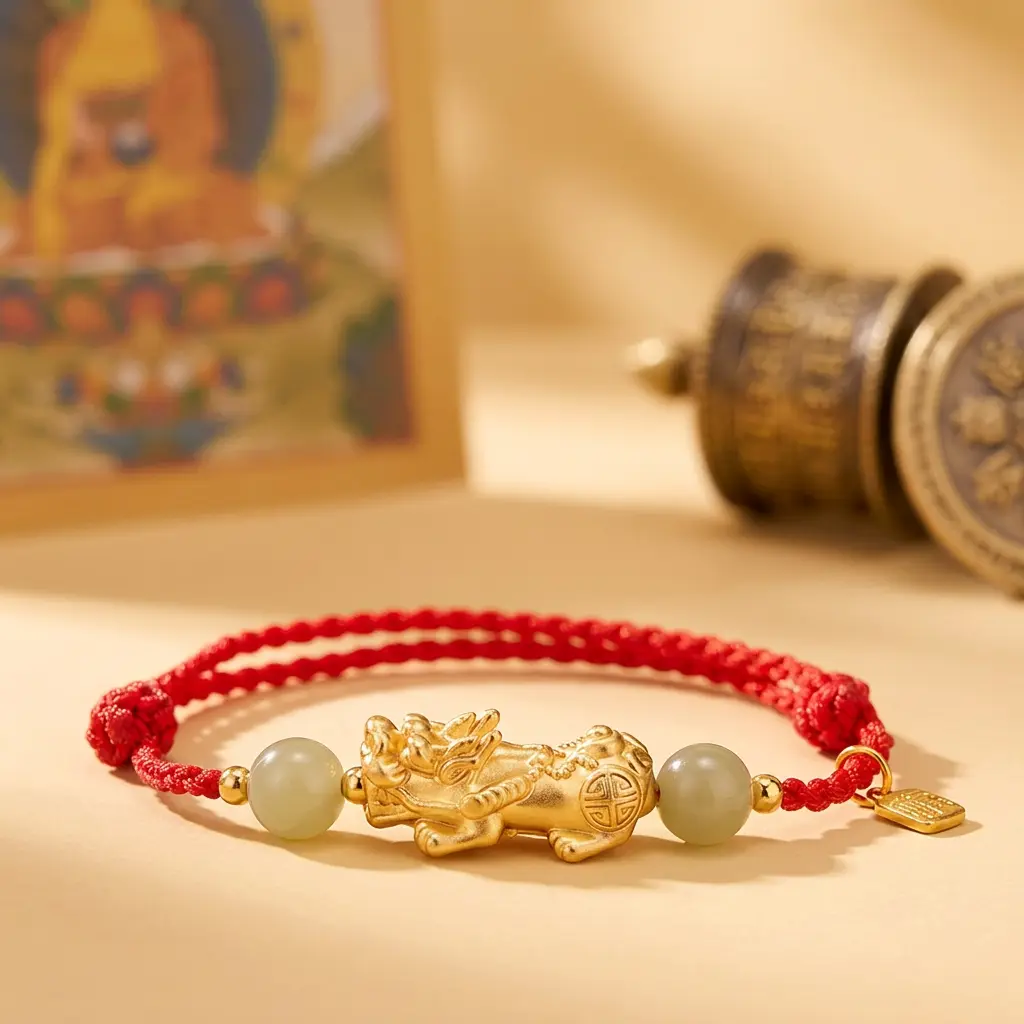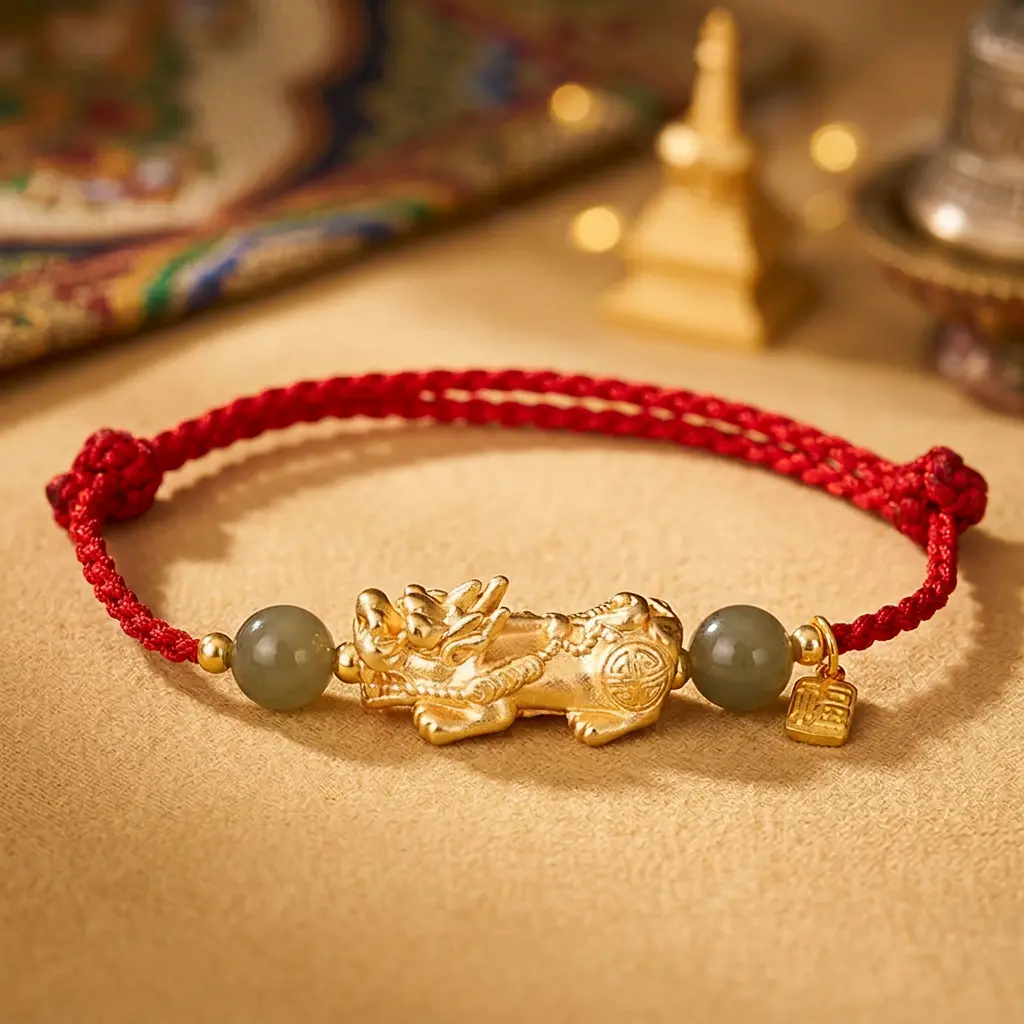

What Makes Tibetan Jewelry Authentic? PotalaStore’s 5-Point Quality and Cultural Checklist
 by Yang Tso
0 comments
by Yang Tso
0 comments
If you are buying Tibetan jewelry online, the real risk is not overpaying by a few dollars. It is paying a genuine price for a nickel alloy stamped to look like silver, or for dyed howlite sold as turquoise. Most jewelry labeled “Tibetan silver” contains little or no actual silver, and a lot of the “turquoise” is reconstituted stone or plastic, yet both sit next to the real thing at nearly the same price.
Authentic Tibetan jewelry comes down to five checks: real materials (925 sterling silver or copper, and natural stones), visible hand craftsmanship, culturally accurate sacred symbols, transparent Himalayan sourcing, and a price that matches the piece. Physical authenticity tells you the metal and stone are real. Cultural authenticity tells you the piece actually belongs to the living tradition it borrows from. You want both.
We have hand-selected pieces from workshops in Lhasa and Kathmandu since 2015, and years at the bench taught us that the seller matters as much as the object. At Potala Store, we sell new, genuine pieces and label them plainly, instead of dressing modern work up as priceless antiques. So this checklist is written to help you buy smart, whether you buy from us or not.
Table of Contents
What Counts as “Authentic” Tibetan Jewelry?
Authentic Tibetan jewelry is handmade in the Himalayan tradition from genuine materials, such as 925 sterling silver, copper, turquoise, coral, amber, and agate, and it carries sacred Buddhist symbols used with meaning rather than for decoration. The word “authentic” fails in two very different ways, and mixing them up is exactly how buyers get burned.
The “Tibetan Silver” Trap
“Tibetan silver” is one of the most misleading labels in the market, because as a marketing term it usually describes a base-metal alloy of zinc, copper, and nickel. Independent testing has repeatedly found pieces with little to no silver in them. Cheaper versions have even tested positive for lead or nickel, which matters because nickel is a common cause of skin reactions when worn against the wrist all day.
Genuine Tibetan silverwork is different. It is 925 sterling silver, meaning 92.5% pure silver, the same international standard used in fine jewelry worldwide, usually alloyed with a little copper for strength. If a listing leans on the phrase “Tibetan silver” but never states a silver content or shows a 925 hallmark, treat that as a yellow flag rather than a selling point.
Two Kinds of Authentic: Physical and Cultural
Most buying guides test only one axis, and that is where they leave buyers exposed. Physical authenticity asks whether the metal is really silver and the stone is really turquoise. Cultural authenticity asks a harder question: are the symbols correct, was the piece made within the tradition, and can the seller tell you who made it? A machine-stamped pendant with a scrambled mantra can be real silver and still be culturally hollow. The five points below check both. Points 1, 2, and 5 cover the object, while Points 3 and 4 cover the culture behind it.
Point 1: Start With the Materials, Real Metals and Natural Stones
The fastest authenticity filter is the material itself, because real metals and natural stones behave in ways mass-produced substitutes cannot fake for long. Check the metal first, then the stones.
Metals: 925 Sterling Silver, Copper, and the Alloys to Avoid
Traditional Tibetan pieces are worked in sterling silver (925) or pure copper, both of which carry cultural and spiritual weight in the Himalayas. Sterling silver holds a bright, warm sheen and, on quality work, a “925” stamp somewhere on the piece. Copper develops a living patina over time instead of flaking. What you want to avoid is the dull, grayish “mystery metal” that is magnetic, unusually light, or shows brassy color peeking through a thin silver coat, all signs of electroplating or a nickel alloy underneath.
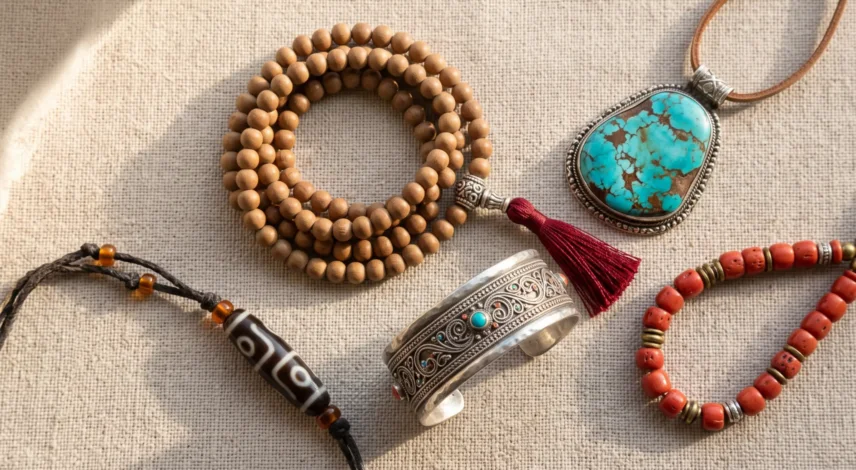
This detail hides a real benefit. Because sterling silver is 92.5% pure and holds a hallmark, it will not corrode to green or trigger the nickel rashes cheap alloys cause, so it stays safe for daily skin contact and keeps genuine heirloom and resale value that a base-metal casting never earns. If you want to see what hand-worked silver looks like up close, our hand-embossed Tibetan silver and copper cuff shows the hallmarking and hand-stamped detail described here.
Stones: Turquoise, Coral, Amber, and Agate vs. Dyed Look-Alikes

Natural stones are the heart of Tibetan jewelry, and each one leaves a tell you can check by eye:
- Turquoise: the most sacred stone in Tibetan culture, tied to sky, protection, and life force. Real turquoise shows an irregular matrix, the brown or black web-like veining, and no two stones are identical. Ten pieces with the same uniform pattern almost always mean dyed howlite or plastic.
- Red coral: a symbol of life force and vitality. Genuine coral is increasingly rare, which is exactly why dyed resin imitations are so common.
- Amber: fossilized tree resin that feels warm and lightweight, not the cold, heavy glass often sold in its place.
- Agate: the stone behind Tibetan dzi beads, rating 6.5 to 7 on the Mohs hardness scale, noticeably harder than glass, and cool and dense in the hand.
Dzi beads deserve their own field test, since they are among the most faked items in the entire market. Our guide on how to tell a real dzi bead from a fake walks through the agate, etching, and weathering checks in detail.
Point 2: Look for the Human Hand, Craftsmanship Signals
Authentic Tibetan jewelry is made by hand, and the hand always leaves a signature in small irregularities that machines erase. Read the surface, then read the settings.
Hand-Hammered Texture and Tool Marks

Run your eye, or a jeweler’s loupe, across the metal. Traditional silverwork feels slightly heavy for its size and carries faint, uneven tool marks from hand-stamping and engraving. A pattern like the Endless Knot will vary a little from one repeat to the next. Machine-made replicas, by contrast, show perfectly uniform, shallow stamping, mirror-smooth backs, and a lightweight, sometimes hollow feel. Perfection is the tell here. A completely flawless, symmetrical “handmade” piece usually was not touched by a human at all.
Irregular Settings and Hand-Drilled Holes
Look at how the stones are set and how the beads are drilled. Hand-cut stones sit slightly irregular in their bezels, and you may see faint marks of hand-setting instead of a bead of glue oozing from under a loose stone. On beaded pieces, traditional drilling leaves a slightly off-center, double-cone bore, wider at each end, because the bead was drilled from both sides by hand. A flawless, machine-perfect cylinder points to modern mass production. To see this craft in motion, our look inside a Tibetan mala workshop shows how the beads are strung and knotted by hand.
Point 3: Do the Symbols Actually Mean Anything? Cultural Accuracy
In the Tibetan Buddhist tradition, symbols are not ornaments, they are visual scripture, so correct iconography is itself a mark of authenticity. This is the point most guides skip, and it is where physical tests stop being enough. A piece can be real silver set with real turquoise and still be culturally empty if the symbolism is wrong, incomplete, or purely decorative.
The Core Sacred Symbols and What They Say

A handful of symbols recur across genuine Tibetan pieces, each with a specific meaning drawn from Buddhist practice:
- The Endless Knot (Srivatsa) represents infinite wisdom and the interweaving of all things, one of the Eight Auspicious Symbols (Ashtamangala).
- The Dorje (Vajra) stands for the indestructible, diamond-like nature of enlightenment.
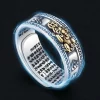
- Om Mani Padme Hum, the mantra of compassion, is often engraved on rings, cuffs, and prayer wheels. On genuine work the script is clean and correctly formed, not a smeared approximation.
- The Lotus, Conch, and the rest of the Eight Auspicious Symbols each carry their own meaning and are placed deliberately, not scattered at random.
Because the meaning lives in the symbol, reading it correctly is part of judging authenticity. Our deeper breakdown of Tibetan bracelet symbols and their materials covers how to interpret them, and the same standard applies to a hand-painted thangka, where a single misplaced gesture betrays a mass-printed copy.
108 Beads, Correct Iconography, and Respect vs. Decoration
Numbers matter too. A traditional Tibetan mala carries 108 beads plus a larger guru bead, a structure tied directly to Buddhist practice rather than an arbitrary design choice. When a “mala” has a random bead count and a decorative tassel bolted on, it is styled after the tradition instead of made within it. None of this means you cannot wear Tibetan jewelry if you are not Buddhist. Wearing these pieces with awareness is widely welcomed. It simply means an authentic piece treats the symbolism as something real, and so should the seller describing it.
⚠️ A note on meaning and benefits: The stones and symbols in Tibetan jewelry are traditionally believed to offer protection, balance, and positive energy. These beliefs come from cultural and spiritual tradition, not scientific evidence, and are shared here for educational purposes, not as medical, financial, or psychological advice.
Points 4 and 5: Where It Came From, and What It Should Cost
The last two checks are about the seller as much as the piece, and together they are the strongest fake-filter you have. Ask where it was made, then check whether the price agrees with the answer.
Sourcing Transparency and Fair Trade
The best question you can ask a seller is simple: who made this, and where? An honest answer names a specific region or workshop, such as Lhasa, Kathmandu, Boudhanath, or Dharamsala, and can speak to how the artisans were paid. A vague “made in Nepal or Tibet” with no further detail is a yellow flag. Transparent sourcing also protects the tradition, because fair-trade practices mean living wages for Himalayan artisans and help preserve crafts that mass production is erasing. This is the standard we hold ourselves to, and you can read how we work directly with Himalayan artisans on our Potala Store about page.
The Price Reality Check and Seller Red Flags
Make the price agree with the materials and the craft, because that single check catches most fakes on its own. Genuine new agate dzi beads typically run about $80 to $300 USD, and hand-worked sterling silver set with natural stone sits well above the price of a base-metal casting. When a “rare antique” or a “solid silver” piece costs less than dinner, the math is telling you something the listing will not. Before you pay, look for four things:
- Honest tier labeling: does it say “new genuine,” or vaguely imply “ancient” to justify the price?
- Real, high-resolution photos: actual macro shots of the hallmark, stone matrix, and tool marks, not stock images.
- A real return policy: honest sellers let you inspect a piece in hand and send it back.
- A stated material: “925 sterling silver” or “natural turquoise,” not just “Tibetan silver” or “healing stone.”
You will find every piece labeled this way in our authentic Tibetan jewelry collection, from handmade Tibetan bracelets to pre-vetted authentic Tibetan dzi beads.
Your 5-Point Tibetan Jewelry Authenticity Checklist
Run all five checks together, because no single row is proof on its own, but as a set they catch the great majority of fakes.
| # | Check | Authentic | Red Flag |
|---|---|---|---|
| 1 | Material | 925 sterling silver or copper; natural turquoise, coral, amber, agate | “Tibetan silver” alloy; dyed howlite, resin, or glass |
| 2 | Craftsmanship | Hand-hammered texture, tool marks, hand-drilled double-cone holes | Machine-perfect uniformity, hollow feel, oozing glue |
| 3 | Symbolism | Correct, meaningful sacred symbols and clean mantra script | Scrambled or purely decorative iconography |
| 4 | Sourcing | Named workshop or region, fair-trade artisans | Vague “made in Tibet/Nepal,” no origin detail |
| 5 | Price & trust | Price matches materials; real photos, real returns | “$50 antique,” stock photos, no return policy |
Buy Authentic Tibetan Jewelry With Confidence
Every piece in our collection is hand-selected in the Himalayas, honestly labeled by tier, and described by its real material, so you pay for exactly what you get.Shop the Tibetan Collection →
Frequently Asked Questions
Usually not. As a marketing term, “Tibetan silver” most often describes a base-metal alloy of zinc, copper, and nickel with little or no actual silver, and cheaper pieces have tested positive for lead or nickel. Genuine Tibetan silverwork is 925 sterling silver, meaning 92.5% pure, and carries a hallmark. Look for a stated silver content rather than the label alone.
Real turquoise shows an irregular matrix, the brown or black web-like veining, and no two stones look identical. Uniform, repeating patterns across many pieces usually mean dyed howlite or plastic. Natural turquoise also feels cool and slightly waxy, and a reputable seller will tell you whether a stone is natural, stabilized, or reconstituted.
Wearing Tibetan Buddhist jewelry with awareness and respect is widely welcomed, whether or not you are Buddhist. What matters is buying pieces that treat the symbolism as meaningful and support the artisans who make them, which is why sourcing transparency and correct iconography are on this checklist.
It depends on the materials. Genuine new agate dzi beads generally run about $80 to $300 USD, while hand-worked sterling silver set with natural stone costs well above a base-metal casting. If a piece is priced like a keychain but sold as solid silver or a rare antique, the price is the warning sign.
📚 References
- Sterling silver standard (925 / 92.5%): Purity definitions and hallmarking for sterling silver and fine jewelry. Gemological Institute of America (GIA)
- Agate and gemstone properties: Hardness, composition, and identification standards for agate, turquoise, and chalcedony. GIA Gem Encyclopedia
- Dzi bead material analysis: Synchrotron study confirming dzi composition (agate) and the traditional etching process. Heritage, MDPI (2020)
- The Eight Auspicious Symbols (Ashtamangala): Background on core Tibetan Buddhist iconography and its meaning. Wikipedia: Ashtamangala