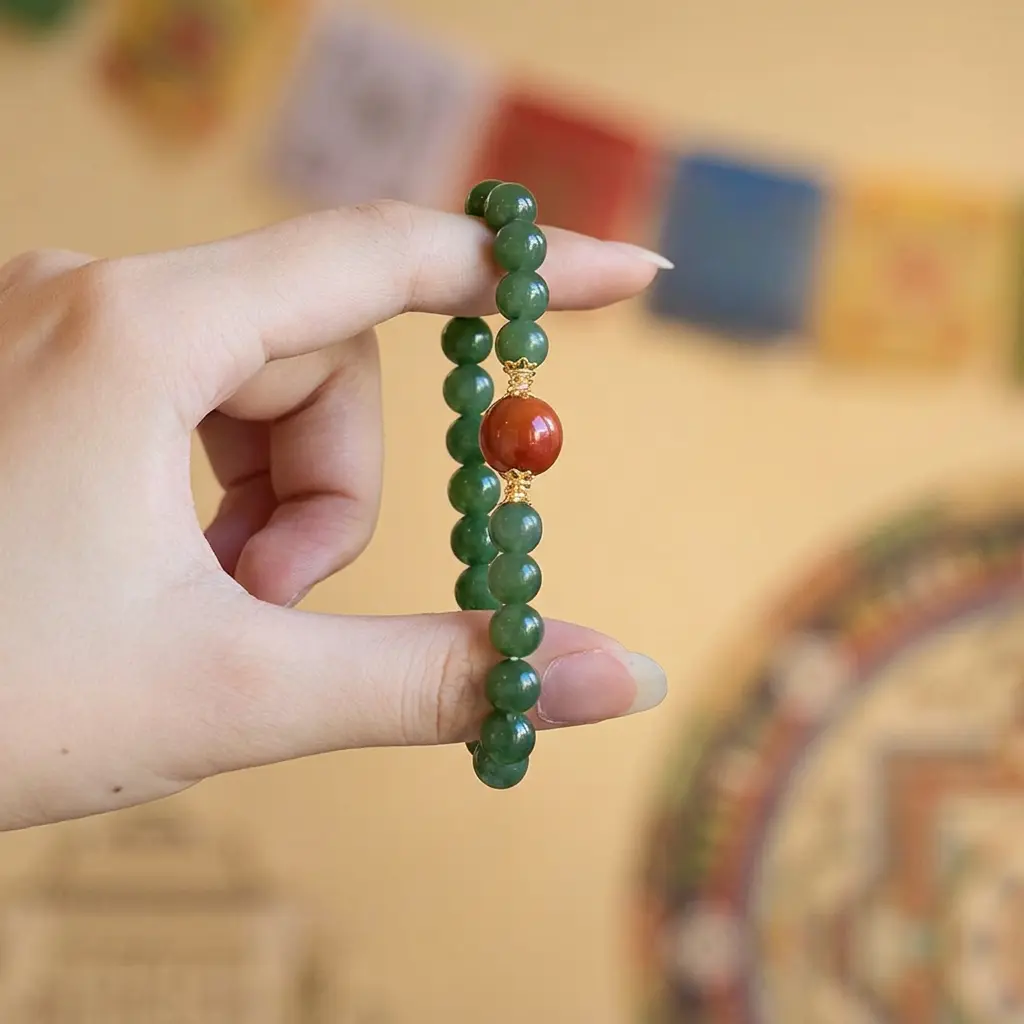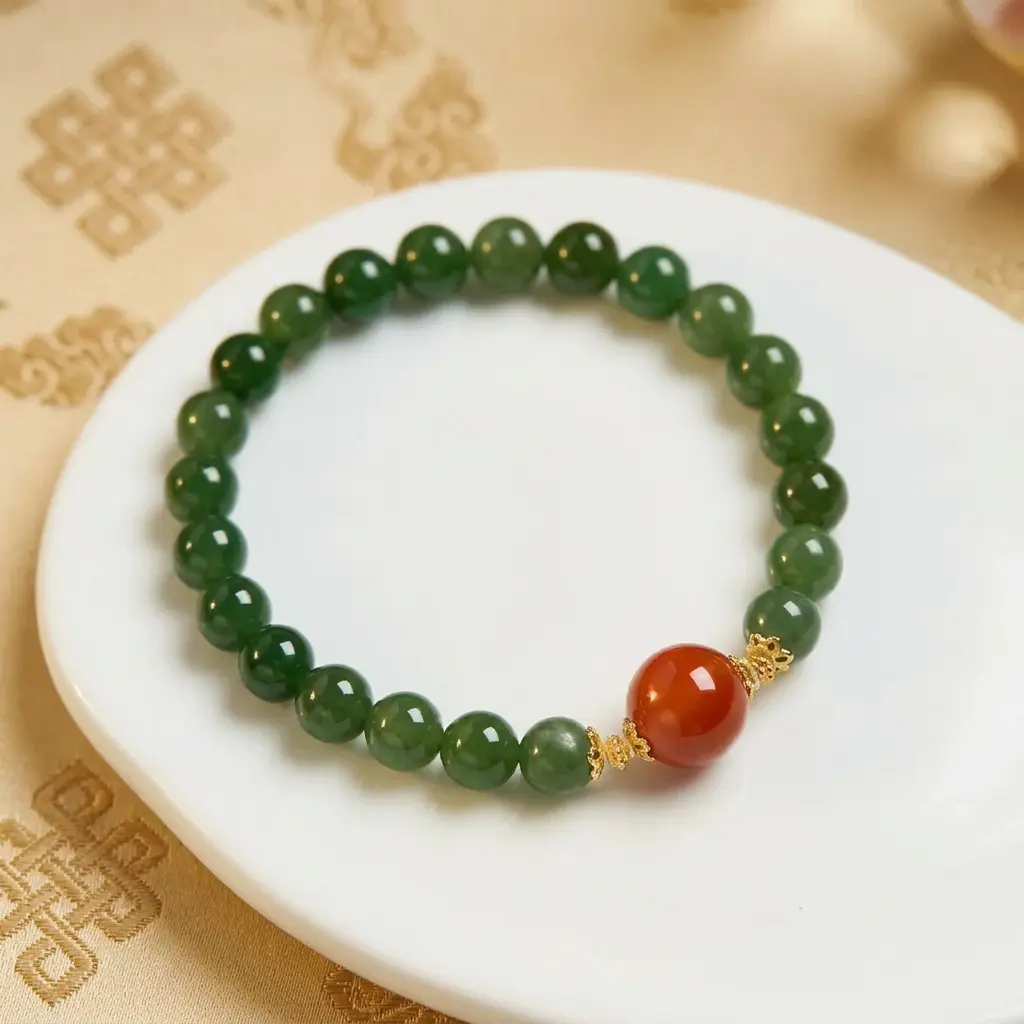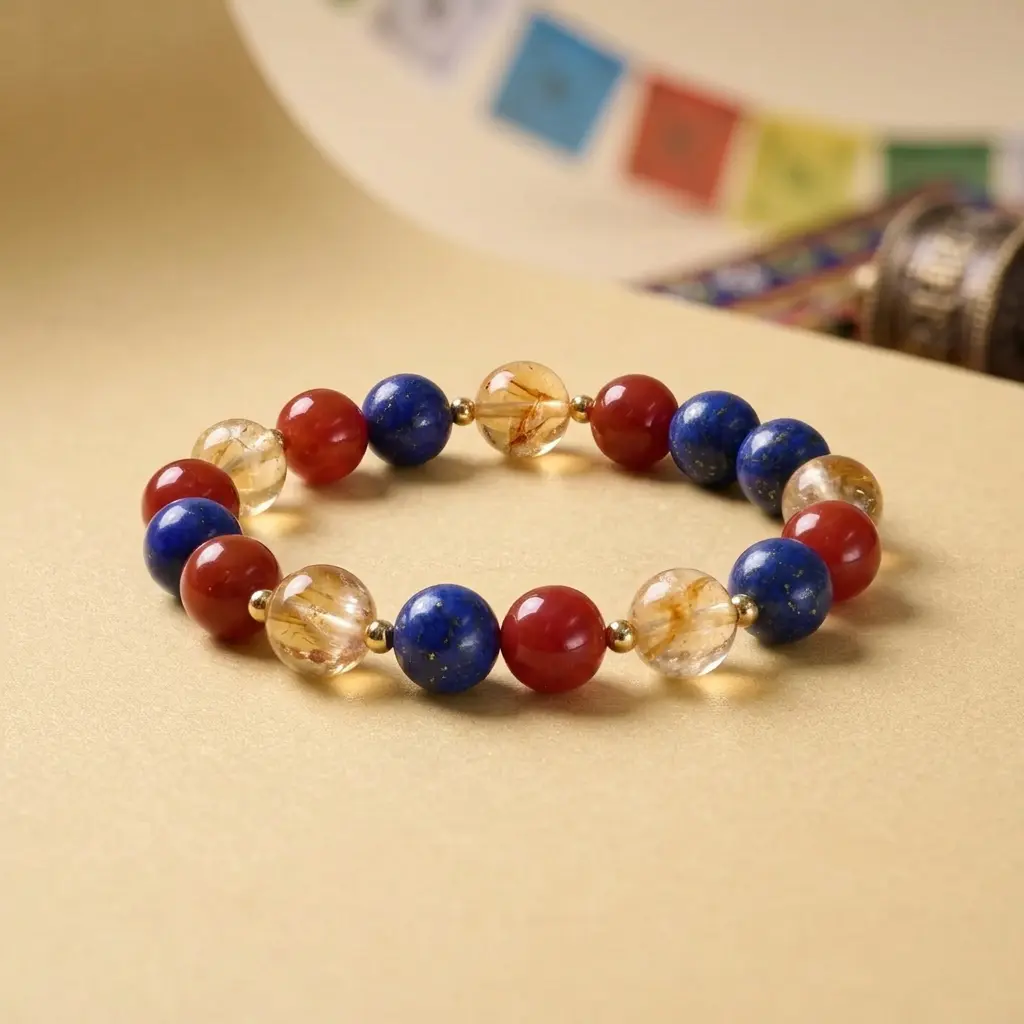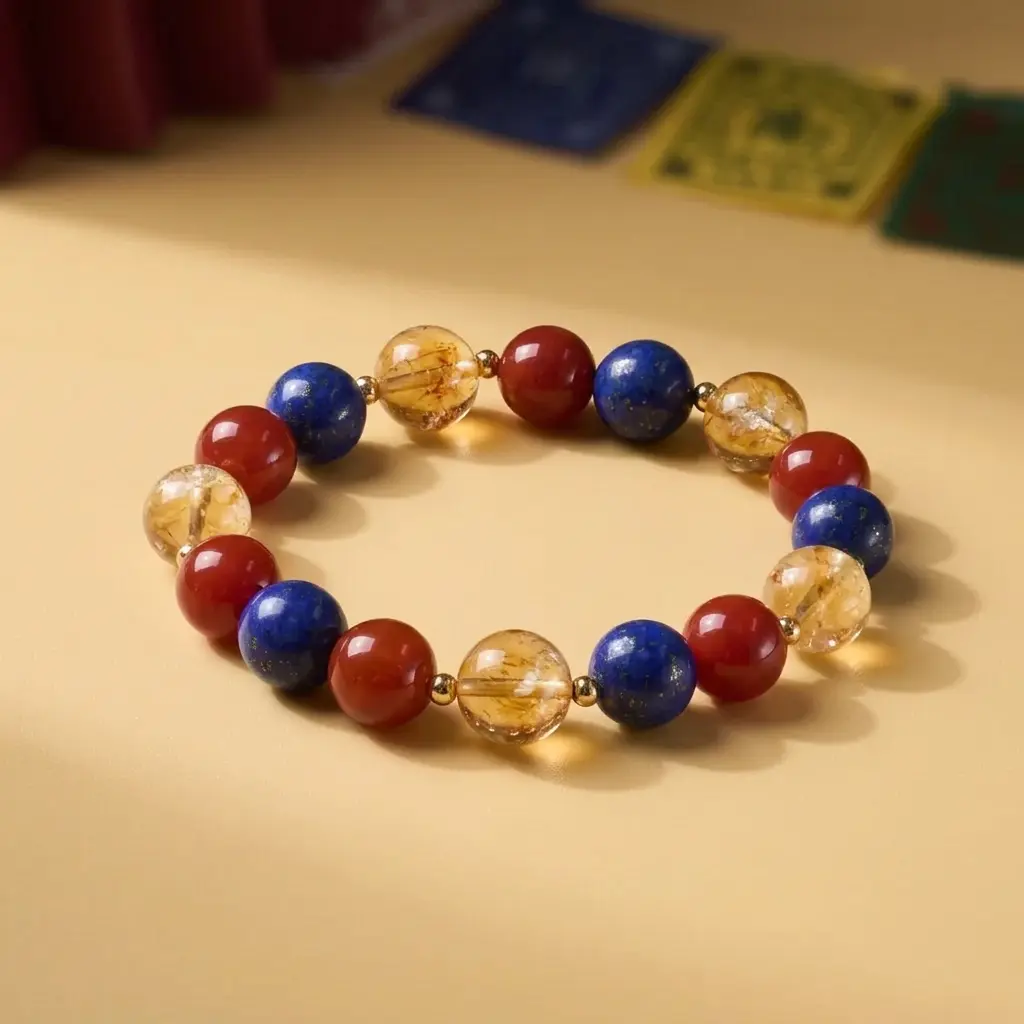

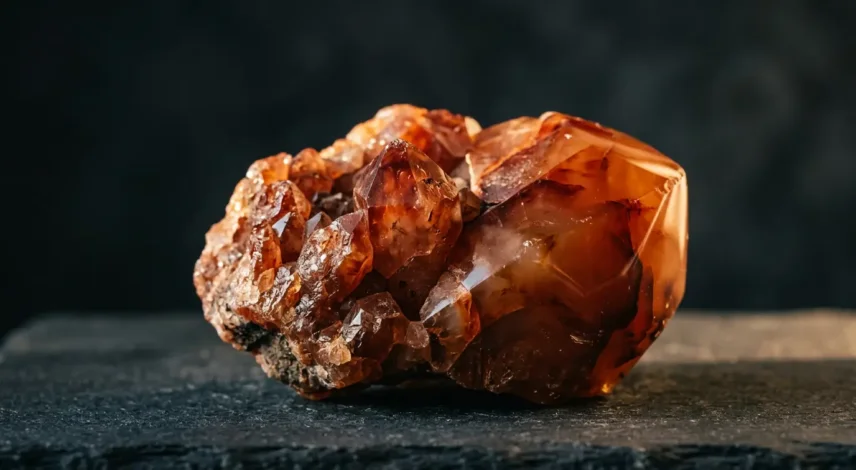

Carnelian is a warm orange-to-red variety of chalcedony, a form of quartz colored by iron oxide, and in crystal-healing traditions it is known as the stone of motivation, believed to support vitality, creativity, and confidence. If you have felt stuck, keep postponing a creative project, or simply want a stone that matches bold action, carnelian is the one most people reach for. This guide covers what carnelian is, what it is believed to do, its link to the sacral chakra and the zodiac, how to wear and cleanse it, and how to tell a real stone from a dyed imitation.
There is a timely reason this orange gem is getting attention. For 2026, the Year of the Fire Horse, several astrologers and crystal authorities, including The AstroTwins and Energy Muse, have named carnelian a Crystal of the Year, tying its fiery color to a year built around momentum and transformation.
At Potala Store, we have spent years working directly with Himalayan artisans and studying how gemstones are used in living spiritual practice, and we have packed and inspected enough natural stone to know exactly where beginners get misled. That perspective shapes everything below: honest properties, practical use, and a clear look at what the science does and does not support. You can explore our healing crystal bracelets any time, but read on first so you buy with intention instead of guesswork.
Table of Contents
What Is Carnelian? Meaning, Color, and Physical Properties
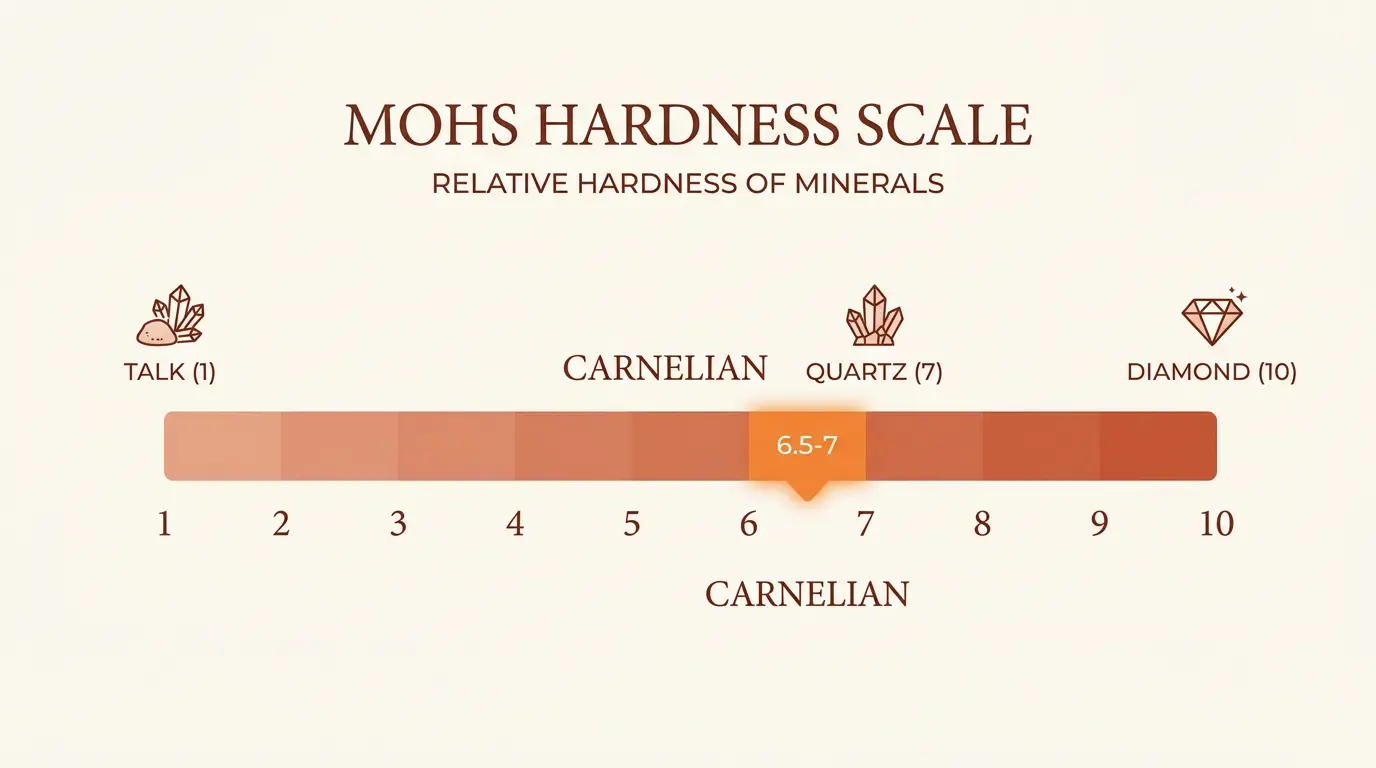
Carnelian is a translucent orange-to-red variety of chalcedony, a microcrystalline form of quartz (silicon dioxide) that gets its color from traces of iron oxide. It rates 6.5 to 7 on the Mohs hardness scale, which makes it durable enough for everyday wear as jewelry.
Beyond that, carnelian crystallizes in the trigonal system, shows a waxy to resinous luster, and has a specific gravity of about 2.58 to 2.64. Those numbers matter for buyers: a stone this hard resists everyday scratches, so a carnelian ring or bracelet holds up far better than softer decorative stones.
The name itself holds a small surprise most articles get wrong. It is often said that carnelian comes from the Latin caro, meaning flesh, after its color. The Oxford English Dictionary traces it the other way. Carnelian is a 16th-century respelling of the older word cornelian, which comes from the Latin cornum, the cornel cherry, whose translucent red fruit resembles the stone. The flesh association came later, as a mistaken analogy.
What does carnelian symbolize?
Carnelian symbolizes courage, creativity, and life force. Ancient Egyptians linked it to the setting sun and to the goddess Isis, and Roman soldiers wore carnelian signet rings that were believed to grant courage before battle. Across these cultures, the through-line is drive: the stone stood for action and vitality.
Where does carnelian come from?
Most carnelian on the market today comes from India, the primary global source, with additional deposits in Brazil, Uruguay, and Madagascar. A practical note for shoppers: much of the commercial supply from these regions is heat-treated agate, which is a common and accepted practice, but one an honest seller should disclose.
Healing Properties: Vitality, Creativity, and Confidence
In crystal-healing traditions, carnelian is believed to spark creativity, rebuild confidence, and restore a sense of vitality, which is why it earned the nickname the artist’s stone. Here is what it is most often associated with:
- Creative momentum: traditionally used to push past creative blocks and procrastination.
- Confidence and courage: believed to support public speaking, interviews, and bold decisions.
- Physical vitality: associated with energy, drive, and the motivation to actually start.
- Emotional warmth: thought to steady the mood and reconnect you with passion.
Now the honest part. There is no peer-reviewed evidence that carnelian changes your body or brain directly. What research does support is simpler: a meaningful object, worn with intention, can reinforce focus and reduce stress. In our experience, people rarely report an instant switch. Most describe a shift over roughly two weeks, usually along the lines of “I noticed I was actually finishing things.” One caution worth stating plainly: carnelian carries activating energy, so if you are looking for calm, or you tend toward anxiety or a short temper, it can feel too stimulating. Try it for a few days before committing to daily wear.
What is carnelian good for?
Carnelian is used most often for motivation, creative work, and confidence. People reach for it at the start of a new project, before a nerve-testing conversation, or during a stretch when energy feels low. It is a cue for action more than a cure for anything.
What does carnelian do spiritually?
Spiritually, carnelian is associated with grounding your energy in the present and reconnecting you with desire and drive. In chakra work it is tied to the body’s creative and emotional center, which is the sacral chakra we cover next.
The Sacral Chakra and Zodiac Connections
Carnelian is primarily associated with the sacral chakra (Svadhisthana), the energy center of creativity and passion, and secondarily with the root and solar plexus chakras. That single pairing, carnelian and the sacral chakra, is the reason it shows up in almost every guide about creative and emotional energy.
Among zodiac signs, carnelian is most often matched with Aries, Leo, and Virgo, and it serves as a secondary birthstone for Virgo. The fiery signs get the clearest match, since the stone’s activating quality suits their forward energy.
There is a second lens worth knowing. Alongside the Western astrological match, Tibetan medicine, known as Sowa Rigpa, has its own centuries-old tradition of using warm-toned stones for vitality. Where two independent systems point the same direction, the recommendation carries a little more weight. We map these overlaps sign by sign in our guide to the best crystals for every zodiac sign. For 2026, that same fiery energy also lines up with the Fire Horse year and its Aries-like drive, which is part of why carnelian keeps coming up this year.

Which chakra is carnelian?
Carnelian is mainly a sacral chakra stone. That center governs creativity, pleasure, and emotional flow, which lines up directly with the stone’s reputation for sparking creative and physical energy. It also lends secondary support to the root and solar plexus chakras.
What zodiac sign is carnelian for?
Carnelian is most closely tied to Aries, Leo, and Virgo, and it doubles as a secondary Virgo birthstone. That said, a zodiac match is a starting point, not a rule. Many people simply use the stone whose energy fits the goal in front of them.
How to Wear, Cleanse, and Care for Your Stone
You can use carnelian by wearing it as jewelry, carrying a tumbled stone in your pocket, meditating with it over the sacral area, or placing it in the south of a room. To keep its energy fresh, cleanse it about once a month using one of these methods:
- Rinse under running water for a minute to clear residual energy.
- Charge in moonlight overnight, especially on a full moon.
- Rest it on a selenite plate for a few hours as a no-water option.
- Skip long sun exposure, which can fade the orange over time.
One thing we learned from handling a lot of stock: prolonged direct sunlight really does dull carnelian’s color, because the iron oxide that gives it that orange is light-sensitive. Short charging sessions are fine. Leaving a stone on a sunny windowsill for weeks is not.
For wearing, there is no strict rule, although many people choose the right wrist to project active, outward energy. If you are easing in, start with a couple of hours a day for the first week. Because carnelian sits in the same chalcedony family as red agate, our Year of the Fire Horse red agate bracelet makes a durable everyday option, and its 2026 timing fits carnelian’s action theme. Not sure what suits you? Our guide on which crystal bracelet is right for you walks through it step by step.
How do you cleanse and charge carnelian?
Rinse carnelian under running water for about a minute, then charge it in moonlight overnight or rest it on selenite for a few hours. Cleanse it roughly once a month, or more often with heavy daily use. Avoid long sun exposure, which fades the color.
Can carnelian go in water?
Yes, carnelian can go in water briefly. At 6.5 to 7 on the Mohs scale it is hard enough that a short rinse will not harm it. Avoid long soaks and salt water, though, since extended exposure can dull the surface over time.
Carnelian vs. Red Agate: How to Tell Them Apart
Carnelian and red agate are both chalcedony, but carnelian usually shows a uniform, translucent orange-red body, while red agate shows visible banding or stripes.
| Feature | Carnelian | Red Agate |
|---|---|---|
| Color pattern | Uniform orange-red | Visible bands or stripes |
| Transparency | Often translucent | Often more opaque |
| Energy (traditional) | Activating, motivating | Grounding, stabilizing |
| Mineral family | Chalcedony (quartz) | Chalcedony (quartz) |
| Hardness | Mohs 6.5-7 | Mohs 6.5-7 |
In practice, the line blurs. A single stone can sit right in the overlap, and “carnelian agate” is a real, honest label for banded material. Some sellers use the two names interchangeably, so the description matters more than the word on the tag.
Are carnelian and red agate the same stone?
They are close cousins, not identical. Both are iron-colored chalcedony, but the everyday distinction is pattern and energy: carnelian tends to be uniform and activating, while red agate tends to be banded and grounding. Neither is better, they simply suit different goals.
A quick three-question check before you buy
Before you buy, ask three questions:
- Pattern: is the color uniform (leans carnelian) or clearly banded (leans agate)?
- Treatment: does the seller disclose any dye or heat treatment?
- Energy fit: do you want activating energy (carnelian) or grounding energy (agate)?
Honest answers to those three matter more than the label itself.
How to Spot Real Stones from Dyed Imitations
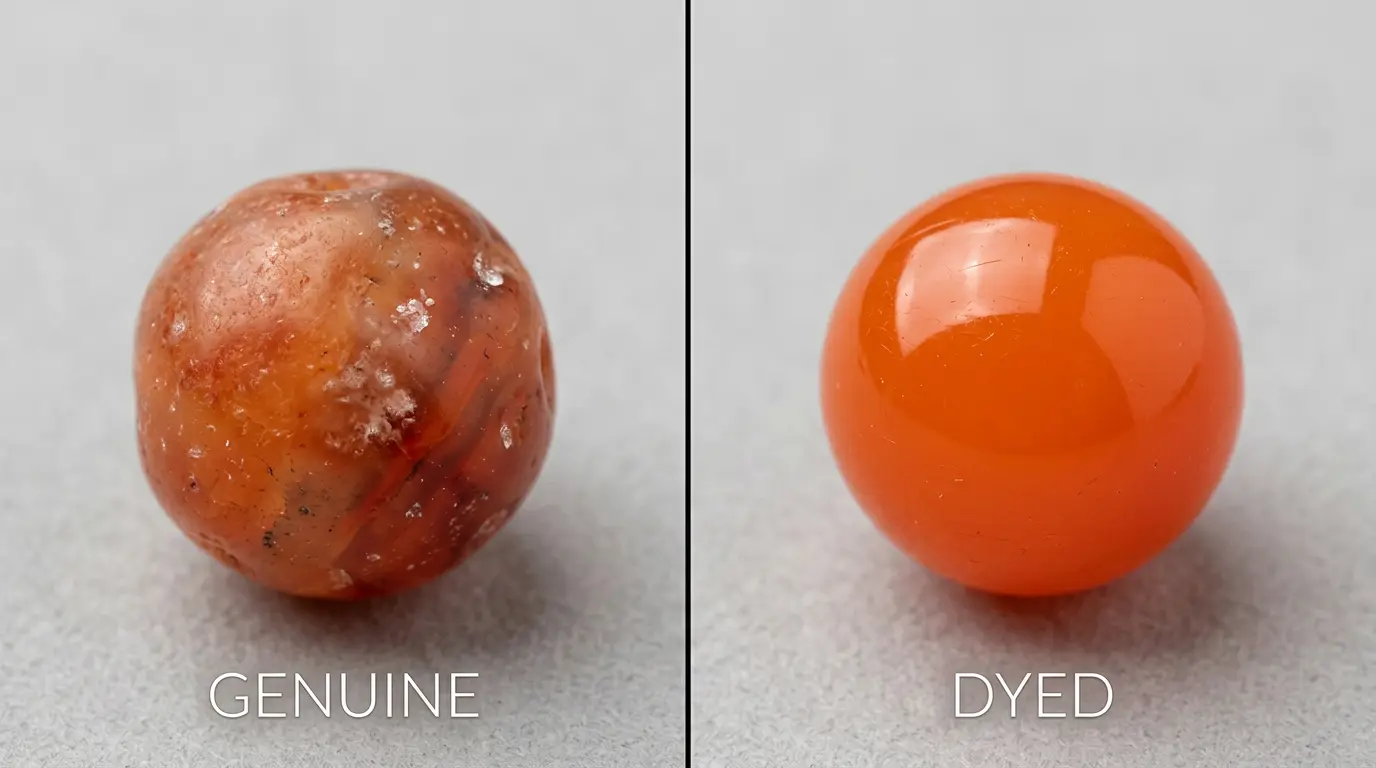
To tell genuine carnelian from a fake, look for uneven natural color and cloudy inclusions, a cool-to-touch feel, and no air bubbles or seams. A uniform, candy-bright orange is the single most common sign of dyed agate. Most fakes are inexpensive agate colored with iron nitrate and heat, with the rest being glass or plastic.
We assumed brighter meant better when we started out. It is the opposite. The most vivid, perfectly even orange stones are usually the dyed ones, while real carnelian tends to have a slightly cloudy, uneven glow that no dye bath reproduces well.
Is carnelian frequently faked?
Yes, though the wording matters. Because natural carnelian is inexpensive, most “fakes” are actually dyed agate sold at a markup, plus some glass and plastic. Heat treatment on its own is an accepted industry practice, but a trustworthy seller will still tell you when a stone has been treated.
Simple at-home authenticity tests
- Temperature: real stone feels cool and takes a moment to warm in your hand.
- Loupe check: look for natural inclusions and uneven color, not flawless uniformity.
- Bubble check: visible air bubbles or a seam mean glass, not stone.
- Hardness and color: genuine carnelian (6.5-7) lightly scratches glass, and any color that rubs off is a red flag for surface dye.
The simplest protection of all is buying from a seller who discloses treatment up front.
Wear Carnelian with Intention
Explore natural, ethically sourced stones chosen for creativity, confidence, and vitality, strung and ready to wear from day one.Browse Our Crystal Bracelet Collection →
Frequently Asked Questions About Carnelian
Carnelian carries activating, fiery energy, so anyone seeking calm, or prone to anxiety, insomnia, or a short temper, may find it too stimulating. It causes no physical harm. If it feels overwhelming, simply take it off, and consider trying a gentler stone instead.
Many traditions use the left wrist to draw energy in and the right wrist to project it outward. For motivation and confidence, most people wear carnelian on the right. There is no wrong choice, so wear it whichever way feels aligned for you.
No, carnelian is one of the most affordable stones, with genuine pieces often starting around $3. That low price is exactly why elaborate forgeries are rare. Dyed agate is still sold as carnelian, so buy from sellers who disclose any treatment.
About once a month is typical, or more often with heavy daily wear. Use running water, moonlight, or a selenite plate, and keep the stone out of long sun exposure so its orange color stays rich.
A note on tradition and science: The spiritual and energy properties described here come from crystal-healing and cultural traditions, not from scientific evidence. This content is for educational purposes and is not a substitute for professional medical, psychological, or financial advice. Carnelian is a meaningful, intention-setting tool, not a treatment for any condition.
📚 References
- Carnelian, mineral data and properties: hardness, chalcedony composition, and iron oxide coloration. Mindat.org
- Carnelian overview, history, and etymology: comprehensive reference on the stone’s mineralogy and cultural background. Wikipedia
- Chalcedony and gemstone education: gemstone identification standards and quality guidance. Gemological Institute of America (GIA)
- Origin of the word “carnelian”: the cornel-cherry root and the later flesh-color respelling. Online Etymology Dictionary