
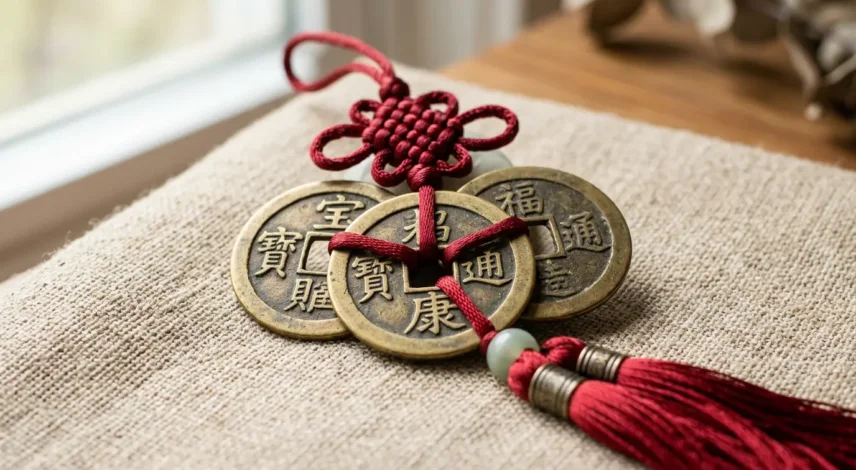

Feng shui lucky coins are round Chinese coins with a square hole in the center, tied with red string and traditionally believed to attract wealth and protection. The round shape represents Heaven and the square hole represents Earth, and the most auspicious sets use three, six, or nine coins placed in your wallet, by your front door, or in the southeast wealth corner of a room.
If you have received a set as a gift, or spotted one on a bracelet and want to use it correctly, this guide covers what the coins mean, how to tell the types apart, which numbers to choose, and exactly where to place them. At Potala Store, we source authentic Chinese and Tibetan wealth pieces directly from Himalayan artisan workshops, and the same two questions reach us again and again: what does this actually mean, and am I using it the right way?
Below you will find the full meaning, the coin types, the number rules, and clear placement guidance, grounded in tradition rather than guesswork.
Table of Contents
What Do Feng Shui Lucky Coins Mean?
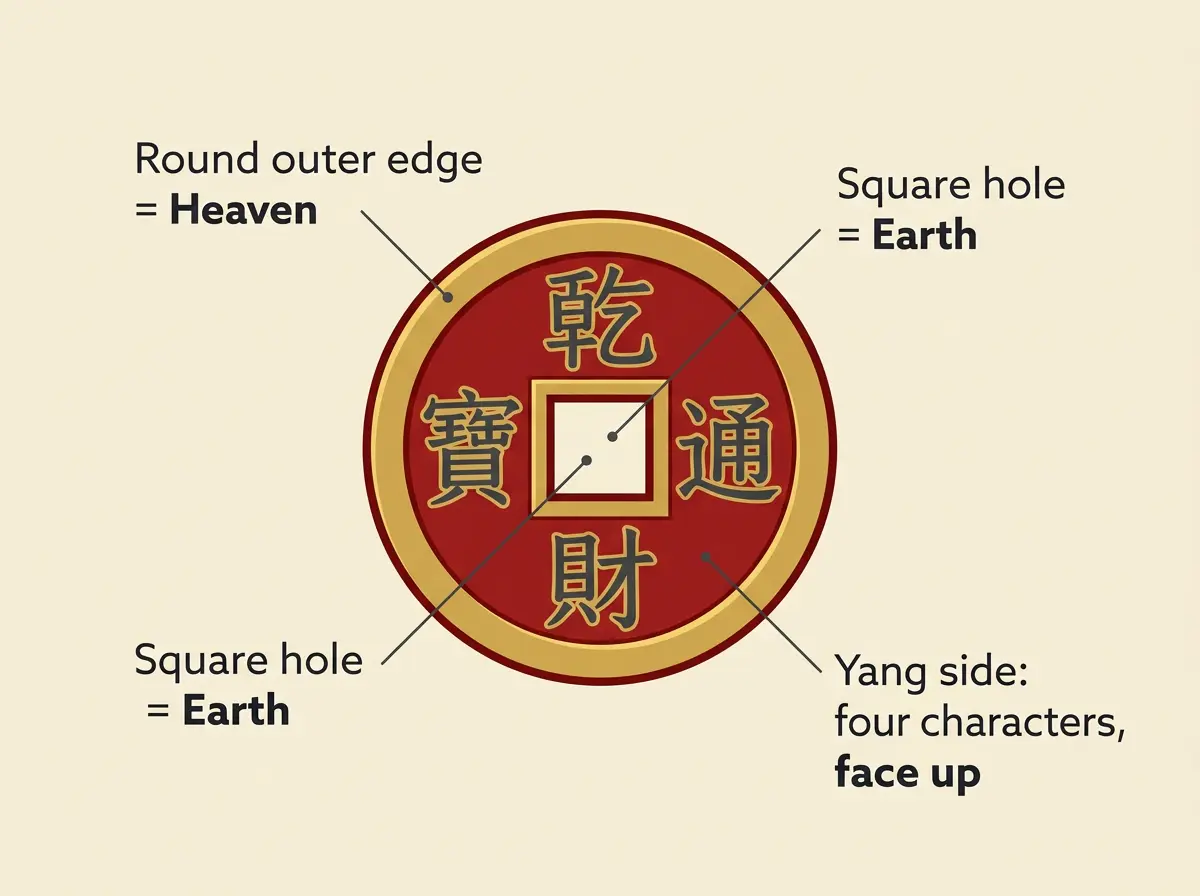
Feng shui lucky coins symbolize the union of Heaven, Earth, and Humanity, and are traditionally used to draw wealth and good fortune toward the owner. Each coin is a small map of the ancient Chinese universe, which is why the design has stayed the same for more than 2,000 years.
The coins are usually made from brass, bronze, or copper, the metals long associated with money energy in Chinese practice. Their meaning works on three layers: the shape, the two faces, and the inscription. Together these turn a simple piece of metal into an intentional wealth symbol.
Why Are the Coins Round With a Square Hole?
The round outer edge represents Heaven and the square hole in the center represents Earth. This idea is called Tían yuán dì fāng (天圆地方), meaning “round Heaven, square Earth.” The four characters stamped on the front name the emperor whose reign issued the coin, and the emperor stood for Humanity. So a single coin already carries the full Heaven-Earth-Humanity trinity.
The Yang Side and Yin Side Explained
Every coin has a Yang side with four Chinese characters and a Yin side with two characters. The Yang face carries active, wealth-attracting energy, so you display or carry it facing up or outward. The Yin face is receptive and traditionally faces down or inward. Getting this direction right is a small detail that most quick guides skip.
Types of Chinese Lucky Coins
Most feng shui coins fall into a few recognizable types, and knowing which one you have tells you what it is traditionally used for. Some types focus on wealth, others on protection, and a few combine both.
- I-Ching coins (cash coins): The everyday classic, round with a square hole and four characters plus tōng bǎo (“circulating treasure”). Used as a general wealth activator in wallets, homes, and businesses.
- Five Emperor Coins: A set from five successive Qing dynasty reigns, believed to combine protection against negative energy with wealth attraction.
- Three Emperor Coins (三帝钱): The most prized three-coin set, explained in detail below.
- Bagua and zodiac coins: Coins featuring the eight Bagua trigrams and the twelve zodiac animals, hung on interior door handles to protect the household.
I-Ching Coins (Cash Coins)
I-Ching coins are the type most people picture: a brass disc with a square hole and a four-character Yang face. They are the most flexible option, since a single coin or a small string works equally well in a wallet, on a desk, or by a door. If you own one unlabeled coin, it is almost certainly this kind.
Five-Emperor and Three-Emperor Coins
The Three Emperor Coins are made up of the Qianlong, Jiaqing, and Daoguang Tongbao, three genuine cash-coin designs from successive Qing dynasty emperors. They are chosen for two reasons. First, those reigns covered one of the most prosperous stretches of the Qing dynasty, so the coins are believed to carry the energy of that golden era. Second, spoken together the three emperors’ names sound like “money gets home” (钱到家, Qián dàojiā), a phrase that signals wealth arriving and staying. Most English guides list the coins but skip this wordplay, which is exactly where the set’s meaning lives. Five Emperor Coins follow the same logic with five reigns, leaning slightly more toward protection.
Bagua and Zodiac Protection Coins
Some coins swap the plain reverse for the eight Bagua trigrams and the twelve zodiac animals. These lean toward protection rather than pure wealth. Tradition hangs them from an interior doorknob, where they are believed to guard the home from negative forces while still inviting good fortune.
What Do the Numbers of Coins Mean?
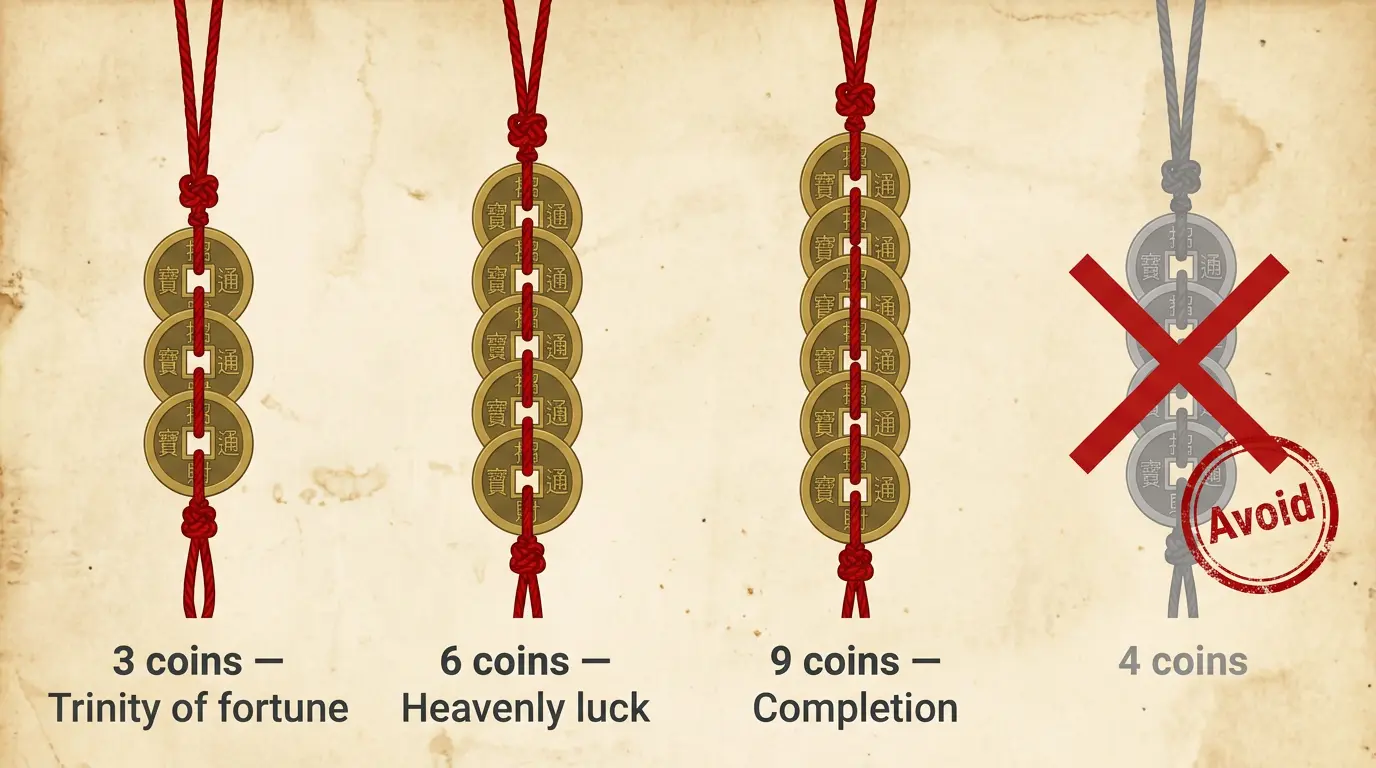
The number of coins changes what they emphasize: three coins represent the Heaven-Earth-Humanity trinity, six invite heavenly luck, and nine stand for the wholeness of the universe. One number is deliberately avoided.
| Number of Coins | Meaning | Best For |
|---|---|---|
| 3 coins | Trinity of Heaven, Earth, and Humanity | Everyday wealth in a wallet or home |
| 6 coins | Heavenly luck and helpful mentors | Career growth and business support |
| 8 coins | Endless prosperity and growth | Business spaces and wealth corners |
| 9 coins | Completion and the wholeness of the universe | Strong protection and the center of a home |
| Avoid 4 | “Four” sounds like the word for “death” | Skip four coins entirely |
Three, Six, and Nine Coins for Wealth
For daily money luck, three coins are the everyday favorite, gathering the full trinity of fortune into one charm. Six coins shift the focus toward heavenly support and mentors, which suits career goals. Nine coins carry the strongest protective and completing energy, so they often sit at the center of a home or a larger business space. If you want the deeper story behind the trinity set, our guide to what three feng shui coins on a red string mean breaks down each layer.
Why You Should Avoid Four Coins
Four coins are traditionally avoided because the Chinese word for “four” (四, sì) sounds close to the word for “death” (死, sǐ). Many people never learn this rule, so it is a very common and easy mistake. When you tie or buy a set, stick to three, six, eight, or nine coins and you stay on the safe side.
Where to Place Feng Shui Coins for Wealth
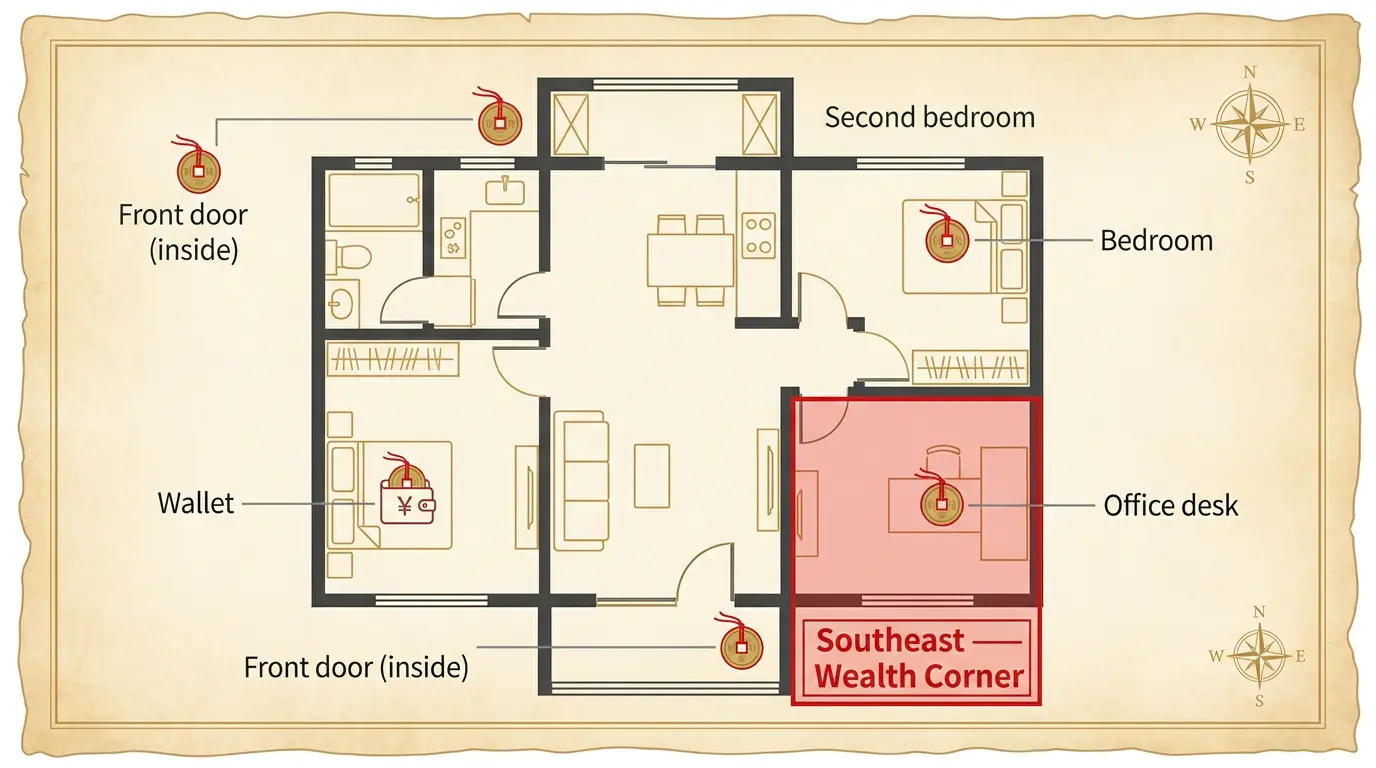
Place feng shui coins where money enters your life, most often your wallet, the inside of your front door, or the southeast wealth corner of a room. The guiding rule is simple: put them where income flows in, not where money sits idle, and keep the surrounding area clean so energy can move freely.
| Placement | What It Attracts |
|---|---|
| Wallet or purse | Continuous, personal money energy that travels with you |
| Inside the front door | Income and opportunity across your threshold |
| Southeast wealth corner | Prosperity in the Bagua map’s traditional wealth sector |
| Office desk or cash register | Career growth and steady business flow |
| Inside the car | Safe travel and protective energy on the road |
If you are new to this, it is normal to feel unsure about the exact direction or corner. You do not need a perfect reading to start. Pick one clear spot from the table, place the coins with the Yang side up, and adjust later as you learn your home better.
In Your Wallet and at the Front Door
Carrying a coin string in your wallet keeps a small, daily reminder of your financial intention close at hand. On the front door, hang the set on the inside handle, where it is believed to invite income each time the door opens. Both spots follow the same logic: money energy should reach you where you receive it.
The Southeast Wealth Corner
In the classical Bagua map, the southeast corner is the traditional wealth sector, so resting your coins there is one of the most reliable placements. Keep that corner tidy, since clutter is said to block chi before any object can help. To activate the whole sector rather than a single charm, our guide to the feng shui money corner walks through what belongs in that southeast space and why.
Office, Business, and Car Placements
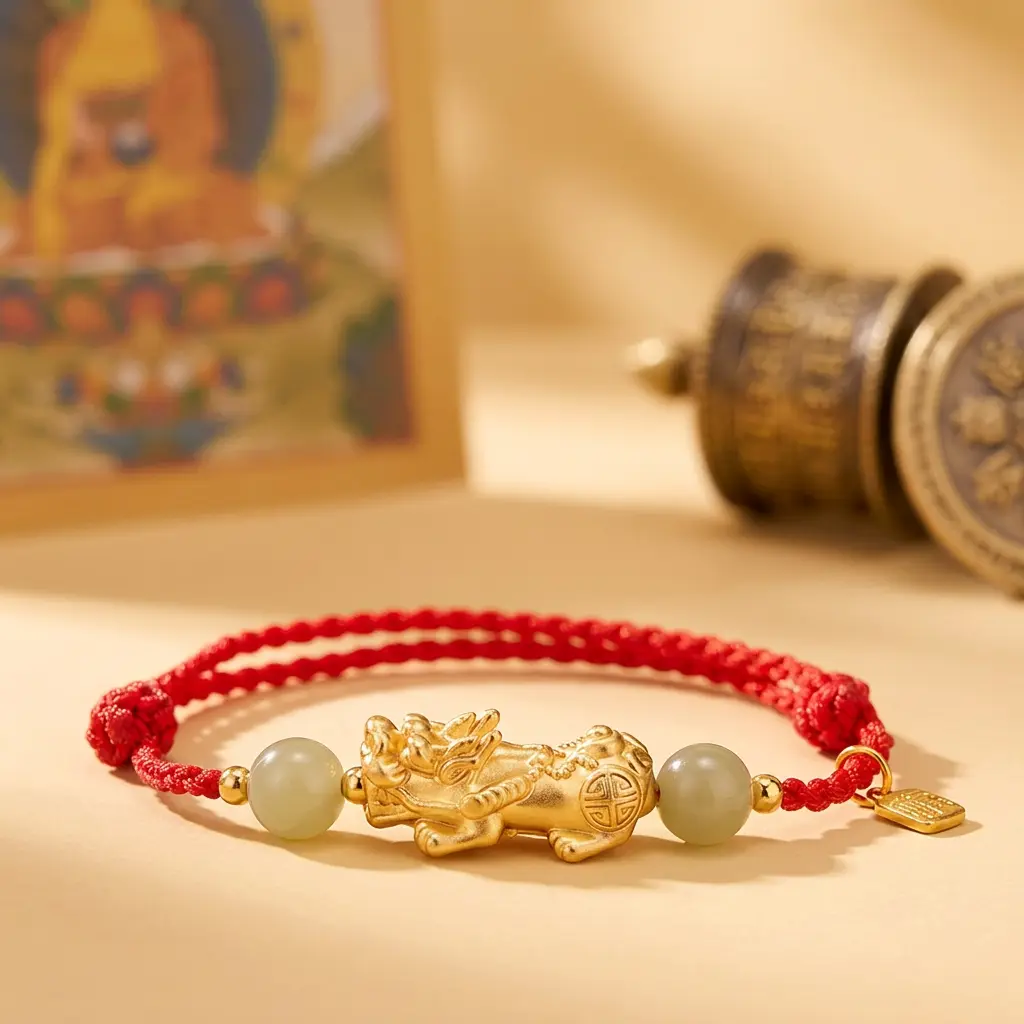
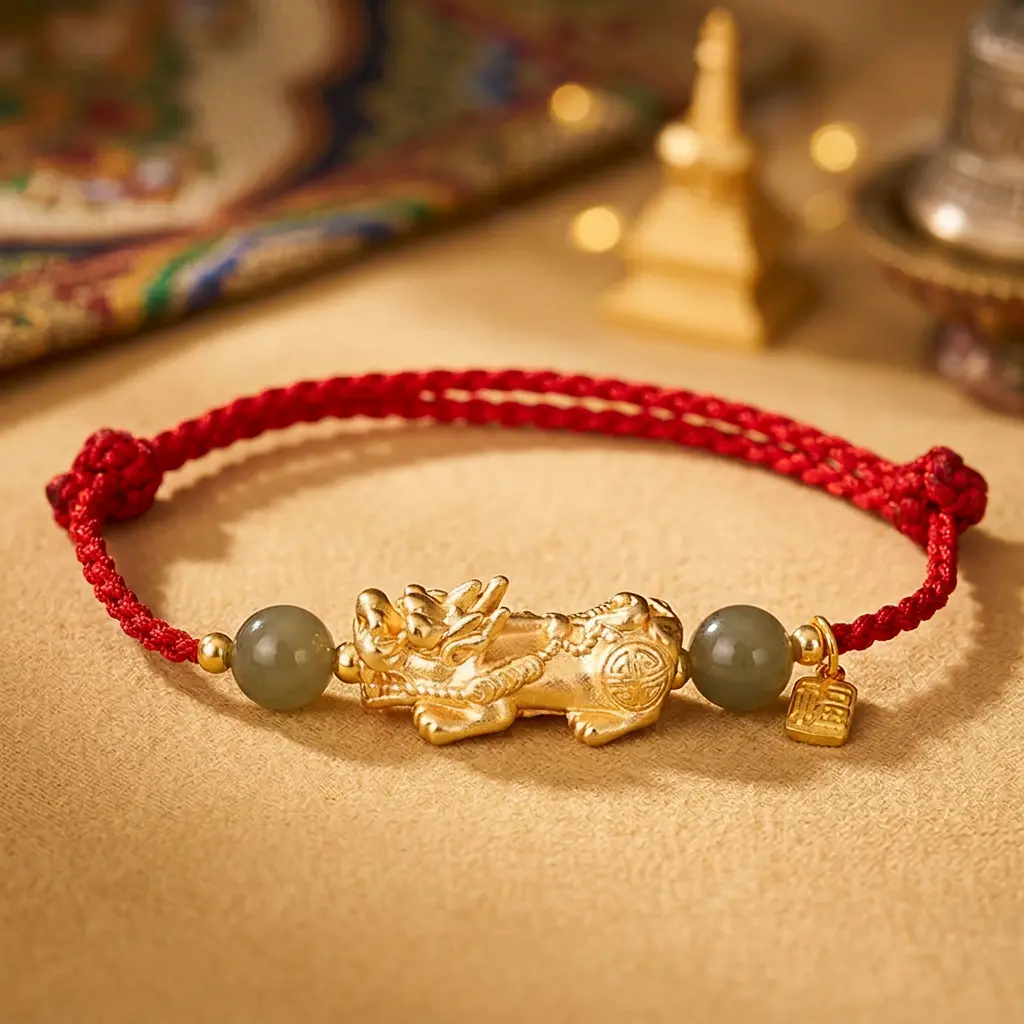
At work, tuck a three-coin string under your desk mat or keep it near the cash register to support career growth and steady sales. In the car, a small coin charm is carried for safe travel. Many people also like to wear the symbol daily, and our red money bag bracelet with Chinese coin pendants carries the same round-Heaven, square-Earth meaning outside the home.
How to Activate and Care for Your Coins
To activate feng shui coins, tie them on red string, hold them while setting a clear intention, and keep the Yang side facing up. Activation takes only a few minutes, and the steps matter more than the price of the coins.
- Tie the coins on red string: Thread three, six, or nine coins on red cord or ribbon, Yang side (four characters) facing up.
- Set your intention: Hold the coins for a moment and state one clear financial goal.
- Place them with care: Rest or hang them in your chosen spot, keeping the area clean and clutter-free.
- Refresh once a year: Cleanse the coins around Lunar New Year, in late January or early February, and restate your intention.
Activating Coins With Red String
Stringing the coins on red cord is believed to activate their Yang energy, since red belongs to the Fire element and carries momentum and protection. Many sets finish the cord with a mystic knot, an endless loop that symbolizes unbroken good fortune. The same red-cord principle appears in wearable pieces like our red string Fu bracelet, where the cord plays the same activating role. The same activated coin also seats in the mouth of a wealth toad, as our guide on how to activate a feng shui money frog with an I-Ching coin explains.
Cleansing and Refreshing Your Coins
Because the coins draw their power from symbolism rather than metal value, care is mostly about intention and cleanliness. A gentle wipe, incense smoke, or a night of moonlight all work well as a yearly reset. In our experience helping customers, three mistakes come up most often: the Yang side is left facing down, the red string is missing entirely, and the coins face out toward the door, which is said to send prosperity the wrong way. Fixing those three points solves nearly every “why does mine feel like an ornament” question we get.
⚠️ Important Note: The wealth and energy properties described here come from traditional Chinese feng shui belief and cultural practice, not scientific evidence. This guide is for educational and cultural purposes and is not a substitute for financial planning or professional advice. No object guarantees an outcome.
How to Choose Authentic Feng Shui Coins
You do not need a genuine antique for feng shui coins to work, because tradition holds that the power lives in the design and symbolism, not the age of the metal. That makes choosing a set simpler than most people expect.
Do the Coins Have to Be Antique?
No. Both authentic ancient cash coins and modern replicas are considered effective in traditional practice. What matters is the round-Heaven, square-Earth form, a clear four-character Yang face, and a proper red string, not whether the coin is a museum piece. This is reassuring news if you simply want a working charm rather than a collector’s item.
What Makes a Coin Set Authentic
A quality set gives you three things beyond the metal. The complete round-and-square form keeps the Heaven-Earth symbolism intact, so your charm reads correctly at a glance. A clear Yang face and red cord mean the set is ready to activate the moment it arrives, which saves you guesswork. And a trusted, culturally grounded source gives you a piece with real tradition behind it instead of a hollow decoration, so you can place it with confidence. If you are choosing a set as a gift, that grounding also matters, since you would rather give a present whose meaning you can actually explain, like the “money gets home” story behind the Three Emperor Coins.
For more seasonal ideas, see our roundup of the most powerful good luck charms for money in 2026.
Bring the Coins Home
Explore Potala Store’s authentic, monk-blessed feng shui coins and wealth charms, sourced directly from Himalayan artisan workshops and shipped free across the US.Shop Wealth Charms →
Frequently Asked Questions
Display the Yang side, the face with four Chinese characters, facing up or outward, since that side is believed to project active, wealth-attracting energy. The Yin side has only two characters and traditionally faces down or inward.
It depends on your goal. Three coins represent the Heaven-Earth-Humanity trinity and suit everyday wealth, six invite heavenly luck and mentors, and nine represent completion and strong protection. Avoid sets of four, since “four” sounds like the word for “death” in Chinese.
The most common spots are your wallet or purse, the inside knob of your front door, or the southeast wealth corner of a room. Keep the area clean and clutter-free so the energy can flow toward you.
No. Modern replicas are traditionally considered just as effective, because the power is understood to live in the coins’ design and symbolism rather than the age of the metal. What matters is the round-Heaven, square-Earth form, the red string, and how you place them.
📚 References
- Cash Coins in Feng Shui: Overview of the round-Heaven, square-Earth cosmology, the Three Emperor Coins set, and the symbolism of red cords. Wikipedia
- Bagua (Eight Trigrams): Background on the Bagua map used to locate the southeast wealth sector referenced throughout this guide. Wikipedia
- Chinese Cash Coins and Their History: Museum documentation of round coins with a square hole and Qing dynasty tongbao coinage. Source: The British Museum, Money and Medals collection (Readers may search the institution’s website for current resources)
- Ancient Chinese Coinage: Historical context on the reigns and inscriptions behind traditional emperor coins. Wikipedia