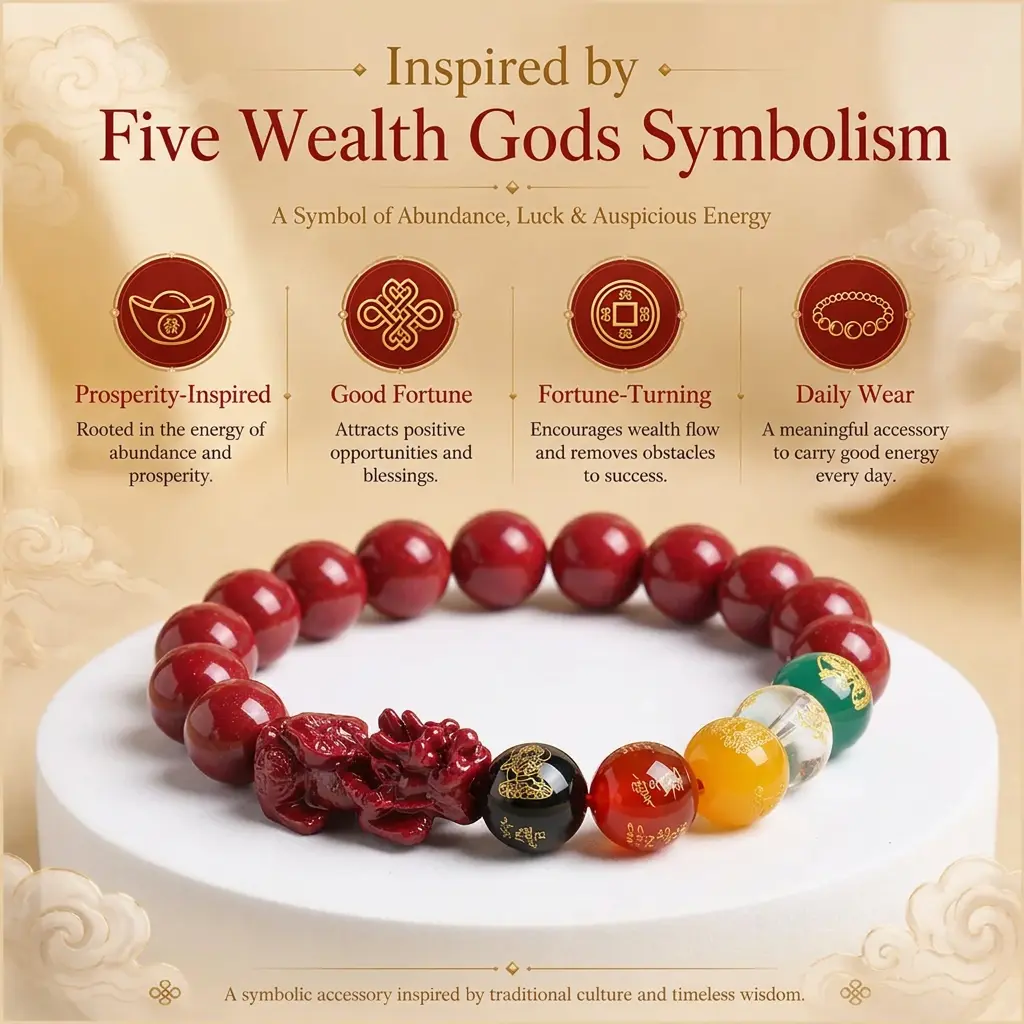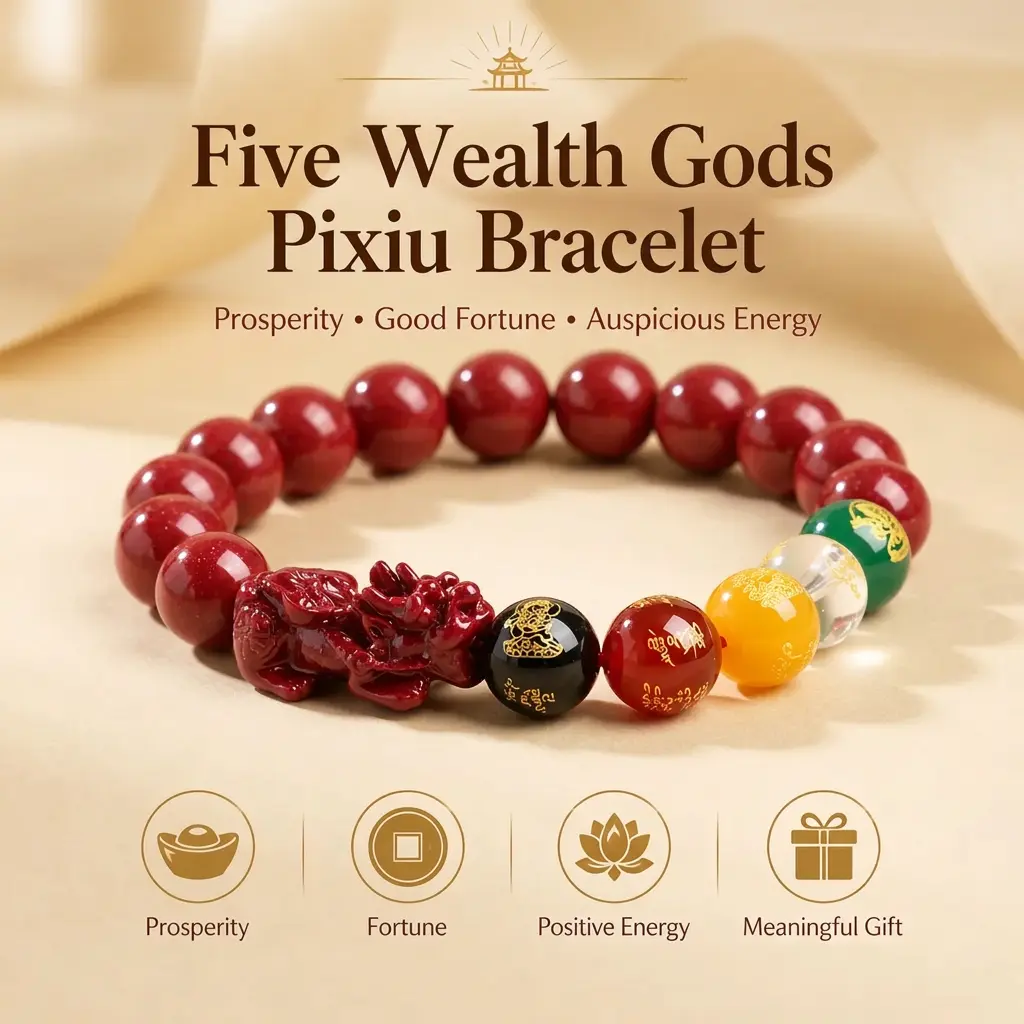

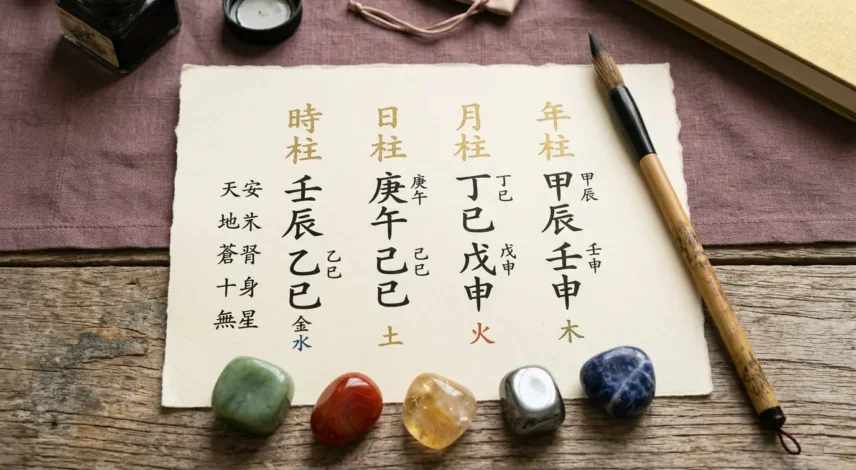

If eight strange characters left you more confused than curious, you are in the right place. BaZi, also called the Four Pillars of Destiny, is a Chinese system that turns your birth year, month, day, and hour into eight characters that reveal your Five Elements, your core personality, and your life timing. It is not a fixed fate, and it is not the same as your zodiac animal. This beginner’s guide shows you what a Chinese birth chart actually contains, how to read the one character that matters most, and how to find the single element your chart is missing.
At PotalaStore, we publish a monthly Chinese zodiac series that we track against the BaZi solar calendar rather than the Western month, working alongside our Himalayan artisan partners. That steady contact with the four-pillars framework shapes how we explain it here: plainly, and without the mysticism that scares most beginners off.
Feeling overwhelmed by the terminology is completely normal. You do not need years of study to get value from your chart. By the end of this guide, you will understand your Day Master, spot your favorable element, and know one practical step you can take today.
Table of Contents
What Is BaZi, and Why Is It More Than Your Zodiac Animal?
BaZi, or the Four Pillars of Destiny, is a Chinese system that converts your exact birth date and time into eight characters that map your elemental makeup, strengths, and life timing. The name is literal. “Ba” means eight and “zi” means characters, so BaZi means “eight characters.”
Your Chinese zodiac animal is only one small piece of this system. It comes from a single character in your Year Pillar, which means the animal you know from restaurant placemats is a thin slice of your full chart. Reading only your zodiac year leaves out roughly 85% of what BaZi actually measures.
The Eight Characters, Decoded
Your eight characters come from four pillars, one each for your birth year, month, day, and hour. Each pillar holds two parts: a Heavenly Stem on top and an Earthly Branch below. That gives you four stems and four branches, or eight characters in total. There are 10 Heavenly Stems and 12 Earthly Branches, and every stem and branch carries one of the Five Elements plus a Yin or Yang polarity.
What BaZi Is Not: Fortune-Telling vs. Probability
BaZi is not fortune-telling, and it will not name the date you get married. In Chinese metaphysics, the chart reads tendencies and timing, the way a forecast reads weather patterns. It can point to a decade that favors career risk without promising a specific outcome. It also is not fatalism. Your chart shows the terrain you start on, and you still choose your route through it.
How the Four Pillars Map Your Life
Each of the four pillars covers a different layer of your life, and one character outranks them all. The table below shows what each pillar governs and the life phase it colors most.
| Pillar | What It Governs | Life Phase |
|---|---|---|
| Year | Ancestry, family background, early environment | Childhood |
| Month | Career foundation, parents, birth season | Youth to early adulthood |
| Day | Self, character, marriage and partner | Core adult life |
| Hour | Ambitions, children, later years | Later life |
Notice that your Day Master sits inside the Day Pillar, at the center of the grid. Every other element in your chart is judged as favorable or unfavorable relative to your Day Master and its Five Elements balance.
Year, Month, Day, and Hour Pillars at a Glance
Your Year Pillar is the least decisive of the four. It describes the family and era you were born into, not the person you became. The Month Pillar carries more weight. It sets your birth season, which decides whether your Day Master is naturally strong or weak, and it shapes your career foundation. The Hour Pillar governs your later years and ambitions, and it depends entirely on an accurate birth time.
Why Your Day Master Is the One Character That Matters Most
Your Day Master is the Heavenly Stem of your Day Pillar, and it is the reference point for your entire chart. Find it, and the rest of BaZi falls into place. Every element becomes supportive or draining in relation to it, and every relationship in the chart is measured from its perspective. If you learn only one thing about your chart, learn your Day Master and its element.
The Five Elements Behind Your Chart
Your chart is written in five elements, and reading it starts with one question: which element does your chart lack, and which does it favor? The Five Elements, known in Chinese as Wu Xing, are Wood, Fire, Earth, Metal, and Water.
These five elements interact through two cycles. In the generating cycle, each element feeds the next: Wood feeds Fire, Fire forms Earth, Earth yields Metal, Metal carries Water, and Water nourishes Wood. In the controlling cycle, each element keeps another in check: Wood parts Earth, Earth absorbs Water, Water quenches Fire, Fire melts Metal, and Metal cuts Wood. Neither cycle is good or bad. Balance is the goal, not more of any single element.
Wood, Fire, Earth, Metal, and Water: What Each Governs
Each element stands for a distinct set of qualities in your chart:
- Wood: growth, vision, and long-term planning.
- Fire: energy, expression, and visibility.
- Earth: stability, patience, and support.
- Metal: structure, discipline, and precision.
- Water: intelligence, adaptability, and flow.
Most charts lean heavy on one or two of these elements and run thin on the rest. That imbalance, not the element itself, is what a reading pays attention to.
Finding Your Favorable Element (Your Chart’s Missing Piece)
Your favorable element is the one your chart needs to move toward balance, and finding it is the first practical step in any BaZi reading. Count how often each element appears across your four pillars. An element that is missing or badly outnumbered is often the one worth strengthening, while an element that floods the chart may need tempering. Reaching your favorable element by hand takes practice, so many beginners start by learning how the Five Elements in feng shui reveal your birth element before refining it with a full chart.
Reading Your Chart: A 5-Step Starter Method

You can start reading your own chart today with five steps, and no advanced study is required.
- Generate your chart: enter your exact birth date, time, and place, and convert clock time to true solar time first.
- Find your Day Master: locate the Heavenly Stem of your Day Pillar and note its element and polarity.
- Check your season: read your Month Pillar, since your birth season decides whether your Day Master is strong or weak.
- Weigh your elements: count all five elements across the four pillars and note which is missing or dominant.
- Read your Luck Pillar: find your current 10-year Luck Pillar and see whether it supports or strains your Day Master.
Step one trips up more beginners than any other. Your true solar time, the real position of the sun at your birthplace, can differ from the clock time on your birth certificate, shifting about four minutes for every degree of longitude away from your time zone’s center. For many United States cities, that gap is enough to move your Hour Pillar into the neighboring hour and change part of your chart. When we first started mapping charts with customers, we underestimated how often an uncorrected birth time produced the wrong Hour Pillar.
Steps 1 to 3: Generate, Find Your Day Master, Check Your Season
Start by generating the eight characters with an accurate birth time, then find your Day Master and write down its element. Next, look at your Month Pillar to read your birth season. A Day Master born in its own season tends to be strong, while one born in a season that drains it tends to be weak. This single reading colors everything that follows.
Steps 4 to 5: Weigh Your Elements and Read Your Luck Pillar
Count each of the five elements across your chart to see the shape of your balance. Then find the 10-year Luck Pillar, a shifting elemental period that layers over your fixed chart, and check whether its elements support or stress your Day Master. Do not worry about mastering all of this at once. Start with just your Day Master, and treat everything else as refinement you add over time.
Not ready to calculate by hand? Once you know your favorable element, our 30-second find-your-fit quiz points you to pieces matched to that element, your intention, and your budget.
From Chart to Practice: Balancing Your Elements
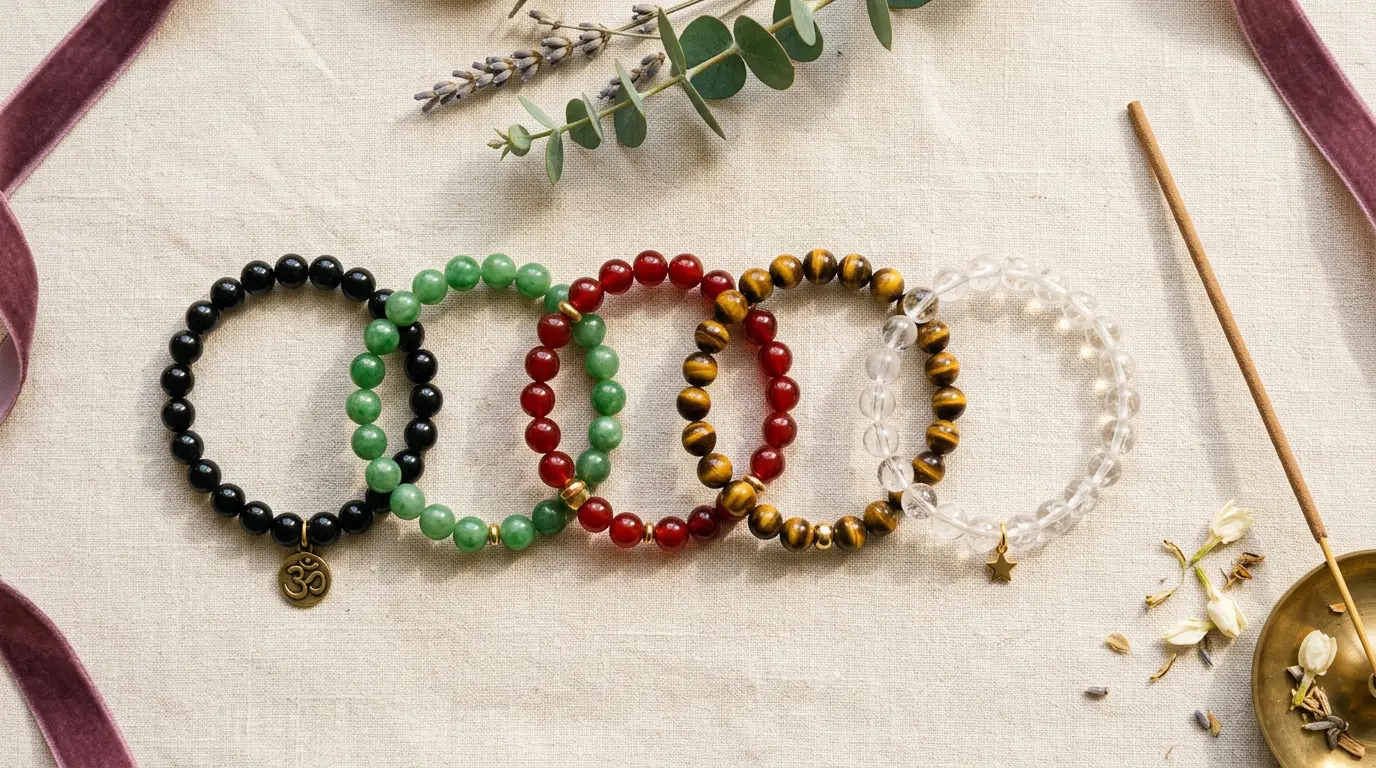
Once you know your favorable element, you can lean toward balance in small, everyday ways. Most beginners stop at reading the chart, yet the tradition has always been about acting on it, through your environment, your colors, and the materials you keep close. The table below pairs each favorable element with the stones traditionally used to support it.
| Favorable Element | Traditional Stones | Traditionally Used For |
|---|---|---|
| Water | Black obsidian, lapis lazuli | Flow, career, calm |
| Wood | Jade, green aventurine | Growth, fresh starts |
| Fire | Red agate, garnet | Drive, confidence |
| Earth | Tiger eye, citrine | Grounding, stability |
| Metal | Clear quartz, hematite | Focus, structure |
Here is how that works in practice. Black obsidian is a natural volcanic glass that carries the Water element in feng shui. If your chart runs hot and Fire heavy, an obsidian piece leans it back toward Water, which gives a beginner a simple daily way to nudge the balance without studying for years. Jade, a Wood element stone, does the same for a chart that favors Wood, aligning the accessory you wear every day with the element your chart actually wants.
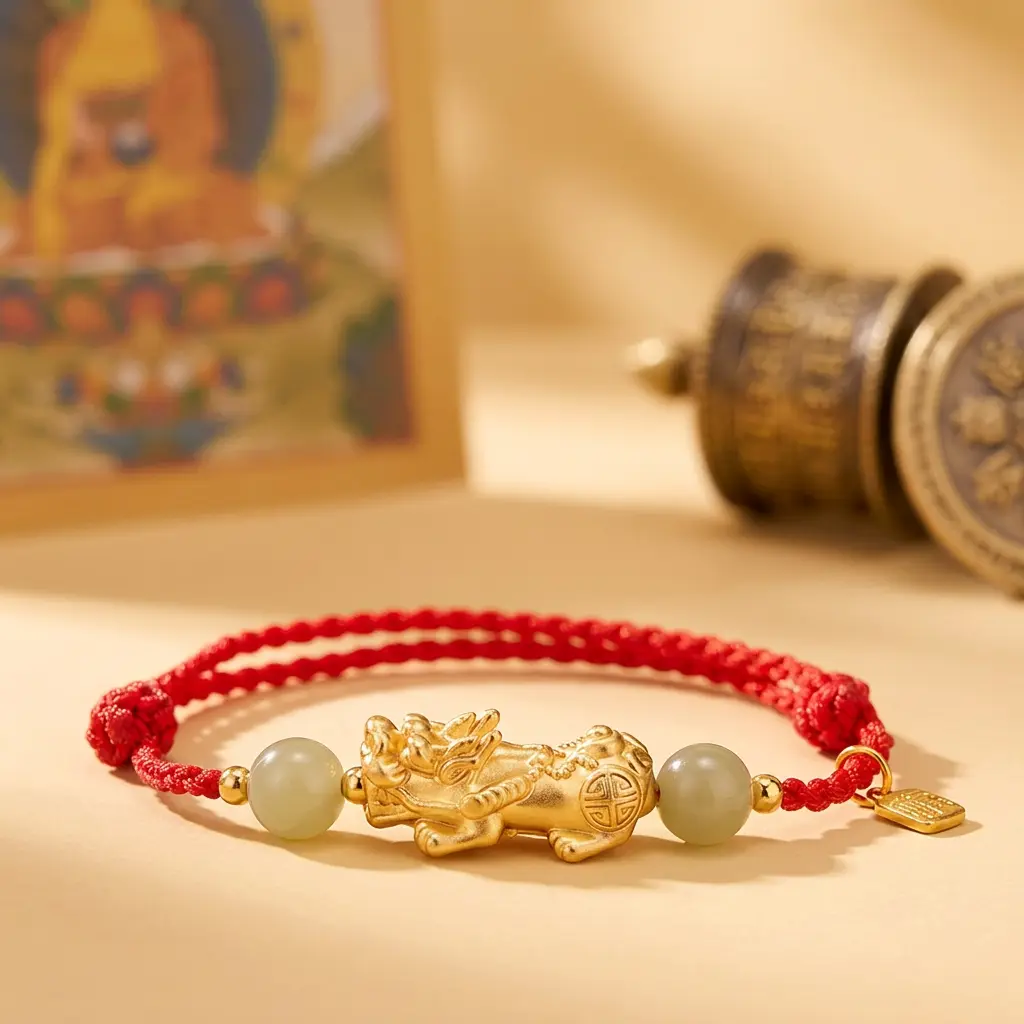
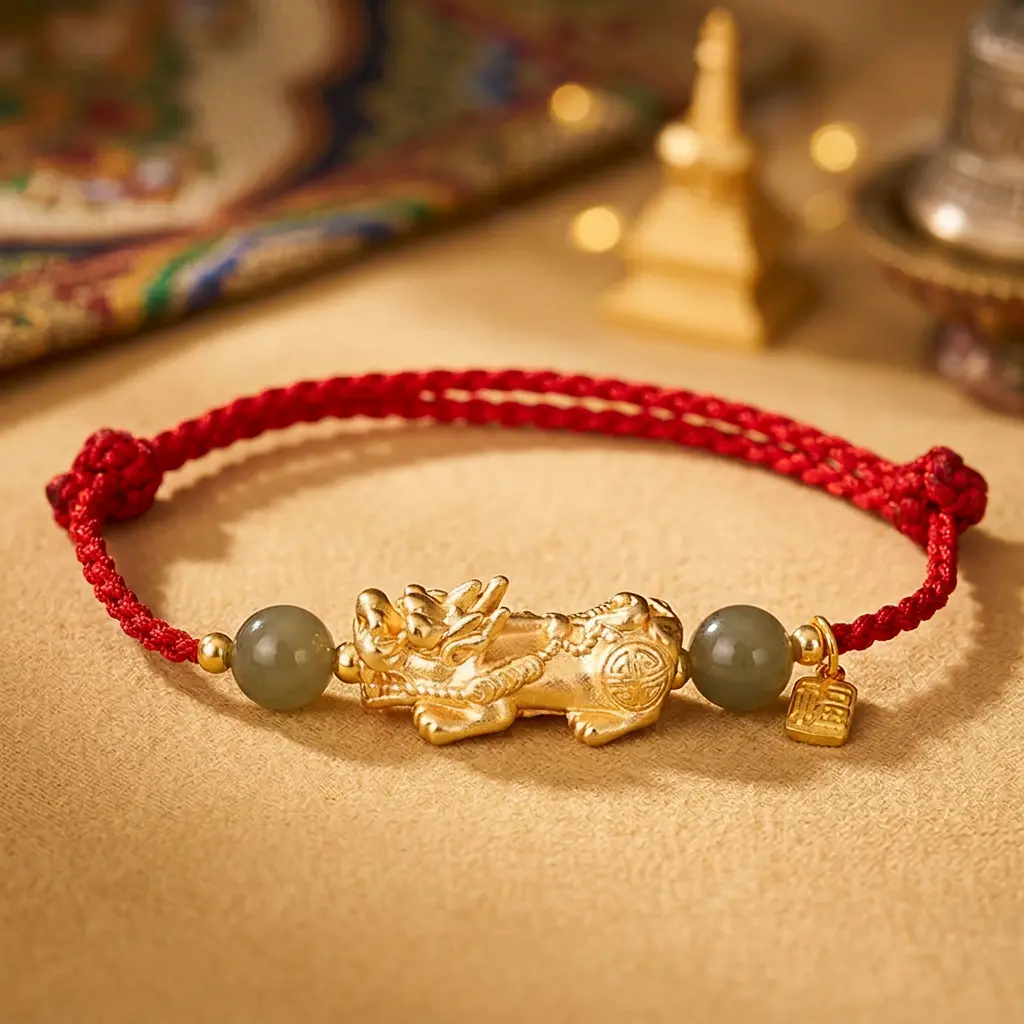
At PotalaStore, our pieces are blessed by our Himalayan monastic partners before they ship. That step matters because traditional practice holds that only natural, untreated stone carries and conducts energy, not dyed glass or resin. If your favorable element is Water, this black obsidian Pixiu bracelet is a straightforward starting piece. If you are still weighing options, our guide on how to choose and wear a feng shui bracelet for your element walks through the match step by step, and you can browse the full monastery-blessed feng shui bracelet collection by intention.
⚠️ Important note: The elemental and energy properties described here come from traditional Chinese feng shui belief and cultural practice, not scientific evidence. This content is for cultural and educational purposes only and is not a substitute for professional advice.
Everyday Ways to Strengthen a Weak Element
Stones are one option, and color and surroundings are another. Someone who needs Water might add dark blue and black to a workspace, or keep a small water feature nearby. Someone who needs Wood might bring in plants and green tones. The idea is gentle and consistent exposure to your favorable element, not a dramatic overhaul.
Choosing a Piece That Matches Your Element
Match the stone to your favorable element first, then check that it is natural and untreated. Traditional feng shui also has a wearing rule: the left wrist receives energy, and the right wrist releases it. Wealth-drawing stones like citrine or a Pixiu charm are usually worn on the left, while black obsidian, used to clear energy, is often worn on the right.
Common BaZi Myths Beginners Get Wrong
The biggest myth about BaZi is that your fate is sealed, when your chart actually shows patterns and timing, not a script you cannot rewrite.
“Your Fate Is Fixed” and Other Misconceptions
A challenging chart is not a curse. It is a map of terrain that rewards a specific strategy, and there is no universally good or bad chart. Another common myth is that BaZi predicts exact events. It gives probabilities and windows, not a lottery date. A third is that you need years of study to benefit, when understanding your Day Master alone already puts you ahead of most people who read only their zodiac animal.
Why Two People With the Same Birthday Can Differ
Two people born on the same day can hold different charts, because the Hour Pillar depends on birth time and true solar time, not the calendar date alone. Birthplace matters too. Two babies born at the same clock time in different cities sit under different solar conditions, so their charts diverge. This is also why a quick zodiac app, which usually ignores solar time, can hand you the wrong hour and a shallow reading.
Find Your Element, Then Find Your Piece
Once you know the element your chart favors, choosing a matched piece is simple. Explore PotalaStore’s monastery-blessed pieces, made with your favorable element in mind and shipped worldwide.Find Your Element Match →
Frequently Asked Questions
The calculation itself is mathematically precise, but BaZi reveals tendencies and timing, not exact events. Accuracy depends on a correct birth time, converted to true solar time, and a skilled interpretation. Treat it as a strategic map, not a prediction of specific dates.
Yes. Start with the five steps above: generate your chart, find your Day Master, check your season, weigh your Five Elements, and read your current Luck Pillar. Understanding your Day Master alone already gives you more insight than a zodiac animal ever will.
No. Your zodiac animal is just the Earthly Branch of your Year Pillar, one character out of eight. BaZi reads all four pillars plus your Day Master, Five Elements, and timing, so it captures the roughly 85% a zodiac reading leaves out.
Yes. Your Hour Pillar depends on it, and clock time must be adjusted to true solar time, which shifts about four minutes per degree of longitude. Without an accurate time, the Hour Pillar can be wrong. If you are unsure, the time on your birth certificate is the best starting point.
📚 References
- Four Pillars of Destiny, Historical Overview: An encyclopedic introduction to the Four Pillars system and its place in Chinese astrology. Travel China Guide
- The Sexagenary Cycle: Background on the 60-year cycle of Heavenly Stems and Earthly Branches that underpins BaZi timing. Wikipedia
- Wuxing (Five Phases) Philosophy: An academic overview of the Five Elements as a philosophical system rather than literal substances. Source: Internet Encyclopedia of Philosophy (readers can search the institution’s site for the current entry)
- Classical BaZi Texts: Primary sources documenting the methodology, including Yuanhai Ziping and Sanming Tonghui, foundational to the Day Master approach refined by Master Xu Ziping.