

Yes — a Buddha statue is an appropriate and generous gift in almost every case, as long as you match the figure to the person and hand it over without pressure. The two mistakes we see most often are gifting a reclining Buddha (which depicts the Buddha’s death) for a housewarming, and giving a religious icon to someone who never signaled interest in it.
At PotalaStore, we source statues directly from Sera Jhe Monastery in South India and Kopan Monastery in Nepal, and questions about gift etiquette land in our inbox constantly — usually about a week before a birthday. This guide covers what actually matters: which Buddha figures and mudras (hand gestures) suit which occasions, how to present the piece, where the recipient should place it, what a respectful statue costs in the US, and which superstitions you can safely ignore.
Table of Contents
Is It OK to Give a Buddha as a Gift?
Giving a Buddha statue is appropriate whenever the recipient would welcome spiritual or cultural imagery in their home, and it carries no negative meaning in Buddhist tradition. Generosity — dāna, one of the core practices in Buddhism — is the exact frame this gift sits in. Nothing in Buddhist teaching restricts who may give or receive an image of the Buddha.
What changes the answer is context, not doctrine. Ask yourself three questions before you buy:
- Would they display it? A statue that ends up in a closet creates awkwardness for both of you. Décor-friendly recipients and meditation practitioners are safe; someone with a strict aniconic religious practice is not.
- Is the timing neutral? Housewarmings, weddings, birthdays, graduations, and retirements all work. Bereavement is the one occasion to skip — certain figures carry funerary associations in East Asian tradition, and grief is a poor moment for iconographic nuance.
- Can you explain it in one sentence? “This is Shakyamuni in the earth-touching gesture, which represents steadiness” turns an object into a gesture of care.
Buddhist teacher Vanessa Zuisei Goddard, writing in Tricycle, frames the issue as one of context rather than permission: a statue is fitting in a temple or a home shrine, and jarring as bathroom décor. The object doesn’t become disrespectful because a non-Buddhist owns it. It becomes disrespectful when it’s treated as scenery.
You are probably here because you don’t want to send the wrong message with a gift that costs real money. That instinct is right — and it’s almost entirely solved at the next step, which is choosing the figure.
Which Buddha Statue Is Good for Gifting?
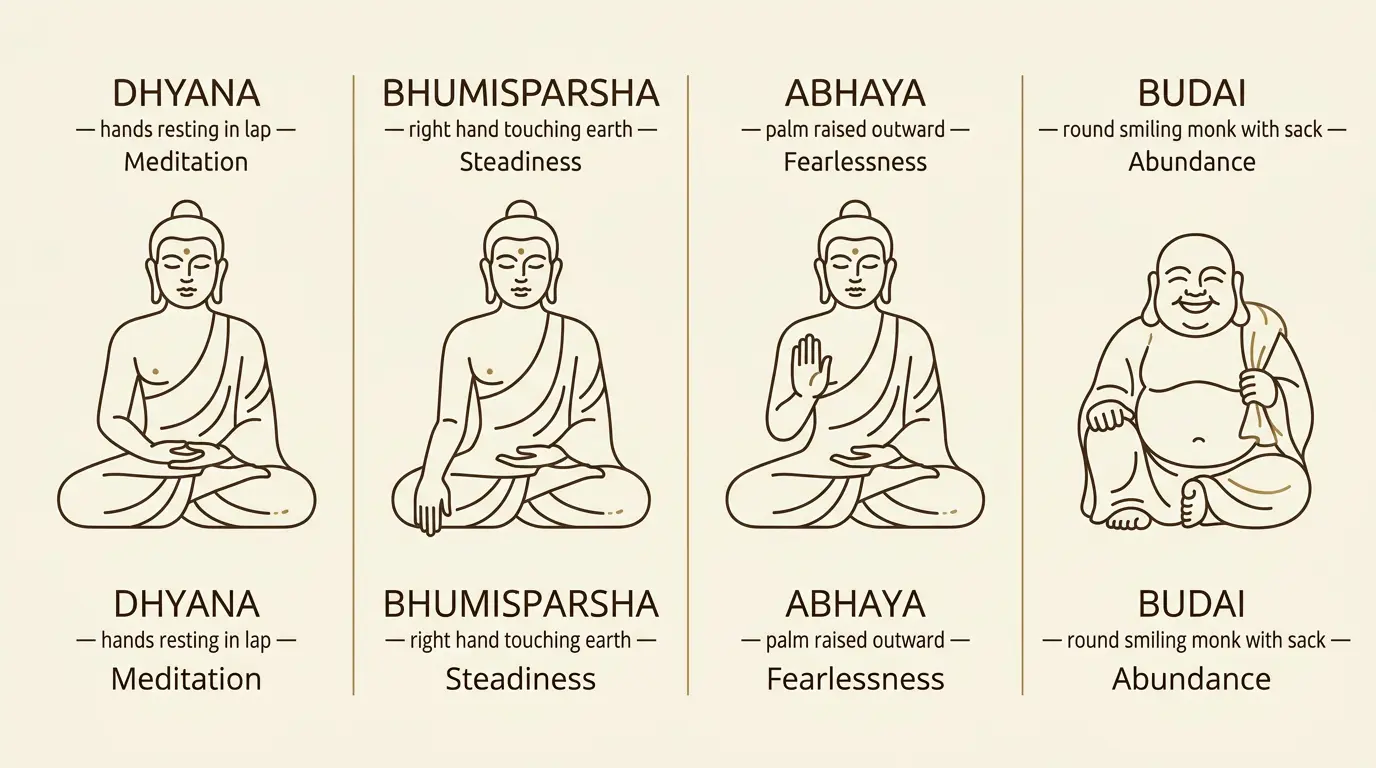
A seated Shakyamuni Buddha in the meditation (Dhyana) or earth-touching (Bhumisparsha) mudra is the safest gift for any recipient, and a Laughing Buddha is the best choice for a non-Buddhist housewarming. The figure and hand position carry the meaning, so this is where your decision actually gets made.
| Figure & Mudra | Meaning | Best For | Avoid When |
|---|---|---|---|
| Shakyamuni, Dhyana mudra (hands resting in lap) | Meditation, inner stillness | Meditation practitioners, yoga teachers, anyone starting a practice | Rarely inappropriate |
| Shakyamuni, Bhumisparsha mudra (right hand touching the earth) | Steadiness under pressure, awakening | New jobs, graduations, major life transitions | Rarely inappropriate |
| Abhaya mudra (palm raised outward) | Fearlessness, protection, reassurance | Housewarmings, someone facing a hard year | Rarely inappropriate |
| Budai / Laughing Buddha | Abundance, contentment, good humor | Non-Buddhist friends, offices, restaurants, housewarmings | Recipient wants an authentic Buddhist icon (Budai is a Chinese folk monk, not Siddhartha Gautama) |
| Medicine Buddha (blue, holding a bowl) | Healing and recovery | Recovery milestones, caregivers | An active illness, where it can read as a comment |
| Reclining Buddha | Parinirvana — the Buddha’s passing | Collectors and practitioners who request it | Almost all gifting. Wrong message for a home or a celebration |
The single most common error we correct: Budai and Shakyamuni are different people. The round, smiling figure most Americans picture is Budai, a 10th-century Chinese monk later folded into folk tradition — not the historical Buddha, Siddhartha Gautama. Encyclopædia Britannica treats them as separate entries for good reason. Gifting a Laughing Buddha to a serious Buddhist practitioner isn’t offensive, but it does land the way a Santa figurine would in a church.
If you’re unsure of the recipient’s tradition, default to a seated Shakyamuni. It’s recognized across Theravada, Mahayana, and Vajrayana lineages, and it reads as art to everyone else. Browse PotalaStore’s Buddha statue collection for seated figures, or the Laughing Buddha statues if you’re shopping for a housewarming.
Gift Etiquette: How to Present It, and What to Include
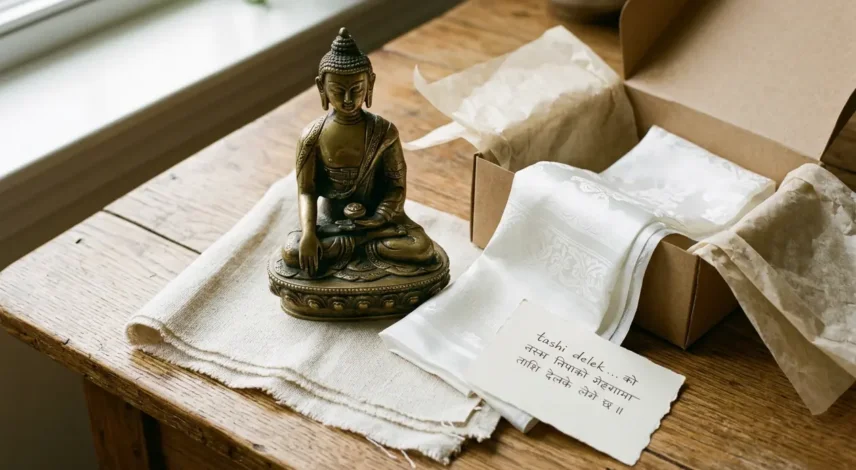
Present the statue upright, in both hands, with a short written note explaining the figure — and skip any instructions about what the recipient must do with it. Good gift etiquette here is mostly about removing obligation.
- Wrap it upright, never face-down. Traditional practice treats the image with the same care as a person; a statue packed on its face reads as careless to anyone from a Buddhist household.
- Write two sentences. Name the figure and the mudra, and say why you chose it for them. This is the entire difference between a decoration and a meaningful gift.
- Add one companion item, not five. A small incense holder or a khata (Tibetan offering scarf) completes the gesture without turning it into a project.
- Say nothing about placement. Offer the guidance below only if they ask. A gift with rules attached stops being a gift.
- Keep the receipt private but available. If the piece isn’t right for their home, they should be able to exchange it without a conversation.
One thing we got wrong early on: we used to include a printed card of placement rules with every statue. Customer replies told us it landed as homework — several people said they felt they’d been handed an obligation rather than a present. We cut the card down to the figure’s name and meaning, and the feedback reversed almost immediately.
💡 On consecration: Tibetan statues are traditionally blessed through a rab-ne consecration ritual before use. Our monastery-sourced pieces undergo a 3-day puja conducted by resident monks at Sera Jhe and Kopan. If you buy elsewhere, monasteries in the US typically suggest a donation of around $100 for a statue consecration — a detail worth mentioning to a practitioner recipient, since an unconsecrated statue is considered art rather than a support for practice.
Is It Bad Luck to Buy a Buddha for Yourself?
No. The belief that a Buddha statue must be received as a gift and never purchased for yourself is a modern folk superstition with no basis in Buddhist teaching. It circulates widely in Western gift blogs and feng shui listicles, and it’s worth naming directly because it makes people anxious about a decision that carries no risk.
The reasoning behind the myth is usually stated as “you can’t buy your own luck.” Buddhist practice contains no such transaction. Practitioners across traditions buy their own statues, and monasteries sell them. What tradition does emphasize is how the image is treated afterward — kept clean, kept elevated, kept out of bathrooms and off the floor. Respect lives in the handling, not in the receipt.
Two related beliefs also deserve correcting:
- “Buddha heads are always disrespectful.” Head-only sculptures are genuinely contentious — many originate as fragments of damaged statues. A purpose-made head is a different object from a looted one, but if this matters to your recipient, a full-figure statue avoids the question entirely.
- “A gifted statue can’t be re-gifted or moved on.” If a statue no longer fits someone’s home, passing it to a temple or another practitioner is the traditional route. Nothing is broken by it.
Materials, Sizes, and What a Respectful Gift Costs
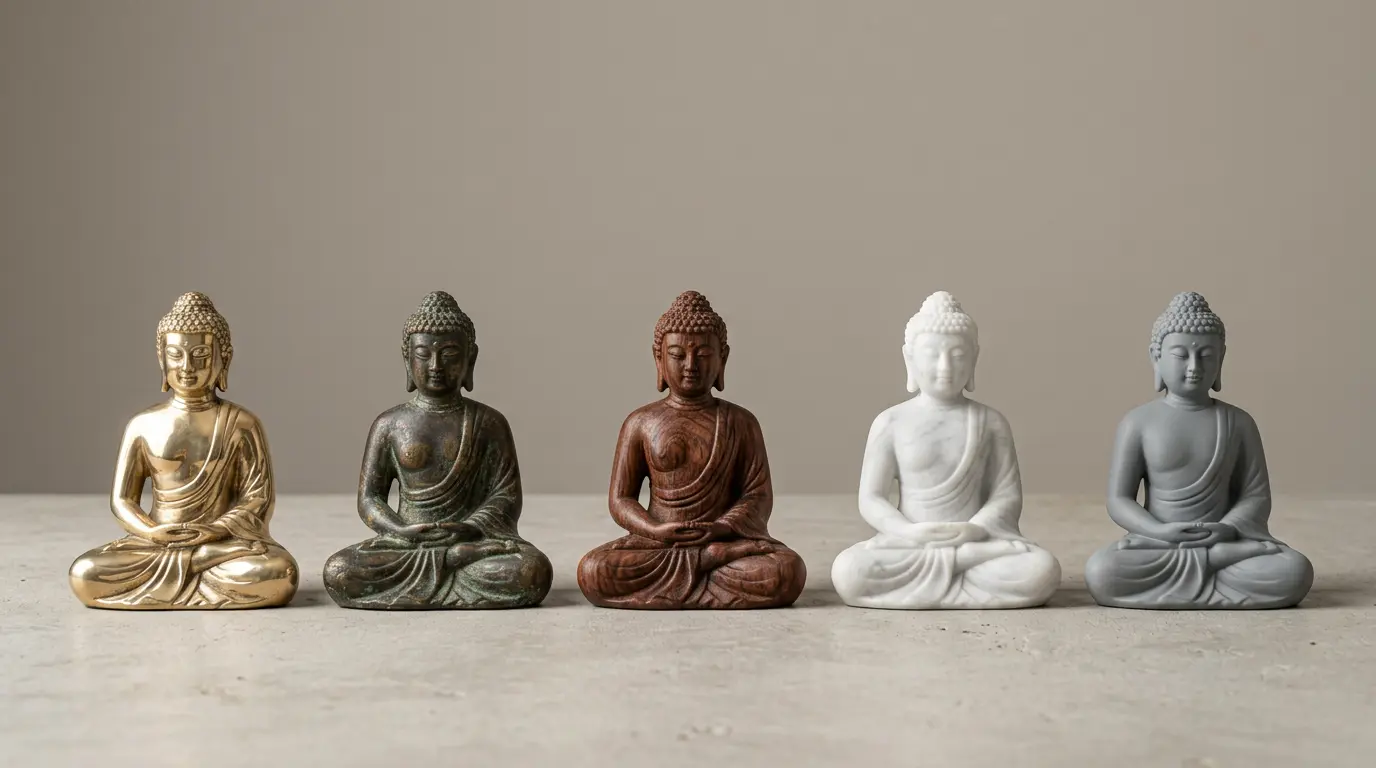
Expect $50–$800 for a quality brass statue, $80–$1,200 for carved wood, and $150–$3,000+ for cast bronze — with 6 to 12 inches being the sweet spot for a gift. Material determines both the price and how long the piece survives in a real home.
| Material | US Price Range | Practical Notes |
|---|---|---|
| Brass | $50–$800 | The default for Himalayan statues. Hand-finished lost-wax pieces sit at the upper end |
| Bronze | $150–$3,000+ | Lasts 100+ years; the heirloom option |
| Carved wood | $80–$1,200 | Needs 40–60% relative humidity; cracks in dry winter heat |
| Stone / marble | $120–$5,000+ | Heavy; confirm the recipient has a surface that can hold it |
| Resin | $20–$150 | Rarely lasts beyond 15 years; fine for décor, thin as a milestone gift |
On size: a 6–12 inch statue fits a bookshelf, a desk, or a small shrine without dominating a room. Anything above 18 inches assumes a dedicated space the recipient may not have — and a statue that has to be stored is worse than a smaller one that gets displayed. For a full breakdown of proportions and finishes, see our guide on how to choose a Buddha statue by size, material, and pose.
One customs detail almost no gift guide mentions: if you’re buying a statue while traveling in Thailand, Buddha images larger than 12 cm (about 4.7 inches) require an export permit from Thailand’s Fine Arts Department under the Ancient Monuments Act. Each image needs its own permit, processing runs three to five days, and no more than five pieces are allowed per person. Fragments — heads, hands, feet — cannot be exported at all. Travelers discover this at the airport more often than they should.
Every PotalaStore purchase also sends 10% of gross sales to our Tibetan artisan community fund and monastery partners, which is worth a line in your gift note if the recipient cares where their objects come from.
Where Should the Recipient Place a Buddha Statue?
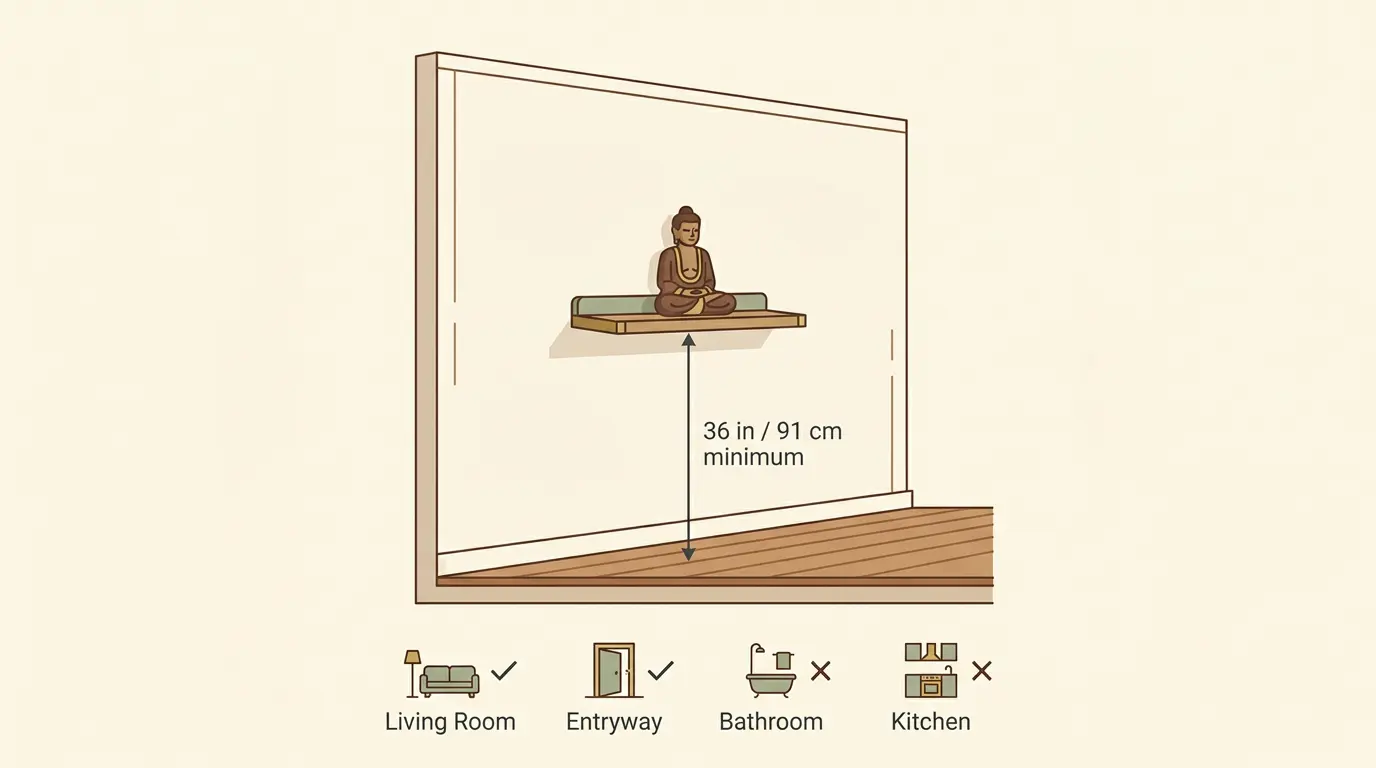
The statue should sit at or above eye level — with its base at least 36 inches off the floor — facing into the room, and never in a bathroom, a kitchen, or directly on the ground. Share this only if they ask, but it’s the question most new owners have within a day.
- Height: base a minimum of 36 inches from the floor. A shelf, mantel, or dedicated table works; the floor and the top of a TV do not.
- Direction: east or northeast is traditional in several systems, but a statue facing into the living space matters far more than compass alignment.
- Rooms to avoid: bathrooms and kitchens. This is the one placement rule that’s near-universal across traditions.
- Bedrooms: acceptable in most interpretations if the statue isn’t directly facing the bed. Practitioners differ; nobody considers it a serious error.
- Care: dust with a dry, soft cloth. Skip household cleaners on brass and bronze — they strip the patina that gives an older statue its depth.
These placement conventions are about sustained respect rather than luck. A statue kept clean and elevated stays a focal point; one that migrates to the floor beside a plant stand has quietly become clutter. For the full room-by-room breakdown, our Buddha statue FAQ on placement, materials, and cultural respect covers every scenario we’ve been asked about.
⚠️ Important Note: Descriptions of spiritual meaning, energy, and auspicious placement in this article reflect traditional Buddhist and cultural beliefs, not scientific findings. Interpretations vary between Theravada, Mahayana, and Vajrayana traditions and between individual practitioners. When in doubt, the recipient’s own preference outranks any general rule here.
Find a Statue Worth Giving
Seated Shakyamuni, Medicine Buddha, and Laughing Buddha figures — sourced from Himalayan artisan workshops and blessed through a 3-day monastery puja before they ship.Shop Buddha Statues →
Frequently Asked Questions
Yes. A Buddha statue given to a non-Buddhist reads as a gesture of peace and goodwill, and it’s one of the most common gifting scenarios there is. Choose a Laughing Buddha or a seated Shakyamuni in Abhaya mudra, and include a note explaining the figure so it doesn’t feel like a religious statement.
It signals a wish for calm, resilience, and good fortune for the recipient, and it aligns with dāna, the Buddhist practice of generosity. The specific meaning comes from the figure and mudra you choose — meditation, fearlessness, healing, or abundance.
Budai, the Laughing Buddha, is the figure associated with abundance and prosperity in Chinese folk tradition, often shown with a sack or gold ingots. This association comes from folk practice rather than Buddhist doctrine, which is why it’s a comfortable choice for a business opening or a housewarming.
No — provided it’s displayed with care rather than used as ironic décor. Keep it elevated, keep it clean, and keep it out of bathrooms. Most Buddhist teachers are far more concerned with how an image is treated than with the beliefs of the person who owns it.
What’s the safest Buddha statue to gift when you don’t know their tradition?
A seated Shakyamuni Buddha in Dhyana or Bhumisparsha mudra, 6 to 12 inches tall, in brass or bronze. It’s recognized across every major Buddhist tradition and reads as fine art to anyone else. Statues that need explaining before they can be displayed are the ones that go wrong.
The Bottom Line
A Buddha statue is one of the few gifts that improves with the recipient’s attention rather than wearing out. The key takeaway: pick a seated Shakyamuni or a Laughing Buddha, keep it between 6 and 12 inches, avoid the reclining figure, wrap it upright, and write two sentences about why you chose it. Skip the placement lecture unless they ask. If you’re shopping for a specific occasion, our roundup of housewarming gifts with spiritual meaning pairs statues with the pieces that complete them.
📚 References
- When a Buddha Statue Is Appropriate or Offensive: A Zen teacher’s guidance on context, respect, and the ethics of Buddhist imagery in secular settings. Tricycle: The Buddhist Review
- Mudras in Buddhist Art: Scholarly overview of the primary hand gestures and their codified meanings in Buddhist sculpture. Smarthistory
- The Art of Gandhara: Museum scholarship on the origins of the Buddha image and its early iconographic conventions. The Metropolitan Museum of Art
- Exporting Buddha Images from Thailand: Reporting on Fine Arts Department permit requirements for Buddha images under the Ancient Monuments Act. Bangkok Post