
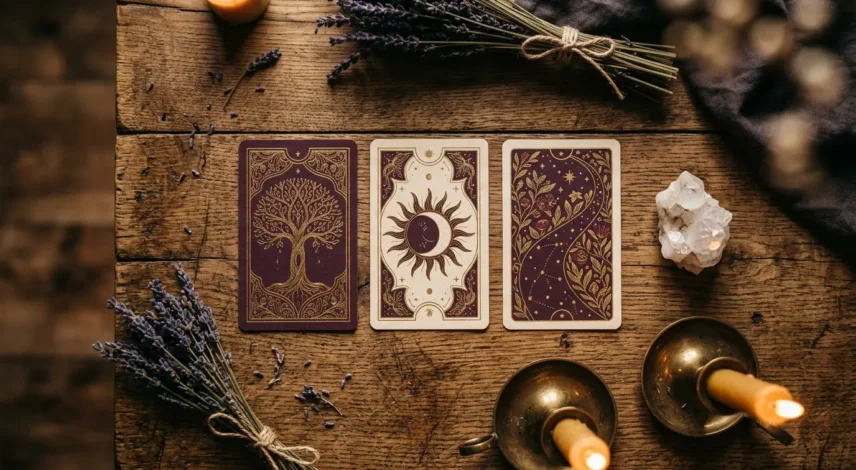

A tarot spread is a set layout where each card position answers one part of your question. If a fresh deck of 78 cards feels overwhelming, the right spread turns that pile into a clear, readable story. This guide gives you 10 beginner tarot spreads, from a one-card daily draw to the ten-card Celtic Cross, with a position map for each.
At PotalaStore, we work with people setting up their first spiritual practice, and the same worry comes up again and again: there is too much to learn at once. You do not need to memorize every card to start. Begin with one-card and three-card layouts, get comfortable reading them as a story, then grow into the larger spreads further down.
Every layout below includes what it does, when to use it, and how to read the positions. Pick one, shuffle, and try it today.
Table of Contents
What Is a Tarot Spread? (And Why Beginners Need One)
A tarot spread is a set layout where each card position stands for a specific question, such as past, present, and future, so you can read the cards as one connected story instead of guessing card by card. The layout does the organizing for you, which is exactly what a new reader needs.
A standard tarot deck holds 78 cards: 22 Major Arcana (big life themes and turning points) and 56 Minor Arcana (everyday events across four suits). A spread pulls just a few of those cards into fixed positions, so you focus on meaning rather than memory.
How the Positions Work
Each position holds one question, and each card fills that slot with an answer. In a past, present, future layout, the first card reports the past, the second reads the present, and the third points to the likely path ahead. You read them left to right, then look at how they connect. For example, the Tower, the Star, and the Sun might read as a sudden ending, a moment of healing, and brighter days coming. The story lives in how the cards flow together, not in any single card on its own.
Why Start With a Spread Instead of Freeform Reading
A spread keeps you on track when you are still learning card meanings. Instead of staring at one card and freezing, you get a framework that guides the reading toward a clear answer. Most beginners find that this structure builds confidence faster than open-ended interpretation.
Before You Start Your First Reading
You do not need anything fancy to start, just your deck, a quiet moment, and a clear question in mind. A short setup routine helps you focus and makes the reading feel intentional. Do not worry about doing it perfectly. Follow these steps and you will be ready.
Shuffle and Set an Intention
Shuffle the cards slowly while you hold your intention in mind, whether that is a specific question or simply a wish for clear guidance. When the deck feels ready, cut it once and draw from the top. This quiet minute of focus is the step new readers skip most, and it matters more than any fancy technique.
Cleanse Your Deck

Many readers cleanse a new deck once by passing it through incense smoke or resting a clear quartz crystal on top of it overnight. The idea is to clear old energy before you begin, and it takes only a few minutes. If you like to set the mood this way, browse our healing crystals for tarot and intuition or a little incense for cleansing your tarot deck. Some readers also keep a small stone nearby during a reading; if you want one to hold, our guide to choosing between 8mm and 10mm crystal beads can help you pick a comfortable size.
5 One- to Three-Card Spreads to Learn First
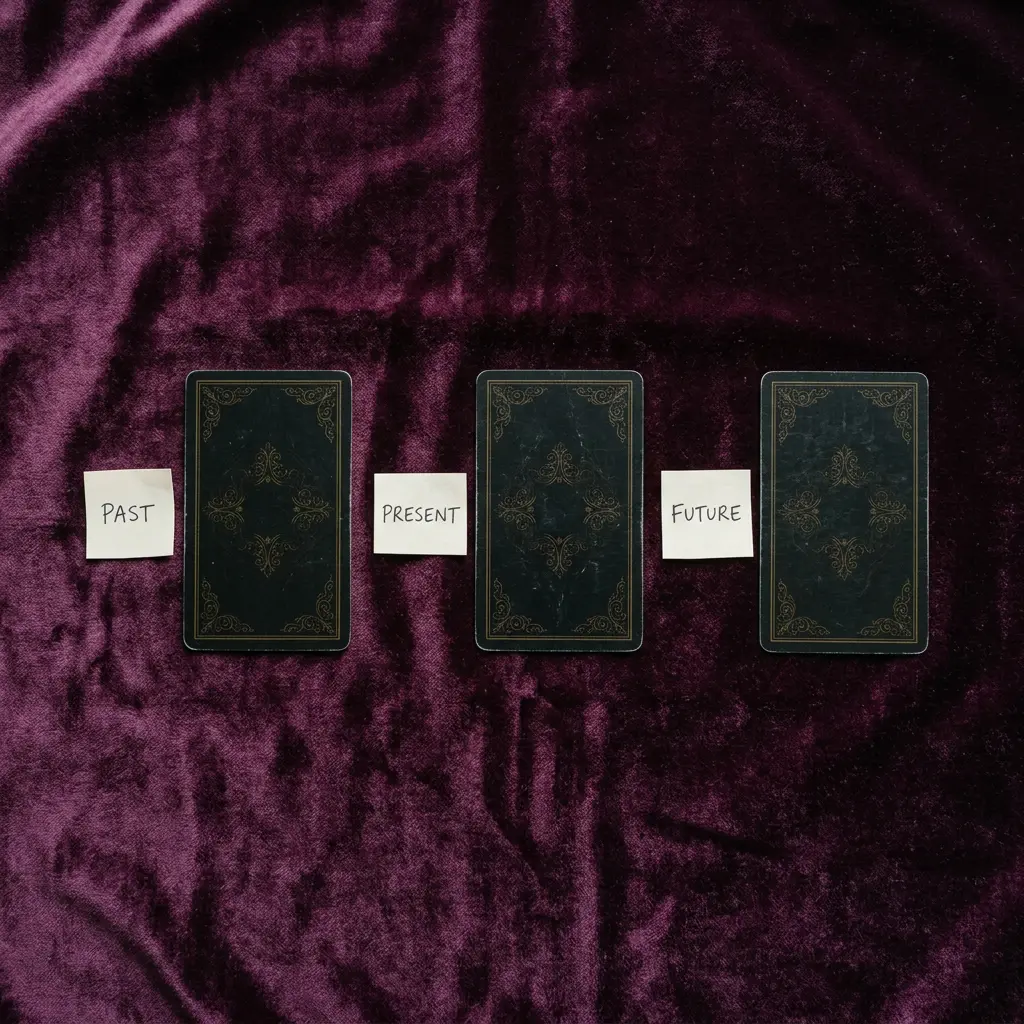
If you are brand new, start here. These five layouts use one to three cards, so nothing feels overwhelming, and each one teaches you how positions shape meaning.
1. The One-Card Daily Draw
1. Focus of the day
The one-card daily draw uses a single position and takes about 2 to 5 minutes. Pull one card each morning and ask an open question, such as what you should keep in mind today. This daily habit trains your intuition and helps you learn card meanings one at a time. A quick note in a journal each day makes the lessons stick.
2. The Two-Card Decision Spread
1. Option A2. Option B
The two-card spread lays out one card for each choice you are weighing. Read them side by side to compare the energy around Option A versus Option B. It is a fast, low-pressure way to bring clarity to a simple either-or decision.
3. Past, Present, Future
1. Past2. Present3. Future
The three-card spread maps past, present, and future across three positions, which makes it the most popular starting layout in tarot. The first card shows what led here, the second reads the current moment, and the third points to the likely outcome. Reading the three as one story is the core skill every beginner builds first.
4. Mind, Body, Spirit
1. Mind2. Body3. Spirit
This three-card layout checks in on your whole self. One card speaks to your thoughts, one to your physical state, and one to your inner or emotional life. Use it for a calm weekly reflection when you want a snapshot of how you are doing overall.
5. Situation, Action, Outcome
1. Situation2. Action3. Outcome
This layout is built for a specific problem you want to solve. The first card names the real situation, the second suggests a helpful action, and the third shows where that action leads. Ask something practical, such as how to handle a tense conversation at work. It turns a vague worry into a clear next step.
5 Multi-Card Layouts to Grow Into
Once one- and three-card layouts feel natural, these five add more detail. Work up to them in order, and save the Celtic Cross for last.
6. The Four-Card Guidance Spread
1. Situation2. Challenge3. Advice4. Outcome
The four-card spread adds an advice position to the basic story line. It names your situation, the challenge in the way, the advice to follow, and the likely result. This is a gentle first step up from three cards.
7. The Five-Card Cross
1. Center2. Past3. Future4. Known5. Hidden
The five-card cross uses five positions arranged around a center card to explore one issue in depth. The center holds the core energy, with cards for past, future, what you already know, and what stays hidden. It is a flexible all-purpose layout for almost any question.
8. The Relationship Spread
1. You2. Them3. Connection4. Challenge5. Direction
This five-card layout looks at a connection between two people. It gives one card to you, one to the other person, and three to the bond, its main challenge, and where it is heading. Read it for reflection on a friendship or partnership rather than as a verdict on someone else.
9. The Horseshoe Spread
1. Past2. Present3. Hidden4. Advice5. Outside6. Action7. Outcome
The horseshoe spread uses seven cards in a curved arc for a fuller view of a situation. It covers the past, present, hidden influences, advice, outside factors, your best action, and the likely outcome. Try it when a three-card reading leaves you wanting more context.
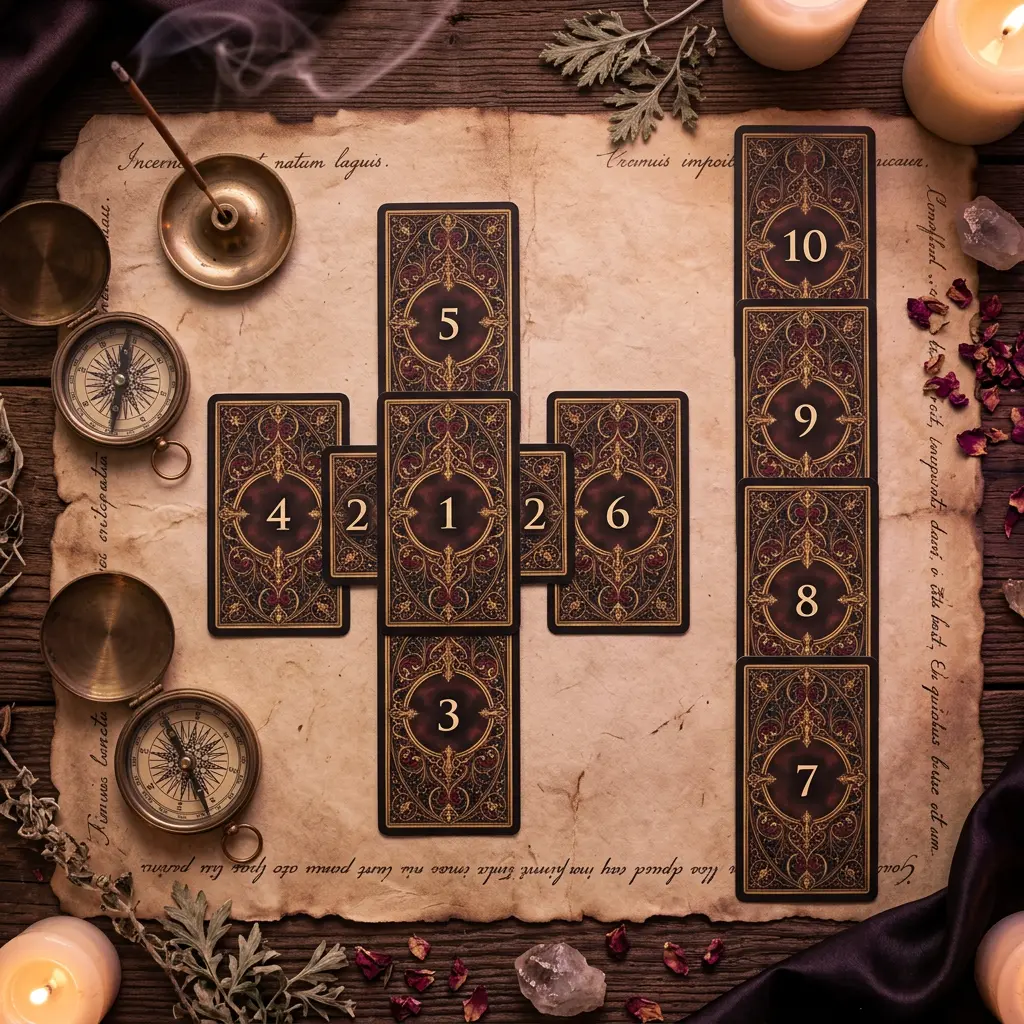
10. The Celtic Cross
1. Present2. Challenge3. Past4. Future5. Above6. Below7. Advice8. External9. Hopes/Fears10. Outcome
The Celtic Cross uses 10 positions and is the classic deep-dive layout in tarot. It reads the present, the challenge, the past and future, your hopes and fears, outside forces, and the final outcome. It is the most detailed spread here, so learn the simpler layouts first and grow into this one.
Pro tip: You can read almost any spread using upright card meanings only. Reversed cards add nuance, but they are optional when you are starting out.
How to Choose the Right Layout for Your Question
Not sure which to use? Match the spread to your question. Quick check-ins need one card, while big decisions call for more. Use the table below to pick fast.
| Spread | Cards | Best For | Level |
|---|---|---|---|
| One-Card Daily Draw | 1 | Daily focus, building intuition | Beginner |
| Two-Card Decision | 2 | Simple either-or choices | Beginner |
| Past, Present, Future | 3 | Understanding how a situation flows | Beginner |
| Mind, Body, Spirit | 3 | Weekly self check-in | Beginner |
| Situation, Action, Outcome | 3 | Solving a specific problem | Beginner |
| Four-Card Guidance | 4 | Adding advice to a reading | Easy |
| Five-Card Cross | 5 | All-purpose deeper reading | Intermediate |
| Relationship Spread | 5 | Reflecting on a connection | Intermediate |
| Horseshoe | 7 | Full picture of a situation | Intermediate |
| Celtic Cross | 10 | In-depth, complex questions | Advanced |
Quick-Answer vs. Deep-Dive Questions
For a quick answer, stay with one to three cards. For a layered question with many moving parts, step up to five, seven, or ten. A good rule: the more cards you add, the more time you need to read how they relate.
Start Small, Then Build
Pick one layout and use it for a week before adding another. Repeating the same spread teaches you the positions by heart, so the reading gets faster and clearer each time. Confidence comes from repetition, not from collecting layouts.
Common Beginner Mistakes to Avoid

A few habits trip up almost every new reader. Watch for these so you enjoy the process instead of second-guessing every card.
Trying Too Many Layouts at Once
The most common beginner mistake is jumping straight to the ten-card Celtic Cross and feeling buried. Start with a one-card draw, add the three-card spread, and only then explore larger layouts. Learning one spread well beats half-learning five.
Reading the Cards as Fixed Fate
Tarot works best as a tool for reflection and self-insight, not as a fixed prediction of your future. Read the cards as prompts that help you think, then make your own choices. Many readers keep a tarot journal to track how their intuition grows over time, which also helps you spot patterns in your own thinking. If you enjoy the symbolism side of practice, you might also like our guide to the meaning of the Hamsa hand.
A quick note: Tarot is meant for reflection, personal insight, and entertainment. It is not a substitute for professional medical, legal, financial, or mental health advice. Read the cards as a way to think through your own choices, and seek a qualified professional for important decisions.
Frequently Asked Questions
The one-card daily draw. It uses a single card, takes about 2 to 5 minutes, and builds your intuition faster than any complex layout. Once it feels easy, move on to the three-card spread.
Tarot works best for insight and reflection, not strict yes-or-no answers. A one- or two-card spread can point you toward clarity, but read it as guidance rather than a final verdict.
Start with one to three cards. Once reading them as a connected story feels natural, work up to five, then the ten-card Celtic Cross. There is no rush to use big layouts.
Not every time. Many readers cleanse a new deck once with incense smoke or a clear quartz crystal, then simply shuffle with intention before later readings. After that, a quick shuffle with a clear question is enough for everyday readings.
Set the mood for your first reading
A calm space makes a new practice easier to keep. Explore blessed crystals and incense from PotalaStore to help you focus before you draw your first card.Explore Crystals for Your Practice
References
- History and Structure of Tarot: Overview of the 78-card deck and its origins as a Renaissance card game before its later use in divination. The Metropolitan Museum of Art
- Visconti-Sforza Tarot: The oldest surviving tarot cards, created in fifteenth-century Italy for the aristocracy. The Morgan Library & Museum
- Tarot Deck Composition: Detail on the Major and Minor Arcana and the standard 78-card structure. Wikipedia: Visconti-Sforza Tarot