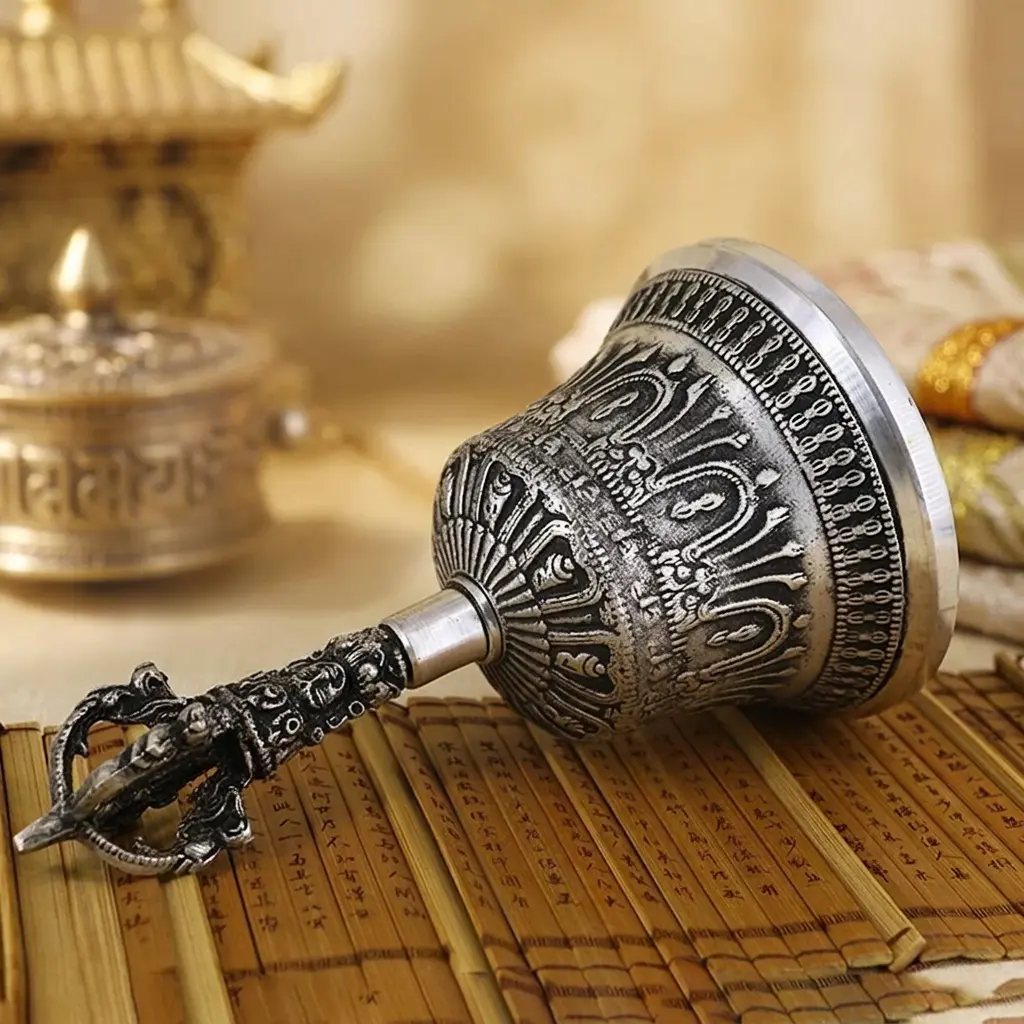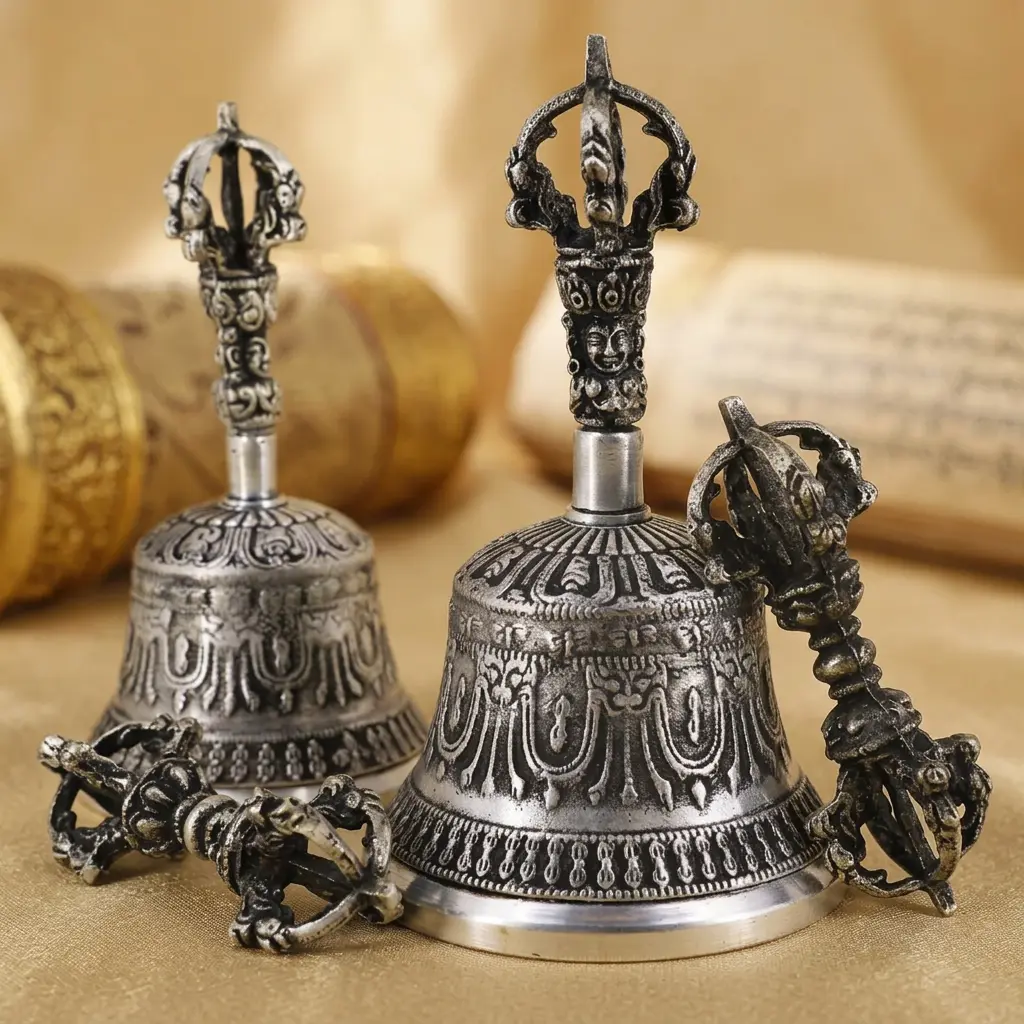


Gifts for a Buddhist friend work best when they support daily practice: incense, a mala (Buddhist prayer beads), a small singing bowl, or a book by a respected teacher. Skip alcohol, Buddha-head decor, and novelty “zen” merchandise. Buddhism includes several traditions, so a gift that suits a Tibetan practitioner may miss with a Zen meditator.
At PotalaStore, we see the same two gift mistakes most often: a reclining Buddha given as a housewarming present, and a religious icon given to someone who never showed interest in one. Both are easy to avoid once you know why they land badly. You want your gift to say “I see you,” not “I looked up Buddhism five minutes ago.”
This guide shows you how to match a gift to your friend’s tradition, which gifts to avoid and why, and when to give them. Short on time? Browse our Buddhist gift ideas collection for spiritual friends.
Please note: Buddhist customs vary by tradition and community. This guide offers general etiquette, not religious instruction. When you can, ask your friend what they prefer.
Table of Contents
What Is a Good Gift for a Buddhist?
A good gift for a Buddhist friend supports their practice or reflects Buddhist values without pressure: a mala, quality incense, a small singing bowl, a book by a respected teacher, or a donation in their name. When you don’t know their tradition, choose a practice tool over religious imagery.
Many Buddhist communities see giving as dāna, generosity offered with no expectation of return. A gift in that spirit is simple, useful, and free of obligation. Look for items that fit into meditation or mindfulness practice, and buy from sellers who source ethically.
Start With Their Tradition: Tibetan, Zen, Theravada, or Pure Land?
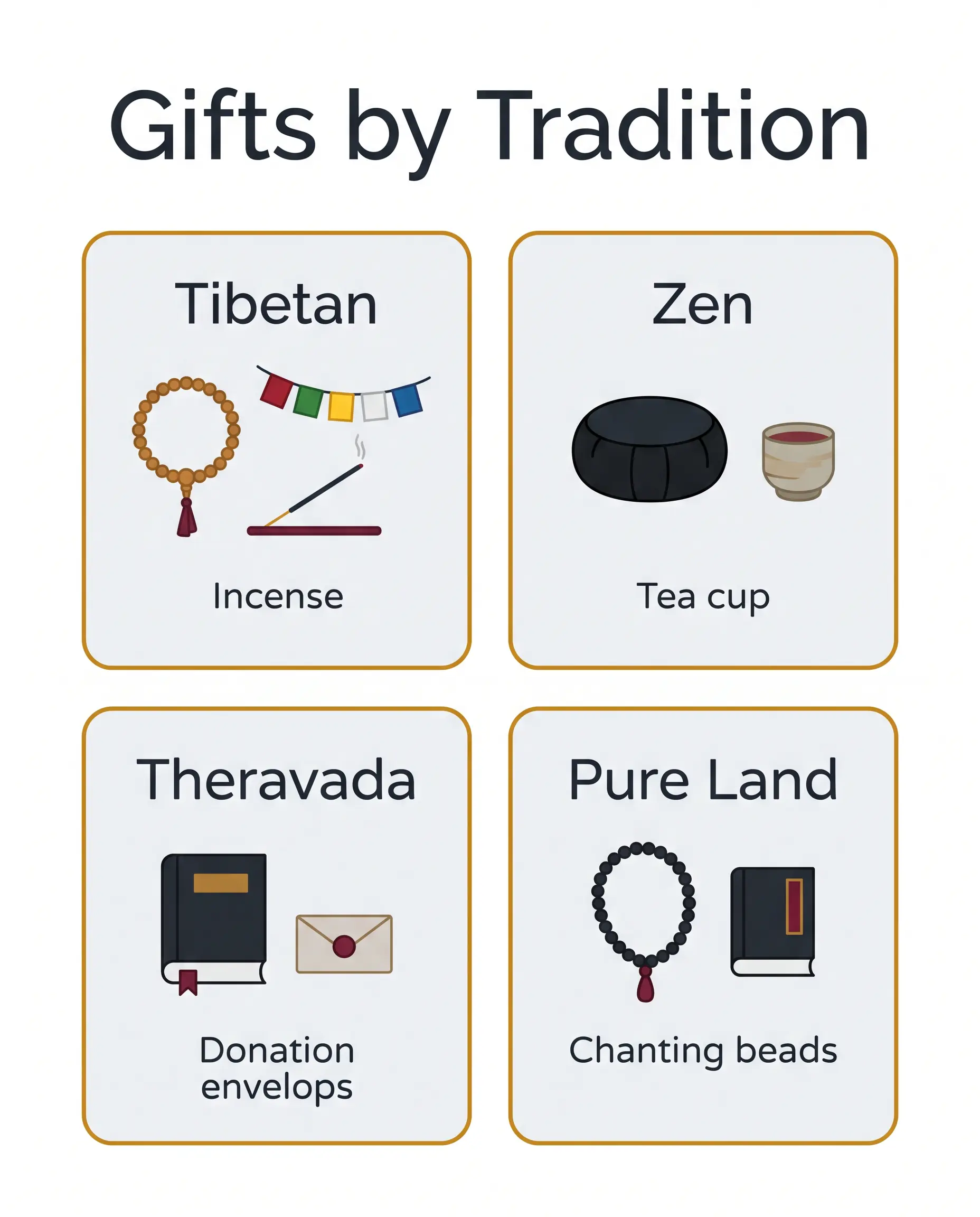
The quickest way to choose well is to notice which tradition your friend follows. The objects on their shelf usually tell you. Tibetan, Zen, and Theravada practitioners favor different things, so use this table as a starting point.
| Tradition | Often welcomed | Choose with care |
|---|---|---|
| Tibetan | Mala, prayer flags, incense, a khata (white ceremonial scarf) | Statues of wrathful deities and thangkas of deities you can’t name |
| Zen | A zafu (round meditation cushion), tea, simple calligraphy | Ornate ritual objects and large statues |
| Theravada | Books, simple useful items, a temple donation in their name | Mahayana figures such as Kwan Yin, which appear less often in their practice |
| Pure Land | Chanting beads, books by Pure Land teachers | Amitabha statues, unless you know the family’s preference |
We would rather you send a simple incense set than a deity statue from the wrong lineage. If you can’t tell which tradition your friend follows, choose a practice tool most traditions welcome, such as incense or a book.
Practice Tools vs. Decor: Which Gift Lands Better?
Practice tools usually land better than decor, because they join your friend’s routine instead of asking for shelf space and ritual care. The Buddhist teaching of non-attachment also makes a modest, consumable gift feel lighter than a large object.
A statue comes with placement rules your friend must now honor. Incense, tea, and books come with none. When in doubt, give something your friend can use up or read.
9 Respectful Gift Ideas by Budget
Here are nine respectful picks, sorted by price:
- Incense cones: $20.95, no shelf space needed.
- A teacher’s book: under $25, ideal for readers.
- Tibetan prayer flags: a low-cost way to share Tibetan tradition.
- 108-bead mala bracelet: $25.95, a counting tool for mantra practice.
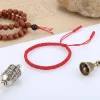
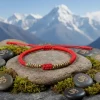
- Red-string knot bracelet: from $28.95, traditionally given as a blessing.
- Om Mani Padme Hum singing bowl: $40.95 to $46.95, a beginner-friendly bowl.
- Red turquoise mala necklace: $53.95, a more formal gift.
- Handmade 8 cm copper singing bowl set: $69.95, ready to play.
- Full Moon singing bowl: from $289.95, for committed practitioners.
Prices reflect PotalaStore listings on 10/27/2026 and may change.
Under $25: Incense, a Teacher’s Book, or Prayer Flags
Under $25, incense is the safest choice because your friend burns it and nothing is left to store. The Tibetan Backflow Incense Cones 60-Pack costs $20.95 and covers about two months at one cone a day. A daily ritual of lighting incense gives your friend a steady cue to settle into meditation.
Backflow cones need a backflow burner. Check whether your friend owns one, or pair the cones with a burner from our incense burners and Tibetan incense collection.
Books by Thich Nhat Hanh or Pema Chödrön suit friends who read. Ask which teacher they follow first, since lineages differ. For friends in the Tibetan tradition, our Tibetan prayer flags collection offers a low-cost option, traditionally hung outdoors where the wind carries the printed prayers.
A $20 incense set your friend burns daily beats a $300 bowl that never leaves the box.
$25 to $75: A 108-Bead Mala or a Small Singing Bowl
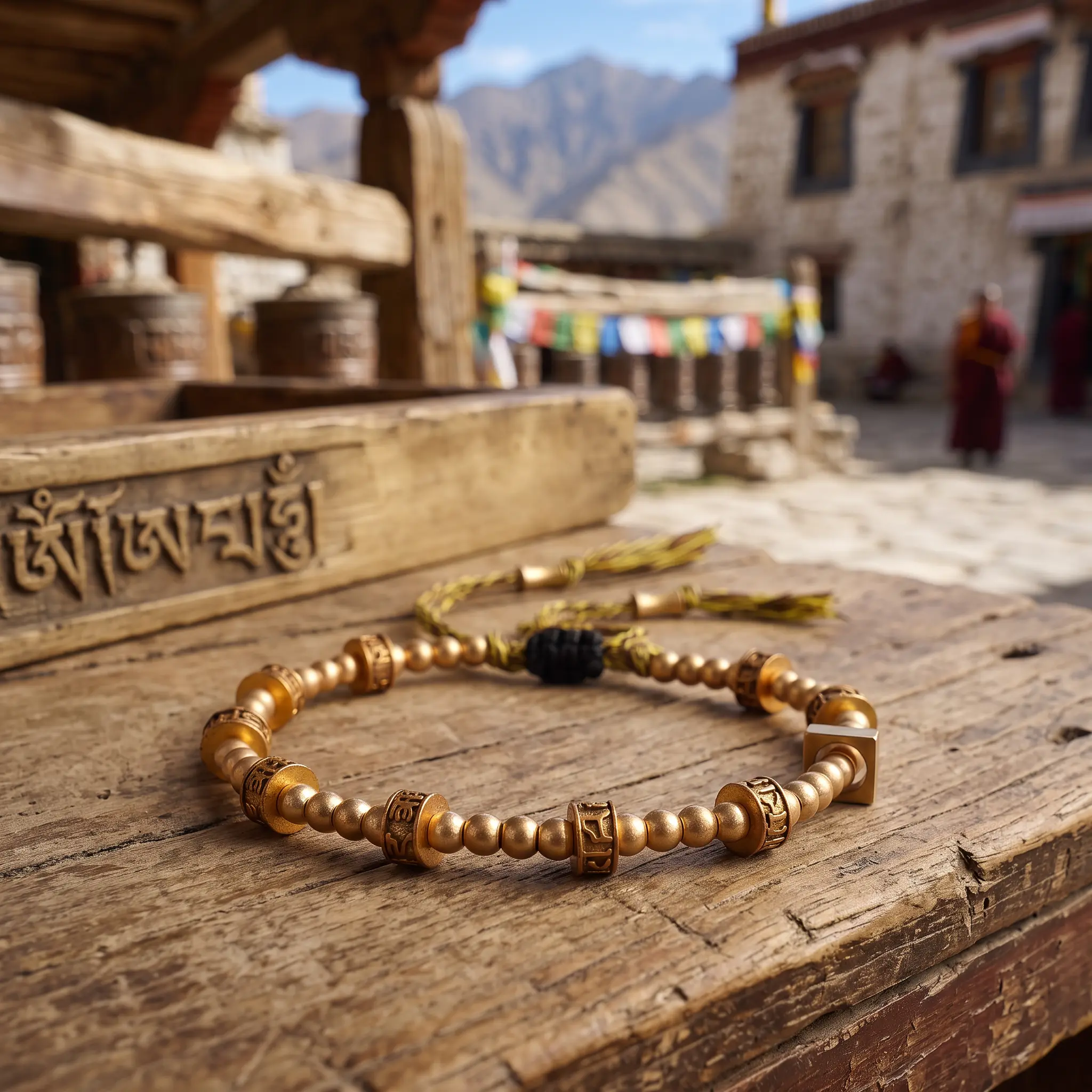
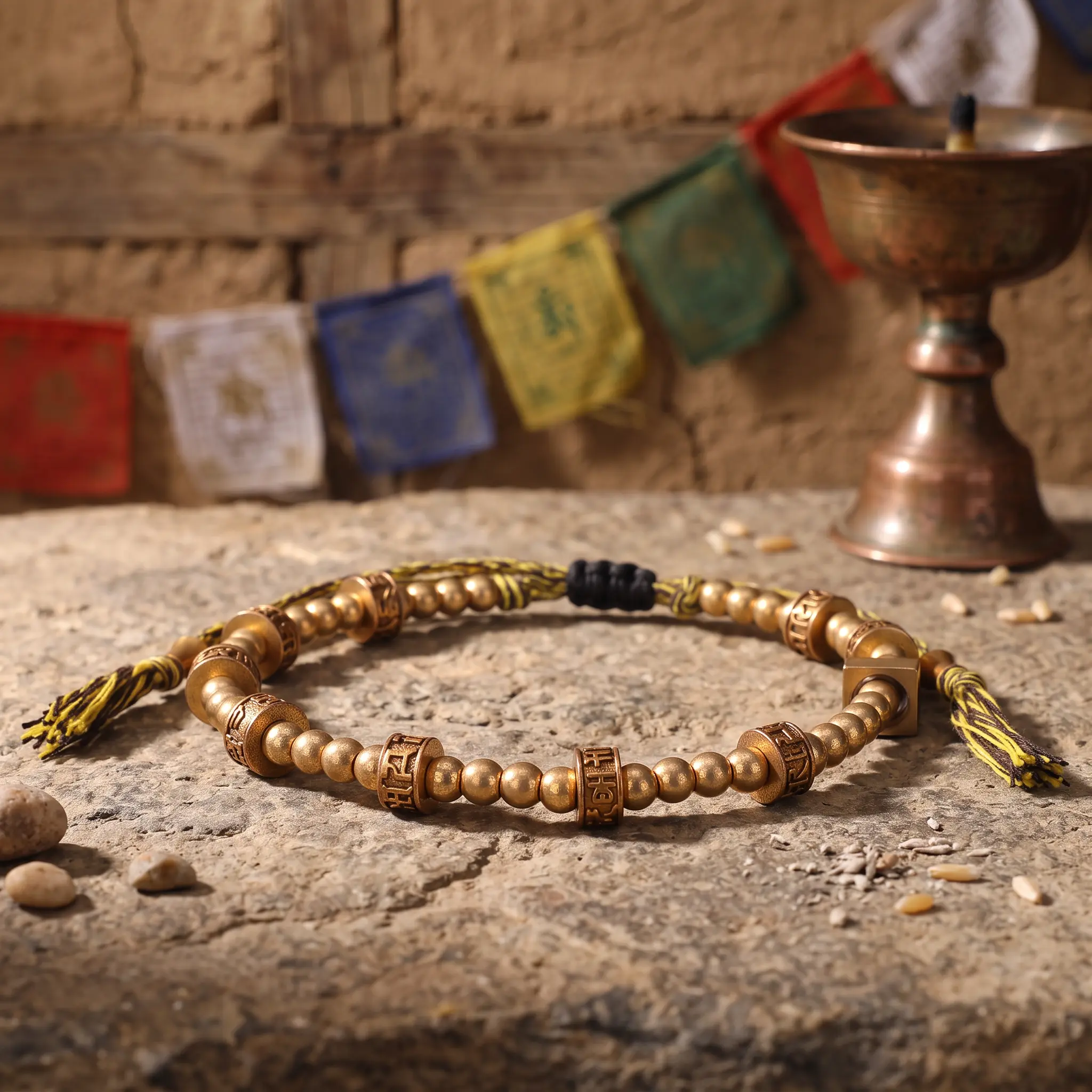
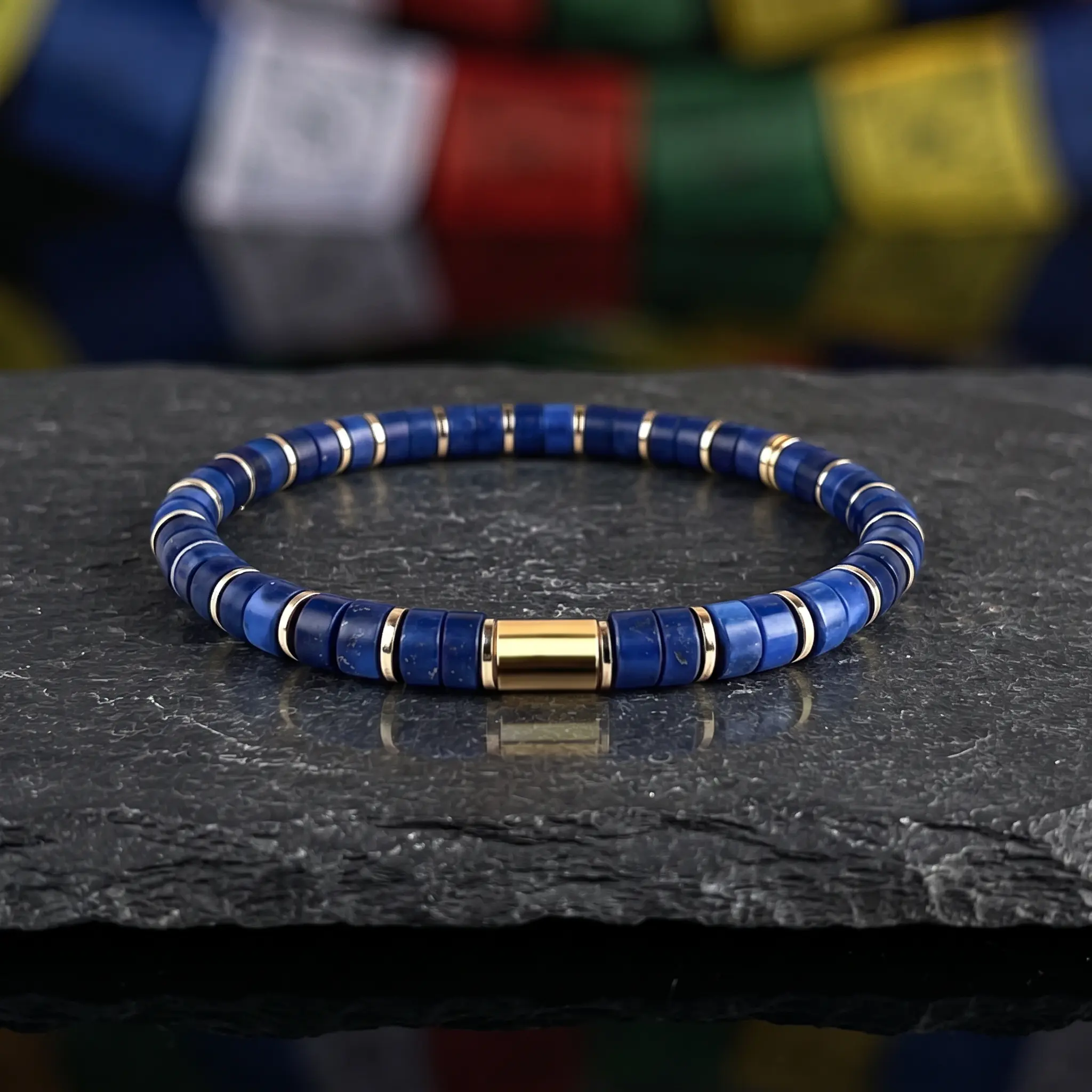
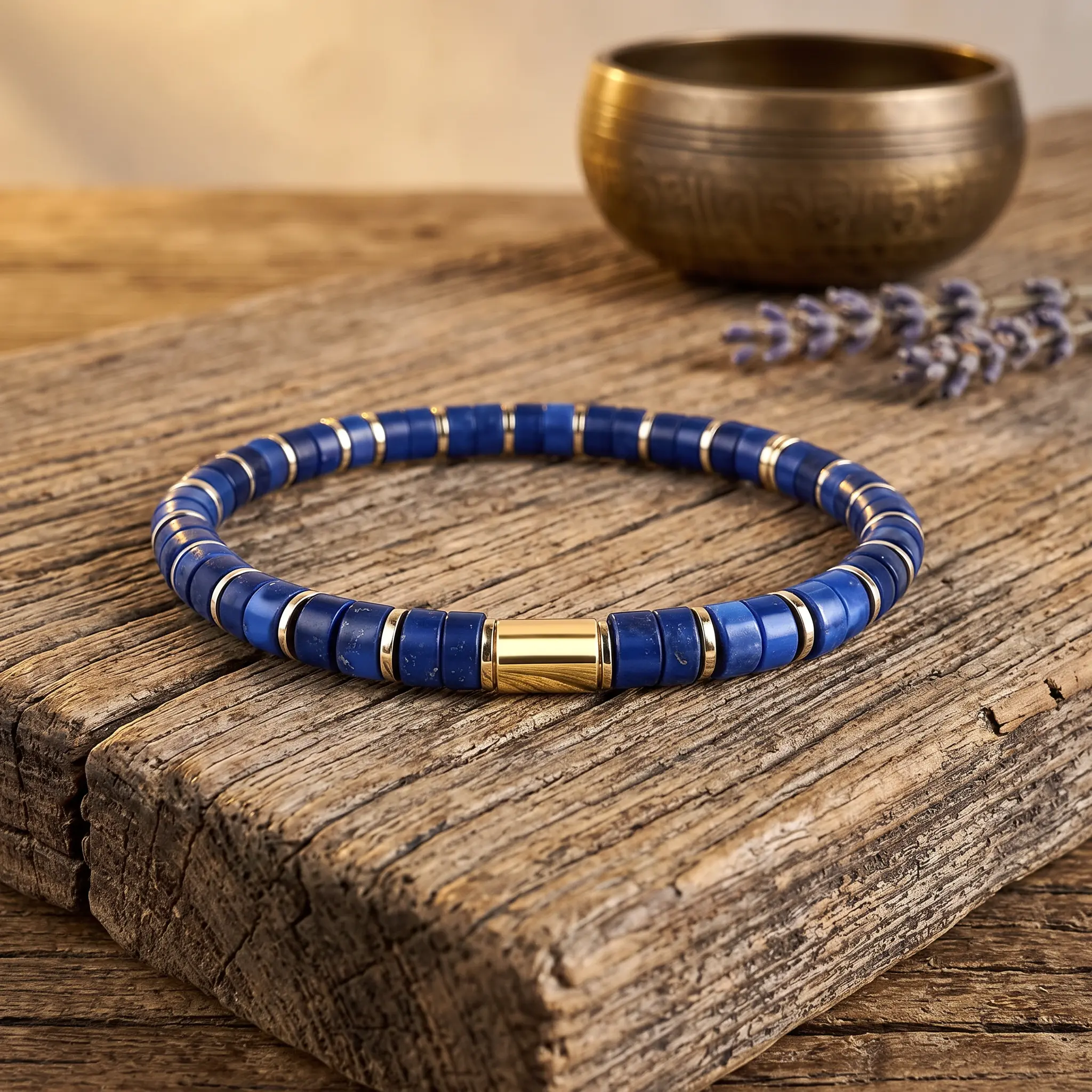
From $25 to $75, a 108-bead mala or a small singing bowl gives your friend a tool for daily practice. A mala is a string of 108 beads used to count mantra repetitions. The 108 Mala Beads Bracelet costs $25.95 and sits on an elastic cord, so your friend can count repetitions without a phone.
For a more formal gift, the Tibetan Mala Red Turquoise 108 Beads Necklace costs $53.95 and suits a birthday or Christmas. The handmade Tibetan knot bracelet with red string starts at $28.95. Traditionally, a red string is given as a blessing, so a short note about that meaning adds warmth.
Singing bowls work well for beginners. The Om Mani Padme Hum singing bowl costs $40.95 to $46.95 and features the mantra of compassion. The handmade 8 cm copper singing bowl set costs $69.95. At about 3 inches across, it arrives as a set, so your friend can start playing right away.
Not Buddhist yourself? Our guide on whether non-Buddhists can wear mala beads respectfully covers the etiquette.
Find the right mala: Browse PotalaStore’s 108-bead Tibetan mala and necklace collection to find a style that fits your friend’s practice.
$75 and Up: A Premium Singing Bowl for the Committed Practitioner
Above $75, a premium singing bowl suits a committed practitioner. The Lunar Rainbow Full Moon Singing Bowl is handmade in copper and ranges from $289.95 to $499.95. A hand-painted thangka can also suit a Tibetan practitioner, but buy one only after you learn which deity your friend honors.
Price does not signal respect. Many Buddhists value simplicity, so a flashy, expensive gift can feel like a burden. Spend more only when your friend has told you what they want.
What Should You Not Give a Buddhist?
Avoid five gifts: alcohol, meat-based food (for many East Asian Buddhists), Buddha-head decor, novelty items that turn the Buddha into a joke, and a reclining Buddha statue as a housewarming gift. When you are unsure about animal products, check your friend’s tradition first.
- Alcohol: conflicts with the Fifth Precept for many lay Buddhists.
- Meat-based food: depends on tradition, and many East Asian Mahayana friends eat vegetarian.
- Buddha-head decor: many Buddhists find a head displayed alone disrespectful.
- Novelty and slogan merchandise: turns a sacred idea into a punchline.
- Reclining Buddha as a housewarming gift: the pose depicts the Buddha’s passing.
Why Alcohol Is the Riskiest Default Gift
The Fifth Precept asks lay Buddhists to refrain from “intoxicating drinks and drugs,” so alcohol is the riskiest default gift you can bring. Not every Buddhist abstains completely, and practice varies by community. Still, a bottle can put your friend in an awkward spot.
Wine is America’s default host gift, and it is the one we would steer you away from first. Choose tea or incense instead.
Leather, Meat, and Animal Products: It Depends on the Tradition
Food gifts depend on tradition. Theravada monastics traditionally accept whatever food is offered, which can include meat, while many East Asian Mahayana communities emphasize vegetarian eating. Not all Buddhists are vegetarian, but vegetarian treats are the safest food gift.
Many Buddhists who avoid harming animals also skip leather. A cotton or canvas item is the safer pick.
Buddha Heads, Novelty Buddhas, and Slogan Merch
Many Buddhists find a Buddha head displayed alone as decor disrespectful, and some antique heads on the market come from looted temples. A bookend or garden ornament made from a head turns a sacred figure into furniture.
Slogan mugs and “zen” novelty items cause a different problem. They get a laugh for two days, then sit in a cupboard. Choose something your friend will actually use.
Is It OK to Give a Buddha Statue as a Gift?
Yes, if your friend would welcome sacred imagery: a seated Shakyamuni in meditation pose is the safest choice, while a reclining Buddha, which depicts the Buddha’s passing, is best avoided as a housewarming gift. Ask first, because a statue brings placement rules and ritual care.
Our full guide to Buddha statue gift etiquette covers materials and meanings in depth. This section gives you the short version.
Safe vs. Situational Figures: Shakyamuni, Kwan Yin, Laughing Buddha, and Reclining Buddha
- Shakyamuni (seated, meditating): the safest choice, representing the historical Buddha. The Tibetan Meditation Buddha Statue in green sandstone costs $42.95.
- Kwan Yin: embodies compassion and suits a friend who cares for others, mainly in East Asian Mahayana traditions.
- Budai (Laughing Buddha): a Chinese folk figure of contentment, not the historical Buddha. He works better as a cheerful housewarming gift than as a sacred image.
- Reclining Buddha: depicts parinirvana, the Buddha’s final passing. Skip it for housewarmings.
For more ideas, see our guide to spiritual housewarming gifts with real meaning.
Placement Tips to Write in Your Gift Card
Tell your friend to place a Buddha statue at eye level or higher, never on the floor or in a bathroom. Floor placement is widely considered disrespectful, and a high shelf shows honor.
Write three things on the card: the figure’s name, one line on its meaning, and a placement tip. This turns the gift into guidance instead of a guessing game.
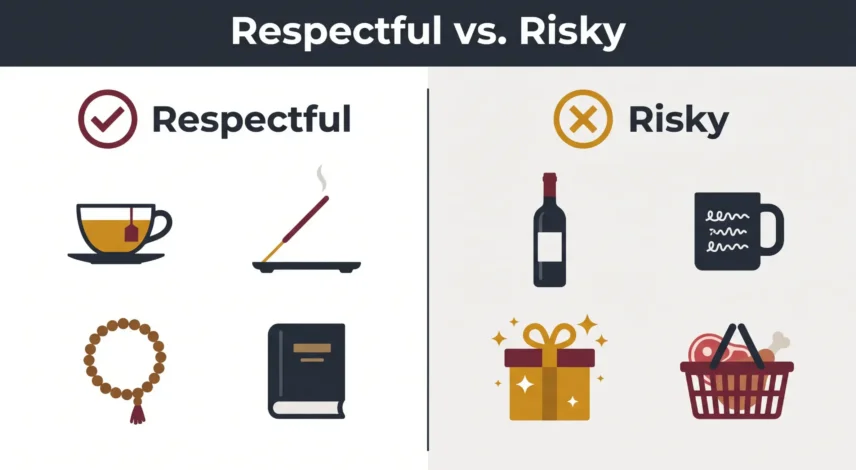
Respectful vs. Risky: A Side-by-Side Gift Checklist
Use this checklist before you buy:
| Category | Respectful pick | Risky pick |
|---|---|---|
| Drink | Tea or incense | Wine or spirits |
| Food | Vegetarian treats | Meat basket |
| Imagery | Seated Shakyamuni, if welcome | Reclining Buddha as a housewarming gift |
| Decor | Practice items such as a mala | Buddha-head bookends |
| Humor | A teacher’s book | “Zen” slogan mug |
| Price | Simple and useful | Flashy luxury item |
If a gift supports practice, carries no obligation, and avoids intoxicants and disrespectful imagery, it is almost always a safe choice.
How to Present a Gift With Respect
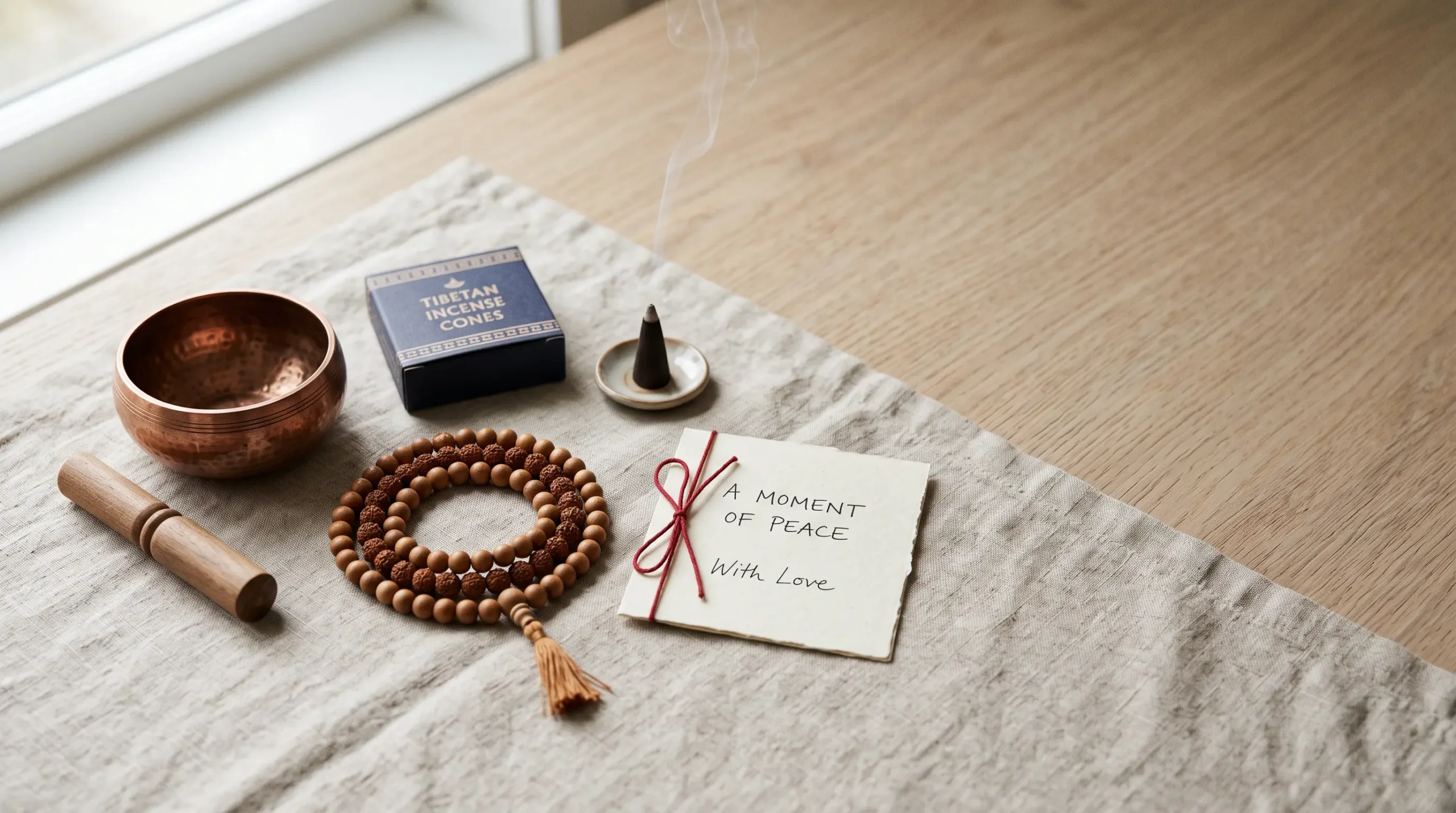
Present the gift with both hands and add a handwritten note. Both gestures signal respect in many Asian cultures. Keep the note simple: say why you chose the gift, and leave out instructions about what your friend should do with it. A gift with no strings attached honors the spirit of dāna.
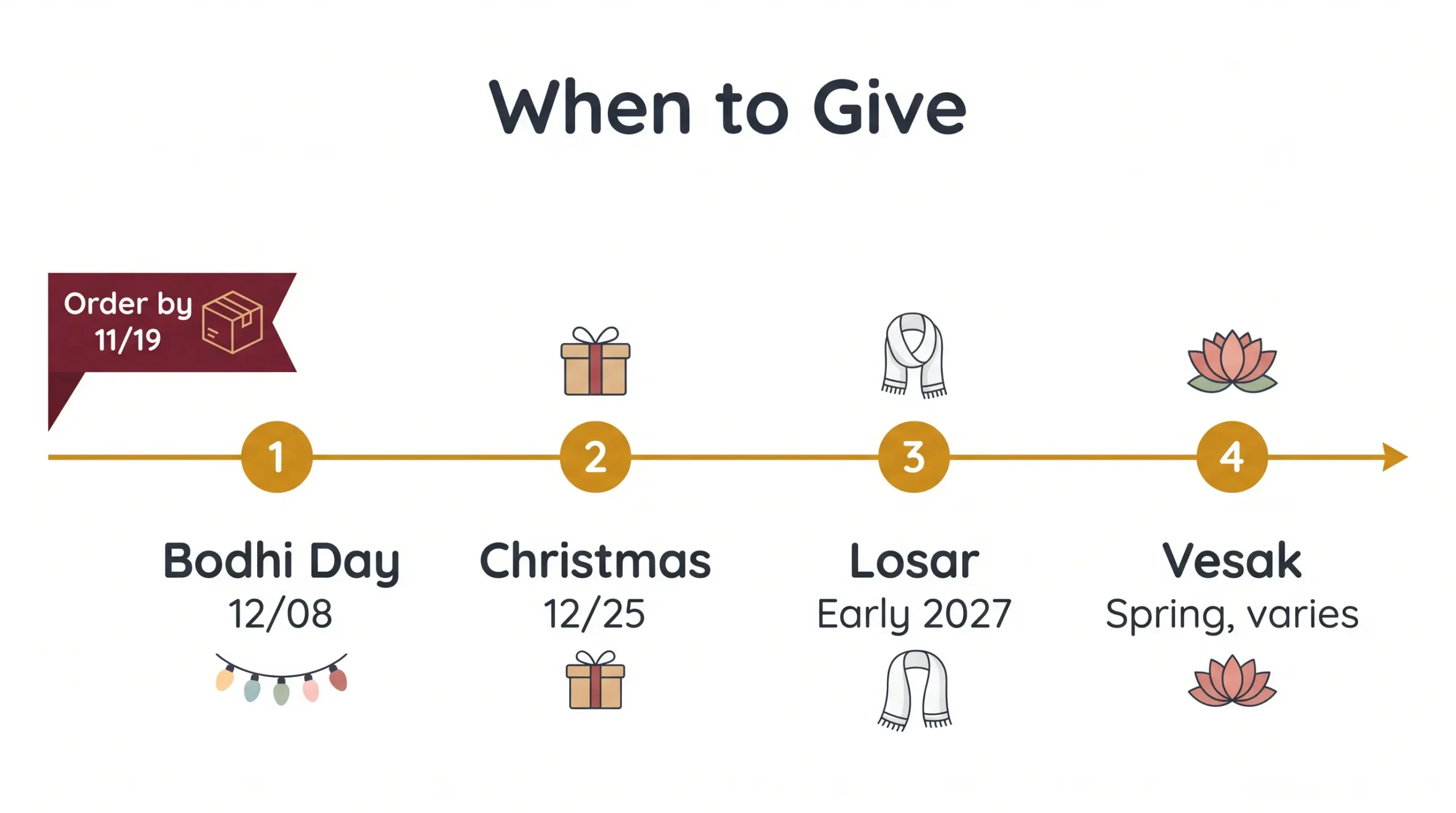
When to Give: Bodhi Day (12/08), Vesak, Losar, and Christmas
- Bodhi Day, 12/08/2026: marks the Buddha’s enlightenment and is called Rohatsu in Japanese Zen. Many Mahayana communities mark it with meditation and colored lights.
- Vesak (Buddha’s Birthday): falls in spring, and the date varies by country and tradition, so ask your friend.
- Losar: the Tibetan New Year arrives in early 2027. Our Losar gift guide for Tibetan New Year presents has ideas for every budget.
- Christmas: regular gifts are welcome, and the advice in this guide applies.
To arrive by Bodhi Day, we suggest ordering by 11/19/2026. That date allows 24 to 48 hours for dispatch and 5 to 10 business days for US delivery, with Thanksgiving (11/26/2026) in the middle.
When You’re Not Sure: Experiences, Donations, and Simply Asking
If you can’t tell what your friend would want, give an experience or a donation in their name, or simply ask. Both options remove the risk of choosing the wrong object.
Donating to a Temple or Charity in Their Name
Tricycle’s Buddhist gift guide includes charitable donations among its suggestions. Choose a cause your friend already supports, such as their meditation center or a temple, and include a handwritten card. This gift carries no clutter and fits the spirit of dāna.
How to Ask Without Spoiling the Surprise
A casual question works better than a guess. Try “Is there anything you’ve wanted for your practice lately?” or “Which teacher are you reading right now?” Either one tells you their tradition and their taste without revealing your plans.
Frequently Asked Questions About Buddhist Gifts
Yes. A thoughtful gift is welcome at Christmas, and the advice in this guide applies. If you want to honor your friend’s path too, Bodhi Day on 12/08 falls a few weeks earlier.
Yes, as long as the mala is treated as a practice tool and not as a fashion prop. Our guide to choosing between a mala necklace and a wrist mala explains how each style is worn.
Name the gift, add one line about its meaning, and avoid telling your friend what to do with it. Ready to choose? Browse our gift ideas for Buddhist friends.
Customs for monastics differ by tradition and country. Ask the temple or your friend’s teacher before buying anything. For a lay friend, everything in this guide applies.
In summary, the best gifts for a Buddhist friend are simple, useful, and chosen with their tradition in mind. Pick a practice tool, skip the five risky gifts, and add a handwritten note.
Ordering for Bodhi Day?
Order by 11/19/2026 to arrive by 12/08. Holiday purchases made 11/01 to 12/31 can be exchanged within 60 days under our holiday exchange policy.Shop Buddhist gift ideas
References
- The Five Precepts (pañca-sila): Explains the Fifth Precept on intoxicants and its role in lay practice. Access to Insight
- Tricycle’s Buddhist Gift Guide 2018: Gift suggestions from a leading Buddhist magazine, including charitable donations. Tricycle: The Buddhist Review
- Buddhist cuisine: Overview of how food practices differ between Theravada and East Asian Mahayana traditions. Wikipedia
- Bodhi Day: Background on the 12/08 observance, including the Japanese Zen name Rohatsu. Wikipedia
How we wrote this guide: We compared current gift guides, drew etiquette points from our own customer conversations, and checked precept and festival details against the sources above. Customs vary by tradition and community, so treat this as a starting point and ask your friend when you can.