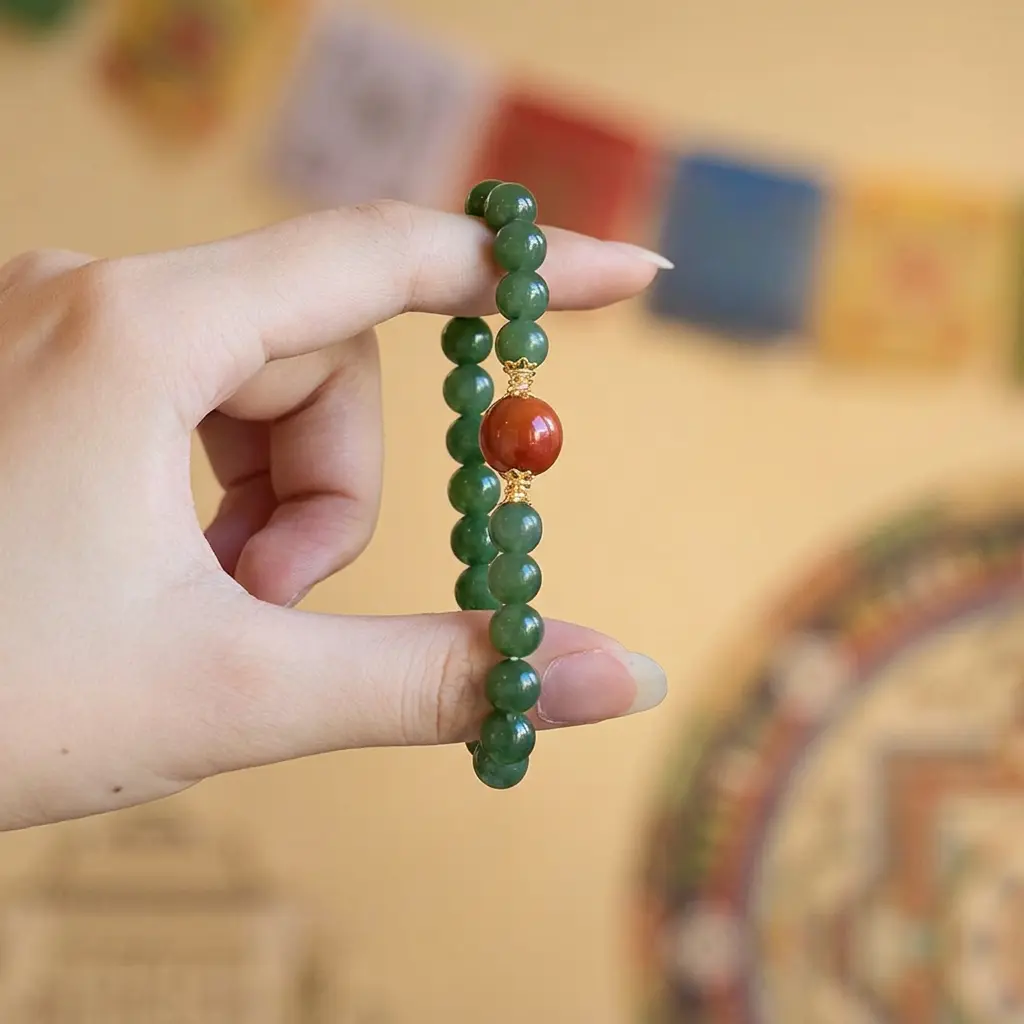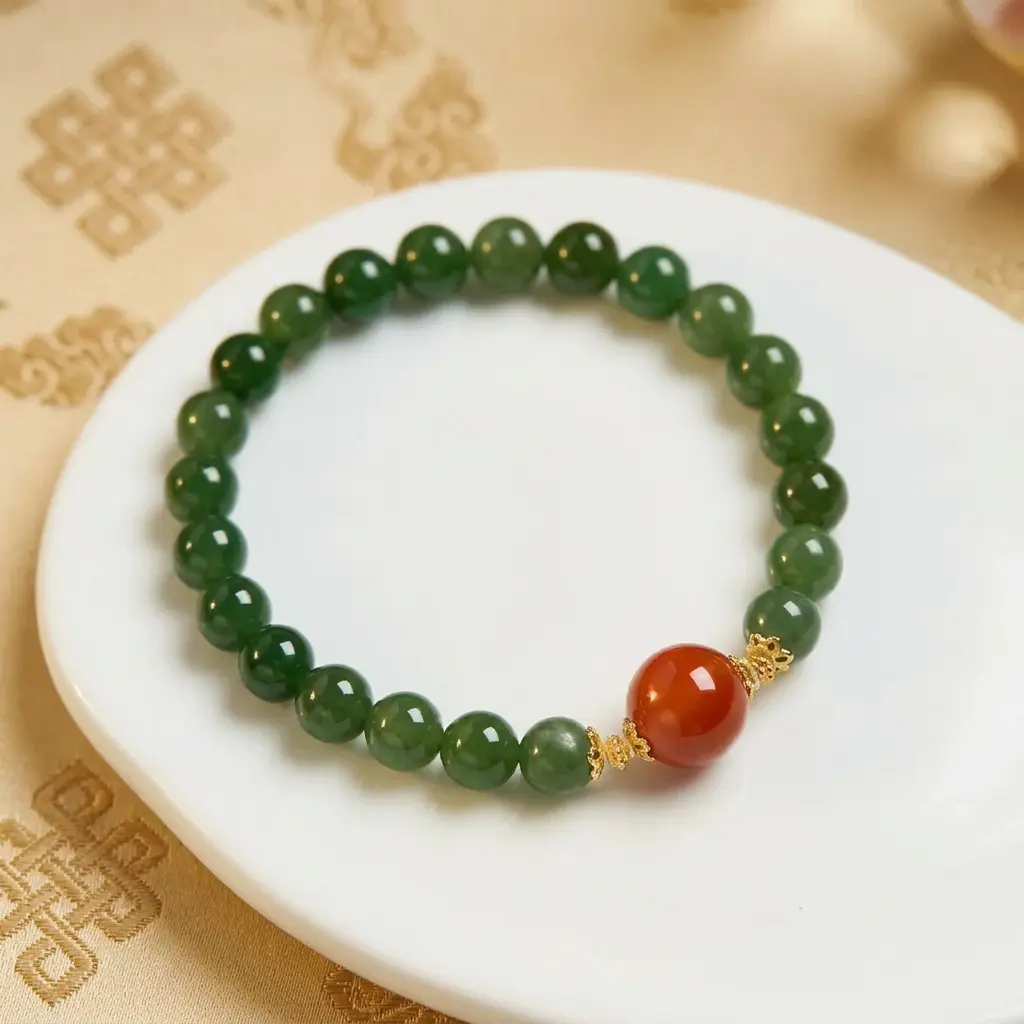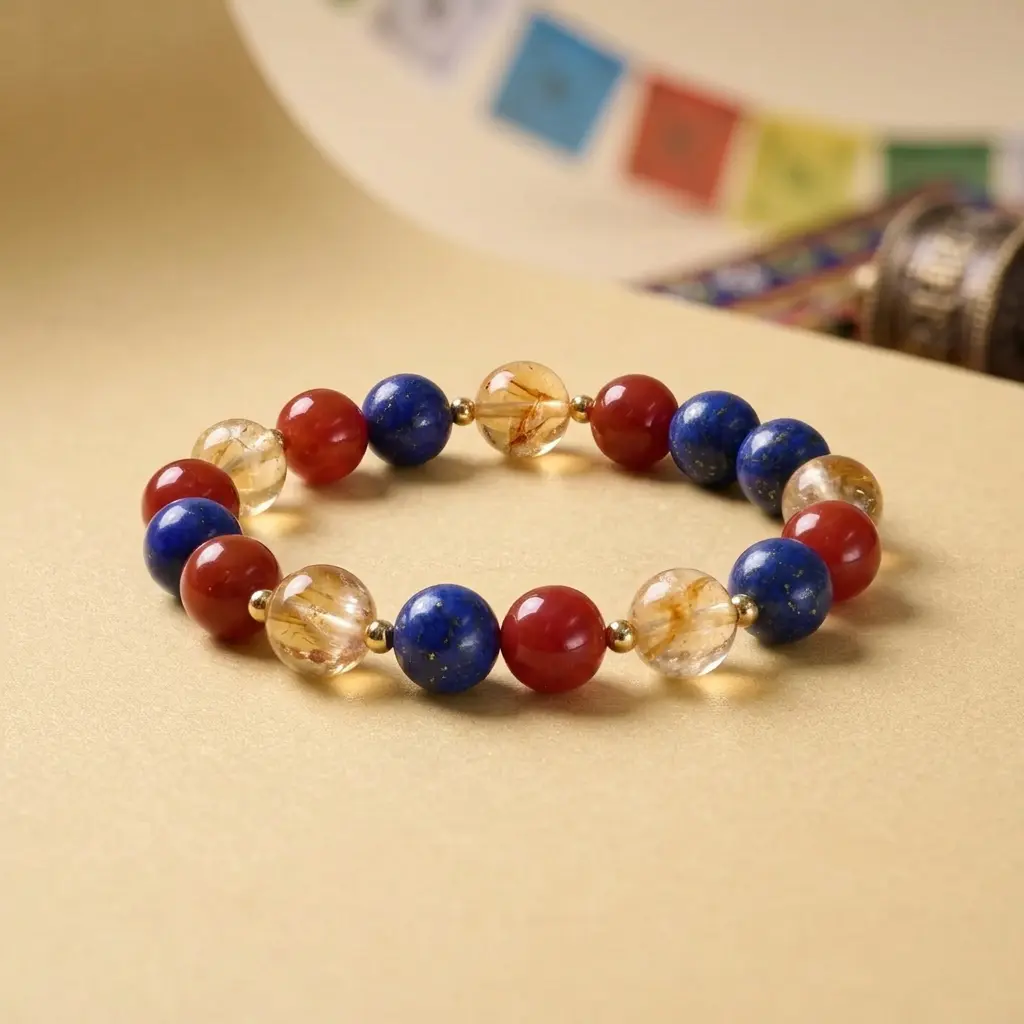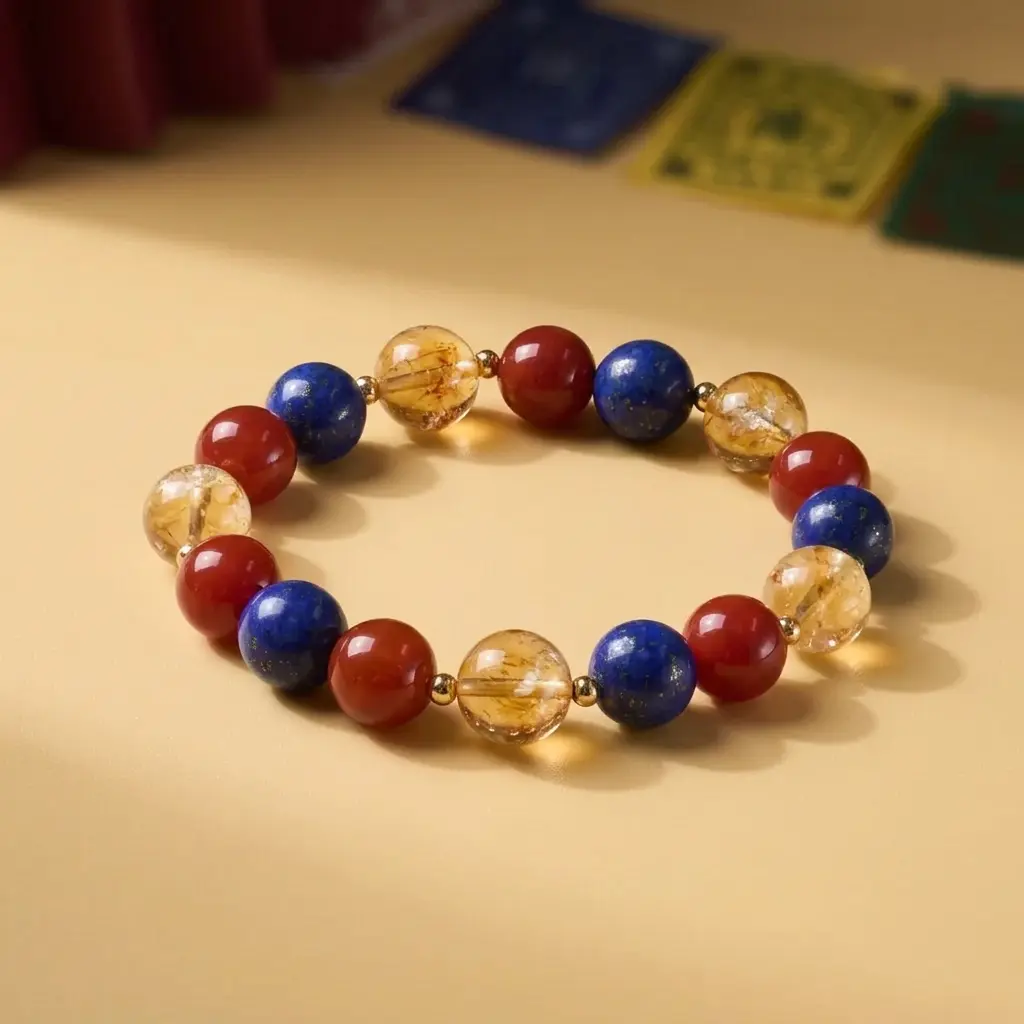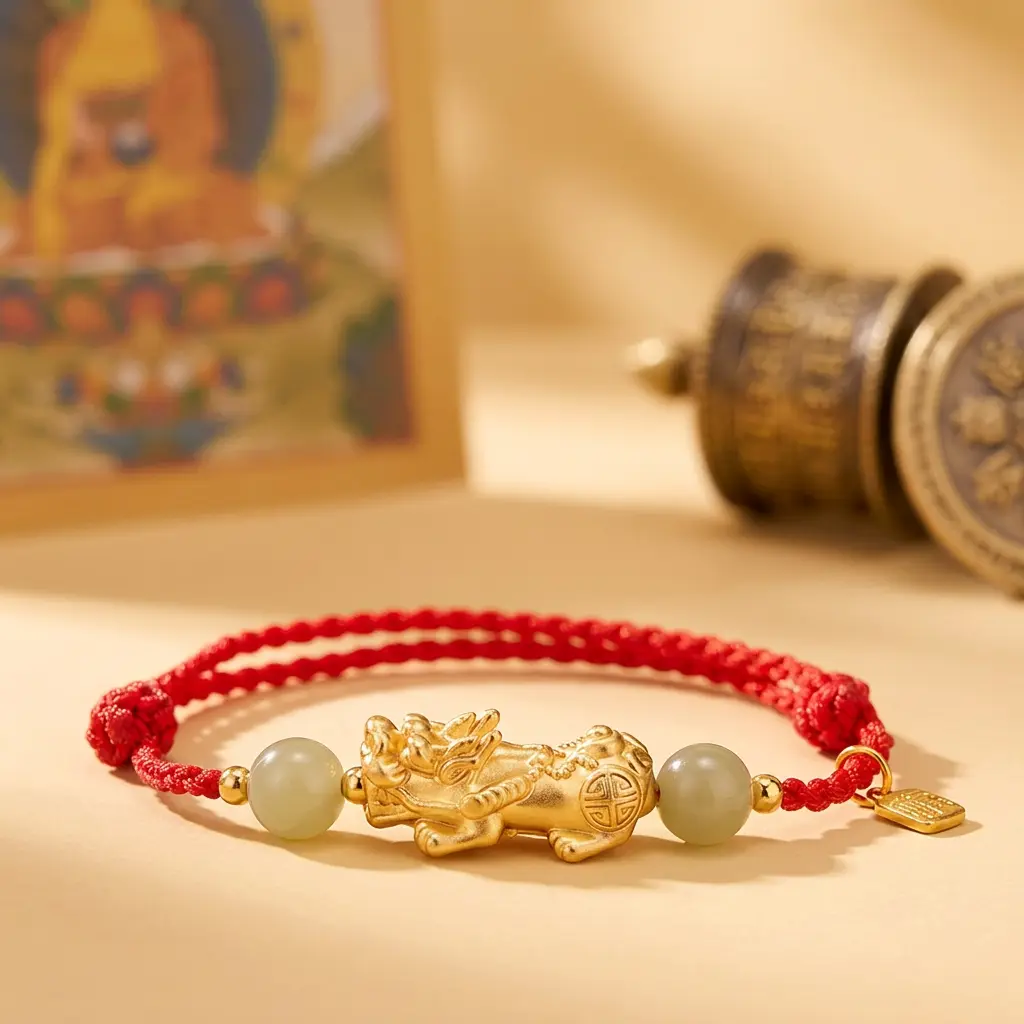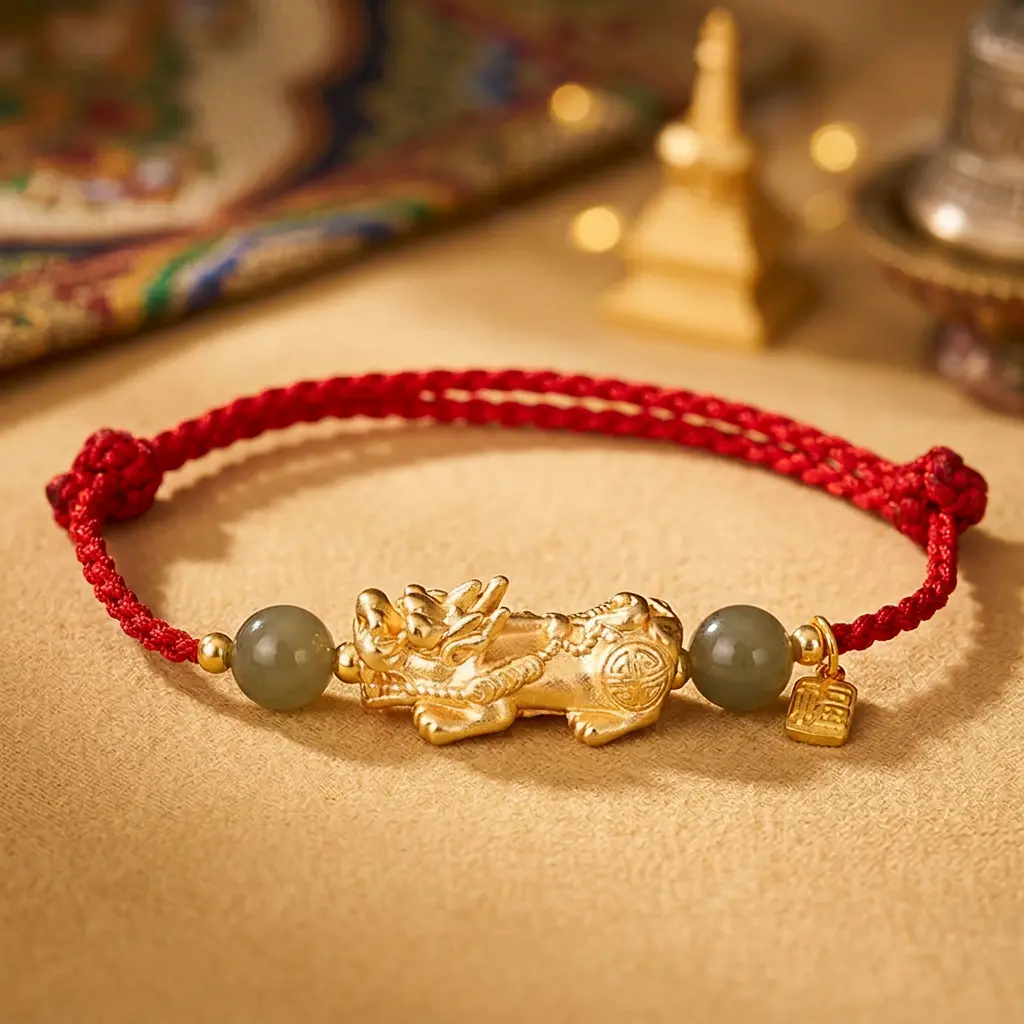

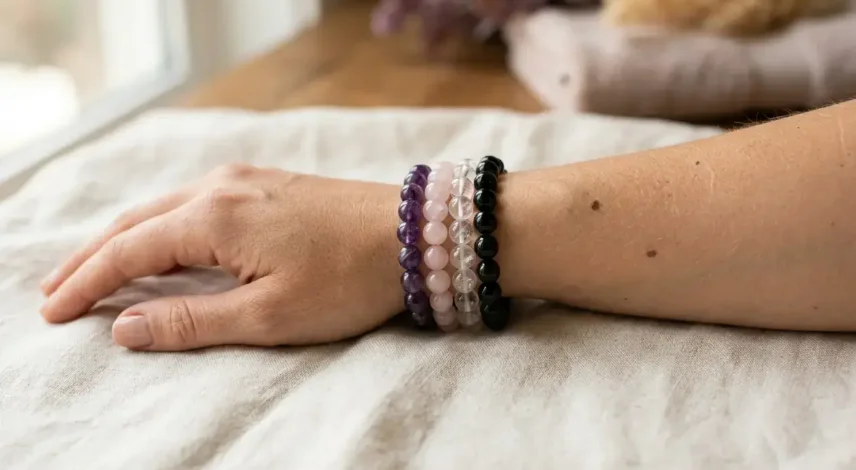

Yes, you can wear multiple crystal bracelets at once. Most people find that a stack of two to four bracelets works best: choose stones that share a single intention, let one anchor stone lead, and keep the stack comfortable on your wrist. There is no spiritual limit on how many crystals you can wear, only the limits of clarity and comfort.
At Potala Store, we have fitted thousands of first-time buyers and worked with Himalayan artisans who have strung prayer beads for generations. That experience taught us something simple: a focused stack of a few meaningful stones almost always feels better than a crowded wrist. You can browse Potala Store’s crystal bracelet collection to see how different stones pair, but first, here are the rules that actually matter.
This guide answers the questions people ask most: how many bracelets is too many, which crystals work well together, which wrist to stack them on, and how to build a stack that stays comfortable for years. If you own only one bracelet right now, that is a perfectly good place to start. Add the next one with intention, not by accident.
⚠️ Important note: The energy and intention properties described here come from traditional beliefs and personal experience, not from scientific evidence. Crystals can be a meaningful part of a mindfulness or styling practice, but they are not a substitute for medical, psychological, or financial advice.
Table of Contents
Can You Wear More Than One Crystal Bracelet at Once?
Yes, wearing more than one crystal bracelet is completely fine, and pairing two to four is the most common way people build a stack. The point is intention, not the number of beads on your arm. If you are new to this, start with one bracelet you connect with, wear it for a week, then add a second that shares its purpose. If you are choosing your very first piece, our guide on how to choose your first crystal bracelet walks through material, size, and fit.
What “wearing with intention” actually means
Wearing with intention means every bracelet on your wrist points toward the same goal. A calm-focused stack might combine amethyst, rose quartz, and howlite, three stones traditionally linked to rest and emotional balance. A protection stack might combine black obsidian, black tourmaline, and hematite. When each stone supports one theme, your stack feels clear instead of scattered. That single shared purpose is what turns a pile of pretty beads into a practice.
Do multiple crystals cancel each other out?
No, crystals do not physically cancel each other out. In crystal healing belief, the real risk is not that stones fight, but that mixing opposite intentions can muddy your focus. This view has deep roots. In Tibetan Buddhist tradition, where our founder first learned to string mala beads, crystals are treated as supports for practice rather than competing forces. At monasteries such as Kachoe Dechen Ling, many stones sit together in one room, including pairs that Western guides call incompatible. What matters is the intention and the blessing placed on them, often through sung (a prayer or mantra recitation), not a rulebook of clashing pairs.
Nature blends “opposite” crystals too. Amethyst and citrine grow together inside a single quartz crystal called ametrine, whose only commercial source is the Anahí mine in Bolivia, according to the Gemological Institute of America. Purple calm and golden energy share one stone, and no one calls it a conflict.
How Many Is Too Many?
Two to four crystal bracelets is the comfortable, intention-led range for most wrists. Beyond about five, a stack usually becomes jewelry styling rather than an intention practice, which is fine as long as you know that is the goal. Because stacked bracelets touch more surfaces, many people also cleanse them a little more often, roughly every 2 to 3 weeks instead of monthly.
Signs your stack is overloaded
Watch for these four signs that your stack has crossed the line:
- Blurred intention: You can no longer say in one sentence what your stack is for.
- Physical pressure: The bands leave marks or slide over your hand.
- Constant clicking: Beads knock and scratch against each other all day.
- Decoration over practice: You are adding stones for looks, not purpose.
Sensitivity varies from person to person, so trust comfort over any fixed count. If pairing feels like a lot to manage, a pre-matched option removes the guesswork. Our 7 Chakra Stones Bracelet strings seven stones tuned to one balanced intention, so a single piece gives beginners a complete, harmonious stack with no pairing decisions at all.
How many bracelets per wrist?
Most people wear one to three bracelets per wrist and split larger stacks across both. Three slim 8mm bands sit comfortably on an average wrist. Two chunkier 10mm or 12mm bands can feel like plenty on a smaller wrist. Comfort is the real limit here, not a magic number, and a stack that pinches will get left in a drawer.
Which Crystal Bracelets Work Well Together?
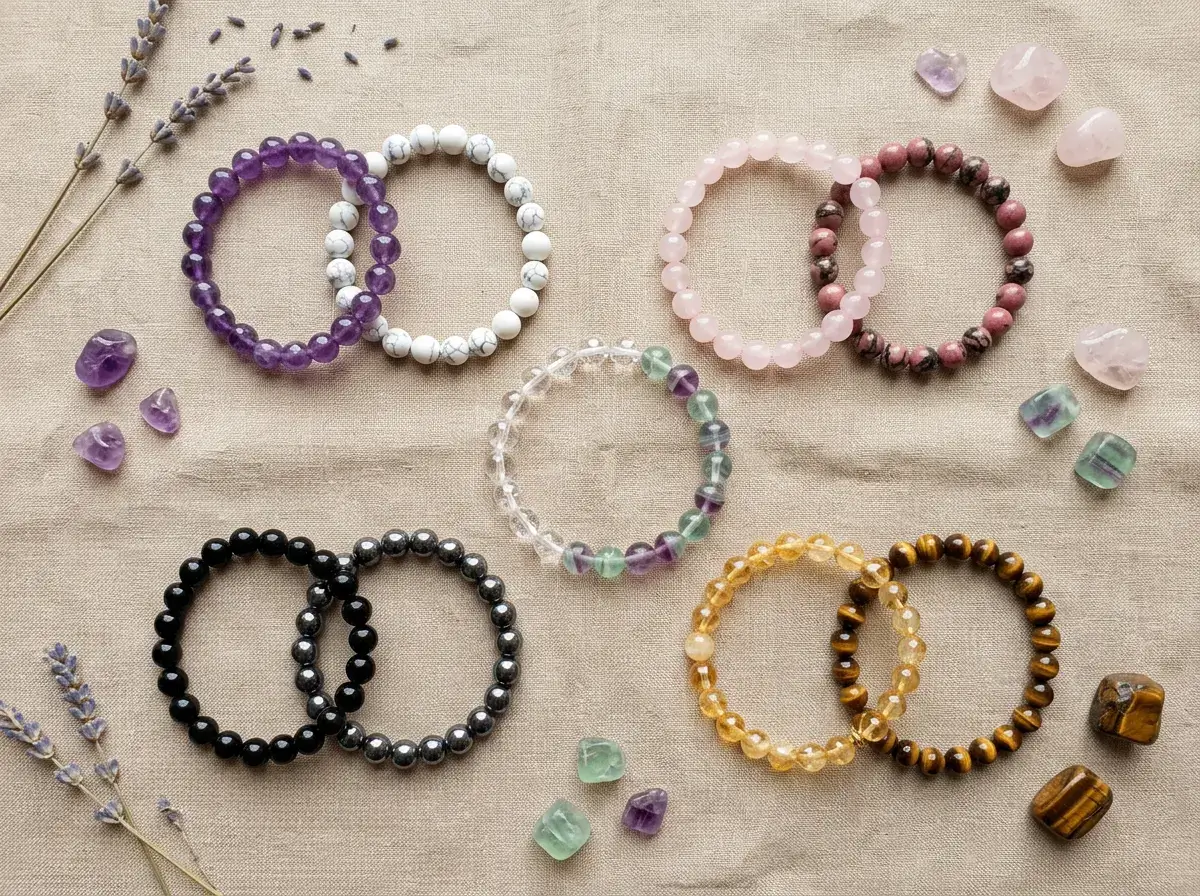
The easiest crystal bracelet combinations pair stones whose intentions point the same direction: calm with calm, protection with grounding. A quick way to build any pairing is one anchor stone plus one or two support stones. The anchor sets the main intention, and the supports reinforce it. Clear quartz is the universal team player, believed to strengthen whatever it sits beside.
Best pairings by intention
Here are five reliable pairings organized by the goal they support:
| Intention | Crystal Pairing | Best Wrist |
|---|---|---|
| Calm & sleep | Amethyst + Howlite | Left |
| Love & self-worth | Rose Quartz + Rhodonite | Left |
| Focus & clarity | Clear Quartz + Fluorite | Either |
| Protection & grounding | Black Obsidian + Hematite | Right |
| Abundance & confidence | Citrine + Tiger’s Eye | Right |
For a gentle everyday pairing, many customers combine our Rose Quartz Bracelet with an amethyst band. Rose quartz is traditionally linked to self-love and calm, so the two together make a soft, comforting stack that is easy to wear from a morning sit to a busy afternoon. You can also wear a stack alongside a watch or metal jewelry, as long as hard clasps do not rub the softer stones all day.
Which crystals should you avoid combining?
A few pairings work against each other because their intentions pull in opposite directions. The most commonly flagged clash is carnelian and amethyst. In a review of ten popular pairing guides, seven named this fiery-plus-calming mix as one to avoid, since active fire energy can compete with quiet water energy rather than support it. We keep this section short on purpose. For the full breakdown, see our guide on crystals that shouldn’t be placed together.
Left or Right: Which Wrist for Each Stone?

In crystal tradition, the left wrist is linked to receiving and inner work, while the right wrist is linked to projecting energy outward. That simple split gives you an easy rule for placing each stone in your stack.
Left wrist vs right wrist, explained
Match each stone’s job to the wrist that shares its direction:
| Wrist | Traditional Role | Best Stones For |
|---|---|---|
| Left | Receiving, inner work | Calm, love, sleep, healing (amethyst, rose quartz) |
| Right | Projecting, outward energy | Confidence, protection, abundance (citrine, obsidian, tiger’s eye) |
Comfort still comes first. If you write or work with your right hand, a lighter stack on that side usually feels better through the day.
Splitting a stack across both wrists (power banding)
Many wearers split a stack across both wrists to keep it balanced. A calming anchor like amethyst sits on the left to draw energy inward, while a protective stone sits on the right to send it outward. This left-and-right pairing is sometimes called power banding. Our Black Obsidian Pixiu Bracelet is a popular right-wrist choice: black obsidian is traditionally worn for protection and grounding, so pairing it opposite a calming left-wrist band gives you one wrist to soothe and one to shield. We break down each stone’s ideal side in our guide on which wrist to wear a crystal bracelet.
How to Build a Comfortable, Long-Lasting Stack

Beyond energy, there is a physical rule most stacking guides skip: a harder bead slowly scuffs a softer one wherever they rub. This is where the Mohs hardness scale, a 1-to-10 measure of scratch resistance, decides whether your stack survives daily wear.
Hardness order: protect your softer beads
Stones at Mohs 7, like amethyst and most quartz, are hard enough for daily stacking. Softer stones need care.
| Crystal | Mohs Hardness | Stacking Note |
|---|---|---|
| Selenite | 2 | Very soft and water-soluble. Store it separately and keep it dry. |
| Malachite | 3.5–4 | Soft. Protect from harder beads and from moisture. |
| Amethyst / Quartz | 7 | Durable for daily wear and stacking. |
| Tiger’s Eye | 7 | Hard-wearing and safe to pair with quartz. |
Selenite sits at Mohs 2, soft enough to scratch with a fingernail and slowly damaged by water, so it should never sit wet against harder beads. Malachite (Mohs 3.5 to 4) scratches easily and releases a little copper when damp. When you mix hardness levels, put softer stones where they rub least, often closest to your skin, and keep the hardest beads from grinding against them.
Building the stack itself takes three steps:
- Pick your anchor: Choose one stone for your main intention, such as amethyst for calm.
- Add one or two supports: Reinforce the anchor with stones that share its theme and sit near Mohs 7.
- Check comfort and hardness: Keep the stack snug but not tight, and separate any soft stone like selenite.
A day-stack vs night-stack routine
Switching your stack between day and night keeps it purposeful and comfortable.
| Time | Stack Focus | Example Stones | Wrist |
|---|---|---|---|
| Day | Focus & confidence | Clear quartz, citrine, tiger’s eye | Right |
| Night | Calm & sleep | Amethyst, howlite | Left |
Before bed, take off any bulky or soft bands so nothing digs in or snags on your bedding. One quick self-test keeps any stack honest: if you cannot name your stack’s intention in a single sentence, simplify until you can.
One honest note on energy
The comfort and hardness rules above are physical facts you can see and feel. The energy effects are different. In a 2001 study at the University of London (Goldsmiths), 80 volunteers held either real quartz or an indistinguishable fake while meditating, and researchers found no effect beyond a placebo response. That does not make crystals pointless. The focus, ritual, and calm many people feel are real and worth something, whether they come from the stone or from the intention you bring to it. Wear your stack because it helps you slow down and feel grounded, not because any bead is promised to change your health or luck.
The bottom line: you can absolutely wear multiple crystal bracelets at once. Keep your stack to two to four stones that share one intention, split it across your wrists for balance, and mind the hardness so your softer beads last. Start with one piece you love, then build with purpose.
Build a Stack That Feels Like You
Explore Potala Store’s crystal bracelets, hand-strung from natural stones and grouped for calm, protection, focus, and more. Find your anchor stone, then add from there.Shop Crystal Bracelets →
Frequently Asked Questions
Crystals do not physically cancel out. In crystal healing belief, the concern is mixing opposite intentions, which can blur your focus. A stack of two to four stones that share one theme is seen as clearer than a crowded wrist.
It is personal preference. Some people keep a calming stone like amethyst on overnight, while others remove everything to rest the wrist and protect softer beads from snagging on bedding. Bulky or soft bands are best taken off before sleep.
Yes. Just keep harder metal clasps from constantly rubbing softer stones, which can scuff them over time. Many people wear a watch on one wrist and their crystal stack on the other.
Start with your anchor stone and wear it for a week. Then add one supporting stone that shares its intention. When you are ready to grow your stack, browse Potala Store’s crystal bracelet collection to add your next intentional piece.
📚 References
- Gemstone Properties & Durability: Reference on quartz, amethyst, and the natural amethyst-citrine blend known as ametrine. Gemological Institute of America (GIA) (Readers can search the GIA gem encyclopedia for “ametrine” and “quartz.”)
- Mohs Scale of Mineral Hardness: Overview of the 1-to-10 scratch-resistance scale used to compare stone durability. Encyclopaedia Britannica
- Crystal Healing and the Placebo Effect: French, C. C., Williams, L., & O’Donnell, H. (2001), a placebo-controlled study presented at the British Psychological Society Centenary Annual Conference, University of London (Goldsmiths). Source: British Psychological Society (Readers can search the study title “psychological aspects of the paranormal crystal healing” for coverage.)
- Mineral Reference Data: Hardness and composition details for gypsum (selenite) and malachite. Mindat.org (Search “gypsum” and “malachite” for full mineral data.)