
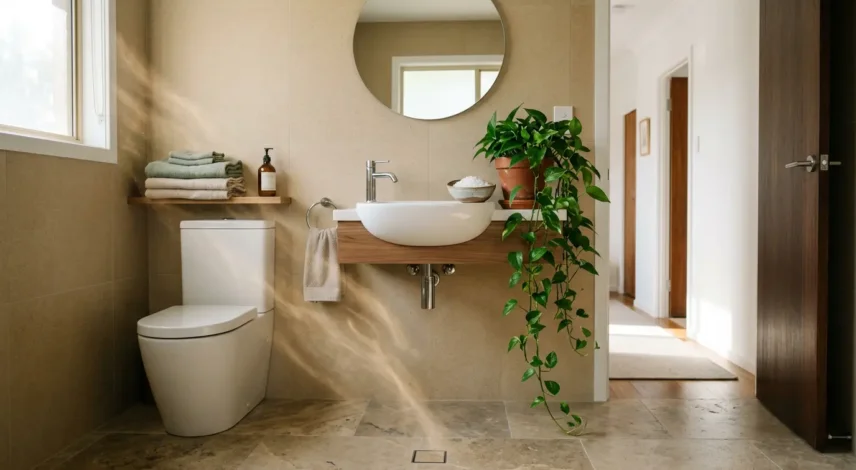

If money keeps slipping away no matter how carefully you budget, feng shui points to a room most people never think about: the bathroom. In feng shui, a bathroom is believed to drain wealth because water symbolizes money, and every drain, toilet, and shower sends that water — and the prosperity energy, or chi, that rides on it — straight out of your home. The fix isn’t a remodel. It’s a closed toilet lid, a repaired faucet, a mirror on the right side of the door, and the Wood element to soak up excess Water.
At Potala Store, we’ve spent years sourcing wealth objects directly from Tibetan monastery partners, and the bathroom question comes up more than any other. It’s also the one where Western guides give the vaguest advice. This guide gives you exact cures, the compass sectors that actually matter, real replacement intervals, and one traditional layer almost every English-language article skips entirely.
Table of Contents
Does a Bathroom Drain Your Money in Feng Shui?
Yes — symbolically. In feng shui, Water represents wealth and cash flow, so a room built to remove water is traditionally believed to remove prosperity chi with it. The concern isn’t the bathroom itself. It’s that drains create a constant downward, outward pull in a space where feng shui wants energy to gather and circulate.
Classical texts describe two forces at work. Chi enters your home and should meander, pooling in living areas. A bathroom interrupts that: it pulls chi downward through drains and out through pipes. Practitioners also flag Sha Chi — stagnant, damp energy that collects in poorly ventilated wet rooms and spreads to neighboring spaces when the door stays open.
Here’s the part we find more persuasive than the symbolism, and it’s where most guides stop short. The wealth drain isn’t only metaphorical. According to the EPA’s WaterSense program, a faucet dripping at one drop per second wastes more than 3,000 gallons per year — roughly 180 showers’ worth of water you’re paying for and never using. Feng shui says a leak drains money. Your utility bill agrees. That overlap is exactly why “fix the leaks” is the first cure on every credible list, and why it’s the one worth doing today.
💡 Key takeaway: A bathroom doesn’t curse your finances. It creates a persistent outward pull on Water-element energy — which you counter by containing, redirecting, and rebalancing rather than renovating.
Where Is the Wealth Corner — and Is Your Bathroom In It?
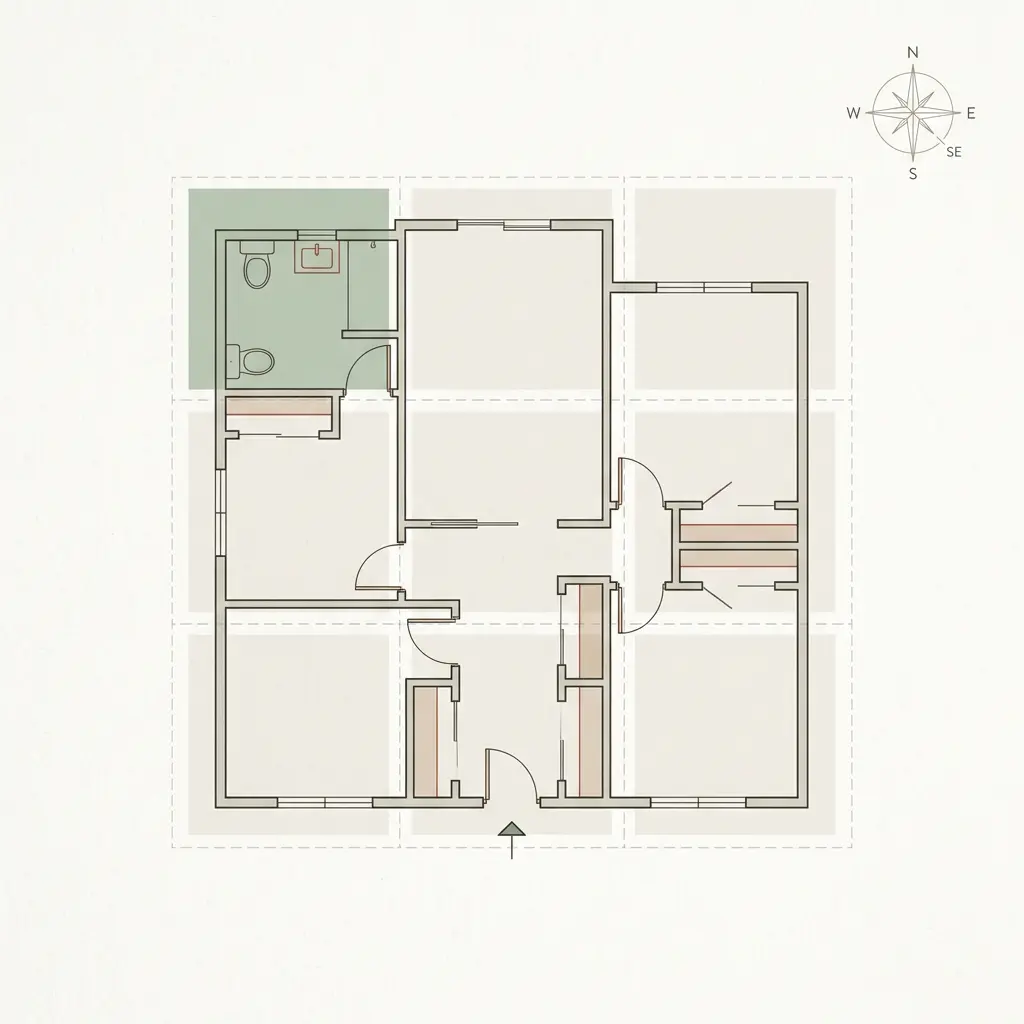
Your wealth corner is the Xun gua (巽卦), located in the southeast sector at 112.5°–157.5° by compass, or in the far back-left square of your floor plan when you stand at the front door facing in. If your bathroom sits there, the cures below become urgent rather than optional.
Two schools give two answers, and the contradiction is why so many people give up here. Both are legitimate — you just have to pick one and apply it consistently throughout your home.
| Method | How to Find Your Wealth Corner | Best For |
|---|---|---|
| BTB / Black Hat | Stand at your front door facing in. Divide the floor plan into a 3×3 grid. The far back-left square is Xun. Works room by room too. | Apartments, irregular layouts, renters |
| Classical / Compass | Use a compass app. The southeast sector (112.5°–157.5°) is fixed and never shifts with your door. | Houses, precision work, Flying Star practice |
The Xun gua is governed by the Wood element, which Water nourishes. That’s the nuance most articles miss: a little Water feeds Wood, which is why the southeast isn’t automatically hostile to a bathroom. The problem is volume. A bathroom delivers Water constantly and in excess, and in the Five Element cycle, too much Water doesn’t nourish Wood — it floods and rots it. Your cure strategy follows directly from that: contain the Water, then strengthen the Wood.
If you want the full picture of what belongs in that southeast sector once you’ve neutralized the bathroom, our feng shui money corner guide walks through the nine traditional wealth objects, the colors, and the activation sequence.
10 Feng Shui Bathroom Tips to Stop Wealth From Draining
Apply these ten cures in order — the first four take under an hour total:
- Close the toilet lid — every time. The single most-cited cure in feng shui. The lid stays down 100% of the time between uses, not just when guests visit. It’s the cheapest wealth cure that exists.
- Keep the bathroom door closed. A closed door contains Sha Chi and stops drained energy from pulling on adjacent rooms. Critical if the bathroom faces your front door, kitchen, or bedroom.
- Fix every leak within a week. One dripping faucet wastes 3,000+ gallons annually. In feng shui terms, an active leak is an active wealth wound — you can’t cure a room that’s still bleeding.
- Close all drains when not in use. Stoppers in the sink and tub, plus a hair catcher in the shower. Cheap, invisible, and it addresses the mechanism directly.
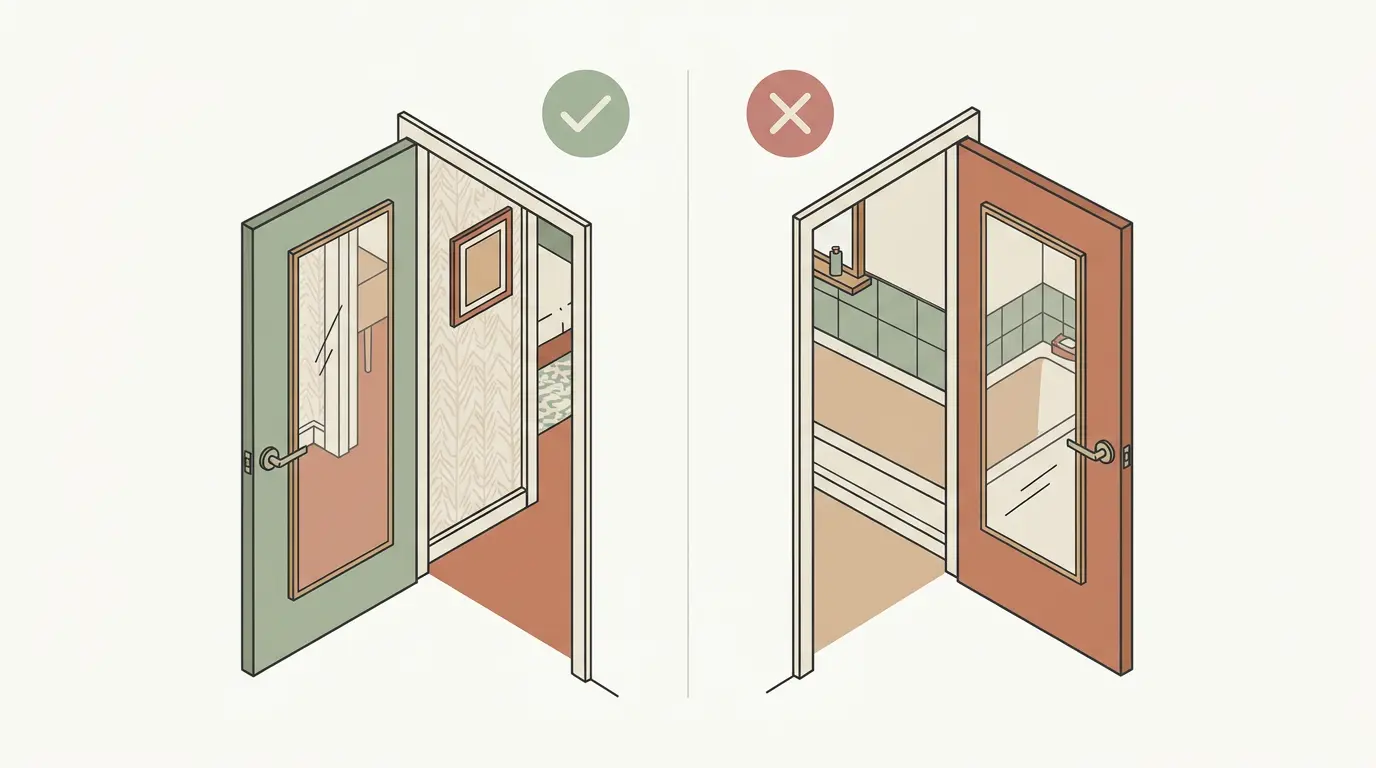
- Hang a full-length mirror on the outside of the bathroom door. Traditionally believed to “erase” the room from the home’s energy map. Outside face only — a mirror inside the bathroom doubles the Water instead of hiding it.
- Add the Wood element. Wood consumes excess Water. Pothos, snake plant, or lucky bamboo all tolerate 2–4 hours of indirect light and bathroom humidity. Green towels and a wooden bath mat count too.
- Ground it with the Earth element. Earth dams Water. Use terracotta, beige, sand, or clay tones through your tile, towels, and accessories.
- Set out a sea salt bowl and replace it every 15–30 days. Traditionally used to absorb stagnant damp energy. Replace it when the salt clumps or discolors — that’s your signal, not the calendar.
- Declutter ruthlessly. Expired products, dead razors, half-empty bottles. Stagnant objects in a Water room compound stagnant energy.
- Brighten and ventilate. Warm, bright light and a working fan counter the damp, dark conditions Sha Chi needs. Skip deep blue, black, and water-scene artwork — they amplify the very element you’re trying to contain.
One honest correction from our own experience: we used to recommend the salt-water cure — salt, water, and coins in a covered container, refreshed every 12 months — as a starting point. We’ve stopped leading with it. It’s a real traditional cure, but customers kept forgetting it for two years, and a neglected cure sitting in a corner is just clutter with extra steps. Start with the lid and the leaks. Those work whether or not you remember them.
The mistake we see most often
People hang the mirror on the inside of the bathroom door. It feels intuitive — you want a mirror in a bathroom. But the cure only functions from the outside, where it visually removes the door from the hallway. Inside, you’ve just amplified the Water element in the room you’re trying to calm. If you’ve done this, moving one mirror is your highest-leverage fix this week.
💡 Pro tip: If your bathroom has no window, a real plant will struggle and a dying plant is worse feng shui than no plant at all. An amethyst crystal tree gives you the upward Wood form and crystal energy without the light requirement — and it won’t quietly die on you in a windowless room.
Cure Table by Compass Sector: Where Your Toilet Sits Matters
Not every bathroom is equally urgent. Here’s what changes based on where yours sits:
| Sector | Why It Matters | Priority Cure | Urgency |
|---|---|---|---|
| Southeast (Xun) | The wealth corner itself. Excess Water floods the Wood element that governs prosperity. | Wood + Earth together: green plants over terracotta pots, door mirror outside | High |
| Center of home | The Tai Chi point — the heart that feeds all nine sectors. Drainage here affects everything. | Earth element, constant ventilation, door always closed | High |
| Facing the front door | Incoming chi meets a drain immediately on arrival. | Door closed + mirror outside + a Wood-element barrier in the hallway | High |
| Above the front door | Water pressing down on the mouth of chi. | Upward light in the entry; never store water containers above the entry | Medium |
| North (Kan) | Naturally a Water sector — the bathroom belongs here more than anywhere. | Standard cures only: lid down, door closed, no leaks | Low |
The bottom line: a north-facing bathroom needs the basics and nothing more. A southeast or central bathroom deserves the full ten-step treatment. If you’d like the current year’s star positions layered on top of this, our 2026 wealth sector guide maps the Flying Star chart onto these same sectors.
The Tibetan Buddhist Layer Most Western Guides Skip
Western feng shui stops at object placement. Tibetan Buddhist practice adds a second step: consecration — the ritual that traditionally transforms a decorative object into a functioning one. This is the layer we almost never see in English-language bathroom guides, and it changes what your cures are supposed to be doing.
In Tibetan tradition, a wealth object isn’t activated by where it sits. It’s activated by rab gnas (the Tibetan consecration ceremony, echoing the Chinese kai guang, “opening the light”). Every crystal we sell passes through a 3-day rab gnas puja performed by ordained monks at Sera Jhe Monastery in Bylakuppe, India — founded in 1419, one of the Three Great Seats of Gelug Buddhist learning, home to over 4,800 monks today. Each piece is consecrated individually rather than in bulk batches, which is the practical difference between a blessed object and a marketing claim.
Why does this matter for a bathroom? Because the honest limitation of every cure above is that it’s defensive. A closed lid and a door mirror reduce loss. They don’t generate anything. Tibetan practice pairs the defensive move with an intentional one — which is why practitioners place a consecrated wealth object in the room the bathroom threatens, rather than in the bathroom itself.
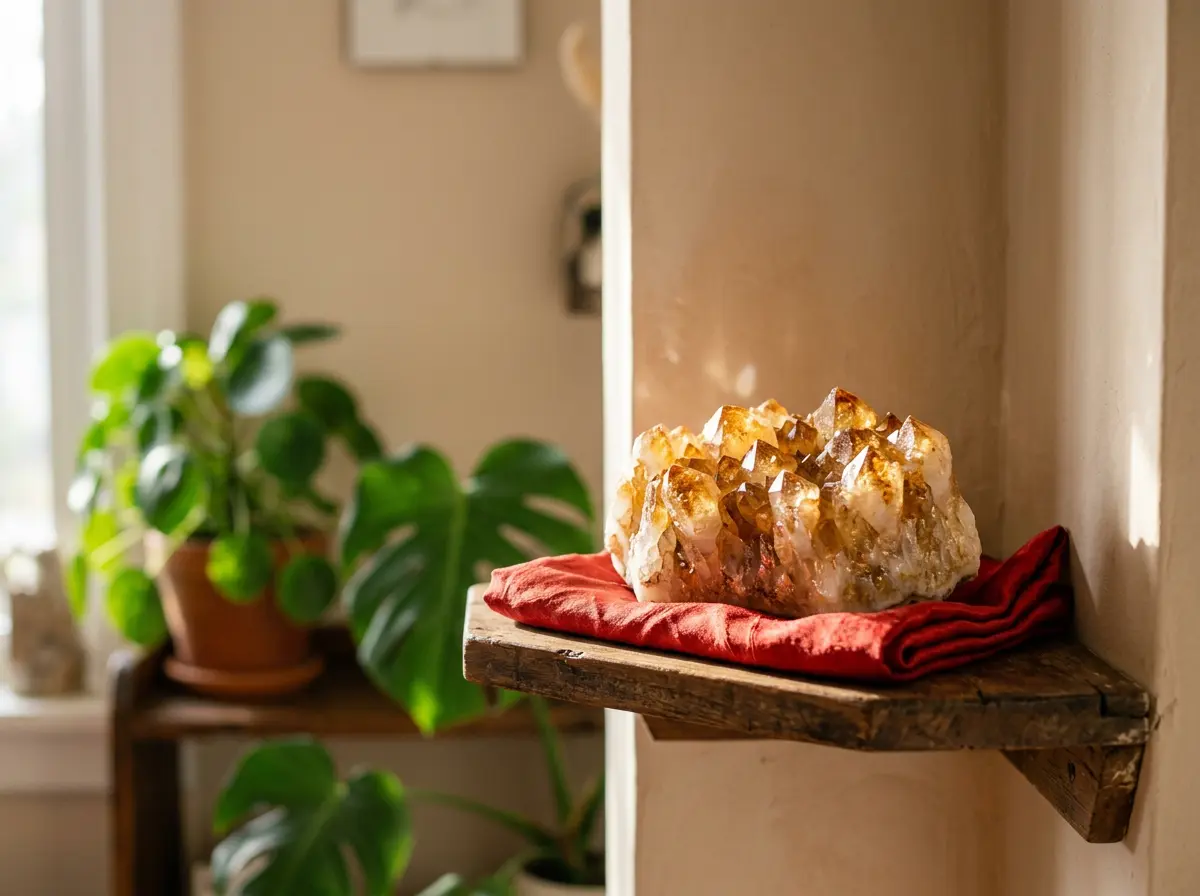
Practically: don’t put your wealth crystal in the bathroom. Humidity, cleaning chemicals, and the drain’s downward pull all work against it. Instead, cure the bathroom with the ten steps, then activate the nearest living space. A monk-blessed citrine wealth crystal (citrine aura quartz, SiO₂ base, Mohs hardness 7) placed in the southeast corner of your living room compensates for a compromised sector far more effectively than anything you can put on a bathroom shelf.
⚠️ Important note: The wealth and energy properties described here come from traditional Chinese feng shui and Tibetan Buddhist belief, not scientific evidence. This guide is for educational and cultural purposes and is not financial advice. The one exception is water waste, which is measurable — fixing leaks saves money whether or not you practice feng shui.
Quick Fixes vs. Long-Term Remodels: What’s Actually Worth It
Start with the five cures that cost under $50 and take under an hour. Reach for structural changes only if your bathroom sits in the southeast or the center of your home and the quick fixes haven’t shifted anything after a full season.
| Fix | Time | Cost | Do It? |
|---|---|---|---|
| Close lid + door | 0 min | $0 | Always — start here |
| Drain stoppers | 10 min | Under $15 | Always |
| Repair a dripping faucet | 1 hr | $10–$25 in parts | Always — pays for itself |
| Mirror outside the door | 30 min | $25–$60 | Yes if SE, center, or facing entry |
| Plants + Earth-tone textiles | 1 hr | $30–$80 | Yes — highest impact per dollar |
| Relocate the bathroom | Weeks | $$$$ | Almost never — cure instead |
Don’t worry if you can’t do all ten at once. Nobody does. In our experience the people who see a shift are the ones who close the lid every day for six months, not the ones who buy every cure in a weekend and forget the basics by Thursday. Consistency beats completeness here.
Cure the Bathroom, Then Activate the Wealth Corner
Defensive cures stop the drain. A consecrated wealth object rebuilds what was lost. Every piece in our collection is blessed through a 3-day monastery puja at Sera Jhe.Shop Blessed Wealth Crystals →
Frequently Asked Questions
Yes — the lid should stay closed 100% of the time between uses. It’s the most widely recommended bathroom cure in feng shui because it caps the most direct symbolic channel for wealth to exit your home. It costs nothing and takes no time, which makes it the one cure worth doing before any other.
A full-length mirror on the outside of the bathroom door is a traditional cure believed to visually “erase” the room from your home’s energy map. It must face outward into the hallway. A mirror mounted inside the bathroom does the opposite — it amplifies the Water element you’re trying to contain.
Pothos, snake plant, and lucky bamboo all handle bathroom humidity and survive on 2–4 hours of indirect light. They add the Wood element, which absorbs excess Water in the Five Element cycle. If your bathroom has no window, use a crystal tree instead — a dying plant is worse feng shui than no plant.
A central bathroom is considered one of the more challenging placements because the center — the Tai Chi point — feeds energy to all nine sectors of your home. Drainage there is believed to affect every area of life, not just wealth. Prioritize constant ventilation, Earth-element grounding, and a door that’s always closed.
📚 References
- Water Waste From Household Leaks: EPA data showing a faucet dripping at one drop per second wastes more than 3,000 gallons per year. U.S. Environmental Protection Agency — WaterSense
- Feng Shui Definition and Qi: Scholarly overview of feng shui as the practice of orienting sites and objects in harmony with the flow of qi. Encyclopaedia Britannica
- Taoist Roots and the Five Elements: Background on feng shui’s origins in early Taoism and the water/wood/fire/earth/metal system. National Geographic Education
- Professional Practice Standards: Certification standards and practitioner directory for those wanting a personalized consultation on a difficult layout. International Feng Shui Guild