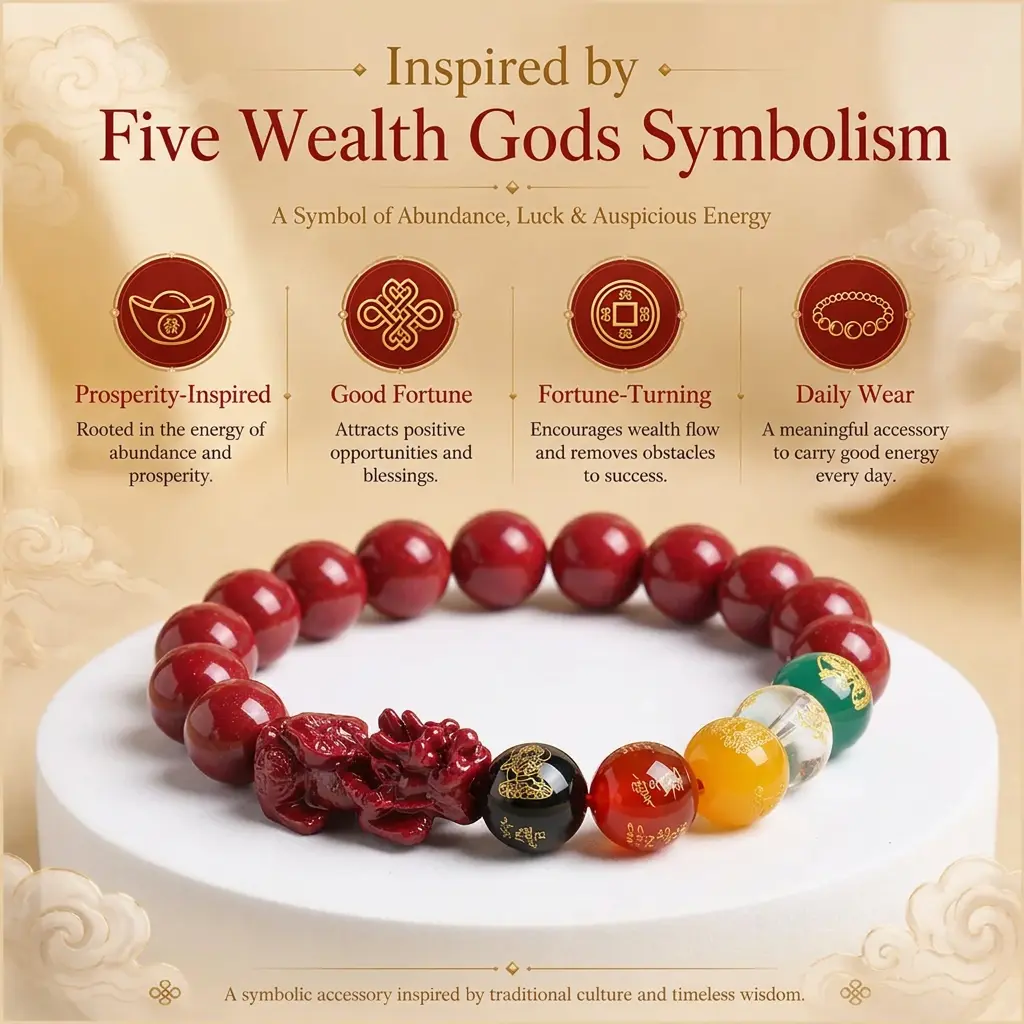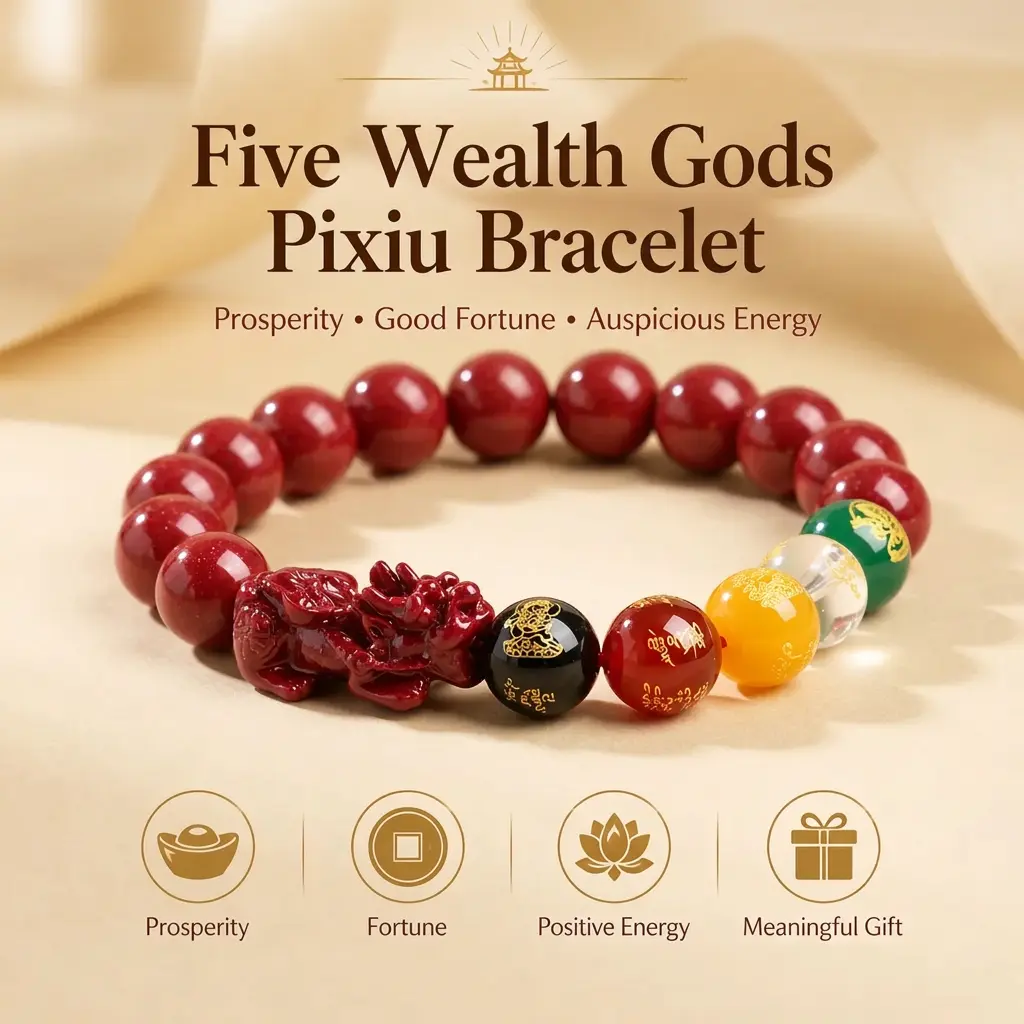

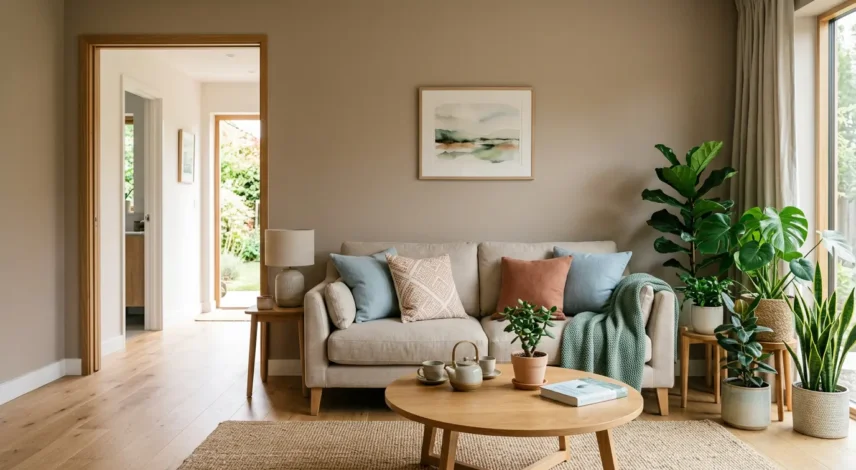

If your living room feels tense, cluttered, or somehow “off,” a few intentional shifts can reset the whole space in a single afternoon. To feng shui your living room, you arrange furniture so chi (energy) flows freely, place your sofa in the command position, balance the five elements, and keep the room clutter-free so it supports rest, connection, and harmony.
You don’t need a renovation or a big budget. You need the right order of operations. After years of working directly with Himalayan monasteries and helping thousands of customers set up calmer, luckier homes, we’ve watched the same handful of adjustments turn a draining room into a restful one. This guide walks you through all eight, with real measurements, a 2026 energy update most articles skip, and honest notes on what actually matters versus what’s just decoration.
At Potala Store, we source blessed, monastery-consecrated feng shui pieces straight from the Himalayas — so the cures we recommend below aren’t generic décor, they’re objects made for this purpose. New to home feng shui? Start with our roundup of the 12 most common feng shui mistakes at home before you rearrange a thing.
Before you startYou can’t do this “wrong.” Feng shui rewards small, intentional changes, not perfection. Every shift you make below adds up, so start with whichever step feels easiest and build from there.
Here’s the honest case for bothering at all: in a 2015 survey of 500 Chinese-American homebuyers by Better Homes and Gardens Real Estate and the Asian Real Estate Association of America, 79% said they’d pay more for a home that follows feng shui principles — about 16% more on average. And a UCLA Center on Everyday Lives of Families study found that people who described their homes as cluttered showed stress-linked cortisol patterns throughout the day. Your living room affects how you feel. Feng shui is one framework for shaping that on purpose.
Table of Contents
What Is a Feng Shui Living Room?
A feng shui living room is a space arranged so chi — the life-force energy — flows freely and feels calm, anchored by a well-placed sofa, balanced across the five elements, and kept clear of clutter. The term feng shui literally means “wind-water,” an ancient Chinese practice of arranging your environment to support the natural flow of energy.
Chi enters your home through the front door and windows, then moves through each room like water finding its path. In the living room — the social heart of the home, sometimes called the “bright hall” — you want that energy to circulate gently, never rushing straight through or getting stuck in a corner. When your living room flows well, the whole house tends to feel lighter.
Good living room feng shui rests on a few core ideas you’ll see throughout this guide: the command position (where your main seating goes), the five elements (wood, fire, earth, metal, and water), yin and yang (balancing active and restful energy), and the bagua map (an energy map that assigns life areas to different parts of the room). Master metaphysics teacher Joey Yap frames feng shui as a blend of design, architecture, and environmental psychology — not superstition, but intentional space-shaping.
How Do You Arrange Furniture in the Command Position?
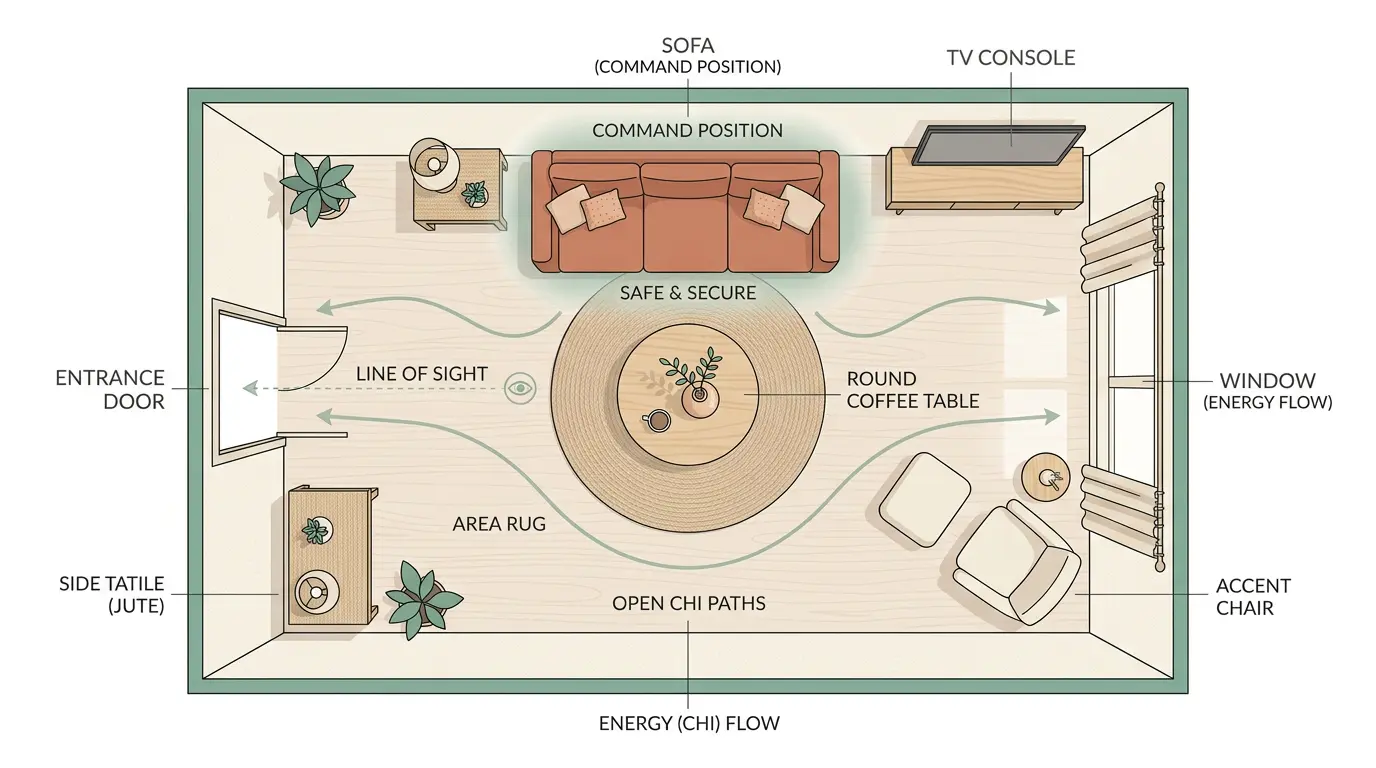
Place your sofa against a solid wall where you can see the entrance without sitting directly in line with it — this is the command position, and it’s the single most important rule in living room feng shui. A solid wall behind you (called “mountain backing”) gives a sense of support and safety, while a clear view of the door keeps you from being startled or feeling subconsciously on edge.
Follow these steps in order for the best flow:
- Declutter first (about 30 minutes). Clear surfaces, tuck away cords, and remove anything broken. Clutter is stagnant energy, and it’s the fastest thing to fix.
- Clear the space with sound. Once the room is tidy, reset the atmosphere. Starting at the front door and moving clockwise, strike a singing bowl three times per corner — mornings between 7:00 AM and 1:00 PM carry the freshest rising energy.
- Set the sofa in the command position. Solid wall behind, clear line of sight to the entrance, but not squarely facing the door.
- Keep the center open. Leave the middle of the room — the “Tai Chi” heart — uncluttered, with at least 30 inches of walking space around furniture so energy and people move freely.
Tools you’ll need: a tape measure, a compass (your phone’s compass app works fine), and 30 minutes. A round or oval coffee table sitting just below sofa-seat height is ideal, since softened edges keep energy flowing instead of creating “poison arrows” — sharp corners that aim cutting energy at your seats.
From our experienceIn our own testing, the “no solid wall behind the sofa” problem trips up the most people — open-concept layouts and floating sofas are everywhere now. The fix that worked best for us: place a console table or a low bookshelf behind a floating sofa to create artificial backing. In one small rental, angling the sofa 45 degrees into a corner gave a clear door view when no single wall would cooperate.
🔔
Tibetan Singing Bowl (Om Mani Padme Hum)
For step 2, a hand-hammered Tibetan singing bowl clears stale energy through sound where decluttering alone can’t reach — ideal after a move or a stressful stretch.
Balancing the Five Elements for a Harmonious Space
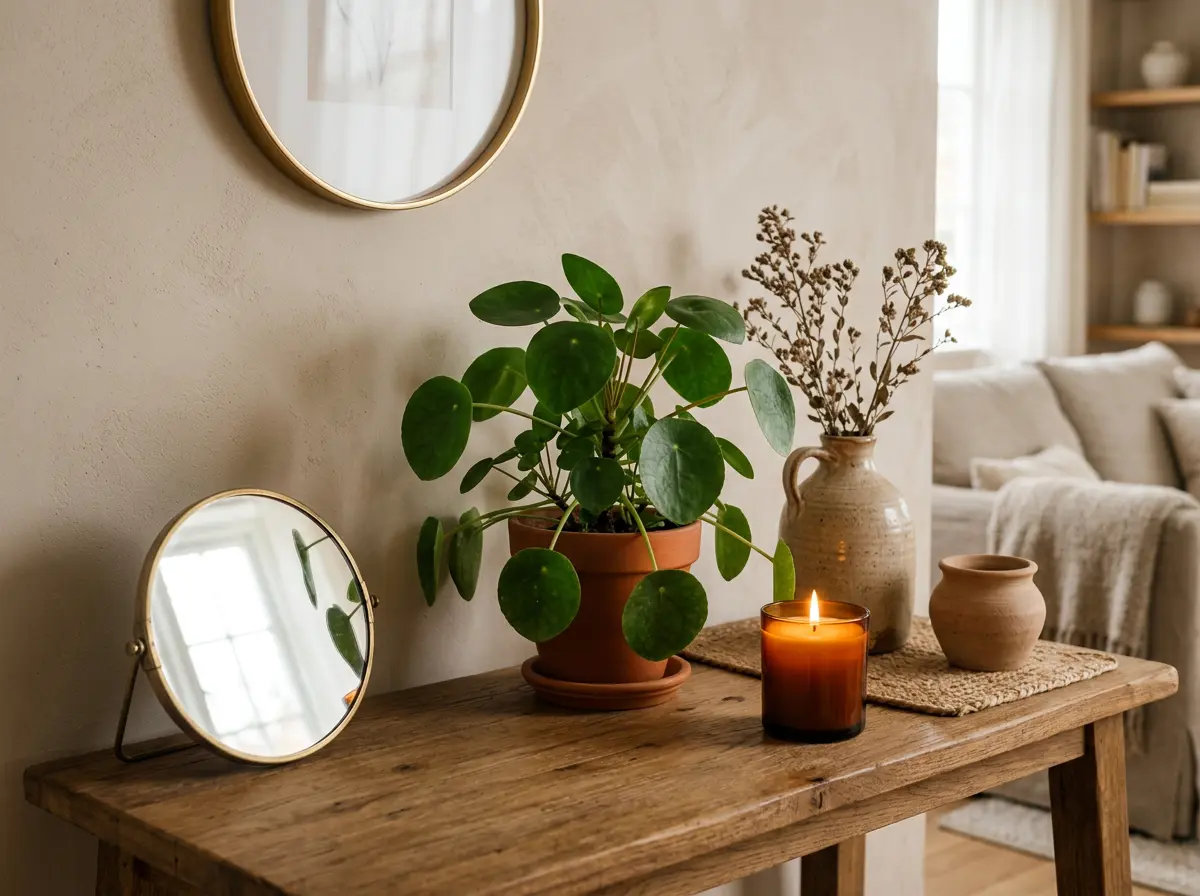
Balance the five elements — wood, fire, earth, metal, and water — by adding one or two subtle touches of each, rather than overloading any single one. In feng shui, these five elements represent different types of energy, and a living room that leans too far into one can feel unbalanced: all metal feels cold, all fire feels agitated.
You don’t need to buy anything new to start. Most rooms already contain several elements — the trick is spotting what’s missing. Here’s how each element shows up at home:
| Element | Energy It Brings | How to Add It |
|---|---|---|
| Wood | Growth, vitality | Live plants, green tones, wooden furniture |
| Fire | Passion, warmth | Candles, red or orange accents, good lighting |
| Earth | Stability, grounding | Ceramics, crystals, beige and brown tones |
| Metal | Clarity, focus | Round metallic decor, white and gray, metal frames |
| Water | Calm, flow | Mirrors, a small fountain, blue and black accents |
The simplest approach: identify the one element your room lacks and add a single touch of it. A room full of wood furniture and beige walls (earth) but no water might feel static — a mirror or a bowl of water on the console gently reintroduces flow. A chakra money tree, with its wooden trunk and stone leaves, quietly layers wood and earth together in one piece.
🌳
Chakra Money Tree Ornament (Blessed for Wealth)
A blessed money tree adds the wood element and doubles as a wealth-corner activator — more on that next.
Using the Bagua Map to Activate the Wealth Corner
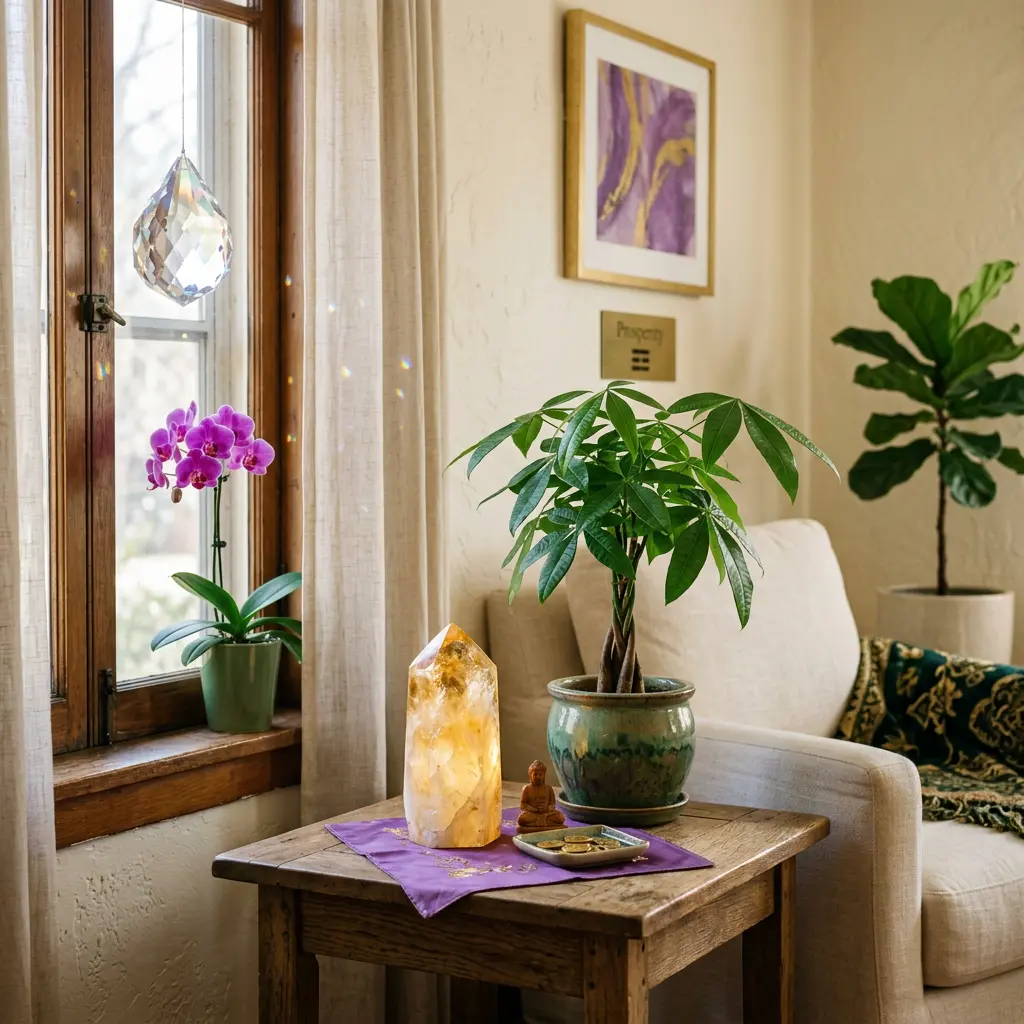
Stand in your living-room doorway looking in: the far back-left corner is your wealth corner — the Xun area of the bagua map, which also aligns with the southeast by compass. The bagua map is an energy map that divides any space into nine life areas, from wealth and fame to relationships and career. You can overlay it on your whole home or, more usefully here, on the single room.
There are two common methods, and both work — pick one and stay consistent:
- BTB (Western) method: Stand in the doorway. The far back-left corner is wealth, back-center is fame, back-right is relationships. Fast, no compass needed.
- Classical (compass) method: The wealth sector sits in the southeast, between 112.5° and 157.5° on a compass. More precise if you want to align with traditional practice.
To activate the wealth corner, feng shui traditionally pairs the wood element (its governing element) with touches of water and purple or green tones. A healthy plant, a citrine crystal (long associated with abundance), or a faceted crystal hung in a corner window are classic choices. This is where a well-placed cure earns its keep — the southeast wealth area responds to intentional, cared-for objects rather than random decoration.
2026 update — most guides skip thisFeng shui energy shifts each year under the Flying Star system, and we’re now in Period 9 (2024–2044), when the #9 Purple Star of future prosperity peaks in the southeast — the same direction as your wealth corner. That makes 2026 an especially good year to activate the southeast. One caution: in 2026 the difficult #5 star and the Tai Sui (Grand Duke) sit in the south, so avoid heavy renovation or noisy disruption in that part of the room. For the full year-by-year breakdown, see our 2026 Flying Star chart guide and the deeper feng shui wealth sector 2026 walkthrough.
💎
Natural Citrine Money & Wealth Crystal Tower
Placed in the southeast (Xun) corner, a natural citrine tower is one of the most traditional wealth-corner activators — pair it with a live plant for the wood-plus-earth combination the sector favors.
Colors, Plants, Mirrors & Lighting That Support Good Energy
Choose colors and living things that match your room’s purpose — calming blues and greens for rest, warm reds and oranges for social energy — and keep plants healthy with soft, rounded leaves. These finishing touches shape the mood of the room once your furniture and elements are in place.
Colors: Stick to three main colors or fewer so the space feels cohesive. Earthy neutrals (earth element) create a grounded base; add greens for growth, soft blues for calm, and small hits of red or orange to spark warmth and conversation.
Plants: The best feng shui plants have rounded, upward leaves that circulate gentle energy. Strong choices include the money tree (Pachira), jade plant, snake plant, and pothos. Avoid spiky or thorny plants in main seating areas — pointed leaves are thought to scatter energy rather than nourish it. Place a money tree in the southeast wealth corner for a double benefit.
No green thumb? That’s fineIf keeping plants alive isn’t your strength, a healthy silk plant or a simple bowl of round, fresh fruit still reads as living, growing energy. Feng shui is about intention, not a perfect indoor garden.
Mirrors: Mirrors expand space and add the water element, but placement matters. A mirror should never directly face the front door. As Sam Van Horebeek of East-West Property Advisors puts it, a mirror facing the main door pushes away the good energy just as it’s about to enter. Instead, position mirrors to reflect something pleasant — a garden view, a piece of art, or natural light.
Lighting: Layer your lighting — ambient (overall), task (reading), and accent (mood) — to keep chi lively without harsh glare. And a common question: is a TV opposite the front door bad feng shui? In feng shui practice the TV is a fire element, and placing it directly across from the door can over-stimulate the room’s energy. Offset it, or house it in a cabinet you can close when it’s off, and ground it with wood or earth tones nearby.
Common Feng Shui Living Room Mistakes (and Quick Fixes)
The most common feng shui living room mistakes are a sofa with its back to the door, clutter, a floating sofa with no wall behind it, sharp table corners aimed at seats, and a mirror facing the front door. The good news: every one of these has a fast, low-cost fix.
| Mistake | Why It Matters | Quick Fix |
|---|---|---|
| Back to the door | Creates unease, weak position | Reposition sofa to the command position |
| Clutter | Traps stagnant energy | Clear surfaces; store cords and clutter |
| No backing | Lack of support | Add a console or bookshelf behind a floating sofa |
| Sharp corners | “Poison arrows” of cutting chi | Choose round tables or soften edges with plants |
| Mirror faces door | Pushes energy back out | Reposition to reflect light or art, not the entry |
The bottom line: fix the big three first — the sofa’s position, clutter, and any mirror facing the door. Those three shifts alone transform how a living room feels. A set of feng shui coins tied with red ribbon, a time-honored cure, can be tucked into the wealth corner or near the entry as a finishing touch.
A gentle reminderFeng shui doesn’t demand perfection — just intention. If you can’t hit every rule (rentals and small spaces rarely allow it), focus on the few that matter most and let the rest go. A room arranged with care already carries better energy than a “perfect” room arranged without any.
🪙
Feng Shui Lucky Coins for Wealth & Success
A classic, affordable cure — place feng shui coins in the southeast wealth corner or near the entry to invite steady prosperity.
A note on energy claims: Feng shui reflects traditional beliefs and environmental influence, not guaranteed outcomes. The energy and prosperity effects described here are rooted in centuries-old practice and cultural tradition, not scientific proof, and this guide is for educational purposes — it isn’t a substitute for professional, medical, or financial advice.
Bring Authentic Harmony Home
Your living room is arranged, your elements are balanced, and your wealth corner is ready to activate. Finish with blessed, monastery-consecrated pieces made for exactly this purpose.Shop Feng Shui Home Decor →
Frequently Asked Questions
Position your main sofa in the command position — against a solid wall with a clear view of the entrance, but not directly in line with it — and keep the center open with at least 30 inches of walking space. Balance the five elements, soften sharp corners, and declutter so chi flows freely.
Stand in the doorway looking in; the far back-left corner is your wealth (Xun) area, which also aligns with the southeast by compass. Activate it with a healthy money tree or a citrine crystal. For exact 2026 placement, see our feng shui wealth sector 2026 guide.
In feng shui practice the TV is a fire element, and placing it directly opposite the door can over-stimulate the room’s energy. Offset it or enclose it in a cabinet you can close, and balance it with wood or earth tones nearby.
Absolutely — small spaces often benefit most. Use floating-leg furniture to keep sightlines open, add mirrors to expand the room (never facing the front door), and choose one or two intentional element touches instead of a full renovation.
📚 References
- Feng Shui and Home Value Survey: National survey findings on how feng shui influences home buying and perceived value. Better Homes and Gardens Real Estate & AREAA
- Clutter and Stress Research: Overview of the UCLA Center on Everyday Lives of Families study linking household clutter to daily cortisol and stress. The Science Behind Decluttering
- Feng Shui Principles Overview: Background on chi, the five elements, and the bagua as an environmental design framework. Source: Encyclopædia Britannica, “Feng Shui” (Readers may search Britannica for the current entry.)
- Mirror Placement Guidance: Expert commentary on why a mirror facing the main door works against incoming energy. Inman Real Estate News