
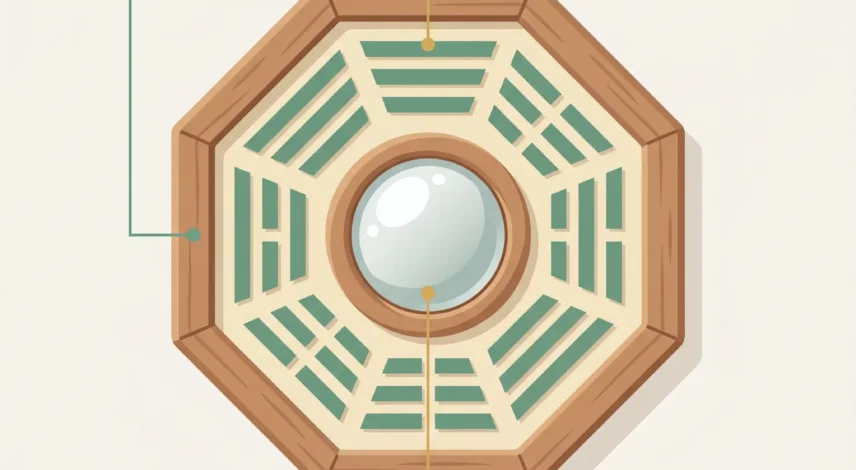

If you just spotted an octagonal mirror above a neighbor’s door—or you feel your own front door sits in the path of something harsh, like a road or a sharp roofline—here’s the short answer. A bagua mirror is an eight-sided feng shui mirror, framed by the eight trigrams around a central glass, hung outside above an entrance to deflect negative energy away from a home. Used correctly, it’s a calm, protective tool. Used carelessly—indoors, or aimed at a neighbor—it causes real problems.
At Potala Store, we work with Himalayan artisans and monastery-blessed protective pieces, so we spend a lot of time answering nervous questions about home protection cures. This guide keeps it grounded: what the mirror means, the three types and what each one does, and a safety-first way to use it that protects your space without harming anyone—including you.
⚠ A quick note before we start: Feng shui describes energy in traditional and cultural terms. The protective effects discussed here are believed to work within feng shui tradition and are not scientifically proven. Treat this as cultural and educational guidance, not a substitute for professional advice.
Table of Contents
What Is a Bagua Mirror? (Meaning and Symbolism)
A bagua mirror is an octagonal feng shui mirror framed by the eight trigrams (the bagua), with a round mirror at its center, traditionally hung outside above a front door to deflect negative energy. The name says it plainly: ba means eight, and gua means trigram. It is a protective talisman, not indoor decor.
Each of the eight trigrams is a stack of three lines—solid or broken—drawn from the I Ching, the ancient Chinese Classic of Changes. Protective mirrors use the Early Heaven arrangement (also called the Fuxi or Pre-Heaven bagua), the ordering believed to shield and stabilize a space. That symbolism is why people reach for one when a home feels energetically “exposed.”
In feng shui, the front door is the “mouth of qi”—the main opening through which energy enters your home. Because the mirror guards that opening, correct placement and orientation matter far more than most first-time buyers expect. We’ll get to the exact rules below.
What Does a Bagua Mirror Do? Deflecting “Poison Arrows”
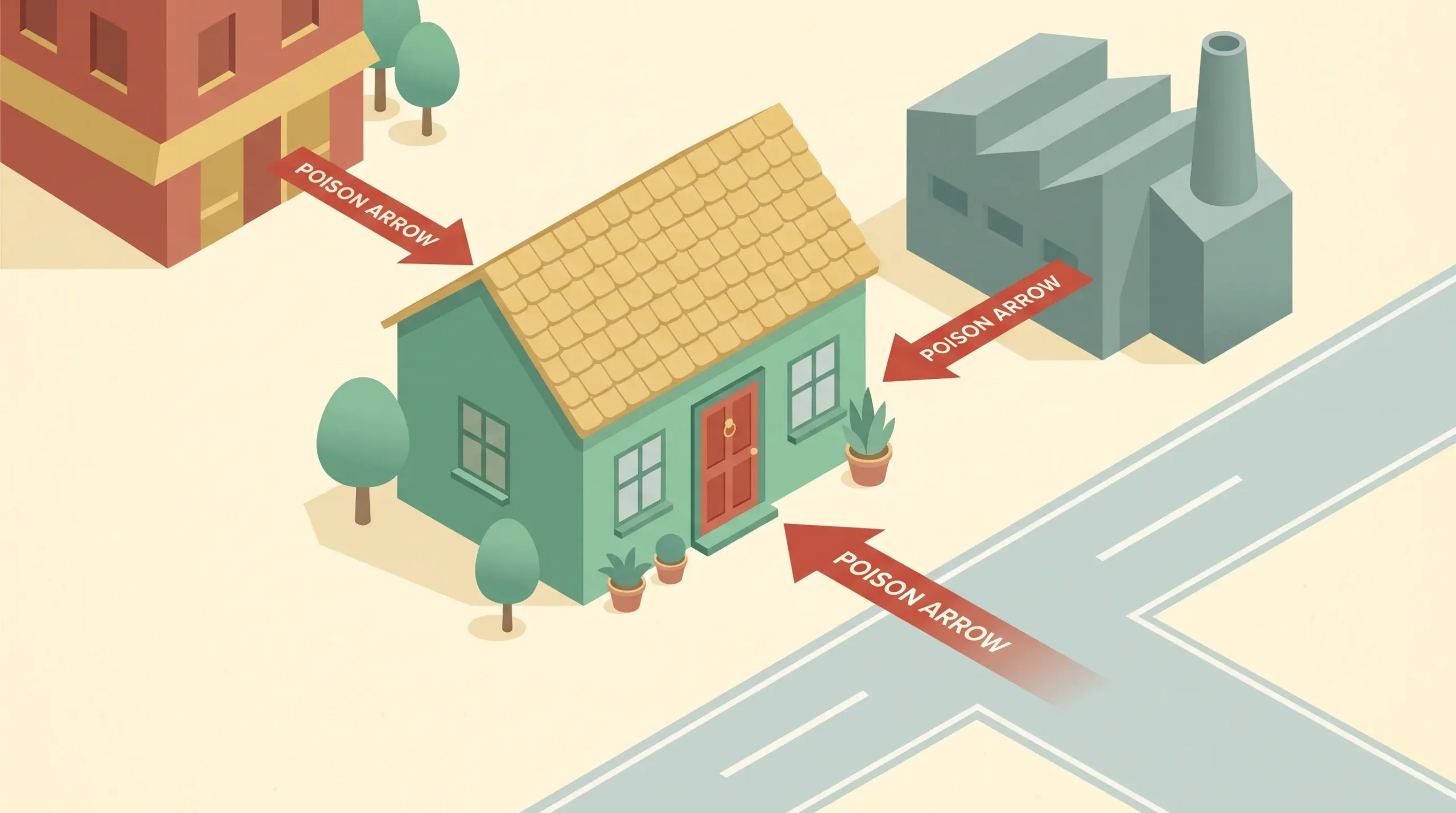
A bagua mirror is believed to protect a home from sha qi—harsh, fast-moving energy known as “poison arrows”—by reflecting or dispersing it before it reaches your front door. In feng shui, sha qi (sometimes written sha chi) is energy that rushes at a home in a straight, aggressive line instead of meandering gently.
You don’t need to sense anything mystical to recognize the situations practitioners worry about. Common poison-arrow sources include:
- A T-junction: a road that points straight at your door.
- A sharp corner: the hard edge of a neighboring building aimed at your entrance.
- An imposing structure: a door facing a cemetery, hospital, or a much larger building.
If your entrance has ever felt strangely “in the line of fire,” this is the feeling feng shui is describing. The mirror is meant to redirect that energy—which is exactly why the way it’s placed carries real weight. To understand where your entrance sits within your home’s overall energy layout, our guide to the 2026 feng shui wealth sector walks through mapping the bagua across your floor plan.
Types of Bagua Mirrors: Convex vs. Concave vs. Flat
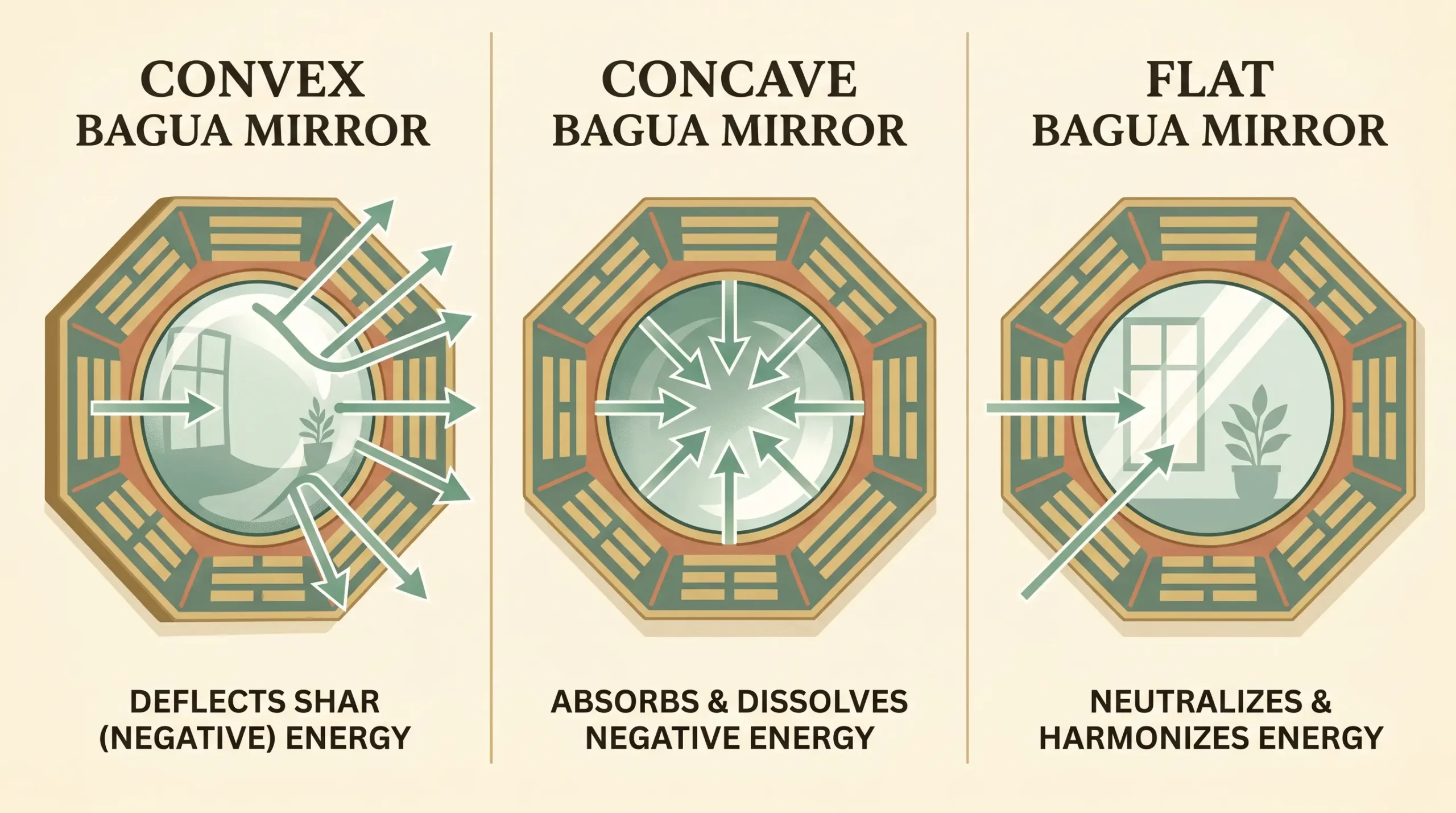
The three bagua mirror types differ by what they do with energy: a convex mirror deflects it, a concave mirror absorbs it, and a flat mirror reflects it neutrally. Choosing the right one depends on how aggressive the energy source is. Here’s a quick comparison.
| Mirror Type | Surface | What It’s Believed to Do | Best For |
|---|---|---|---|
| Convex | Bulges outward | Deflects and disperses energy back outward | Strong, aggressive sha qi (a T-junction or road aimed at the door) |
| Concave | Curves inward | Absorbs and neutralizes incoming energy | Milder negative energy you want softened rather than bounced |
| Flat | Plane surface | Reflects energy neutrally, without amplifying it | General, all-purpose use—the gentlest starting point |
Convex mirror: the strong deflector
A convex bagua mirror pushes energy back the way it came, which makes it the go-to for aggressive sources. One honest caveat we’ve learned to pass along: practitioners genuinely disagree about which type is “strongest.” Some describe the convex as the most forceful because it perpetually bounces energy back; feng shui master Rodika Tchi is in this camp. So if you’re unsure how harsh your situation really is, don’t default to the most aggressive option.
Concave mirror: the absorber
A concave bagua mirror curves inward and is believed to absorb and hold negative energy rather than reflect it outward. Because it doesn’t fling energy back at the source, many people find it a gentler choice for a mild issue—though, again, schools differ on the fine points here.
Flat mirror: the neutral all-purpose option
A flat bagua mirror is the most balanced and least confrontational of the three. If you’re new to this and just want general protection above an entrance, the flat mirror is the safest place to start.
If you’d prefer something gentler
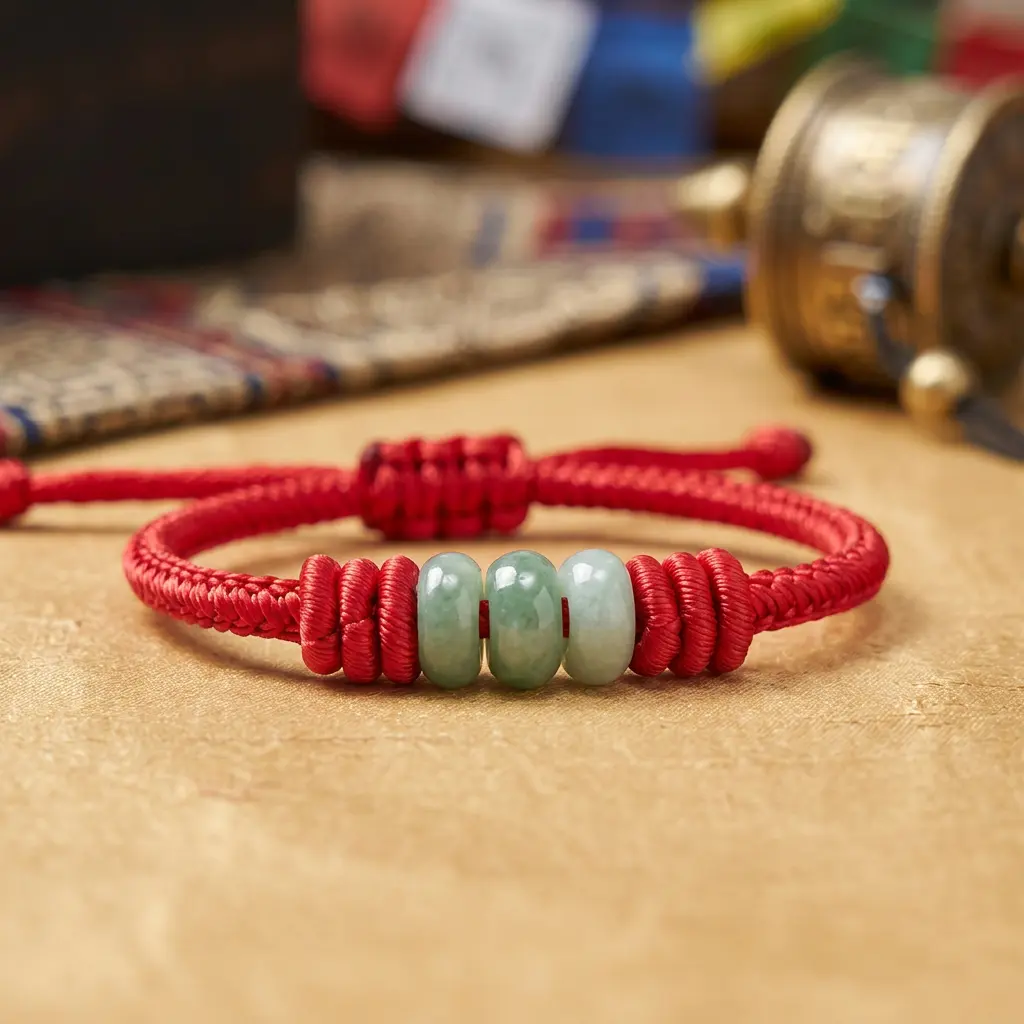
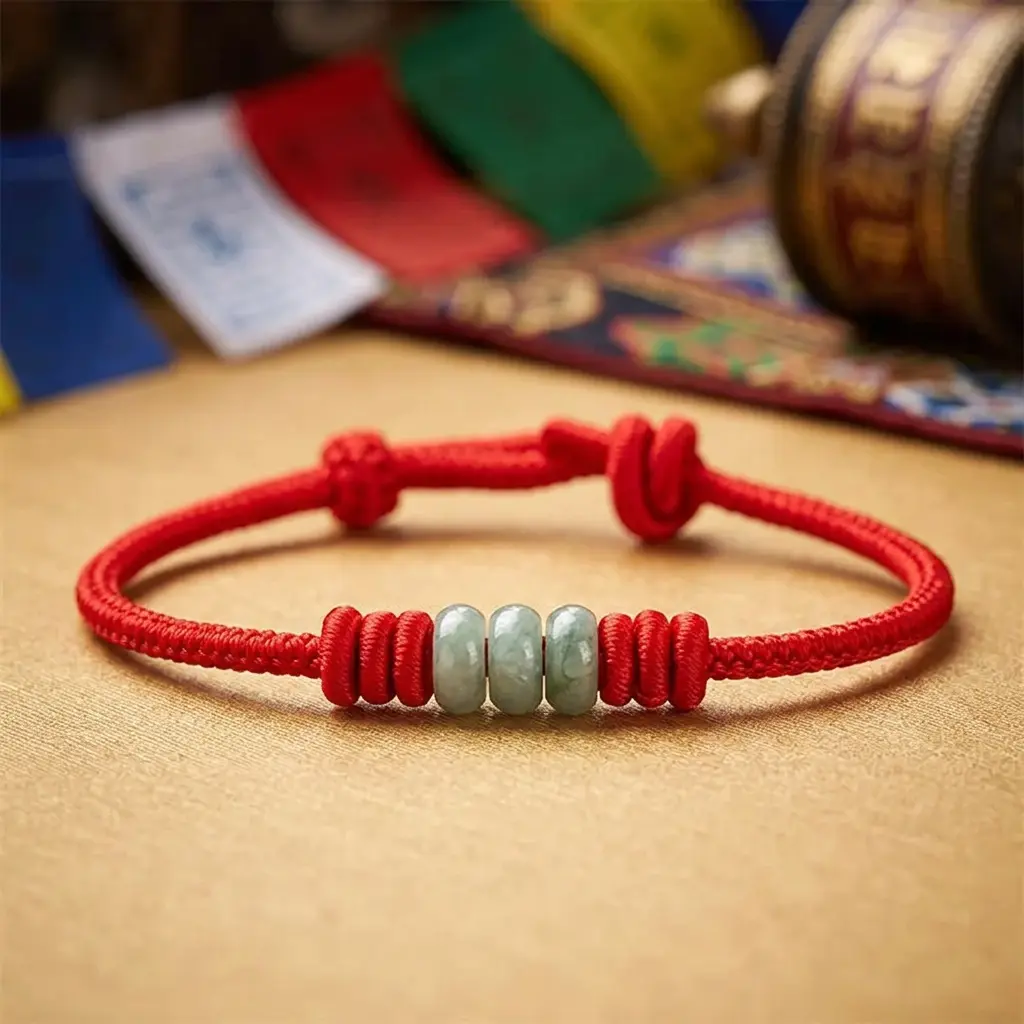
Not everyone wants a mirror on their home. If your goal is simply a sense of protection at your entrance or on your person, a monastery-blessed piece like our Tibetan red string bracelet offers a quieter, non-confrontational alternative that never involves your neighbors.
How to Use a Bagua Mirror Safely: Placement Step by Step
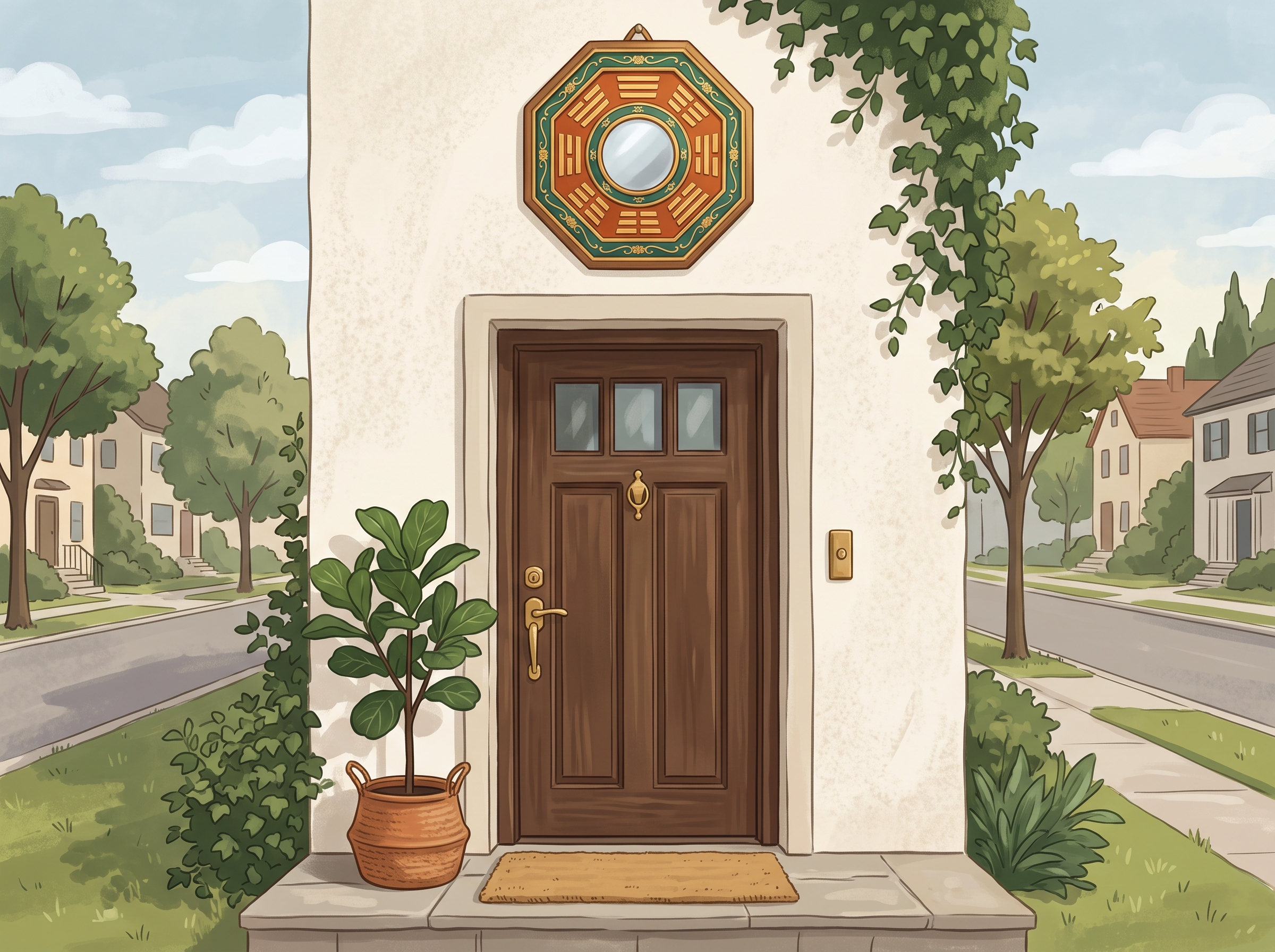
To use a bagua mirror safely, hang it outdoors only, above your main entrance, facing the source of negative energy—never indoors and never aimed at a neighbor. Follow these five steps in order.
- Confirm you actually have a sha qi source. A bagua mirror is strong medicine, not decoration. Only use one if there’s a genuine poison-arrow source—a T-junction, sharp corner, or imposing structure—pointed at your door.
- Choose the right type. Match the mirror to the strength of the problem: convex for aggressive energy, concave to absorb milder energy, flat for general protection.
- Hang it outdoors, above the main entrance. Position it on the exterior wall over your front door, facing outward toward the energy source. This is the single most important placement rule.
- Orient the Qian trigram at the top. Hang the mirror so the trigram with three solid, unbroken lines (Qian, ☰) sits at the very top. Most mirrors include a hook at the top to guide you.
- Hang it at a calm, intentional time. In tradition, midday—around 11:00 a.m. to 1:00 p.m., when yang energy peaks—is considered ideal. Consider this a cultural custom rather than a proven requirement; there’s no scientific basis for the timing.
The key takeaway: outdoors, above the door, facing out, Qian on top. Get those four right and you’ve handled the essentials.
Bagua Mirror Safety: Physical Risks, Mistakes, and Neighbor Etiquette
Bagua mirrors are not dangerous when used correctly, but two kinds of safety matter: the physical mounting and the etiquette of where the mirror points. This is where most guides stop short, so we’ll cover both—because a protection cure shouldn’t create a new problem.
Physical safety: mount it like the glass object it is
A bagua mirror is a framed glass mirror hung outdoors, so treat it with ordinary hardware sense. Mount it securely and high, well above head height and out of children’s reach, so a fall can’t hurt anyone. Check the glass for cracks before and after hanging—a damaged mirror is both a shard risk and, in feng shui terms, believed to lose its protective quality and worth replacing. If yours hangs in an exposed, windy spot, make sure the fixing can hold, and favor a non-toxic, weatherproof frame finish since it lives outside year-round.
⚠ The three cardinal mistakes
1. Never hang it indoors. A bagua mirror is an outdoor cure. Inside, it’s believed to disrupt your home’s own energy instead of protecting it. 2. Never aim it at a neighbor’s door, window, or home. This is a well-known feng shui taboo that effectively sends energy at them and can spark a genuine “feng shui war.” 3. Never use one decoratively. Hanging a bagua mirror with no real sha qi source is considered stirring up energy you don’t need to touch.
“A neighbor’s bagua mirror is pointed at my house”—what to do
First, take a breath: a mirror aimed your way does not “curse” you. A bagua mirror is designed to redirect energy, not to attack a specific person, and the fear around this is usually overstated. If it still bothers you, the calm path works best.
- Talk to your neighbor kindly. Many people hang these without knowing the etiquette—or without any ill intent at all. A friendly conversation resolves most cases.
- Add a gentle buffer if you like. A leafy plant, a curtain, or a small faceted crystal in the line of sight can soften your side without escalating.
- Don’t retaliate with your own aggressive mirror. Two mirrors facing off is exactly the “ricochet” feng shui warns against. De-escalation protects the relationship and your peace.
If you like the idea of quiet protection you control entirely, some readers prefer a personal cure over a wall fixture. Our guide to Buddhist protection amulets covers gentler, self-contained options.
Do You Actually Need a Bagua Mirror? (And Gentler Alternatives)
Most homes don’t need a bagua mirror; experienced practitioners recommend one only when there’s a clear, strong sha qi source you can’t soften another way. It’s worth hearing this from the experts themselves. Feng shui master Rodika Tchi advises always looking for an alternative solution first, and Moni Castaneda, creator of the Nine Steps to Feng Shui® System, has said she doesn’t recommend bagua mirrors at all—because thoughtful people rarely want to send difficult energy back toward anyone.
In our own conversations with customers, the pattern is consistent: the people happiest long-term are the ones who started gentle. So before you drill anything into your exterior wall, consider these softer cures:
- Living plants or a hedge: a green buffer that absorbs harsh energy naturally.
- Wind chimes: believed to break up and slow fast-moving qi.
- Decluttering your entrance: the simplest, most overlooked way to invite calm energy in.
- A personal protection piece: a blessed cure you keep on you rather than on the wall.
The bottom line: a bagua mirror is a real, meaningful feng shui tool with a specific job—protecting an exposed entrance from poison arrows. Respect what it’s for, place it outdoors with Qian on top, keep it away from your neighbors, and it does its work quietly. When in doubt, start gentle.
Prefer protection you can carry?
If a wall-mounted cure isn’t for you, explore Potala Store’s monastery-blessed protection pieces—quiet, personal, and never aimed at anyone.Shop our protection collection →
Frequently Asked Questions
No. A bagua mirror is an outdoor cure meant for the exterior wall above an entrance. Hung indoors, it’s believed to disrupt your home’s own energy rather than protect it. Always place it outside, facing outward.
It won’t curse you—a bagua mirror redirects energy, it doesn’t target a person. If it bothers you, talk to your neighbor kindly first, since many hang them without knowing the etiquette. You can also add a plant or small crystal on your side, but avoid escalating with your own facing mirror.
Traditionally, midday—around 11:00 a.m. to 1:00 p.m., when yang energy is at its peak—is considered the ideal time. This is a cultural custom rather than a proven rule, so treat it as tradition, not a requirement.
Start gentler. Declutter your entrance, add a healthy plant or wind chime, or choose a personal protection piece you keep with you. You can browse quieter, non-confrontational options in Potala Store’s protection collection.
📚 References & Further Reading
- Bagua (Eight Trigrams) — Overview: Comprehensive reference on the eight trigrams, the Early Heaven arrangement, and the bagua mirror itself. Wikipedia: Bagua
- Bagua — Chinese Divination: Concise scholarly definition of the bagua and its link to yin-yang and natural forces. Encyclopaedia Britannica
- Yijing (I Ching): Background on the Classic of Changes, the source of the trigrams and hexagrams behind feng shui symbolism. Encyclopaedia Britannica
- Eight Trigrams as Cultural Motif: A Qing-dynasty stoneware bowl decorated with the bagua, showing the trigrams as a genuine artistic and cultural tradition. The Metropolitan Museum of Art