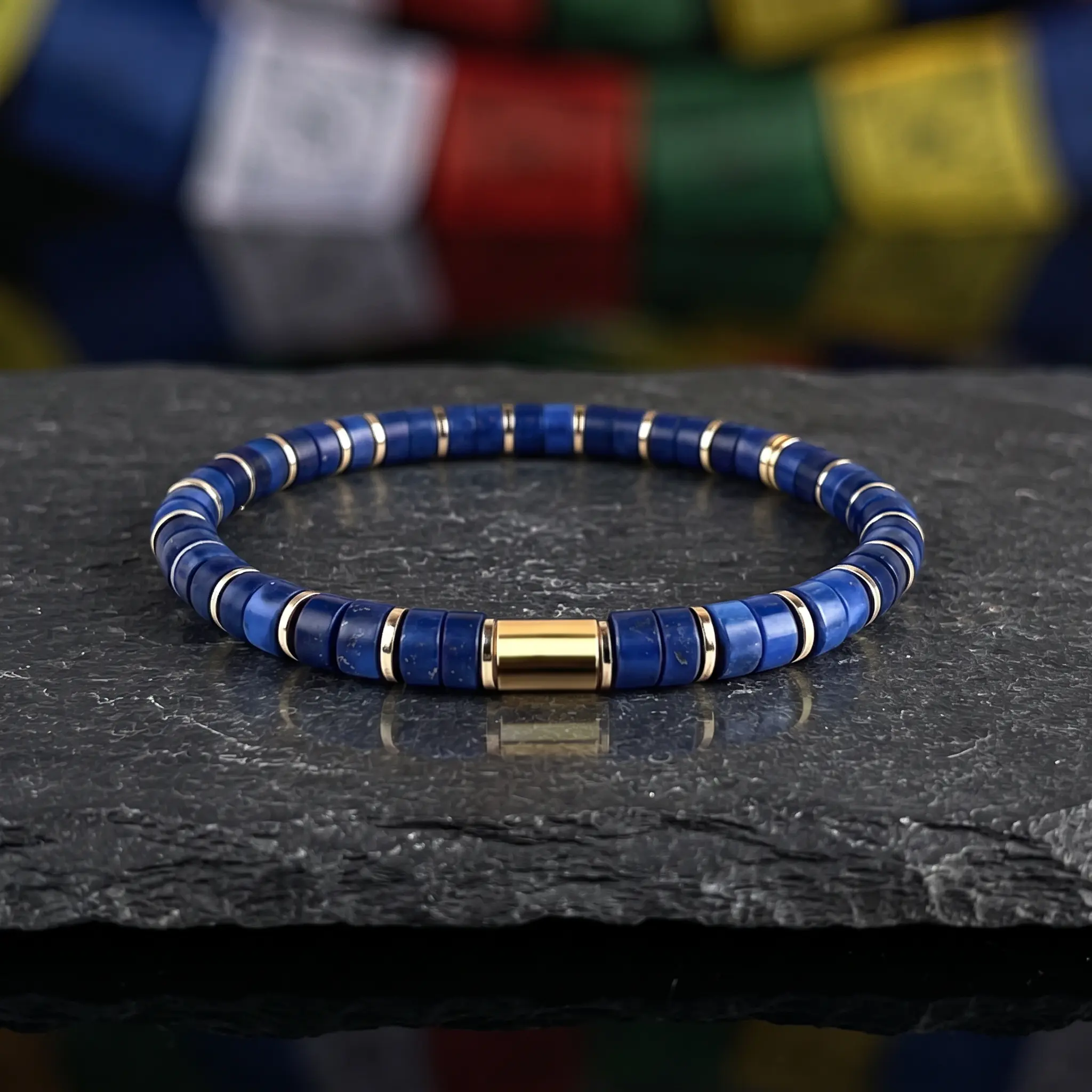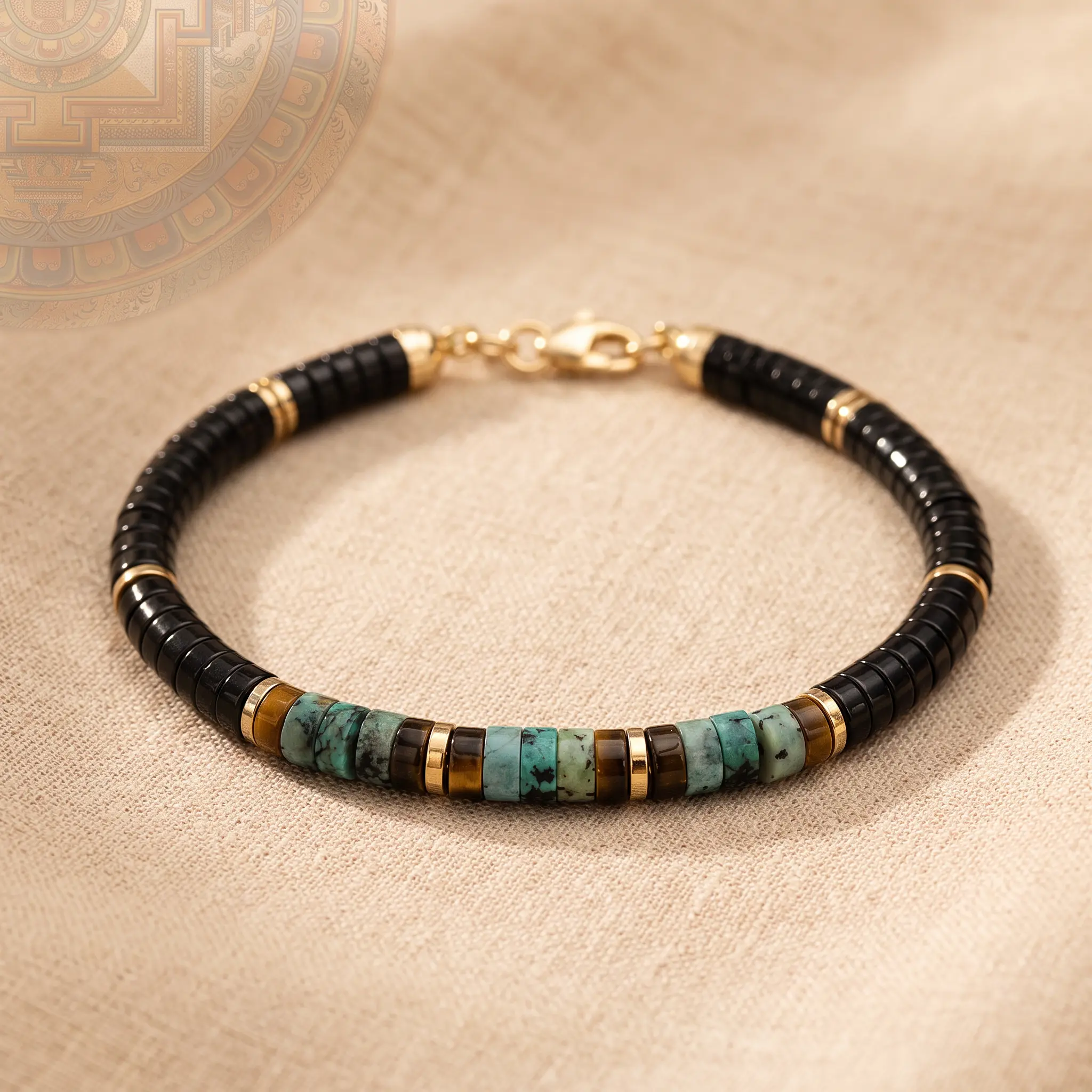



Genuine blue tiger eye is a real, fully natural stone—but most of the “blue tiger eye” sold online is actually dyed gold tiger eye or fiber-optic glass. If you want the authentic blue-gray stone (also called hawk’s eye) for its calming, throat-chakra energy, the first thing you need is a way to spot the fakes.
That gap is exactly why we put this guide together. At PotalaStore, we source crystal bracelets directly, and after sorting through dozens of “blue tiger eye” batches, we’ve seen how often dyed quartz gets passed off as the real thing. Below you’ll learn what blue tiger eye actually is, the meaning and benefits people value it for, and a clear test to confirm yours is natural before you buy.
Table of Contents
What Is Blue Tiger Eye?
Blue tiger eye is a fibrous variety of quartz (silicon dioxide, SiO₂) that forms when quartz replaces blue crocidolite fibers, keeping a blue-gray to navy color. It’s also known as hawk’s eye or falcon’s eye, and it shares the same mineral family as gold and red tiger eye.
The blue color is the key to its identity. In crocidolite—a sodium-rich amphibole nicknamed “blue asbestos”—the iron stays in its original, un-oxidized state, so quartz preserves that cool blue-gray tone. Once that iron oxidizes, the same stone turns golden, which is why gold tiger eye is far more common than the blue form.
That replacement process gives the stone its signature chatoyancy: a moving band of light, like a cat’s eye, that shifts across the surface as you rotate it. Most blue tiger eye on the market is mined from the iron formations of Griqualand West in South Africa, with smaller deposits in Western Australia, India, and Brazil. It registers 6.5–7 on the Mohs hardness scale, hard enough to resist a steel nail.
One detail worth knowing: how tiger eye forms is still debated. For over a century, geologists assumed quartz slowly replaced the crocidolite fibers (a process called pseudomorphism). A 2003 study in the journal Geology by Heaney and Fisher argued instead that the quartz and fibers grew together through a crack-seal vein process. Either way, the result is the same shimmering blue-gray stone—and that natural origin is what dyeing can never replicate.
Is Blue Tiger Eye Natural, or Just Dyed Quartz?

Yes, natural blue tiger eye exists—but it’s genuinely rare, so a large share of cheap “blue” stones are dyed gold tiger eye or colored glass. The natural stone owes its color to un-oxidized iron, while dyed pieces get their color from pigment that soaks into surface cracks.
This is the honest detail most crystal shops skip. Because true hawk’s eye is uncommon, sellers dye the abundant golden tiger eye a uniform “electric” blue, then label it natural. It isn’t fake quartz—it’s real tiger eye with added color—but it isn’t the natural blue stone you think you’re paying for. Every blue tiger eye bracelet we stock at PotalaStore uses undyed, untreated beads, which is why we’d rather teach you the test than ask you to take our word for it.
| Feature | Natural Blue Tiger Eye | Dyed / Glass Imitation |
|---|---|---|
| Color | Blue-gray to navy, slight gradient, sometimes golden streaks | Uniform, intense “electric” blue; pools in cracks |
| Chatoyancy | Sharp single light band that moves | Diffuse glow or none (glass shows no band) |
| Hardness | 6.5–7 Mohs; resists a steel nail | Glass/resin scratches easily |
| Weight | Dense, cool quartz feel | Fiber-optic glass feels light |
| Price | Higher; reflects rarity | Suspiciously cheap |
How to Tell if Blue Tiger Eye Is Real
Run through these five checks before you buy:
- Look for chatoyancy: tilt the stone under light—natural tiger eye shows one crisp band that slides; glass shows none.
- Check the color flow: real stone has a subtle blue-gray gradient, while dye looks flat and concentrates in cracks.
- Inspect the fibers: under magnification, genuine hawk’s eye shows fine parallel lines; glass is featureless.
- Test the hardness: at 6.5–7 Mohs, it won’t scratch with a steel pin; glass and resin will.
- Weigh it in your hand: quartz feels cool and dense; fiber-optic glass feels noticeably light.
⚠ A note on energy claims: The spiritual and chakra properties described below come from traditional belief and personal practice, not scientific evidence. This guide is for educational purposes and isn’t a substitute for professional medical advice.
Blue Tiger Eye Meaning and Spiritual Benefits

Blue tiger eye is traditionally associated with the throat and third eye chakras, and it’s believed to support clear communication, calm, and steady decision-making. Where gold tiger eye is linked to courage and drive, the blue stone is seen as the cooler, more reflective member of the family.
Practitioners reach for it when they want to speak honestly under pressure. Many report that working with blue tiger eye helps loosen a tight throat chakra, easing the fear that blocks open communication. It’s also believed to slow anxious thinking, which is why it’s a popular choice for high-stress weeks at work.
On the third-eye side, the hawk’s eye stone is traditionally used to sharpen intuition and perspective—hence the “all-seeing” hawk and falcon names. People often pair it with meditation, holding the bracelet or stone while focusing on a single decision they’ve been avoiding.
So who tends to gravitate toward it? In our experience, blue tiger eye appeals most to people who freeze up in conversations—public speakers, anyone navigating a tense work environment, or those who want a calmer counterpart to the bolder gold variety. If you’re drawn to the energy of tiger eye but find the golden tone too “fiery,” the blue stone is the natural place to start.
💡 In our experience: beginners often expect a dramatic “buzz” the moment they put a stone on. What our customers describe instead is subtler—a calmer response to small frustrations over the first week or two. Treat it as a gentle daily anchor, not a switch.
Blue Tiger Eye vs Gold and Red Tiger Eye

Blue, gold, and red tiger eye are the same mineral at different stages: blue keeps its original un-oxidized iron, gold has oxidized to a golden tone, and red is usually gold tiger eye that’s been heat-treated. Knowing this makes color-matching—and authenticity—much easier.
| Variety | Color & Cause | Energy (Traditional) |
|---|---|---|
| Blue (Hawk’s Eye) | Blue-gray; un-oxidized iron | Calm, communication, intuition |
| Gold | Golden brown; oxidized iron | Courage, confidence, focus |
| Red | Reddish; usually heat-treated | Motivation, energy, drive |
If you’re still deciding between shades, our side-by-side look at red vs blue tiger eye breaks down which mood each one suits. For the full picture across all three colors, see our guide to tiger eye bracelet benefits.
Want the real blue, not dyed quartz?
Our Blue Tiger Eye Protection & Wealth Bracelet uses 100% natural, never-dyed beads—priced from $28.95.Shop Blue Tiger Eye →
Frequently Asked Questions
Brief contact with water is fine, but don’t soak it. Blue tiger eye is a hard quartz-based stone, yet long water exposure can dull the polish and, on dyed pieces, cause color to bleed—another quick way to spot a fake.
It’s traditionally linked to the throat and third eye chakras. Many practitioners use it to support honest communication and clearer intuition, which is why it’s often worn during stressful conversations or meditation.
Natural blue tiger eye is uncommon compared with the golden form, because it requires iron to stay un-oxidized. That rarity is exactly why so much dyed gold tiger eye is sold as “blue”—real, untreated pieces command a higher price.
Yes—hawk’s eye and falcon’s eye are simply other names for natural blue tiger eye. All three refer to the same blue-gray, quartz-replaced stone with un-oxidized crocidolite fibers and that signature moving light band.
Blue tiger eye rewards a little homework. Once you can spot a natural blue-gray stone with true chatoyancy, you’ll never mistake it for dyed quartz again—and you’ll know the calming, throat-chakra energy you’re holding is the genuine thing. Browse PotalaStore’s natural crystal bracelets when you’re ready to choose yours.
📚 References
- Origin of Tiger’s-Eye (Formation Science): Heaney, P.J. & Fisher, D.M. (2003), “New interpretation of the origin of tiger’s-eye,” Geology, v. 31, no. 4. Geological Society of America
- Tiger’s Eye Mineral Data: Composition, hardness, and locality records including Griqualand West, South Africa. Mindat.org
- Tiger’s Eye Overview: General background on the quartz variety and its color varieties. Wikipedia