

Every crystal carries a traditional meaning, and a crystal meanings chart is the fastest way to learn what each stone does without memorizing dozens of names. If you’re new to healing crystals and feeling a little lost in all the colors, chakras, and properties, this reference page gives you one clean table to scan, plus a simple color-and-chakra index so you can find the right stone for calm, love, protection, or abundance in about 30 seconds.
At PotalaStore, we’ve spent years working with Himalayan artisans to source natural stones, so we’ve organized this chart the way beginners actually use one—by what you’re feeling and what you want to support. Here’s the short version: a crystal meanings chart pairs each stone with its color, its associated chakra, and the qualities it’s traditionally believed to carry. New to the whole topic? Start with our pillar guide to the 10 best crystals for beginners, then come back here to look up meanings any time.
⚠️ Important Note: The meanings on this page reflect traditional spiritual beliefs and historical practices. They are not medical advice and are not intended to diagnose, treat, or cure any condition. Crystals are best used as a supportive, mindful tool—not a replacement for professional medical care.
Table of Contents
What Is a Crystal Meanings Chart?
A crystal meanings chart is a quick-reference guide that pairs each stone with its color, its chakra, and the qualities it’s traditionally believed to support—like calm, love, protection, or abundance. Instead of reading a long article for every stone, you scan one table and find what you need at a glance.
Most beginners reach for a chart for one of two reasons: they have a stone and want to know what it means, or they have a feeling—stress, a relationship goal, a money intention—and want to know which stone matches. This page answers both. The chart below works in either direction, and the color guide that follows helps you decode any new crystal you come across.
Crystal Meanings Chart: Color, Chakra & What Each Stone Does
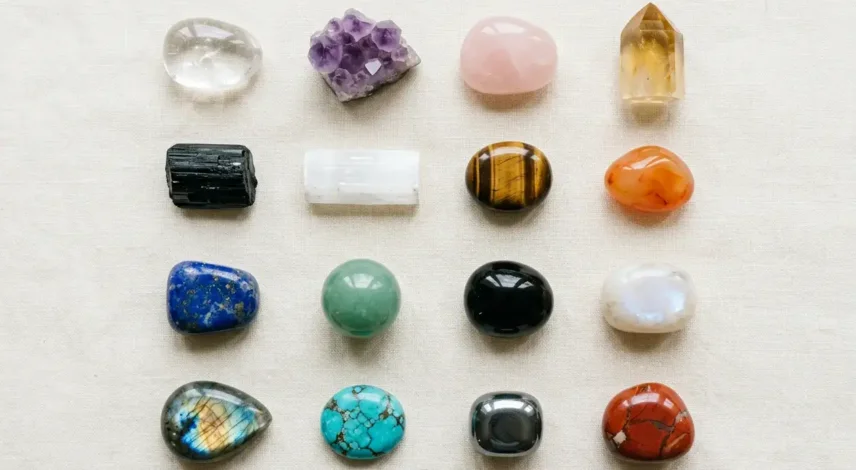
Here’s your full beginner reference. Each row lists the stone’s color, its associated chakra, what it’s traditionally believed to mean, and a common way people use it.
| Crystal | Color | Chakra | Traditionally Believed Meaning | Common Use |
|---|---|---|---|---|
| Clear Quartz | Clear / white | Crown (all) | “Master healer”; amplifies energy and clarity | Boost intention; pair with any stone |
| Amethyst | Purple | Third Eye / Crown | Calm, intuition, stress relief | Meditation, sleep, easing anxiety |
| Rose Quartz | Pink | Heart | Love, self-love, compassion | Relationships, emotional healing |
| Citrine | Golden yellow | Solar Plexus | Abundance, confidence, positivity | Wealth intentions, motivation |
| Black Tourmaline | Black | Root | Protection, grounding | Shielding; place by the door or desk |
| Selenite | White / translucent | Crown | Cleansing, clarity, high vibration | Cleanse and charge other stones |
| Tiger’s Eye | Golden-brown | Solar Plexus | Courage, confidence, willpower | Focus, decision-making |
| Carnelian | Orange-red | Sacral | Creativity, vitality, motivation | Creative work, energy |
| Lapis Lazuli | Deep blue | Throat / Third Eye | Truth, wisdom, communication | Self-expression, study |
| Green Aventurine | Green | Heart | Luck, opportunity, growth | New ventures, abundance |
| Black Obsidian | Black | Root | Grounding, releasing negativity | Protection, shadow work |
| Moonstone | White / pearly | Crown / Third Eye | Intuition, new beginnings | Emotional balance, cycles |
| Labradorite | Grey-iridescent | Third Eye | Intuition, transformation, protection | Spiritual work, change |
| Turquoise | Blue-green | Throat | Protection, healing, communication | Travel, voice and throat |
| Hematite | Metallic grey | Root | Grounding, stability, focus | Anchoring, staying calm |
| Red Jasper | Red | Root / Sacral | Grounding, strength, courage | Stamina, stability |
A few facts worth knowing as you read this table. Clear quartz is silicon dioxide (SiO₂) with a Mohs hardness of 7, which is why it’s durable enough for everyday jewelry. Amethyst is simply purple quartz—its violet color comes from iron and trace elements within the same quartz family. If amethyst’s calming reputation is what drew you in, an amethyst bracelet for peace and clarity is one of the easiest ways to keep that stone with you through the day.
How to read the chart in practice: if you already have a stone, find it in the first column to learn its meaning and best use. If you’re starting from a feeling instead—stress, a money goal, a desire for more confidence—scan the “Traditionally Believed Meaning” column for a match. The stones near the top of the table (clear quartz, amethyst, rose quartz, black tourmaline, citrine) are the five most recommended for beginners because they’re affordable, widely available, and cover the most common intentions between them.
What Do Crystal Colors Mean?

Crystal color is the quickest shortcut to meaning, because color maps closely to the chakra a stone supports. Once you learn the color-and-chakra pattern, you can guess a new stone’s traditional purpose before you even read its name.
- Red & black — Root chakra: grounding, protection, stability (black tourmaline, red jasper, hematite).
- Orange — Sacral chakra: creativity, passion, vitality (carnelian).
- Yellow & gold — Solar Plexus chakra: confidence, abundance, willpower (citrine, tiger’s eye).
- Green & pink — Heart chakra: love, compassion, growth (rose quartz, green aventurine).
- Blue — Throat chakra: communication, truth, expression (lapis lazuli, turquoise).
- Purple & indigo — Third Eye chakra: intuition, calm, insight (amethyst, labradorite).
- Clear & white — Crown chakra: clarity, amplification, connection (clear quartz, selenite, moonstone).
This is also why a balanced set covers the whole color spectrum from root to crown. A 7 chakra stones bracelet strings one stone for each color and chakra, which makes it a popular first piece for anyone who wants the full range in a single item.
How Do I Know Which Crystal I Need?

The simplest way to choose a crystal is to start with your intention—the feeling or goal you want to support—and match it to a stone. You don’t need intuition or special knowledge to begin; you just need to know what you’re looking for.
If the long list feels like a lot, that’s completely normal—almost every beginner feels it. The fix is to pick one stone for one goal and actually use it, rather than collecting a dozen at once. In our experience helping new collectors, the most common mistake isn’t choosing the “wrong” stone; it’s buying too many mixed stones at the start and never forming a connection with any of them. One stone you carry daily beats ten in a drawer.
Here’s how the most-searched intentions map to stones:
- Anxiety or stress: amethyst, with rose quartz or black tourmaline as alternatives.
- Love and relationships: rose quartz — explore crystals for attracting love.
- Protection and grounding: black tourmaline or black obsidian — see protection crystals and jewelry.
- Abundance and money: citrine, the “merchant’s stone.”
- Sleep: amethyst kept on a nightstand.
For an even faster shortcut, this table matches the most common goals to a first-choice stone and a backup, so you can pick in seconds:
| Your Goal | First-Choice Stone | Backup Option |
|---|---|---|
| Calm & stress relief | Amethyst | Rose Quartz |
| Self-love & relationships | Rose Quartz | Green Aventurine |
| Protection & grounding | Black Tourmaline | Black Obsidian |
| Money & abundance | Citrine | Green Aventurine |
| Confidence & focus | Tiger’s Eye | Citrine |
| Clarity & amplifying intentions | Clear Quartz | Selenite |
Once you’ve used your first stone for a few weeks, you’ll naturally sense what you want to add next. That’s a much steadier way to build a collection than buying a big mixed set on day one—and it’s how most of the practitioners we work with started.
How to Cleanse and Charge Your Crystals

Cleansing clears the energy a crystal is believed to absorb, and charging restores it—together they keep your stones working the way crystal tradition intends. Most methods take just a few minutes, but the right method depends on how hard your stone is.
- Moonlight charging: leave stones on a windowsill overnight under a full moon. Safe for every crystal.
- Selenite or sound: rest stones on a selenite plate, or pass a singing bowl over them for 1–2 minutes.
- Smoke cleansing: pass stones through sage or palo santo smoke for about 30 seconds.
- Water rinse: only for hard, water-safe stones (see the rule below)—a quick 30-second rinse under running water.
The water-safety rule most charts leave out: use the Mohs hardness scale. Stones rated Mohs 6 or higher (clear quartz, amethyst, citrine, tiger’s eye) are generally water-safe. Stones rated Mohs 5 or lower should stay dry—and selenite, a form of gypsum at just Mohs 2, is water-soluble and will literally dissolve over time, so never put it in water. Lapis lazuli, turquoise, and malachite are also too soft or porous to soak. When in doubt, choose moonlight or smoke instead.
💡 Tip: Want the full routine, including how often to cleanse and which stones fade in sunlight? Read our guide to cleansing and charging spiritual jewelry.
Crystal Facts vs. Crystal Beliefs: What’s Actually True
It helps to separate what’s measurable mineralogy from what’s traditional belief, because honest sources do both. The metaphysical meanings in this chart come from spiritual tradition, while a few facts about these stones are well-documented science—and knowing the difference makes you a smarter buyer.
One example worth knowing: most citrine sold today is actually heat-treated amethyst. According to the Gemological Institute of America (GIA), natural yellow quartz is rare, so much of the citrine on the market is amethyst heated until its purple shifts to golden tones. That doesn’t make it “fake”—it’s still genuine quartz—but it’s the kind of detail an honest chart should disclose. Likewise, quartz has a real, measurable property called piezoelectricity (it’s used in watches and electronics), which is physics, not evidence of healing.
On the spiritual side, properties like “calm,” “protection,” and “abundance” are traditional associations valued across many cultures, but they aren’t scientifically proven health effects. We share them because they’re meaningful to how people use crystals—not as medical claims.
Frequently Asked Questions About Crystal Meanings
Clear quartz is the most commonly cited “most powerful” crystal because it’s traditionally believed to amplify energy and intention and works with every chakra. It’s also the easiest beginner stone, since it can stand in for almost any other crystal’s purpose.
Amethyst is the stone most often associated with calm and anxiety relief, traditionally used to quiet a busy mind. Rose quartz and black tourmaline are common alternatives. Remember these are supportive practices, not a substitute for professional mental-health care.
Some practitioners advise keeping high-energy and grounding stones apart—for example, pairing carnelian with amethyst, or clear quartz with smoky quartz—believing the energies can compete. There’s no standardized rule here and sources disagree, so treat it as tradition rather than fact and follow what feels right to you.
As a rule, crystals rated Mohs 6 or higher—like clear quartz, amethyst, citrine, and tiger’s eye—are water-safe for a quick rinse. Softer stones rated Mohs 5 or below, including selenite, lapis lazuli, and turquoise, should stay dry to avoid damage.
Now that you know what each crystal means, the easiest place to start is one balanced piece. PotalaStore’s 7 chakra stones bracelet covers the full color and chakra range in a single beginner-friendly item.Explore the 7 Chakra Bracelet →
📚 References
- Citrine and Heat Treatment: Explanation of how most commercial citrine is produced from heated amethyst. Gemological Institute of America (GIA)
- Selenite Properties: Overview of selenite’s mineral composition (gypsum), softness, and water sensitivity. Healthline
- Healing Crystals Overview: Balanced look at crystal claims and the lack of scientific evidence for healing effects. Healthline
- Gemstone Education: General reference on gemstone properties, hardness, and identification. Source: International Gem Society (gemsociety.org)