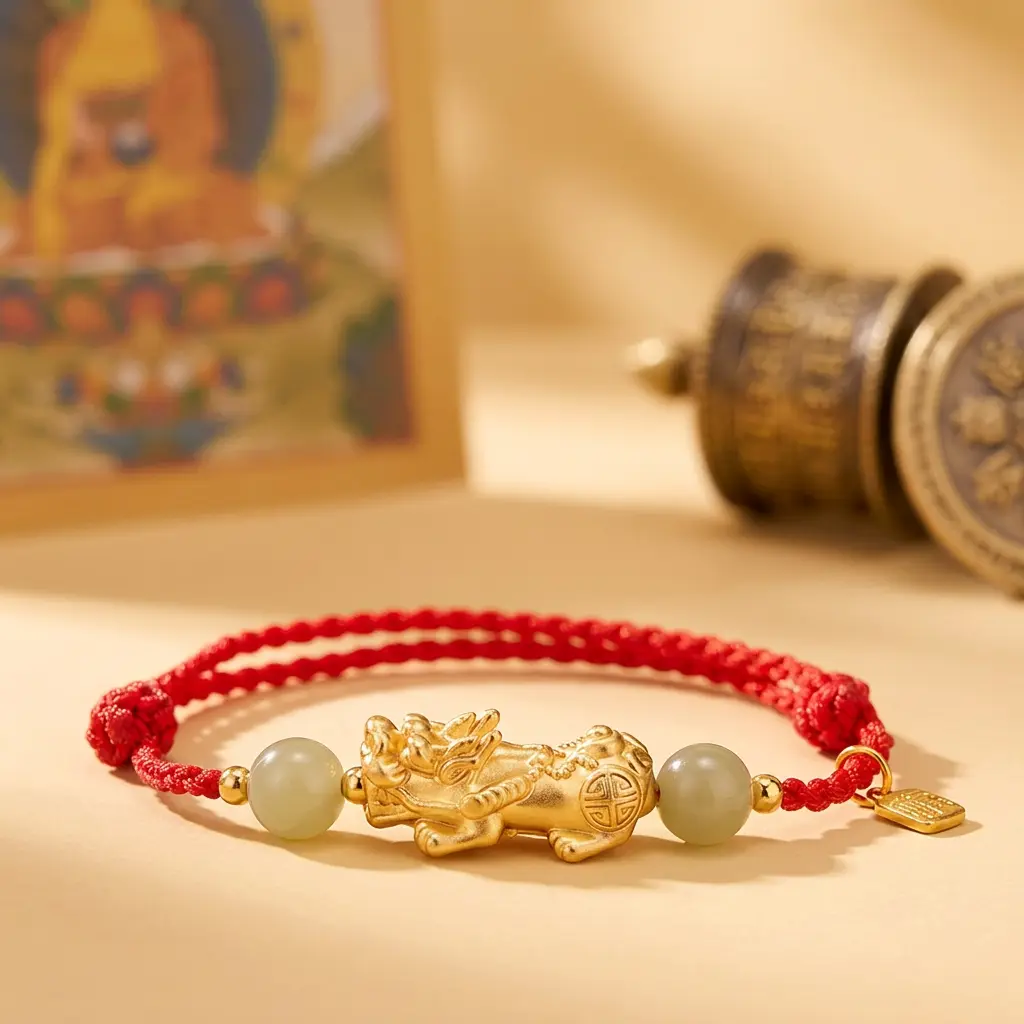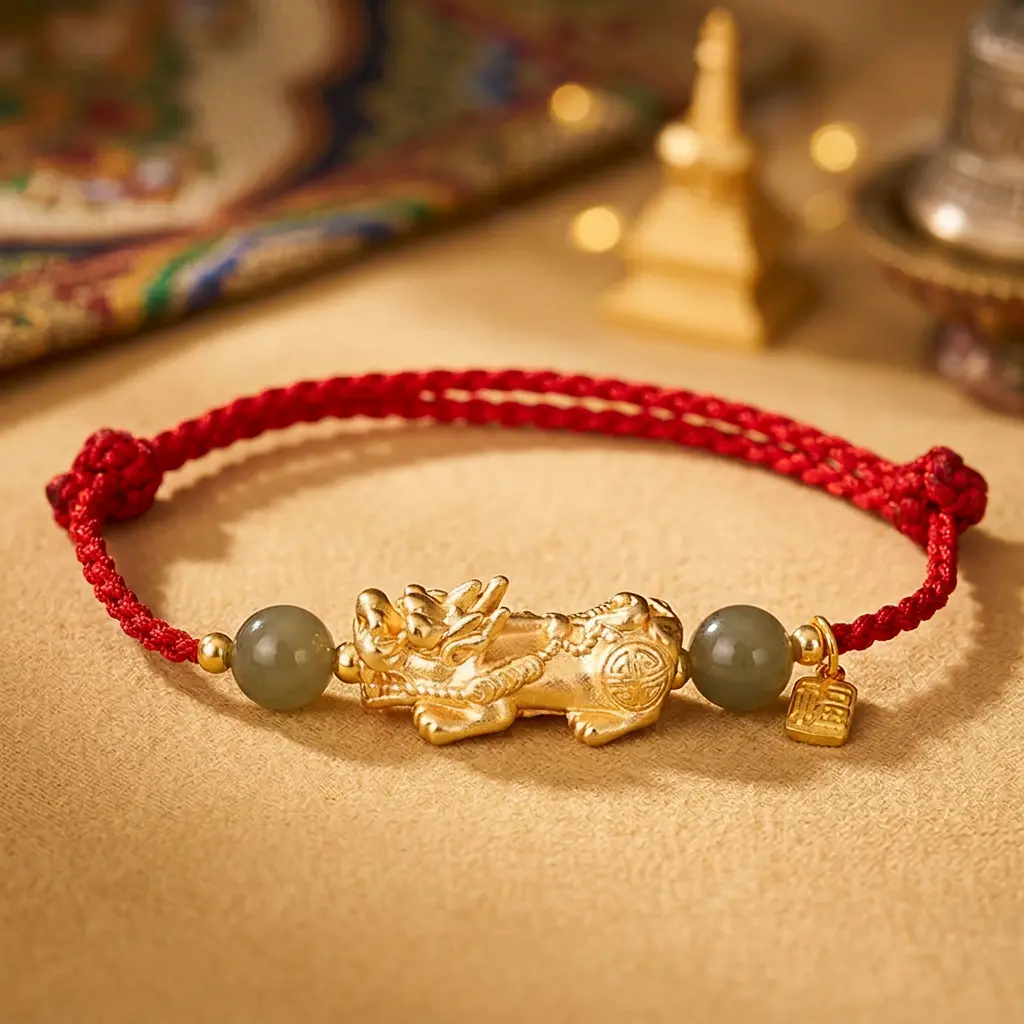

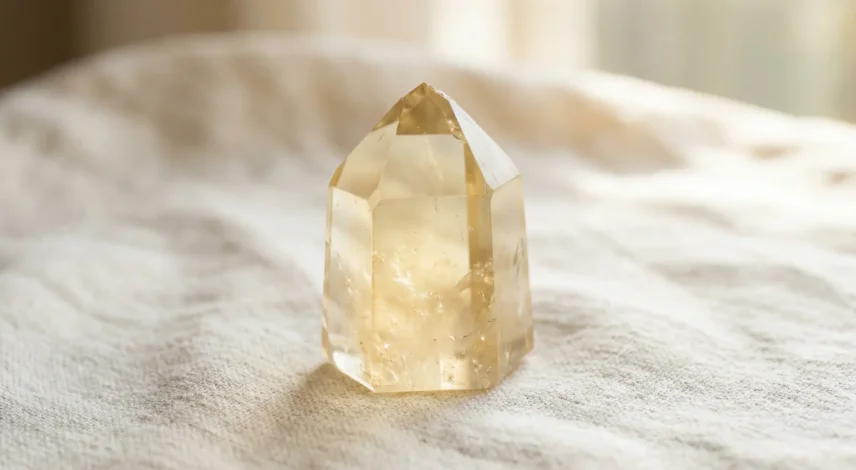

For over two thousand years, merchants have tucked a piece of golden citrine into their cash boxes — and it’s still one of the most popular crystals for anyone hoping to attract more money. Citrine is a sunny variety of quartz known as the Merchant’s Stone, and it’s traditionally used to support wealth, confidence, and an abundance mindset. At Potala Store, we’ve sourced citrine for thousands of customers through partner workshops in Tibet and Nepal, so this guide skips the fluff and gets to what matters: what citrine means, what it’s believed to do, four practical ways to use it for money, and how to tell real citrine from heat-treated amethyst.
One honest note up front: no crystal guarantees a bigger bank balance, and citrine’s wealth properties come from tradition and crystal healing practice, not from proven science. We’ll explain exactly how it does help further down. This guide is for educational purposes and isn’t financial or medical advice.
Table of Contents
◆What Is Citrine?
Citrine is a golden-yellow variety of quartz (SiO2) with a Mohs hardness of 7, traditionally called the Merchant’s Stone because it has been used for centuries to attract wealth and confidence. Its color ranges from pale, sunny yellow to deep golden amber, and most natural citrine on the market is mined in Brazil and Madagascar.
In crystal healing, citrine is tied to the solar plexus chakra, the energy center linked to personal power and motivation. It’s also November’s birthstone, which makes it a familiar gift stone for late-fall birthdays in the United States. One thing worth knowing early: most “citrine” sold today isn’t naturally golden quartz at all — it’s heat-treated amethyst, a point we’ll come back to when you’re ready to buy.
◆Why Citrine Is Called the Merchant’s Stone
Citrine earns its nickname, the Merchant’s Stone, from a centuries-old belief that it helps merchants attract — and hold on to — wealth. According to the American Gem Society, people called citrine the Merchant’s Stone because they believed it would help accumulate wealth and success, and Roman priests once fashioned the golden quartz into rings.
The name itself comes from citron, the French word for lemon, a nod to its bright color. Symbolically, citrine carries the energy of the sun and gold: warmth, optimism, and personal power. Its traditional planetary ruler is Jupiter — the planet of expansion and abundance — which is part of why the stone became so closely tied to growth and prosperity. In the U.S. it doubles as a meaningful gift beyond birthdays, too: citrine is the traditional stone for a 13th wedding anniversary. If you want to put that symbolism to work at home, it starts in the wealth corner of your home.
◆Citrine Benefits in Crystal Healing
In crystal healing practice, citrine is believed to support confidence, motivation, and an abundance mindset by energizing the solar plexus chakra (Manipura) — the energy center associated with self-worth and the drive to act. People reach for citrine when they want an emotional nudge, not just a pretty stone.
The benefits practitioners most often describe are:
- Confidence and self-worth — useful before a salary negotiation, pitch, or interview.
- Motivation to act — turning intentions into actual follow-through.
- An abundance mindset — staying optimistic and open to opportunities instead of fixating on lack.
- Creativity — loosening up problem-solving when you feel stuck.
Here’s the honest part. There’s no scientific evidence that citrine attracts money or changes your finances on its own. In a controlled experiment, psychologist Christopher French at Goldsmiths, University of London found that people holding real crystals reported the same sensations as people holding fakes — no effect beyond a placebo. What does have research behind it is self-efficacy: psychologist Albert Bandura showed that believing you can reach a specific goal measurably improves real-world performance. That’s how most people find citrine works — as a daily anchor that keeps you focused, confident, and ready to act. A citrine bracelet simply keeps that reminder on your wrist.
◆How to Use Citrine for Money
There are four traditional ways to use citrine for money:
- Wear it on your left wrist or as a pendant near your solar plexus.
- Place it where your money lives — your wallet, register, or wealth corner.
- Set an intention by meditating with it on a clear financial goal.
- Pair it with action — citrine supports the mindset; you do the work.
Wear It (Bracelet or Pendant)

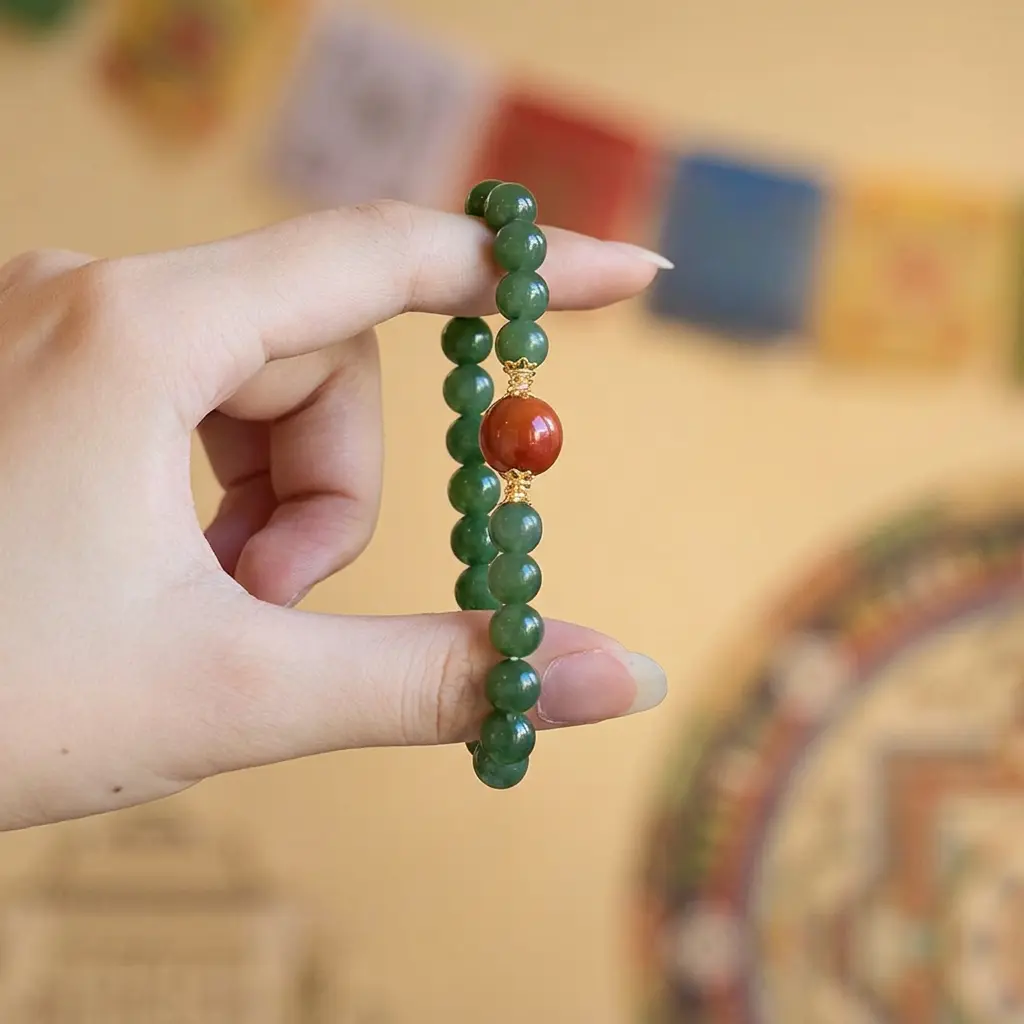
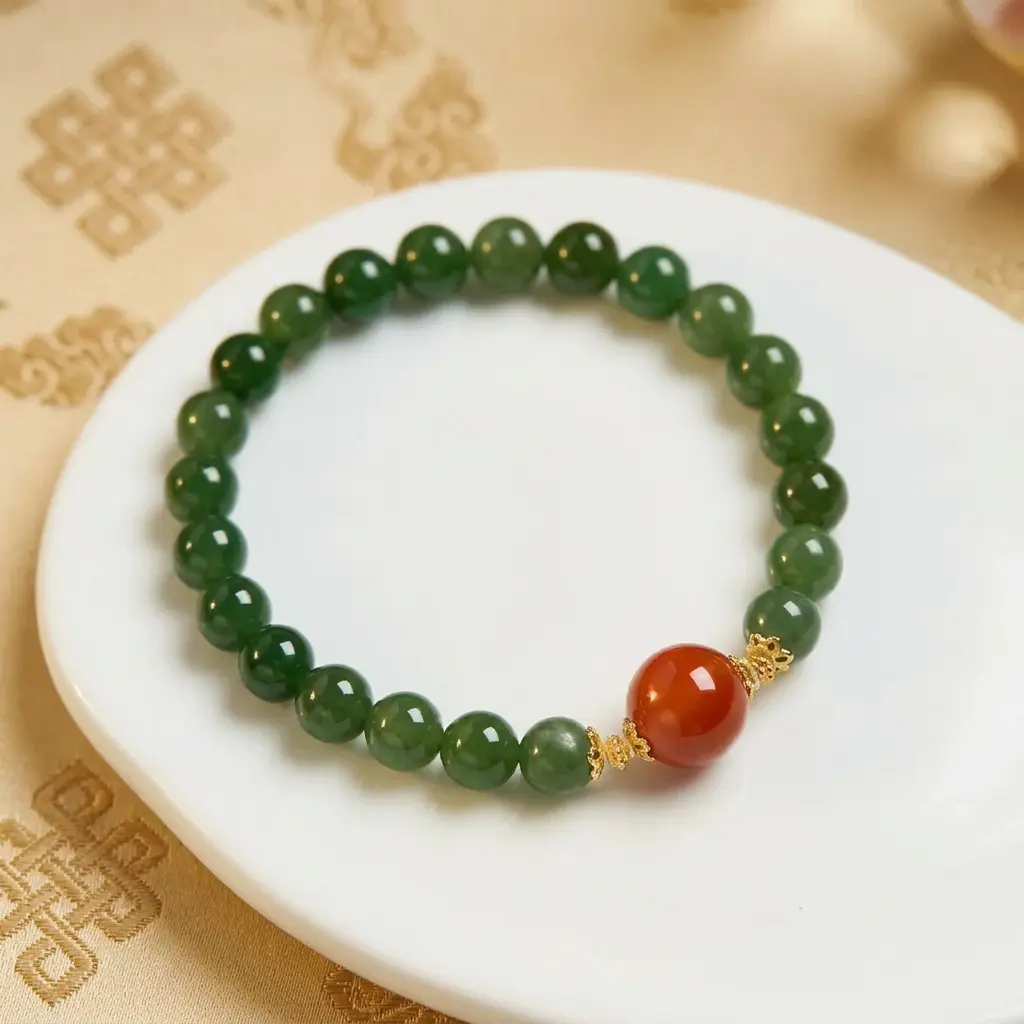
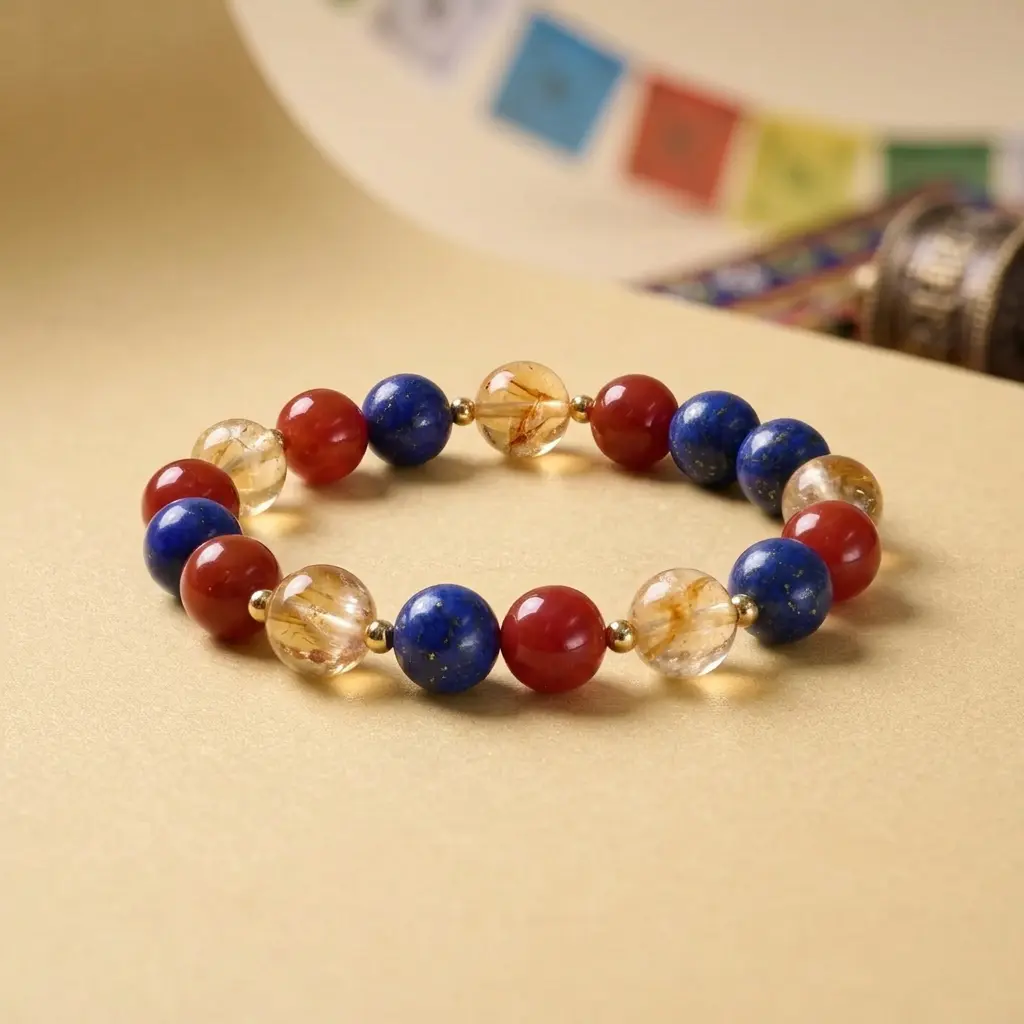
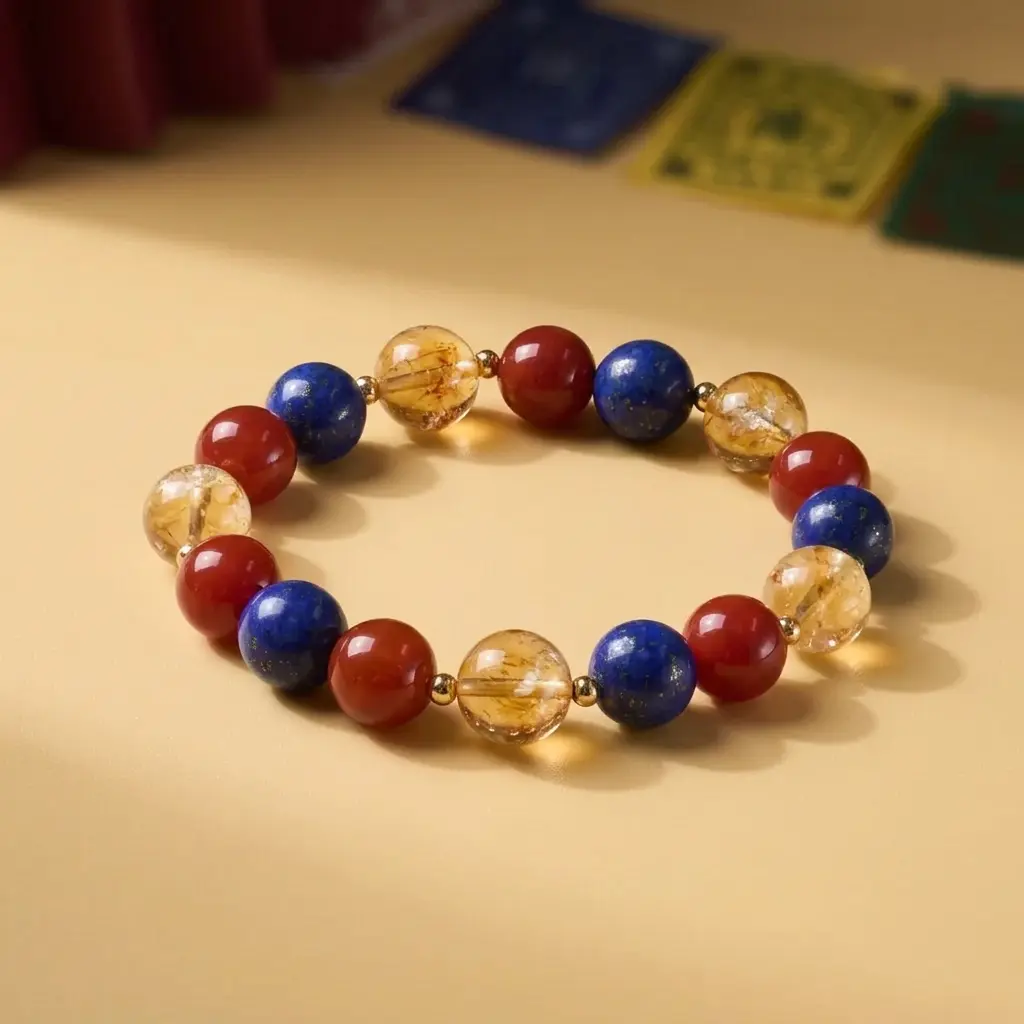
The easiest way to work with citrine every day is to wear it — and in feng shui tradition, the left wrist is the “receiving” side believed to draw abundance toward you. A bracelet keeps the stone against your skin as a constant reminder, while a pendant sits naturally near the solar plexus. If you’re not sure which hand to wear it on, the short answer is the left for attracting wealth.
Wear the Merchant’s Stone on Your Wrist
Browse Potala Store’s natural citrine bracelets — blessed in our partner monasteries and shipped free worldwide.Shop Citrine Bracelets →
Place It (Wallet, Register, or Wealth Corner)

Keep a piece of citrine where your money lives: your wallet, your cash register, or the wealth corner of your home. Shop owners often tuck a small stone by the till; freelancers slip a tumbled piece into a wallet pocket. For your home’s feng shui placement, the wealth corner sits in the far back-left of your space as you stand in the front doorway looking in — the southeast Xun (巽) area traditionally linked to abundance. Set the stone on a small dish rather than directly on the floor.
Meditate With It
To focus citrine on a money goal, hold it over your solar plexus and set one clear, specific intention. Spend 5 to 10 minutes breathing slowly and picturing the outcome you want — a new client, a raise, a steadier month. Saying a simple affirmation like “I am open to new income” gives your mind a concrete focus. Then close the session by naming one action you’ll take that day, because the intention only matters if it moves you to act.
◆Real vs. Fake Citrine: How to Tell
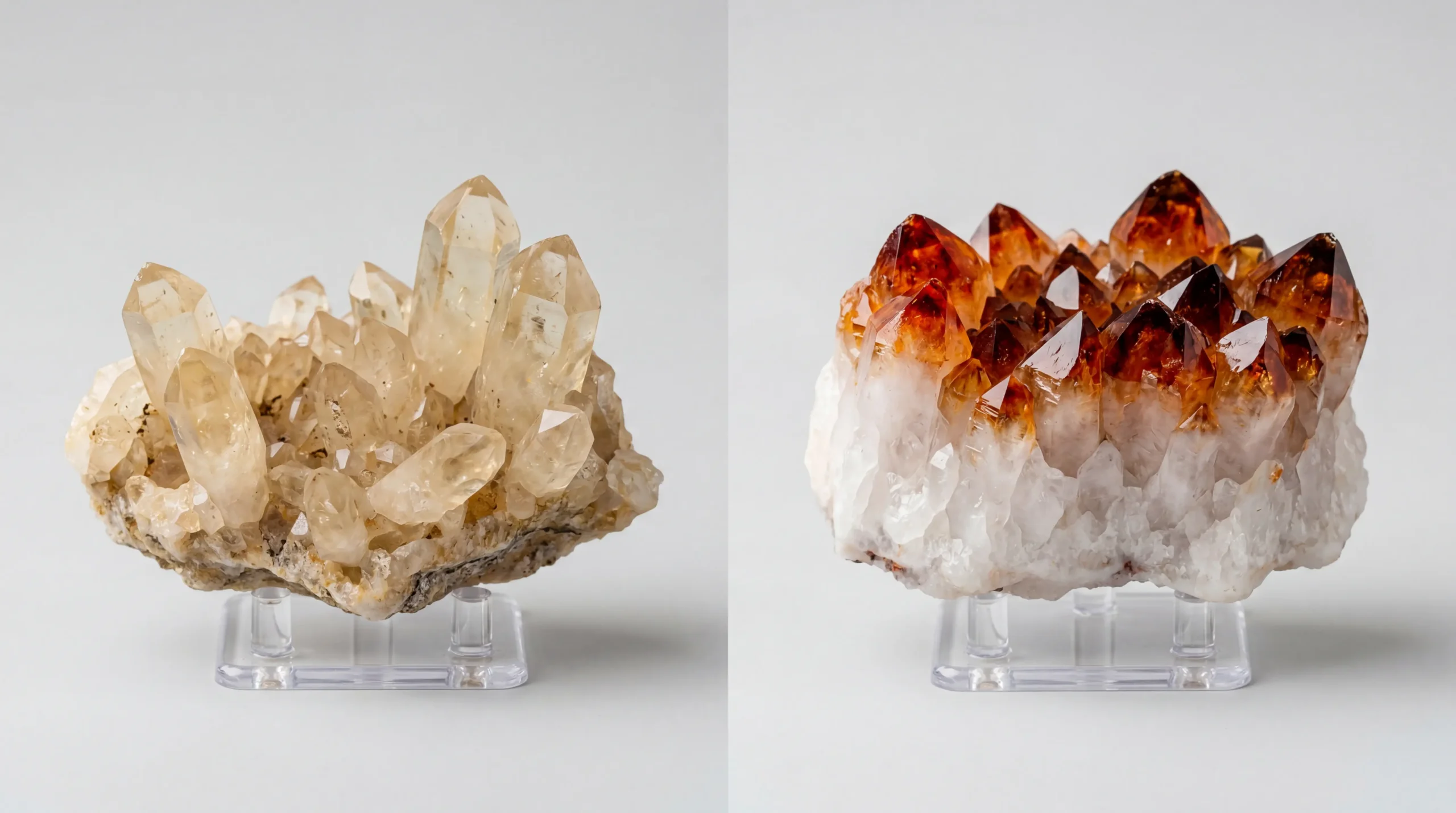
Most citrine sold today is actually heat-treated amethyst — according to the GIA, that’s because natural citrine is genuinely rare. Heat turns pale, undesirable amethyst into an attractive yellow-orange, and the result is still real quartz. It just isn’t naturally occurring citrine. Here’s how to tell the difference at a glance:
| What to check | Natural citrine | Heat-treated amethyst |
|---|---|---|
| Color | Even, pale golden-yellow throughout | White or clear base fading to orange-red tips |
| Common form | Subtle points and small clusters | Large, vivid geode clusters |
| Color zoning | Soft, gradual | Sharp, “burnt-looking” tips |
| Rarity | Rare and usually pricier | Abundant and inexpensive |
Glass imitations are a separate problem: they often trap tiny air bubbles and feel suspiciously flawless, whereas genuine quartz shows a refractive index of about 1.544–1.553 and minor natural marks. To be clear, natural citrine and heat-treated amethyst are both real quartz, and plenty of practitioners happily work with either — the key is buying from a seller who tells you which one you’re getting. If you’re weighing your options, our breakdown of whether citrine or pyrite works better for wealth goes deeper on authenticity and pairing.
◆How to Cleanse and Charge Citrine
Citrine is easy to care for: it’s a hard quartz (Mohs 7) that handles a quick rinse, and it’s traditionally considered self-cleansing. Many practitioners believe citrine doesn’t absorb negative energy the way other stones do, so it rarely needs heavy clearing. Still, an occasional reset keeps it feeling fresh.
- Moonlight: leave it out overnight under a full moon.
- Selenite or a sound bowl: rest it on selenite or ring a bowl near it for a minute.
- Smudging: pass it through sage or palo santo smoke.
One care caution: avoid leaving citrine in strong, direct sunlight for long stretches. Per GIA guidance, prolonged intense light can gradually fade the color, and sudden temperature swings can crack quartz. A windowsill for an hour is fine; a south-facing ledge all summer is not.
💡 Tip: Many people pair citrine with tiger eye — one to attract opportunity, one to build the confidence to act on it. See how citrine and tiger eye compare for wealth.
◆Frequently Asked Questions
Citrine is traditionally called the Merchant’s Stone and is believed in crystal healing to support an abundance mindset and financial confidence. There’s no scientific proof it attracts money directly, but many people use it as a daily reminder to stay focused and act on opportunities.
In feng shui tradition, wear citrine on your left wrist — the “receiving” side believed to draw abundance toward you. The right wrist is used for projecting energy outward, which suits protective stones instead.
Place citrine in your wallet, near your cash register, or in your home’s wealth corner — the far back-left area (southeast, or Xun) as you face inward from your main door. Set it on a small dish rather than directly on the floor.
Natural citrine is a pale, even golden-yellow and is rare. Per the GIA, most market citrine is heat-treated amethyst, which tends to be deep orange with white bases and “burnt” tips, often sold as large geodes. Both are genuine quartz — a reputable seller will tell you which you’re buying.
Explore Potala Store’s full collection of citrine and wealth crystals — authentic, monastery-blessed, and chosen to support your abundance practice.Shop Wealth Crystals →
◆References
- Citrine Description & Quality Factors: Mineral data, color range, and why most citrine is heat-treated amethyst. Gemological Institute of America (GIA)
- Citrine, the Merchant’s Stone: Historical nickname and its association with wealth and success. American Gem Society
- Crystals and the Placebo Effect: Background on controlled studies of crystal healing claims. Crystal Healing — Wikipedia
- Citrine (Quartz) Overview: Composition, occurrence, and varieties of quartz. Citrine (quartz) — Wikipedia