
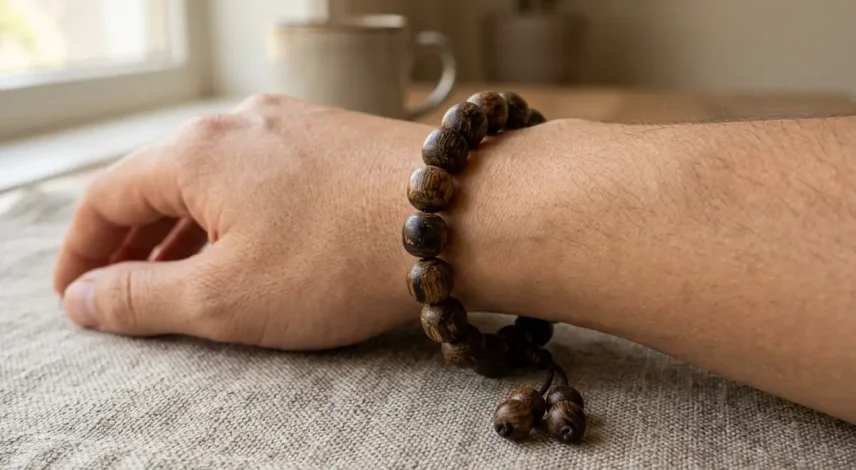

An agarwood bracelet is worn for one main reason: it brings a quiet, grounding calm to a busy mind. Its warm, resinous scent settles your thoughts and makes it easier to focus and stay present. Carved from the fragrant heartwood of the Aquilaria tree, this agarwood bracelet (also called an oud or aloeswood bracelet) is valued for three things: calming aromatherapy, a natural anchor for meditation, and traditional spiritual protection.
At PotalaStore, we have spent over a decade sourcing sacred wood and gemstone malas directly from Himalayan monastery partners, including Sera Jhe and Kopan. That work has shown us how practitioners actually wear fragrant-wood beads, and where most buyers get misled. Below you will learn what an agarwood bracelet really does, which wrist to wear it on, how to spot a genuine one, and how to care for it so the scent lasts for years.
⚠ Important note: The spiritual and energy properties described here reflect traditional beliefs and personal experience, not scientific or medical evidence. An agarwood bracelet is a complementary practice. It is not a substitute for professional medical advice or treatment.
Table of Contents
What Is an Agarwood (Chenxiang) Bracelet?
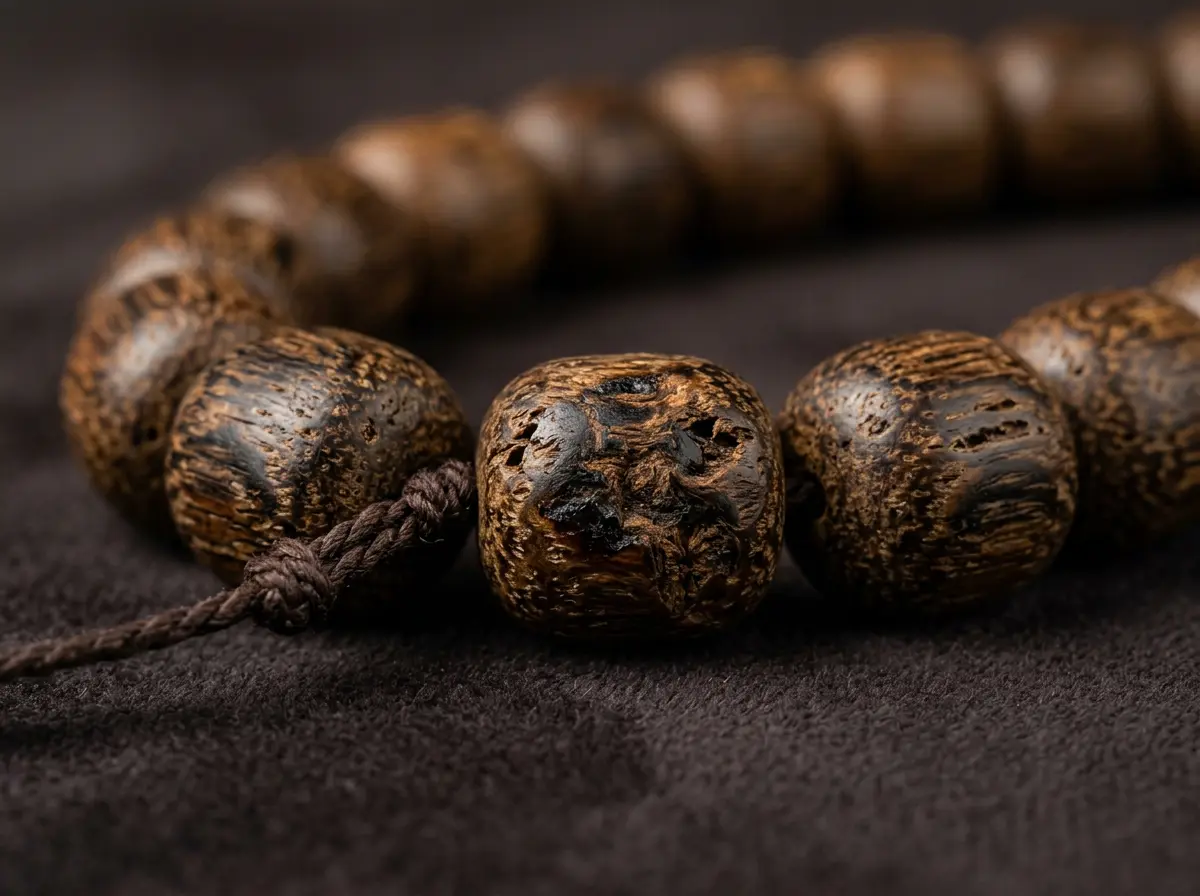
An agarwood bracelet is a string of beads carved from the fragrant, resin-rich heartwood of the Aquilaria tree, a wood also known as oud, aloeswood, or gaharu. In Chinese it is called chenxiang, which means “sinking incense,” because high-resin wood is dense enough to sink in water. Most bracelets are strung as a wrist mala with a traditional bead count.
What agarwood (oud) actually is
Agarwood forms when an Aquilaria tree is wounded and slowly produces a dark, aromatic resin over many years. The finest beads show rich, dark coloring and give off a complex, sweet-woody aroma. This resin is the same material prized in oud perfume and temple incense, which is why real agarwood carries such a distinctive scent.
Why it is called the “Wood of the Gods”
Agarwood has been used in Buddhist ritual, meditation, and healing for centuries, which earned it the name “Wood of the Gods.” Monks carved it into prayer beads long before it became modern jewelry. Wearing a piece connects you to that heritage every time the scent rises from your wrist.
What Are the Main Benefits of Wearing Agarwood?
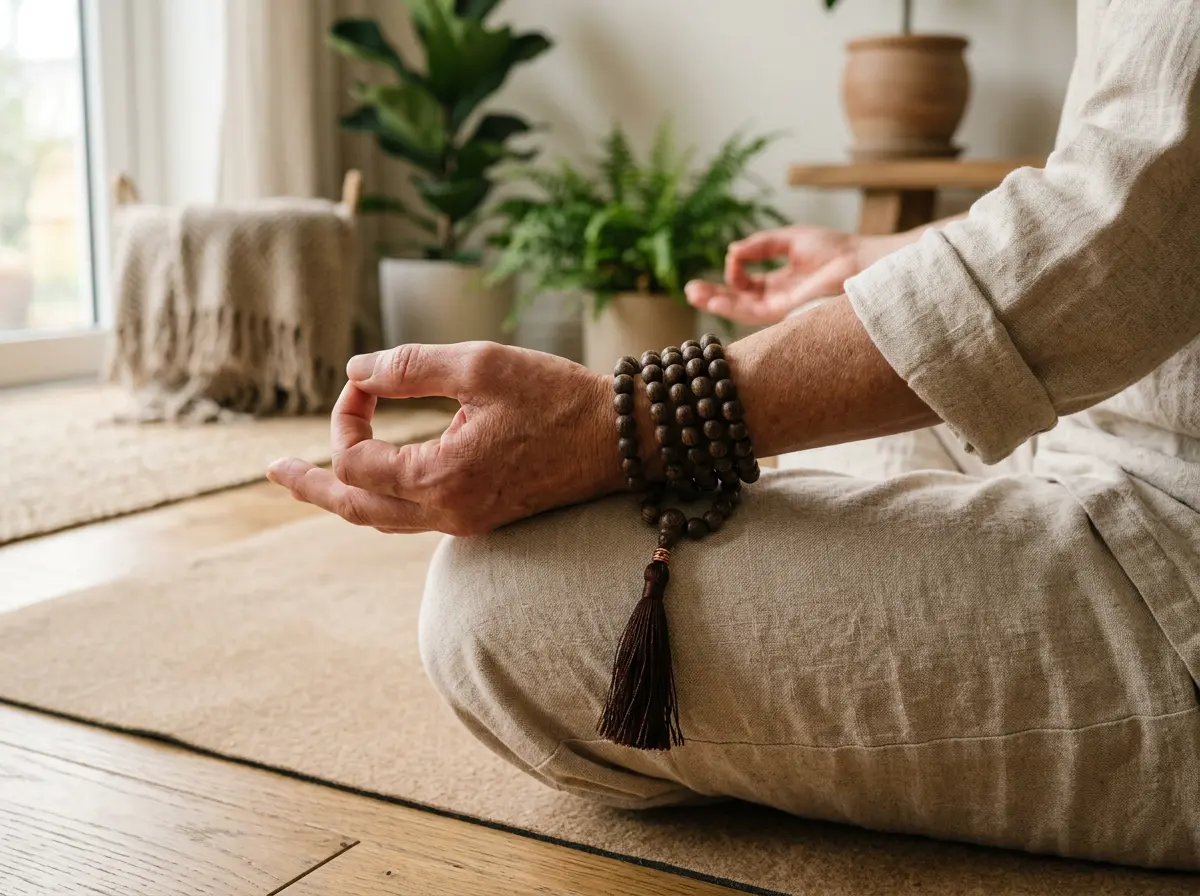
People wear an agarwood bracelet for four main reasons:
- Calming aromatherapy: the warmth of your skin releases a soft, woody fragrance that many people find eases everyday stress.
- A natural anchor for meditation: the aroma quiets mental noise and helps you settle into meditation faster.
- Traditional spiritual protection: in feng shui, agarwood is believed to carry strong yang energy that wards off negativity.
- A meaningful daily symbol: the beads act as a tactile reminder to slow down and return to your intention.
Calming aromatherapy for everyday stress
The calming effect starts with the fragrance. Your body warmth, or a gentle rub of the beads with your thumb, releases the scent without any oils or sprays. That gives you a subtle, continuous form of aromatherapy through the day. Many wearers reach for the beads after a tense meeting or a long commute, and simply breathe.
A natural anchor for meditation and mindfulness
Agarwood and meditation have gone together for centuries, and the reason is practical: the grounding aroma pulls your attention back to the present moment. Traditional malas carry 108 beads, a sacred count across Buddhist and Hindu practice, so the bracelet doubles as a counting tool. The fragrant wood gives you continuous aromatherapy, and the bead count keeps a steady rhythm, so your mind stays on your breath or mantra instead of on keeping track. If you would like an accessible way to start, our 108 natural-wood mala bracelet pairs a fragrant wood with the traditional 108-bead format. For a fuller primer, see our guide to meditation bracelet benefits and beginner basics.
Spiritual protection and feng shui energy
In feng shui, agarwood is traditionally believed to be a conduit for positive “qi,” or life-force energy. Many practitioners feel it repels negativity and invites calm and good fortune. These ideas are cultural beliefs rather than proven effects, so treat them as part of the tradition. To understand how different materials and colors carry meaning, our complete feng shui bracelet guide breaks it down.
Which Wrist Should You Wear an Agarwood Bracelet On?
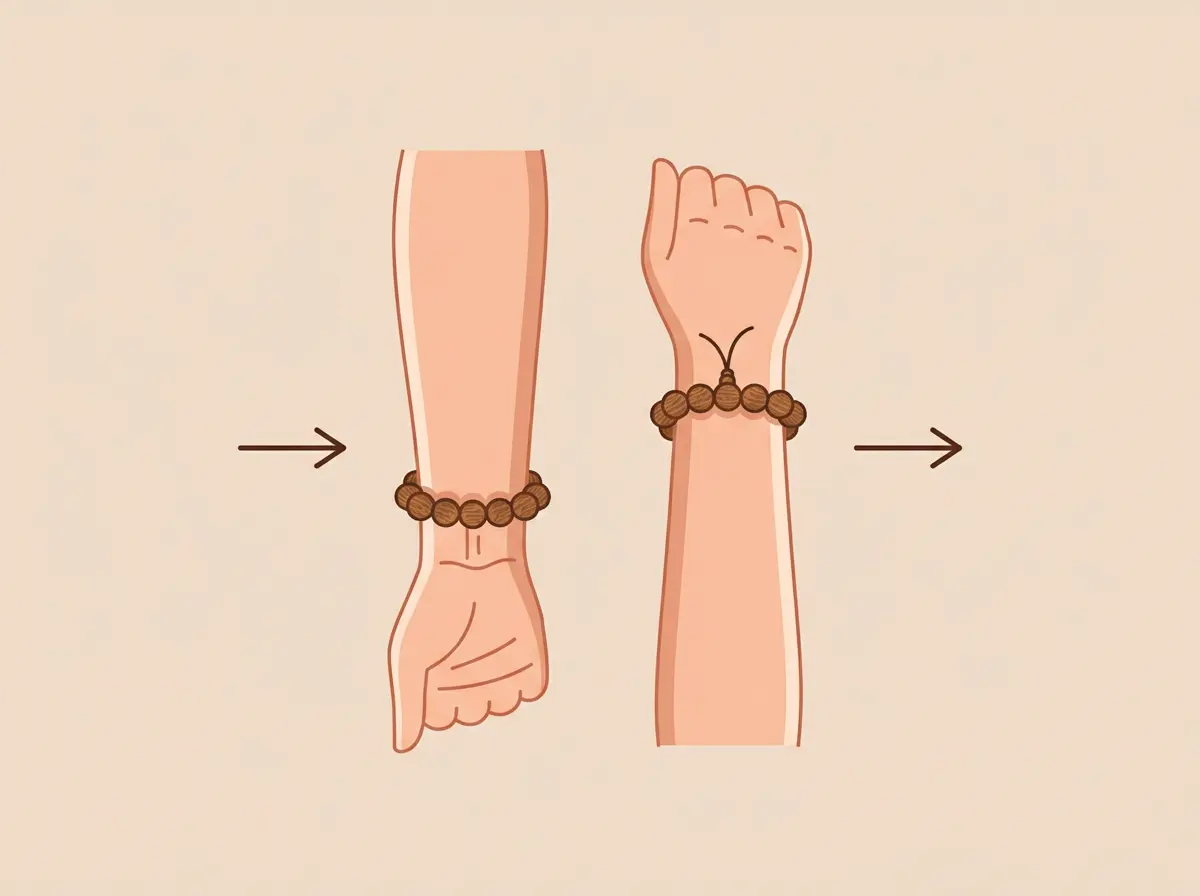
Wear an agarwood bracelet on your left wrist to take in calming, protective energy, and on your right wrist to project confidence or push negativity away. The choice depends on what you want from the beads that day.
Left wrist: receiving calm and protection
In many traditions the left wrist is the receiving side, so it draws energy inward. Wearing agarwood here is said to help you absorb its calming energy and support emotional balance. Practitioners often choose the left wrist during meditation or quiet reflection. An old text even notes that agarwood on the left hand invites auspicious energy.
Right wrist: projecting confidence, warding off negativity
The right wrist is linked to action and output, so it projects energy outward. Wear agarwood on the right when you want steady confidence in a meeting or a big decision. Some people also switch it to the right wrist when visiting hospitals or funerals, where the wood is believed to guard against heavy energy.
How to release the fragrance
To wake up the scent, gently rub two or three beads between your thumb and finger. The warmth draws out the wood’s oils and gives you a quiet moment of calm. This small ritual works on either wrist and takes only a few seconds.
How Do You Choose Authentic Oud Beads?
To choose an authentic agarwood bracelet, check four things in order:
- The scent: real agarwood has a layered, sweet-woody aroma, never a sharp or artificial perfume smell.
- The grain and resin: genuine beads show natural, uneven grain with dark resin lines running through them.
- The weight and feel: high-resin beads feel dense and warm to the touch, not light or plasticky.
- The seller’s sourcing: a reputable seller can explain the wood’s origin and grade in plain terms.
It is completely normal to feel unsure at first. Even experienced buyers lean on scent and sourcing far more than looks alone.
Signs of genuine agarwood
The table below shows how real agarwood compares to a synthetic or scented-wood imitation.
| Feature | Genuine agarwood | Imitation |
|---|---|---|
| Scent | Complex, sweet-woody, warms with skin contact | Sharp, chemical, or fades within days |
| Grain & resin | Natural, uneven, dark resin lines | Uniform color, painted or stained look |
| Weight | Dense, feels substantial for its size | Light, hollow, or overly glossy |
| Price | Roughly $30 to $300+ USD by grade and origin | Very cheap, with no sourcing details |
The feng shui bead-count rule
In feng shui tradition, the total bead count should not be divisible by four, and a remainder of one is preferred. That is why counts like 108, 54, 27, and 17 beads are common, while a count that divides evenly by four is usually avoided. The number 108 carries the deepest meaning, representing the earthly desires a practitioner works to overcome. For help matching a bead style to your practice, see our guide on how to choose the right mala beads for your practice.
Beginner vs. collector: matching grade to budget
Prices for an agarwood bracelet run from about $30 to well over $300 USD, depending on resin content and origin. Beginners do well with a natural-shape bracelet that offers honest value and a real scent. Collectors often pay more for high-resin beads with a deeper aroma. One point of trust matters here: all agarwood-producing Aquilaria trees are protected under international trade rules, so a genuine seller should be transparent about how the wood is sourced.
How Do You Cleanse and Care for Your Bracelet?
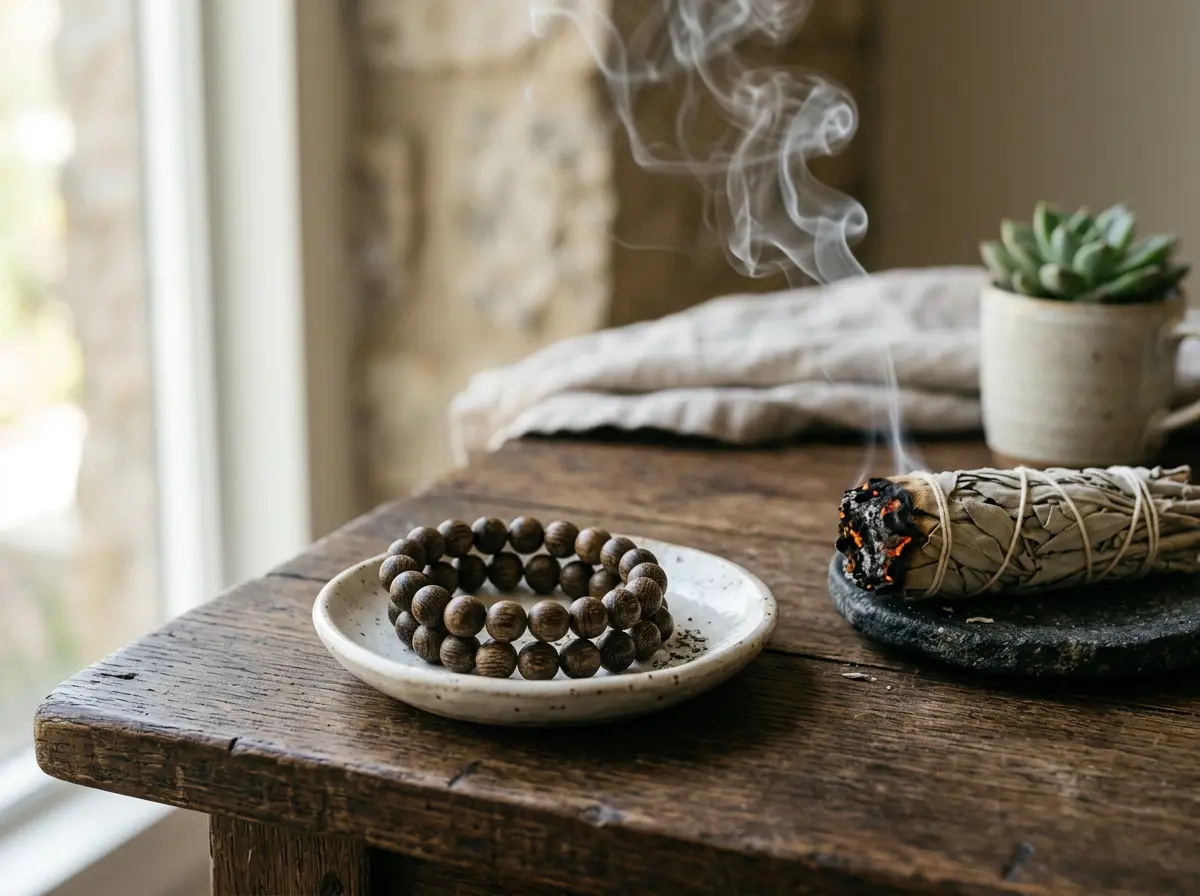
Caring for an agarwood bracelet comes down to two habits: cleansing its energy and protecting its natural scent. A simple routine keeps both the aroma and the finish looking good for years.
Cleansing the energy
Gentle sage smoke, or a night under the moon, is believed to clear the energy your beads absorb during daily wear. Pass the bracelet through white sage smoke for about 30 seconds, or rest it on a windowsill under moonlight. Many practitioners cleanse their beads at least once a month, even with regular wear.
Preserving the fragrance and finish
To protect the scent, follow a short care routine:
- Avoid perfumes and harsh chemicals, which strip the natural oils that give agarwood its aroma.
- Keep it out of prolonged water, so remove the bracelet before showering or swimming.
- Store it in a dedicated or airtight box, which locks in the fragrance between wears.
Warmth from your body actually helps, since regular wear draws out more scent over time. A little care now means the bracelet can stay with you for many years.
Is an Agarwood Bracelet Right for You?
An agarwood bracelet suits you if you want a calmer, more focused day and a meaningful object to return to. It fits daily wear, meditation, and quiet moments equally well.
Who benefits most from wearing one
Meditators gain a fragrant anchor for their practice. Beginners get a gentle, low-effort way to build a mindful habit. Gift-givers get something with real meaning, since a thoughtful agarwood piece signals care and good wishes. If you are buying for someone else, a natural-wood mala is a safe and welcome choice.
What sets a monastery-blessed wood mala apart
Every mala we carry passes through our Himalayan monastery partners at Sera Jhe and Kopan before it reaches you, so the piece arrives with genuine provenance and intention. Our founder, Yang Tso, counts 27 beads on her wrist mala each morning while coffee brews, a habit she picked up after years working with monks at Kopan. That firsthand relationship is why we test each material by wearing it ourselves, and why we would rather explain a wood’s real grade than oversell it. For you, that means confidence you are wearing the real thing, and a piece that carries meaning from the first day.
Start your practice with an authentic wood mala
Browse our monastery-sourced natural-wood malas and Tibetan bracelets, blessed through our Himalayan partners and shipped free worldwide.Shop the Tibetan bracelet collection →
Frequently Asked Questions
Yes. Daily wear is traditional, and it actually helps, since body warmth releases more of the wood’s aroma over time. Just remove it before showering, swimming, or applying perfume.
Genuine agarwood keeps its scent for years with proper care. Warmth and a gentle thumb-rub revive it, while perfumes, harsh chemicals, and long water exposure shorten it.
In feng shui tradition, people avoid a bead count divisible by four, keep the beads clean, and treat the piece with respect. These are cultural customs, not rules with proven effects.
Occasional splashes are fine, but avoid soaking. Prolonged water and soap can dull the finish and fade the natural fragrance, so take it off before washing up or swimming.
📚 References
- Agarwood conservation and trade status: All Aquilaria (agarwood-producing) species are listed in Appendix II for controlled international trade. CITES (Convention on International Trade in Endangered Species)
- Agarwood use and trade overview: Detailed report on agarwood trade names, sources, and sustainability from Aquilaria species. IUCN / TRAFFIC, “Heart of the Matter: Agarwood Use and Trade”
- Species, chemistry & authentication: Peer-reviewed review of Aquilaria distribution, chemical constituents, and how genuine agarwood is authenticated. Asian Journal of Plant Sciences (2024)
- How agarwood forms: Research on the wound-induced resin process in Aquilaria trees and its aromatic compounds. National Library of Medicine (NCBI)