

If you want to lay out your home for good feng shui but you are stuck on the very first step, this guide gets you unstuck: how to find the exact direction your house faces. Get this reading right and every map after it, bagua, Flying Star, your wealth corner, lands in the correct place. Get it wrong and the whole layout drifts.
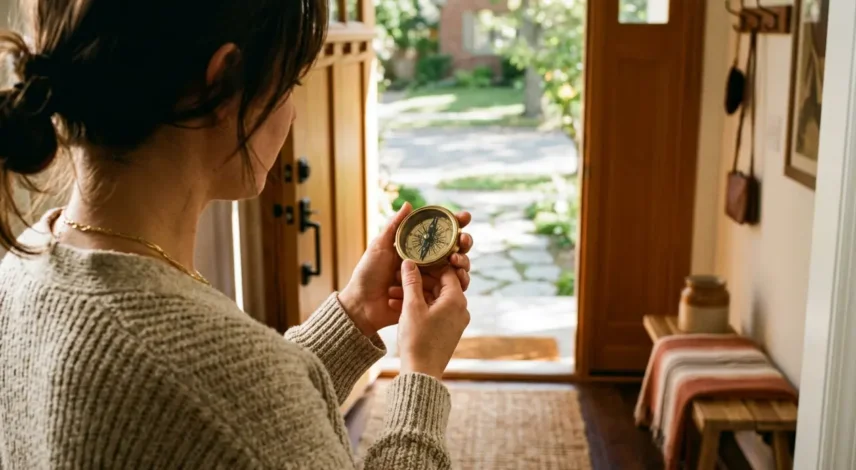
To measure your feng shui house facing direction, stand just inside your main door, face the way you walk out, and take a compass reading in degrees. That number is your facing direction; the opposite side is the sitting direction. Take three readings, average them, and correct for magnetic declination before you map anything.
At Potala Store, we have spent years working with Tibetan monastery artisans and classical practitioners, and we have watched people build an entire home layout on the wrong facing side. This guide walks you through the compass reading, the degree-to-direction charts (including the finer 24 mountains most guides skip), the tricky-home cases, and how to turn your result into a room plan that supports harmony and steady Qi flow.
Time needed: about 10 minutes. What you need: a compass or a calibrated phone compass app, your floor plan (optional), and your home’s build year (you will need it later for Flying Star).
Table of Contents
Key Takeaways
- Read the degrees at your main door. The way the front of your home points is your facing direction; the opposite side is the sitting direction.
- A basic compass or a calibrated phone app is enough to start. You do not need a luopan for your first reading.
- Correct for magnetic declination. A compass shows magnetic north, which can sit several degrees off the true north feng shui reads from.
- Match your degrees to the eight directions (45° each) for a quick read, or the 24 mountains (15° each) when you move to Flying Star.
What Is a Feng Shui House Facing Direction?
Your feng shui house facing direction is the side your home actively faces, usually where the front door opens onto the most light, air, and movement. Read in degrees on a compass, it decides how Qi enters your home and where every sector of the bagua falls. It is the anchor for the rest of your analysis, so it earns a careful reading.
Facing Direction vs. Sitting Direction
The facing direction is your home’s bright, active front; the sitting direction sits directly opposite, behind it, like a person seated with their back to a wall. One compass reading gives you both, because they are always 180 degrees apart. The facing direction captures the yang side that draws energy in, while the sitting direction is the solid, supportive back that many classical formulas rely on for stability.
Why the Facing Direction Decides Everything Else
Get the facing wrong and every map after it lands in the wrong place. Your bagua sectors shift, your Flying Star chart rotates, and your kua-number room plan points you the wrong way. Most people assume the front door always equals the facing side. Usually true, but not always, which is exactly why the reading matters more than the guess.
How to Measure Your House Direction with a Compass
You do not need a luopan to start. A basic compass or a calibrated phone app is enough to find your facing direction in about 10 minutes. The method is the same whatever tool you use: stand at the main door, read the degrees, take several readings, and correct for true north.
What You Need: Compass, Luopan, or Phone App
Three tools can take the reading, and they trade convenience for precision. A luopan is the traditional feng shui compass, printed with the 24 directions and used by professionals, but it is not required for a first reading.
| Tool | Accuracy | Best for |
|---|---|---|
| Magnetic compass | Reliable, no drift | Most homeowners; the recommended starting tool |
| Phone compass app | Good if calibrated; can read up to ~15° off near metal or speakers | Quick checks when calibrated and clear of interference |
| Luopan | Highest, 24-direction detail | Advanced Flying Star and Eight Mansions work |
The 5-Step Compass Reading
Follow these five steps to get a clean reading:
- Stand at the main door, facing out the way you would walk to leave.
- Hold the compass flat and level at waist height so the needle can settle.
- Step 3 to 5 feet away from metal doors, wiring, and appliances, which pull the needle off course.
- Read the degrees where the front of your home points.
- Take three readings and average them. Three readings, averaged, cancel out small errors and give you a number you can trust.
When we first started measuring homes, we assumed one reading was enough. It rarely is. Standing too close to a steel door or a breaker box was the quiet culprit behind most of our early bad numbers, so give the interference real distance.
Fixing True North vs. Magnetic North
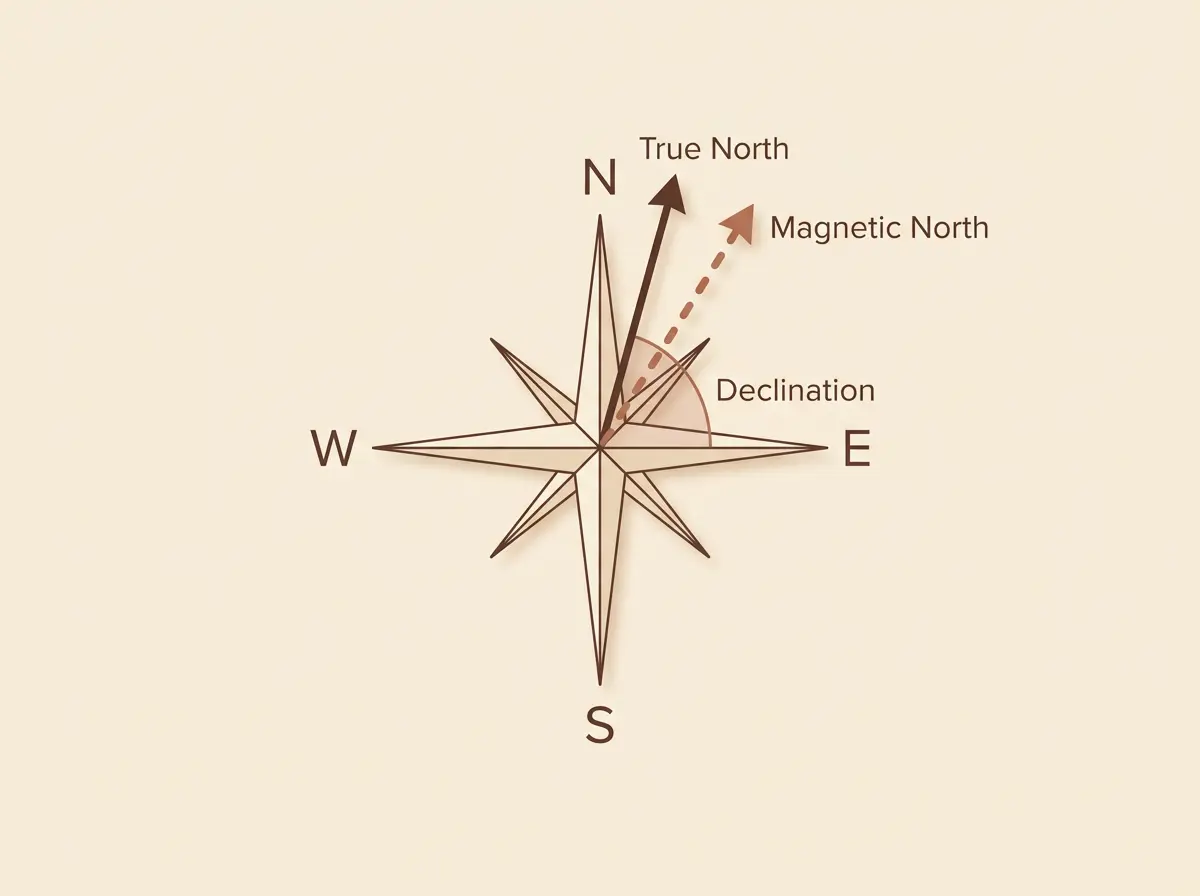
This is the step most guides skip, and it throws more readings off than any other. A compass points to magnetic north, but feng shui directions are read from true north. The gap between them, called magnetic declination, shifts with your location and can reach 10 to 15 degrees in the western United States, enough to push a reading into the wrong direction entirely.
Before you lock in a result, look up your local value with the free NOAA declination calculator, then add or subtract it from your reading. A few degrees of correction can be the difference between a southeast layout and a true south one.
Reading the Degrees: From 8 Directions to the 24 Mountains
The compass splits into eight directions of 45 degrees each. Match your corrected reading to the slice it falls into, then refine to the 24 mountains if you plan to use Flying Star. Start simple with eight; move to 24 when you go deeper.
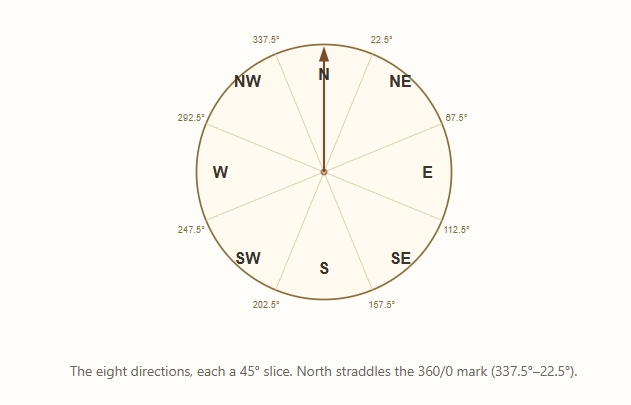
The Eight Directions Chart (45° Each)
Match your corrected degree reading to its slice:
| Compass reading | Facing direction |
|---|---|
| 337.5° – 22.5° | North |
| 22.5° – 67.5° | Northeast |
| 67.5° – 112.5° | East |
| 112.5° – 157.5° | Southeast |
| 157.5° – 202.5° | South |
| 202.5° – 247.5° | Southwest |
| 247.5° – 292.5° | West |
| 292.5° – 337.5° | Northwest |
The 24 Mountains: 15° Precision for Flying Star
The 24 mountains split each of the eight directions into three 15-degree sectors, the finer precision that Flying Star and Eight Mansions charts need. Instead of a single “South,” you get South 1, South 2, and South 3, each behaving differently in the formulas. A house reading 180 degrees, for example, is South 2 (172.5°–187.5°), due south on the finer scale.
| Sub-direction | Bearing | Sub-direction | Bearing |
|---|---|---|---|
| S1 | 157.5°–172.5° | N1 | 337.5°–352.5° |
| S2 | 172.5°–187.5° | N2 | 352.5°–7.5° |
| S3 | 187.5°–202.5° | N3 | 7.5°–22.5° |
| Each of the eight directions divides the same way into three 15° sectors, for 24 in total. | |||
Worked Example: Turning a Reading into a Direction
Say your raw reading is 168 degrees and your local declination is 8 degrees east. Subtract the declination and you get 160 degrees. That falls inside the 157.5° to 202.5° slice, so your home faces South and sits North. On the finer scale, 160 degrees is S1. From there, South becomes your Fame sector and North your Career sector on the bagua grid.
Which Side Is Really the Front? Tricky Homes and Apartments
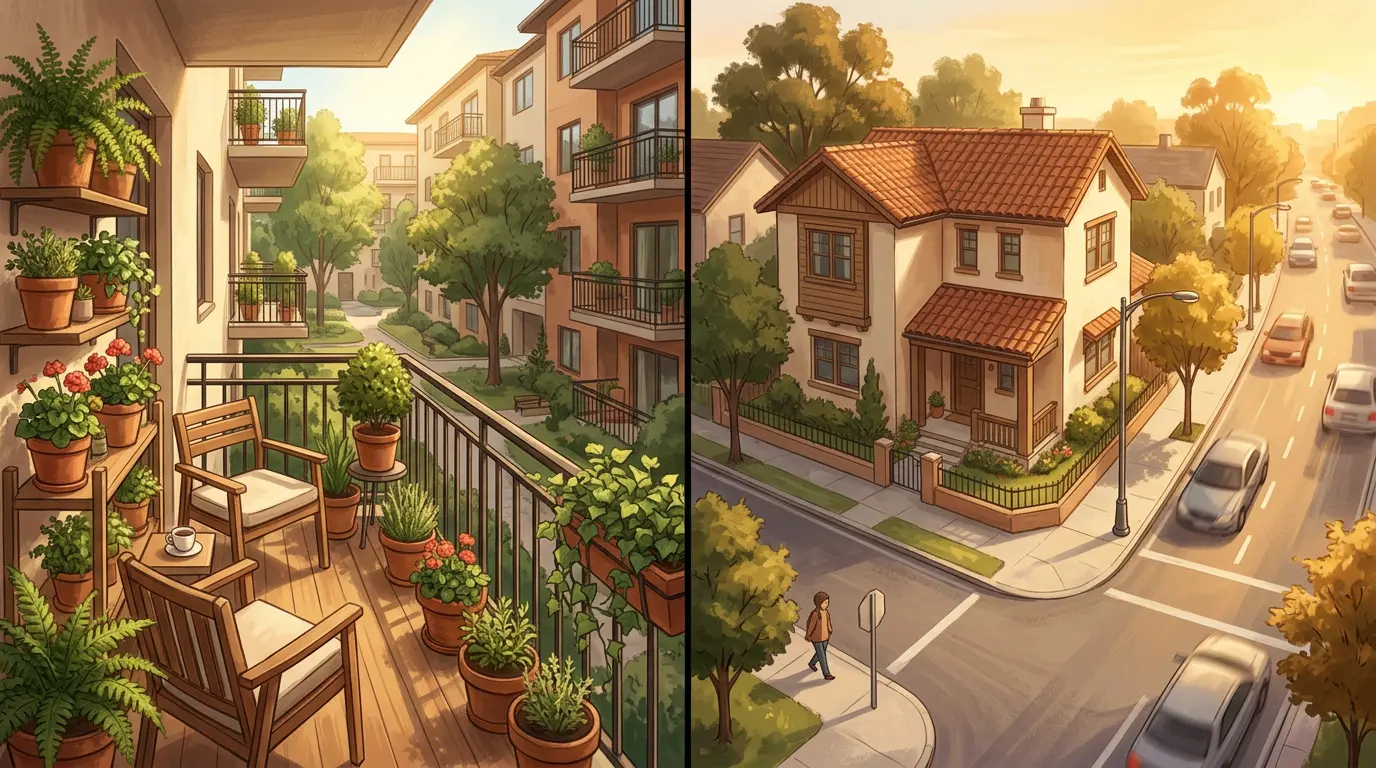
When the front door and the brightest, busiest side disagree, take a reading at both and trust the more yang side: bright, open, and full of movement. It is normal to second-guess which side faces out, and getting it wrong is the most common mistake we see. The good news is that it is an easy fix.
When the Front Door Isn’t the Facing Direction
The facing side is the yang side, where light, air, activity, and often the busiest street gather. A house on a quiet street with a big balcony and picture windows at the back may actually face the back. When the door and the brightest side point different ways, read both and follow the side where energy and people genuinely flow.
Measuring Apartments, Condos, and Corner Lots
Apartments give you less to work with, so the reading moves indoors. For a condo or apartment, the facing side is usually the wall with the largest windows or the balcony that looks out, not the door opening onto a dim interior hallway. Take one reading from inside and one from just outside to catch any electrical interference. For a corner lot, the more active, busier street usually marks the facing side.
Common Measuring Mistakes That Ruin the Reading
These are the errors we watch people make most:
- Standing too close to metal: steel doors, breaker boxes, and cars all bend the needle.
- Wearing metal while reading: belt buckles, rings, and phones in your hand skew the result.
- Trusting a map instead of a compass: satellite views and street maps are not a substitute for a real reading.
- Skipping declination: a magnetic reading left uncorrected can sit a full direction off from true north.
Turn Your Direction into a Harmonious Home
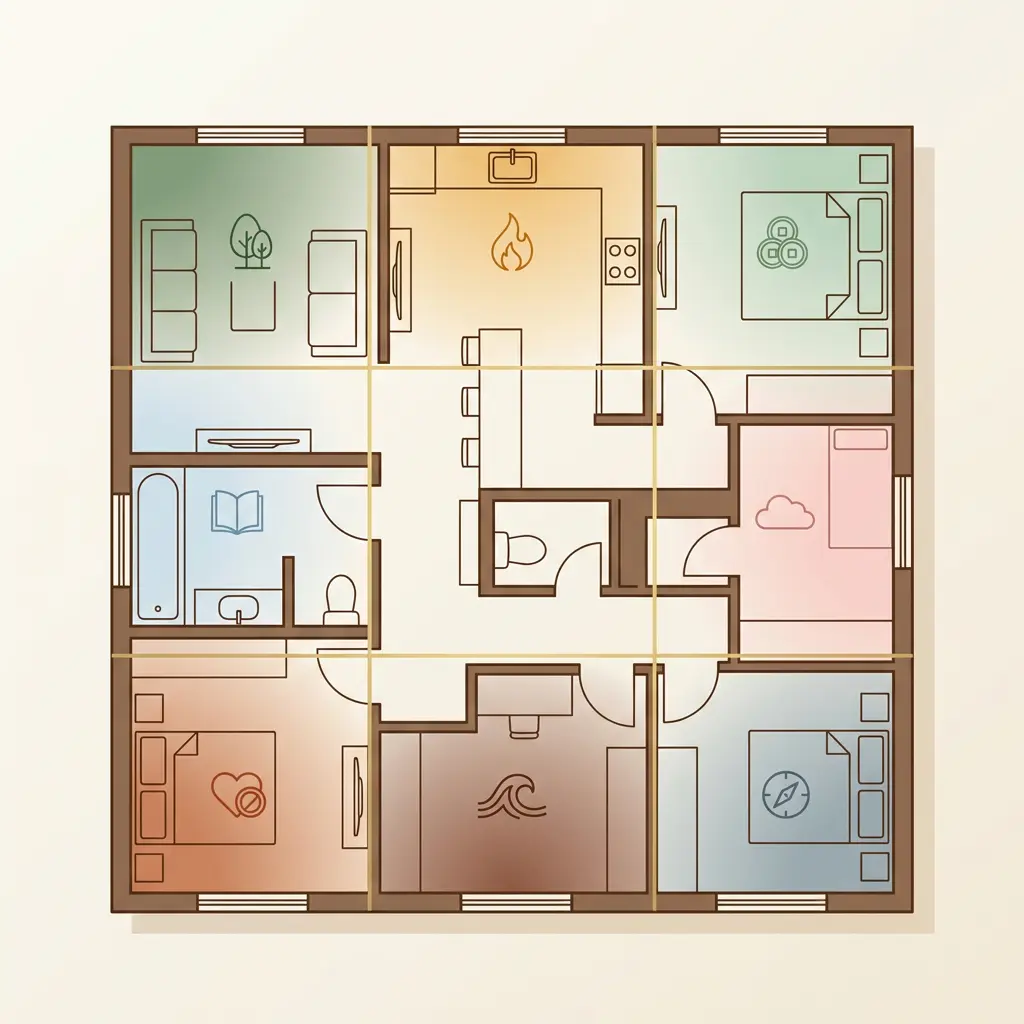
Once you know your facing direction, two things unlock: your personal best directions from your kua number, and which sectors of the bagua fall where in your home. This is where a measured direction becomes a real change rather than a decorative one.
Find Your Kua Number and Your Best Directions
Your facing direction sets the house energy; your kua number sets your personal best directions for sleeping and working. Your kua number sorts you into the East group (1, 3, 4, 9) or the West group (2, 6, 7, 8). The East group does best facing east, south, north, and southeast; the West group does best facing west, northwest, southwest, and northeast. Point your bed and your desk toward one of your group’s good directions. Pairing this with your element helps too, and you can find your five-element birth element to fine-tune the match.
Map the Bagua and Activate Each Sector
Lay the bagua grid over your floor plan using the directions you measured, then assign each zone its life area: wealth in the southeast, fame in the south, career in the north. Where a sector feels weak, place a matching element cure so the layout actually supports the space instead of just decorating it. A crystal tree, for example, brings gentle Earth-element energy to a sector, which in feng shui tradition is believed to steady and support that area of life. Once your grid is down, the wealth corner is usually the first sector people want to work on, and you can activate your southeast wealth corner step by step. You will find element cures, crystal trees, and grounding pieces among the feng shui cures and decor in our Home & More collection, each chosen to sit exactly where the bagua says it belongs.
💡 A quick tip from us: if your front door faces a road, a sharp roofline, or a neighbor’s corner, that “poison arrow” is worth softening. A bagua mirror for a front door facing a road or sharp corner is one traditional remedy, used carefully and outdoors.
Match the Reading to Your System: Eight Mansions vs. Flying Stars
After you have the degrees, one question decides your next move: which system are you using? Eight Mansions works from your personal kua number, while Flying Star works from your home’s facing direction plus its period, so the two systems ask for different inputs.
| System | What it needs | Best for |
|---|---|---|
| Eight Mansions | Your kua number + house facing | Matching people to auspicious room directions |
| Flying Star | Facing direction (24 mountains) + build period | Year-by-year, sector-by-sector energy maps |
This is why we told you to note your build year at the start. Flying Star needs your home’s period, and we are currently in Period 9, which runs from 2024 to 2044. With your facing direction and period in hand, you can read your 2026 Flying Star chart, sector by sector and see exactly which corners to support this year.
One note on where our own pieces come from: every Potala Store cure passes through a 3-day puja consecration at Sera Jhe Monastery in Bylakuppe, one of the great seats of Gelug Buddhist learning. That blessing is the step most sellers skip, and it is why our founder, Yang Tso, insists on it after years spent with Himalayan monastery communities. A consecrated piece is meant to carry intention into the sector you place it in, not just fill the space.
Frequently Asked Questions
Usually, but not always. The facing direction is your home’s most yang side, bright, open, and busy, which is often the front door but can be a balcony or a window wall instead. When they disagree, take a reading at both and trust the more active side.
Yes, a calibrated phone compass is accurate enough to find your facing direction. Trace the figure-eight calibration first, stay clear of speakers, laptops, and steel frames, and keep a physical compass as a backup if the needle reads unstable.
The eight directions split the compass into 45-degree slices, which is simple and beginner-friendly. The 24 mountains divide each of those into three 15-degree sectors, the finer precision that Flying Star and Eight Mansions rely on. Start with eight, and move to 24 when you go deeper.
No direction is doomed. Put your bed and desk in the command position, keep the entrance and center of your home clear, and add element-based cures to the sectors that need support. From there, check your annual Flying Star chart to see which corners to activate this year.
Ready to activate the directions you just measured?
Browse feng shui cures, crystal trees, and bagua-ready decor from Potala Store, monastery-blessed at Sera Jhe and shipped free across the US.Shop Feng Shui Home & Decor →
⚠️ A note on intent: Feng shui directions and energy practices are drawn from traditional belief and centuries of cultural practice, not scientific evidence. This guide is for educational and personal-interest purposes and is not a substitute for professional advice.
📚 References
- The Feng Shui Compass (Luo Pan): Museum overview of the luopan as a geomantic instrument and its directional systems. Duke University, Sacred Art of the Diaspora
- Magnetic Declination Calculator: Official tool to find true-vs-magnetic north correction for your location. NOAA National Centers for Environmental Information
- Luopan (24 Directions): Reference on the feng shui compass and its 24 directions at 15 degrees each. Wikipedia
- Feng Shui Overview: Background on feng shui as a traditional practice of orienting space to the flow of Qi. Wikipedia