

The Hamsa hand is an ancient palm-shaped amulet, traditionally believed to protect against negative energy and the evil eye while inviting blessings into your life. Its five fingers tie it to the number five across many cultures. Wear it facing up to deflect negativity, or facing down to invite abundance.
If you’ve just received a Hamsa or you’re about to buy one, you probably have two questions: what does it actually mean, and which way should you wear it? This guide answers both, then covers how to choose your piece, which hand to wear it on, and whether you can wear it respectfully if it isn’t from your own tradition.
At Potala Store, our Hamsa pieces are hand-tied and blessed in the Tibetan Buddhist tradition, and “up or down?” is the question we hear most. Here is the clear version, without the guesswork.
Table of Contents
What Is the Hamsa Hand? Meaning and the Eye at Its Center
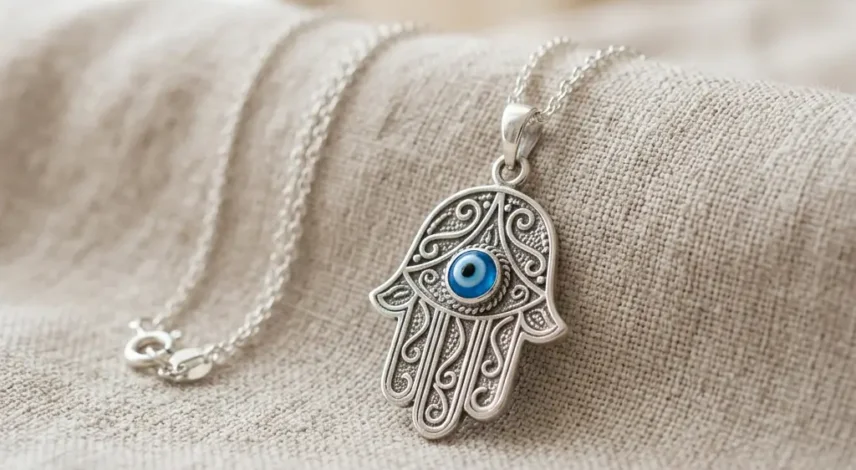
The Hamsa hand is a stylized, open-palm amulet, believed to offer protection from the evil eye and negative energy while extending blessing and good fortune to whoever wears it. Its design is deliberately symmetrical, with two matching outer fingers that no real hand has, which marks it as a symbol rather than a literal drawing of a hand.
The Hamsa is an active symbol. That outward palm reads like a gesture that says “this far, and no further.” In many traditions the same hand that deflects harm also extends a blessing. What makes it unusual is its reach. The Hamsa appears in North African, Middle Eastern, Jewish, Islamic, and Hindu imagery, which very few protective symbols do. A symbol that crosses that many borders and centuries tends to be carrying something real, or at least something that a great many people, over a very long stretch of time, have found worth keeping close to the body. For where it sits among the wider family of protective jewelry, our overview of sacred symbols and their meanings covers the rest.
Why the Number Five Matters
The “five” in Hamsa is the whole point. The name comes from khamsa in Arabic and hamesh in Hebrew, both meaning five, a nod to the five fingers of the open hand. Different traditions read those five fingers differently. In several, the number stands for the five senses and the connection between them. As you will see below, Islam and Judaism each attach their own meaning to the five.
The Eye in the Palm: The Evil Eye Connection
The eye at the center of many Hamsas is an evil eye, a watchful eye that “sees” incoming negativity and reflects it back before it reaches you. When you combine the two, the hand deflects and the eye watches, which is why the Hamsa and the evil eye appear together so often on jewelry. The story behind evil eye protection and the nazar amulet is worth reading on its own.
Where the Symbol Comes From: Origins Across Cultures
Long before Islam or Judaism, the open-hand amulet appeared in ancient Mesopotamia and Carthage, which means the Hamsa predates every religion that now claims it. The same symbol simply picked up a new name in each tradition it entered.
The hand shows up as a protective sign tied to ancient goddesses such as Ishtar and Tanit. As trade carried it across the Mediterranean and North Africa, Islamic, Jewish, and later some Christian communities each made it their own. The core meaning, protection, stayed the same everywhere it traveled.
Ancient Roots in Mesopotamia and Carthage
The oldest hand-shaped protective amulets trace back to ancient Mesopotamia and the Phoenician-Carthaginian world. Archaeological finds place open-hand charms in these cultures long before the major religions formed. The hand was linked to protection and fertility, an outstretched palm meant to shield people from harm and welcome good fortune.
The Hand of Fatima and the Hand of Miriam
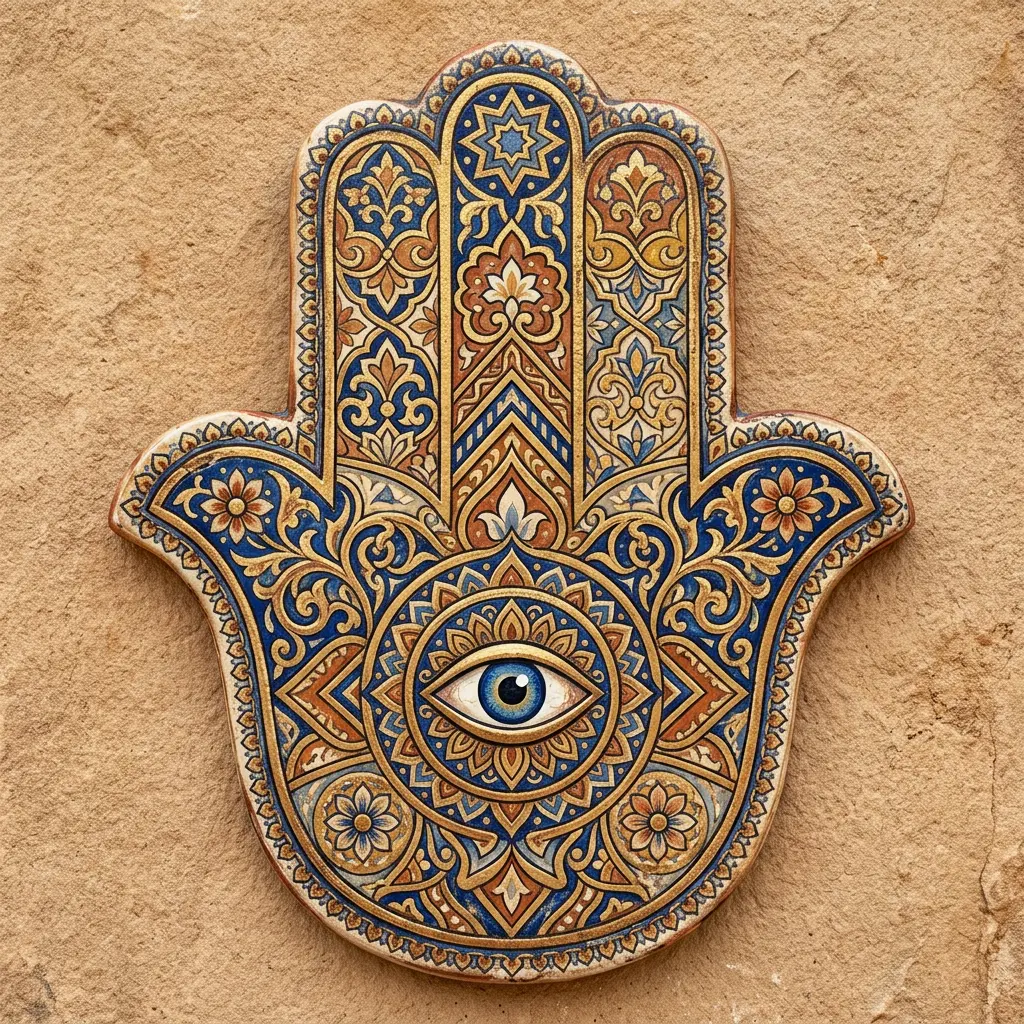
Same symbol, different names: in Islam the Hamsa is the Hand of Fatima, and in Judaism it is the Hand of Miriam. In Islamic tradition, the Hand of Fatima honors Fatima Zahra, daughter of the Prophet Muhammad, and its five fingers are often linked to the Five Pillars of Islam. In Jewish tradition, the Hand of Miriam honors Miriam, the sister of Moses, and the five fingers recall the five books of the Torah. Some Levantine Christians know the same symbol as the Hand of Mary.
Hamsa Up or Down: What Each Direction Means
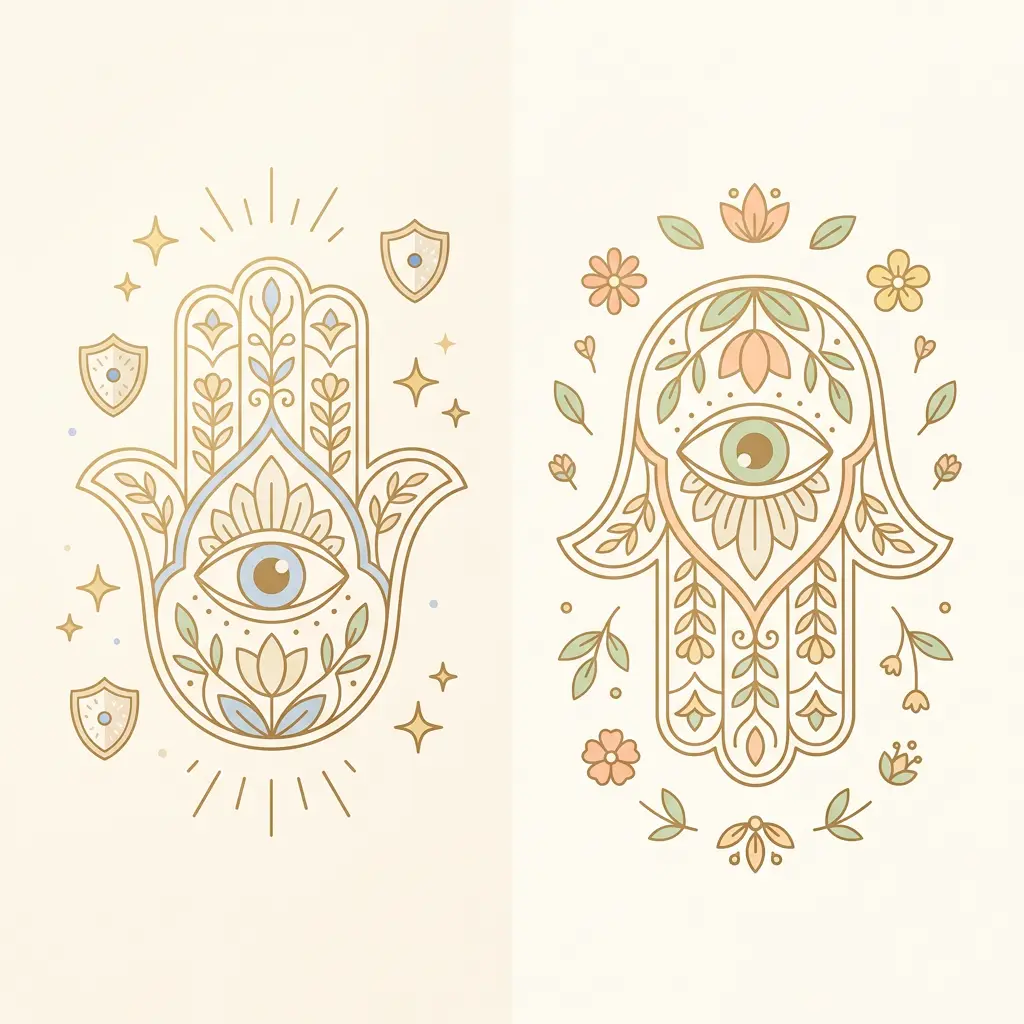
There is no wrong direction. Facing up deflects negativity and harm, while facing down invites blessings and abundance. Choose the one that matches what you need right now.
| Direction | What It Means | Best For |
|---|---|---|
| Facing Up (fingers to the sky) | Deflects evil, envy, and negativity. Acts as a shield. | A new job, exams, travel, or any stressful season |
| Facing Down (fingers to the ground) | Invites blessings, abundance, and fertility. An open hand. | New beginnings, opportunity, growth, and calm |
If you are worried about getting the direction “wrong,” you can relax. Both orientations are traditionally valid, and many rings are made so you can flip them to suit the day.
When to Wear It Facing Up (Protection)
Wear the Hamsa facing up, fingers toward the sky, when you want an active shield against negativity or a stressful stretch ahead. This is the orientation you will find on most protective Hamsa jewelry. People reach for it during big transitions, like starting a new job, sitting an exam, or traveling somewhere unfamiliar, when a daily reminder to hold your own energy helps.
When to Wear It Facing Down (Blessings and Abundance)
Facing down, fingers toward the ground, the Hamsa becomes an open hand that invites abundance, blessings, and new opportunity. Some traditions link the downward hand to openness and fertility. It suits seasons of growth: a fresh start, a new relationship, or a goal you are actively working toward. This is also why a downward-facing Hamsa is such a common gift for a new home, a new job, or a new chapter, since it reads as a wish for good things to flow toward the person receiving it.
How to Wear a Hamsa Hand: A Practical Guide
Wearing a Hamsa comes down to three quick decisions. Make these first, then use the details below to fine-tune each one.
- Pick your piece: a necklace, bracelet, or ring you will actually wear every day.
- Choose your hand and direction: left wrist and facing up for protection, right wrist or facing down to invite abundance.
- Set your intention: hold the piece, take a slow breath, and name what you want it to carry before you put it on for the first time.
Choosing Your Piece: Necklace, Bracelet, or Ring
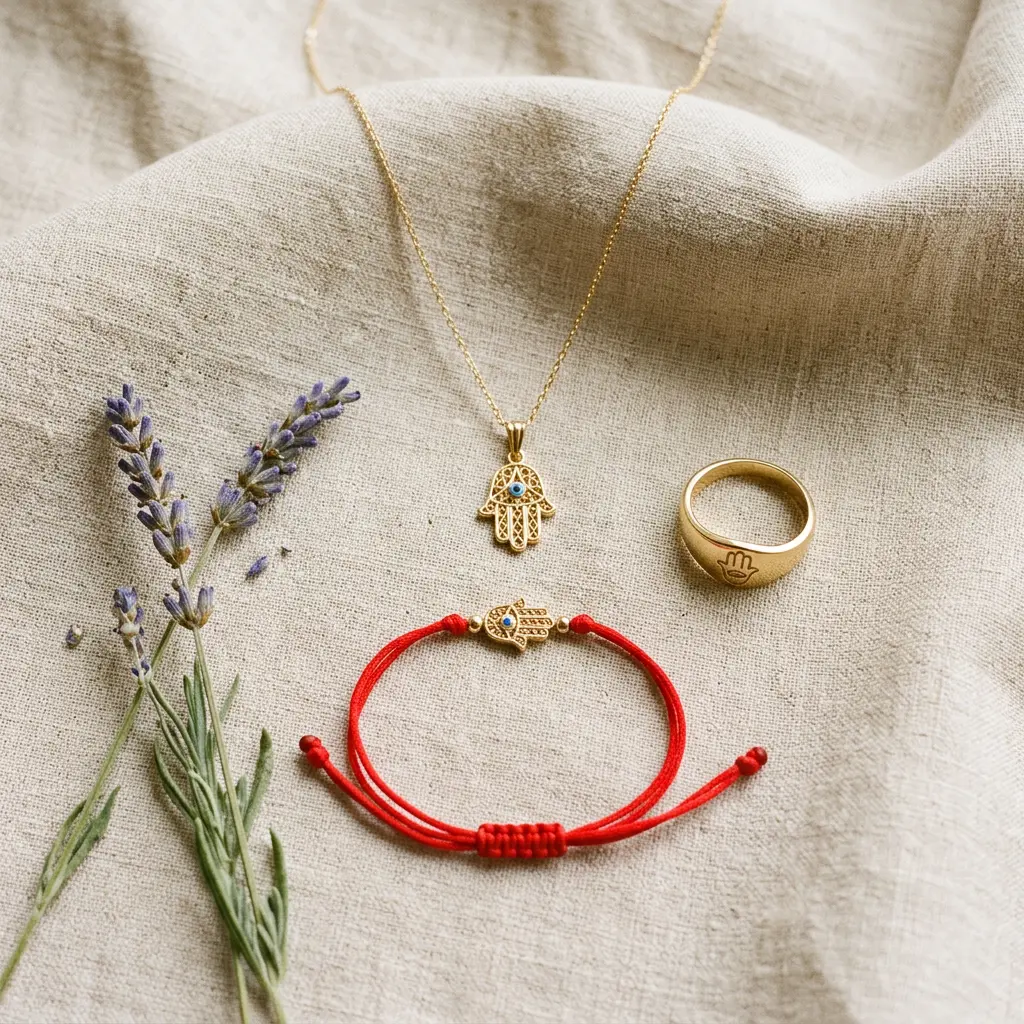
Each piece suits a different lifestyle:
- Necklace: worn close to the heart for daily, visible protection. A 16 to 18 inch (40 to 45 cm) chain sits at the chest, while 20 to 24 inches (50 to 60 cm) rests over the heart.
- Bracelet: the most versatile option. It layers easily and lets you choose which wrist to wear it on.
- Ring: subtle and easy to flip, so you can switch between up and down depending on the day.
If you like the idea of pairing the symbol with a grounding stone, a black obsidian protection necklace works well alongside a Hamsa piece for a layered, protective look.
Left Hand or Right Hand?
Wear it on your left to draw protective energy inward, or on your right to send it outward. In many traditions your left is the receiving hand and your right is the giving hand. If your intention is protection, the left wrist is the common choice. The same left-versus-right logic applies to most crystal and feng shui bracelets, so it is worth learning once and using everywhere.
Pairing the Hamsa with the Evil Eye and Choosing Your Metal
The Hamsa and the evil eye are designed to work together: the hand deflects while the eye watches. Your metal adds another layer of intention. Silver is tied to the moon, intuition, and protection. Gold is tied to the sun, confidence, and abundance, so pick the metal that matches your goal.
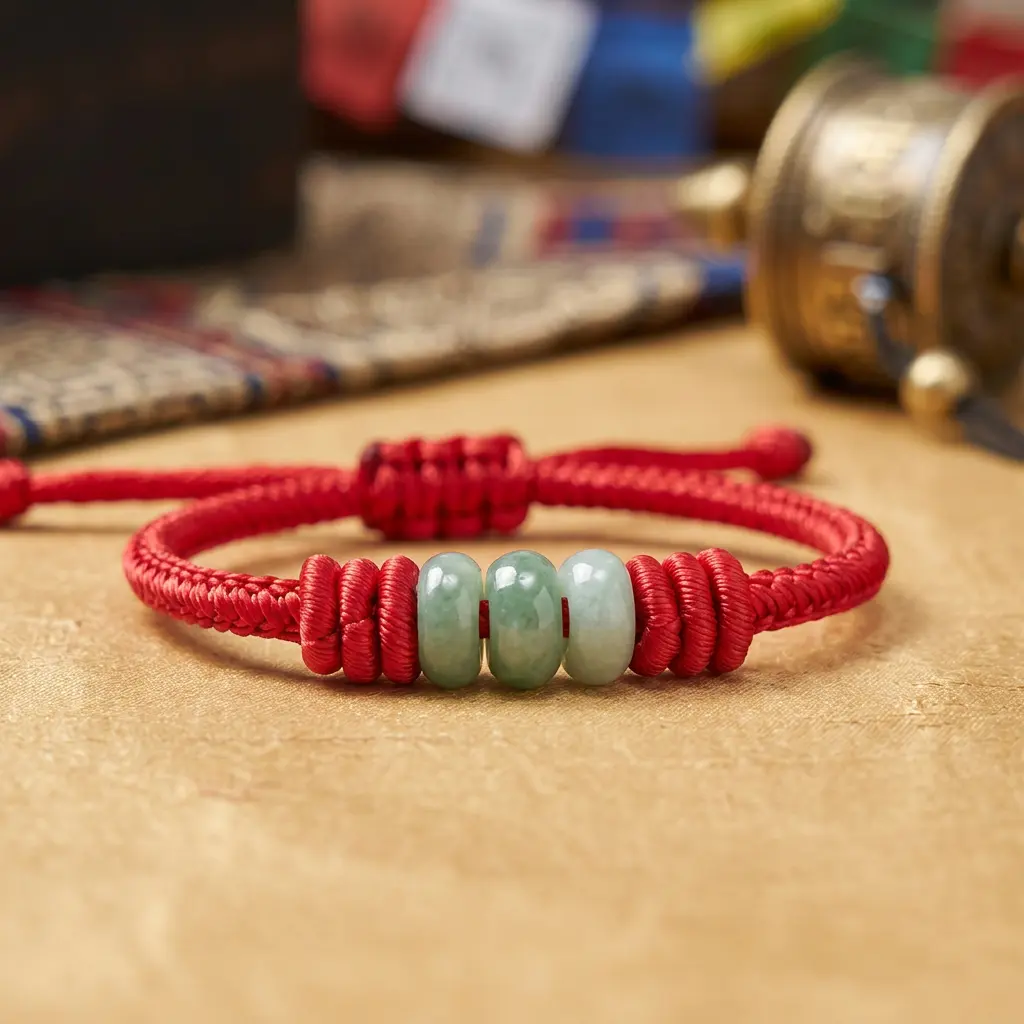
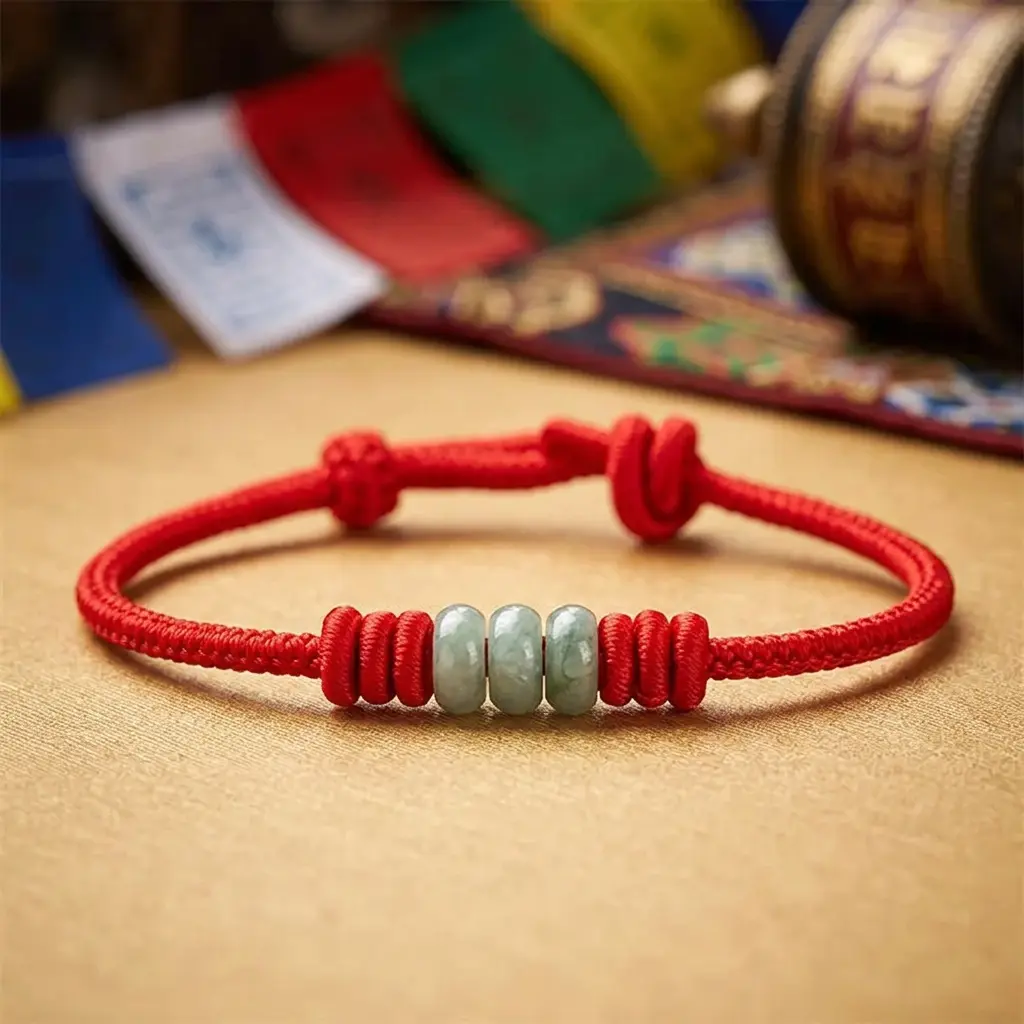
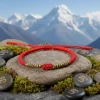
The material carries real meaning here. Our Hamsa red string bracelets are hand-tied one knot at a time while the maker recites Om Mani Padme Hum, the mantra of compassion. So you are not wearing a decoration. You are wearing an intention that was worked into the cord, on an adjustable band (6.3 to 8.3 inches, or 16 to 21 cm) that fits almost any wrist. That also makes it an easy gift, since you never have to guess a size. Browse the full range of Hamsa and evil eye protection jewelry to find the piece that fits your intention.
Can Anyone Wear the Hand of Fatima? Respect and Cultural Context
Yes, anyone can wear a Hamsa. It has been shared across cultures for thousands of years, so it does not belong to a single group. The key is appreciation, not appropriation: understanding what it means rather than treating it as a passing trend. If you love the symbol but are not sure it is “yours” to wear, you are asking exactly the right question, and the answer is reassuring.
Appreciation, Not Appropriation
The line is simple: learn the symbol’s meaning and origins, then wear it with respect. The Hamsa has always been gifted, traded, and worn across religious and ethnic lines. That said, the Hand of Fatima carries genuine religious weight in Islam, so wearing it with awareness of that origin is part of wearing it well. If protective symbols draw you in more broadly, our guide to Buddhist amulets for protection covers a wider family worth knowing.
Wearing It with Intention
Set a clear intention when you put it on, whether that is protection, blessing, or connection. That single habit turns the Hamsa from an accessory into a daily reminder. Worn this way, with respect for where it comes from, the symbol welcomes you rather than shuts you out.
Wear your intention every day
Whether you are drawn to the Hamsa for protection or for blessing, our hand-blessed pieces are tied and consecrated in the Tibetan Buddhist tradition. Find the one that fits where you are right now.Explore Protection Jewelry →
Frequently Asked Questions
The Hamsa symbolizes protection from the evil eye, along with blessings, good fortune, and good health. Its open palm is traditionally believed to deflect negativity while inviting positive energy, a meaning shared across Islamic, Jewish, and North African traditions.
Yes. Across nearly every tradition that uses it, the Hamsa is seen as a good-luck charm that attracts blessings and wards off misfortune, especially when it is paired with an evil eye at the center.
Protective stones are the natural match. Black obsidian and black tourmaline reinforce the shielding intention, while amethyst adds a sense of calm. You can cleanse and charge your Hamsa jewelry to keep its energy fresh.
Hang it near the front door to filter energy entering your space, or in a main living area for the whole household. Face it outward toward the entrance, pointing up for protection or down to invite blessings in.
A quick note: The spiritual and energy meanings described here are based on traditional beliefs and personal experience, not scientific evidence. This guide is for educational and cultural interest, and it is not a substitute for professional advice.
📚 References
- Hamsa History and Symbolism: Overview of the palm amulet, its names, and its cross-cultural use. Wikipedia
- Protective Amulets in the Ancient World: How ancient cultures used hand and eye symbols to invoke protection. The Metropolitan Museum of Art
- The Evil Eye Across Cultures: Scholarly background on the belief and its protective charms. Encyclopedia Britannica
- Good-Luck Charms Around the World: The evil eye and other protective talismans as cultural symbols. National Geographic