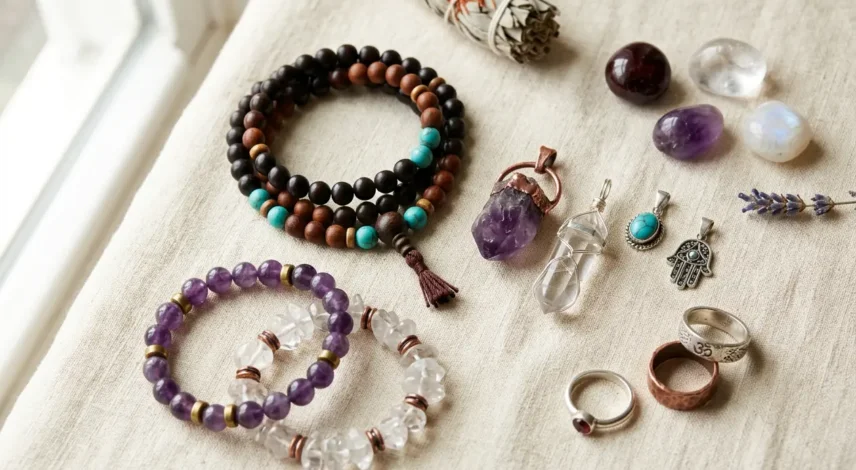

The global spiritual jewelry market is worth roughly $14.8 billion in 2024, and most forecasts expect it to reach about $19.69 billion by 2028. That is a compound annual growth rate near 7.4%, faster than fine jewelry overall. If crystals, mala beads, and symbolic pendants seem to be everywhere lately, the market size data explains why.
The tricky part is that published estimates disagree, and by a wide margin. Depending on how analysts define the category, the 2024 figure runs from about $3.2 billion to nearly $15 billion. This guide reconciles those numbers, breaks out the United States market, and shows what the growth means if you are buying a piece rather than tracking an industry.
We also make this jewelry ourselves. PotalaStore works directly with artisan families across Tibet, Nepal, and Thailand, so next to the third-party data we can show you what the supply side of this boom looks like from the inside. That view turns out to matter once you start shopping.
Table of Contents
How Big Is the Spiritual Jewelry Market in 2026?
The global spiritual jewelry market is worth roughly $14.8 billion in 2024 and is forecast to reach $19.69 billion by 2028, growing at about 7.4% a year. Narrower estimates that count only faith-based pieces put the 2024 figure closer to $3.2 billion. The headline number depends entirely on what gets counted.
Across the major research firms, the direction is consistent even when the totals are not. Every forecast points up, and most land in the mid single digits to low double digits for annual growth. The category is expanding faster than the broader jewelry market, which grows closer to 4% to 5% a year.
The global market size and forecast
Here is how the leading estimates compare on size, forecast, and growth rate.
| Research firm | Base size | Forecast | CAGR |
|---|---|---|---|
| The Business Research Company | $14.78B (2024) | $19.69B by 2028 | 7.4% |
| Research and Markets | $15.91B (2025) | $21.12B by 2029 | 7.3% |
| Market.us | $14.3B (2023) | $26.1B by 2033 | 6.2% |
| Transparency Market Research | $13.2B (2022) | $22.2B by 2031 | 6.0% |
| Verified Market Research (narrow) | $3.2B (2024) | Not stated | Not stated |
The title figure of $19 billion comes from The Business Research Company, whose 2028 projection of $19.69 billion is one of the most cited in the industry. Read any single report and you get a clean number. Read several and you get a range.
Why estimates range from $3B to $26B
The gap comes down to definition, not disagreement about the trend. Broad studies fold in every product that carries meaning, such as birthstones, zodiac pendants, evil-eye charms, and wellness crystals. That approach produces the $13 billion to $15 billion base figures and forecasts reaching $22 billion to $26 billion.
Narrow studies count only explicitly faith-based or ritual jewelry. That approach produces the $3.2 billion figure. Neither is wrong. They simply draw the boundary in different places, which is why comparing two headlines without checking their definitions is misleading. When you see a spiritual jewelry market size quoted with no context, the first question worth asking is what the analyst chose to include.
What Is Driving Double-Digit Growth in Meaningful Jewelry
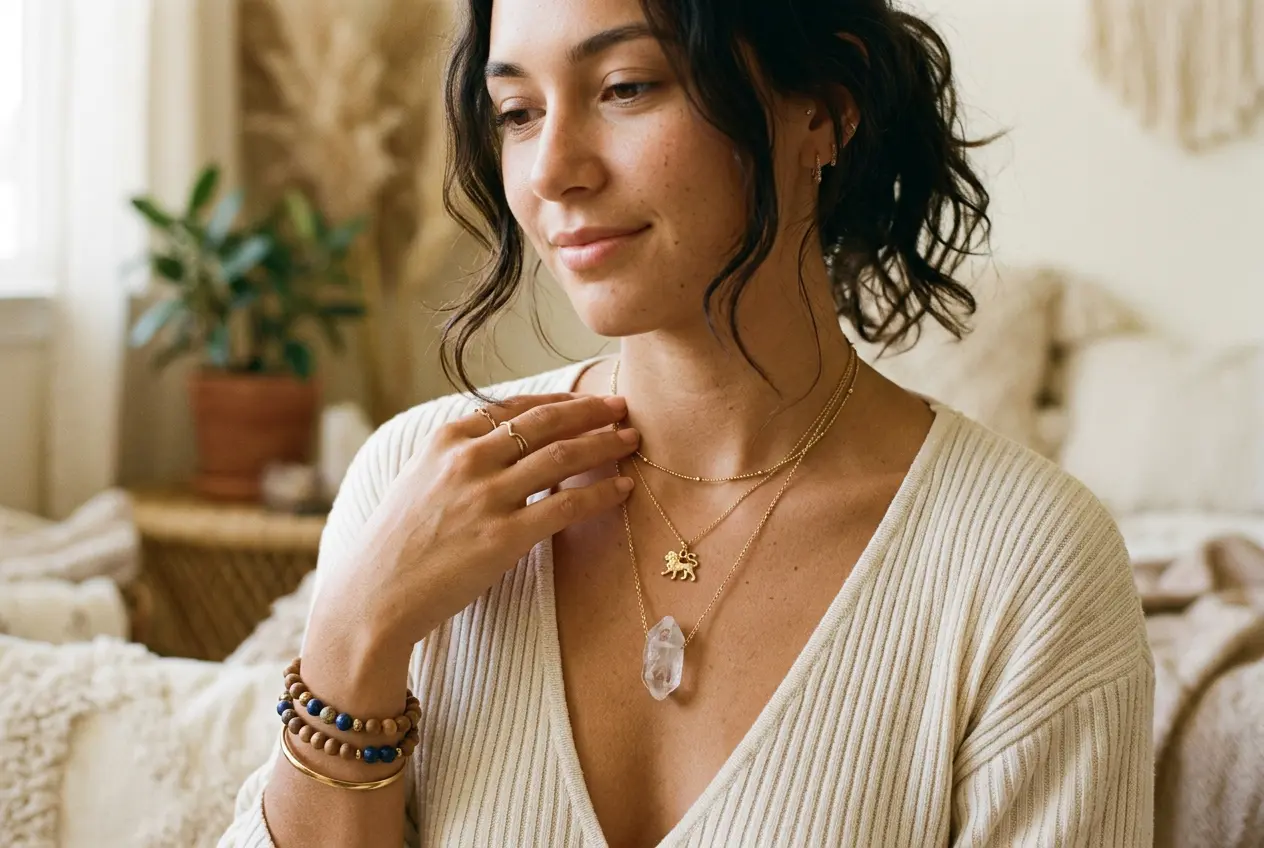
Three forces drive the growth: a broad shift toward wellness and self-expression, younger buyers embracing astrology and symbolism, and rising demand for ethically sourced pieces. None of these is a passing fad, and together they explain why forecasts keep pointing up.
Wellness and the meaning economy
Buyers increasingly want objects that mean something, not just objects that look expensive. Meaningful jewelry sits at the intersection of accessories and the wellness economy, so it draws spending from both. A mala bracelet or a crystal pendant reads as self-care as much as adornment, which widens its appeal well beyond traditional jewelry shoppers.
This shift also changes how people shop. Instead of asking what is fashionable, buyers ask what a piece represents. Intention now sells as strongly as design, and that reframing is a large part of why the category outgrows fine jewelry.
Gen Z, astrology, and ethical sourcing
Younger consumers push the trend hardest. Gen Z and millennials have folded astrology, birth charts, and crystal symbolism into everyday style, and social platforms amplify it. CNN reported in 2026 that astrology-driven and personalized jewelry has moved firmly into the mainstream, with demand rising among buyers in their twenties and thirties.
Values shape these purchases as much as aesthetics. Ethical sourcing and sustainability now influence which brands younger buyers trust, and pieces with a clear origin story tend to win. That preference rewards makers who can show where a stone came from and who set it, and it feeds directly into demand for authentic healing crystal jewelry over mass-produced lookalikes. Provenance, once a niche concern, is becoming a baseline expectation.
Who Buys Spiritual Jewelry, and How
Women make up the largest share of buyers at roughly 61%, and most spiritual jewelry today is bought online rather than in stores. The buyer base is broadening, though, and the sales channel picture tells you a lot about how the category actually moves.
Women lead, but men’s and couples’ segments are rising
Women account for about 61% of spiritual jewelry purchases, the clear majority. That share is slowly shifting as men’s symbolic jewelry and matching couples’ pieces gain ground. Spirit-animal pendants, protective symbols, and beaded bracelets have pulled more male buyers into a category once marketed almost entirely to women.
If you are buying for someone else, that shift is worth keeping in mind, because the wrong piece is easy to give and awkward to return. Matching the symbol to the person matters more here than with ordinary jewelry, so a little research goes a long way when you shop for meaningful spiritual gifts.
Online is the dominant sales channel
Online retail is the leading channel for spiritual jewelry, and its lead keeps growing. The reason is practical. Meaning-driven pieces come with stories, origins, and symbolism that a product page can explain far better than a shelf tag. Buyers who want to understand what they are wearing gravitate to sellers who take the time to tell them, and most of that discovery now happens on a phone.
Which Products and Materials Lead the Market
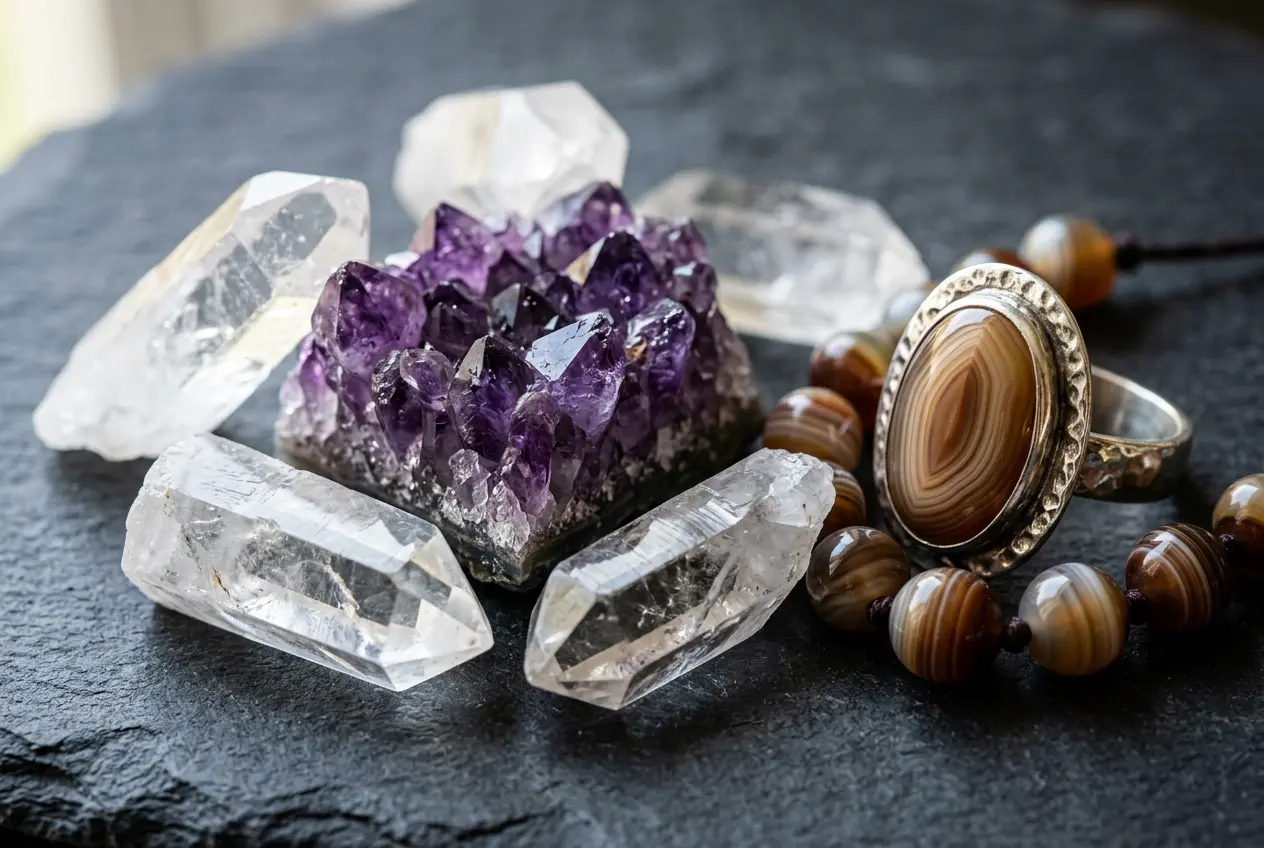
By product type, rings lead the market, followed by necklaces and bracelets. By material, precious metals dominate while natural stones grow fastest, and quartz is the most popular gemstone. The segmentation is remarkably consistent across the major reports.
Rings, necklaces, and bracelets by segment
Rings hold the top product spot, valued for their symbolism and easy daily wear. Necklaces and bracelets follow closely, with mala-style beaded bracelets especially strong in the wellness segment. The table below shows which segment leads each category.
| Category | Market leader | Also strong |
|---|---|---|
| Product type | Rings | Necklaces, bracelets |
| Material | Precious metals | Natural stones (fastest-growing), wood |
| Gemstone | Quartz | Amethyst, agate |
| Buyer group | Women (~61%) | Men, couples (rising) |
| Sales channel | Online | Specialty retail |
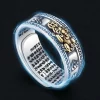
Among rings, feng shui and mantra designs sell steadily because they pair a clear intention with everyday wear. Our Feng Shui Pixiu Mantra Ring ($39.95) is a good example of that combination, and it sits in a wider range of spiritual rings for buyers who want the symbolism without a statement-size piece.
Crystals, precious metals, and the rise of natural stones
Precious metals such as sterling silver and gold still lead by material value. The faster movement is in natural stones, where quartz, amethyst, and agate ride the crystal-wellness wave. Quartz is a clear, hard crystal long linked to clarity and healing in traditional practice, and it is the single most popular gemstone in the category. Natural stones grow quickest because they carry the meaning many buyers now shop for, at prices that stay accessible.
The US Spiritual Jewelry Market: A Closer Look
In the United States, the spiritual jewelry market is estimated at about $3.72 billion in 2024 and projected to reach roughly $6.27 billion by 2033. North America is one of the category’s most important regions, and American buyers shape where it heads next.
US market size and growth outlook
The US market is a large slice of the global total, and it grows in line with the worldwide trend. Steady wellness spending and a deep online retail base give it room to keep expanding through the early 2030s. For anyone weighing the category as a shopper or a seller, the domestic picture is healthy and durable rather than speculative.
What American buyers prioritize
American buyers put a premium on authenticity and a clear origin story. They want to know whether a piece is genuinely handmade, where the materials came from, and whether the maker treats its artisans fairly. Ethical sourcing carries real weight in US purchase decisions, especially among younger buyers, and it increasingly separates the brands people return to from the ones they buy once.
What the Data Means If You Are Buying, Not Just Watching
The same growth that makes this market exciting also floods it with mass-produced pieces, so where and how a piece is made now matters more than ever. The numbers are encouraging for the category, but they carry a practical warning for anyone about to spend money.
A note on spiritual properties: The healing and energy properties described here reflect traditional beliefs and user experiences, not scientific evidence. This information is for educational purposes and is not a substitute for professional medical advice.
Authenticity is the new fault line as the market scales
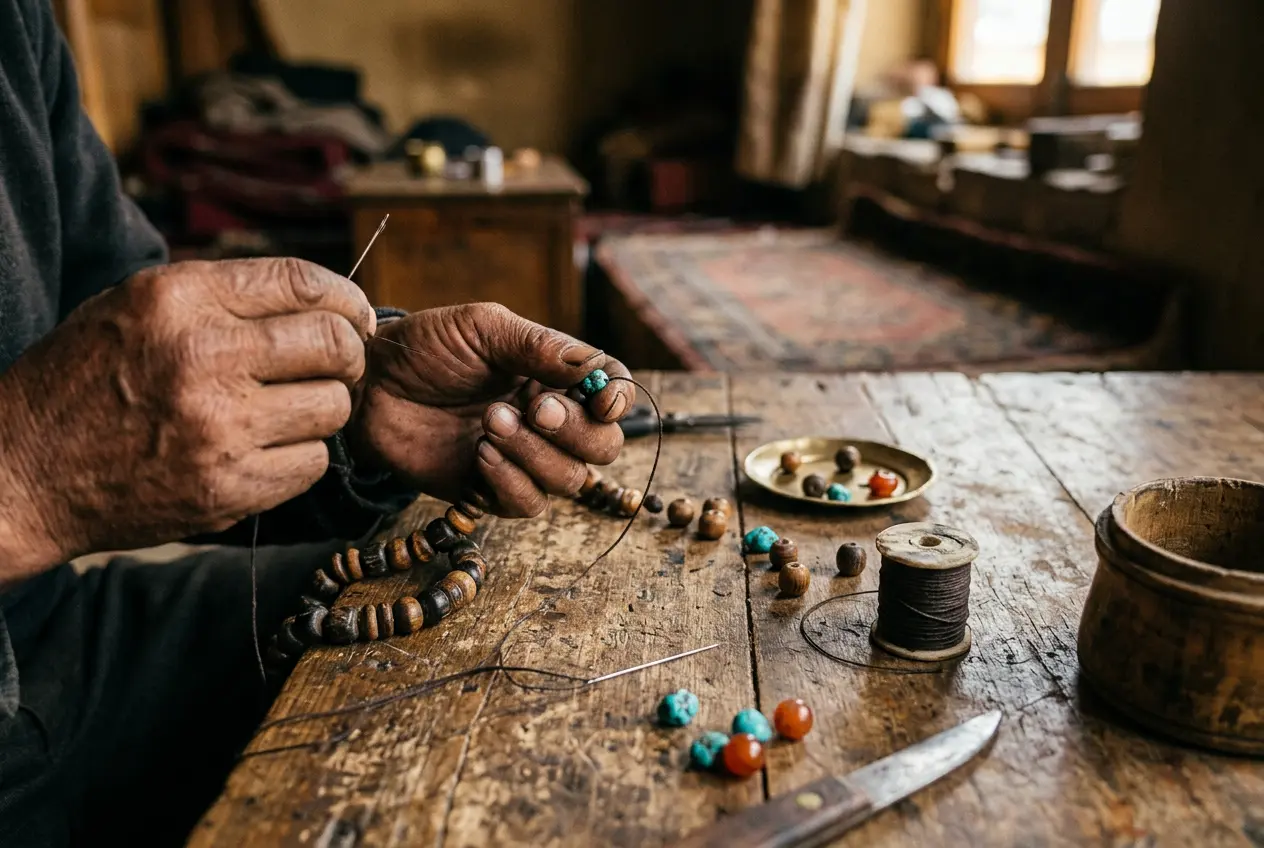
Rapid growth pulls in volume producers, and machine-made pieces are easy to pass off as handcrafted online. The difference shows up in the making. A genuinely handmade piece from our workshops takes two to three days to complete, from stringing to blessing, while a mass-produced equivalent can come off a machine in about 30 minutes. Both can look similar in a photo, which is exactly why the origin story matters before you buy.
This is the gap most market reports skip. They count the money without noting how much of it now flows to lookalikes. As a buyer, the growth curve is a reason to look closer at who made a piece, not a reason to assume every listing is what it claims.
How to choose meaningful jewelry that lasts
Picture the difference between a piece you wear for a season and one you keep for years. The second is the point of buying meaningful jewelry, and a few checks get you there. Look for genuine materials, a named source, and some form of verification.
- Verifiable origin: pieces that are handmade and monastery-blessed, ideally with a blessing certificate, so you know the story is real rather than marketing copy.
- Fair, transparent pricing: workshop-direct sourcing means you pay for craft rather than layers of retail markup, so authentic pieces stay affordable, often in the $28 to $58 range.
- Real materials: natural stones and solid metals age far better than synthetic substitutes, so the piece and its meaning last.
That is the standard PotalaStore is built around. You can browse the full authentic spiritual jewelry collection to see how source and craft are documented, and our Tibetan Copper Bracelet for Healing & Luck ($38.95) is a simple place to start. If you want to see how these pieces come together, read how authentic Tibetan bracelets are made.
The takeaway is straightforward. The spiritual jewelry market is large, growing, and here to stay, but its scale is exactly why a careful buyer should care where a piece comes from before adding it to a cart.
Shop Jewelry With a Story You Can Verify
Every PotalaStore piece is handmade by artisan families, blessed at the source, and shipped worldwide with a blessing certificate.Explore the Collection →
Frequently Asked Questions
By broad estimates, the global spiritual jewelry market is worth roughly $14.8 billion in 2024 and is forecast to reach $19.69 billion by 2028. Narrower definitions that count only faith-based pieces put the 2024 figure closer to $3.2 billion, so the exact number depends on what is included.
Yes. Across the major forecasts, the market grows at a compound annual rate of roughly 6% to 8%. Wellness demand, younger buyers, and online retail are the main drivers, and every leading estimate projects continued growth into the early 2030s.
Rings lead by product type, followed by necklaces and bracelets. Quartz is the most popular gemstone, precious metals dominate by material value, and women make up about 61% of buyers.
Buyers increasingly want pieces that carry meaning rather than just decoration. Wellness culture, astrology, self-expression, and demand for ethically sourced materials have pushed the category into the mainstream, especially among Gen Z and millennial shoppers.
References
- Global market size and forecast: Spiritual jewelry global market report, with the $19.69 billion 2028 projection and 7.4% growth rate. The Business Research Company
- Market segmentation: Product, material, gemstone, buyer, and channel breakdowns for the category. Market.us
- Alternative market sizing: Independent estimate and long-term forecast used to cross-check the range. Transparency Market Research
- Consumer trend reporting: Coverage of Gen Z, astrology, and personalized jewelry entering the mainstream. CNN Style