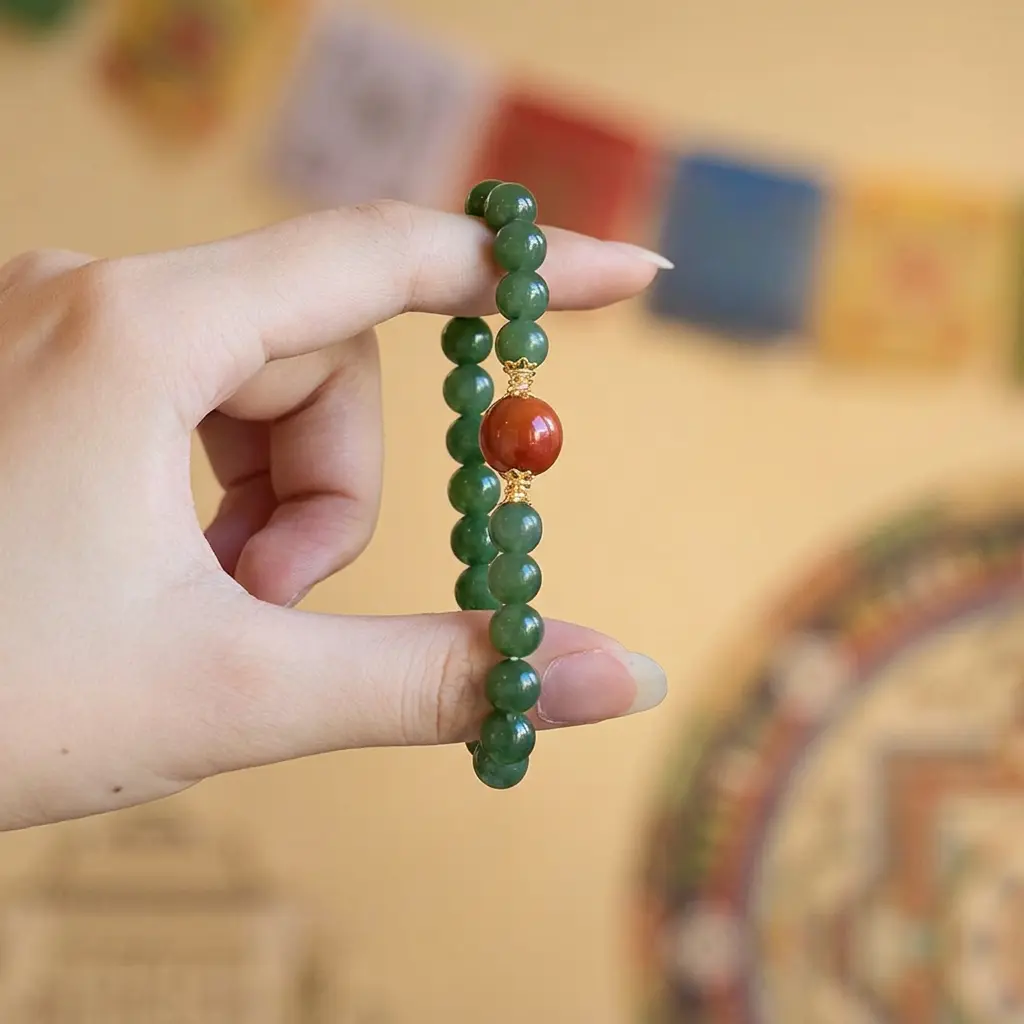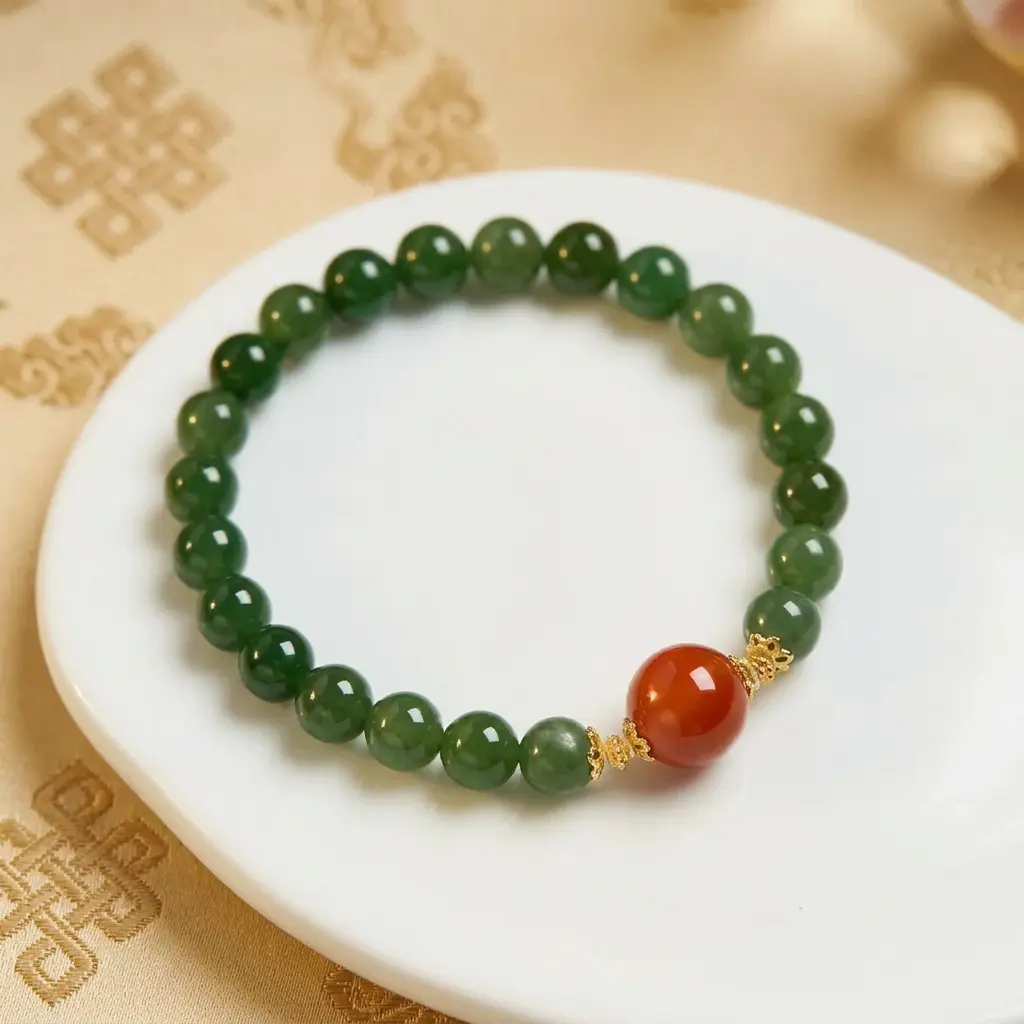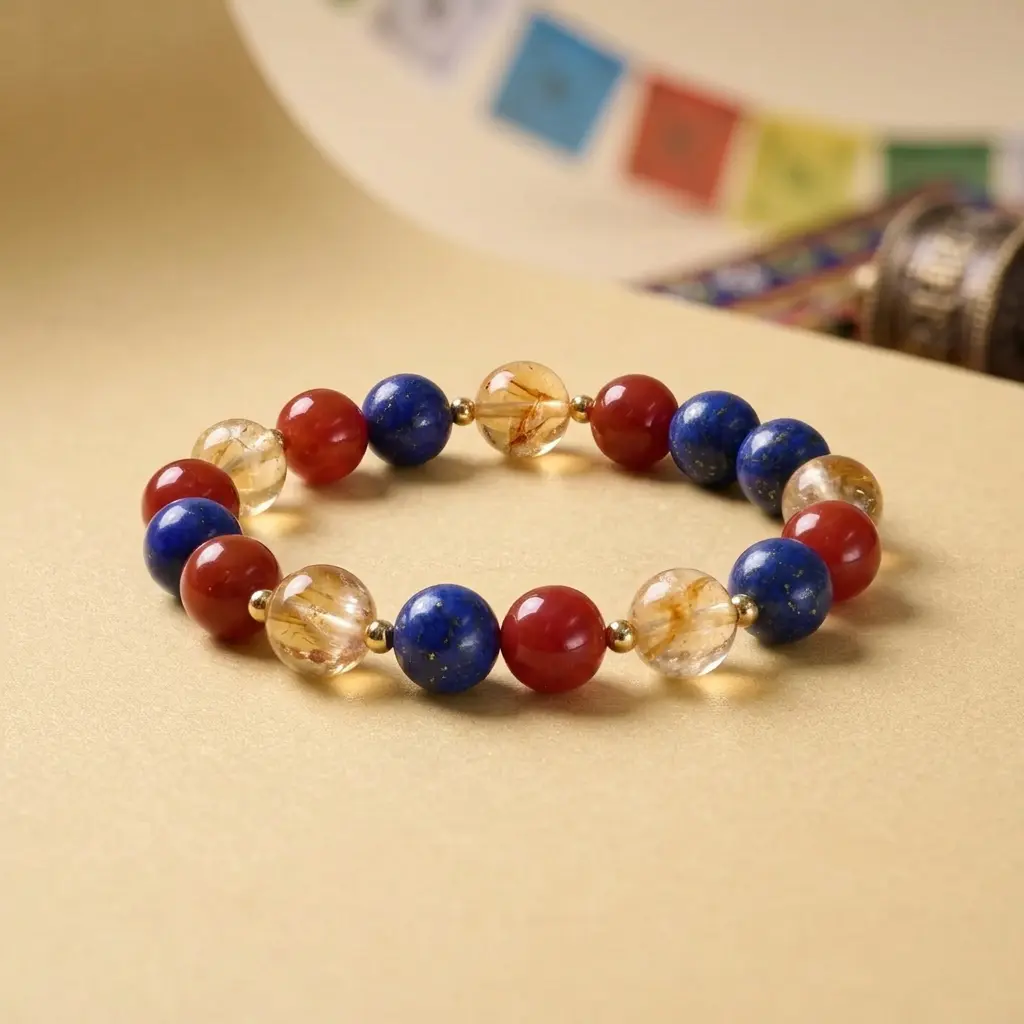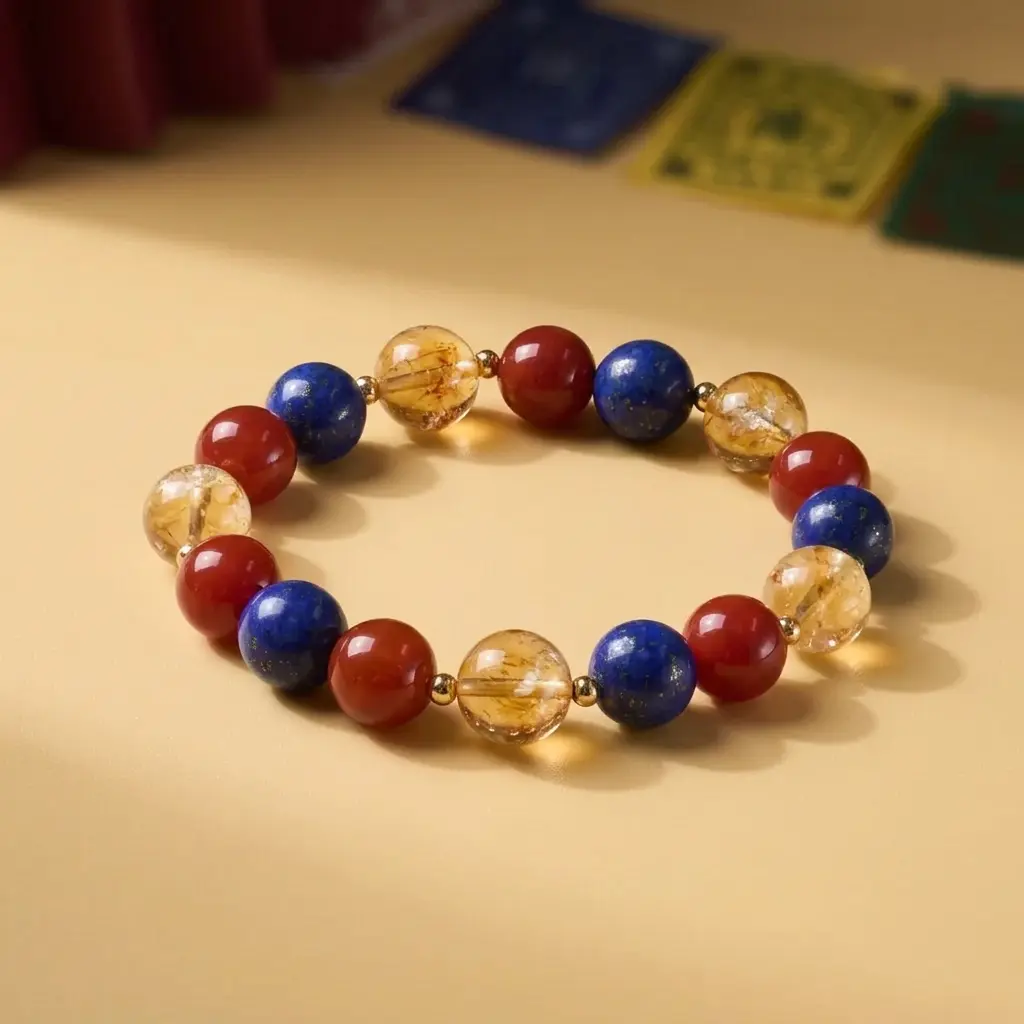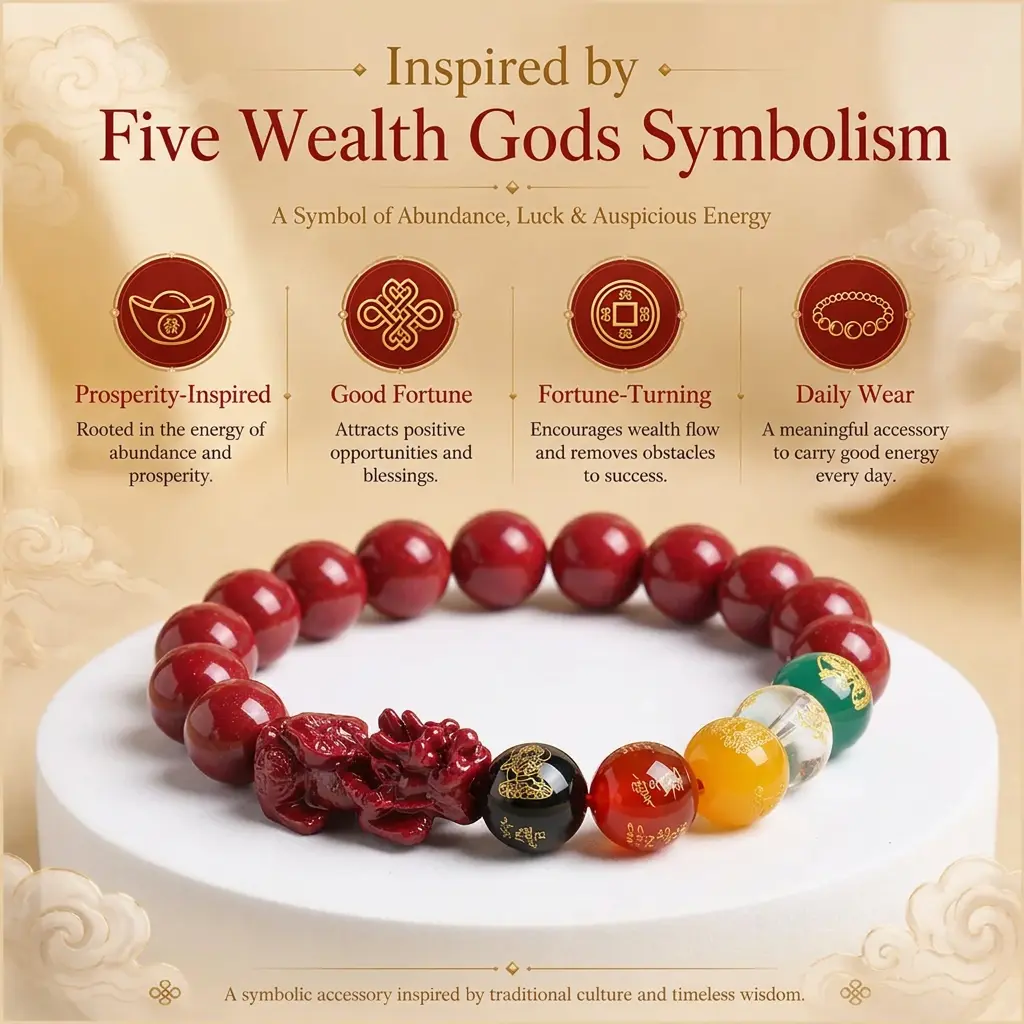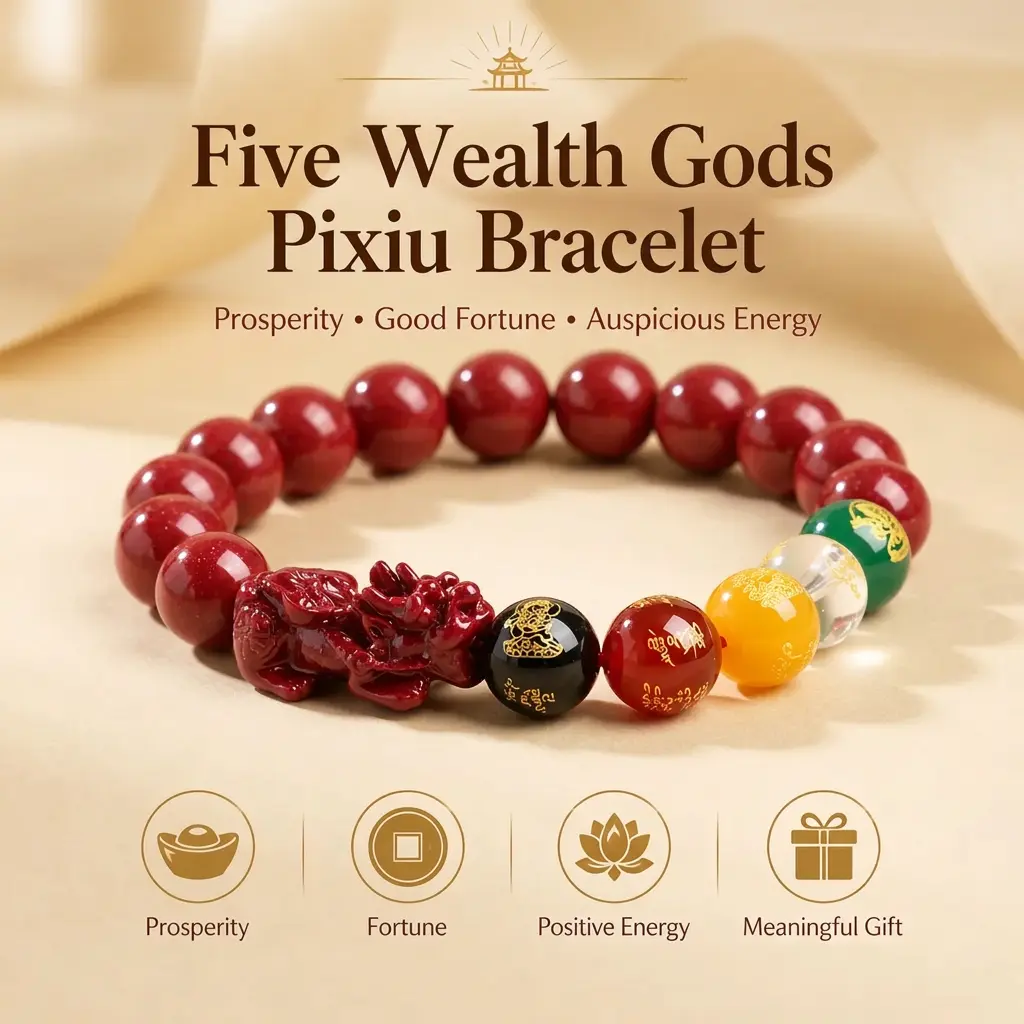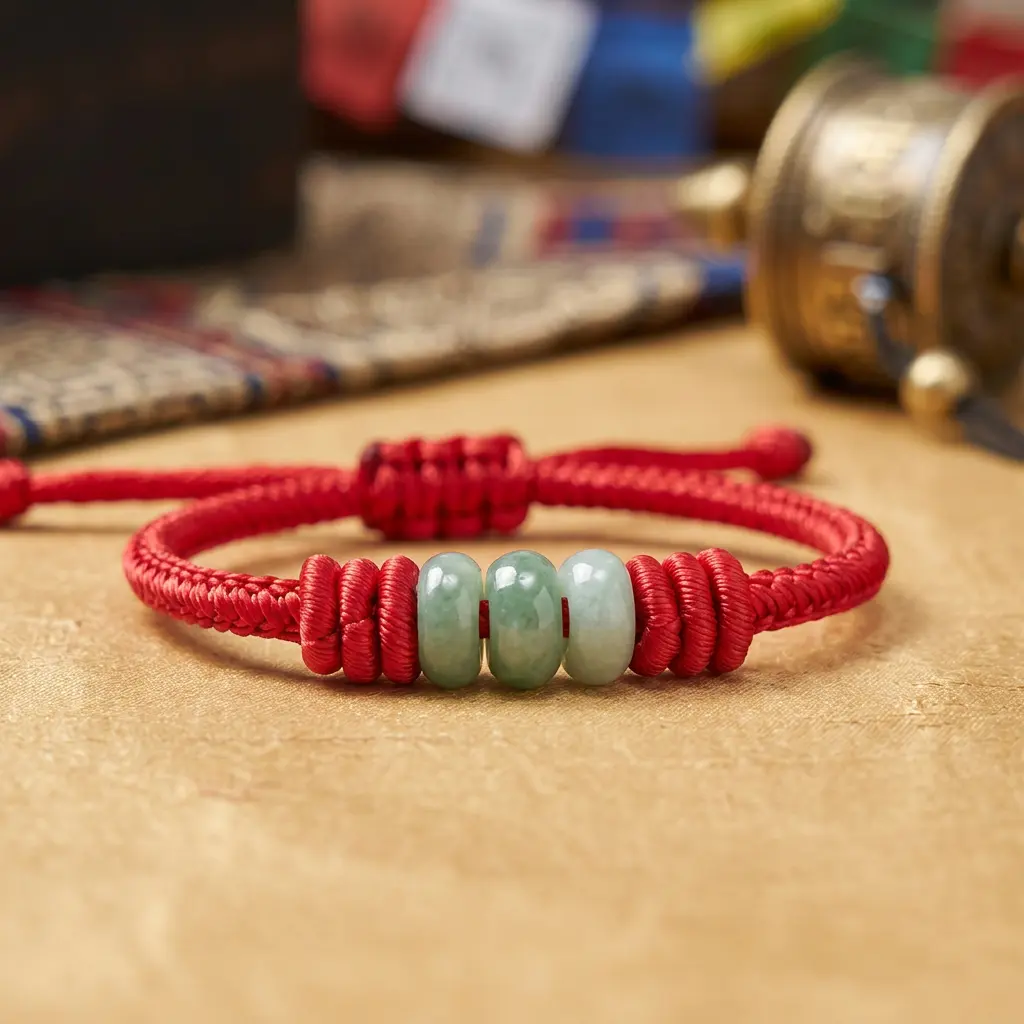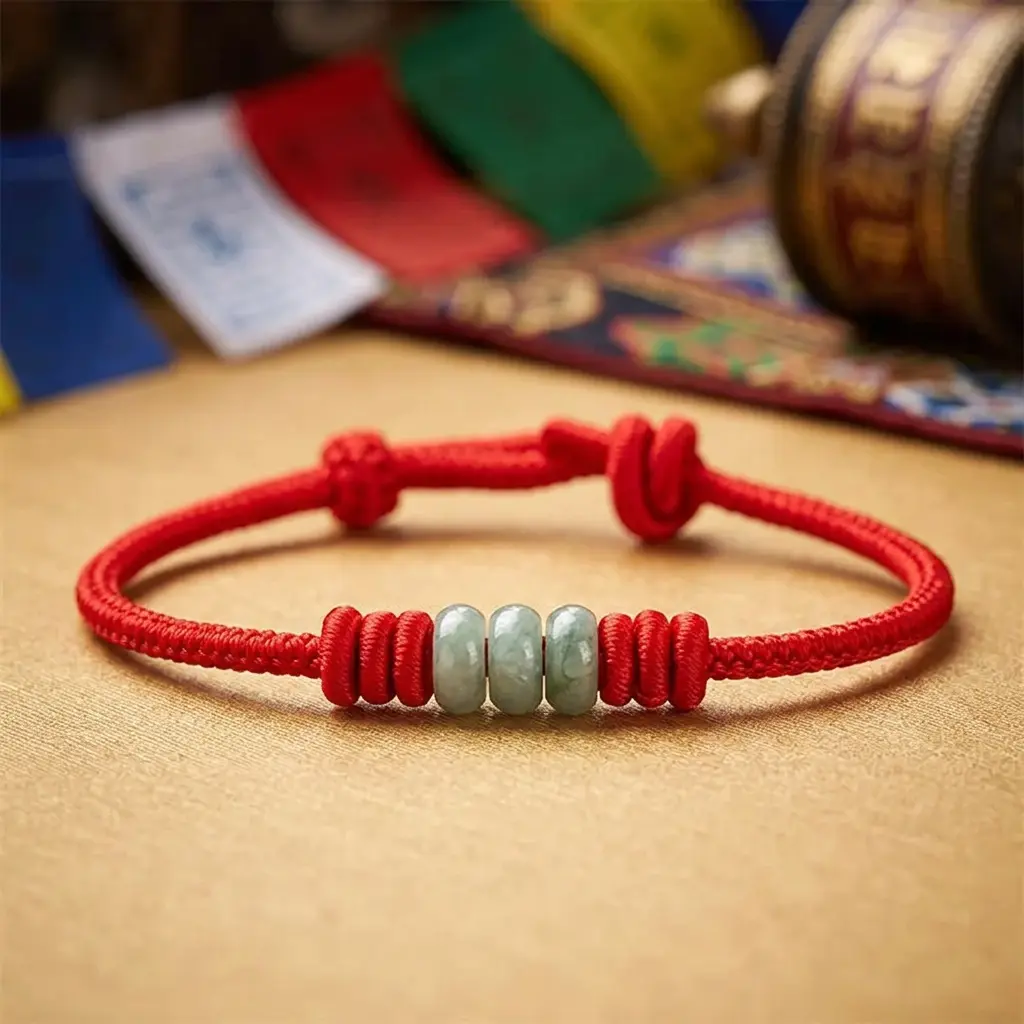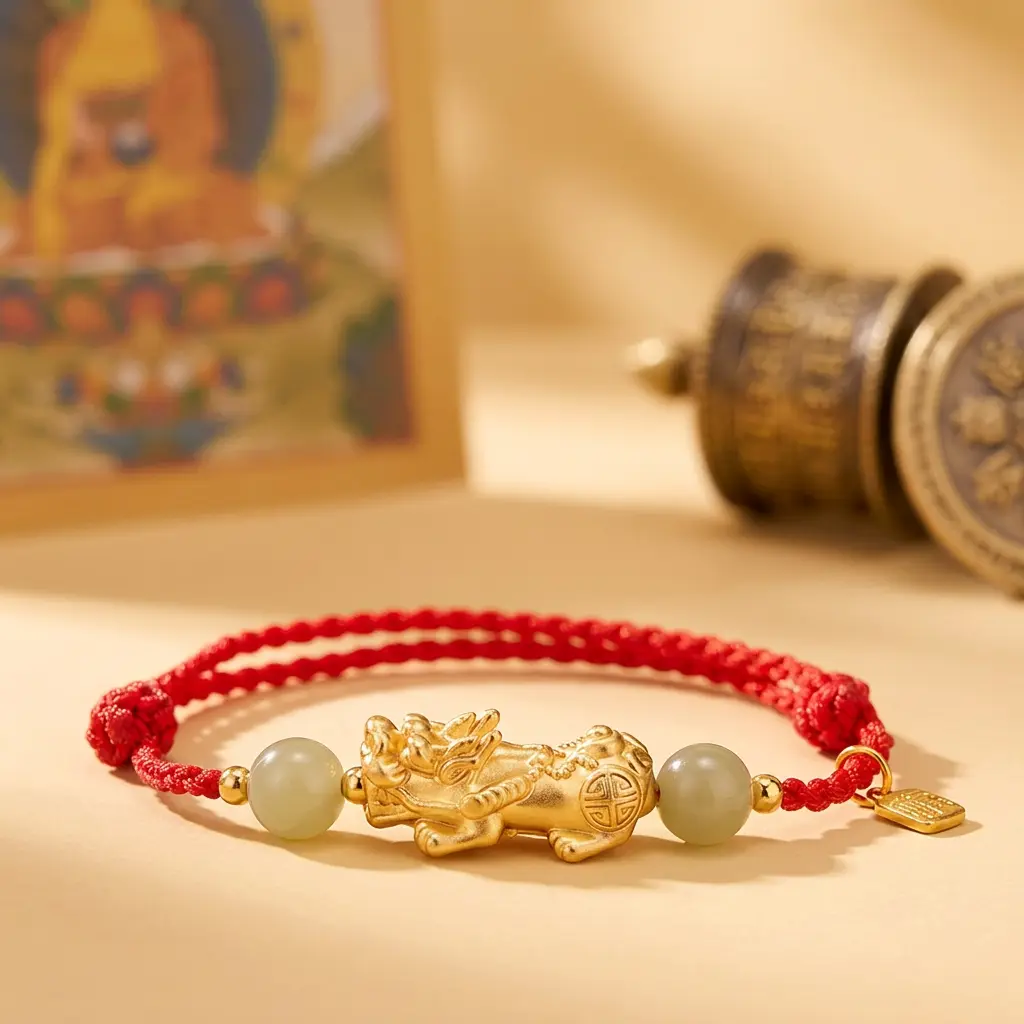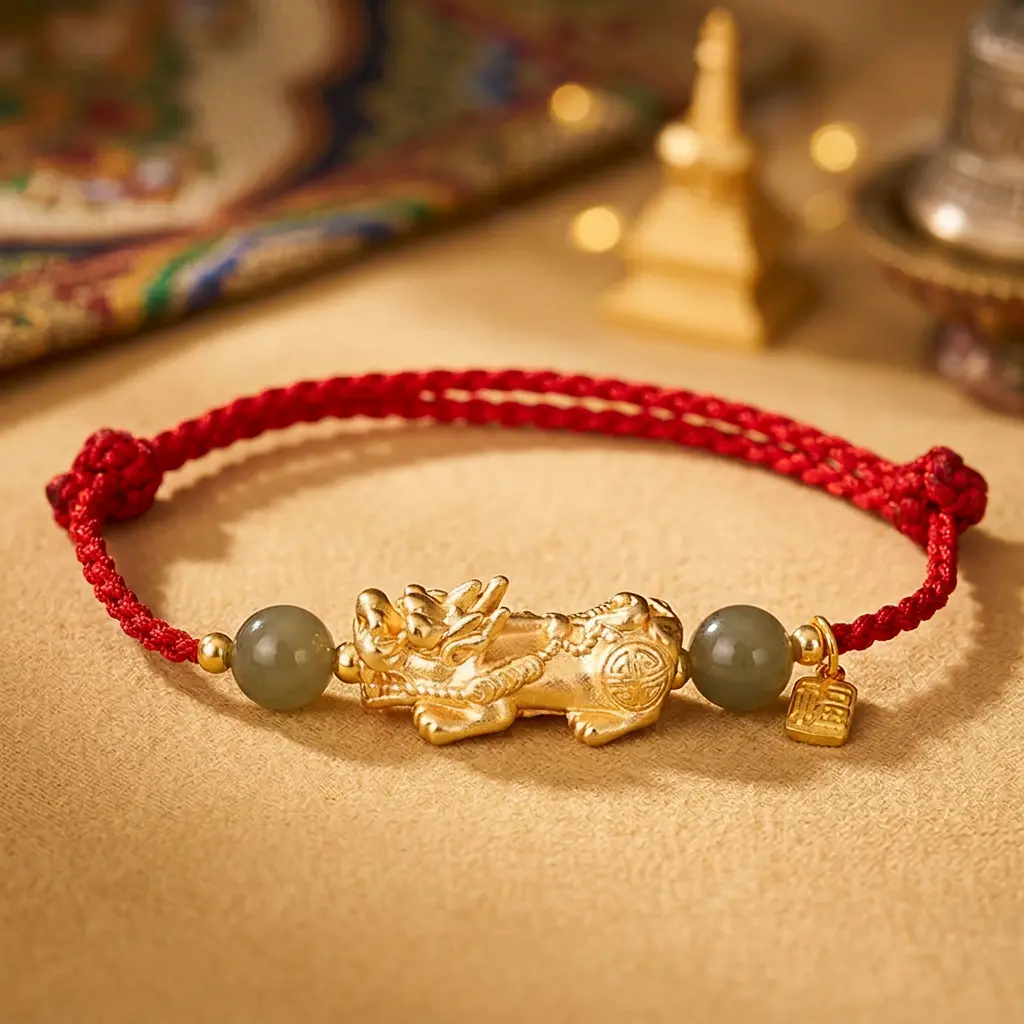


Cinnabar is one of feng shui’s most powerful wealth stones, and in its sealed form it is safe to wear. This vivid red mineral, known as mercuric sulfide, has been used for centuries to attract wealth, spark transformation, and shield a space from negative energy. To use it well, you need three things: the right placement, the right way to wear it, and a clear understanding of its safety.
This guide covers all three. At PotalaStore, we source red and Fire-element stones for our Tibetan wealth pieces, so we have seen firsthand how much “cinnabar” on the market is actually dyed resin, and how a properly sealed piece behaves. You will learn where to place cinnabar for wealth, which hand to wear it on, how to clean it without ruining it, and how to tell a genuine stone from a fake. For the wider picture, our guide to choosing a feng shui wealth bracelet shows how cinnabar fits alongside other prosperity stones.
Table of Contents
Quick Answer
- What it is: a scarlet Fire-element mineral (mercuric sulfide, HgS) tied to wealth and protection.
- Where to place it: the Southeast (Xun) wealth corner, your desk, or the entryway.
- Which hand: left wrist to attract wealth, right wrist to repel negative energy.
- Is it safe: yes, when sealed. Never keep raw ore indoors, and never grind or ingest it.
What Is Cinnabar, and Why Is It Powerful in Feng Shui?
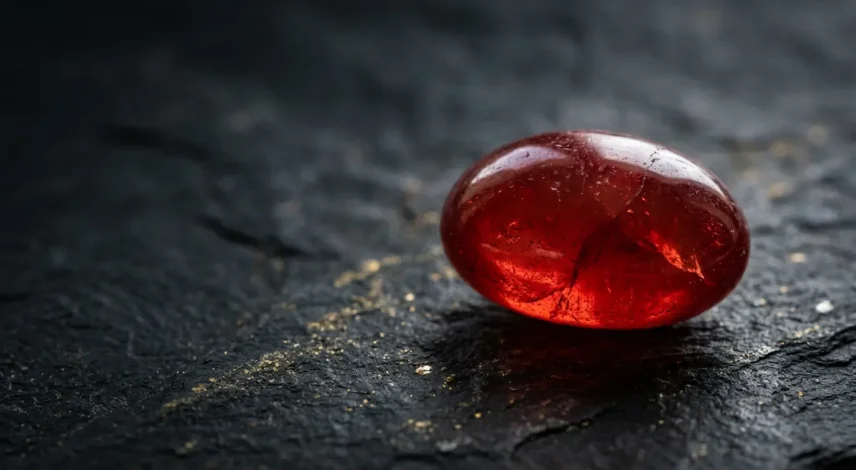
Cinnabar is a vivid scarlet mineral, chemically known as mercuric sulfide (HgS), and long treasured in feng shui as the most auspicious, Fire-element shade of red. For thousands of years it was called Dragon’s Blood and used for pigment, alchemy, and protection.
The Mineral Behind the Myth
Cinnabar forms in hydrothermal veins near volcanic activity, which gives the stone its deep, blood-red color. Ancient cultures ground it into vermilion pigment for sacred art. In Taoist alchemy, practitioners treated it as a symbol of transformation and rebirth. That long history is why cinnabar still carries associations with power, vitality, and change.
Why Red Belongs to the Fire Element
In feng shui, red is the color of the Fire element, and cinnabar is considered its strongest shade. Fire energy stands for life force, recognition, and protection. Because the color sits inside the mineral rather than being painted on, genuine cinnabar is believed to hold powerful Yang energy. Pairing a fiery red stone with Fire-element symbolism is what makes cinnabar a natural tool for attracting good fortune.
Wealth, Transformation, and Protection: The Three Energies
In feng shui tradition, cinnabar is believed to work on three fronts: it attracts wealth, catalyzes transformation, and shields you from negative energy. These three roles are the reason the stone appears in so many prosperity charms.
Wealth: The “Merchant’s Stone”
Cinnabar earned the nickname the “merchant’s stone” for its long reputation of attracting wealth and clearing financial obstacles. Traders once kept it close to sharpen their instincts and draw opportunity. In modern practice, people use it to invite abundance and support career growth. Its energy is often described as active and direct, the kind that pushes you to act on a decision you have been putting off.
Transformation: Fire That Moves You Forward
As a stone of transformation, cinnabar is believed to reignite your inner fire during periods of change. People reach for it during job transitions, new ventures, or big financial decisions. The idea is simple: its Fire energy stirs motivation, confidence, and the drive to follow through. Worn during a launch or a career shift, it serves as a daily reminder of the change you are working toward.
Protection: A Yang Shield Against Sha Qi
Cinnabar’s oldest role is protection. Its strong Yang energy is believed to act as a shield against negative energy, known in feng shui as Sha Qi. Placed in a room, it is said to clear stuck or harmful vibrations. Worn on the body, it forms a personal buffer that helps you move through tense environments without absorbing the negativity around you.
Where to Place Cinnabar in Your Home for Wealth
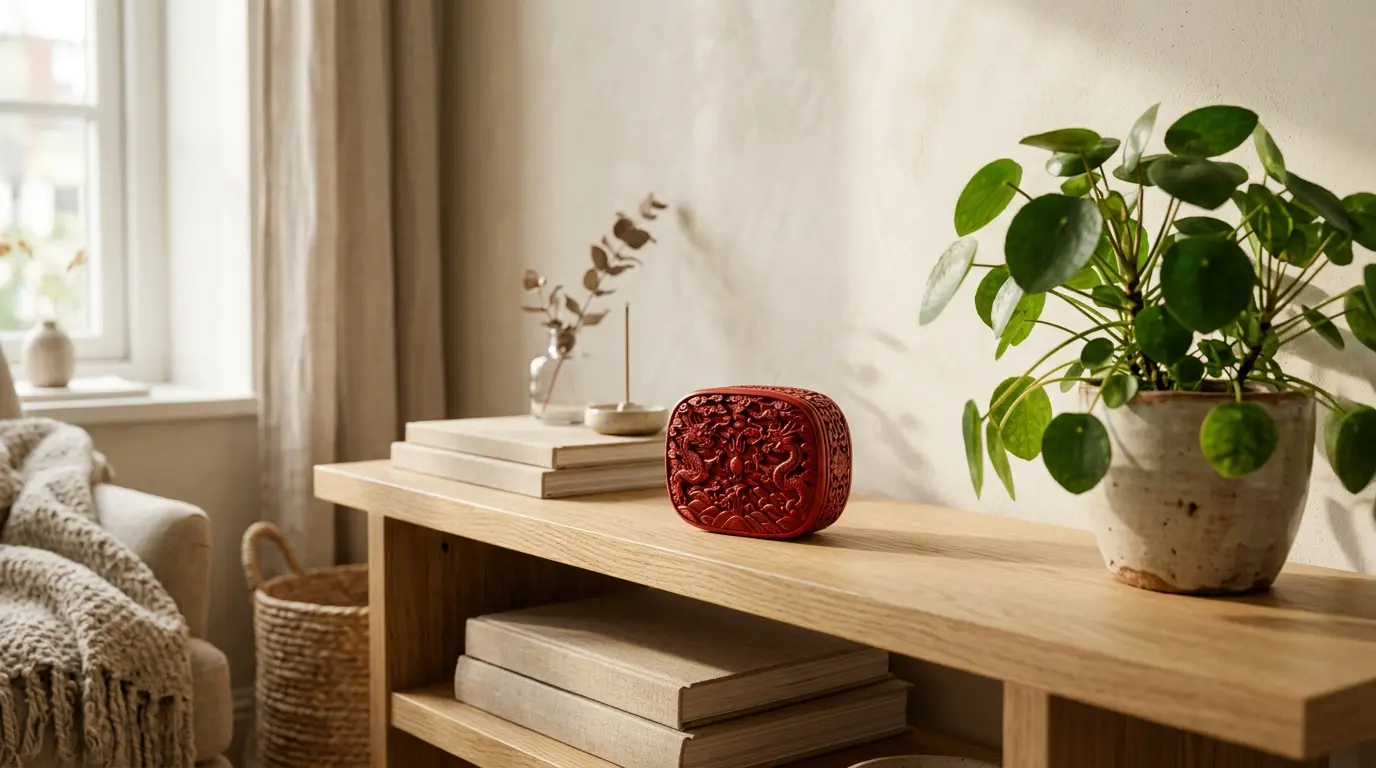
For wealth, place cinnabar in the Southeast (Xun) sector of your home or office, which feng shui recognizes as the wealth corner. You can also set it on your desk to energize your finances, or near the entryway to guard against negative energy.
| Area (Bagua) | Purpose | Where to place cinnabar |
|---|---|---|
| Southeast (Xun) | Wealth and prosperity | A shelf or desk in the far Southeast of your home or main room |
| South (Li) | Fame and reputation | The South area, to feed the Fire element that governs recognition |
| Front entrance | Protection | A console table facing the door |
| Personal desk | Focus and success | On or beside your workspace |
The Wealth Corner: Southeast, or Xun
The wealth corner sits in the Southeast (Xun) sector, and this is where cinnabar is most often placed to attract abundance. Stand at your front door facing in, and the far Southeast area is your wealth zone. A small sealed cinnabar carving here is believed to activate steady financial energy. For a full map of which sectors to activate this year, see our guide to the 2026 Flying Star wealth sectors.
The Entryway, Your Desk, and the Fame Sector
Near the entryway, cinnabar acts as a guardian that deflects negative Sha Qi before it enters. On your desk, it is believed to support focus and decisive, profitable choices. In the South (Li) sector, it strengthens reputation, since red feeds the Fire element that governs fame. Place one piece per purpose rather than scattering many, so your intention stays clear.
Which Hand Should You Wear the Bracelet On?
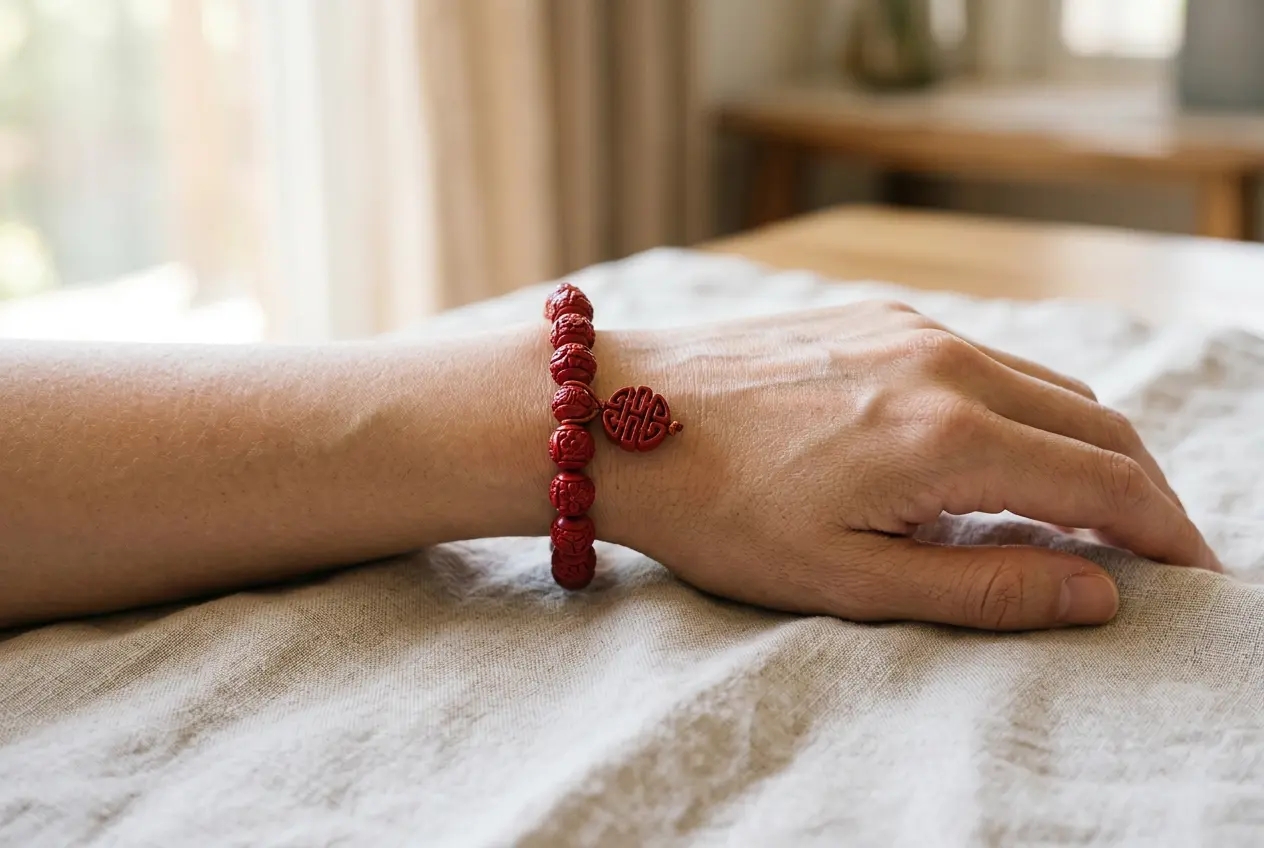
Wear a cinnabar bracelet on your left wrist to draw wealth toward you, or on your right wrist to project and repel negative energy. In feng shui, the left side receives and the right side gives, which is why both answers show up online.
Left to Receive Wealth, Right to Repel Negativity
The left wrist is your receiving side, so most people wear cinnabar there when the goal is attracting wealth. The right wrist is projective, so it suits protection, helping you push away negativity you meet during the day. Cinnabar can do both jobs, which is exactly why some guides say left and others say right. Choose the hand that matches your main intention.
Set an Intention, Then Wear It Daily
Before you wear it, hold the beads, take a few slow breaths, and name one clear goal, such as a specific income target or a new opportunity. Wear the bracelet through the day, especially at work or when meeting new people. Many practitioners take it off before sleep so their energy can rest. Consistency matters more than any single session.
Is It Safe to Wear? Handling, Cleansing, and Care
Sealed cinnabar, meaning resin-set beads, coated carvings, and lacquerware, is safe to handle and wear, because the seal permanently traps its mercury. The only real risk comes from raw, crumbly ore, which can release mercury and should never be inhaled or ingested.
Sealed vs Raw: The One Rule That Matters
The one rule to remember: buy sealed, finished pieces, and never keep raw cinnabar ore in a living space. Genuine carvings and beads are coated so the mineral cannot flake or dust. Cinnabar lacquerware binds fine powder in dozens of hardened layers, which makes it stable and safe to display. Cheap imitations are simply red resin, with no mercury and no risk, though they also carry none of the stone’s traditional energy. Whatever you own, never grind it, never burn it as incense, and always wash your hands after handling raw specimens.
How to Cleanse Cinnabar Without Water
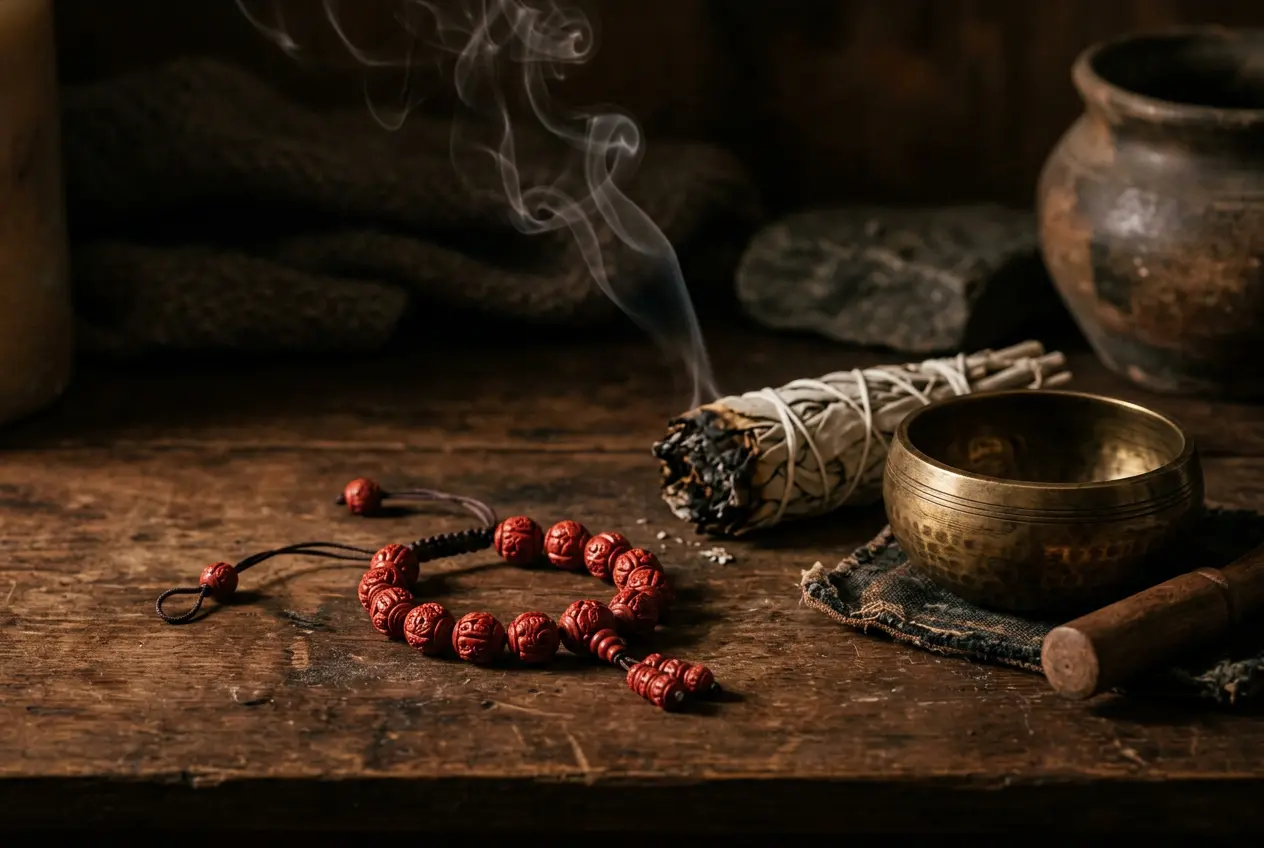
Cleanse cinnabar with smoke, sound, or moonlight, and never with water, salt, or an ultrasonic cleaner, since those can damage the seal. Use these safe methods:
- Smudging: pass the piece through sage or palo santo smoke for about 30 seconds.
- Sound: hold it near a singing bowl for 1 to 2 minutes.
- Moonlight: rest it on a windowsill overnight, ideally under a full moon.
Cinnabar shares this no-water rule with several minerals. Our guide to the crystal-care mistakes beginners make explains why stones like this one react badly to water.
How to Spot Genuine Cinnabar (and What to Buy Instead)
Much of the cheap “cinnabar” sold online is dyed red resin or plastic. Genuine, high-content cinnabar feels heavier and cooler to the touch, shows a mineral red that sits inside the material, and comes properly sealed.
Genuine, Sealed, or Just Red Resin?
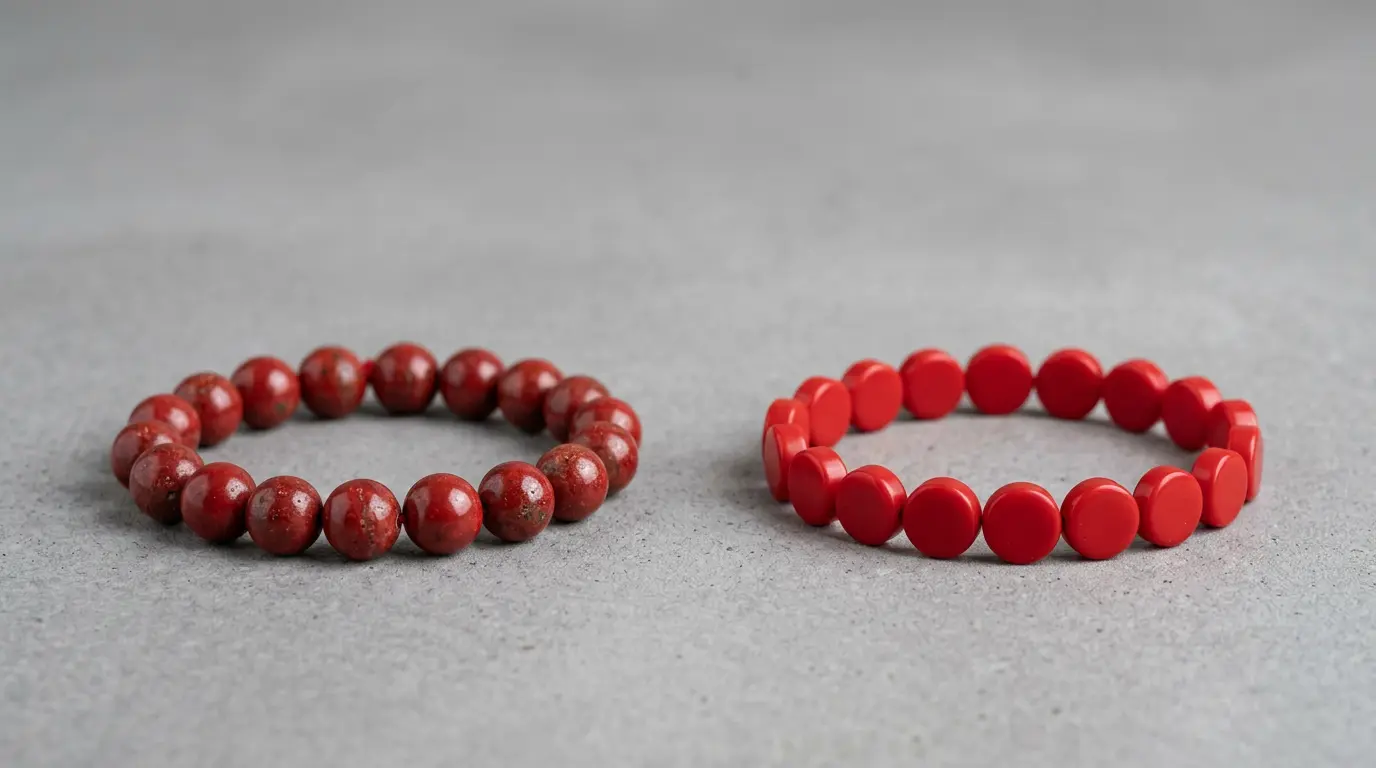
Sourcing red and Fire-element stones for our wealth pieces taught the PotalaStore team how common resin fakes are, and a few quick tells help. Real cinnabar has real weight, since plastic feels light in the hand. The color has depth and slight variation, while dyed resin looks flat and perfectly uniform. A genuine piece is sealed, with a smooth protective surface rather than raw, powdery grain. Price is the last clue: authentic, high-content cinnabar is rarely bargain-cheap, so a very low price usually signals resin. Fakes are harmless to wear, but they carry none of the traditional energy you are paying for.
Cinnabar vs Citrine, Obsidian, and Jade for Wealth
If your main goal is wealth, it helps to compare cinnabar with the stones you are most likely to choose instead.
| Stone | Best for | Element | Wear on |
|---|---|---|---|
| Cinnabar | Wealth plus strong protection | Fire (Yang) | Left for wealth, right for protection |
| Citrine | Attracting and manifesting money | Earth | Left wrist |
| Black Obsidian | Protecting and retaining wealth | Water | Right wrist |
| Jade | Long-term, stable prosperity | Wood | Either wrist |
For a piece with the same red, Fire-element energy, our red agate good-fortune bracelet is a natural match, since red carries the same auspicious symbolism as cinnabar. If you want the classic wealth pairing, a Citrine Pixiu or Black Obsidian Pixiu bracelet adds Pixiu, the creature believed to draw fortune in and never release it, so your gains stay put. To see how these guardians differ, read how Pixiu and Wu Lou compare as wealth and protection symbols.
Buying tip: if you are choosing a wealth stone as a gift, pick a sealed, well-made piece from a seller who is clear about the material. A genuine stone with an honest description is worth far more than a bargain that turns out to be resin.
The Bottom Line
Cinnabar remains one of feng shui’s most powerful tools for wealth, transformation, and protection, as long as you use it with respect. Buy sealed pieces, place them in your Southeast wealth corner, wear them on the hand that matches your goal, and clean them without water. Used this way, this fiery red stone becomes a daily reminder of the abundance and change you are working toward. The start of the Lunar New Year, when many people set fresh wealth intentions, is a fitting time to begin.
Bring Fire-Element Wealth Energy Into Your Space
Explore PotalaStore’s feng shui wealth bracelets, each hand-blessed in the Tibetan tradition and shipped worldwide with free shipping.Browse Wealth Bracelets
Important note: the spiritual and energy properties described here are based on feng shui tradition and personal belief, not scientific evidence. This content is for educational purposes and is not medical advice. Cinnabar contains mercury and should never be ground, burned, or ingested. Keep raw specimens away from children and pets, and wash your hands after handling them.
Frequently Asked Questions
No. Sealed cinnabar, including resin-set beads, coated carvings, and lacquerware, traps its mercury and is safe to wear. Only raw, crumbly ore is a risk, so never grind, burn, or swallow cinnabar.
Wear it on your left wrist to attract wealth, since the left is your receiving side. Wear it on the right to repel negative energy. Cinnabar suits both, because it works for wealth and protection.
Place it in the Southeast (Xun) wealth corner of your home or office, or on your desk. Near the entryway, it also guards against negative Sha Qi.
Use smudging, sound from a singing bowl, or overnight moonlight. Never use water, salt, or ultrasonic cleaners, which can damage the seal. Afterward, reset your intention.
📚 References
- Cinnabar Mineralogy and History: overview of cinnabar as mercuric sulfide and its historical uses in pigment and alchemy. Encyclopaedia Britannica
- Mercury and Human Health: guidance on mercury exposure, forms, and safety precautions. U.S. Environmental Protection Agency
- Gemstone Identification and Care: standards for evaluating and caring for gemstones and minerals. Gemological Institute of America
- Mercury Safety (ToxFAQs): plain-language facts on mercury toxicity and exposure. Agency for Toxic Substances and Disease Registry (ATSDR). Readers can search the ATSDR site for the current Mercury ToxFAQs sheet.