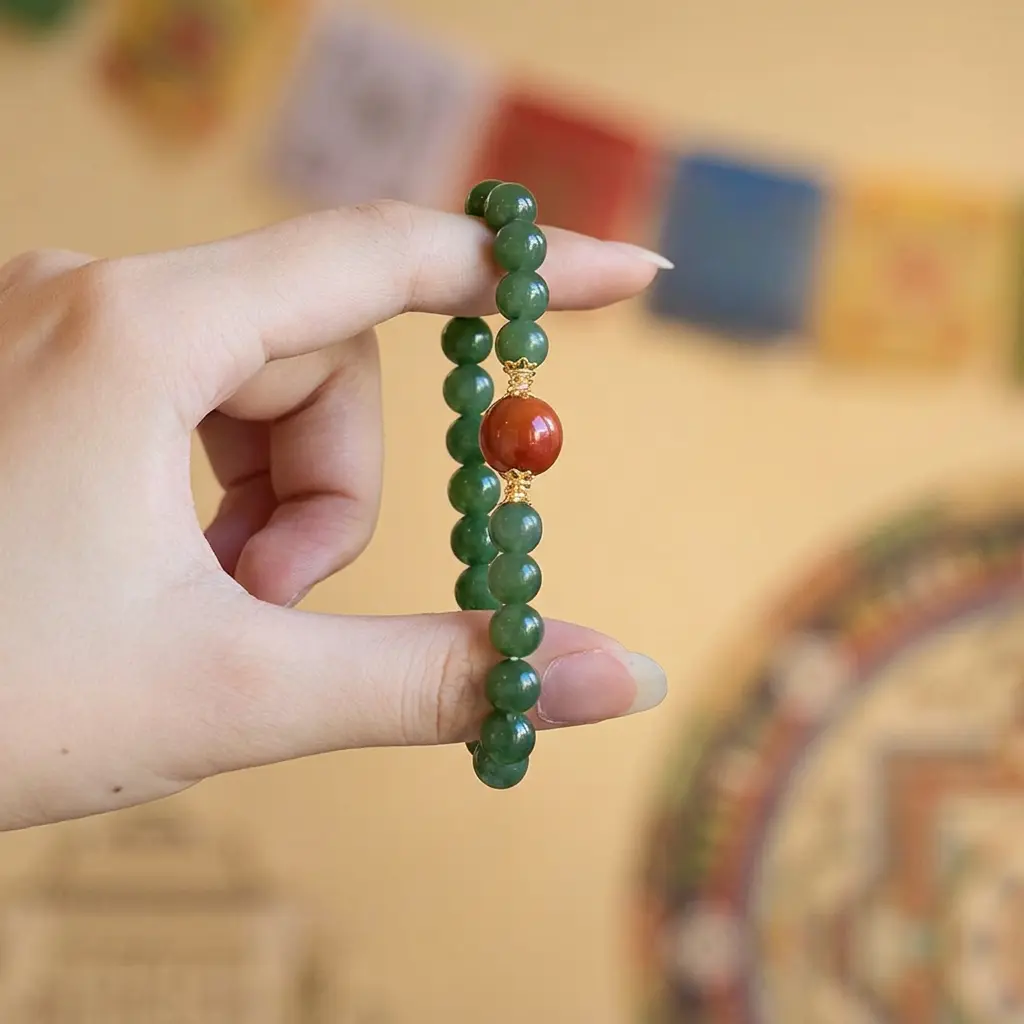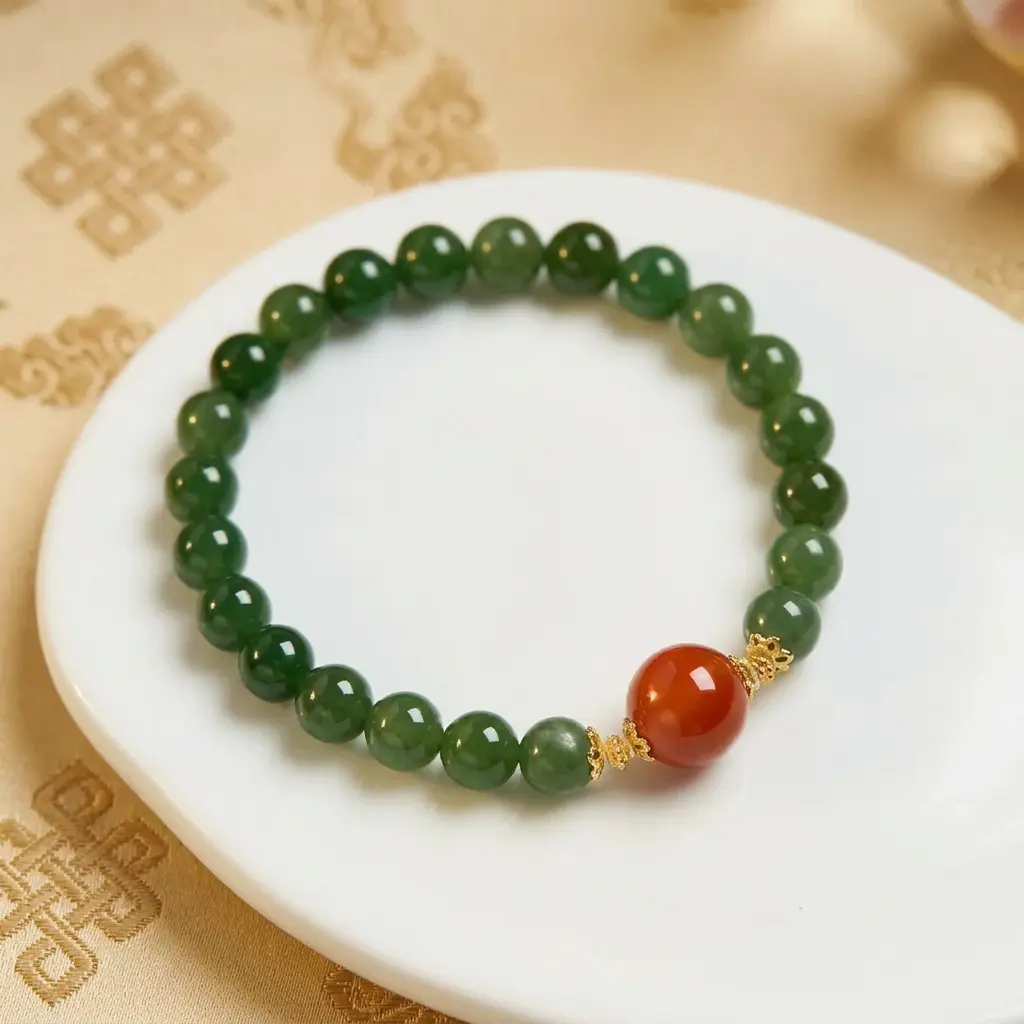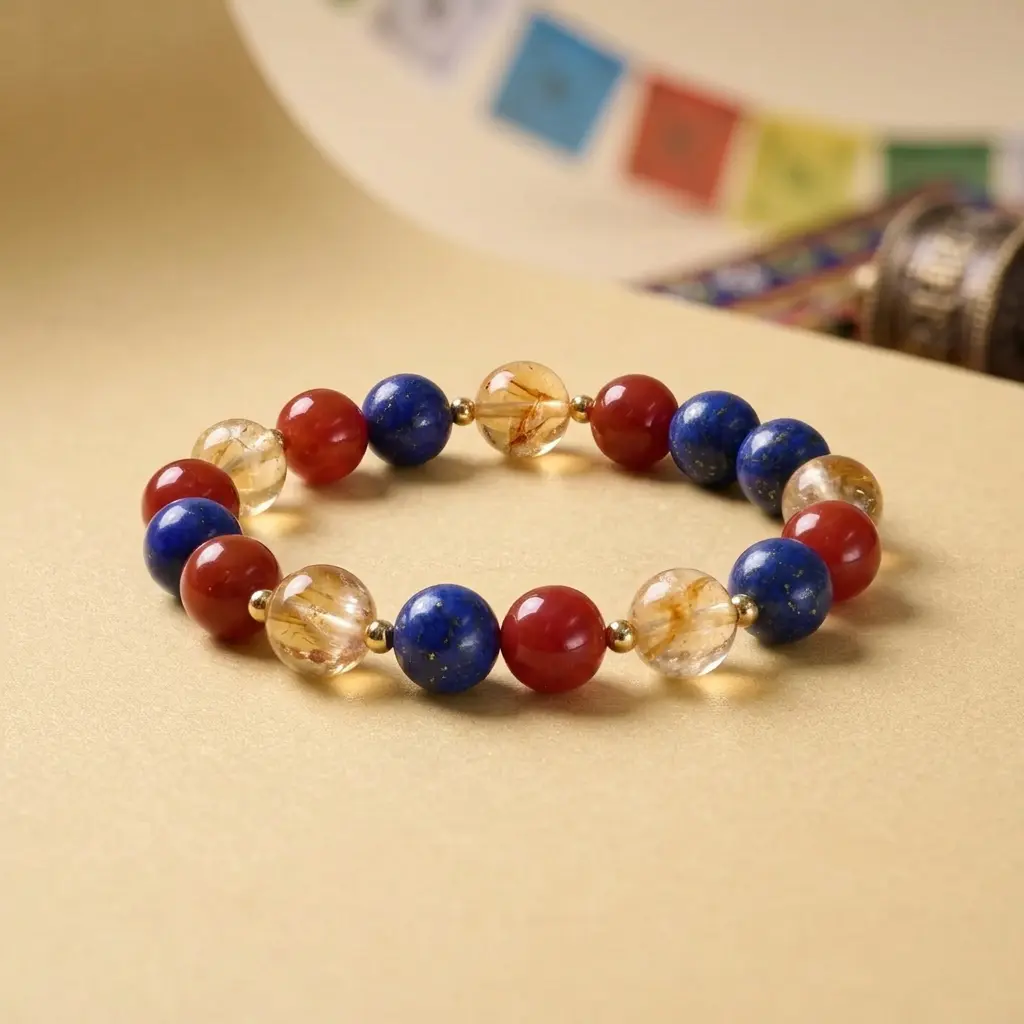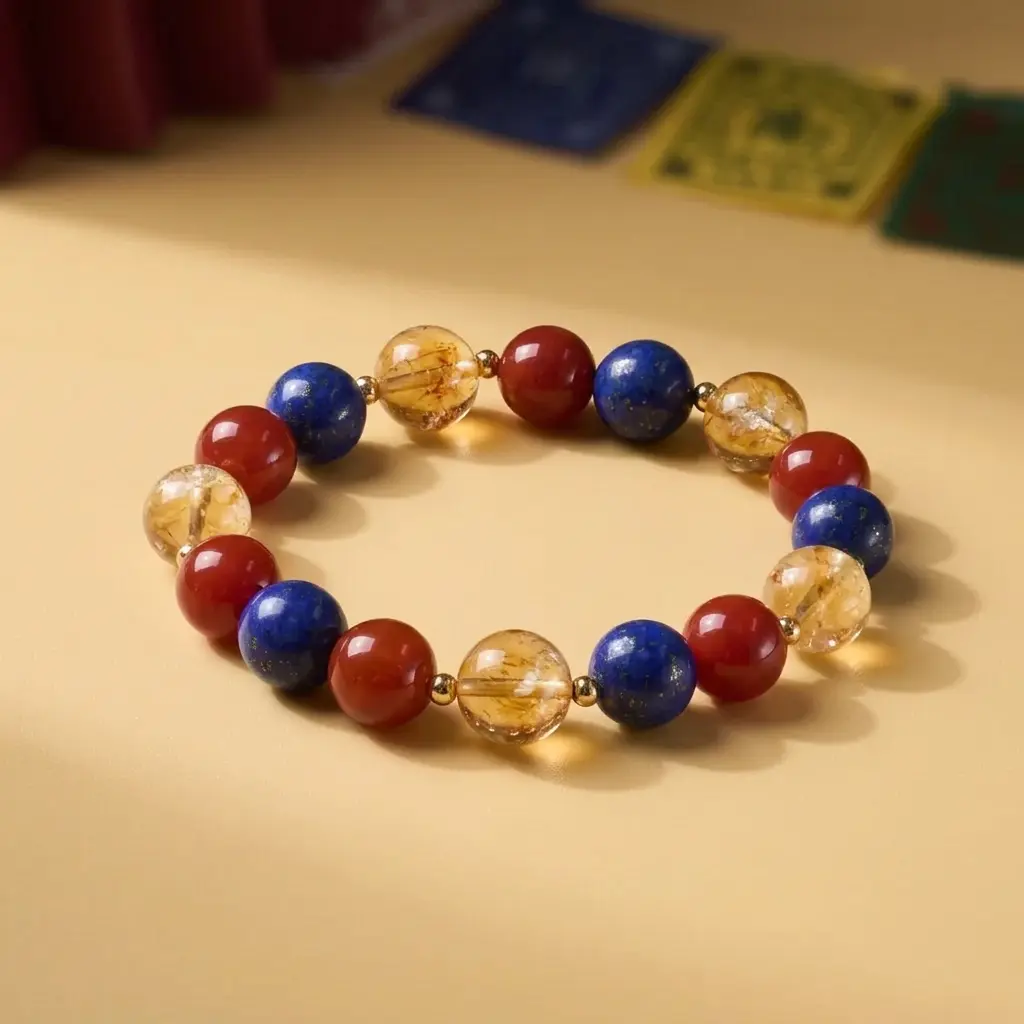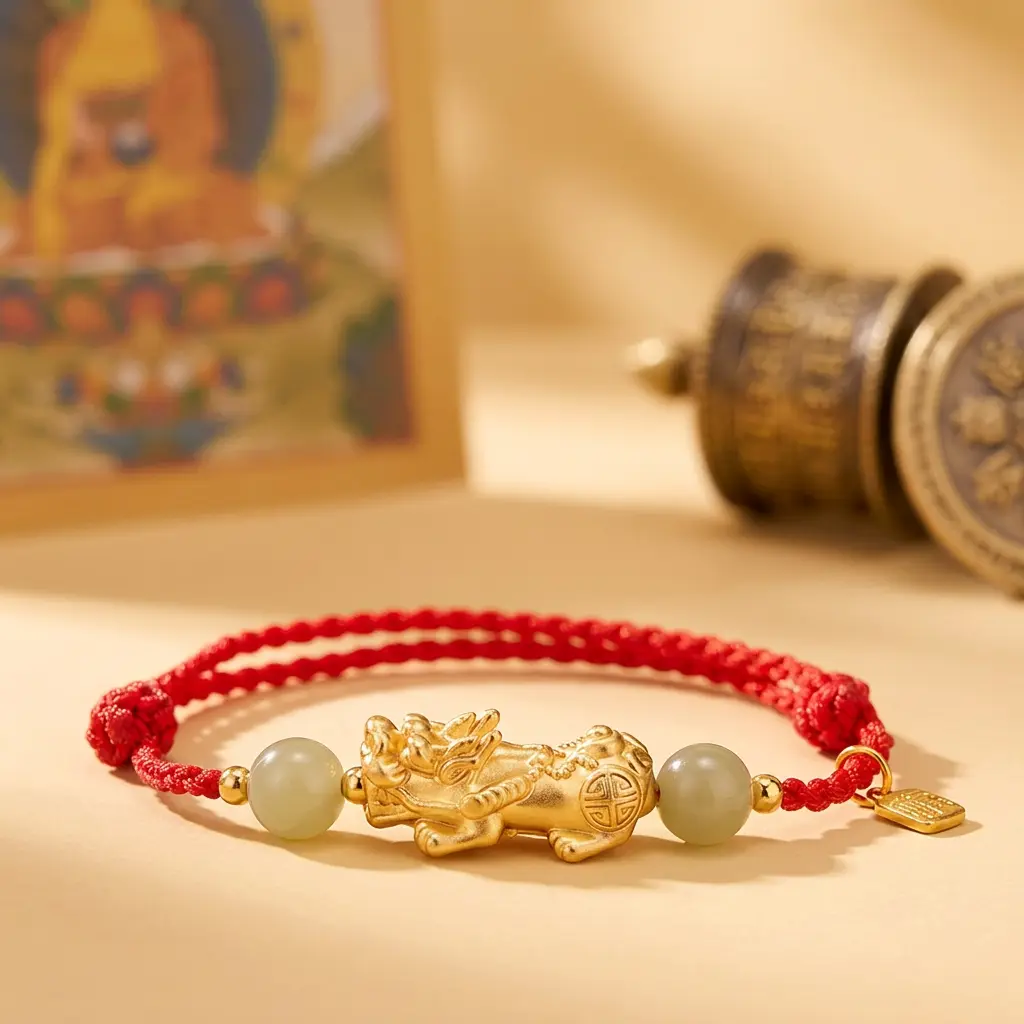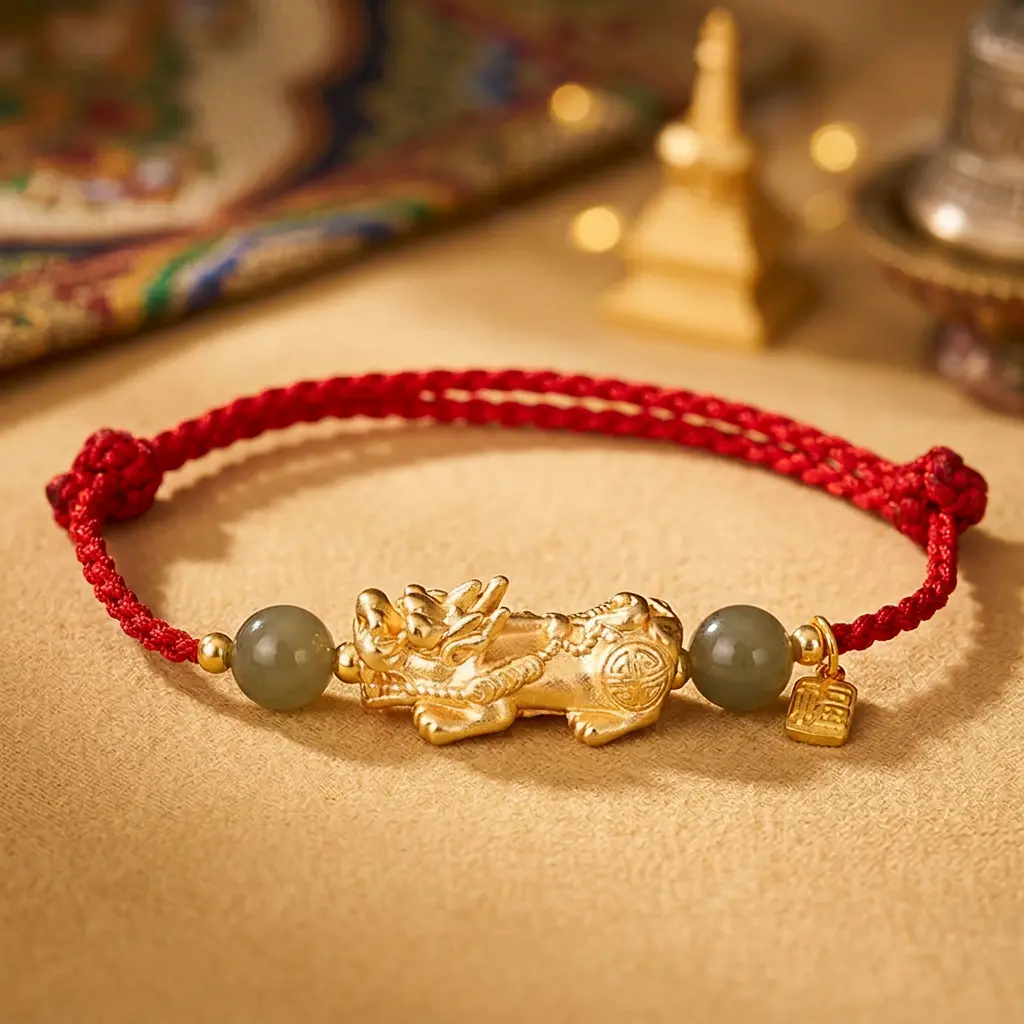



Looking for Tibetan Buddhist jewelry you can wear every day without babying it? Start with an 8 mm wood mala bracelet. It costs $25.95, works as a bracelet or a necklace, and gives you a quiet mindfulness reminder on every commute. If you never want to take a piece off, pick a titanium mantra ring. For a gift, pick a gau pendant.
By Tibetan Buddhist jewelry, we mean the prayer beads, mantra rings, and amulet pendants of the Himalayan Vajrayana tradition. We ranked seven of them by material, bead size, fit, and price, using the specs listed on each product page. We did not rank them by spiritual “power,” because no one can verify that.
At PotalaStore, we have worked with Himalayan artisans and the Sera Jhe and Kopan Monasteries for over a decade. That is why this list also tells you what wears out, what should come off before a shower, and where tradition asks for extra respect.
Short on time? Our top pick for everyday wear is the 108 Mala Beads Bracelet in 8 mm wood ($25.95). See how it compares to six other pieces below.
Table of Contents
How We Picked: 4 Tests for Durability, Fit, Respect, and Price
Every piece had to pass four checks you can verify before you buy:
- Durability: The material handles sweat, handwashing, and daily friction, or it needs only a simple dry routine.
- Fit: Beads measure 6 to 8 mm (about 0.24 to 0.31 in), or the cord slides to fit most wrists.
- Respect: The piece is easy to wear in a way that honors its tradition, at chest or wrist height.
- Price: Each pick costs $25 to $70, the range where genuine handmade Tibetan pieces usually start.
Which Materials Handle Water, Sweat, and Friction?
Metal and stone shrug off daily wear, while wood, bodhi seed, bone, and cord need a dry routine. Titanium does not rust or tarnish, so it survives handwashing and the gym. Wood and seed beads swell when soaked, and cotton or nylon cord fades with soap.
Here is what surprised us when we lined up the specs. The most wearable piece on this list is not the most traditional one. It is the metal ring, simply because you can forget it is there.
Why 6 to 8 mm Beads Work Best for Everyday Wear
Beads between 6 and 8 mm are small enough for a desk and large enough to count by touch. A 108-bead mala in this size wraps an average wrist three to four times. That looks great on its own but feels bulky next to a watch. If you wear a watch, choose 6 mm beads or a single-wrap cord, and put the mala on your other wrist.
How Authenticity and Respect Break a Tie
When two pieces scored the same, we chose the one with clearer sourcing. Genuine handmade pieces show small variations in color and knotting, and they rarely cost less than $25. If you want a fuller checklist, read our guide to the signs of an authentic, monastery-blessed Tibetan bracelet.
The 7 Best Tibetan Buddhist Jewelry Pieces for Everyday Wear, Ranked
Here is the short list, ranked by how easily each piece fits a real weekday.
| Rank | Piece | Material | Size | Price* | Best for |
|---|---|---|---|---|---|
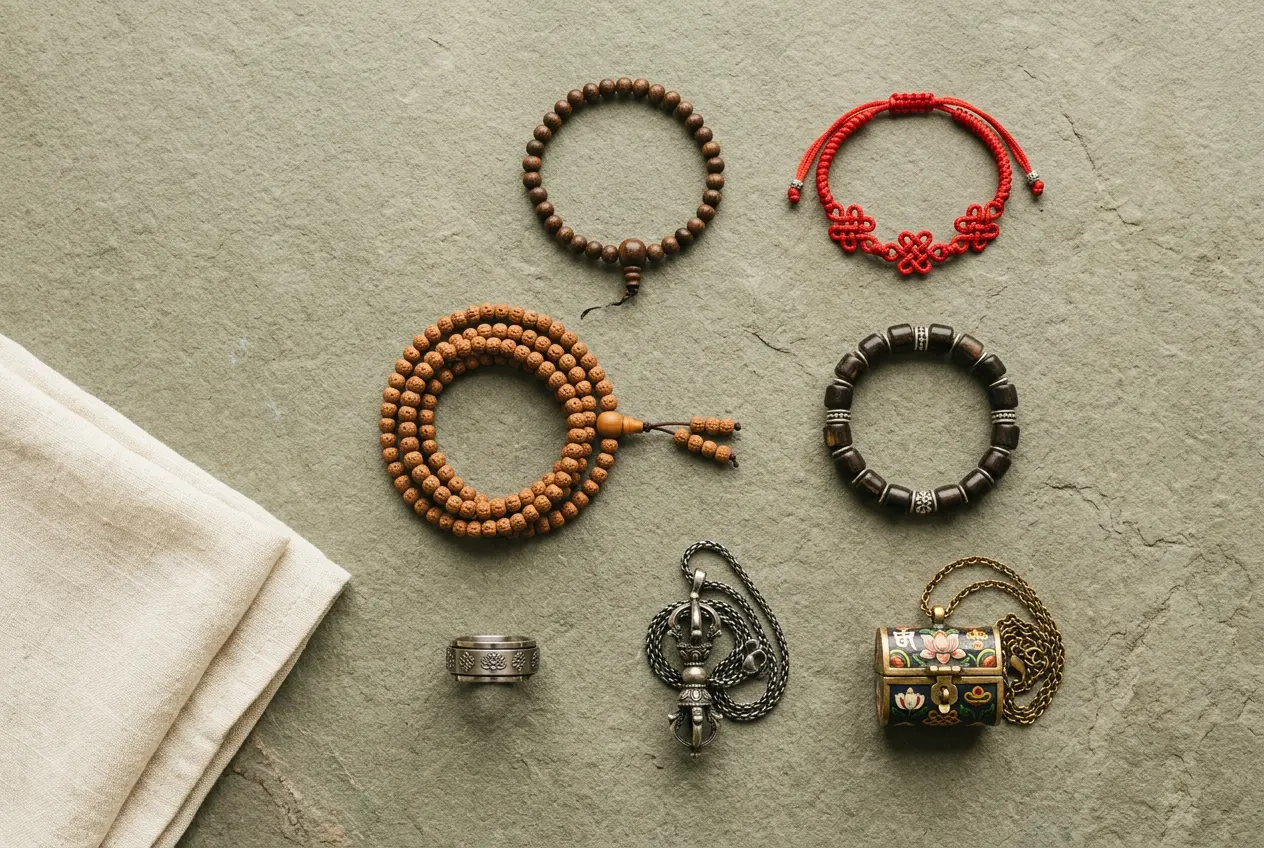
| 1 | 108 Mala Beads Bracelet | Wood beads (listed as sandalwood), elastic cord | 8 mm (0.31 in) beads, wraps 3 to 4 times | $25.95 | First-time buyers |
| 2 | Om Mani Padme Hum Lucky Bracelet | Hand-knotted red cord | 8.6 in (21.8 cm), sliding knot | $34.95 | Minimalists |
| 3 | Bodhi Seed Mala 108 Beads with Lotus | Bodhi seed, hand-knotted | 108 beads, full-length mala | $48.95 | Meditation on the go |
| 4 | Tibetan Yak Bone Bracelet | Yak bone beads | Wrist bracelet | $43.95 | Understated daily wear |
| 5 | Om Mani Padme Hum Titanium Rotating Ring | Titanium, spinning band | Standard ring sizes | $46.95 | Never taking it off |
| 6 | Tibetan Vajra Pendant Necklace | Metal pendant with mantra | Pendant on chain | $42.95 | Office wear |
| 7 | Hand-Painted Thangka Gau Box Pendant | Metal box, hand-painted panel | Gau boxes run 1.5 to 3 in (3.8 to 7.6 cm) | $68.95 | Meaningful gifts |
*Sale prices as listed on PotalaStore on 09/28/2026. Prices and stock may change.
Best Overall: 108 Mala Beads Bracelet (Wood, 8 mm)
This mala bracelet strings 108 wood beads in 8 mm plus a guru bead on elastic cord. In Tibetan tradition, one round counts as 100 mantras, and the 8 extra beads are dedicated to all beings.
Why we like it: It wraps your wrist three to four times, or hangs as a necklace of about 36 to 40 in. One $25.95 piece covers your commute and your yoga class.
Watch out: Wood swells in water, and elastic stretches if you roll it on and off. Slide it on gently and take it off to shower.
Best for: Your first mala. See the 108-bead wood mala bracelet.
Best Minimalist Cord: Om Mani Padme Hum Lucky Bracelet
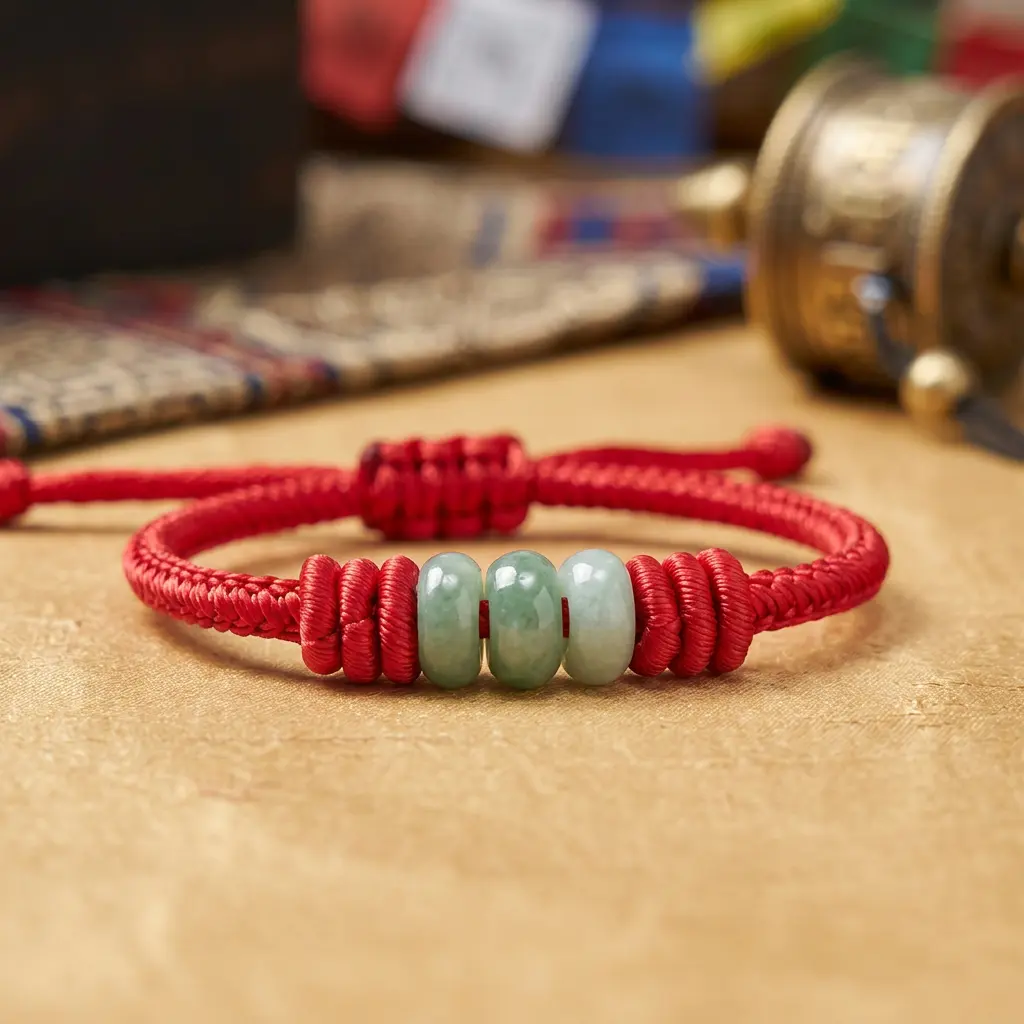
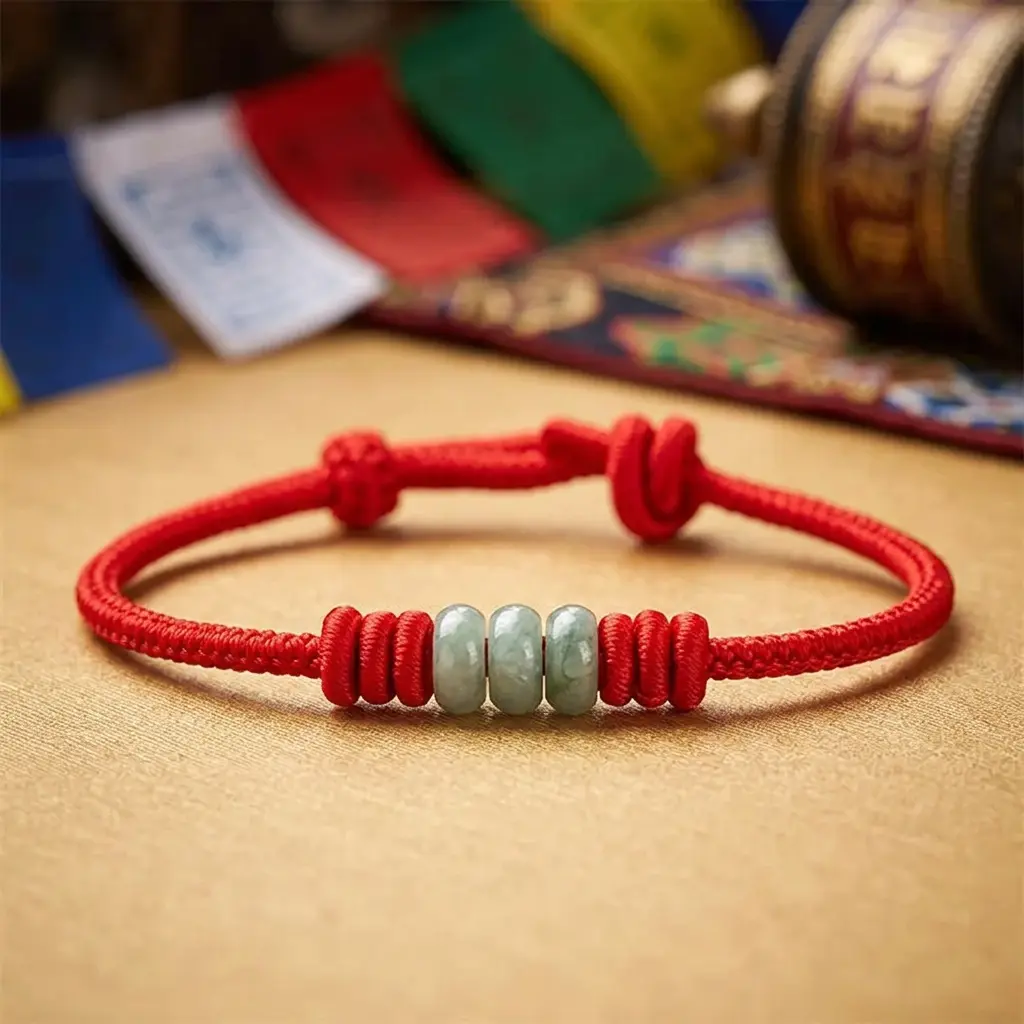
This bracelet is a hand-knotted red cord with endless knots and a sliding knot that opens to 8.6 in (21.8 cm). PotalaStore artisans recite Om Mani Padme Hum for 30 to 50 minutes while tying each one.
Why we like it: The sliding knot fits most wrists without measuring. It weighs almost nothing, so it disappears under a sleeve at work.
Watch out: Red cord fades with soap and sun. A softer color after a few months is normal wear, not a defect.
Best for: Minimalists and gifts. View the Om Mani Padme Hum red knot bracelet.
Best for Meditation on the Go: Bodhi Seed Mala with Lotus
This 108-bead bodhi seed mala is hand-knotted by artisans in Boudhanath, Nepal, and blessed at Kopan Monastery, according to our sourcing records. Bodhi seed beads are dried, textured seeds prized in Buddhist practice for their link to the Buddha’s awakening.
One thing we learned on the workshop floor: most beads sold as “bodhi seed” come from Ziziphus budhensis, a jujube-family tree in Nepal. The seeds of the actual Bodhi fig are far too small to drill. An honest seller should tell you which one you are buying.
Why we like it: Bodhi seeds darken from ivory to golden-brown over 3 to 6 months of handling. Your mala becomes visibly yours, and the texture makes counting easy in a waiting room or on a train.
Watch out: Never soak it. Bodhi seed absorbs water and can crack.
Best for: Daily mantra practice. Compare it with sandalwood and yak bone in our ranking of the best Tibetan mala beads for meditation by material, or find the bodhi seed mala in our necklace collection ($48.95).
Best Mindfulness Reminder: Yak Bone Bracelet
Yak bone beads carry a specific meaning in Tibetan tradition: they remind the wearer of impermanence. The matte, neutral finish makes this the least flashy piece on our list.
Why we like it: It pairs with jeans or a suit, and it works for any gender. Every glance becomes a small cue to stay present.
Watch out: Bone is porous. Keep it away from lotion and long soaks. Fine natural lines are normal.
Best for: Understated everyday wear ($43.95). Browse yak bone and knot bracelets.
Best “Never Take It Off” Pick: Om Mani Padme Hum Titanium Rotating Ring
This ring has a titanium outer band, engraved with the six-syllable mantra, that spins around the inner band. Spinning it echoes the turning of a prayer wheel.
Why we like it: Titanium does not rust or tarnish, so sweat, handwashing, and the gym are no problem. Spin it before a meeting and take one slow breath.
Watch out: A ring cannot adjust like a cord. Measure your finger before you order.
Best for: Anyone who hates taking jewelry on and off ($46.95). See the titanium Om Mani Padme Hum spinning ring.
Best Pendant: Tibetan Vajra Pendant Necklace
The vajra, or dorje, is a Tibetan ritual object that stands for clarity that cannot be broken, like a diamond. This pendant pairs it with Om Mani Padme Hum.
Why we like it: It sits at chest height and hides under a collar, so your reminder stays private at the office.
Watch out: Take the chain off to sleep so it does not tangle. Some metals darken with skin contact.
Best for: Office dress codes ($42.95). View the vajra pendant necklace.
Best Meaningful Gift: Hand-Painted Thangka Gau Box Pendant
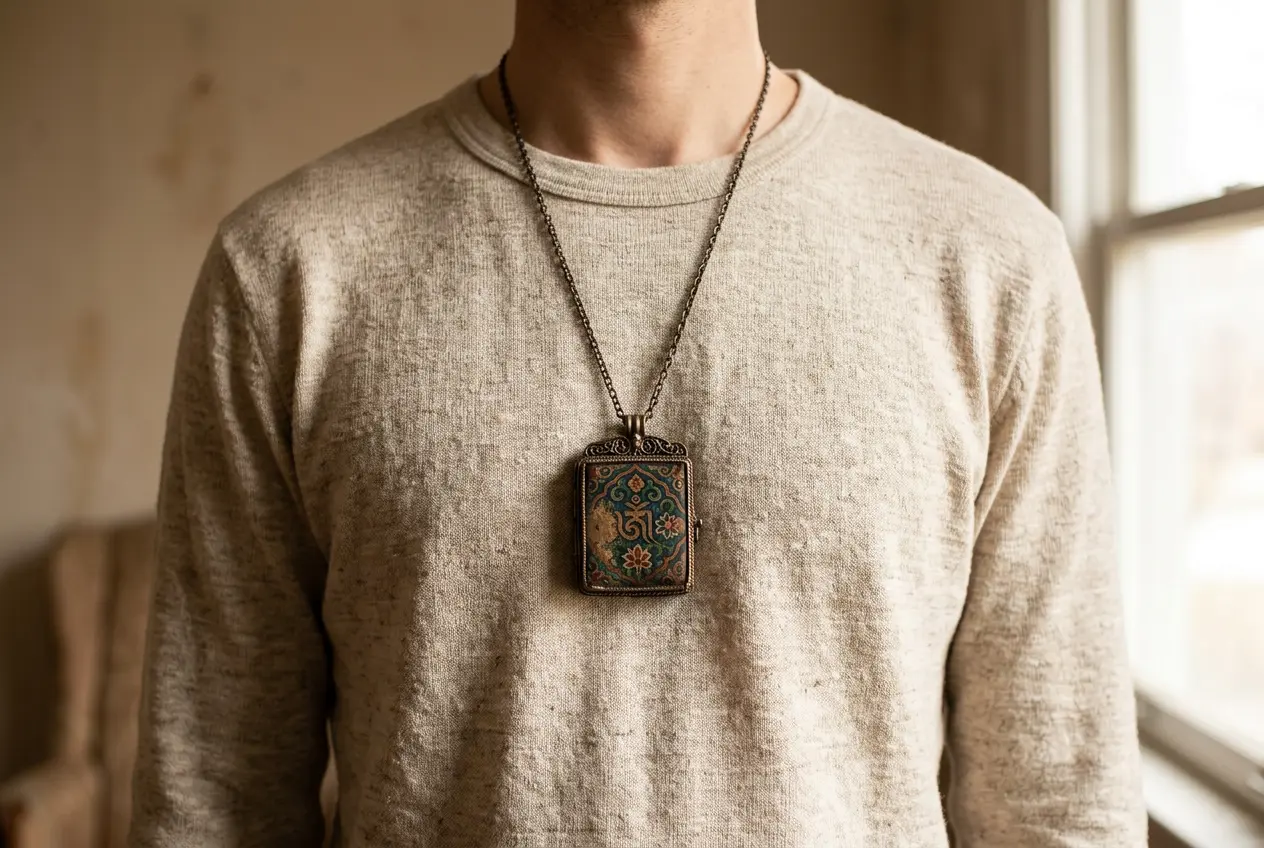
A gau is a Tibetan amulet box that traditionally holds mantra scrolls or blessed objects. It works as a portable shrine, worn at chest height. Gau boxes typically measure 1.5 to 3 in (3.8 to 7.6 cm) across, and this one carries a hand-painted thangka panel.
Why we like it: No other piece here tells a richer story. It is the gift people remember receiving.
Watch out: The painted face scratches. A splash will not harm it, but long soaks damage the metal casing and the contents.
Best for: Birthdays and holidays ($68.95). See the hand-painted thangka gau pendant, or learn more about Buddhist amulet types, from gau boxes to deity pendants.
Can You Wear Mala Beads Every Day?
Yes, you can wear mala beads every day. Many Tibetan Buddhist practitioners keep a mala on the wrist or neck as a constant practice reminder. Take it off before showering, swimming, or sleeping, because water and pressure weaken wood, bodhi seed, and cord. Never step over it or wear it below the waist.
If you are new to this, one habit prevents most problems. The easiest way to snap an elastic mala is to sleep in it, so give yours a spot on the nightstand.
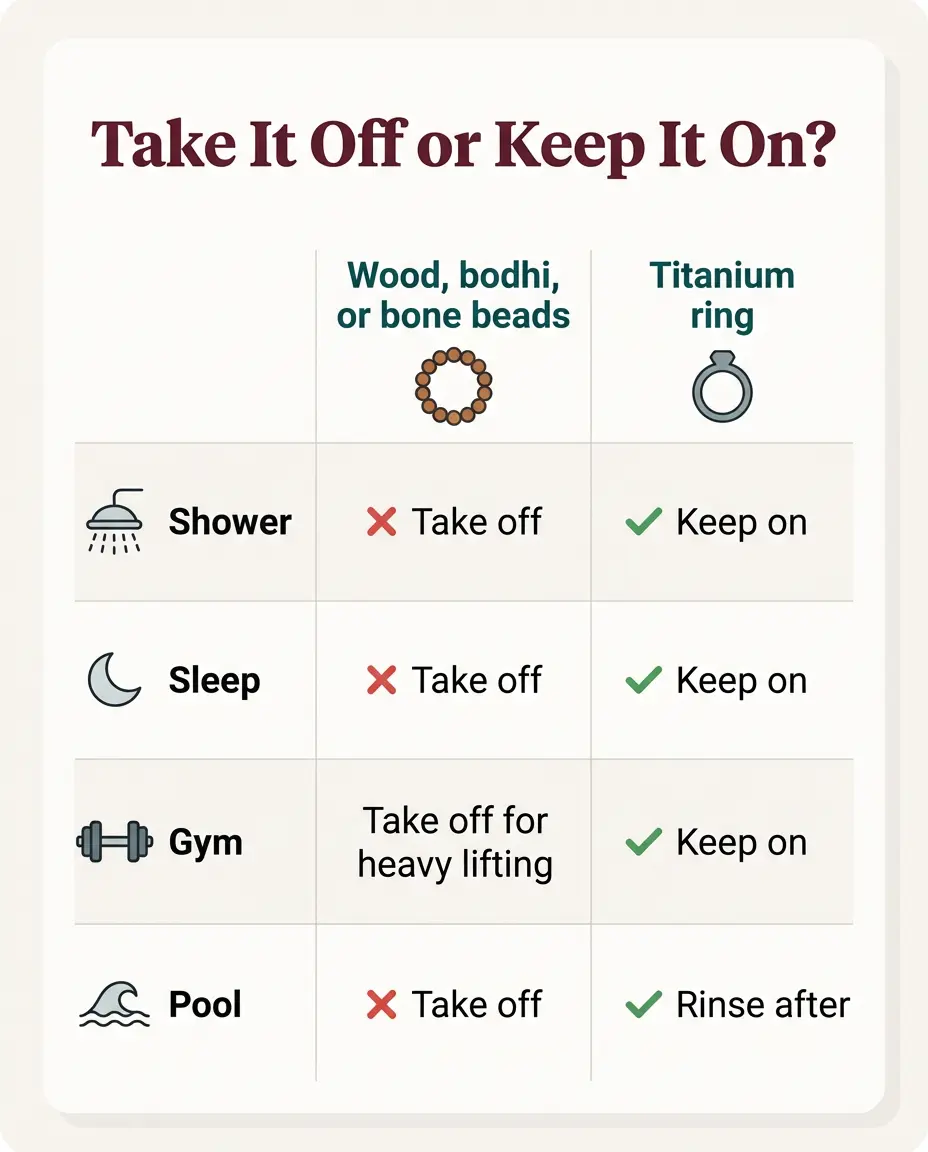
When Should You Take It Off? Shower, Sleep, Gym, and Pool
| Situation | Wood, bodhi, or bone beads | Red string bracelet | Titanium ring |
|---|---|---|---|
| Shower | Take it off | Take it off, soap fades the red | Keep it on |
| Sleep | Take it off, pressure stretches elastic | Fine if loose | Keep it on |
| Gym | Take it off for heavy lifting | Fine | Keep it on |
| Pool or ocean | Take it off | Take it off | Rinse with fresh water after |
| Office | Wear it | Wear it | Wear it |
Water and soap fade a red string bracelet faster than anything else. Store beads dry and off the floor.
Wrist Mala or Mala Necklace: Which Is Easier for Work?
A 27-bead wrist mala is easier for most workdays. It holds one quarter of 108 beads, stays under a cuff, and will not swing over your keyboard. A full 108-bead mala plus its uncounted guru bead suits longer meditation and wraps most wrists four times when stacked. For a side-by-side look, read our 27-bead wrist mala vs 108-bead mala necklace comparison.
Want a piece you never have to take off? Browse Tibetan mantra rings made for water, sweat, and handwashing.
What Do Om Mani Padme Hum, Knots, and the Gau Symbolize?
Each symbol on Tibetan jewelry is traditionally worn as a reminder, not a guarantee. Here is what you carry on your wrist or chest.
Om Mani Padme Hum: The Six-Syllable Mantra of Compassion
Om Mani Padme Hum is the six-syllable mantra of Avalokiteshvara, called Chenrezig in Tibetan, the bodhisattva of compassion. It is often translated as “the jewel in the lotus.” Scholars still debate the grammar, and some read it as calling the bodhisattva by the name “Jewel-Lotus.” Many wearers use it as a simple cue: touch the words, take one breath, and soften your next reply.
Endless Knots and the Five Sacred Colors
The endless knot is one of the Eight Auspicious Symbols of Tibetan Buddhism. Its lines have no beginning or end, which tradition reads as the bond between wisdom and compassion. Multicolor cords use the five sacred colors of blue, white, red, green, and yellow. Our full guide explains Tibetan bracelet meaning, from endless knots to the five sacred colors.
The Gau: A Portable Shrine Worn Close to the Heart
The gau works as a portable shrine for its wearer. The Rubin Museum of Himalayan Art describes an amulet box in its collection as a container filled with religious contents to protect the person wearing it. That museum piece measures 3.5 × 3.1 × 1.5 in, a size meant for the chest, not the wrist.
Is It Disrespectful to Wear Mala Beads If You’re Not Buddhist?
No. Many Tibetan Buddhist teachers welcome non-Buddhists wearing malas and mantra jewelry, as long as you treat each piece as meaningful and not as a costume. A few simple habits show that respect.
Five Simple Etiquette Rules for Everyday Wearers
- Don’t cross the guru bead: When counting, reverse direction at the guru bead instead of passing over it.
- Keep it above the waist: Skip mala anklets and malas clipped to belt loops.
- Keep it off the floor: Store it on a shelf or in a pouch, not on a bathroom counter.
- Know your symbols: Learn what your mantra or deity means before you wear it.
- Listen when someone speaks up: If a practitioner shares a concern, hear them out.
Lineages differ, so treat these as common guidance rather than universal rules.
Wearing With Intention, Not as a Costume
Intention is the difference between wearing a mala and wearing a prop. You do not need to claim a religious identity to use prayer beads for breath counting or a daily pause. We cover the cultural questions in depth in our guide to respectful ways non-Buddhists can wear mala beads.
Which Tibetan Buddhist Jewelry Fits Your Lifestyle?
| Your weekday | Best pick | Why it fits |
|---|---|---|
| Office and minimalist | Vajra pendant or titanium ring | Stays under a collar or quietly on your hand |
| Active and gym | Titanium ring | Handles sweat and handwashing |
| Daily meditation | Bodhi seed mala | Full 108-bead count for mantra practice |
| Under $30 | 108 wood mala bracelet | $25.95, works as bracelet or necklace |
| Gift | Om Mani Padme Hum bracelet or gau pendant | No sizing risk, or a story worth telling |
For the Office and Everyday Minimalists
A pendant under your shirt or a slim ring keeps your practice private. The vajra pendant and the titanium ring pass most dress codes without a second look.
For Gym-Goers and Busy Hands
Choose metal over beads. The titanium ring stays on through workouts, dishes, and showers, so it never ends up forgotten on a locker room bench.
For Gifting This Holiday Season
You do not want to give a gift that does not fit. An adjustable cord like the Om Mani Padme Hum bracelet removes that risk, and a gau pendant adds a story to tell at Thanksgiving or Christmas. Order before Black Friday on 11/27/2026 to leave time for shipping.
The bottom line: the best Tibetan Buddhist jewelry for daily wear is the piece you will actually keep on. Match the material to your routine, then let the symbol do its quiet work. If your focus is meditation more than daily wear, see our picks for Tibetan jewelry for inner peace and meditation.
Frequently Asked Questions
Which wrist should I wear a Tibetan bracelet on?
Many wearers choose the left wrist, which some traditions treat as the receiving side. No rule applies across all lineages. Pick the wrist where the piece is comfortable and does not knock against a watch or keyboard.
Can I shower with a red string or wood mala bracelet?
It is best not to. Soap and water fade cord and swell wood or bodhi seed, so take it off first. If you want a piece you never have to remove, a titanium mantra ring is the easier choice.
What should I do if my mala breaks?
Breaks happen with daily wear, especially on elastic cord. Many practitioners gather the beads and restring them, and some see a break as the mala finishing its work. Hand-knotted malas lose only one bead when the cord snaps.
What is the best Tibetan jewelry for a first-time buyer?
An 8 mm wood wrist mala is the lowest-risk start. It is affordable and works as a bracelet or a necklace. Compare styles side by side in PotalaStore’s Tibetan bracelet collection.
Important note: The spiritual meanings and protective qualities described here come from Tibetan Buddhist tradition and practitioner experience, not scientific evidence. Spiritual jewelry is not a substitute for medical or mental health care. Monastery sourcing and blessing details are provided by PotalaStore.
Find the Piece That Fits Your Weekday
Browse hand-knotted mala bracelets, yak bone beads, and red knot cords from PotalaStore, made with Himalayan artisans and ready for everyday wear.Shop Tibetan Bracelets
📚 References
- Gau (Tibetan amulet box): Museum glossary entry defining the gau and its use as a worn protective container. Rubin Museum of Himalayan Art, Project Himalayan Art
- Amulet Box (Gau), C2008.21: Collection record describing a gau as a portable shrine filled with religious contents. Rubin Museum of Himalayan Art
- Avalokiteshvara: Overview of the bodhisattva of compassion and the mantra Om Mani Padme Hum. EBSCO Research Starters
- Japamala: Background on the 108-bead mala, the uncounted guru bead, and smaller wrist malas in factors of 108. Wikipedia