

Still torn between an evil eye and a hamsa? The difference comes down to shape and scope. The evil eye (nazar) is a blue eye amulet aimed at one concern, the envious gaze. The hamsa is an open hand that many people see as protection plus blessing.
At PotalaStore, we sell both symbols as protection jewelry, so we would rather you choose by meaning than by trend. This guide compares them across 7 traits. It shows museum pieces that reveal where each symbol comes from. It ends with a decision guide for gifts, daily wear, and home. Every claim about origins links to a museum or educational source in the References.
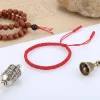
Drawn to both? Our Hamsa Hand Red String Bracelet pairs an open palm with three evil eye charms on one red cord.
Table of Contents
Evil Eye vs Hamsa at a Glance: 7 Key Differences
The evil eye and the hamsa are different protective symbols: the evil eye (nazar) is a single blue eye amulet traditionally used to deflect envious stares, while the hamsa is a five-finger open hand from Middle Eastern and North African traditions that many people see as offering both protection and blessing.
| Feature | Evil Eye (Nazar) | Hamsa (Khamsa) |
|---|---|---|
| Shape | Concentric circles in dark blue, light blue, white, and a dark center | Stylized open palm with 5 fingers, usually symmetrical, with a thumb on each side |
| Origin | Mediterranean and Middle Eastern folk belief; Turkish glass beads are the best-known form | Middle East and North Africa; shared by Muslim, Jewish, and some Christian communities |
| Core meaning | Traditionally used to deflect envy | Many people see it as protection, blessing, and good fortune |
| Purpose | One specific concern: the envious gaze | A broader role: guard and bless |
| Also called | Nazar, nazar boncuğu, mati, mal de ojo, ayin hara | Khamsa, hamesh, Hand of Fatima, Hand of Miriam, Hand of Mary |
| Best for | Minimal style and a focused intention about envy | A statement piece, a wall hanging, or a wider intention |
| Gift occasion | New baby, new job, graduation | Housewarming, wedding, holiday gift |
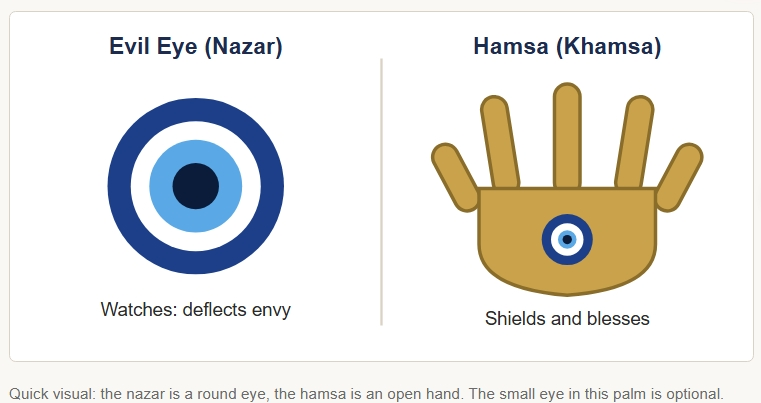
A quick way to remember it: the evil eye watches, and the hamsa shields and blesses. In summary, the two symbols complement each other rather than compete.
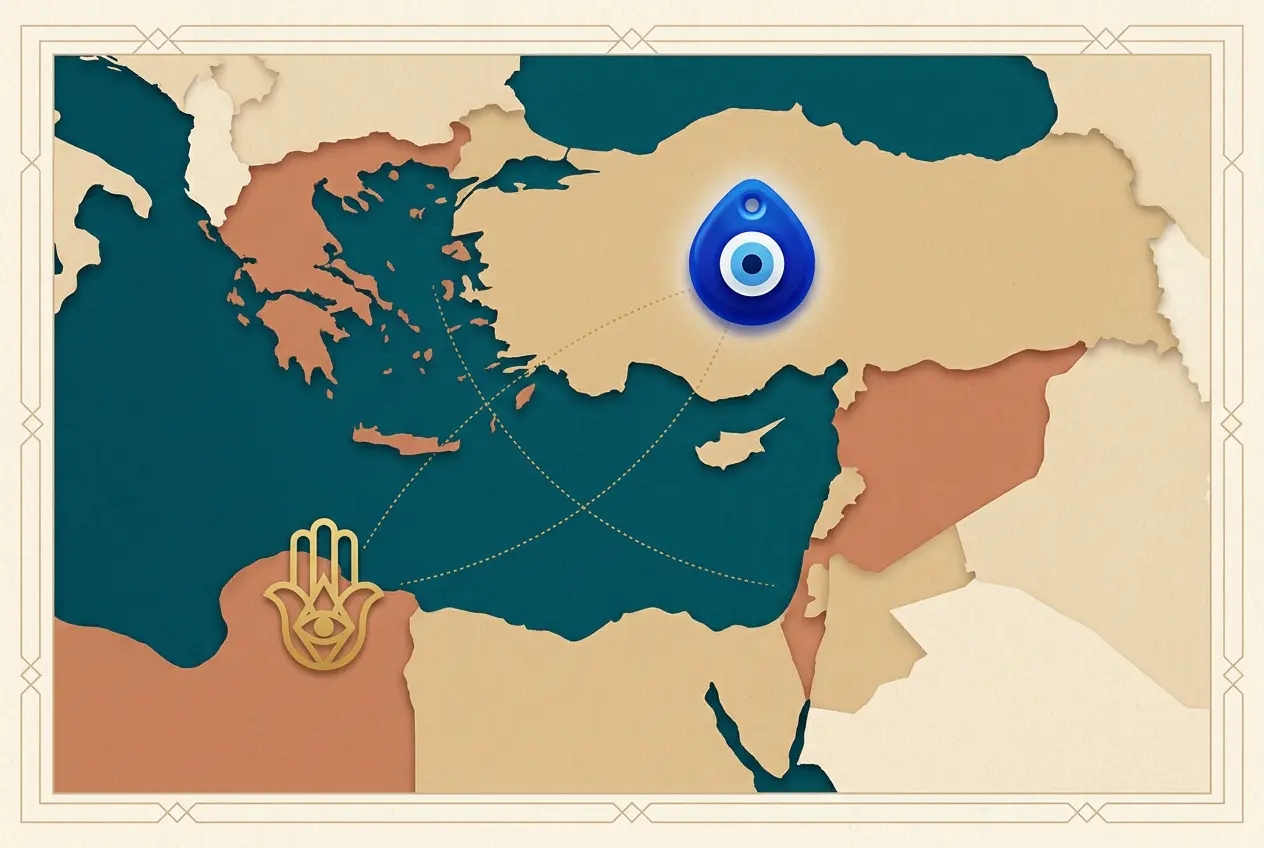
Shape: One Watchful Eye vs an Open Five-Finger Hand
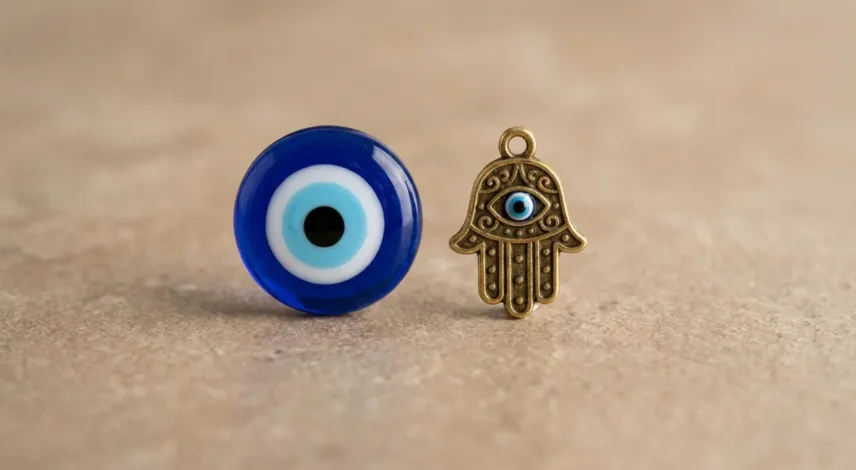
The nazar bead shows concentric circles in dark blue, light blue, white, and a dark center. Its round form reads like a staring eye. The hamsa takes the opposite form: an open palm with five fingers and symmetrical thumbs on both sides.
Modern nazar jewelry comes in many colors beyond classic blue. Our guide to evil eye colors and what each shade means explains the newer palette.
Purpose: Deflecting Envy vs Protection Plus Blessing
The nazar is traditionally used to deflect an envious gaze, while the hamsa is believed to offer protection and blessing. That makes the nazar a specialist for one worry. The hamsa works as a wider emblem of good fortune.
Is the Eye in the Palm the Same Symbol? Untangling the Most Common Mix-Up
No: the hamsa and the evil eye are separate symbols, even though many hamsas carry an eye in the palm, which is exactly why people confuse them. The eye in the palm looks like a nazar, so jewelry makers and shoppers often blend the two names.
Is Hamsa the same as Evil Eye?
No. The two symbols differ in shape, origin, and purpose, as the table above shows. The mix-up happens because jewelry often combines them. Use this three-second test:
- Eye shape only: it is a nazar, the evil eye amulet.
- Hand shape only: it is a hamsa, also called a khamsa.
- An eye set inside a hand: it combines both symbols in one piece.
Two Readings of the Palm Eye: Watchful Guardian or Built-In Nazar
Sources disagree on what the eye in the palm means. Some Judaica retailers say it is not the evil eye at all. They read it as a watchful guardian eye that belongs to the hamsa itself.
Many jewelry sellers describe it instead as a built-in nazar, and our own hamsa guide has done the same. We now present both readings, because the traditions behind them differ.
Museum pieces show why the eye is optional. Hamsa palms appear with an eye, a fish, or an inscription, and the Jewish Museum London holds a silver hamsa banner from 1827.
Where Do the Nazar and the Khamsa Come From?
The nazar grew out of a widespread folk belief in the envious gaze, while the khamsa is a hand-shaped amulet shared by Muslim, Jewish, and some Christian communities across the Middle East and North Africa. For related emblems, see our spiritual symbols guide covering the evil eye, hamsa, and Buddhist symbols.
Nazar Roots: Ottoman Glass Beads, Greek Mati, and Mediterranean Folk Belief
Belief in the evil eye appears in Greek, Roman, Jewish, Islamic, Buddhist, and Hindu traditions, according to Britannica.Each region names it differently. People say nazar in Turkey, mati in Greece, mal de ojo in Spanish-speaking countries, and ayin hara in Hebrew.
The blue glass bead, called nazar boncuğu in Turkish, is the best-known form today. It is the shape most jewelry buyers picture when they hear “evil eye.”
Khamsa Roots: Hand of Fatima, Hand of Miriam, and Hand of Mary
Khamsa means “five” in Arabic, and hamesh means “five” in Hebrew. The same open hand is called the Hand of Fatima in Muslim communities and the Hand of Miriam in Jewish communities. Some Christians call it the Hand of Mary.
The Discover Islamic Art record links the five fingers to the five pillars of Islam, five daily prayers, and five keys to the unseen.
What surprised us while researching this guide: some of the finest antique Hands of Fatima came from Jewish silversmiths in Morocco. A 19th-century silver example from Tangier, held at the FBQ Museum in Qatar (inventory FBQ.HH.358), measures 9.4 × 6.3 inches (24 × 16 cm).The museum describes pieces like it as talismanic doorknobs or pendants.
The same hand is carved into the Alhambra’s 14th-century gate in Granada, according to My Jewish Learning.That article adds that the hamsa may derive from Islamic or pagan culture and is now also a Jewish and Israeli symbol.
Do Hamsa and Evil Eye come from the same culture?
No, but their regions overlap. The nazar belongs to Mediterranean and Middle Eastern folk tradition, and the khamsa belongs to Middle Eastern and North African traditions. Turkey, Morocco, and the wider Levant are places where you often see the two symbols side by side.
Neither symbol belongs to a single religion. Both are worn across faiths, which is one reason their meanings blur in modern jewelry.
Pros, Limits, and Best Uses of Each Protection Amulet
Neither symbol is stronger than the other: the nazar suits you if envy is your specific worry, while the hamsa suits you if you want a broader emblem of protection and blessing.
| Amulet | Pros | Limits |
|---|---|---|
| Evil eye (nazar) | Instantly recognized; small enough for daily wear; the message is simple | Speaks to one concern only; less range if you want a symbol of blessing |
| Hamsa | Broad meaning; works as jewelry or a wall hanging; shared across faiths | A larger shape can feel bold on dainty jewelry; meanings vary by tradition |
Which is better: Hamsa or Evil Eye?
Neither is better, because both are traditional symbols, not tested devices. The better pick is the one whose meaning matches your intention. Choose the nazar for a focused reminder about envy. Choose the hamsa for a wider sense of protection and good fortune.
Keeping it simple? If envy is your main concern, our Red String Evil Eye Bracelet with a cubic zirconia charm keeps the message clear at a glance.
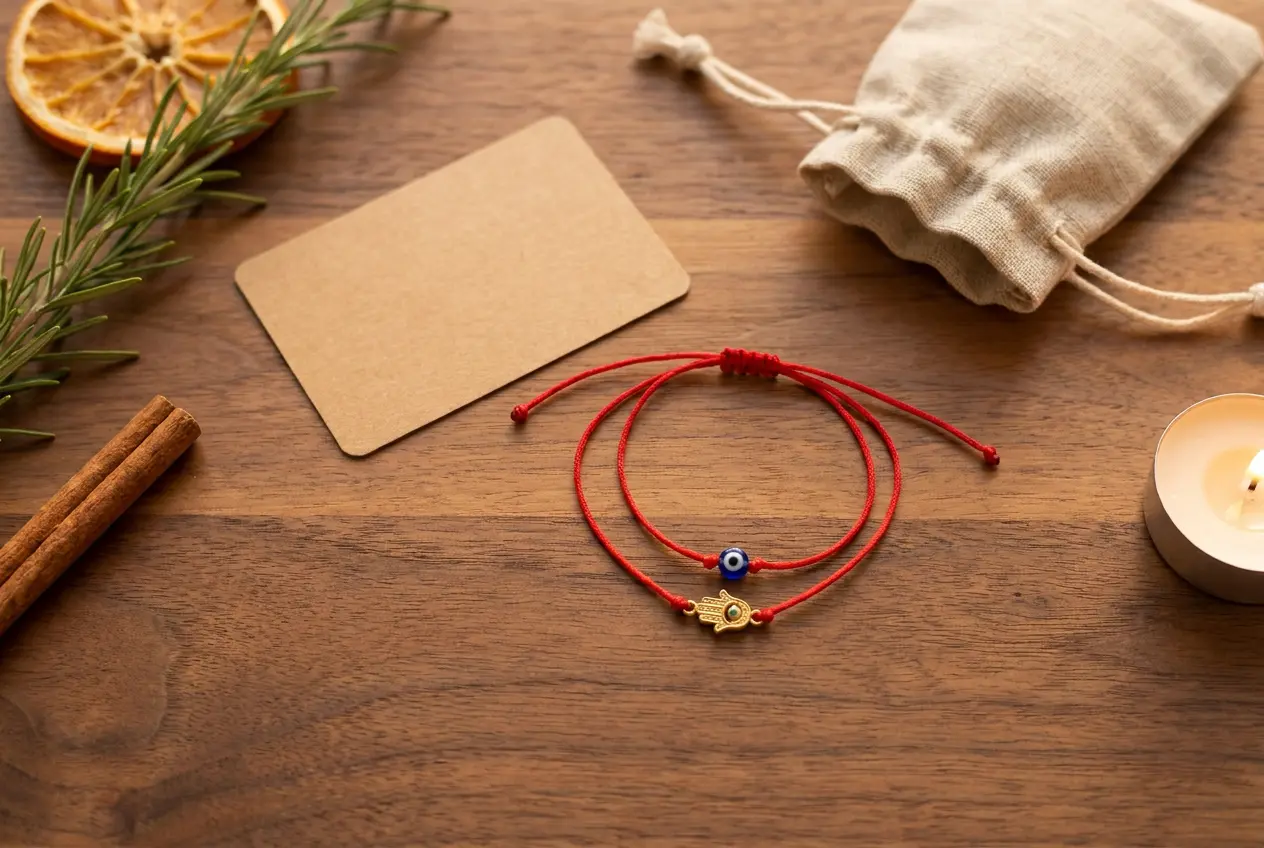
Scenario Guide: New Baby, New Job, Housewarming, Travel
The right symbol depends on the occasion. Use this list to match them:
- Baby gift: Britannica notes that traditions treat children as especially vulnerable to the evil eye, so a nazar is the classic choice.Hang it near the nursery door, out of reach. Skip cords and small beads on infants.
- New job or promotion: A nazar bracelet is traditionally linked to envy, which can follow visible success.
- Housewarming: A hamsa wall hanging by the entrance welcomes guests and suits a shared home.
- Travel: A small nazar or hamsa charm fits on a bag zipper or passport case.
- Holiday gift: For a Thanksgiving host or a holiday exchange, a combined piece is the safest pick when you do not know which symbol the recipient prefers.
Common Mistakes Buyers Make
- Buying an oversized pendant for someone who wears dainty jewelry. A large hamsa can overpower a fine chain, so match the size to the wearer’s style.
- Ordering without measuring your wrist. Most adult wrists measure roughly 6 to 8 inches, so check the adjustable range first.
- Ignoring materials. Check whether the charm is brass, copper, sterling silver, or enamel. Plated metals can wear or irritate sensitive skin over time.
Hands-On: How Nazar and Hand of Fatima Bracelets Compare in Daily Wear
A nazar bracelet and a hamsa bracelet differ in three practical ways: fit, closure, and how visible the symbol is on your wrist.
What We Checked: Fit, Closure, Water Exposure, and Visibility
We compare bracelets on four points before recommending them. Fit comes first: measure your wrist, then check the adjustable range. Closure is second. A sliding knot adjusts, while a no-clasp design must slide over your hand.
Third is water exposure, since red cord can fade or loosen when wet. Last is visibility, meaning how clearly the symbol reads at arm’s length.
On our own listings, the Red String Evil Eye Bracelet pairs a cubic zirconia nazar charm with a twisted red cord. It adjusts up to 8.3 inches (21 cm) with a sliding knot, so one size fits most wrists and gifting needs no guesswork. It is listed at $43.95. The Hamsa Hand Red String Bracelet combines an open palm with three evil eye charms and is listed at $33.95.
We can share only what shoppers have told us so far. The Hamsa bracelet has one 5.00-star review, from a buyer who started wearing it right away and calls it a holiday gift pick. One review is too small a sample to draw conclusions, so treat it as a single data point.
Limits matter too. A separate review of one of our bracelets warns that a no-clasp style may not slide easily over larger hands. That is why we suggest measuring before you order. Listing details and prices reflect our store pages at the time of writing and may change.
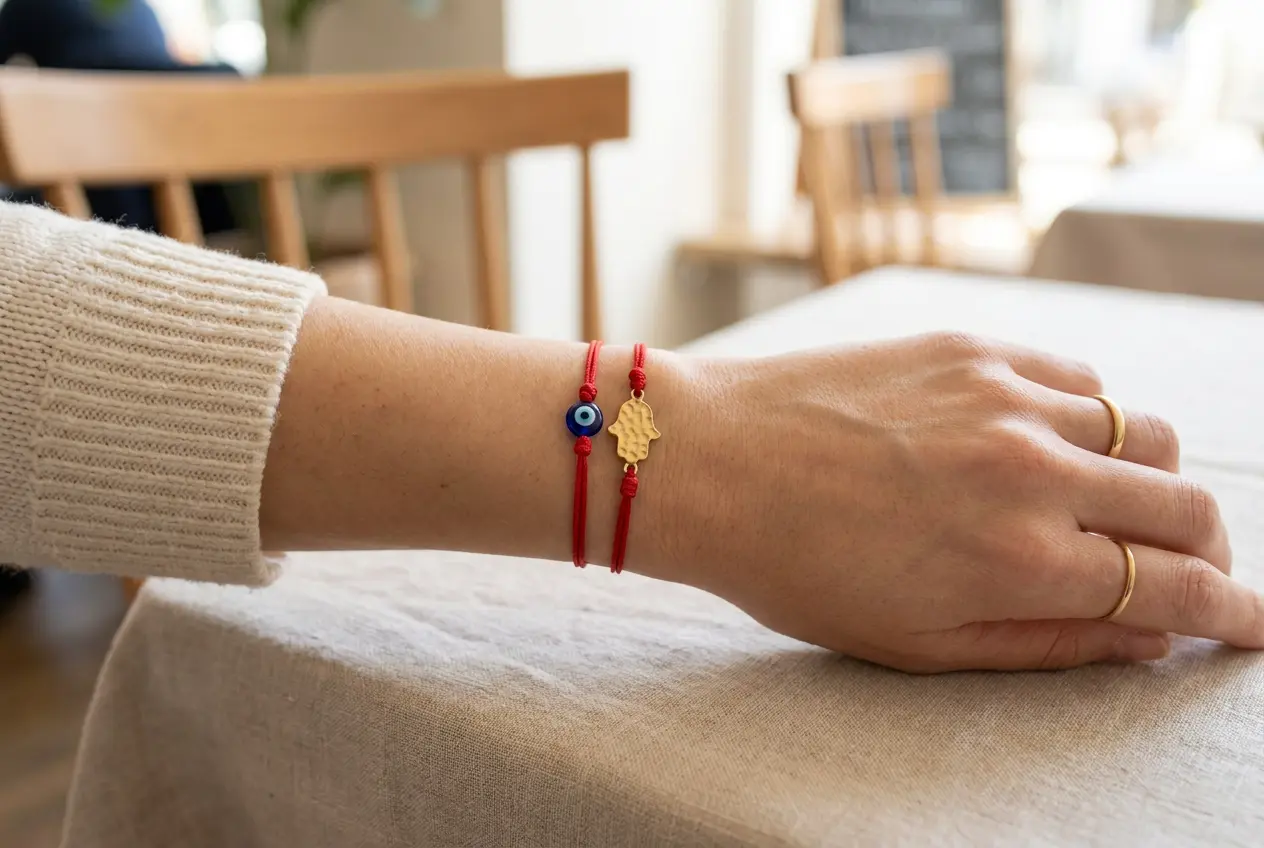
Can you wear Hamsa and Evil Eye together?
Yes. Wearing both is common, and it creates a layered protection look rather than a clash. Pick one of three approaches:
- One combined piece: The Hamsa Hand red string bracelet with three evil eye charms from PotalaStore puts both symbols on one cord, so you never have to choose between meanings.
- Two bracelets, one wrist: Pair a nazar bracelet with a hamsa bracelet. Keep one as the focal point and the other slim.
- Bracelet plus necklace: Wear the nazar on your wrist and the hamsa at your neckline for spacing.
Wearing Both Respectfully: Direction, Wrist, and Context
Wearing both respectfully starts with knowing what each symbol means to the people who use it. Many people read fingers up as protection and fingers down as abundance. Neither reading is universal, and our guide on what a hamsa hand facing up vs. down means covers both.
Treat the hamsa as a meaningful emblem, not a costume prop. When you explain it to others, use its real names, Hand of Fatima or Hand of Miriam.
One clarification on our own pieces: we hand-tie and bless our hamsa bracelets in the Tibetan Buddhist tradition. That describes how we make them, not where the hamsa comes from.
Final Verdict: Hamsa or Evil Eye, Which Should You Choose?
Choose the evil eye for a simple, targeted reminder against envy, the hamsa for a broader symbol of protection and blessing, or a combined piece if both meanings speak to you.
Our Recommendation by Intention
- Envy is your main concern: go with a nazar bracelet or pendant.
- You want broad protection and good fortune: go with a hamsa, worn or hung.
- Both meanings appeal to you: choose a combined piece.
- You are buying a gift and feel unsure: the combined piece avoids picking a side, and the recipient is unlikely to feel it missed the mark.
We sell both symbols, but we would rather you pick the one that means something to you than the one that is trending.
When to Choose Neither
Choosing neither is a fine answer. A protective symbol works as a reminder of intention, not as a substitute for medical care, safety planning, or professional support. If you face a real threat or a health concern, reach out to the right professional first.
⚠️ Important Note: The meanings described in this guide are based on traditional beliefs and cultural practice, not scientific evidence. Protective symbols are traditionally used as reminders of intention and community. They should not replace medical, legal, or professional advice.
Frequently Asked Questions About Protective Symbols
Many people wear it on the left wrist, a habit linked to the Kabbalah red string custom. Others follow no rule at all. The best wrist is the one where the piece feels comfortable and meaningful to you.
Traditionally, both go near the entrance, above or beside the front door, so they greet visitors first. A hamsa wall hanging also suits a nursery or living room as a welcoming accent.
Dark blue is the classic color. Modern jewelry adds other shades with newer, popular meanings. Our guide to evil eye color meanings explains each one.
Many wearers and sellers consider it acceptable when done respectfully, though opinions differ. Learn its names and background, then choose a piece that reflects your own intention. When you are ready, browse our attract-protection jewelry.
In summary, the evil eye and the hamsa are two distinct protective symbols that work well alone or together. Pick the evil eye for envy, the hamsa for broader blessing, or a combined piece for both.
Find the Symbol That Fits Your Intention
Browse PotalaStore’s protection jewelry collection to find a nazar bracelet, a hamsa piece, or a combined design.Shop protection jewelry →
Last updated: 11/14/2026. Editorial process: this guide draws on the museum records and educational sources listed below, and we revisit it when sources or our product listings change. Version history: 11/14/2026, original publication.
📚 References
- Evil Eye Beliefs Across Traditions: Overview of evil eye belief in Greek, Roman, Jewish, Islamic, Buddhist, and Hindu traditions, including the groups thought most vulnerable. Encyclopaedia Britannica
- What Is a Hamsa? Explains the meaning of khamsa and hamesh, the Alhambra hand, and the symbol’s mixed origins. My Jewish Learning
- Hand of Fatima, Tangier (FBQ.HH.358): Museum record for a 19th-century silver Hand of Fatima, with notes on Moroccan Jewish silversmiths and the five fingers. Discover Islamic Art, Museum With No Frontiers
- Silver Hamsa Banner (1827): Museum photograph and description of a silver hamsa banner. The Jewish Museum London