
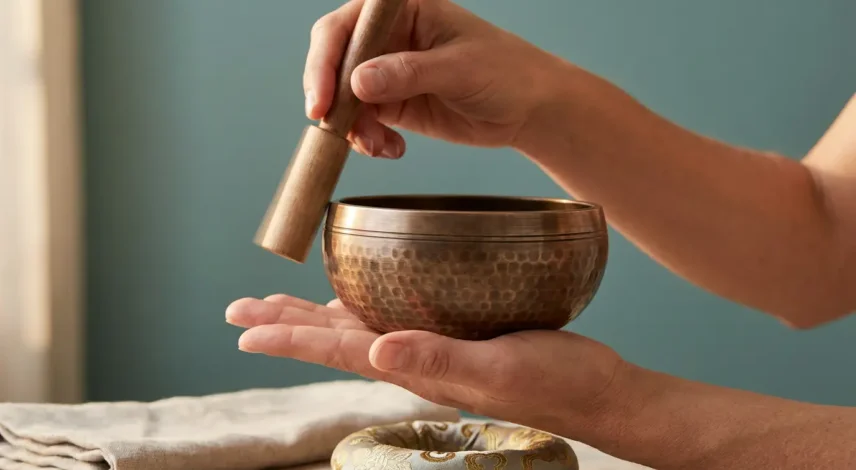

Your singing bowl is most likely fine. It usually stays silent for one small reason. You may be circling the rim too fast or using the wrong end of the mallet. Or your hand may be holding the walls still.
Maybe a Tibetan singing bowl was a holiday gift, or a Black Friday find. You watched a video where rimming looked effortless, and now your meditation bowl only scrapes or rattles. That is a very common first-week stall, and you can usually fix it in minutes.
Potala Store sources hand-hammered copper bowls from metalworking workshops in the Kathmandu Valley. This guide pairs that craft knowledge with published research on how bowls vibrate. You will name your problem by its sound, then apply the matching fix.
The short version: slow your circle, keep the mallet in steady contact, and rim with the wooden side. Once those pieces line up, a bowl typically begins to sustain its tone after 5 to 10 seconds of steady circling.
Time: about 5 minutes per attempt.
You need: your bowl, its mallet with a wooden or leather side, and a ring cushion or a flat palm.
The 7 fixes: slow your circle, keep contact steady, tap first, use the wooden side, break in the mallet, hold the bowl right, clear the rim.
Table of Contents
Why Won’t My Singing Bowl Sing? Listen First
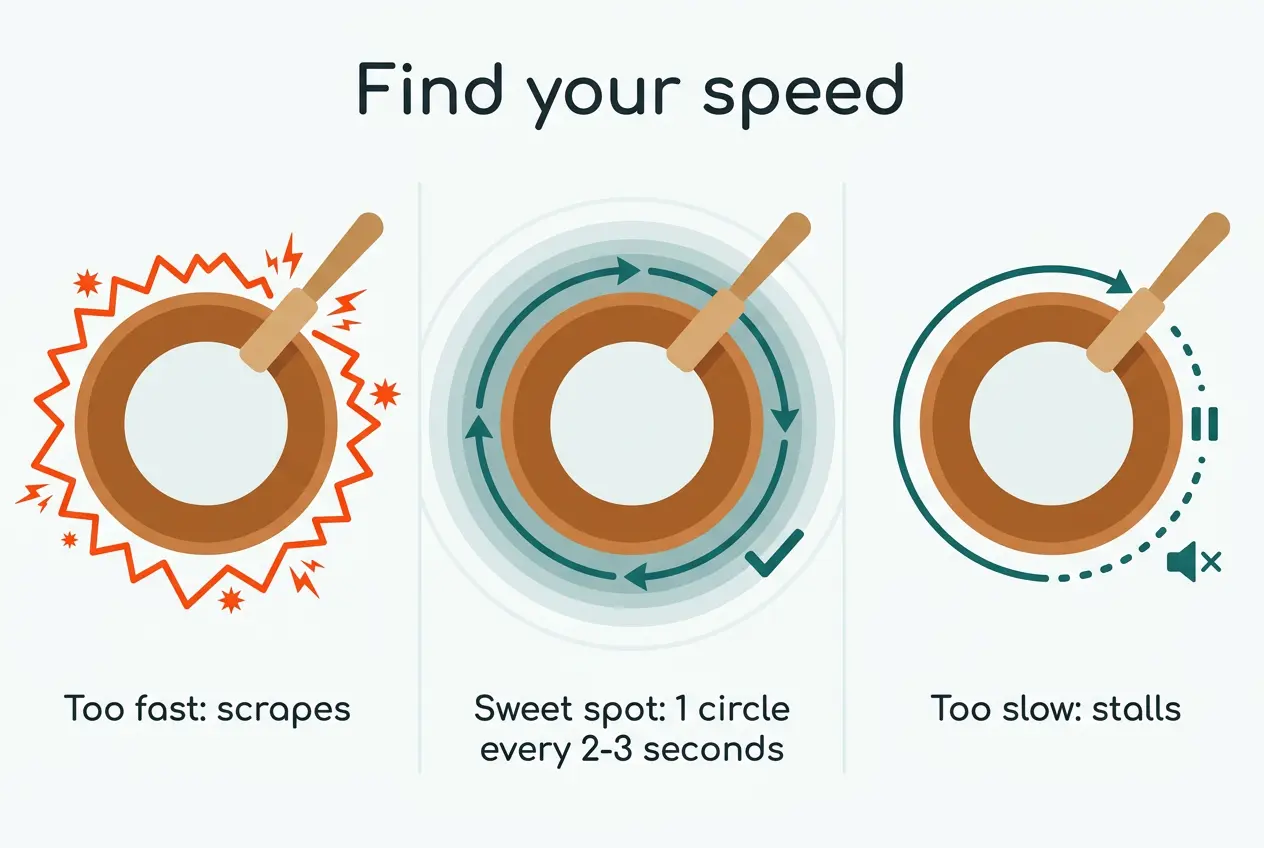
A singing bowl usually won’t sing because the mallet moves too fast, pressure keeps breaking contact with the rim, or you are rimming with the felt end instead of the wooden side. Slow to about one circle every 2 to 3 seconds, keep steady contact, and keep your fingers off the walls.
Your bowl’s sound tells you which one it is. Match what you hear to the chart below, then jump to that fix.
What Does Your Singing Bowl Sound Like?
| What you hear | Most likely cause | Go to |
|---|---|---|
| Scrape or hiss, no tone | Circling too fast, or the felt end is on the rim | Fix 1 and Fix 4 |
| Rattle, buzz, or squeal | The mallet is bouncing on the rim | Fix 1 and Fix 2 |
| Mallet slides, nothing builds | Too little friction from a padded or very smooth mallet | Fix 4 and Fix 5 |
| Short clunk, no ring | Fingers or a tight cushion touch the walls | Fix 6 |
| Dull clank near the base | A ring or bracelet taps the bowl | Fix 7 |
| Tone builds, then dies | Speed or pressure changed as the sound grew | Fix 2 |
| Thin or dead tone, even when struck | The bowl may be damaged or made for striking | Technique or bowl? |
Speed is the most common culprit, so start with Fix 1.
How Does a Singing Bowl Actually Sing?
A singing bowl sings through friction. As the mallet moves around the rim, it grips, then slips, and each grip and slip nudges the metal into vibration.
Researchers Terwagne and Bush describe a stick phase, when the rim follows the mallet, and a slip phase, when it relaxes back. Repeating that cycle makes a sound built from one fundamental tone plus overtones. It is the same principle as a wet finger on a wine glass.
If anything interrupts the grip, the sound stalls. Every fix below protects that cycle.
Speed, Pressure, and the Warm-Up Tap
Work through these three in order:
- Slow your circle. Aim for about one full circle every 2 to 3 seconds on a small or medium bowl.
- Keep contact steady. Press just enough that the mallet never lifts off the rim.
- Tap once, then circle. Start circling while the strike tone still rings, which lasts 15 to 20 seconds.
Fix 1: How Fast Should I Move the Mallet Around the Bowl?
Move about one full circle every 2 to 3 seconds on a small or medium bowl, and slower on a large one. Most first attempts look like someone running late for work.
Use your whole arm in one smooth, full-arm motion, the way you would stir a pot of chili. Hold the mallet like a pen and keep your wrist loose.
Then give it time. Many guides suggest 8 to 10 full revolutions before you decide a bowl will not sing. Too slow and the mallet stalls. Too fast and it skips. The sweet spot sits between, and a steady pace finds it.
Fix 2: Why Does My Singing Bowl Rattle?
A singing bowl rattles when your speed is too high for the mallet to keep constant contact with the rim. Slow the circle first, then steady your pressure.
You will find conflicting advice online. One guide says press more lightly, another says lean in slightly, and a third says press harder. Each one fits a different sound.
If you hear a rattle, squeal, or chatter, ease off and slow down. If the mallet glides in silence and no tone builds, add a little lean. The goal is not a set amount of force. It is contact that never breaks. For most beginners, the right touch is lighter than expected.
Fix 3: Tap Once, Then Circle While It Rings
Strike the outer wall once, softly, then start circling before the tone fades. The tap wakes the bowl, and the ring gives you a 15 to 20 second window to catch it.
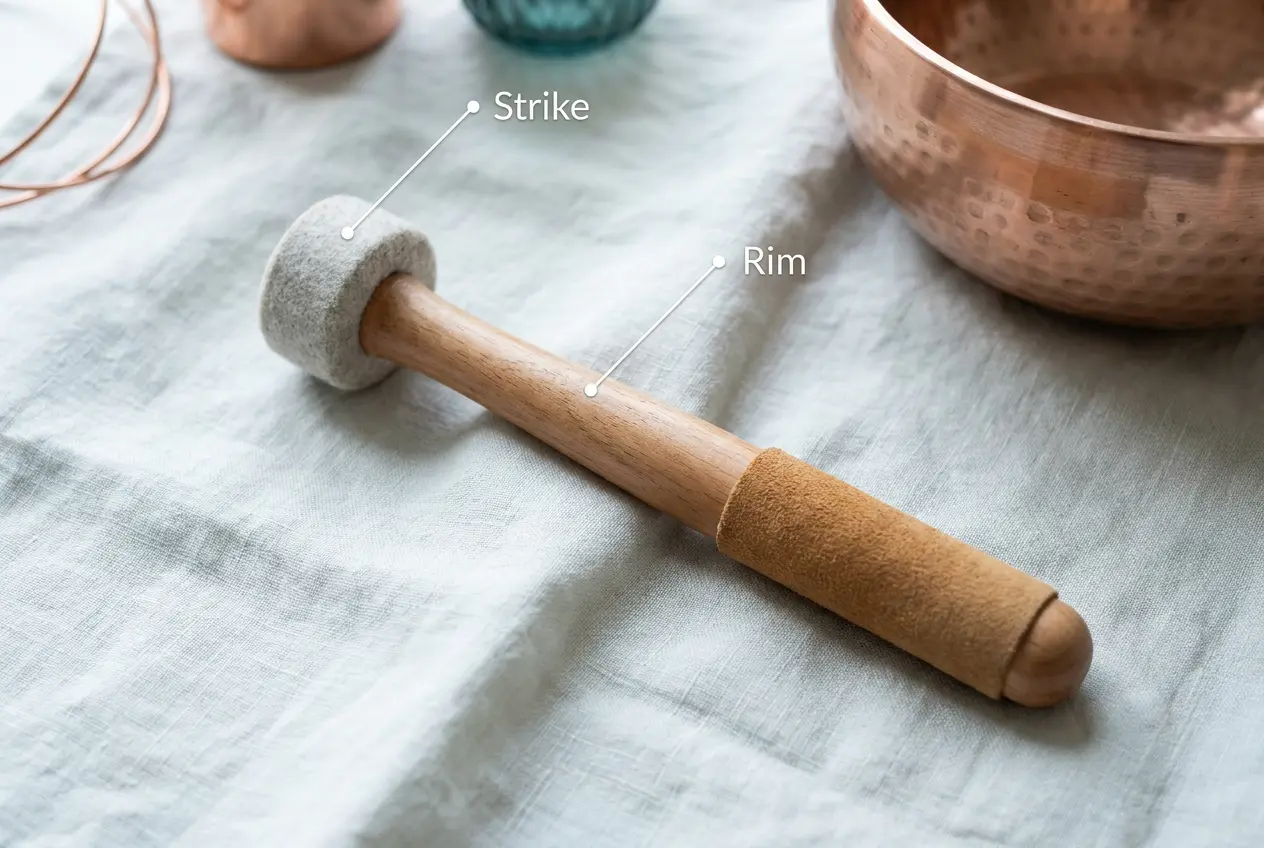
Use the padded end for the tap, aimed at the upper outer wall. Then rest the wooden side of the mallet on the rim and begin your slow circle. A new bowl can take about 30 seconds to give up its sweet spot, so expect a few false starts.
For both moves in more detail, see the strike vs. rim method in our meditation starter kit guide.
Is Your Mallet the Problem? Wood, Leather, or Felt
For rimming, use the wooden side or the leather-wrapped part of the mallet, because the wooden side creates the friction a metal bowl needs while felt slides across the rim. Save the padded end for gentle strikes.
Fix 4: Should I Use the Wooden Side or the Padded Side of the Mallet?
Use the padded end to strike and the bare wooden or leather side to rim. Fabric slides along a metal wall with very little friction, so it cannot build the grip-and-slip cycle.
If bare wood chirps or squeaks on your bowl, try the leather-wrapped part instead. Some bowls favor suede and some favor plain wood, so test each for one minute.
Crystal bowls follow different rules and usually want a suede or silicone head. This guide covers metal bowls.
Fix 5: How Do I Match and Break In a New Mallet?
A brand-new mallet can feel too smooth to grip the rim, and a few sessions of use often fix that. Many guides advise a few practice sessions before you blame your technique.
Size matters too. A stick that is too thin or too thick for your bowl makes the tone harder to start. Try a different mallet before you decide the bowl is the problem.
A bowl that ships with a matched mallet removes one variable. As of 11/20/2026, each of the copper singing bowls at Potala Store includes a wooden mallet. The 8 cm set and the Full Moon bowls also include a cushion.
Support and Contact: Fingertips, Cushions, and Jewelry
A singing bowl vibrates through its whole wall, so fingertips, a tight cushion, or a ring pressing on the sides will mute the vibration. Fix the support first, then check the rim.
Fix 6: Fingertips, Flat Palm, or Cushion? How Should I Hold the Bowl?
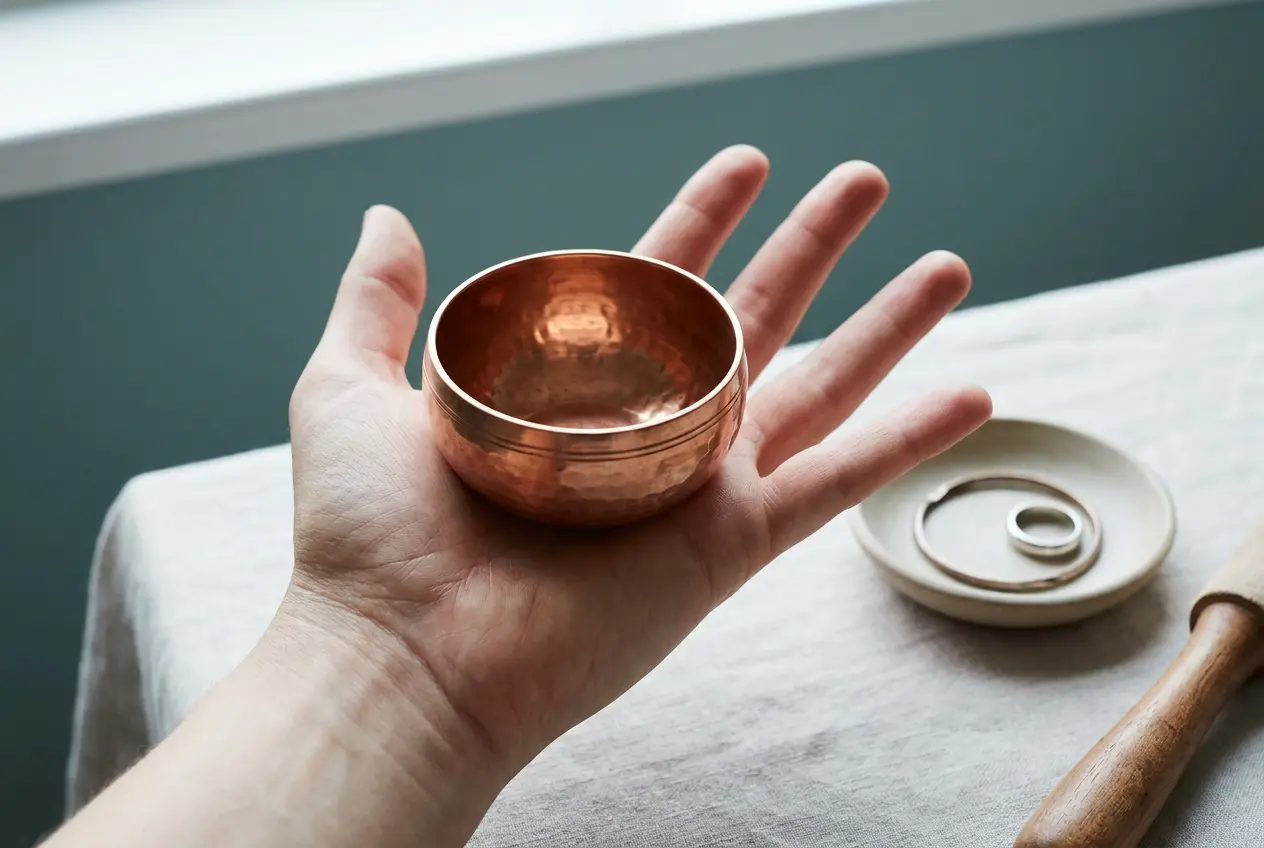
Rest a small or medium bowl on your flat palm with the fingers spread, or set any bowl on a ring cushion. The bowl needs to sit on its base, with nothing gripping the walls.
Most players hold bowls up to about 7 inches (18 cm) and put larger ones on a cushion. Full Moon bowls weigh 450 g (about 1 lb) at 12 cm and 900 g (about 2 lb) at 18 cm. Larger bowls get heavy fast.
If a bowl sings on the cushion but not in your hand, your fingers are touching too much metal. Keep your fingertips under the base only.
Fix 7: Do Rings, Bracelets, or a Wet Rim Stop a Singing Bowl From Singing?
Yes, they can. A metal ring or bangle that taps the base adds a clank. A wet or oily rim gives the mallet less grip.
Take off rings and any bracelet with metal beads before you play. Even a light tap on the base can cut across a tone that is just starting to build. Wooden beads make less noise, but they can still knock the bowl.
Check the rim too. Copper reacts to moisture, salt, and skin oils, so wipe the rim with a soft, damp cloth and dry it fully. Lotion and oils can make the rim slick, so the mallet slips instead of gripping. If you added water for play, empty and dry the bowl right away.
One honest note about tiny bowls. Our handmade 8 cm copper singing bowl set ($69.95, regularly $75.95) is about 3.1 inches wide. It comes with a wooden striker and a brocade ring cushion. It is built around the strike, and small bowls hold less sustain, so rimming takes a lighter touch and more patience. If it will not sing around the rim, that is the size at work, not your technique.
Technique Problem or Singing Bowl Problem?
If a skilled player can make your bowl sing, the issue is technique. If nobody can, and it sounds dead when struck, the bowl may be the issue.
The 2-Minute Swap Test
- Borrow a player. Ask a friend, a yoga teacher, or a sound practitioner to rim your bowl for one minute.
- Borrow a bowl. Rim a different bowl with your own technique. If it sings for you, your technique is fine.
- Time the strike. Tap your bowl once. A well-made bowl typically rings for at least 15 to 20 seconds.
For a fuller check, try the 5-minute strike test in our singing bowl buying guide.
Cracks, Dents, and Bowls Made for Striking
A cracked or dented bowl often sounds buzzy or dead when struck, and the mallet may skip across the rim. Hairline cracks are hard to see, so tilt the bowl toward a light and look closely.
Some bowls are simply better for striking. Thin walls and certain shapes resist rimming even when nothing is wrong.
Alloy plays a part too. Traditional bell metal is a bronze of roughly 78% copper and 22% tin, prized for rich sustain. Copper and brass bowls cost less and can sound lovely, but they may ring shorter. All three bowls we list today are copper.
Do Small or Crystal Bowls Sing Differently?
Yes. Smaller bowls are harder to start, and crystal bowls need a different mallet and technique. A 12 cm (4.72 in) Full Moon bowl gives a brighter tone with shorter sustain. The 18 cm (7.09 in) size gives deeper, longer sustain and suits rim practice.
For a first rimming bowl, a medium size of 6 to 7 inches is the usual starting point.
If your bowl fails the swap test, consider the Lunar Rainbow Full Moon singing bowl. It comes in five sizes from 4.72 to 7.87 inches, and each includes a wooden mallet and cushion. The listing shows 60-day returns and exchanges.
Prices start at $289.95, so it is a real investment. If budget matters more than sustain, look at the Om Mani Padme Hum copper singing bowl ($40.95 to $46.95). It includes a wooden mallet and suits an altar or desk. It is not built for sound baths.
FAQs: Practice Time, Direction, and Fading Tones
A gentle tap gives a clear tone on day one. A steady, sustained tone usually takes a few short practice sessions. Try 5 minutes a day for a week before judging the bowl. Most of the skill is feel, which comes with repetition.
Either direction works. Many players circle clockwise by habit, and the sound is the same. Pick one direction and keep it steady so your pressure stays even.
Usually your speed or pressure changed as the tone grew louder. Once the bowl sings, keep exactly the same motion instead of pushing for more volume. If it still fades, check Fix 7 for a ring or bracelet touching the base.
Often, yes. A medium bowl of 6 to 7 inches is the usual beginner pick. Larger bowls tend to start more easily, while very small ones need a lighter touch. Compare sizes on the size and weight chart on the Full Moon page. Then choose a bowl you would happily strike every morning.
In summary, a singing bowl that will not sing is almost always a speed, contact, mallet, or support problem. Slow your circle, keep steady contact, rim with the wooden side, and clear anything touching the walls.
Singing bowls are traditionally used to mark the start and end of meditation. For the bigger picture, read what sound healing is and where Tibetan singing bowls fit.
Ready for a bowl that is easier to play?
Browse Potala Store’s Tibetan singing bowls and compare sizes, weights, and what comes in the box.Shop Tibetan singing bowls
Important note: Singing bowls are musical instruments traditionally used for meditation and relaxation. They are not medical devices, and nothing here is health advice. A 2017 observational study of 62 adults reported lower self-rated tension after a bowl session, but it was not a controlled trial. Treat a bowl as a mindfulness tool, not a treatment.
📚 References
- How a bowl’s rim and walls vibrate: Terwagne, D., & Bush, J. W. M. (2011). Tibetan singing bowls. Nonlinearity, 24(8), R51-R66. Peer-reviewed physics of striking and rubbing, including the stick and slip phases. MIT Open Access Articles
- Standing bells and singing bowls: Overview of how bowls are played, including the slip-stick mechanism behind sustained tones. Wikipedia, “Standing bell”
- Singing bowl meditation and mood: Goldsby, T. L., et al. (2017). Effects of singing bowl sound meditation on mood, tension, and well-being: an observational study. Journal of Evidence-Based Complementary & Alternative Medicine, 22(3), 401-406. PubMed