
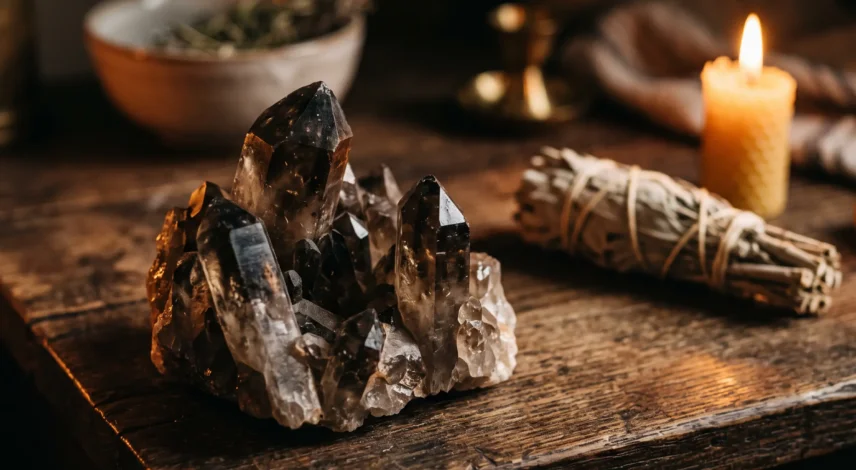

Smoky quartz is a brown-to-black variety of quartz (SiO2) that is traditionally used as a grounding and protective stone. Linked to the root chakra, it is believed to absorb negative energy, ease stress, and help you feel anchored in the present moment. Its meaning sits between two worlds: an old reputation as a stabilizing talisman, and a real mineralogy that explains its smoky color.
This guide covers both sides. You will learn what smoky quartz means, the properties practitioners value, the science behind its color, and how to use and care for it day to day. At Potala Store, we have spent more than a decade sourcing natural stones directly from Himalayan artisans and monastery partners at Sera Jhe and Kopan, so the guidance here reflects hands-on experience rather than repeated folklore.
If you feel drawn to smoky quartz because life has felt scattered or heavy, that instinct is the heart of its meaning. It has long been the stone people reach for when they want to feel steadier.
Table of Contents
What Is Smoky Quartz? Meaning and Symbolism
Smoky quartz is a translucent brown-to-black variety of quartz, a silicon dioxide (SiO2) mineral that gets its color from natural irradiation. In crystal tradition, its meaning centers on grounding and protection: the stone is believed to draw off negative energy, steady difficult emotions, and connect you with the stabilizing energy of the earth.
That grounding and protection pairing is what sets smoky quartz apart from brighter quartz cousins like amethyst or citrine. Where those stones are associated with spirituality or abundance, smoky quartz is the down-to-earth member of the family, valued for keeping you present.
A Grounding and Protective Stone
The core meaning of smoky quartz is grounding. Practitioners traditionally use it to feel less anxious, more focused, and more rooted during stressful stretches. It is often described as a stone that helps you set worry down and return to the moment.
Its second traditional role is protection. Because darker stones are believed to absorb rather than radiate, smoky quartz is used to soak up heavy or stagnant energy in a room, at a desk, or on the body during difficult days.
Symbolism Across Cultures
Smoky quartz carries symbolic weight in several traditions. In the Scottish Highlands, the smoky-brown variety known as Cairngorm was set into brooches, kilt pins, and the handles of ceremonial dirks, where it was worn as a badge of strength. In feng shui, dark quartz is used to steady a space and shield against negative influence.
In Tibetan and Himalayan practice, grounding stones like this one are worn to stay centered during long meditation. Across all of these settings, the shared thread is the same: this is a stone of steadiness, not spectacle.
Healing Properties and Spiritual Benefits
Smoky quartz is most often used for emotional grounding, stress relief, and protection from negative energy. These are traditional, believed benefits rather than medical claims, and practitioners tend to describe them as a steadying background presence rather than a dramatic effect.
What Is Smoky Quartz Good For?
Smoky quartz is good for moments when your mind feels scattered or overwhelmed. It is traditionally used to calm racing thoughts, ease tension, and support a sense of stability during change, grief, or burnout. Many people keep a piece near a busy work area for exactly this reason.
On an emotional level, the stone is believed to help you release fear and let go of what you cannot control. It is a common first choice for anyone who wants a single, versatile grounding crystal to start with.
Protection From Negative Energy
Smoky quartz is traditionally believed to absorb negative energy within its immediate surroundings, which is why it is grouped with protective stones. It is often paired with black tourmaline or black obsidian in a home protection set, since each stone works a little differently. If you want to compare options, our guide to the best crystals for protection from negative energy breaks down how absorbing and deflecting stones differ.
One honest limitation is worth naming: these effects are traditional beliefs, and results depend heavily on your own intention and consistency. A crystal is a focus tool, not a switch.
A note on these claims: The spiritual and energy properties described here reflect traditional beliefs held by many crystal practitioners. They have not been confirmed by peer-reviewed science. This content is for educational purposes and is not a substitute for professional medical or mental health care.
Smoky Quartz and the Root Chakra
Smoky quartz is most closely associated with the root chakra, the energy center traditionally linked to safety, stability, and feeling grounded. When the root chakra feels unbalanced, practitioners describe symptoms like anxiety, restlessness, or feeling disconnected, and smoky quartz is one of the stones used to help restore that sense of ground.
A smaller tradition also connects the stone to the solar plexus chakra for personal willpower, but its primary home is the root.
Using Smoky Quartz for Grounding
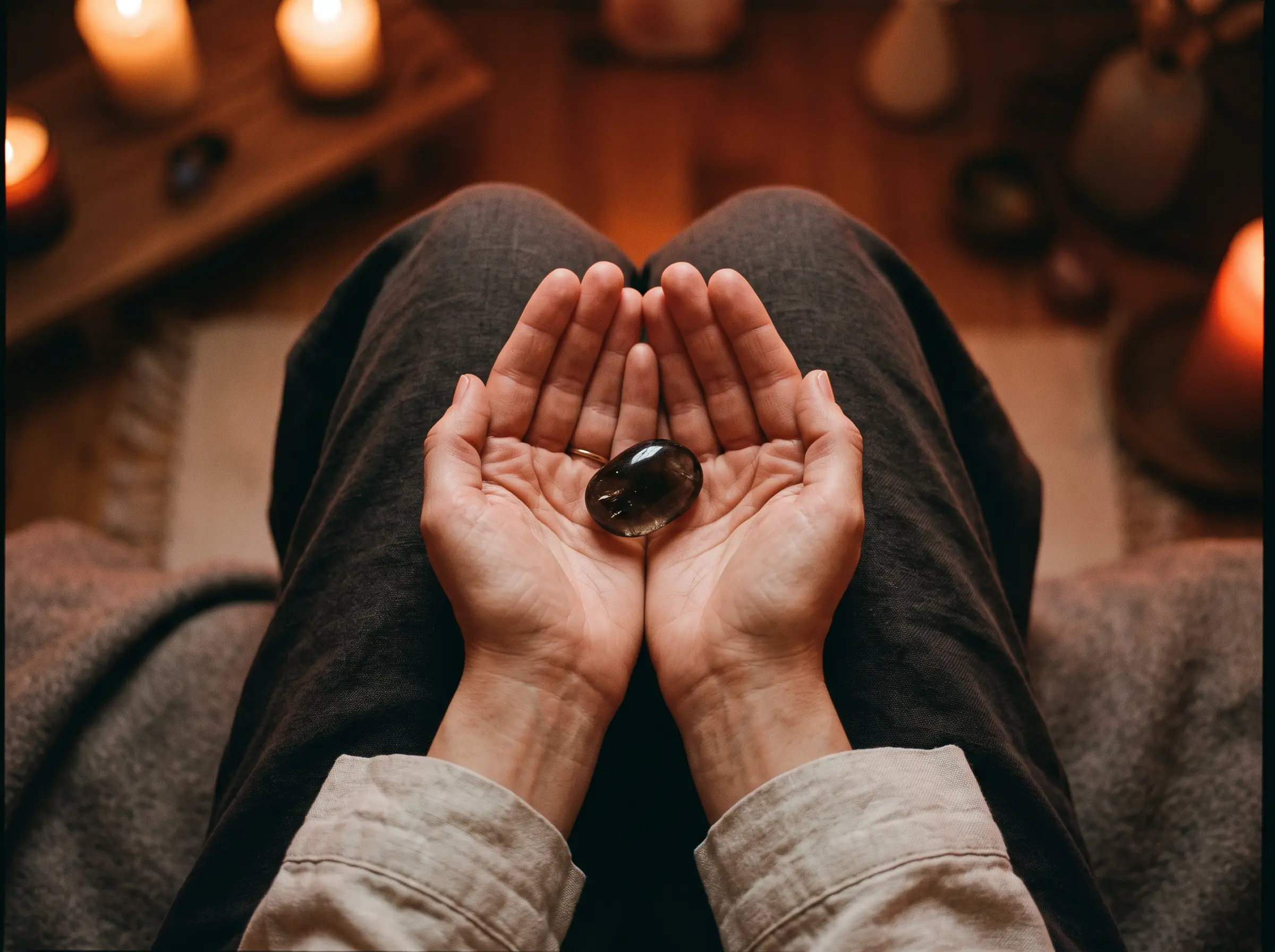
To use smoky quartz for grounding, many practitioners hold a piece during meditation and focus on the base of the spine, where the root chakra sits. A simple method is to sit quietly, hold the stone in your palm, and take slow breaths while picturing tension draining downward into the earth.
Others place a stone at the base of a yoga mat or carry a small tumbled piece in a pocket through a demanding day.
Pairing With Other Grounding Stones
Smoky quartz pairs naturally with other root chakra stones. Common combinations include the following:
- Black tourmaline: adds a stronger protective, shielding quality, especially near electronics.
- Hematite: reinforces the heavy, anchoring feeling of grounding work.
- Clear quartz: traditionally believed to amplify the intention you set with the smoky quartz.
The Geology Behind Brown Quartz: Color and Origins
Scientifically, smoky quartz is a variety of quartz (SiO2) with a Mohs hardness of 7 and a specific gravity of about 2.65. It forms in the trigonal crystal system, and its brown-to-black color is the visible record of natural radiation acting on the crystal over geologic time. This section deals with mineral fact, which is separate from the traditional meanings above.
| Property | Smoky quartz |
|---|---|
| Chemical formula | SiO2 (silicon dioxide) |
| Mohs hardness | 7 |
| Specific gravity | ~2.65 |
| Crystal system | Trigonal |
| Color cause | Gamma irradiation acting on aluminum traces (color centers) |
| Main sources | Brazil, Scotland, Colorado, Switzerland, Madagascar |
| Chakra (traditional) | Root chakra: grounding, protection |
Why Is Smoky Quartz Brown?
Smoky quartz is brown because natural gamma irradiation creates color centers in quartz that contains traces of aluminum. When an aluminum atom (Al3+) sits in place of silicon in the lattice and is then hit by radiation from nearby minerals, it forms an [AlO4] color center that absorbs light and produces the smoky tone. The more aluminum and radiation involved, the darker the stone, up to the near-opaque black variety called morion.
Here is a buying detail most pages skip: much of the smoky quartz on the market today is clear quartz that has been artificially irradiated to darken it quickly. Both are genuine quartz, but natural material usually shows gradual color zoning, while artificial material tends to be very uniform, sometimes with a suspiciously white base under dark points. Prolonged sunlight can fade either type, so this stone is best kept out of long, direct sun.
Where Does Smoky Quartz Come From?
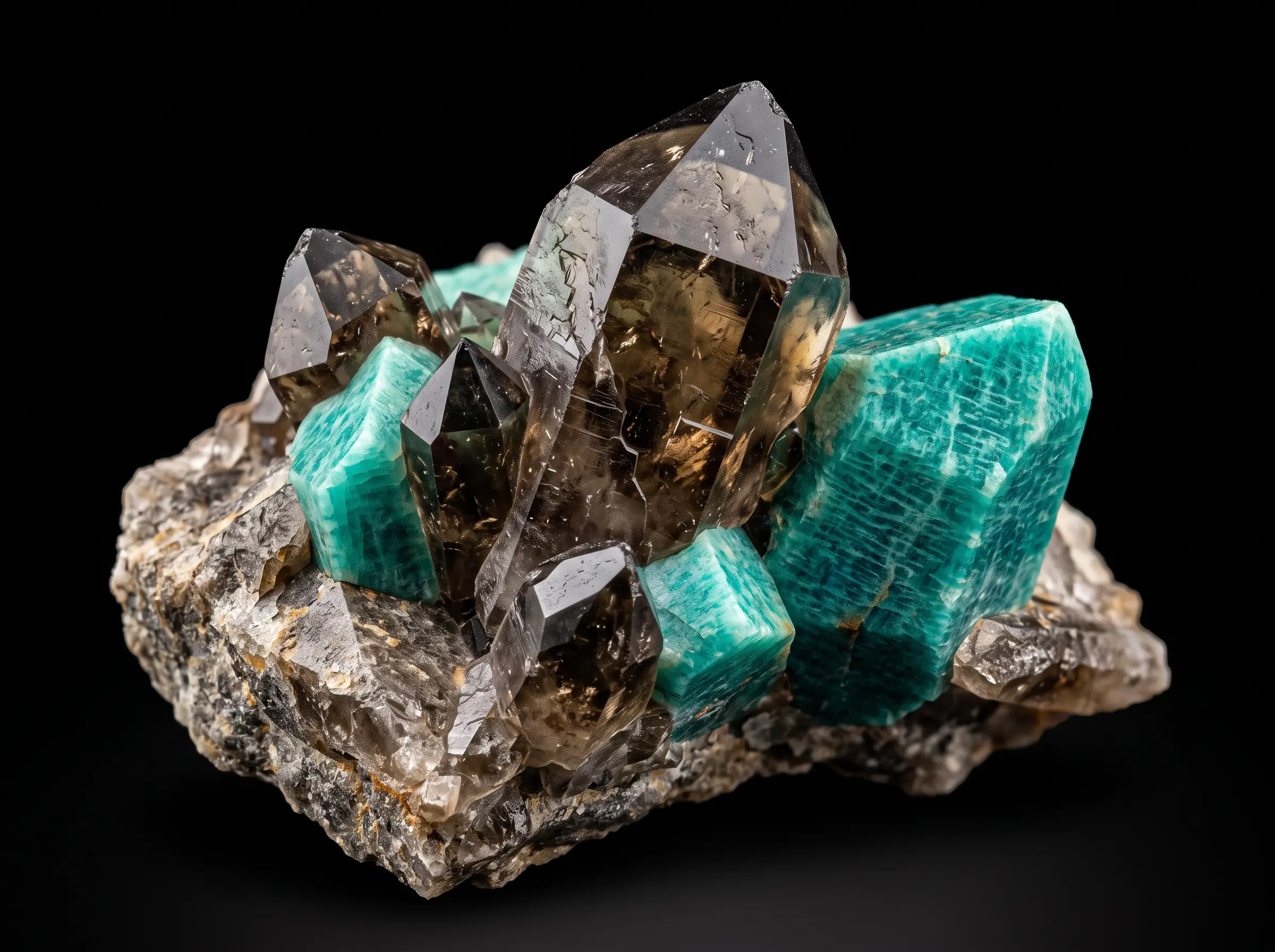
Smoky quartz is found worldwide, with notable deposits in Brazil, Switzerland, Madagascar, and the United States. Two localities carry the most history. Scotland’s Cairngorm Mountains gave the Cairngorm variety its name and its place in Highland jewelry. In the United States, Colorado’s Pikes Peak region is famous for striking smoky quartz that grows alongside green amazonite, a pairing prized by collectors.
Because the stone forms so widely and abundantly, natural smoky quartz stays affordable, which also means convincing fakes are uncommon.
How to Use and Care for Your Grounding Crystal

Because smoky quartz ranks 7 on the Mohs scale, it is durable enough for daily wear and safe for a quick rinse under running water. It has no water-soluble components, so brief water contact will not harm it. The main things to avoid are prolonged soaking, salt water, harsh chemicals, and long stretches of direct sunlight.
How to Wear Smoky Quartz
The most common way to wear smoky quartz is as a bracelet, pendant, or ring kept close to the skin. In feng shui tradition, you wear a piece on your left wrist to draw grounding energy inward, and on your right wrist to project protection outward. If you prefer a wearable everyday option, our healing crystal bracelets for daily wear include several grounding stones.
You can also place a stone at home rather than wear it. A tumbled piece on a desk or in an entryway is a simple way to keep grounding energy in a space you use often.
How to Cleanse and Charge It
Cleanse smoky quartz whenever it feels heavy or after a stressful stretch, roughly every 2 to 4 weeks with regular wear. Because it ranks 7 on the Mohs scale, it tolerates gentle running water, which many soft stones cannot. Reliable methods include the following:
- Running water: rinse for 1 to 2 minutes, then pat dry.
- Moonlight: leave it on a windowsill overnight, ideally on a full moon.
- Sound: use a singing bowl or bell for 1 to 2 minutes.
- Earth: bury it in soil for a few hours, a method that suits a grounding stone especially well.
For a stone-by-stone schedule based on how often you wear a piece, see our guide on how often to cleanse a crystal bracelet.
Frequently Asked Questions
Yes. Smoky quartz ranks 7 on the Mohs scale and has no water-soluble parts, so it is safe for a quick rinse or brief soak. Avoid prolonged soaking, salt water, and sudden temperature changes, which can stress any quartz.
Smoky quartz is abundant and affordable, usually around $2 to $20 per carat. Darker, eye-clean stones and pieces from prized localities like Colorado’s Pikes Peak can cost more, but most natural smoky quartz is budget-friendly.
Both are quartz (SiO2) with the same hardness of 7. The difference is color chemistry: citrine’s yellow comes from traces of iron, while smoky quartz’s brown comes from natural irradiation acting on aluminum traces.
Anyone who wants a grounding, steadying stone is a good match, and it is traditionally linked most to Capricorn and Scorpio. If you are ready to choose a piece, explore PotalaStore’s Attract Protection collection to find a grounding stone that fits your intention.
Find Your Grounding Stone
Smoky quartz is one of the most versatile grounding and protective crystals to start with. Explore ethically sourced pieces, blessed through our Himalayan monastery partnerships.Explore the Attract Protection Collection
References
- Smoky Quartz mineral data and color mechanism: Detailed mineralogy, the [AlO4] color-center mechanism, dichroism, and the morion variety. Mindat.org (Hudson Institute of Mineralogy)
- Properties, formation, and distribution: Overview of smoky quartz composition, hardness, formation by natural irradiation, and global localities. Geology Science
- General mineral overview: Background on smoky quartz as a quartz variety, its color cause, and its varieties Cairngorm and morion. Wikipedia: Smoky quartz