
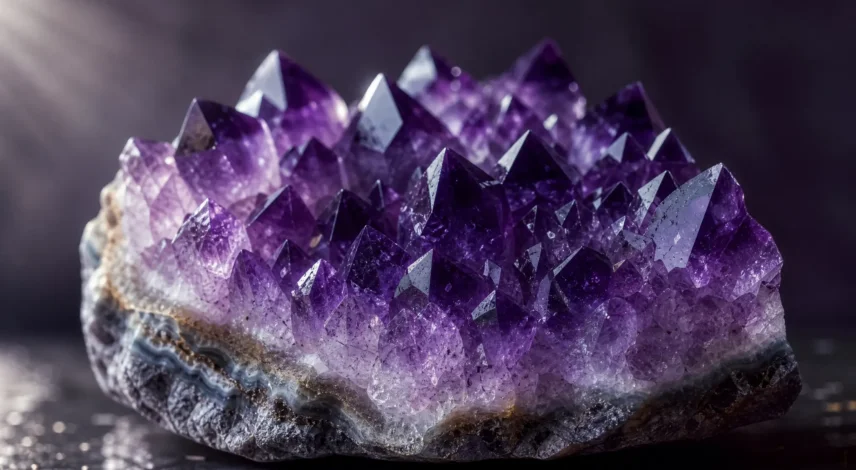

Amethyst is the February birthstone, a purple quartz that was once as rare as ruby and emerald. That changed in the 19th century, when large deposits turned up in Brazil and the gem became widely affordable.
Were you born in February, or are you shopping for someone who was? This guide gives you seven checked facts about amethyst and the legends behind its meaning. It also takes an honest look at its so-called powers. You get simple care habits that keep the purple from fading, too.
At PotalaStore, we build our crystal guides on gemological sources such as the Gemological Institute of America (GIA). We keep traditional beliefs separate from tested facts. Amethyst also has a long place in meditation and spiritual practice, and we cover that with the same care.
⚠️ Important Note: The information about spiritual and energy properties is based on traditional beliefs and user experiences, not scientific evidence. This content is for educational purposes and should not replace professional medical advice.
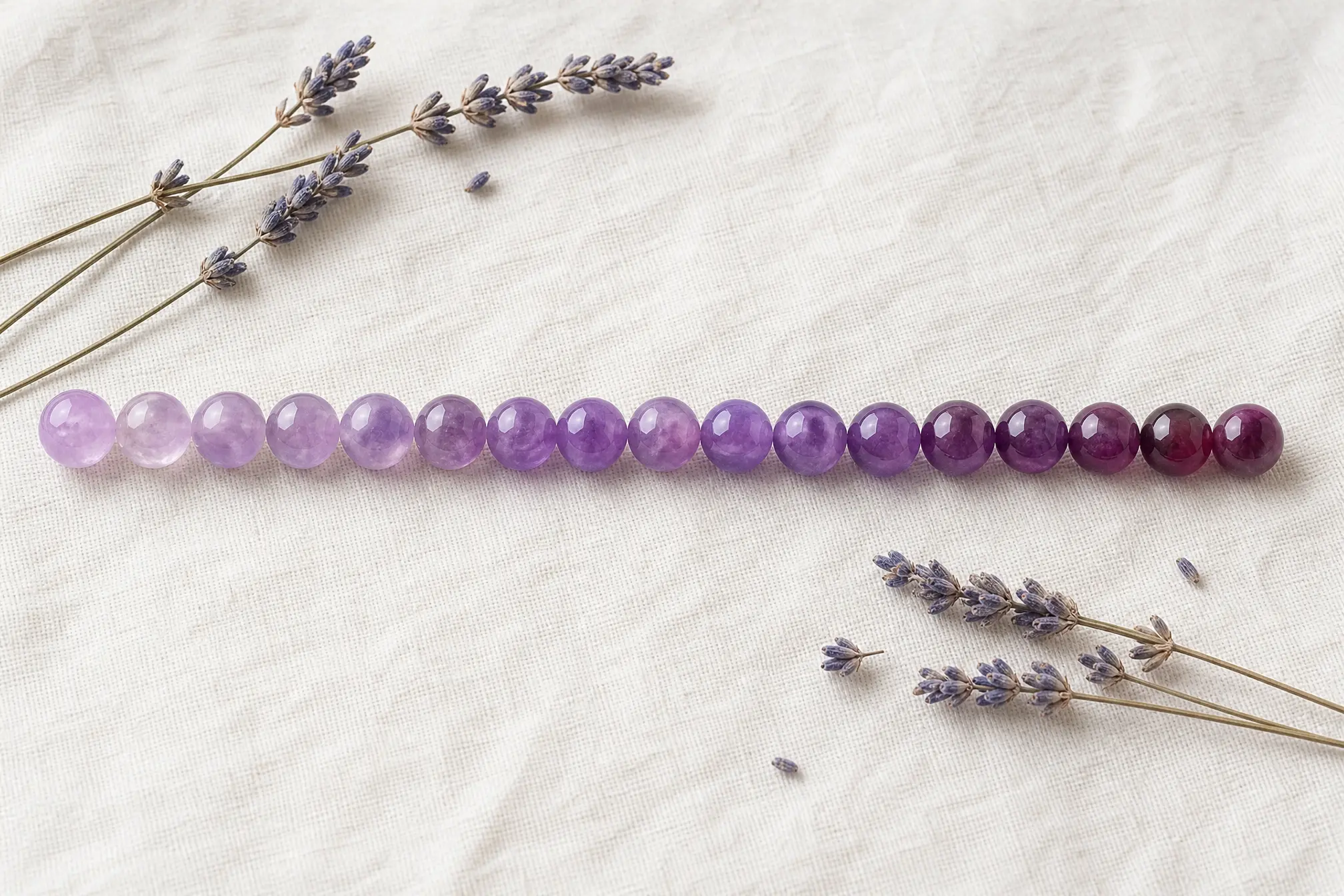
Table of Contents
What Is the February Birthstone? Amethyst at a Glance
The February birthstone is amethyst, the purple variety of quartz (silicon dioxide, SiO2) that rates 7 on the Mohs hardness scale. Its name comes from the Greek amethystos, meaning “not intoxicated,” and for centuries it has been traditionally associated with calm, clarity, and inner strength, making it a meaningful gift for anyone born in February.
| Fact | Amethyst Detail |
|---|---|
| Mineral | Quartz (SiO2), specific gravity about 2.65 |
| Color range | Pale lilac to deep reddish purple |
| Mohs hardness | 7 |
| Name origin | Greek amethystos, “not intoxicated” |
| Zodiac link | Aquarius (Jan 20 to Feb 18) and Pisces (Feb 19 to Mar 20), by tradition |
| Anniversary | Traditional gem for the 6th wedding anniversary |
| Main sources | Brazil, Uruguay, Zambia, and Arizona (USA) |
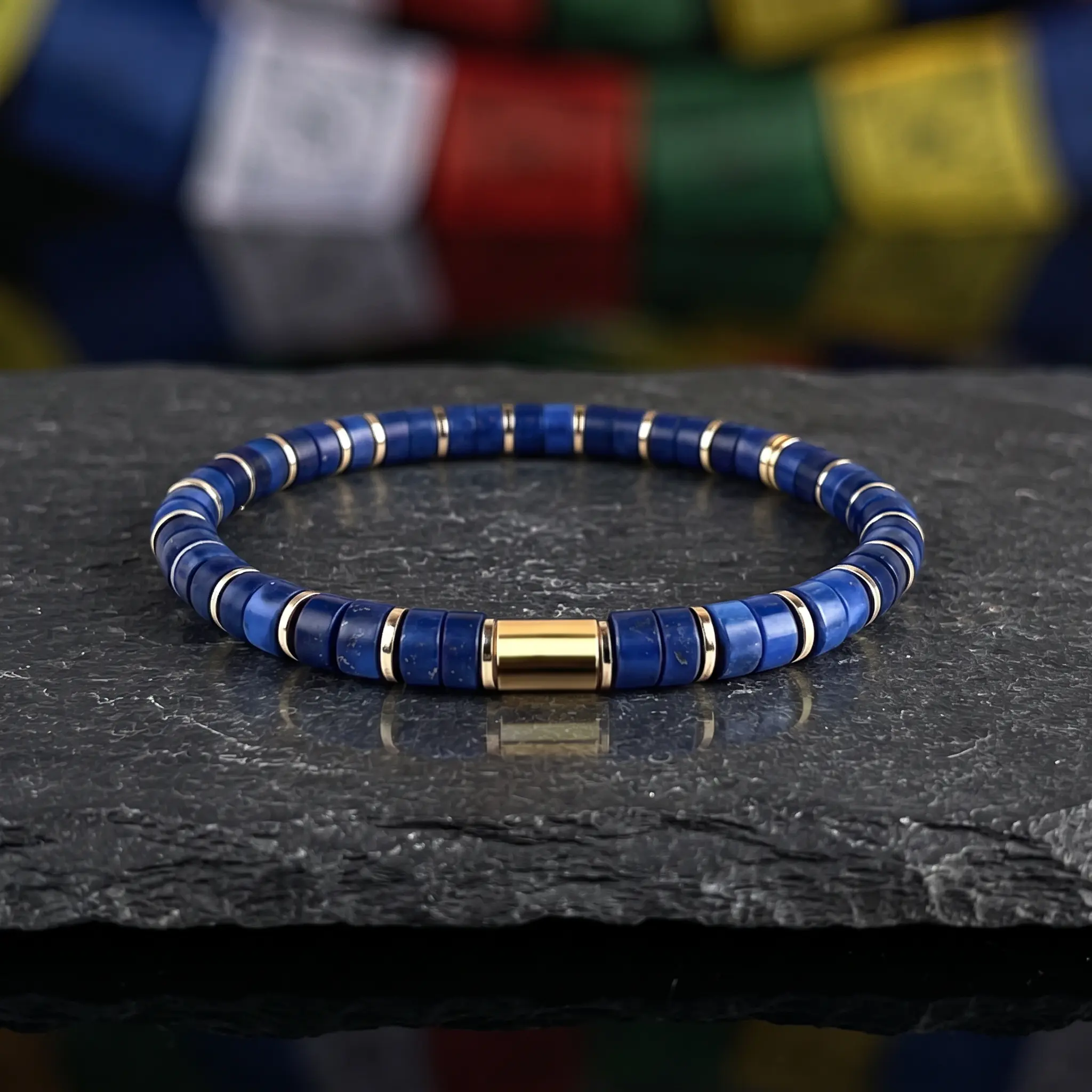
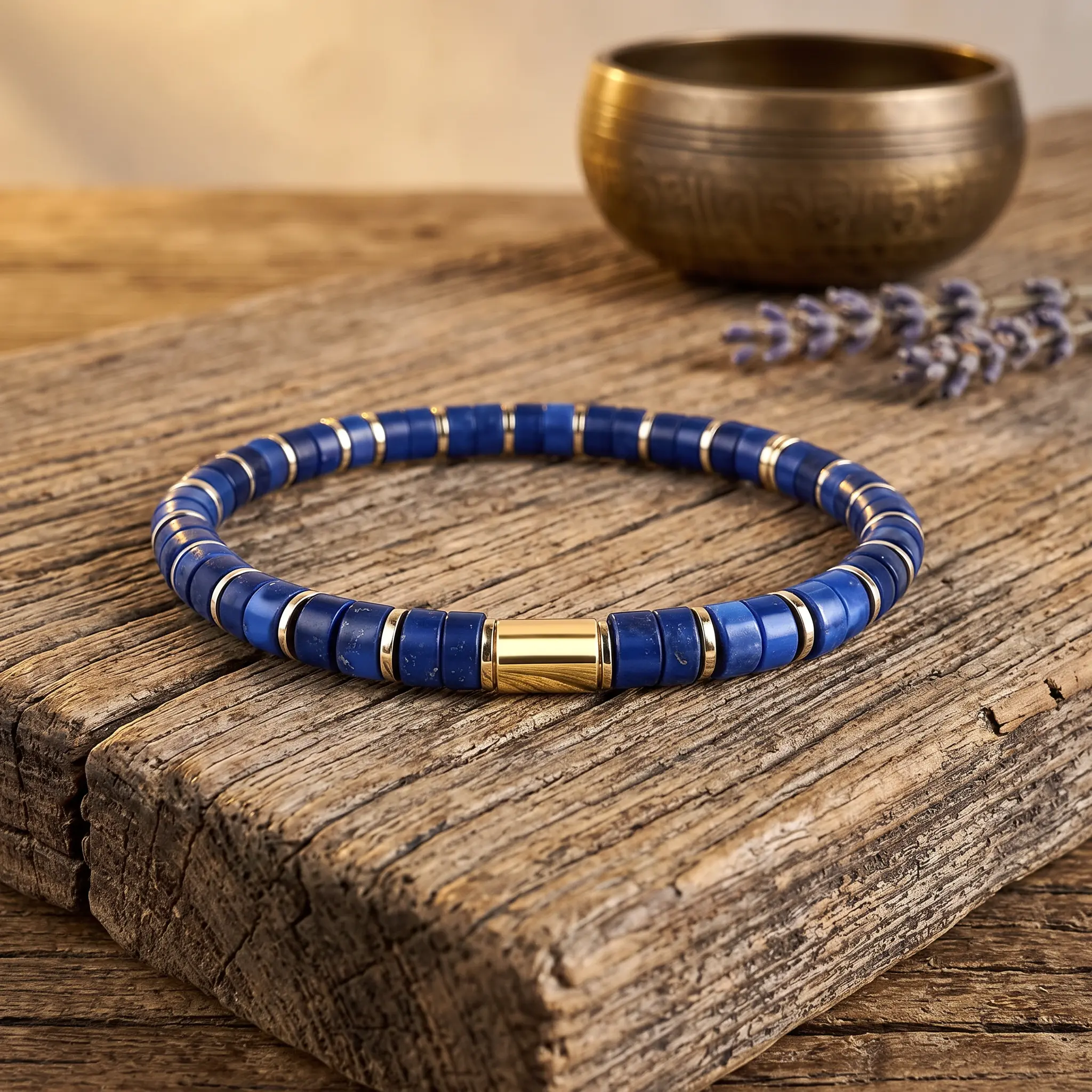
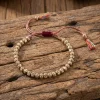
Keep February’s stone close. The natural amethyst bracelet for peace and clarity uses hand-finished natural amethyst rated Mohs 7, so it holds up to all-day wear. It costs $43.95 (regularly $48.95), which keeps a birthday and Valentine’s Day gift under $50.
What Color Is the February Birthstone?
The February birthstone is purple, ranging from pale lilac to deep reddish purple. Many stones show color zoning, with the richest color usually near the crystal tips. That is why two amethyst beads on one bracelet can look slightly different.
Why Is Amethyst Purple?
Amethyst gets its purple from trace iron (Fe3+) locked inside the quartz crystal. Natural radiation in the surrounding rock then turns that iron into a color center. The color center absorbs part of the visible light, and the stone looks purple.
Quartz usually holds only tens to hundreds of parts per million of iron. The stone needs the right amount of iron plus enough natural irradiation, so deep purple takes a lucky combination. The same color center is delicate, and the care section below explains what disturbs it.
How Hard Is Amethyst for Everyday Wear?
Amethyst rates 7 on the Mohs scale, so it resists scratches from dust and most household surfaces. Harder gems such as sapphire and diamond can still scratch it. That balance explains why amethyst shows up in daily rings and bracelets instead of staying in a jewelry box.
Where Does the Purple Quartz Get Its Meaning?
Amethyst’s meaning starts with its name: the Greek amethystos means “not intoxicated,” because ancient Greeks believed the wine-colored stone kept its wearer clear-headed. Later cultures added love, protection, and royalty to that first idea of a calm, sober mind.
The Greek “Not Intoxicated” Legend
Greeks wore amethyst and carved drinking cups from it, hoping to avoid the effects of wine. One myth says Dionysus, the god of wine (Roman Bacchus), poured wine over a white stone and stained it purple. We share these stories as folklore, not fact.
The idea of a clear head stayed attached to the stone. That is why amethyst still stands for calm and sobriety in modern birthstone lists.
St. Valentine’s Ring and February’s Love Connection
Legend says St. Valentine, the patron of love, wore an amethyst ring carved with the image of Cupid. During the Renaissance, Europeans also believed amethyst calmed lovers overrun by passion.
February hosts Valentine’s Day, so one amethyst piece can cover a birthday and a romantic holiday. Amethyst is also the traditional gem for a sixth wedding anniversary.
From Catherine the Great to the Duchess of Windsor
Russia was the main source of amethyst until the 19th century. Empress Catherine II (Catherine the Great, 1729-1796) was among the rulers who prized it. In 1953, Wallis, Duchess of Windsor, wore a Cartier necklace holding 28 step-cut amethysts to a dinner at Versailles.
The stone’s history reaches back much further. The American Gem Society notes that some of the oldest amethyst jewelry dates to about 2000 BC.
What Are the Powers of Amethyst? Traditional Beliefs vs. Science
Amethyst’s “powers” are traditional beliefs, not proven effects: for centuries, people have associated it with calm, clear thinking, restful sleep, and spiritual protection. The table separates what tradition says from what evidence shows.
| Belief | What Tradition Says | What Evidence Shows |
|---|---|---|
| Calm and stress relief | Amethyst is a tranquil stone that soothes a busy mind | No clinical research confirms this effect |
| Clear thinking | The Greek “not intoxicated” legend links it to a sober, clear head | A symbolic meaning, not a measured effect |
| Restful sleep | Placed on a nightstand for peaceful nights | Not tested clinically; a doctor can help with ongoing sleep problems |
| Spiritual protection | Worn as an amulet in many cultures | A matter of personal faith and practice, not science |
| Chakra connection | Linked to the crown and third eye chakras | Chakras are a yogic concept, not a measurable body system |
Calm, Clarity, and Sleep: What Tradition Says
Traditionally, amethyst is called the stone of calm, and many practitioners report that holding or wearing it becomes a quiet daily ritual. Some people keep a piece on the nightstand as part of a bedtime routine.
In our experience helping customers choose a first calming stone, amethyst is the one most people connect with fastest. That reflects its reputation and its color, not a measured result.
What Chakra Is Amethyst For?
Tradition links amethyst to the crown chakra and the third eye chakra. These are the energy centers at the top of the head and between the brows. Some Tibetan Buddhist traditions also regard amethyst as a sacred stone, which is one reason it appears in meditation beads.
For a deeper look at these associations, read our amethyst healing properties and crown chakra guide.
What Amethyst Cannot Do
Amethyst cannot diagnose, treat, cure, or prevent any condition. If anxiety or sleeplessness is affecting your daily life, a stone is a companion, not a replacement for a doctor or therapist.
How Do You Choose February Birthstone Jewelry: Real or Heat-Treated?
Natural, lab-created, and heat-treated amethyst are all real quartz, but sellers are required to tell you whether a gem is natural or synthetic, so always ask. Knowing the source and the treatment helps you pick a piece you will still love in five years.
Natural, Lab-Created, or Heat-Treated Amethyst?
Synthetic amethyst has been made since the 1970s, and it shares the properties of the natural stone. Only advanced lab testing can reliably separate the two, so the seller’s disclosure matters.
Origin also shapes color. These are the main sources and what GIA says about them:
- Brazil: Large deposits were found in the 19th century, and stones from the south tend to look lighter.
- Uruguay: The Artigas region is another well-known source of amethyst clusters.
- Zambia: The Kariba mine ranks among the largest amethyst producers in the world, with richly saturated color.
- Arizona, USA: The Four Peaks mine sits in the rugged Mazatzal Mountains, 46 miles (74 km) from Phoenix, and yields dark purple to purplish red crystals.
Amethyst vs. Citrine: The Heat Connection
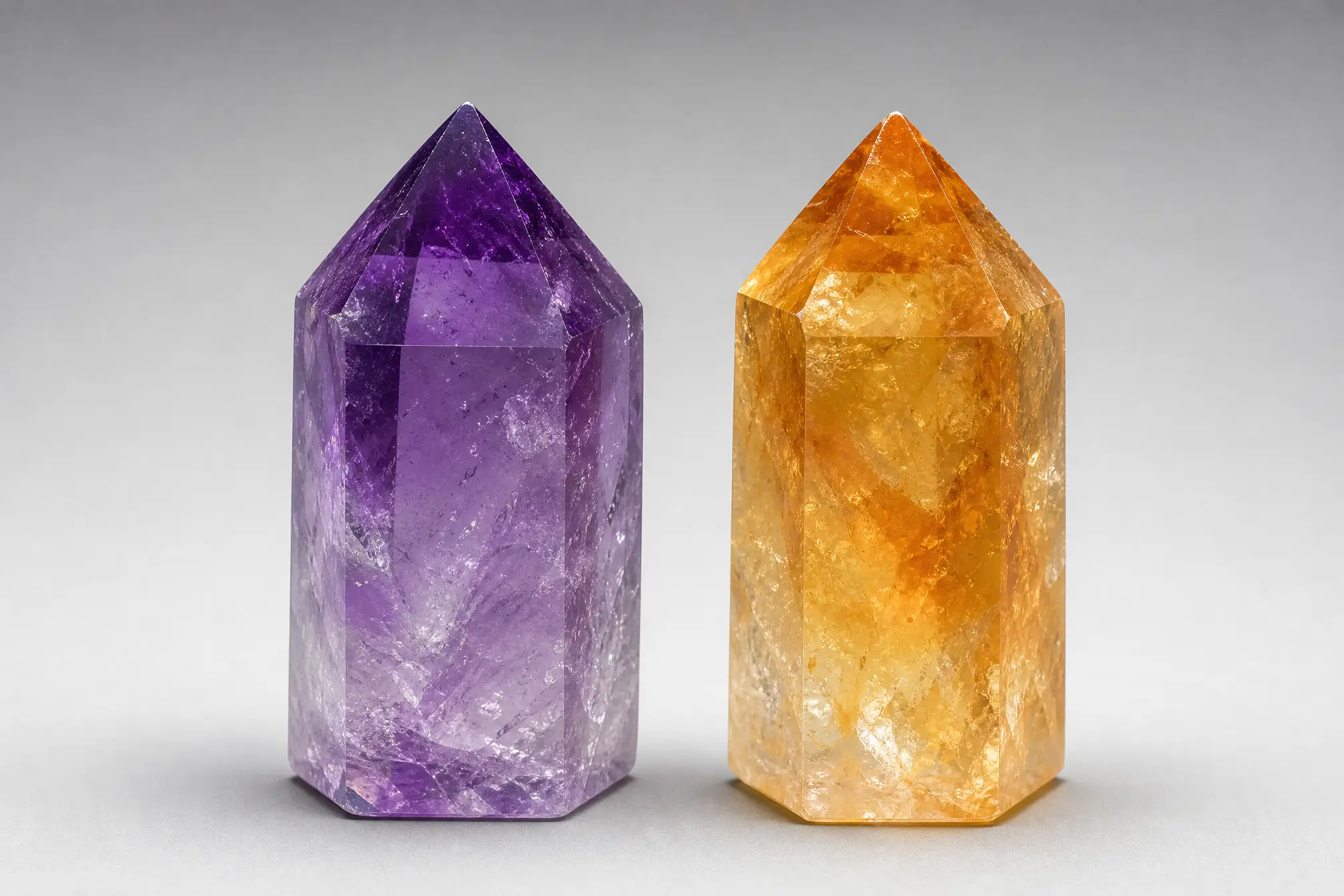
Much of the citrine sold in jewelry is heat-treated amethyst. Heating amethyst to roughly 570-930°F (300-500°C) drives out the purple and leaves yellow, orange, or brown.
The most common mistake is trusting a very bright, perfectly uniform orange stone sold as natural citrine. Natural citrine tends to look paler and softer. Gemologists also check dichroism, a color shift seen from different angles, which natural citrine shows and heated amethyst loses.
Bracelet, Pendant, or Crystal Tree: Which Fits Your Life?
Choose a bracelet if the wearer likes daily jewelry, and choose a crystal tree if they do not. You do not want to give a gift that stays in a drawer, so ask yourself how the person actually lives.
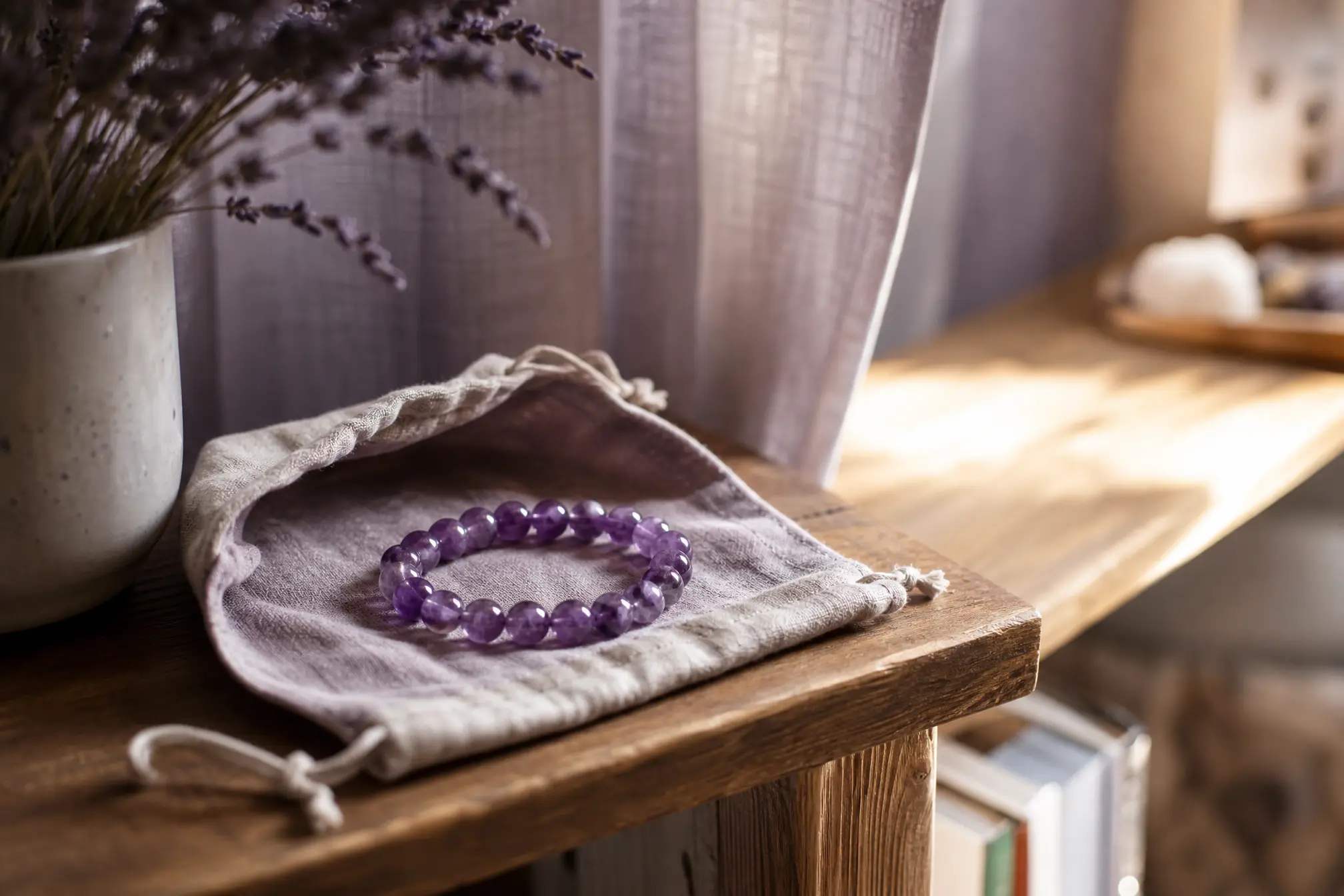
The amethyst bracelet suits all-day wear because amethyst rates Mohs 7 and the beads are hand-finished. For a nightstand or desk, the amethyst crystal tree for your nightstand costs $53.95 (regularly $77.95). It measures about 4.7 in (12 cm) by 3.5 in (9 cm). Brazilian amethyst leaves sit on copper wire branches, so it fits a small shelf.
Both pieces come from PotalaStore, where the amethyst range sits next to other natural stone styles. Prices and availability can change, so check the product page before you buy.
How Do You Care for Amethyst So It Doesn’t Fade?
Yes, amethyst can fade: GIA notes that some amethyst loses color with prolonged exposure to strong light, so keep it out of daily direct sun. Gentle cleaning and smart storage handle the rest.
Can Amethyst Fade in Sunlight?
Prolonged strong light can fade amethyst because it disturbs the iron color center that creates the purple. The change is slow, and most owners never notice it.
The most common mistake is “charging” a crystal on a sunny windowsill for months. If your piece has lived near a window, hold it next to a similar stone kept in a drawer. A visible difference tells you to move it.
Can Amethyst Go in Water?
Amethyst can handle a brief rinse. Warm soapy water and a soft brush are the safest way to clean it. Dry it with a soft cloth afterward, and skip steam cleaners and ultrasonic machines unless a jeweler confirms your piece is safe.
Store amethyst away from diamonds and sapphires, since harder gems can scratch it. Many owners also remove it before intense workouts or swimming.
Moonlight and Sound: Gentle Ways to Cleanse Amethyst
Moonlight and sound are the two cleansing practices most often paired with amethyst, and both are gentle on the stone. Many practitioners leave amethyst out overnight under the moon or play a singing bowl near it for a minute or two. These are spiritual traditions, not physical cleaning, and moonlight avoids the fading risk of direct sun.
For more methods and a safety table, see our guide on how to cleanse, charge, and store crystals.
February Birthstone FAQ: Quick Answers
Yes. Birthstones are a tradition, not a rule, and anyone can wear amethyst for its color or meaning. At Mohs 7, it is durable enough for daily wear.
Amethyst is traditionally linked to Aquarius (Jan 20 to Feb 18) and Pisces (Feb 19 to Mar 20), the two signs that share February. For a deeper look at the water sign’s stones, read our guide to Pisces birthstone meaning and symbolism.
Yes. Legend says St. Valentine wore an amethyst ring carved with Cupid, and amethyst is the traditional sixth-anniversary gem. A bracelet or pendant lets one gift cover a February birthday and Valentine’s Day.
Real amethyst usually shows slight color zoning, while glass imitations can show air bubbles and look perfectly uniform. Lab-created amethyst has the same properties as natural stone, so only a gem lab can reliably separate them. Ask the seller to state in writing whether the stone is natural or synthetic.
In summary, the February birthstone amethyst earns its place through history, not hype. It is a durable purple quartz with a 2,000-year-old story of clear-headedness. One gem can mark a birthday, Valentine’s Day, and a sixth anniversary. Wear it as a reminder of calm, and keep it out of the sun.
Celebrate a February birthday with a stone that has a story.
Compare amethyst bracelets and other natural stone styles in one place.
Shop PotalaStore’s crystal bracelet collection
How we wrote this guide: Gemological facts come from GIA, the American Gem Society, The Old Farmer’s Almanac, and a university physics reference. Spiritual and energy information reflects tradition and personal experience. Prices and availability can change, so confirm them on each product page.
📚 References
- February Birthstone (Amethyst): Gemological Institute of America overview of amethyst sources, hardness, history, and care. GIA
- The Folklore of Amethyst: Legends, myths, and early amethyst jewelry history, presented as lore rather than fact. American Gem Society
- February Birthstone: The Color, Meaning, and Hidden Powers: Color, folklore, and the St. Valentine ring legend. The Old Farmer’s Almanac
- Amethyst (HyperPhysics): University physics explanation of how trace iron and natural radiation create amethyst’s color. Georgia State University