
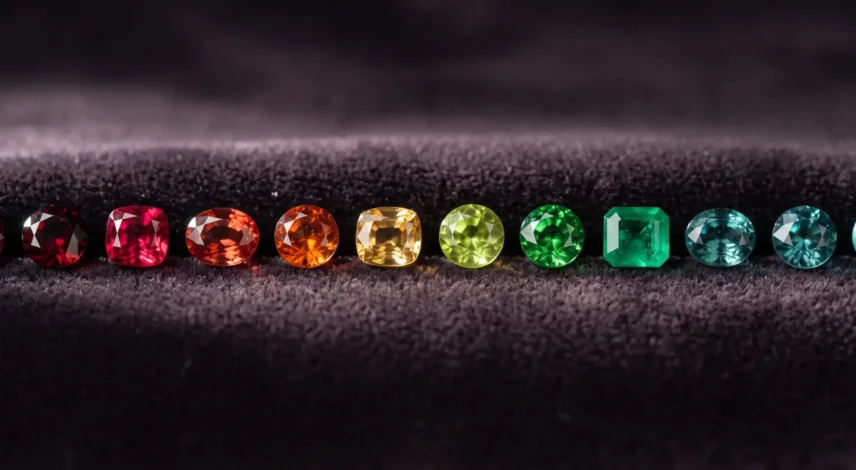

Your birthstone is the gemstone tied to your birth month, and the twelve run from garnet in January to turquoise in December. If you have ever seen two charts disagree, or wondered why your month lists three stones instead of one, this guide sorts it out. Below you will find every monthly birthstone with its color and traditional meaning, how the modern list differs from older ones, which gems survive daily wear, and how to pick one as a gift. At Potala Store, we source gemstones directly through partnerships with Himalayan monasteries, and that work has taught us as much about choosing the right stone as about the lore behind it.
This is a working reference, not just a chart. It treats birthstones as a decision tool: what to wear every day, what to give, and what each stone is believed to carry. Where a meaning comes from tradition rather than science, we say so plainly.
A quick note on meanings: The spiritual and energy properties described below reflect traditional beliefs and cultural lore, not scientific evidence. They are offered as centuries-old context to enjoy, not as medical or psychological advice.
Table of Contents
What Is a Birthstone?
A birthstone is a gemstone assigned to a calendar month, worn as a personal symbol of the month you were born. Each of the twelve carries its own color, history, and traditional meaning, which is why a birthstone reads as both a piece of jewelry and a small statement about you. The custom is old, but the standardized list most Americans know is surprisingly recent.
Where Birthstones Came From
The idea traces back to the Breastplate of Aaron described in the Book of Exodus, a ceremonial garment set with twelve gemstones representing the twelve tribes of Israel. According to the American Gem Society, early scholars linked those twelve stones first to the months of the year and later to the signs of the zodiac. Over centuries the associations shifted by region and culture, which is exactly why older “traditional” stones still circulate alongside the modern ones.
Why the Modern List Feels Official
The version printed on most jewelry store charts was standardized in 1912, when the trade body then called the National Association of Jewelers set a single list to end the confusion. That decision is why almost any American can name their birthstone without hesitation. The list has been revised only a few times since, and we cover each change further down.
Birthstones by Month: The Complete Chart
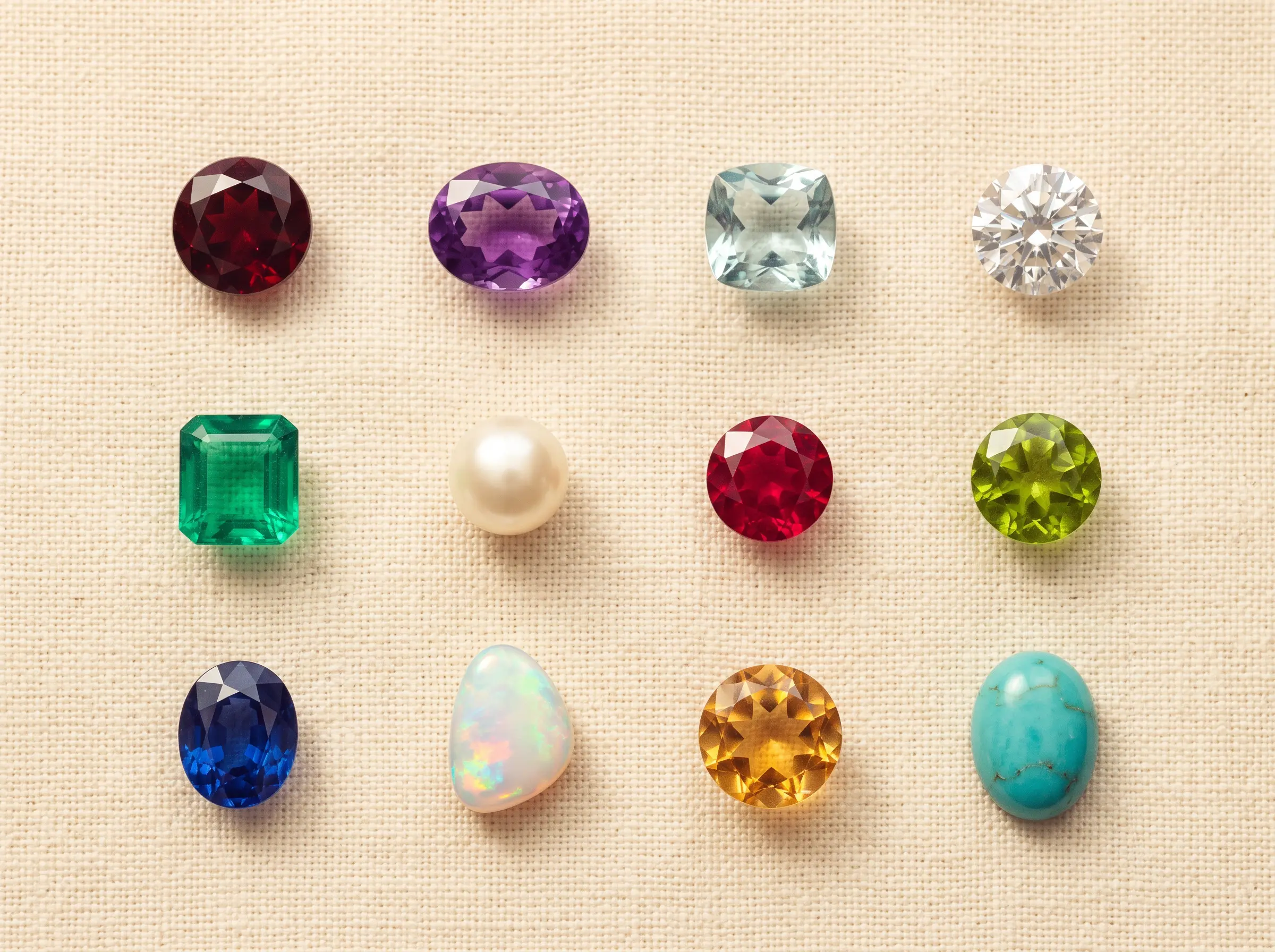
Here is every birthstone by month, from January’s garnet to December’s turquoise, with its color, its traditionally associated meaning, and its hardness on the Mohs scale. Months in bold below carry more than one recognized stone, so you can pick the color or meaning that fits you best.
| Month | Modern Birthstone | Color | Believed Meaning | Mohs Hardness |
|---|---|---|---|---|
| January | Garnet | Deep red | Protection and steady energy | 6.5-7.5 |
| February | Amethyst | Purple | Calm and clear thinking | 7 |
| March | Aquamarine (also bloodstone) | Pale blue-green | Courage and honest communication | 7.5-8 |
| April | Diamond | Colorless | Strength and enduring love | 10 |
| May | Emerald | Green | Renewal and growth | 7.5-8 |
| June | Pearl, alexandrite, moonstone | White, color-shift, sheen | Purity and balance | 2.5-4.5 (pearl) |
| July | Ruby | Red | Passion and vitality | 9 |
| August | Peridot, spinel, sardonyx | Yellow-green and varied | Warmth and well-being | 6.5-7 (peridot) |
| September | Sapphire | Blue | Wisdom and loyalty | 9 |
| October | Opal, tourmaline | Iridescent and varied | Creativity and hope | 5.5-6.5 (opal) |
| November | Topaz, citrine | Golden yellow | Warmth and abundance | 8 (topaz), 7 (citrine) |
| December | Turquoise, tanzanite, zircon | Blue to blue-violet | Good fortune and calm | 5-6 (turquoise) |
January to June at a Glance
The first half of the year holds two of the calendar’s hardest and softest stones. April’s diamond sits at a perfect 10 on the Mohs scale, while June’s pearl is one of the softest gems in jewelry at 2.5 to 4.5, so the two ask for very different care. February’s amethyst is a purple quartz that ranges from pale lavender to deep grape, and if it is your month you can read February’s amethyst in more depth. June is the first month with three official stones, which gives June babies real choice: a classic pearl, a rare color-shifting alexandrite, or a glowing moonstone.
July to December at a Glance
The second half leans warm and jewel-toned. July’s ruby and September’s sapphire are both corundum, so both rate a hard 9 and wear beautifully in daily rings. August and December are the calendar’s most generous months: August pairs green peridot with spinel and sardonyx, and December offers turquoise, blue-violet tanzanite, and bright zircon. November splits between golden topaz and sunny citrine, both easygoing choices for everyday jewelry.
Find your month in a piece you will actually wear. Browse our healing gemstone bracelets to match your birth color to a stone, or keep reading to see which gems hold up to daily use.
Traditional vs. Modern Gemstone Lists: What Changed Since 1912?
The difference is simple: a traditional birthstone comes from centuries of regional and cultural lore, while a modern birthstone belongs to the standardized US list first set in 1912, and neither one is more correct than the other. March is the clearest example. Bloodstone was the old stone for March, but the 1912 list put aquamarine in its place, so both still appear on charts today.
| Month | Traditional stone | Modern stone |
|---|---|---|
| March | Bloodstone | Aquamarine |
| June | Pearl or moonstone | Pearl, alexandrite, moonstone |
| August | Sardonyx | Peridot, spinel, sardonyx |
| November | Topaz | Topaz, citrine |
| December | Turquoise or lapis | Turquoise, tanzanite, zircon |
How the Official List Evolved
Most articles mention 1912 and stop. The list has actually been revised on a clear timeline, and each update added stones that are now considered standard:
- 1912: The National Association of Jewelers set the first official US list at its convention, ending decades of competing charts.
- 1952: The Jewelry Industry Council updated it, adding alexandrite to June, citrine to November, tourmaline to October, and zircon to December.
- 2002: The American Gem Trade Association added tanzanite to December, the first change to the list in fifty years.
- 2016: The American Gem Trade Association and Jewelers of America added spinel to August, the most recent official update.
So if a modern chart looks busier than the one your grandmother knew, that is why. Roughly a century of small, dated revisions built the list we use now.
Traditional or Modern, Which Should You Pick?
Choose the traditional stone when history and symbolism matter most to you, and choose the modern stone when you want the widely recognized standard that most jewelers stock. If durability is the deciding factor, let the harder option win, which usually points you toward the modern choice anyway.
Birthstone vs. Zodiac Stone (and the Tibetan Tradition)
A birthstone follows your calendar birth month, while a zodiac stone follows your astrological sun sign, so the two can be different gems for the same person. Sun signs span parts of two months, which is where the confusion starts. Someone born on May 2 has emerald as a May birthstone but falls under Taurus for zodiac purposes, and the two systems can recommend different stones.
Month Birthstone vs. Sun-Sign Stone
If you were born near the start or end of a month, check both systems before you buy, because a cusp birthday can pull you between two signs and two stones. A birth date of April 19 or 20, for instance, sits on the Aries and Taurus boundary. There is also a separate East Asian system worth knowing: your Chinese zodiac lucky stone is chosen by your birth-year animal and its element, not by your month at all, so it can differ from both your birthstone and your sun-sign stone.
A Tibetan Buddhist View of Birthstones
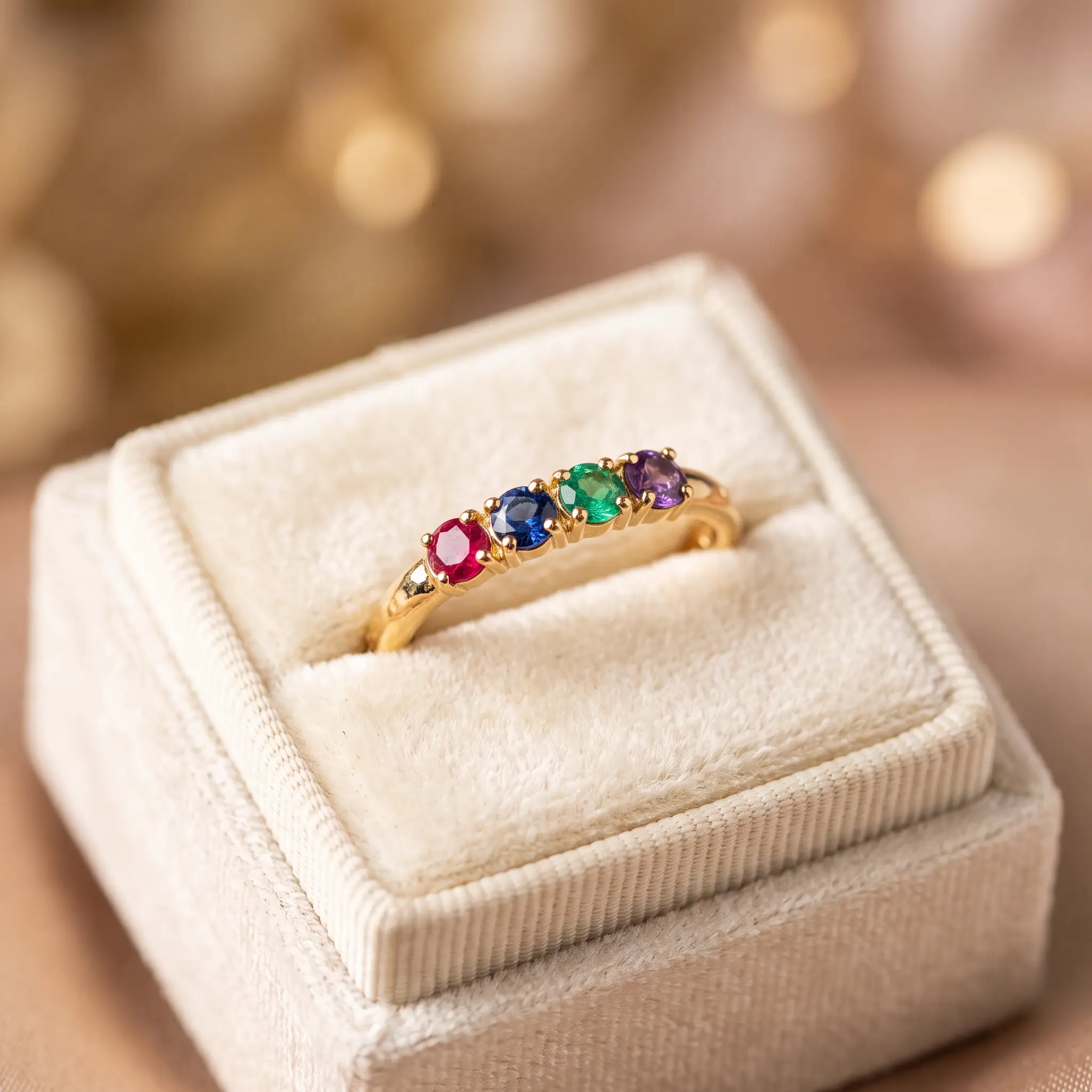
In the Himalayan tradition we work within, a birthstone is read less as a birth-month label and more as a mirror of the soul’s ongoing work, a small daily reminder of what you are trying to cultivate. At Potala Store, sourcing stones through direct partnerships with monasteries including Sera Jhe and Kopan has shown us how differently practitioners treat these gems. They tend to choose by intention first and calendar second, which is a useful reframe if two charts leave you stuck. If you want the personality side of each gem, our guide to what your birthstone says about your personality goes month by month.
Which Gems Handle Everyday Wear? A Durability Guide
For a stone you will wear every day, Mohs hardness is the number that matters, and diamond (10), ruby, and sapphire (both 9) shrug off daily wear while pearl (2.5 to 4.5) and opal need gentler handling. Hardness measures scratch resistance, so a higher number means the gem keeps its polish longer on a ring that meets keys, counters, and car doors.
Birthstone Hardness by Lifestyle
Use this to match a stone to how you actually live, not just to the month.
| Birthstone (month) | Mohs hardness | Best for |
|---|---|---|
| Diamond (April) | 10 | Daily rings in any setting |
| Ruby, sapphire (July, Sept) | 9 | Daily rings and bracelets |
| Topaz (November) | 8 | Rings with occasional care |
| Emerald, aquamarine (May, March) | 7.5-8 | Pendants and earrings; emerald is brittle, so treat rings carefully |
| Amethyst, citrine (Feb, Nov) | 7 | Everyday pendants and rings |
| Garnet, peridot (Jan, Aug) | 6.5-7.5 | Pendants, earrings, light ring wear |
| Opal, turquoise (Oct, Dec) | 5-6.5 | Pendants and earrings; avoid hard knocks |
| Pearl (June) | 2.5-4.5 | Necklaces and earrings; keep off daily rings |
How to Clean and Store Your Birthstone Jewelry
Most hard, transparent gems like diamond, ruby, sapphire, and amethyst are fine with warm water, mild soap, and a soft cloth. Softer or porous stones are the exception. Pearl, opal, and turquoise can absorb liquids and chemicals, so wipe them with a dry or barely damp cloth and keep them away from perfume, hairspray, and ultrasonic cleaners. Store softer stones separately, since a harder gem sitting next to them will scratch the surface over time.
How to Choose Birthstone Jewelry as a Gift
A birthstone gift lands because it is personal, whether it is a ring holding each child’s stone or a simple pendant in someone’s birth color. The color does the emotional work: a recipient recognizes their own month at a glance, which turns a standard piece into something that feels chosen for them specifically.
Birthstone Gifts for Moms and Milestones
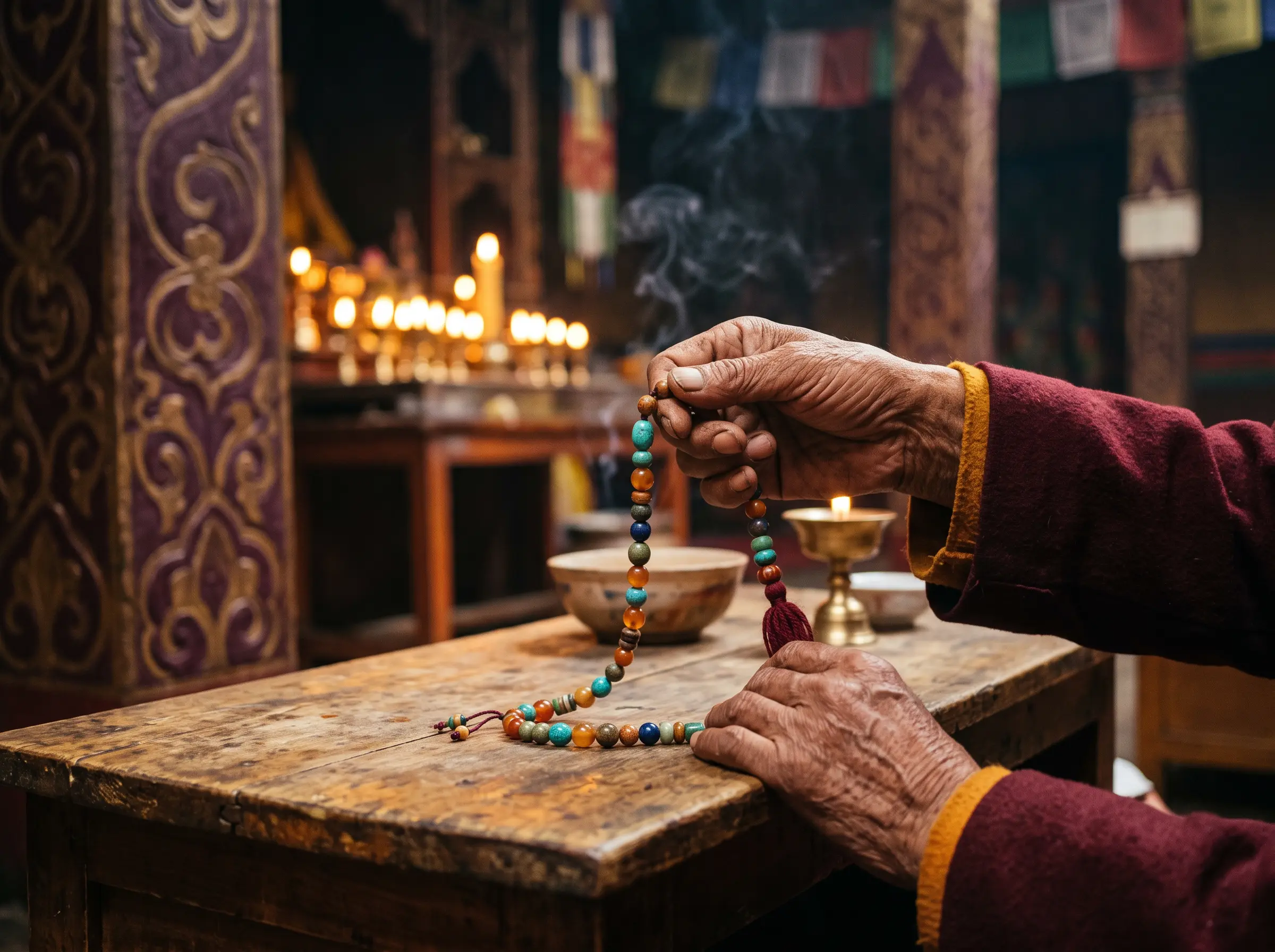
A mother’s ring set with each child’s birthstone is the classic version of this gift, and it is popular around Mother’s Day (May 10, 2027) for a reason. Each stone stands in for a person, so the piece reads as a small family portrait she can wear. When you build one, let the softest stone in the group set the rules: if one child’s month is pearl or opal, a pendant or earrings will outlast an everyday ring. That single choice is the most common mistake we see gift-buyers make, and it is easy to avoid once you know the hardness order above. A pendant in her birth color, drawn from our birthstone-inspired pendant necklaces, gives you the same personal meaning with far less daily wear.
Layering Birthstone and Zodiac Pieces
You do not have to pick just one stone. Many people layer a birthstone piece with a zodiac or intention stone, which lets a gift carry two meanings at once: the month someone was born and the quality they are working toward. Pairing a hard everyday stone with a softer statement piece also spreads the wear, so the delicate gem stays protected. For more ways to make a piece meaningful, see our guide to meaningful spiritual jewelry gifts.
Find the Stone That Fits Your Month
Explore hand-finished birthstone and gemstone jewelry at Potala Store, sourced through direct monastery partnerships and blessed before it ships.Shop birthstone jewelry
Frequently Asked Questions
Your birthstone is the gem assigned to your birth month, such as garnet for January or ruby for July. Some months, including June, August, and December, have more than one official stone, so you can choose the color or meaning you like best.
A birthstone follows your calendar birth month, while a zodiac stone follows your astrological sun sign, which spans parts of two months. Because they are dated differently, the two can be different gems, and many people happily wear both.
Diamond, ruby, and sapphire are the toughest for daily rings thanks to their high Mohs hardness, while softer stones like pearl and opal are better suited to pendants or earrings. Match the stone to how you live, and it will keep its polish far longer.
No. The luck, calm, and emotional meanings tied to birthstones come from tradition and cultural lore, not scientific study. We share them as long-standing history to enjoy, not as medical or psychological guidance.
References
- Origin of the modern birthstone list: Background on how the standardized US list was set in 1912 and revised since. Jewelers of America
- Birthstone history and meanings: Overview of the Breastplate of Aaron origin and traditional versus modern stones. American Gem Society
- Gemstone properties by month: Gemological detail on each birthstone, including durability and color. Gemological Institute of America (GIA)
- Recent list additions: Details on the addition of tanzanite (2002) and spinel (2016). American Gem Trade Association (AGTA)