
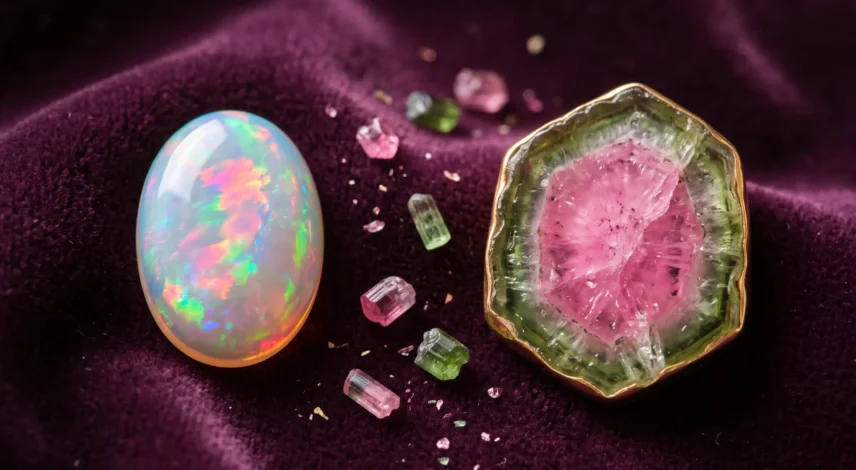

ctober is the only month with two birthstones, opal and tourmaline. Opal, the traditional stone, has symbolized hope, creativity, and innocence for centuries. Tourmaline, added to the official list in 1952, is traditionally associated with protection, grounding, and balance. Both gems appear in a full rainbow of colors, so everyone born in October has two meaningful stones to choose from.
At Potala Store, we work with gemstones and grounding crystals every day, so we wrote this guide to answer the questions October babies ask us most. You will learn what each stone means, why the month has two, how opal and tourmaline compare, and how to keep them looking their best. If you have heard the old rumor that opal is unlucky, we clear that up as well. The short version: it started with a 19th-century novel, and gemologists have since debunked it.
Table of Contents
What Are October’s Two Birthstones?
October has two official birthstones, opal and tourmaline. Opal is the older, traditional choice, prized for the shifting rainbow flashes gemologists call play-of-color. Tourmaline joined the birthstone list in 1952 and is loved for its enormous color range, from hot pink to deep forest green.
Opal, the Original October Birthstone
Opal is a gem of hydrated silica that forms when water carries silica into cracks in rock and slowly dries over millions of years. That watery origin is why some people say opal holds a little rain inside it. Most opal today comes from Australia and Ethiopia, and the stone has been treasured since Roman times, when writers ranked it among the most precious gems. Opal became a modern birthstone for October in the early 1900s and remains the month’s traditional stone.
Tourmaline, October’s Colorful Newcomer
Tourmaline is a boron silicate crystal that grows in more colors than almost any other gem. Its name comes from the Sinhalese word toramalli, meaning “stone with mixed colors.” Jewelers added tourmaline as October’s second birthstone in 1952 because it is harder than opal, easier to wear daily, and sold in bright shades across a wide price range. Today the two stones share the month, and you can pick whichever one speaks to you.
What Does the Opal Birthstone Symbolize?
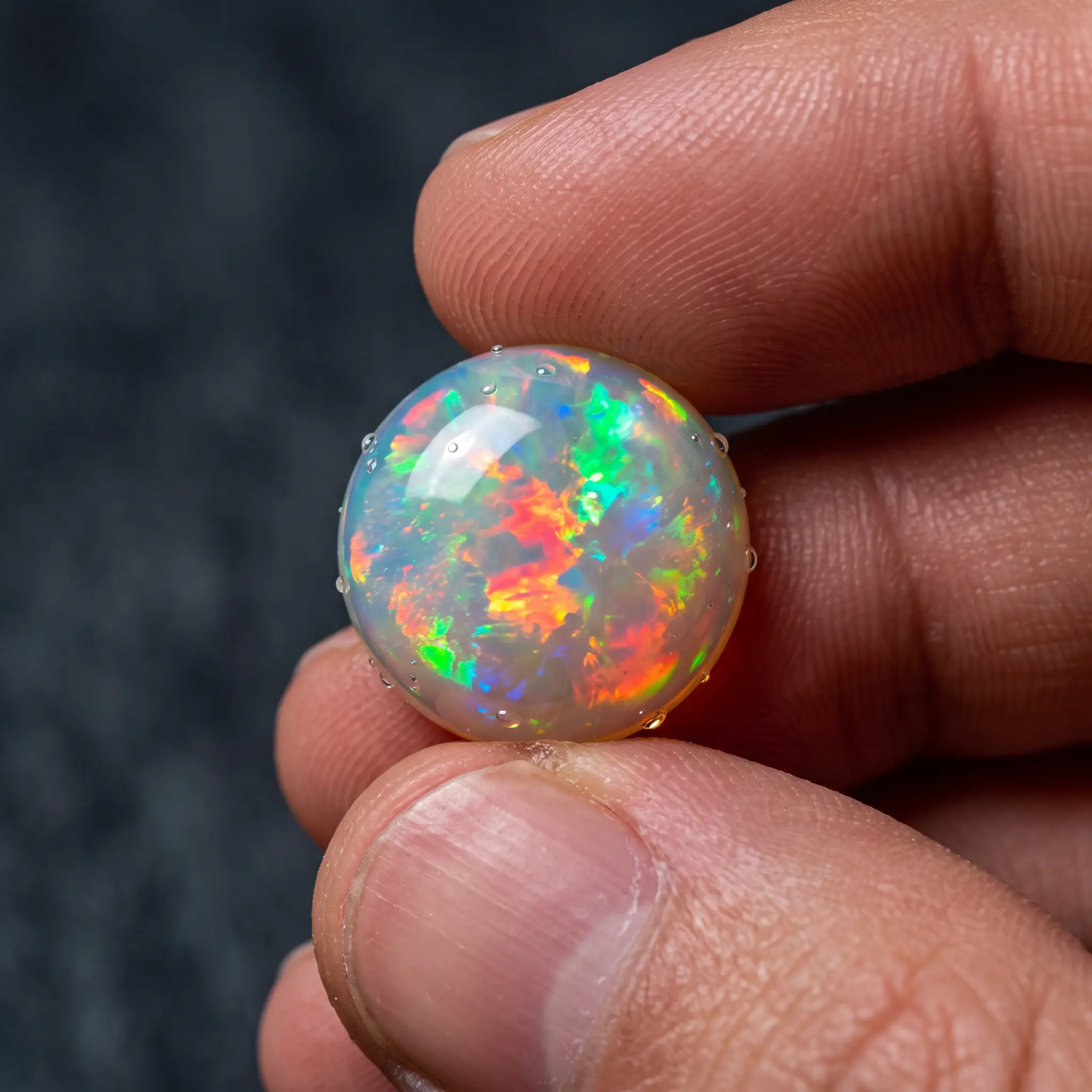
Opal symbolizes hope, creativity, and innocence. Opal earns its link to creativity from its play-of-color, the way a single stone flashes red, green, and blue as it moves in the light. Many cultures also tied the gem to inspiration and emotional healing. In the Middle Ages, people believed opal could sharpen eyesight and protect the wearer on a journey.
Opal play-of-color
Opal Meaning: Hope, Creativity, and Emotional Depth
For centuries, opal has stood for hope and honest self-expression. Roman writers called it opalus, from the Sanskrit upala, meaning “precious stone,” and carried it as a token of good fortune. Many people today find opal a fitting gift for someone starting a new chapter, since its meaning centers on possibility and fresh ideas. Because beliefs about gemstone energy come from tradition rather than science, we share them as folklore.
What Opal’s Play-of-Color Really Is
Opal’s famous rainbow shimmer, called play-of-color, comes from microscopic spheres of silica that bend light like a prism. The stone is a form of hydrated silica, and it can hold up to 20% water, though most gem opals contain closer to 6% to 10%. That water content is also why opal is delicate and needs the gentle care we cover further down. Precious opal shows play-of-color, while common opal stays a single steady shade.
What Does Tourmaline Mean? Protection, Grounding, and Balance
Tourmaline is traditionally associated with protection, grounding, and balance. Its meaning shifts with its color, so black tourmaline is linked to protection while pink tourmaline is tied to love and compassion. Crystal traditions treat tourmaline as a stone that steadies the mind and clears heavy energy. Because it grows in so many shades, tourmaline is often called the most versatile gem for setting an intention.
Tourmaline Symbolism by Color
Tourmaline’s meaning depends on its shade. Here is what each popular color traditionally represents:
- Black tourmaline (schorl): protection and grounding, the variety most people reach for to shield their energy.
- Pink tourmaline (rubellite): love, compassion, and emotional healing.
- Green tourmaline: vitality, growth, and steady physical stamina.
- Watermelon tourmaline: balance between the heart and the mind, matching its pink center and green rim.
Rubellite (pink)
Green tourmaline
Watermelon
Paraíba (blue-green)
Schorl (black)
A Rainbow in a Single Crystal
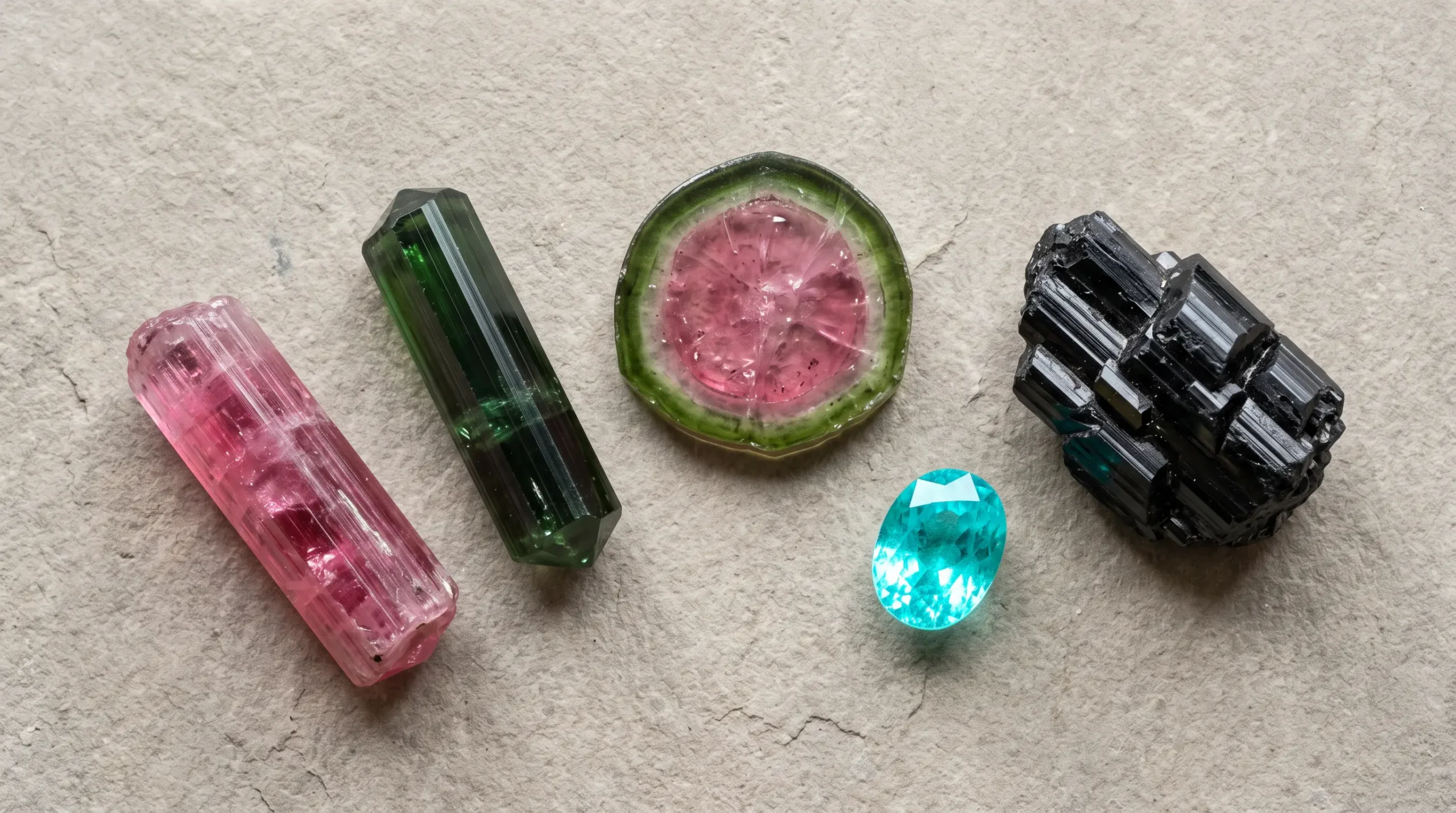
Tourmaline holds the widest color range of any gemstone family, which is exactly why its name means “mixed colors.” The rarest and most valuable type is Paraíba tourmaline, a neon blue-green stone first found in Brazil in 1989. Its copper content gives it a glow so vivid that prices soon passed $20,000 per carat. More common colors like green and pink tourmaline stay far more affordable, which makes the gem easy to start collecting.
In our experience curating grounding stones at Potala Store, black tourmaline and black obsidian are the two pieces customers reach for most when they want protection they can wear every day. We keep coming back to them because they are sturdy, easy to pair with other jewelry, and simple to care for.
If protective, grounding stones speak to you, browse our grounding and protection crystals collection, or read our guide to the best crystals for protection from negative energy.
A note on meaning: The spiritual and energy properties described for opal and tourmaline come from traditional beliefs and personal experiences, not scientific evidence. This guide is for educational purposes and is not a substitute for professional medical or psychological advice.
Why Does October Have Two Birthstones?
October has two birthstones because tourmaline was added to the traditional list in 1952. Opal had been the month’s stone for centuries, but the jewelry trade introduced tourmaline as a harder, more colorful, and more affordable option. A second stone also gave shoppers more choice in color and budget. Several other months carry more than one birthstone for the same reason.
From One Traditional Stone to Two
Opal appeared in the modern birthstone lists of the early 20th century, and the National Association of Jewelers formalized many birthstones in 1912. Tourmaline officially joined October in 1952, when the industry updated the list. The two stones now share the month equally, so neither one is more “correct” than the other. Whichever you prefer counts as a genuine October birthstone.
Is Opal Really Bad Luck?
No, opal is not bad luck, despite a rumor that has followed the stone for almost 200 years. The superstition traces to Sir Walter Scott’s 1829 novel Anne of Geierstein, in which an enchanted opal loses its color and its owner dies soon after. The story frightened Victorian buyers so badly that European opal prices fell by about 50%. Before that book, many cultures saw opal as one of the luckiest, most protective stones you could own, and modern gemologists openly reject the myth.
Opal vs Tourmaline: How to Choose Your October Gem
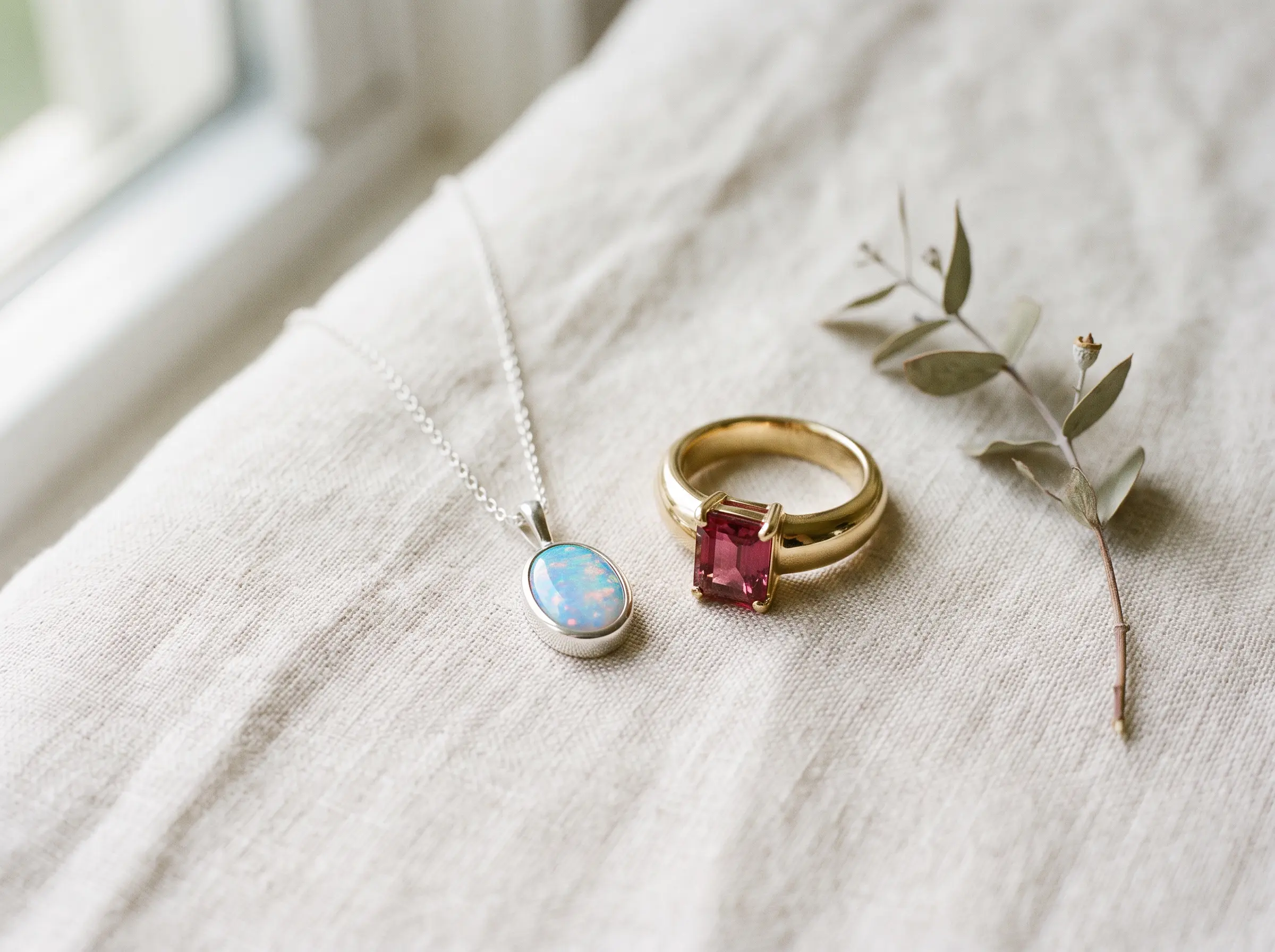
Choose opal for a soft, one-of-a-kind stone, and tourmaline for a harder gem you can wear daily. Opal rates 5.5 to 6.5 on the Mohs hardness scale, so it suits pendants and earrings that avoid knocks. Tourmaline rates 7 to 7.5, which makes it a stronger pick for rings and bracelets. Your birth date and favorite color can guide the final decision.
Durability and Everyday Wear
The biggest practical difference between opal and tourmaline is hardness and water content. The table below sums up how the two October stones compare.
| Feature | Opal | Tourmaline |
|---|---|---|
| Mohs hardness | 5.5 to 6.5 | 7 to 7.5 |
| Composition | Hydrated silica, up to 20% water | Boron silicate crystal, no water |
| Traditional meaning | Hope, creativity, innocence | Protection, grounding, balance |
| Best for | Pendants, earrings, occasional wear | Rings, bracelets, daily wear |
| Rough price range | ~$10 to $500+ per carat (Welo to fine black opal) | ~$50 to $20,000+ per carat (common to Paraíba) |
As the table shows, tourmaline stands up to daily wear better, while opal rewards gentler, more careful use. In short, match the stone to the jewelry: everyday rings favor tourmaline, and sentimental pendants suit opal.
Which Stone Suits You, Libra or Scorpio?
Your October birthday can point you toward one stone. People born from October 1 through October 22 fall under Libra, a sign tied to balance and harmony, which pairs naturally with tourmaline’s grounding meaning. Those born from October 23 onward are Scorpio, a sign linked to depth and transformation, which many people match with opal’s emotional, ever-changing play-of-color. For a gift, tourmaline is the safer everyday choice, while opal makes a striking, sentimental piece. Not sure which crystal style fits the person you are shopping for? Our guide on which healing crystal bracelet is right for you can help you decide.
How to Care for Opal and Tourmaline Jewelry
Clean both opal and tourmaline with warm, soapy water and a soft cloth, and never use ultrasonic or steam cleaners. Opal is porous and can crack if it dries out or meets sudden heat. Tourmaline is tougher, yet it can still chip or dull under harsh chemicals. Store each stone on its own so harder gems do not scratch them.
Cleaning and Storing Opal
Opal needs the gentlest care of any October stone, because it contains water and rates only 5.5 to 6.5 on the Mohs scale. Keep it away from heat, long hours of bright sunlight, and chemical cleaners, all of which can dry the stone and cause fine cracks called crazing. Follow these simple steps:
- Wipe the stone with a soft, damp cloth and a drop of mild soap.
- Rinse briefly in lukewarm water, never hot.
- Dry gently with a lint-free cloth.
- Store opal alone in a padded box or soft pouch.
Caring for Tourmaline
Tourmaline is easier to maintain, since it rates 7 to 7.5 on the Mohs scale and holds no water. Clean it with warm, soapy water and a soft brush to reach the facets, then rinse and pat it dry. Avoid leaving tourmaline in direct heat for long, because sudden temperature swings can occasionally cause internal fractures. With this simple routine, a tourmaline piece can stay bright for generations.
Find a Grounding Stone for Your October Birthday
Whether you love opal’s rainbow shimmer or tourmaline’s protective calm, Potala Store offers hand-picked crystals and grounding stones to mark the occasion. Our best-selling Black Obsidian Pixiu Bracelet is a favorite for anyone who wants daily protection they can wear.Explore the crystals collection
Frequently Asked Questions
Both are official October birthstones. Opal is the older, traditional stone, listed since 1912, while tourmaline was added in 1952. Neither is more correct, so you can wear or gift whichever one you prefer.
No. The superstition comes from Sir Walter Scott’s 1829 novel Anne of Geierstein, which briefly crashed European opal prices by about 50%. For most of history, opal was seen as a lucky, protective stone, and gemologists today treat the bad-luck idea as fiction.
Opal is the traditional gift for a 14th wedding anniversary, and tourmaline marks the 8th. Both also make thoughtful birthday gifts for anyone born in October.
October covers Libra, from October 1 through October 22, and Scorpio, from October 23 to the end of the month. Both signs share opal and tourmaline. For more on the Scorpio side, see our Scorpio birthstone meaning guide.
📚 References
- October Birthstones (Opal & Tourmaline): Official gemological overview of both stones, their colors, and durability. Gemological Institute of America (GIA)
- October Birthstone History: Background on how opal and tourmaline were added to the birthstone list. American Gem Society
- Opal Folklore and the Bad-Luck Myth: Source on the 1829 Sir Walter Scott story and its effect on opal prices. Farmers’ Almanac
- Tourmaline Varieties and Paraíba Value: Detail on tourmaline colors and the copper-bearing Paraíba variety. International Gem Society