
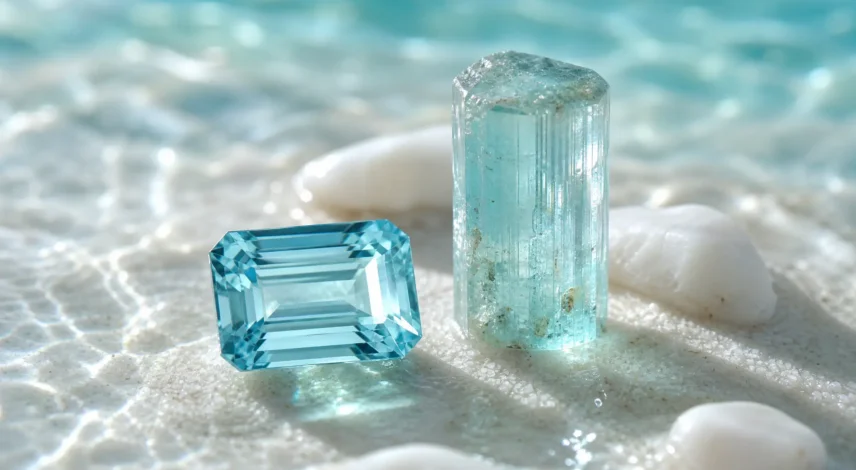

Aquamarine is the March birthstone, a sea-blue variety of beryl that tradition links to calm, courage, and clear communication. If you were born in March, or you are buying for someone who was, you likely want three answers fast: what the gem means, why it is that soft blue, and whether it holds up to daily wear. At PotalaStore, we checked every gem fact below against GIA and the Smithsonian, and we label folklore as folklore.
The short version: aquamarine rates 7.5-8 on the Mohs scale, gets its color from trace iron, and has been tied to sailors and spring for centuries. Its pastel blue to greenish blue shades suit both a March birthday gift and a daily birthstone necklace.
⚠️ Important Note: Gemstone lore is cultural tradition, not medical advice. Meanings described as folklore or belief are not scientific claims. This guide is for education and does not replace professional medical or mental-health care.
Quick facts: the March birthstone at a glance
| Attribute | Aquamarine |
|---|---|
| Mineral | Beryl (Be₃Al₂Si₆O₁₈), a hexagonal crystal |
| Color | Blue to greenish blue, from trace iron |
| Hardness | 7.5-8 on the Mohs scale |
| Name origin | Latin for “seawater” |
| March birthstones | Aquamarine (modern) and bloodstone (traditional alternative) |
| Linked to | The 19th wedding anniversary, Pisces, and Aries |
Table of Contents
What Is the March Birthstone?
The March birthstone is aquamarine, a blue to greenish-blue variety of the mineral beryl whose name comes from the Latin for “seawater.” Traditionally associated with calm, courage, and safe travel at sea, aquamarine rates 7.5-8 on the Mohs scale, making it durable enough for everyday jewelry. Bloodstone is March’s alternative birthstone.
Think of March as a two-stone month. Aquamarine is the modern choice, and bloodstone is the older alternative.
Why Does March Have Two Birthstones?
March has two birthstones because the modern list kept bloodstone as a traditional alternative and added aquamarine, a clearer, more wearable gem. The U.S. list most shoppers use was standardized in 1912 by the National Association of Jewelers, now Jewelers of America.
Bloodstone is a dark green chalcedony flecked with red iron oxide, and GIA rates it 6.5-7 on the Mohs scale. Those red flecks inspired its name and its old reputation for strength. For more on the traditional pick, see our Aries birthstone guide to bloodstone and aquamarine.
Where Does the Name “Aquamarine” Come From?
The name “aquamarine” comes from the Latin for “seawater,” a nod to the gem’s clear, ocean-like color. It labels the blue to greenish-blue variety of beryl, so the word names both a stone and a shade.
Stones in the sea-green range and stones in the sky-blue range both qualify. That is why shoppers see very different colors sold under one name.
What Does Aquamarine Mean? Symbolism From Sailors to Spring
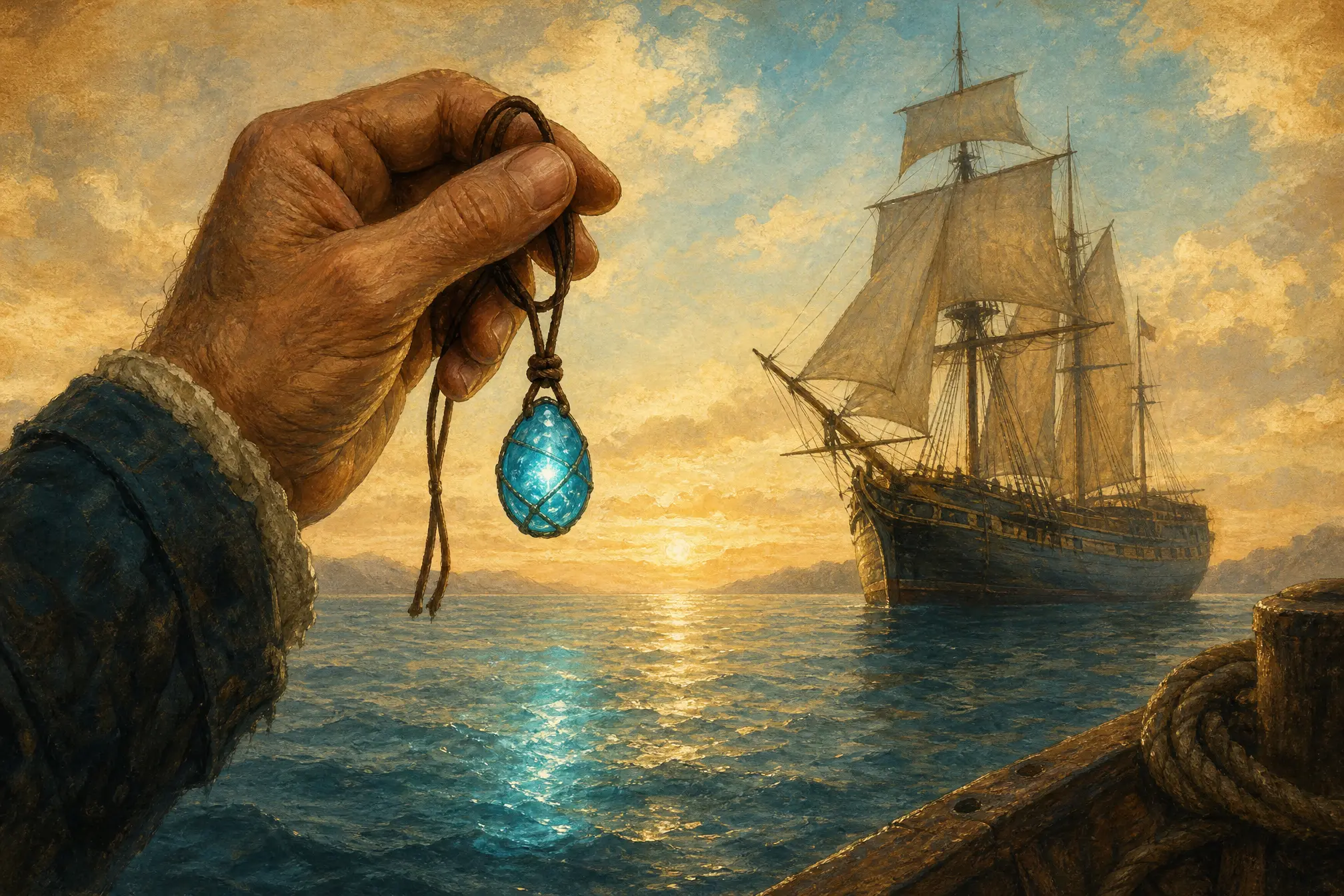
Aquamarine is traditionally associated with calm, courage, and safe passage, meanings that trace back to sailors who carried the gem as a talisman against rough seas. Because its name comes from the Latin for “seawater,” the link to sailors feels natural. Later traditions added marriage and clear thinking.
- Calm seas and safe travel: sailors’ folklore.
- Happiness in marriage: recorded by GIA, and tied to the 19th anniversary.
- Clear thinking: old lore says the gem quickens the intellect.
- Courage and communication: modern belief, often tied to the throat chakra.
Aquamarine Meaning in Folklore and History
According to folklore, sailors in the ancient world carried aquamarine as a talisman for calm seas and safe travel. Later legends linked the gem to Neptune and Poseidon, the Roman and Greek gods of the sea. GIA also records beliefs that aquamarine brought happiness in marriage and sharper thinking.
These are stories people told for centuries, not tested properties. We include them because they explain why the gem remains a popular March birthday gift.
Aquamarine Spiritual Meaning Today
In modern crystal practice, aquamarine is believed to support calm and clearer communication, which is why it is often linked to the throat chakra. Many practitioners report using it as a focus object during meditation, a small reminder to slow down before a difficult conversation.
Treat this as personal ritual, not treatment. No study shows that a gemstone changes your health, and anyone struggling with stress or low mood should talk with a licensed professional first.
Our own perspective comes from Tibetan Buddhist art. The Medicine Buddha is painted with deep blue skin, and blue is associated with healing in that tradition. We find that a helpful lens for why people reach for blue stones when they want calm. It is our cultural reading, not a claim that aquamarine appears in Tibetan ritual texts.
Which Zodiac Signs Are Linked to Aquamarine?
If you were born in March, your zodiac sign is Pisces (through March 20) or Aries (from March 21), and both signs are linked to aquamarine. Pisces is a water sign, so the sea symbolism fits naturally. Aries is a fire sign, and aquamarine is often described as its cooling counterbalance.
Born between February 19 and March 20? Read our Pisces birthstone guide to aquamarine and amethyst to see how the sign connects to this gem.
What Gives This Sea-Blue Beryl Its Color?
Aquamarine gets its blue from tiny amounts of iron inside the beryl crystal, and gentle heat treatment usually shifts greenish stones toward a purer blue. Ferrous iron (Fe²⁺) adds blue, and ferric iron (Fe³⁺) adds yellow. The balance between the two sets the shade, from pastel blue to greenish blue.
Beryl grows as six-sided hexagonal crystals, often inside granite pegmatites. Aquamarine also shows weak pleochroism, so the shade can shift slightly as you turn the stone. A paler, greener stone is often just a stone with more yellow in its mix.
Emerald’s Blue Sibling: Aquamarine in the Beryl Family
Aquamarine and emerald are the same mineral, beryl, and trace elements decide the color: iron makes aquamarine blue, while chromium or vanadium makes emerald green. Pink morganite is a third beryl, colored by manganese. All three share the formula Be₃Al₂Si₆O₁₈ and the same 7.5-8 hardness range.
Why Most Aquamarine Looks Bluer Than Nature Made It
Most aquamarine sold today has been gently heated to remove its yellow component, a common treatment that produces a stable blue. GIA research reports that greenish and yellowish beryl is usually heated between 400 and 500°C (about 750-930°F) to shift the color toward blue.
The iron is still there. Heat removes the yellow tint, so the blue from ferrous iron shows more clearly. For you as a buyer, a pale, slightly greenish stone is not defective. It may simply be untreated. Ask the seller whether the stone has been treated, and expect a clear answer.
Famous Aquamarines: The Dom Pedro and the Roosevelt Gem
The world’s largest faceted aquamarine, the 10,363-carat Dom Pedro, has been on display at the Smithsonian’s National Museum of Natural History since December 2012. The gem stands 14 inches tall, weighs about 4.6 pounds, and was carved by artist Bernd Munsteiner.
The Roosevelt aquamarine is smaller but well known. Brazil’s government gave Eleanor Roosevelt a dark blue, 1,298-carat step cut in 1936, and it now belongs to the FDR Presidential Library and Museum in Hyde Park, New York. Brazil’s Minas Gerais has supplied aquamarine for roughly two centuries. Colorado also lists aquamarine as its state gem, and Mount Antero is a well-known source.
Aquamarine vs. Bloodstone vs. Blue Topaz: Which March Gem Fits You?
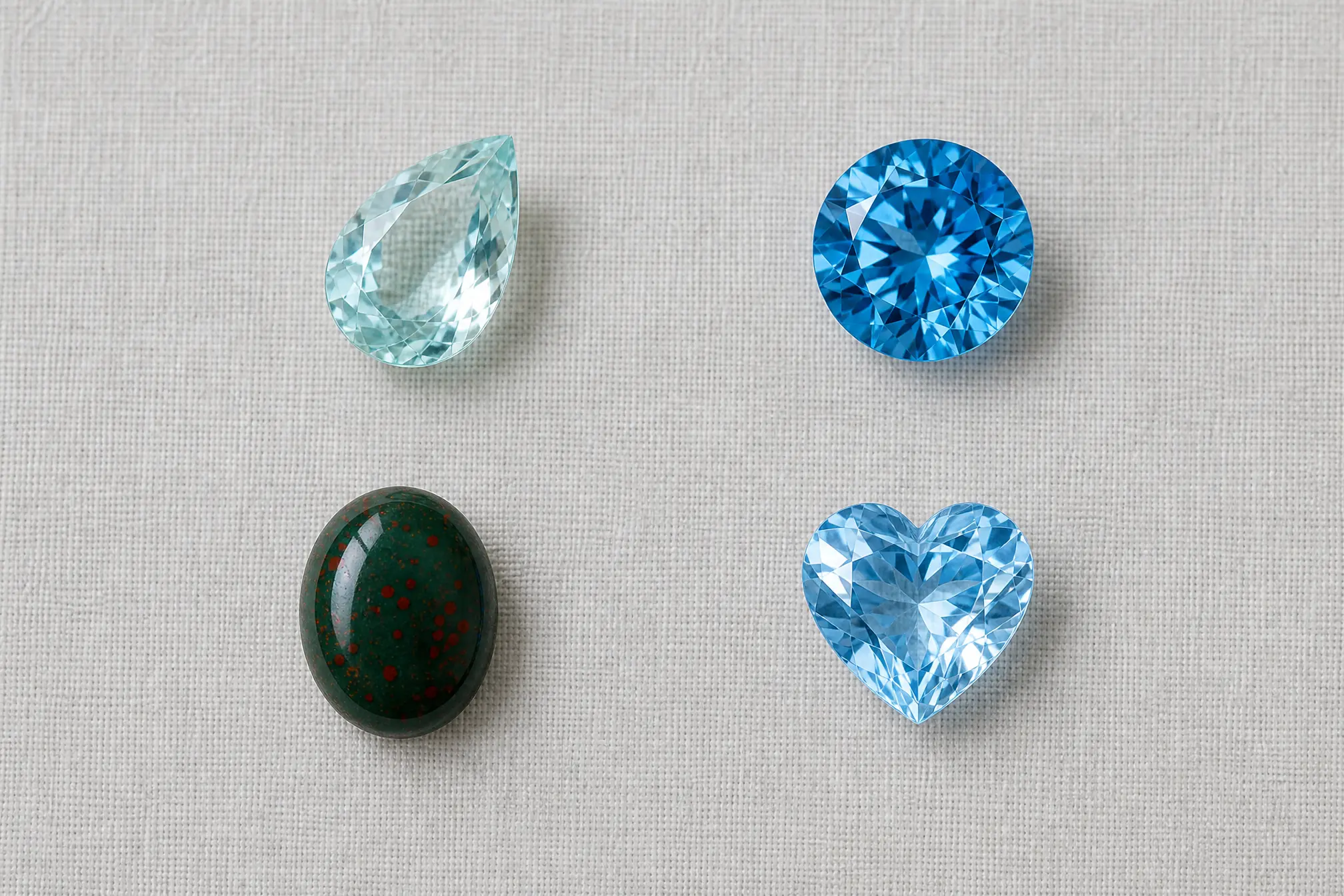
Choose aquamarine for a natural March gem with soft color and everyday durability, bloodstone for a traditional earthy look, and a crystal colorway if you want the symbolism at a gift-friendly price.
| Option | Material | Mohs | Look | Best for |
|---|---|---|---|---|
| Aquamarine | Natural beryl | 7.5-8 | Pale sky blue to sea green, often eye-clean | Heirloom ring, everyday pendant |
| Bloodstone | Chalcedony | 6.5-7 | Dark green with red spots | Traditional, earthy look |
| Blue topaz | Topaz, often treated | 8 | Brighter, more saturated blue | Bold color at lower cost |
| Crystal colorway | Faceted crystal | Varies, check the listing | Aquamarine-like color | Gift-friendly, symbolic wear |
If you are gifting a March birthstone piece, check whether the listing says natural aquamarine or crystal. Both can be meaningful, but they are valued and priced differently, and you do not want the recipient to learn the difference later.
Aquamarine vs. Bloodstone: Modern Clarity or Traditional Strength?
Aquamarine is transparent and sea-blue, while bloodstone is an opaque dark-green chalcedony flecked with red, the “blood” once believed to bring strength. Aquamarine lets light travel through the stone, which gives a bright, airy look. Bloodstone gives a grounded, matte look. Pick by the mood you want to wear.
Aquamarine vs. Blue Topaz and Crystal Look-Alikes
Blue topaz is usually a brighter, more saturated blue than aquamarine, and crystal colorways copy the color without being beryl at all. Most blue topaz on the market is irradiated and heated, and it rates 8 on the Mohs scale. A crystal colorway is a faceted crystal sold in an aquamarine-like shade. It carries the look and the symbolism, but not the mineral.
We keep that distinction clear on our own products. On our page, the March option is labeled Light Sapphire Blue, and the material is high-clarity faceted crystal. So we call it a colorway here, not natural aquamarine.
Prefer the look of aquamarine at a gift-friendly price?
Discover the Love Heart Birthstone Pendant in Light Sapphire Blue from PotalaStore. It was $26.95 when we last checked. The 12 mm (about 0.47 inch) faceted heart catches light without overpowering a neckline, and the stainless steel box chain adjusts from 18 to 20 inches (45-50 cm) so you can change the length for different necklines.
How to Wear and Care for Your March Birthstone
Aquamarine suits daily wear because it rates 7.5-8 on the Mohs scale, and it cleans with warm water, mild dish soap, and a soft brush. The three parts below cover durability, cleaning, and gifting.
Is Aquamarine Good for Everyday Wear?
Aquamarine is a good everyday gem because it rates 7.5-8 on the Mohs scale, harder than quartz-based stones like amethyst. That hardness resists scratches from daily contact.
Hardness does not stop chips, so take rings off for the gym and gardening. Aquamarine can also contain inclusions, and a hard knock may crack it along one. For stainless steel and crystal pieces, a soft cloth after wear is enough. Keep them away from perfume and pool chlorine.
How to Clean Aquamarine Jewelry at Home
Clean aquamarine with warm water, a drop of mild dish soap, and a soft toothbrush, scrubbing gently behind the stone where dirt collects.
- Mix: combine warm (not hot) water with one drop of mild dish soap.
- Soak: leave the piece in the water for about 5 minutes (our suggestion) to loosen oils.
- Brush: scrub gently behind and around the stone with a soft toothbrush.
- Rinse and dry: rinse in clean lukewarm water and pat dry with a lint-free cloth.
GIA says ultrasonic and steam cleaners are usually safe for aquamarine. Skip them if the stone has fractures or fluid inclusions. These steps are for natural aquamarine in jewelry. For crystal colorways like our pendant, wipe with a soft damp cloth instead of soaking.
Gifting a March Birthstone: Birthdays, Anniversaries, and Mother’s Day
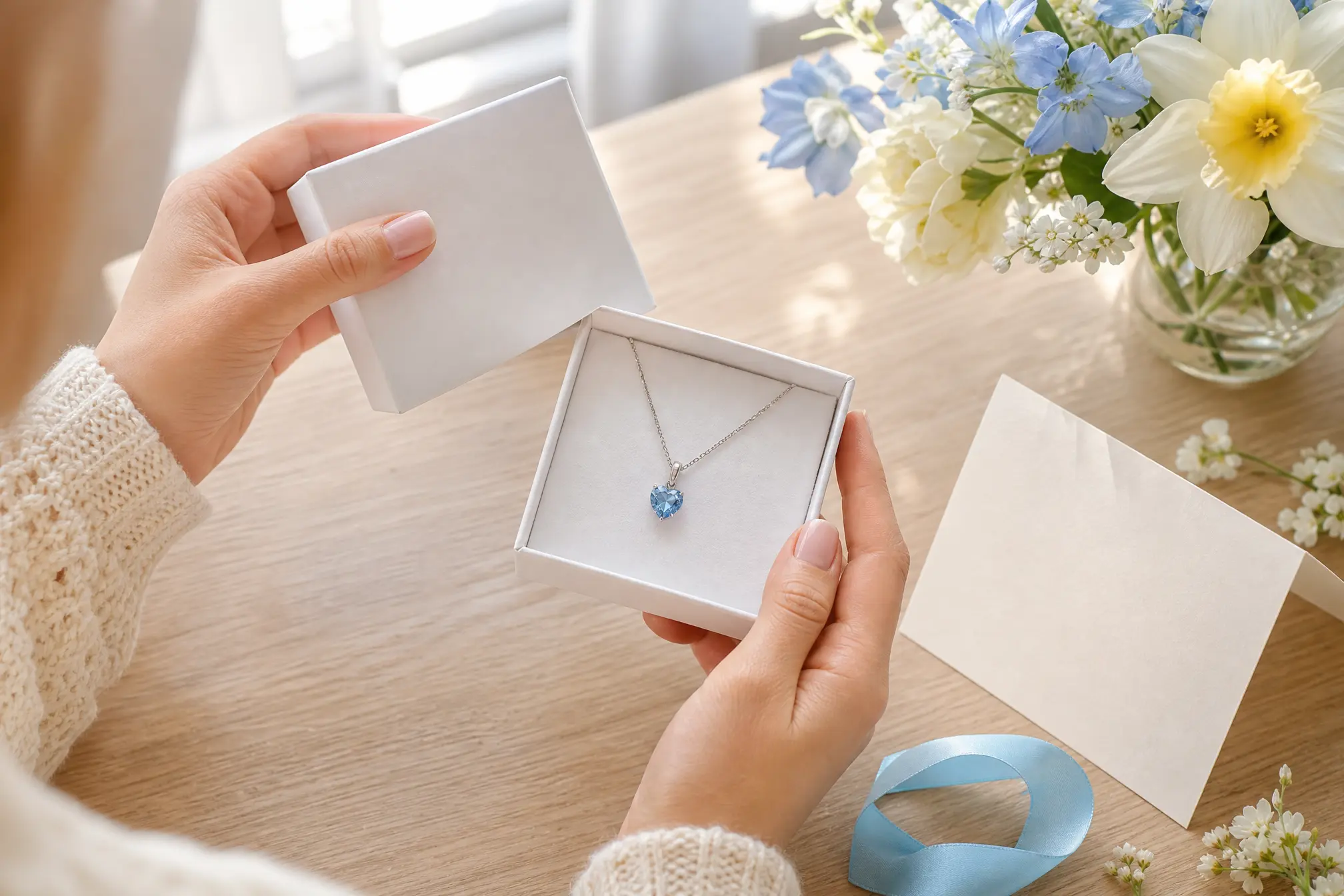
Aquamarine is a natural gift for March birthdays, and it is also the traditional gem for the 19th wedding anniversary. Mother’s Day (05/09/2027) is another fit for a mother who loves blue tones. If you are planning ahead this holiday season for a March birthday, ordering early leaves time to confirm the material and size.
Choose a piece with a story you can retell, such as the sailor’s talisman lore above. Then read the listing to confirm whether it is natural aquamarine or a crystal colorway.
Aquamarine FAQ
Anyone can wear aquamarine. It is not reserved for March birthdays or water signs. It is a natural fit for Pisces and Aries, for anyone who loves soft blue tones, and for people who want a durable everyday gem.
Yes. Birthstone lists are a tradition, not a rule. Many people wear a loved one’s stone or simply choose the color they connect with.
Aquamarine usually costs less per carat than emerald, its beryl relative. Prices rise with deeper, cleaner blue and larger size, and color, clarity, cut, and carat weight all drive the final number.
Natural aquamarine is usually a soft, slightly greenish to sky blue, and it rarely shows the electric blue common in treated blue topaz. Color alone cannot confirm it, so a gem lab report is the reliable test for an important purchase. If you simply want the color and symbolism at a gift-friendly price, choose a piece clearly labeled as a crystal colorway.
In summary, aquamarine, the March birthstone, pairs the 7.5-8 hardness of a sea-blue beryl with centuries of lore about calm, courage, and safe travel. The key takeaway: wear it for the meaning you find in it, check whether a piece is natural or crystal, and care for it with warm water and a soft brush.
Looking for calm, clarity, and a daily reminder to slow down?
Browse PotalaStore’s crystal collection and find a piece that fits your March story.Shop spiritual crystal bracelets for calm and clarity
📚 References
- March Birthstones: GIA’s overview of aquamarine and bloodstone, including meaning, history, the 19th anniversary link, the Dom Pedro and Roosevelt gems, and care. Gemological Institute of America (GIA)
- Aquamarine Description: Gemological properties of aquamarine, including its beryl identity, hardness, and common heat treatment. Gemological Institute of America (GIA)
- Smithsonian To Display World’s Largest Cut Aquamarine, the Dom Pedro: Official announcement with the gem’s size, weight, and display details. Smithsonian Institution
- Color Characteristics of Blue to Yellow Beryl from Multiple Origins: Research on how iron sets beryl color and how heating shifts it toward blue. GIA Gems & Gemology, Spring 2020