
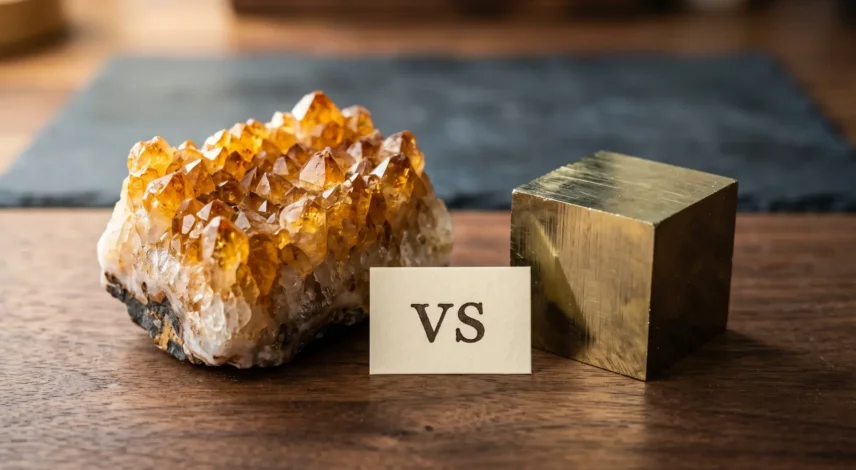

Still torn between citrine and pyrite for wealth? Here’s the short answer: they work differently, they’re not interchangeable, and picking the wrong one for your situation is the most common mistake buyers make. Both stones are genuine wealth-attraction tools in traditional crystal practice — but citrine is traditionally believed to shift your abundance mindset, while pyrite is associated with fueling the action, discipline, and follow-through that turns mindset into money.
At PotalaStore, we’ve sourced wealth crystals directly through our Himalayan monastery partnerships since 2014. What we’ve observed over thousands of orders is this: most customers who are disappointed with their crystals chose based on looks alone — not on what each stone is actually believed to do. This guide gives you the full picture: mineral specs, metaphysical traditions, honest science, and a clear decision framework so you can choose with confidence.
⚠️ Important Note: The metaphysical and energetic properties described in this article reflect traditional beliefs and practitioner experiences, not scientifically verified medical or financial claims. Crystals are best used as complementary mindset tools, not replacements for professional financial advice.
Quick Verdict: Citrine vs Pyrite for Wealth Attraction
Citrine is believed to attract wealth by building an abundance mindset and aligning your Solar Plexus Chakra with opportunities; pyrite is traditionally used to fuel the willpower, discipline, and decisive action that turns those opportunities into income. Neither has direct scientific evidence of attracting money, but both can function as powerful mindset anchors when used with clear intention.
| Feature | 🌕 Citrine | 🪙 Pyrite (Fool’s Gold) |
|---|---|---|
| Chemical Formula | SiO₂ (silicon dioxide) | FeS₂ (iron disulfide) |
| Mohs Hardness | 7 (durable, jewelry-safe) | 6–6.5 (handle with care) |
| Crystal System | Trigonal (hexagonal class) | Isometric / cubic |
| Primary Chakra | Solar Plexus (Manipura) | Solar Plexus (Manipura) |
| Traditional Energy | Attraction, abundance, optimism | Action, confidence, willpower |
| Best For | Mindset shift, opportunity-spotting, sales | Discipline, goal execution, protection |
| Feng Shui Placement | Southeast wealth corner (Xun) | Home office desk, north career sector |
| Water Safe? | ✅ Yes (brief rinse only) | ❌ No — oxidation risk |
| Typical Price Range | $15–$80+ (tumbled to cluster) | $10–$60+ (cube to cluster) |
In summary: if you need to attract wealth, lead with citrine. If you need to build wealth through consistent action, lead with pyrite. For business owners and entrepreneurs, using both together is the most well-rounded approach.
What Is Citrine? The “Merchant’s Stone” Explained

Citrine is a yellow-to-amber variety of quartz (SiO₂) with a Mohs hardness of 7 and a specific gravity of approximately 2.65 g/cm³. Its warm gold color comes from aluminum-based color centers activated by natural irradiation — not from iron content, as many guides mistakenly claim. Its trigonal crystal system gives it excellent structural integrity, making it one of the most durable wealth stones you can wear daily.
In metaphysical tradition, citrine has been called the “Merchant’s Stone” for over two thousand years. Roman merchants carried it as a talisman against negative thought and to attract steady trade. In feng shui, it’s the foremost crystal for activating the Solar Plexus Chakra (Manipura) — the energy center traditionally associated with financial confidence, self-worth, and the capacity to receive abundance. Unlike many crystals, citrine is widely considered self-cleansing in traditional practice, which makes it particularly low-maintenance for daily wealth work.
✨
PotalaStore’s Natural Citrine Wealth Crystal is individually consecrated through a 3-day rab gnas puja ceremony at Sera Jhe Monastery — one of the most respected Tibetan Buddhist institutions active today.
Natural vs. Heat-Treated Citrine — Why It Matters for Wealth Work
Here’s what most crystal guides skip: the vast majority of citrine on the market is actually heat-treated amethyst. The Gemological Institute of America (GIA) states directly that “since natural citrine is rare, most of the citrine on the market is the result of heat treatment, which causes some amethyst to change color from undesirable pale violet to attractive yellow.”
If authenticity matters to your practice, here are three ways to spot heat-treated amethyst being sold as citrine:
- Color distribution: Natural citrine shows a pale, even golden-yellow tone throughout. Heat-treated pieces typically have a white or colorless base with an orange-red tip — especially noticeable in geode clusters.
- Dichroism test: Natural citrine shows visible color variation when rotated under polarized light. Heat-treated amethyst does not.
- Geode shape: Those large, dramatic orange geodes sold as “citrine caves” are almost universally heat-treated amethyst. Genuine citrine geodes are quite rare and significantly more expensive.
Heat-treated pieces aren’t useless in practice — many practitioners work with them effectively. But knowing what you have helps you set accurate expectations and price correctly.
What Is Pyrite? Fool’s Gold — But Not for Your Practice
Pyrite is an iron sulfide mineral (FeS₂) with a brass-yellow metallic luster that has fooled prospectors for centuries. According to Britannica, pure pyrite contains 46.67% iron and 53.33% sulfur by weight. It crystallizes in an isometric (cubic) system, with a Mohs hardness of 6–6.5 and a specific gravity of 4.8–5.0 — noticeably heavier than citrine, a tactile difference you’ll immediately feel when holding both in your hands.
Its name comes from the Greek pyr, meaning “fire” — pyrite was historically used as a fire-starting tool because it produces sparks when struck with iron. In metaphysical tradition, pyrite channels this fire energy into ambition and execution. Many practitioners associate it with the Solar Plexus Chakra, particularly the willpower and structured discipline needed to sustain wealth-building habits over time. It’s also used for financial protection — shielding against energetic “leaks” that drain resources.
💎
Looking for a daily wealth bracelet that combines intention and wear? Browse PotalaStore’s monastery-blessed crystal bracelet collection — including pieces specifically sourced for abundance and financial confidence.
⚠️ The Safety Warning No One Mentions: Never Get Pyrite Wet
🔴 Critical Care Warning: Pyrite should never be submerged in water or placed in humid environments. The Canadian Museum of Nature documents that pyrite oxidation — triggered by contact with humid air and moisture — produces iron sulfate, sulfuric acid, and sulfur dioxide gas. This process, known as “pyrite disease,” can physically degrade the specimen and release mildly toxic compounds. Store pyrite with a silica gel packet, away from bathrooms, basements, and humidifiers. Never cleanse pyrite by soaking.
We’ve seen customers damage beautiful pyrite cubes simply by placing them in a bathroom or rinsing them the way they’d cleanse other crystals. For pyrite, stick to smoke cleansing (sage or Palo Santo) or sound cleansing (singing bowl) — both are safe and effective.
Which Stone Actually Works for Wealth? The Honest Answer
Let’s be direct: there is no peer-reviewed scientific evidence that either citrine or pyrite attracts money through any metaphysical mechanism. Anomalistic psychologist Christopher C. French (Goldsmiths, University of London) ran a controlled experiment in which 80 volunteers meditated holding either a genuine quartz crystal or an identical plastic fake. Both groups reported similar sensations — leading French to conclude there is “no evidence that crystal healing works over and above a placebo effect.”
So why do so many practitioners — including many of our customers — report real shifts in financial outcomes after working with these stones? The answer is psychology, and it’s legitimate.
The Mindset Mechanism: Why Crystals Can Still Be Useful Tools
Psychologist Albert Bandura’s foundational research on self-efficacy — your belief in your ability to achieve specific outcomes — shows a consistent, measurable link to real-world performance. A meta-analysis by Stajkovic and Luthans (1998), covering 114 studies and over 21,000 participants, found self-efficacy correlated with work performance at r = .38 across diverse domains. In plain terms: believing you can succeed measurably increases how often you do.
A citrine cluster on your desk or a pyrite cube in your wallet isn’t changing market conditions. But if it functions as a daily intention anchor — a physical cue that activates your self-belief and keeps your financial goals front of mind — it can reinforce the mindset behaviors that lead to real outcomes. This is backed by research on implementation intentions: the more concretely you associate a physical trigger with a goal, the more consistently you act on it.
The key takeaway: don’t expect crystals to do the work for you. Expect them to help you show up as the person who does the work. That’s a meaningful distinction — and it’s the difference between using these stones well and being disappointed by them.
Citrine or Pyrite for Wealth — Which One Should You Choose?

The answer depends on where your biggest gap is right now. Use the guide below to find your fit:
🌕 Choose Citrine If…
- You struggle with a scarcity mindset or fear of receiving
- You’re in a sales, freelance, or client-facing role where confidence and openness to opportunity matter
- You’re launching a creative or service business
- You want to attract new income streams organically
- You’re a beginner starting your crystal practice
🪙 Choose Pyrite If…
- You have clear financial goals but struggle with consistency and follow-through
- You work in finance, operations, or high-pressure decision-making
- You need protection from financial drains or toxic business dynamics
- You already have opportunities but need discipline to execute
- You’re scaling an existing business and need structured energy
✨ Use Both Together If…
- You’re a business owner or entrepreneur
- You’re going through a major financial transition
- You want to cover both attraction and action energy simultaneously
- You’re building a crystal wealth grid for your office or home
When pairing them, many practitioners place citrine at the center of a crystal grid (as the attractor) with pyrite cubes at the outer anchor points (as the activators). Others wear a citrine bracelet on the left wrist (receiving side) and hold pyrite during focused work sessions.
🌿
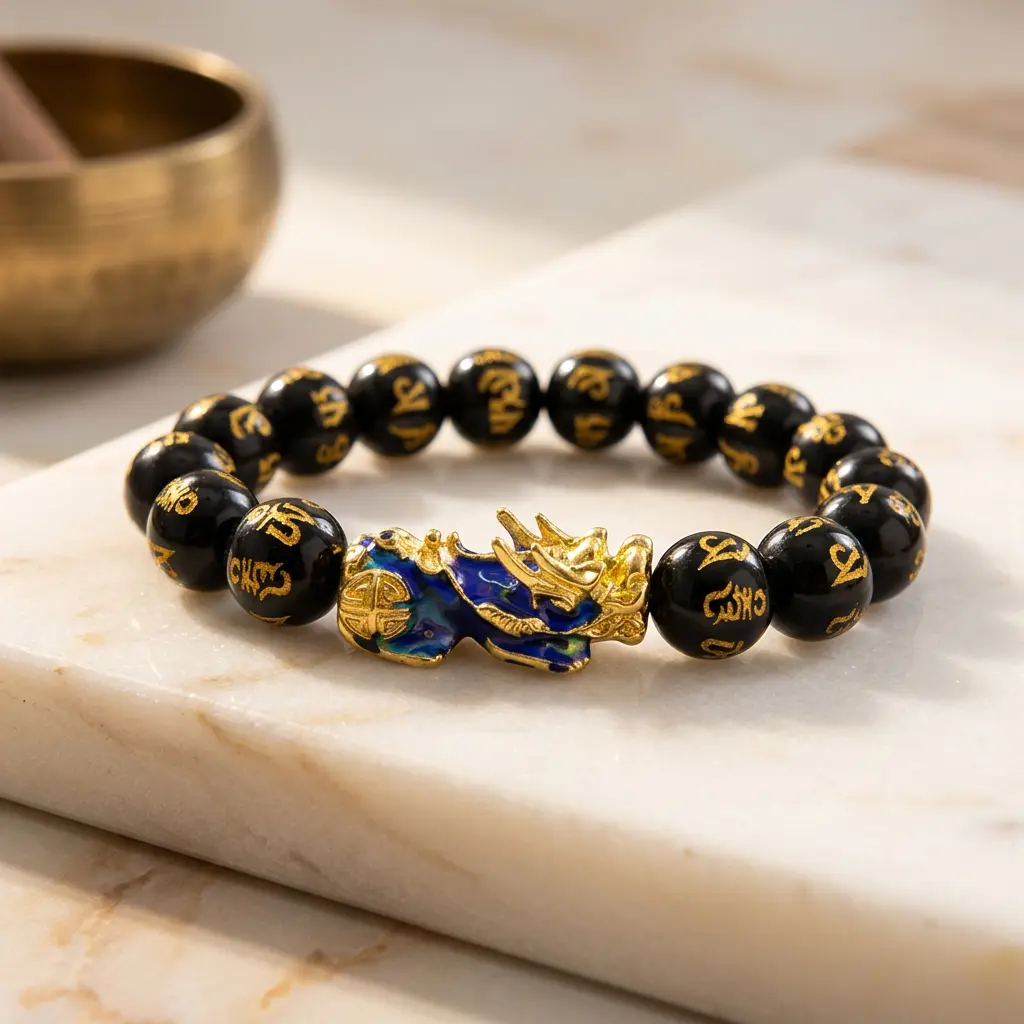
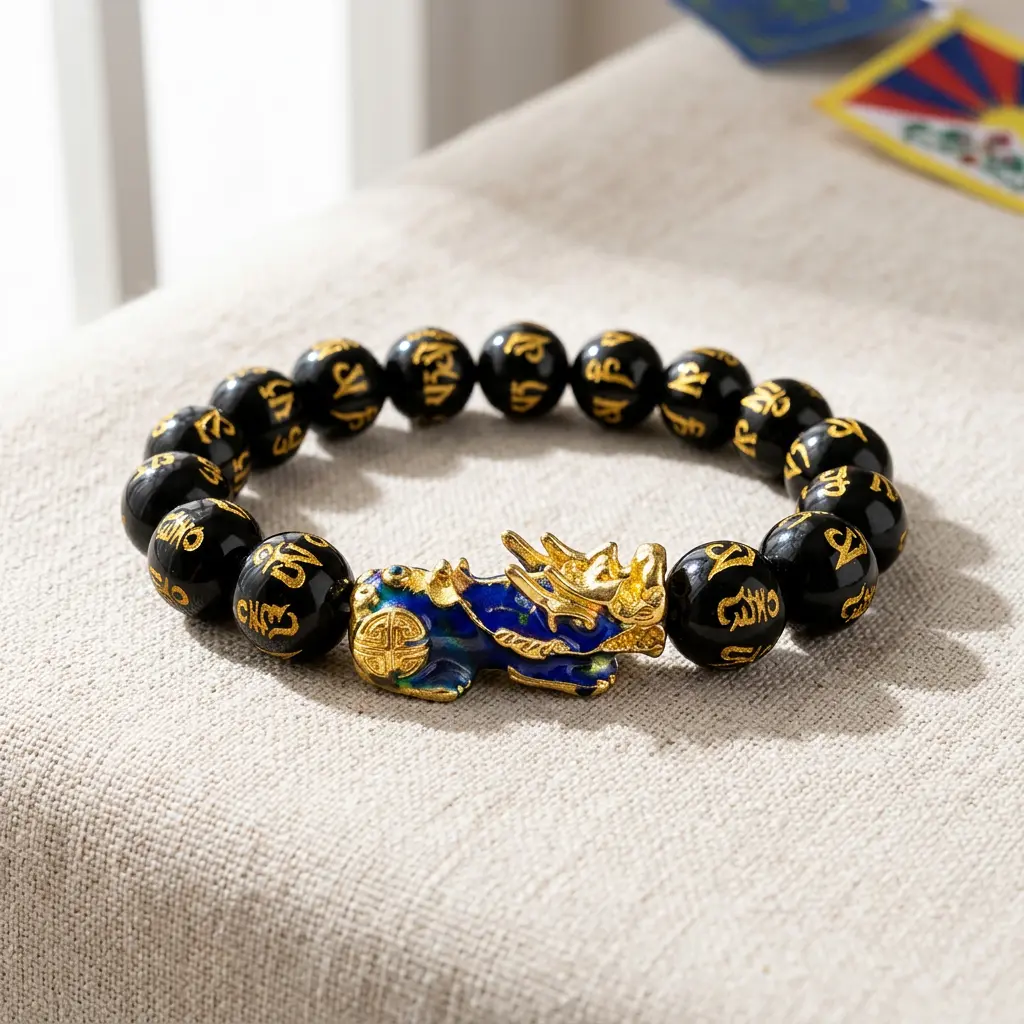
PotalaStore’s Citrine God of Wealth Bracelet combines citrine beads with 5-element feng shui principles and a monastery blessing — a strong everyday wealth piece for left-wrist wear.
Placement, Care, and Daily Use for Wealth Crystals

How you position and maintain your stones matters. Here are the most effective practices, drawn from both feng shui tradition and practical stone care:
Placement for Maximum Wealth Activation
- Southeast Bagua corner (Xun): Stand at your front door and look to the far back-left corner of your room — that’s your feng shui wealth zone. Place citrine here at desk or knee height with points facing inward.
- Home office desk: Citrine on the left (Green Dragon position) for sustained income flow. Pyrite cube on the right (White Tiger position) for sharp financial decision-making.
- Wallet: A small pyrite tumble or a golden citrine chip is the classic “money magnet” placement. Keep it clean and intentional.
- Cash register / point-of-sale: Citrine cluster near the register is a centuries-old merchant tradition believed to anchor transactional flow.
Cleansing & Recharging Your Stones
- Citrine: Full moonlight for 4–6 hours, or place on a selenite plate overnight. Brief sun exposure (under 2 hours) works, but prolonged UV light can fade color centers over time.
- Pyrite: Sage smoke, Palo Santo, or a Tibetan singing bowl. Never water. Store in a dry environment with a silica gel packet — humidity above 60% can trigger surface oxidation within days.
For a deeper look at how wrist placement and crystal pairing affect energy flow, see our expert guide to healing crystal bracelets — it covers left vs. right wrist, chakra alignment, and stacking protocols.
Frequently Asked Questions
Neither is objectively “better” — they serve different purposes. Citrine is traditionally believed to attract wealth by building an abundance mindset and openness to opportunity, making it ideal for people who need a mindset shift. Pyrite is associated with the willpower and discipline to take consistent action toward financial goals. For most people, combining both produces the strongest results.
Yes — they’re considered complementary. Citrine brings receptive, attracting energy (abundance mindset, opportunity recognition); pyrite brings active, driving energy (discipline, execution, protection). Used together in a crystal grid or worn as a pair, they’re believed to cover both sides of the wealth equation. Just store them separately — pyrite needs a dry environment, while citrine can handle more varied conditions.
Check the color gradient: natural citrine shows a consistent, pale golden-yellow throughout. If your piece has a white or colorless base with an orange-red tip — especially common in large geode clusters — it’s almost certainly heat-treated amethyst. That’s not necessarily a problem for practice, but it’s worth knowing. Genuine natural citrine is rare and expensive; a $15 citrine cluster is virtually always heat-treated.
No. Pyrite (iron sulfide, FeS₂) reacts with water and humid air through a process called pyrite oxidation, which can degrade the stone’s surface and — in severe cases — produce sulfuric acid and sulfur dioxide gas. Always cleanse pyrite with smoke (sage, Palo Santo) or sound (singing bowl). Store it away from bathrooms, kitchens, and any humid environment.
Ready to Build Your Wealth Crystal Practice?
Every wealth crystal at PotalaStore is individually blessed through a 3-day monastery ceremony at Sera Jhe or Kopan Monastery — two of the most respected Tibetan Buddhist institutions in the world. Sourced directly, consecrated intentionally, shipped worldwide.Shop Monk-Blessed Wealth Crystals →
📚 References
- Citrine Quality Factors: Authoritative overview of citrine’s gemological properties, natural vs. heat-treated distinctions, and market realities. Gemological Institute of America (GIA)
- Pyrite — Mineral Information, Data and Localities: Comprehensive mineral data including chemical formula, crystal system, hardness, and physical properties. Mindat.org
- Pyrite Disease: Documentation of pyrite oxidation mechanisms, conditions that trigger deterioration, and preservation protocols for pyrite specimens. Canadian Museum of Nature
- Pyrite — Properties & Facts: Scientific overview of pyrite’s composition, formation, and mineral classification. Encyclopædia Britannica