
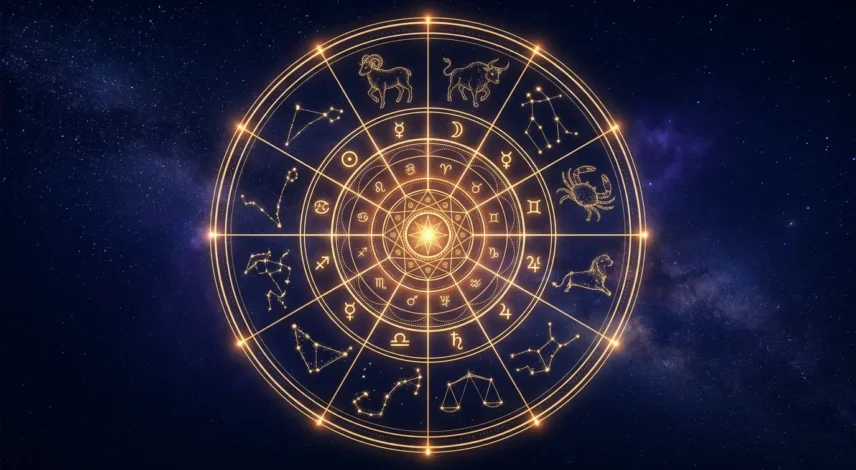

If your Sun sign has never quite described you, you are not reading a broken horoscope. You are reading one piece of a much larger map. Your birth chart (also called a natal chart) is a snapshot of where the Sun, Moon, and planets sat at the exact moment and place you were born. It shows your zodiac signs, the twelve houses of your life, and the aspects between your planets.
At Potala Store, we have guided thousands of seekers who arrived for a single answer and left understanding their whole chart. Most began exactly where you are now: curious, a little overwhelmed by a wheel full of symbols, and quietly sure there had to be more than one sign to the story.
Here is the short version before we go deep. Read your chart in this order: Ascendant, then Sun, then Moon, then your chart ruler, then any clusters of planets, then the major aspects. This guide walks through each layer in plain language, and shows you how to turn what you find into a simple daily practice. You do not need math or any special gift to start.
Table of Contents
What Is a Birth Chart? Your Cosmic Snapshot Explained
A birth chart is a map of where every planet sat in the sky at the exact minute and location of your birth, drawn as a wheel of twelve zodiac signs and twelve houses. It records the positions of the Sun, Moon, and planets from your point of view here on Earth.
Picture a photograph of the solar system, taken from your birthplace the second you arrived. That photograph never changes. It stays fixed for your entire life, which is why astrologers call it your cosmic blueprint.
What Your Natal Chart Actually Maps
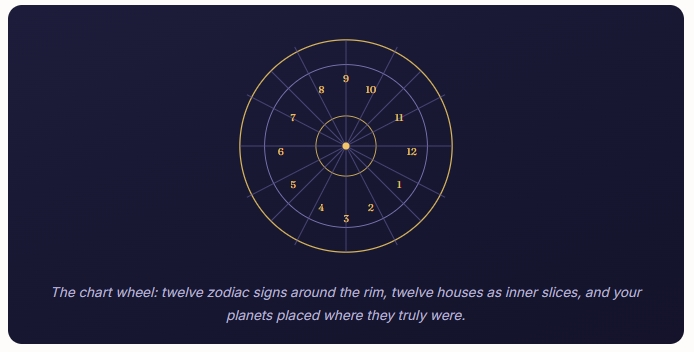
Your natal chart maps three things at once: which planets were active, which zodiac sign each planet occupied, and which house it fell into. The wheel places the twelve signs around the outer rim and the twelve houses as inner slices. Your planets sit wherever they actually were in the sky at your birth.
The 3 Details You Need to Cast an Accurate Chart
An accurate natal chart depends on your exact birth time, down to the minute, plus your birth date and birthplace. Birth time matters most. Your Ascendant, the sign rising on the eastern horizon, and all twelve house cusps shift about every 2 hours. If you do not know your time, check your birth certificate first. When no time is available, astrologers use 12:00 noon and read the houses as approximate.
The Four Building Blocks Every Reading Starts With
Every birth chart is built from four layers: planets, zodiac signs, houses, and aspects. Planets show what energy is active, signs show how it expresses, houses show where in your life it plays out, and aspects show how your planets interact.
A quick way to remember it: planets are the actors, signs are their costumes, houses are the stage, and aspects are the conversations between them.
| Building Block | What It Answers |
|---|---|
| Planets | What energy is active (Sun, Moon, Mars, and more) |
| Signs | How that energy expresses (bold, gentle, precise) |
| Houses | Which life area it affects (money, love, career) |
| Aspects | How two planets interact (harmony or tension) |
Planets, Signs, Houses and Aspects at a Glance
Your chart holds 10 planets, 12 zodiac signs, 12 houses, and 5 major aspects. That sounds like a lot, yet most of your personality comes from just a handful of key placements. You will learn which ones to prioritize in the next sections.
The Simple Formula: Planet Plus Sign Plus House Equals Insight
One placement combines all three layers into a single reading: a planet, plus its sign, plus its house. For example, Venus (love and values) in Libra (harmony) in the 7th house (partnership) points to someone who seeks balance and beauty in close relationships. Every placement in your chart works the same way.
Start With Your Big Three: Sun, Moon and Rising
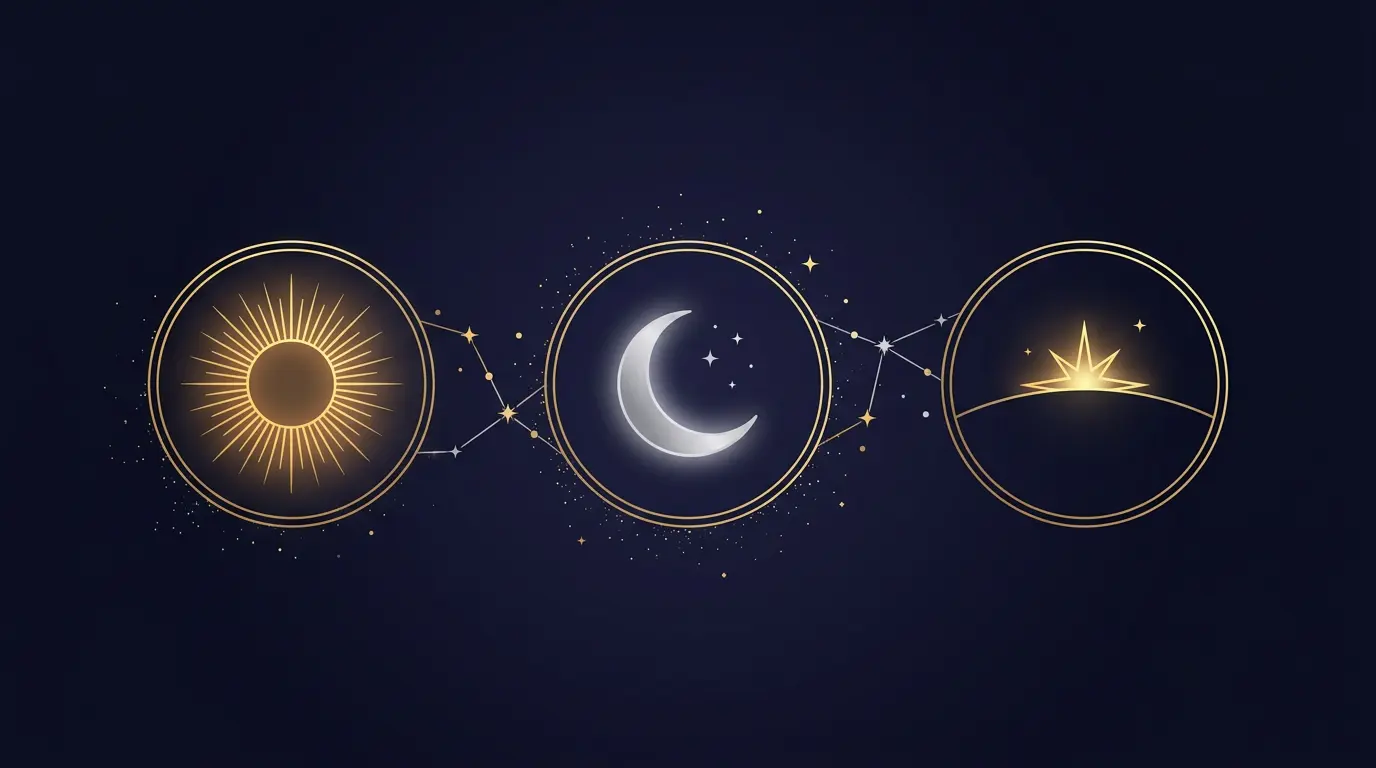
Your Big Three are your Sun, Moon, and Rising signs, and together they cover most of your personality. Astrologers start every reading here, because these three placements shape how you think, how you feel, and how you come across to others.
- Sun Sign: your core identity and life direction. The Sun spends about 1 month in each sign, so everyone born in your four-week window shares it.
- Moon Sign: your emotional world and what you need to feel safe. The Moon changes signs every 2.5 days, so your birth date alone is often not enough.
- Rising Sign (Ascendant): how the world first sees you. It changes about every 2 hours, which makes it the most personal of the three.
If your Sun sign has never felt like you, you are not alone. That is completely normal, and it usually means your Moon or Rising sign tells a truer story. Read those two first.
Your Sun Sign: Core Identity and Life Direction
Your Sun sign is what you are growing into over a lifetime, not necessarily who you feel like at 20. It describes your central drive and the qualities you are here to express. This is the sign most people already know from birthday horoscopes.
Your Moon Sign: Emotional World and Inner Needs
Your Moon sign describes your instincts, your private feelings, and what makes you feel secure. Many people find their Moon sign fits them more closely than their Sun. It often explains emotional patterns your Sun sign never quite captured.
Your Rising Sign: How the World First Sees You
Your Rising sign, or Ascendant, is the first impression you give and the style others read before they know you. Because it depends on your exact birth time, it is personal even among people born the same day. Your Sun sign is your core, yet your Rising sign is what the room meets first.
Knowing your Sun sign is also the starting point for choosing a meaningful gift or stone. If you are shopping for someone special, our guide to what your birthstone says about you by month pairs each birth month with its traditional stone, and our birthstone crystal necklaces make that connection easy to wear.
Reading the Planets Through Signs and Houses
Read your personal planets first, because they shape you far more than the slow outer planets that color whole generations. Your personal planets are the Sun, Moon, Mercury, Venus, and Mars.
Personal vs. Outer Planets: Which Shape You Most
Your personal planets change signs quickly and describe your day-to-day nature. The outer planets move slowly: Jupiter spends about 1 year per sign, Saturn about 2.5 years, and Pluto up to 30 years. Because a whole generation shares them, their sign matters less to you personally than the house they land in.
Elements and Modalities: Your Chart’s Energy Balance
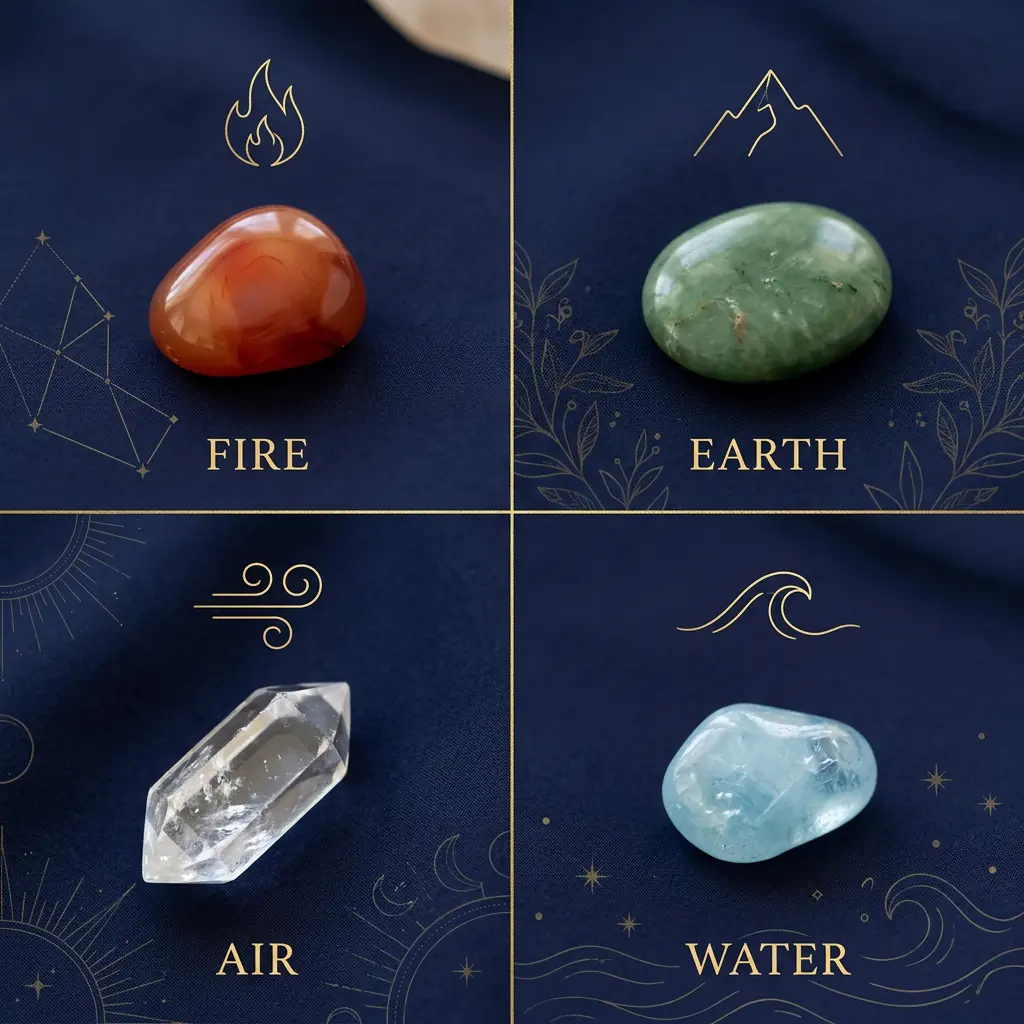
Every zodiac sign belongs to one of four elements (fire, earth, air, water) and one of three modalities (cardinal, fixed, mutable). Counting how many planets fall in each element reveals your natural balance. Many fire placements point to an energetic, action-first nature. Many earth placements point to a grounded, practical one.
Your dominant element is also the simplest bridge from chart to daily practice. Once you know your dominant element, a matching zodiac crystal gives that energy a tangible daily anchor. Instead of living only in theory, the traits you are learning to work with stay present in your hands. Fire signs often reach for carnelian, water signs for aquamarine or amethyst. Our full guide to the best crystals for every zodiac sign matches each Sun sign to its stones.
How Planets Talk: Understanding Aspects
Aspects are the angles between two planets, and they show whether those energies support each other or create tension. The five major aspects are the conjunction, sextile, square, trine, and opposition.
| Aspect | Angle | What It Means |
|---|---|---|
| Conjunction | 0° | Energies merge and intensify |
| Sextile | 60° | Easy opportunity and support |
| Square | 90° | Friction that pushes growth |
| Trine | 120° | Natural flow and talent |
| Opposition | 180° | Tension seeking balance |
The Five Major Aspects and Their Angles
Each aspect uses a small margin called an orb, usually 6 to 8 degrees, within which the angle still counts. A conjunction at 0 degrees blends two planets completely. A trine at 120 degrees links them in easy harmony. You will spot these lines crisscrossing the center of your chart wheel.
Soft vs. Hard Aspects: Where Flow and Growth Live
Soft aspects, the trines and sextiles, show where energy flows easily and talents come naturally. Hard aspects, the squares and oppositions, create tension, and that tension is where most people grow the most. Many accomplished people have prominent squares in their charts. A cluster of 3 or more planets in one sign or house, called a stellium, concentrates that area into a major life theme.
How to Read Your Birth Chart Step by Step
Read your chart in this order: Ascendant, Sun, Moon, chart ruler, stelliums, then major aspects. Working one layer at a time keeps a full chart from feeling overwhelming, and each step builds on the last.
The 6-Step Reading Order for Beginners
- Find your Ascendant. The sign on your 1st house sets the frame for the whole chart.
- Read your Sun. Note its sign and house to see your core identity and direction.
- Read your Moon. This is your emotional core and what you need to feel safe.
- Locate your chart ruler. This is the planet that rules your Rising sign. If you are Aries Rising, that is Mars. Then see which sign and house it sits in.
- Spot any stelliums. Three or more planets in one sign or house mark a major life theme.
- Note the major aspects. Look at conjunctions, squares, and trines touching your Sun, Moon, or Ascendant.
You will not absorb all of this in one sitting, and you are not supposed to. Read one layer, sit with it, and come back for the next.
Turning Your Chart Into a Daily Practice
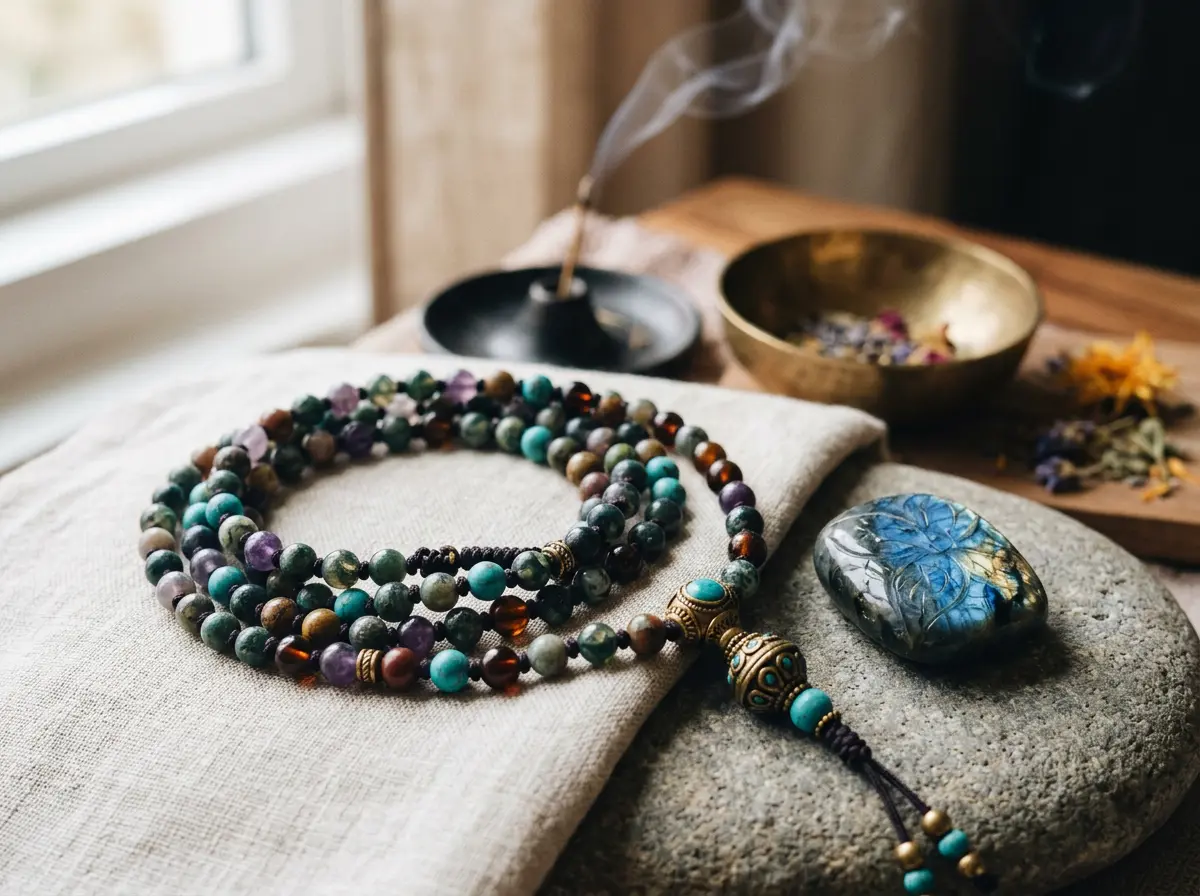
The most useful thing you can do with a chart is turn it into a small daily habit. In our experience guiding seekers at Potala Store, the people who get the most from astrology are the ones who make it tactile. One approach we have seen work well: pick the element that dominates your chart, choose a stone that carries it, and hold it during a short 5 to 15 minute practice.
A mala makes that practice easier to keep. A Tibetan mala has 108 counting beads plus 1 guru bead, and every piece we carry is hand-knotted in Tibetan workshops and blessed through traditional ceremonies at the Sera Jhe and Kopan monasteries. The tactile counting keeps a busy mind focused, which turns a chart insight into a daily ritual rather than a one-time read. You can see how this lands for real people in these real stories from people who tried spiritual jewelry.
Your natal chart is not a script you are stuck with. It is a map, and now you have the six layers to read it. Start with your Ascendant, work through your Big Three, and let the rest unfold one placement at a time.
Ready to turn your chart into a daily practice?
Match your dominant element to its stone, then wear it. Our zodiac crystal bracelets are sorted by sign, hand-knotted in Tibetan workshops, and blessed at the Sera Jhe and Kopan monasteries.Shop Zodiac Crystal Bracelets
For more guides like this one, explore more astrology and horoscope insights from Potala Store.
Birth Chart FAQ
For your Rising sign and house placements, yes. The Ascendant shifts about every 2 hours, so an accurate time matters. Without it, you can still read your planets in signs and most aspects. Just use 12:00 noon and treat the houses as approximate.
No. A natal chart describes your tendencies, strengths, and themes, not fixed events. It works best as a tool for self-reflection, not fortune-telling. What you do with the map is always your choice.
Not quite, and the difference is worth knowing. A birthstone is assigned by your calendar birth month and was standardized by the jewelry industry in 1912. A zodiac crystal is matched to your Sun sign through astrological tradition. Your birthstone and your zodiac crystal may differ, and many people use both.
Western astrology uses the tropical zodiac, aligned with the seasons. Vedic astrology uses the sidereal zodiac, aligned with the constellations, which shifts most placements about one sign earlier. Most beginners start with the Western system, though the Vedic ruling-planet layer adds useful depth.
A note on how to use this: Astrology is offered here for self-reflection and personal exploration, not as medical, psychological, or financial advice. Gemstone and crystal associations are traditional and spiritual in nature, not scientifically established claims. Treat your chart as a mirror for insight, not a prediction of fixed events.
Last updated: August 2026. Written and reviewed by the Potala Store editorial team.
References
- Astrology, definition and history: Overview of how horoscopes are cast from the zodiac and celestial positions at the moment of birth, across Western and Vedic traditions. Encyclopaedia Britannica
- The zodiac, signs, elements and modalities: Background on the twelve signs, their four elements and three modalities, and their Babylonian origin, with a note that astrology is not supported by science. Encyclopaedia Britannica
- Birthstone standardization: History of the modern birthstone list standardized in 1912, useful for distinguishing birthstones from zodiac crystals. International Gem Society