

Caring for a crystal comes down to three things: cleanse it to clear absorbed energy, charge it to restore that energy, and store it somewhere dry and protected. The catch? Using the wrong method—like dunking the wrong stone in water—can permanently damage it. That last part is exactly where most beginners slip up.
After cleansing and handling thousands of stones sourced from Himalayan artisan workshops, we’ve watched selenite turn chalky in a sink and amethyst fade on a sunny windowsill—small mistakes that are completely avoidable. This guide gives you the safe, no-nonsense version of crystal care, debunks the myths that cause those mistakes, and keeps the woo to a minimum. New to stones entirely? Start with our pillar guide to the 10 best crystals for beginners, then come back here for the care routine.
What “Cleansing” a Crystal Actually Means
Cleansing a crystal means energetically clearing it—not scrubbing off dust. Crystals are traditionally believed to absorb the energy of the people and places they pass through, so cleansing is thought to reset a stone to a neutral state before you work with it.
Charging is the follow-up step. If cleansing empties the cup, charging refills it—restoring and amplifying the crystal’s natural properties. A simple way to remember it: cleanse to clear energy, charge to restore energy. Most beginners cleanse a stone the day it arrives, then again roughly once a month, or whenever it feels heavy or “off.”
You don’t need every method below. Pick one cleansing method and one charging method that fit your lifestyle, and you’re set.
How to Cleanse Crystals: 5 Beginner-Safe Methods
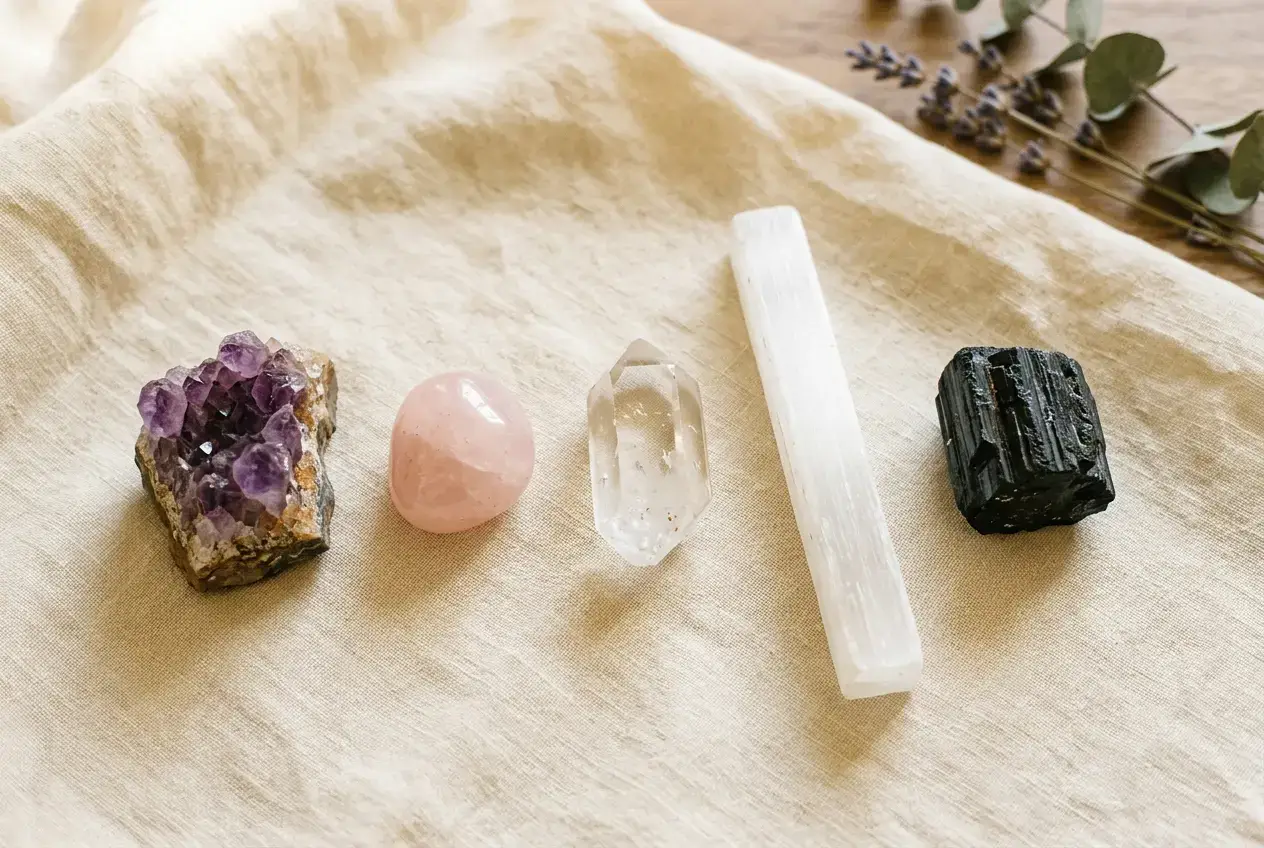
The safest way to cleanse a crystal as a beginner is sound or smoke, because neither method can physically damage the stone. Here are five reliable options, from safest to most situational:
- Sound (safe for every crystal): Place your crystal near a singing bowl, bell, or tuning fork and let it ring for 30–60 seconds, letting the vibration wash over the stone. Sound cleansing is the most universal method—no water, no sun, no risk—so it’s ideal for a mixed collection.
- Smoke / Sage (quick and universal): Light a sage bundle, palo santo, or incense, then pass the crystal through the smoke for about 30 seconds while setting a clear intention to release stale energy. Keep a window open for airflow.
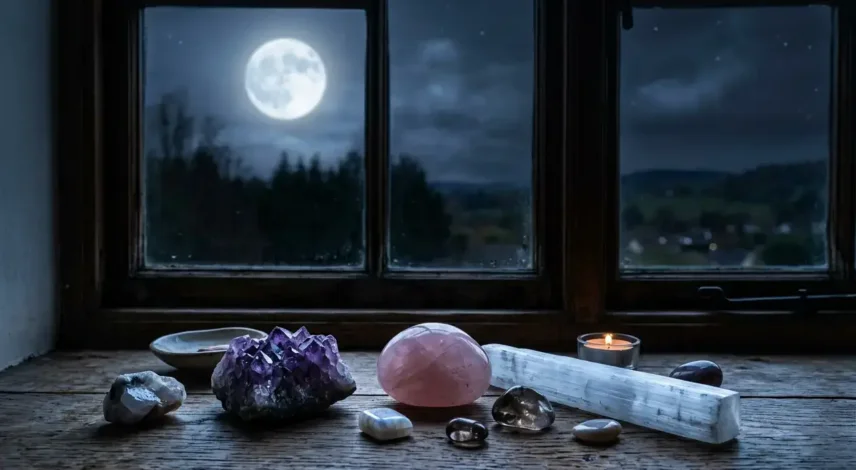
- Moonlight (gentle, hands-off): Set your crystals on a windowsill overnight where moonlight can reach them. Moonlight is gentle enough for every stone—including light-sensitive ones. Clouds don’t block the effect, so don’t stress about a clear sky.
- Running Water (only for hard stones): Hold water-safe stones under cool running water for 30–60 seconds, then pat dry. This is the method that damages crystals when used carelessly—see the safety rule below.
- Selenite Plate (set-and-forget): Rest your crystals on a selenite slab for several hours. Selenite is traditionally considered self-cleansing, which means it clears other stones without needing to be cleansed itself—a two-in-one storage and maintenance trick.
A quick word on the water method, because it’s where beginners do real damage. A useful safety rule is the Mohs hardness scale—a 1-to-10 mineral scale (talc is 1, diamond is 10) developed in 1812 by mineralogist Friedrich Mohs. As a rule of thumb, stones rating roughly 6 or higher tolerate a brief rinse, while softer stones do not. Conveniently, the entire quartz family rates a solid 7, so clear quartz, amethyst, citrine, and rose quartz handle a quick splash. Skip salt water entirely—it can seep into tiny fractures, recrystallize, and crack or dull a stone over time.
| Crystal | Mohs Hardness | Water-Safe? |
|---|---|---|
| Clear Quartz | 7 | Yes — brief rinse |
| Amethyst | 7 | Yes — brief rinse |
| Rose Quartz | 7 | Yes — brief rinse |
| Selenite | 2 | No — dissolves |
| Malachite | 3.5–4 | No — leaches copper |
| Pyrite | 6–6.5 | No — rusts |
⚠ Keep these stones away from water: selenite, malachite, calcite, halite, pyrite, and fluorite. Selenite is a soft form of gypsum (just 2 on the Mohs scale) and turns cloudy when wet; malachite is a copper carbonate that can leach copper into water, so it should never be submerged or used in elixirs. When you’re not sure whether a stone is genuine—or what it even is—our breakdown of how to tell a real crystal from a fake helps you identify what you’re holding before you risk water.
How to Charge Crystals (Moonlight, Sun & Intention)
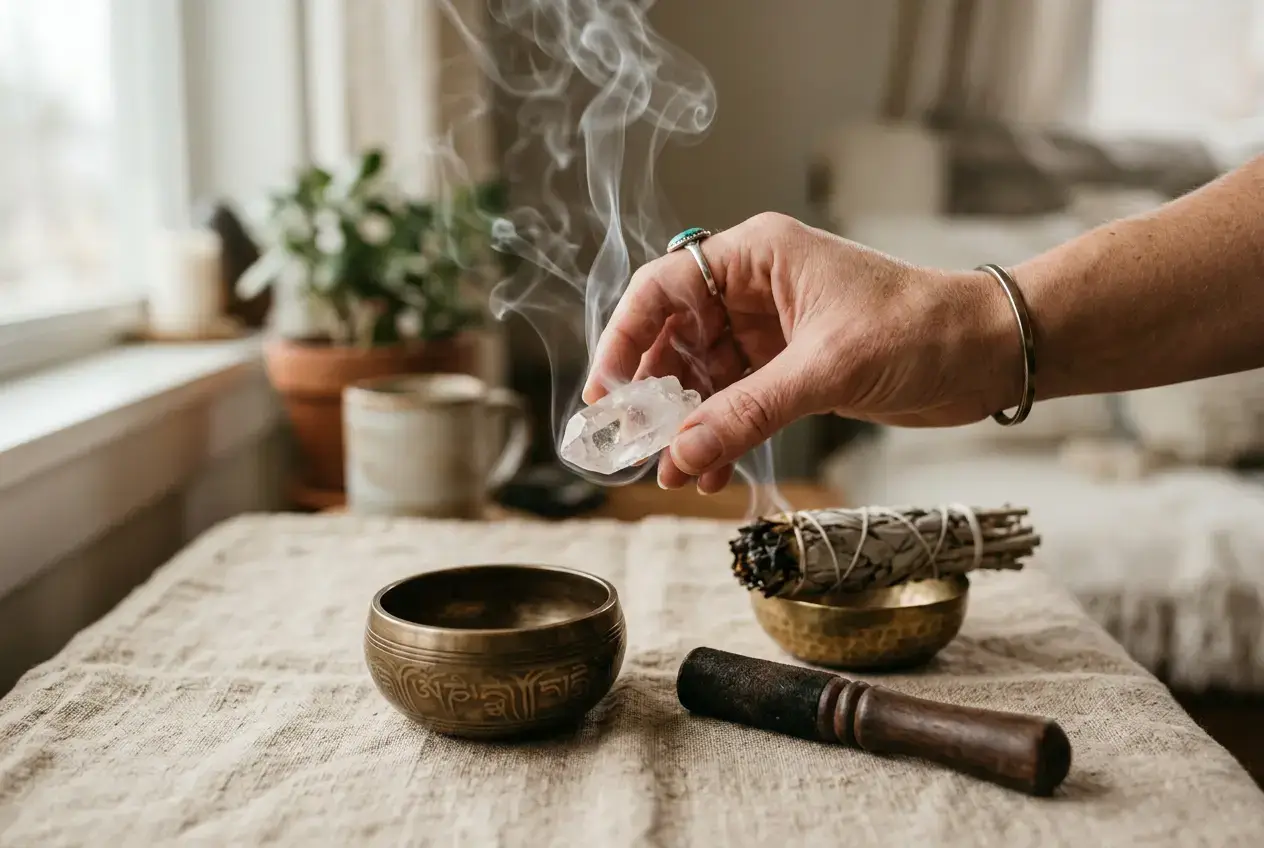
To charge a crystal, place it under moonlight overnight, in gentle morning sun for a short window, or hold it while setting a clear intention. Charging restores a stone’s energy after cleansing—do it monthly, or whenever a crystal feels less vibrant than usual.
Moonlight charging (safest for all)
Leave cleansed crystals out overnight—on a windowsill or outdoors on a natural surface—and bring them in before strong morning sun. The full moon is considered the most potent time, but any night works; full-moon energy is generally said to last about three days, so the night before or after counts too.
Sunlight charging (sun-safe stones only)
Direct sun delivers a fast, energizing charge, but it fades and damages many popular stones. Keep amethyst, rose quartz, citrine, and fluorite out of prolonged sun—limit them to under an hour of early-morning light, or skip sun entirely. Durable stones like clear quartz, carnelian, and tiger’s eye handle a couple of hours. Never leave a clear, faceted crystal in direct sun on paper or wood—it can focus light like a lens and start a fire.
Intention / programming
Hold your cleansed crystal between your palms, take a few slow breaths, and state one simple, positive intention—pairing the charge with intention is what gives the stone direction. Keep it to one intention per crystal.
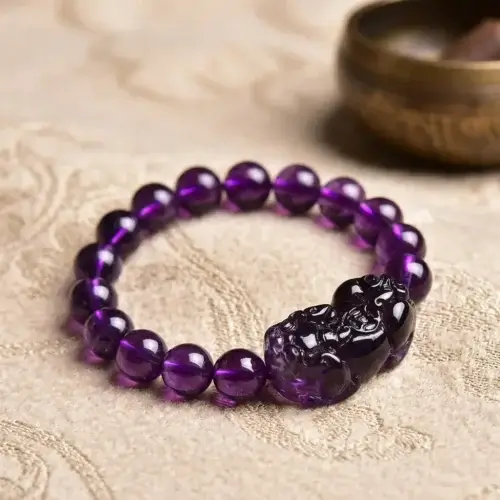
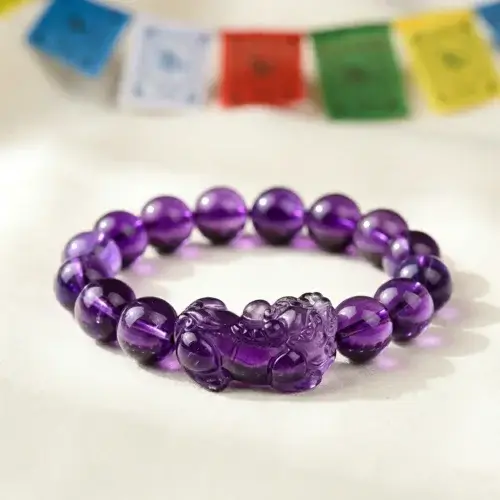
💡 Pro tip: A wearable piece makes daily intention-setting effortless. A beginner-friendly healing crystal bracelet from Potala Store keeps your intention literally at hand and is simple to cleanse with sound or smoke—no water needed.
How to Store Crystals So They Last
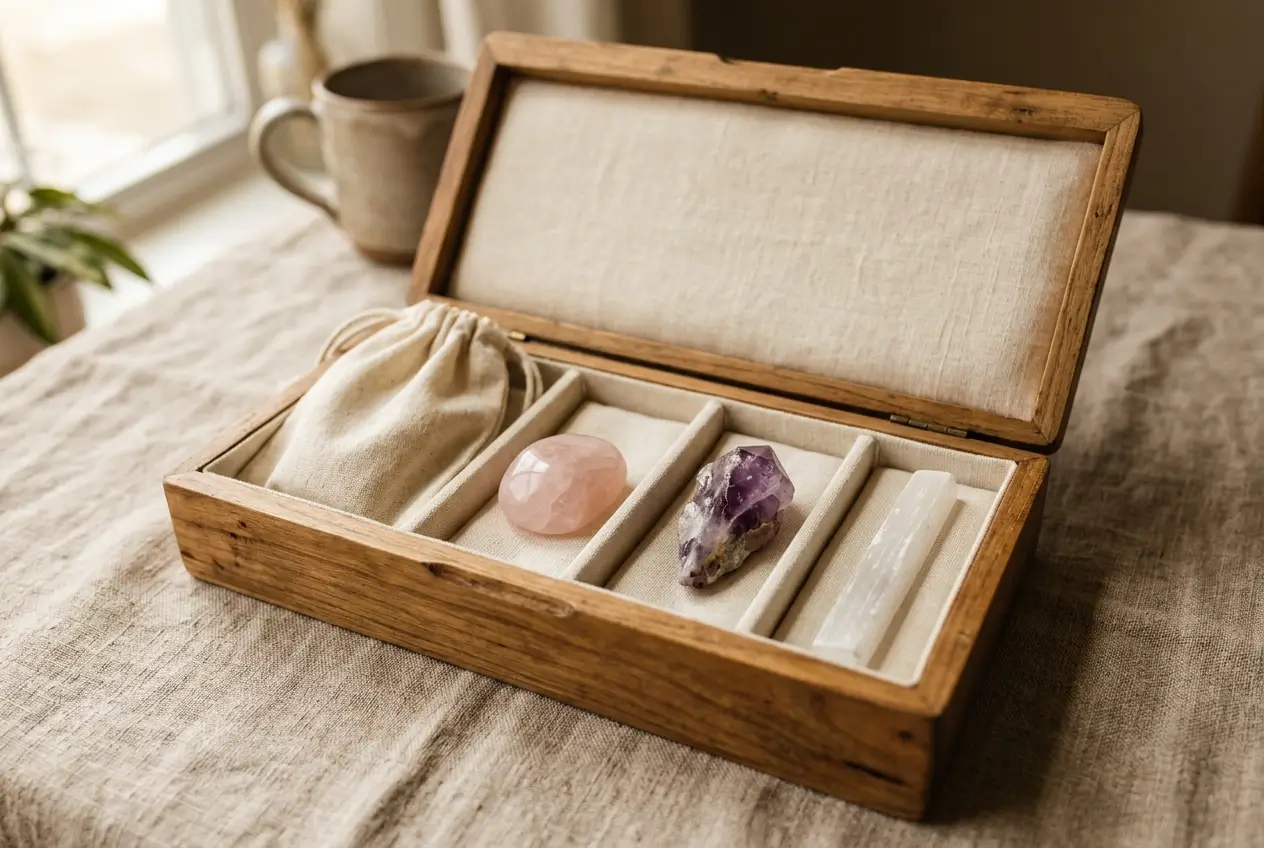
Store crystals in a dry spot, separated by hardness, and away from direct sunlight. Three quick rules keep a collection intact:
- Keep them dry. Avoid bathrooms, kitchens, and damp basements—moisture damages water-sensitive stones like selenite and malachite.
- Separate by hardness. Wrap delicate or polished stones in a soft cloth or pouch so harder, rougher pieces can’t scratch them. A fabric-lined wooden box is a beginner-friendly choice.
- Mind the light. Long-term sun exposure fades amethyst, rose quartz, and citrine, so a drawer, box, or shaded shelf preserves color.
A selenite plate doubles as a display surface and a passive cleanser, so stones stay refreshed between uses. If your crystals live on a bracelet you wear daily, see our companion guide on how often to cleanse a crystal bracelet.
No Myths: 5 Crystal-Care Beliefs to Retire
The “No Myths” promise—here are the false beliefs that cause the most damage and frustration:
- “All crystals can be washed in water.” False. Soft and porous stones dissolve, rust, or degrade. Check the Mohs hardness first, and when in doubt, use sound or smoke instead.
- “Crystals ending in ‘-ite’ can’t go in water.” Catchy but unreliable. Some “-ite” stones are fine and some non-“-ite” stones aren’t—hardness and composition decide, not the name.
- “You must wait for a full moon to charge.” No. Any moonlit night, gentle sun (for sun-safe stones), sound, or intention works. Consistency matters more than the lunar calendar.
- “Salt is always safe.” It isn’t. Salt and salt water damage many stones, and the residue can crack or dull them.
- “Selenite needs to be charged.” Selenite is considered self-cleansing and is used to clear other stones—it doesn’t require charging itself.
And the honest part. There is no scientific evidence that crystals hold or emit measurable “energy.” In a 2001 study led by Prof. Christopher French at the University of London, volunteers who held real quartz reported the same sensations as those given fake glass crystals—the researchers concluded the effects came from the power of suggestion, not the power of the crystals. That doesn’t make crystals worthless. Many people find real comfort, focus, and ritual in working with them. Just treat crystals as a complement to—not a replacement for—professional care.
⚠ Wellness note: The energy and healing properties described here reflect traditional spiritual beliefs and historical practices. They are not scientifically proven, are not medical advice, and are not intended to diagnose, treat, or cure any condition. Always seek professional medical guidance for health concerns.
Start Your Collection the Right Way
Every crystal from Potala Store is hand-selected from trusted Himalayan artisans and ships with stone-specific care instructions—so you’ll always know how to cleanse, charge, and store it.Shop Crystal Bracelets →
Frequently Asked Questions
Cleanse a new crystal as soon as it arrives to clear energy from its journey to you. The easiest beginner-safe method: hold or pass the stone through sage smoke or near a singing bowl for 30–60 seconds, set a simple intention to clear it, optionally rest it on a selenite plate for a few hours, then charge it under moonlight overnight.
Only water-safe ones. Hard stones such as clear quartz, amethyst, citrine, and rose quartz—the quartz family rates 7 on the Mohs scale—tolerate a quick cool rinse. Keep selenite, malachite, calcite, halite, pyrite, and fluorite out of water, and skip salt water entirely. When unsure, use sound or smoke.
Cleanse on arrival, then about once a month for general use. Cleanse weekly if you wear a stone daily or use it through stressful, emotional periods. There’s no fixed rule—if a crystal feels heavy, dull, or “off,” that’s your cue.
No. The full moon is popular but optional. Any moonlit night works, as does gentle morning sun for sun-safe stones, sound, a selenite plate, or simply holding the stone and setting an intention.
📚 References
- Mohs Hardness & Gem Durability: Why hardness determines which stones tolerate water and handling. Gemological Institute of America (GIA)
- Crystal Healing & the Placebo Research: Overview of the evidence base, including the French (2001) study on suggestion. Crystal healing — encyclopedia overview
- Selenite (Gypsum) Properties: Mineral composition and water solubility of selenite. Selenite mineral data
About Potala Store. For over a decade, our team has worked alongside artisans and monastery communities in Nepal and Tibet, sourcing ethically traded stones and spiritual jewelry. The care methods in this guide reflect both traditional practice and hands-on experience handling thousands of crystals.
Last updated: 06/01/2026.