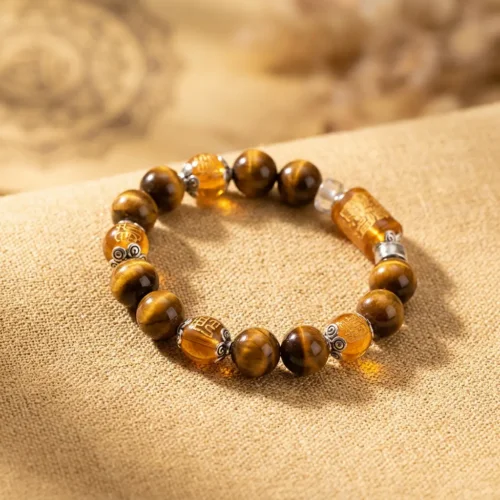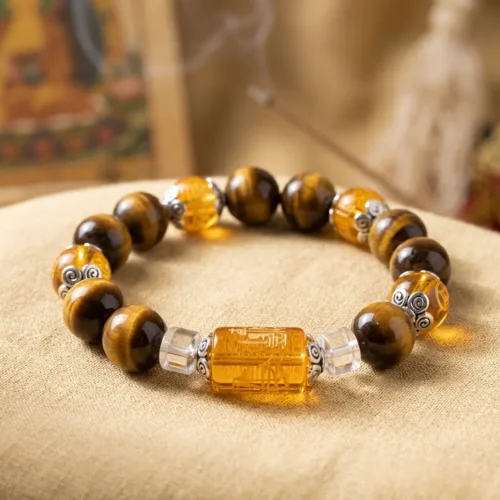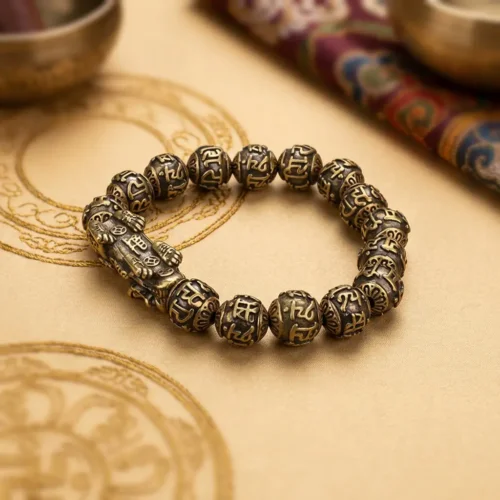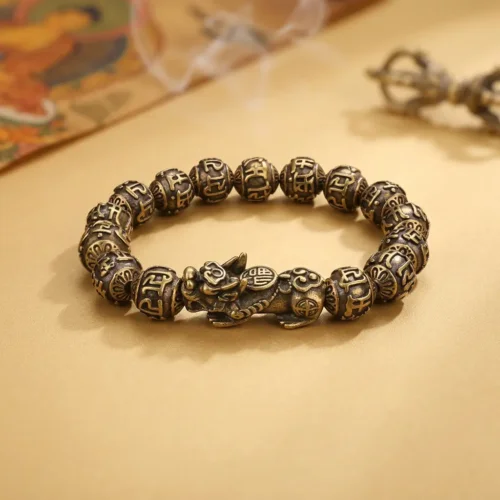

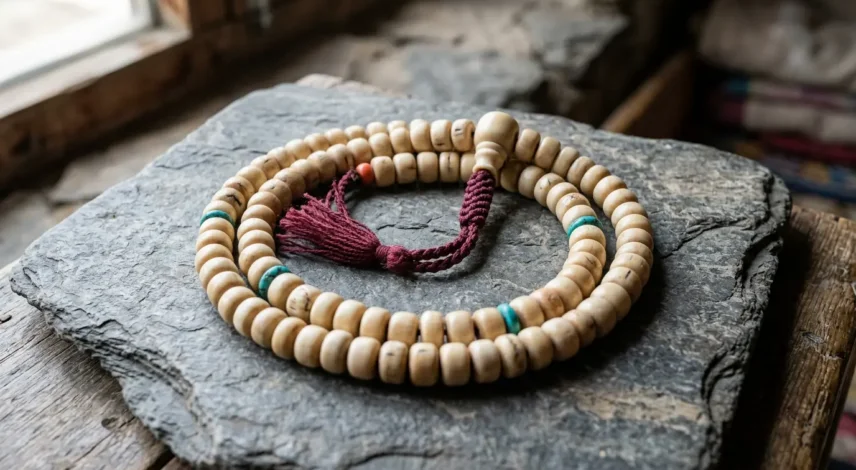

Yak bone mala beads symbolize impermanence — the Buddhist teaching, called anicca, that everything conditioned is temporary, including your own body. If you’ve been drawn to a bone mala but felt uneasy about what it means or where the bone comes from, that hesitation deserves a real answer, not a sales pitch.
At Potala Store, we’ve spent years working alongside artisan workshops in Kathmandu and Lhasa, and the same two questions come up again and again: Is this morbid? and Was an animal killed for this? The short answers are no and no — but the longer answers are what actually make these prayer beads worth understanding.
Here’s the core of it. In Tibetan Buddhism, bone isn’t a symbol of death for its own sake. It’s the most direct teaching material available: a strand of 108 beads you can hold during meditation, count mantras on, and feel the truth of impermanence through your fingertips. This guide covers what the beads mean, how the bone is sourced, how to use and care for them, how they differ from kapala malas, and how to tell real yak bone from imitation.
What Are Yak Bone Mala Beads?
A yak bone mala is a Tibetan Buddhist prayer strand of 108 beads carved from yak bone, plus one larger guru bead, used to count mantra repetitions during meditation. The word mala is Sanskrit for “garland”; in Tibetan it’s called a threngwa. The material is what sets it apart from a sandalwood or bodhi seed strand.
The beads come from the domestic yak (Bos grunniens), the animal that has carried Himalayan life for centuries — milk, wool, transport, fuel, and dung for fires. Most strands measure 21 to 36 inches (53–91 cm) in full loop length and are strung on knotted cord, often finished with a tassel or accented with turquoise, coral, or small brass spacers.
Pick one up and the first thing you notice is temperature. Bone stays cool against the hand longer than wood, and it has a faint porosity — a slight drag under the thumb rather than a polished glide. Over months of counting, the beads darken unevenly into a soft patina where your fingers touch them most. That patina is not wear. It’s a record of practice.
If you’re weighing materials before committing, our guide to how yak bone compares with bodhi seed, sandalwood, and gemstone malas lays the options side by side.
What Does Bone Symbolize in Buddhism?
Bone symbolizes impermanence (anicca) — the first of the Three Marks of Existence, the Buddha’s teaching that all conditioned things arise, change, and pass away. A bone bead makes that abstraction physical: you are holding what remains of a living body, and one day your own body will be exactly this.
Impermanence and the Three Marks of Existence
Buddhist teaching describes all phenomena through three characteristics: anicca (impermanence), dukkha (dissatisfaction), and anattā (non-self). Most articles about bone malas stop at “impermanence” and move on. The doctrinal placement matters, though, because it changes what the bead is for.
Anicca isn’t a gloomy observation. It’s the hinge of the whole system: because things change, clinging to them produces suffering, and because there’s no fixed self doing the clinging, release is possible. A yak bone mala doesn’t ask you to dwell on death. It asks you to stop assuming permanence — of your health, your circumstances, your grievances — so that attachment loosens on its own.
Strength, Endurance, and the Yak
The specific animal adds a second layer. Yaks survive above 14,000 feet in conditions that kill most livestock, and Tibetan culture reads them as endurance made visible. So the strand holds two ideas at once: everything passes, and you can carry hardship with steadiness while it does. Practitioners working with wrathful protector deities such as Mahakala, or with Chöd — a practice built on offering the body and cutting through self-clinging — often prefer bone for exactly this reason.
Why Bone Communicates This More Directly Than Wood
Western readers have a close parallel: memento mori, the skulls and hourglasses in old European painting that reminded viewers of mortality. The difference is tactile. A painting is looked at once; a mala passes through your hands 108 times per round, every day. That repetition is the mechanism. Sandalwood soothes, gemstone decorates, bone reminds.
⚠️ Important Note: The spiritual meanings described here reflect traditional Tibetan Buddhist belief and practitioner experience, not scientific findings. This content is educational and is not a substitute for medical, psychological, or religious guidance from a qualified professional or teacher.
Are Yak Bone Malas Ethical?
Authentic yak bone malas are considered ethical because the bone comes from yaks that died of natural causes — never from animals killed for their bones. In Himalayan communities, using every part of an animal that has already died honors its life and reflects the Buddhist principle of non-harm.
This is worth stating plainly, because the concern is reasonable and the internet is not always honest about it. A yak that has spent fifteen years as a working animal is not discarded when it dies. Hide, horn, and bone all continue serving the household. The bone that becomes a mala is a by-product of a life that ended on its own terms — closer in logic to using fallen antler than to ivory, which drives the killing itself.
Ethically sourced bone mala beads should come with a traceable story, and you’re entitled to ask for it. Reputable sellers can tell you which region the bone came from, which workshop carved it, and whether the strand was blessed. If a seller can’t answer any of those three questions, that silence is your answer.
We’d rather be honest about the limits here: the global market for bone beads is not uniformly regulated, and “yak bone” is sometimes used loosely for other animal bone. Provenance depends on the supply chain, not on the word printed in a product title.
How to Use and Care for Your Prayer Beads
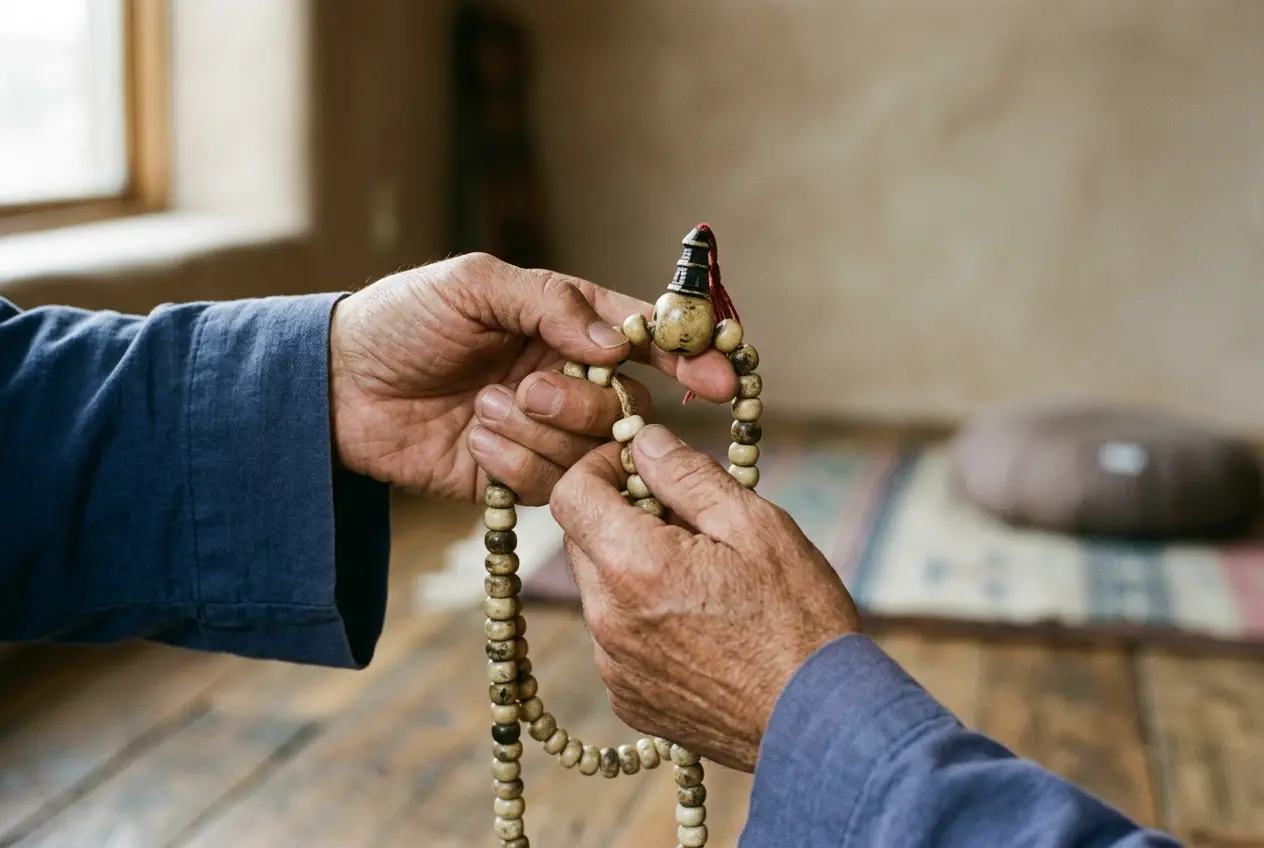
To practice with a mala, hold it in your left hand, begin at the bead beside the guru bead, and move one bead per mantra until you complete 108 repetitions. Here is the full sequence:
- Find the guru bead. It’s the larger bead with three stringing holes, usually capped by a small tower-shaped bead. It represents your teacher and is never counted.
- Start beside it. Begin on the first counting bead next to the guru bead, holding the strand in your left hand in the Tibetan manner.
- Count one bead per recitation. Use your thumb to draw each bead toward you as you recite your mantra — Om Mani Padme Hum is the standard choice for daily practice.
- Reverse at the guru bead. When you return to it after 108 beads, don’t cross over it. Flip the mala and continue in the opposite direction as a sign of respect.
- Allow 10 to 20 minutes for a full round of 108 beads at a steady, unhurried pace.
How to Wear It: Necklace or Wrist
A full 108-bead strand is worn around the neck or wrapped several times around the wrist between sessions. At 8mm — the most common bead diameter, roughly 5/16 inch — a complete bone strand weighs about 20 to 30 grams (0.7–1.1 oz), light enough for all-day wear but substantial enough to feel present. Keep it off the floor, and take it off before bathing to protect the cord. Whether you want a full strand or something more discreet depends on how you actually practice; our comparison of a mala necklace versus a wrist mala covers that decision in detail.
How to Clean and Care for Bone Beads
Bone is porous, so water is the main hazard. Skip soaking and rinsing entirely. Instead:
- Wipe the beads with a dry, soft cloth after use.
- Condition them two or three times a year with a trace of natural oil to prevent drying and hairline cracking.
- Cleanse traditionally by passing the strand through juniper or sage smoke — a Tibetan practice called sang. Regular cleansing is believed to clear the accumulated energy a mala absorbs during practice.
- Store it in a cloth pouch or on your altar, never loose in a bag with keys or coins.
Yak Bone vs. Kapala vs. Water Buffalo Bone Malas
Yak bone and kapala malas both point to impermanence, but they are not interchangeable: yak bone is an everyday practice tool, while a kapala mala is made from human bone and is reserved for advanced Vajrayana practitioners who have received specific empowerments.
| Feature | Yak Bone Mala | Kapala (Human Bone) Mala | Water Buffalo Bone Mala |
|---|---|---|---|
| Material source | Domestic yak, natural death | Human bone from charnel-ground tradition | Water buffalo, slaughter by-product |
| Who it’s for | Any practitioner, including beginners | Empowered Vajrayana practitioners only | Any practitioner; budget option |
| Typical use | Daily mantra counting, impermanence practice | Wrathful deity practice, Chöd, advanced tantra | General mantra counting, jewelry |
| Density and feel | Cool, dense, faint grain | Lighter, finely porous | Denser, whiter, more uniform |
| Availability | Widely available | Rare, restricted, often misrepresented | Very common; frequently sold as “yak bone” |
That last row is the practical takeaway. Water buffalo bone is the substitution most buyers actually encounter — it is cheaper, whiter, and more uniform, and a great deal of it circulates under the yak bone label. It isn’t a scam in itself; buffalo bone malas are legitimate practice tools. The problem is only the mislabeling.
Skull-carved bone beads sit in a category of their own. A carved skull isn’t a horror motif — it’s a compressed version of the same teaching, which is why skull imagery appears throughout Tibetan iconography alongside dakinis and protector deities. Bone also runs harder than most people expect for an organic material, at roughly 2.5 to 3 on the Mohs scale, comparable to ivory and softer than any gemstone.
Who Should Use a Bone Mala — and How to Spot a Real One
A bone mala suits practitioners who are comfortable contemplating mortality and want a daily, tactile reminder of impermanence; anyone who finds bone unsettling will practice better with sandalwood or bodhi seed. There is no spiritual demerit in choosing something gentler — a tool that makes you flinch is a tool you won’t pick up.
Consider a yak bone mala if you:
- Are working with grief, loss, or a major life transition and want the teaching close at hand
- Practice mantra recitation regularly and want a strand with grip and weight
- Are drawn to Tibetan Buddhist tradition specifically, rather than to mala jewelry generally
Choose a different material if you:
- Feel uneasy about bone — that discomfort will sit between you and your practice
- Are buying primarily as decorative jewelry, where the symbolism would go unused
- Are shopping for someone whose feelings about animal materials you don’t know
You don’t need to be Buddhist to use one respectfully, though the question deserves more room than a bullet point — we’ve addressed it directly in our honest answer on who can wear mala beads.
How to Tell Real Yak Bone from Imitation
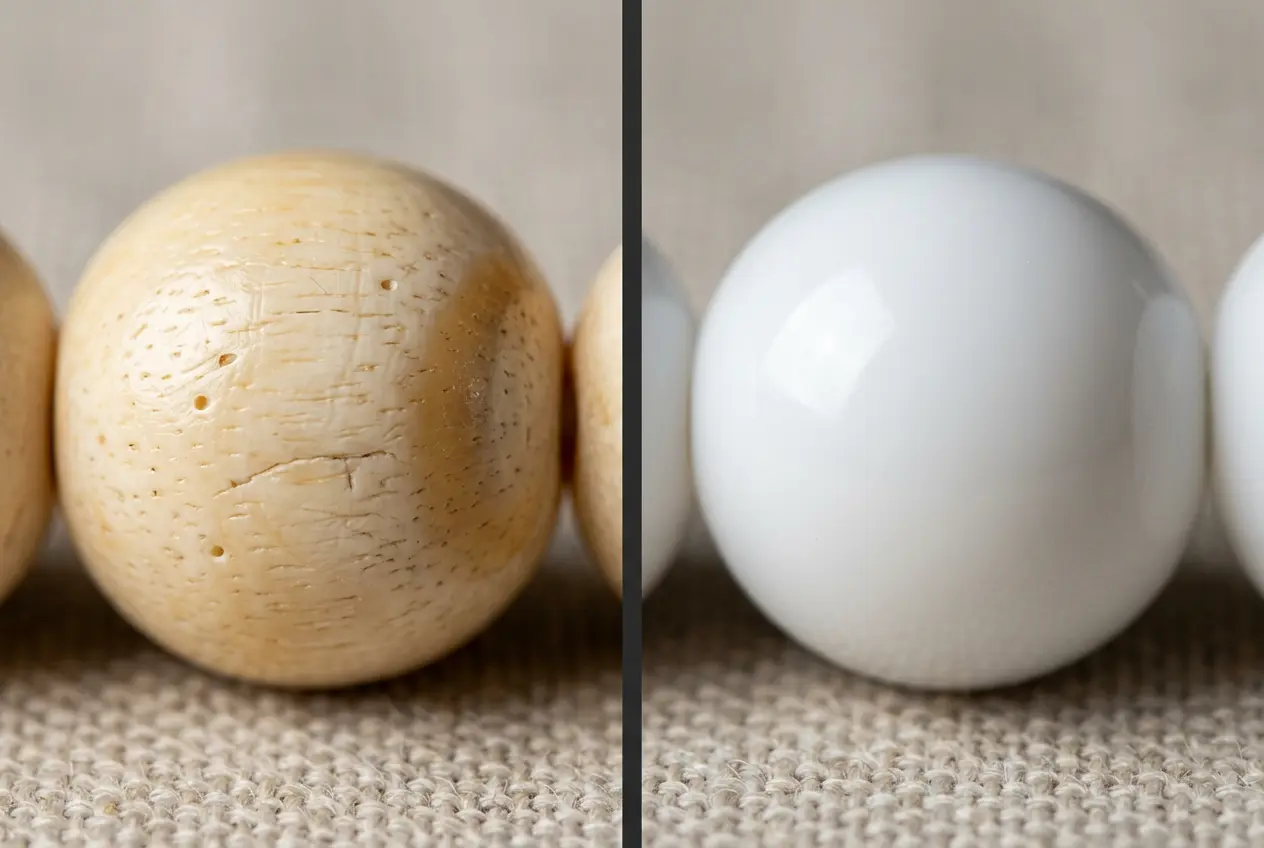
When we first started sourcing bone strands, we assumed the whitest, most uniform beads were the highest grade. A workshop partner in Kathmandu corrected us fairly bluntly: perfectly uniform, milky-white beads are usually bleached — or resin. Real bone is slightly inconsistent, and that inconsistency is the proof. Check four things:
- Color variation: genuine bone shows subtle cream-to-ivory shifts between beads, not one flat white.
- Weight: an 8mm yak bone bead runs roughly 4 to 6 grams — noticeably heavier than plastic, lighter than stone.
- Temperature: bone stays cool on first contact and warms slowly; resin warms almost immediately.
- Grain: hold a bead to the light and look for faint linear striations and tiny pores. Resin has neither.
The key takeaway: uniformity is the warning sign, not the quality marker.
Choosing your first strand? If bone feels like more than you want to start with, a wood or bodhi seed strand teaches the same counting practice with a gentler association. Potala Store sources through verified partnerships with Tibetan and Nepalese artisan communities, and our walkthrough on how to choose mala beads for your practice narrows it down by material, bead size, and intention.
Frequently Asked Questions
Yes. Anyone drawn to its meaning can wear a yak bone mala for meditation or as a mindful reminder, as long as it’s treated as a sacred object rather than an accessory. If you intend to use one for formal Vajrayana or wrathful deity practice, consult a qualified teacher or lama first.
108 is sacred across Tibetan Buddhism, Hinduism, and Jainism. In Tibetan tradition it reflects the 108 volumes of the Buddha’s collected teachings, known as the Kangyur. A common alternative calculation gives 108 defilements: 6 senses × 3 sensations × 2 states × 3 times.
A carved skull amplifies the same teaching the bone already carries — impermanence and the dissolution of ego — rather than signaling anything morbid or malevolent. Skull-carved strands are favored by practitioners working with fearlessness and Chöd. You’ll find both plain and carved styles in our Tibetan mala collection below.
Most practitioners cleanse with juniper or sage smoke every two to four weeks, or after any period of heavy use or emotional difficulty. Avoid water entirely, and condition the beads with a trace of natural oil two or three times a year to prevent cracking.
Find a mala that matches your practice
Hand-knotted 108-bead strands sourced through verified Tibetan and Nepalese artisan partnerships — bone, bodhi seed, sandalwood, and gemstone.Browse PotalaStore’s Tibetan mala collection
📚 References
- Impermanence (Anicca) in Buddhist Doctrine: Collected essays on the first of the Three Basic Facts of Existence, with a preface by Nyanaponika Thera (The Wheel No. 186/187, Buddhist Publication Society). Access to Insight
- The Three Marks of Existence: Plain-language overview of anicca, dukkha, and anattā and how they relate to samsara and the Buddhist path. Tricycle: The Buddhist Review
- How to Use and Choose a Tibetan Mala: Guidance from a nonprofit supporting Tibetan Buddhist nuns, covering the guru bead, counting method, and the 108-volume Kangyur significance. Tibetan Nuns Project
- Kapala and Charnel-Ground Bone Implements: Background on human-bone ritual objects in Vajrayana practice, useful for distinguishing them from animal bone malas. Wikipedia
Written by the Potala Store editorial team, drawing on our sourcing partnerships with artisan workshops in Kathmandu and Lhasa. Cultural and doctrinal details reviewed against the sources listed above. We update this guide as our sourcing practices and available research change.